

Composite cable trench cover plate wholesale is mainly used for electrical cable trenches, utility channels, substations, power plants, telecom projects, railway facilities, industrial parks, municipal cable corridors, and outdoor maintenance access areas where lightweight handling, insulation, corrosion resistance, anti-slip safety, and long service life are important. Compared with traditional concrete trench covers and steel trench covers, composite cable trench cover plates are easier to lift, safer around electrical systems, resistant to rust, and suitable for repeated maintenance access. For wholesale buyers, the key is to confirm material structure, load capacity, size, anti-slip surface, flame retardant requirement, outdoor weather resistance, packaging, bulk order quantity, and whether the supplier can support custom dimensions for project drawings.
Composite cable trench cover plates are widely supplied in wholesale quantities for electrical and utility projects because cable trenches usually extend over long distances and require many cover plates with repeated sizes. These covers are used to protect underground or floor-level cable routes while allowing maintenance workers to remove panels for inspection, cable laying, cleaning, and repair.
In electrical projects, cover plates are not only judged by price. They must provide safe access, stable load performance, insulation, weather resistance, anti-slip surface, and convenient handling. A wholesale order may involve hundreds or thousands of pieces, so small differences in weight, size tolerance, surface quality, and packing can affect installation speed and project cost.
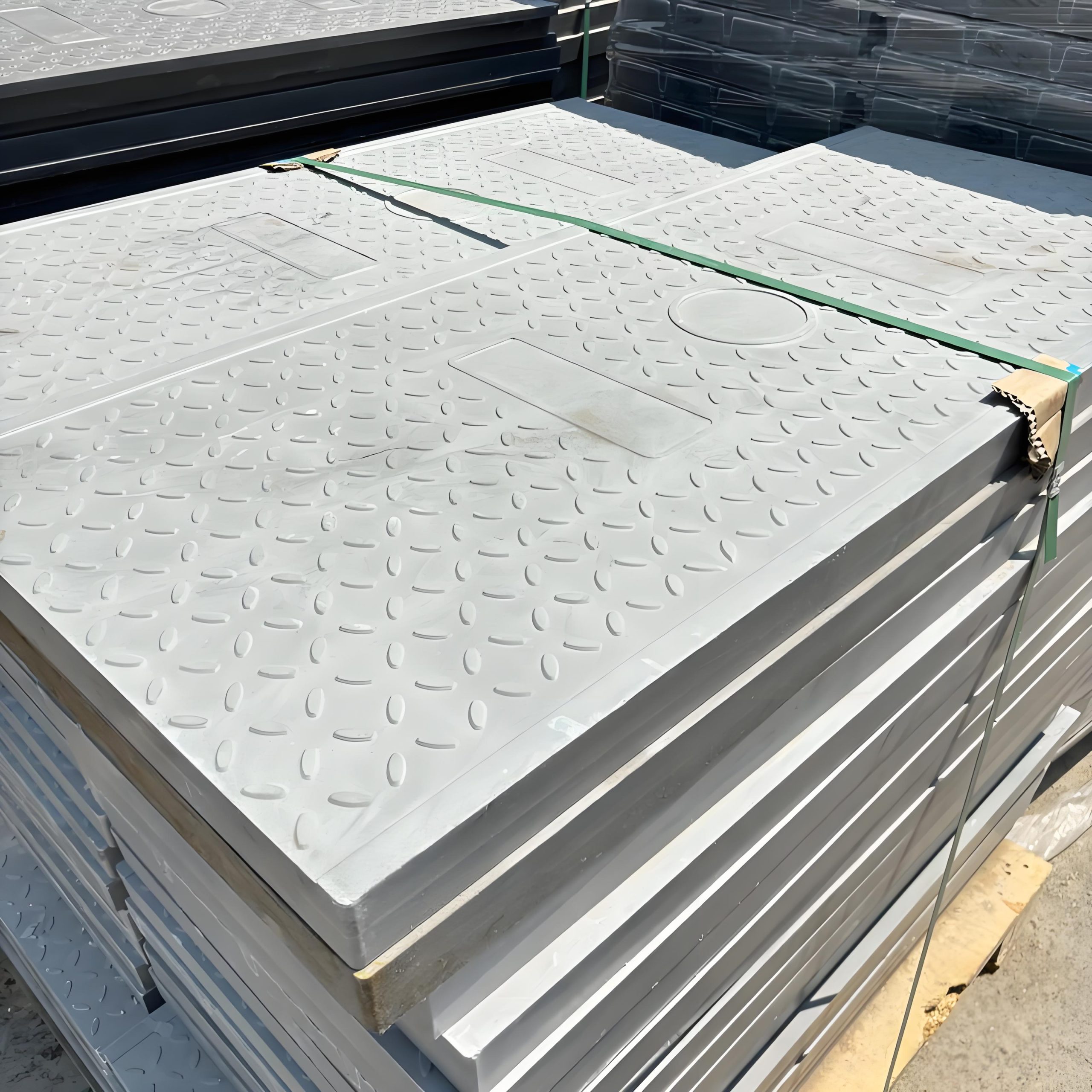
Composite cable trench cover plates are commonly used in substations, power distribution rooms, electrical workshops, telecom cable routes, railway power systems, solar and wind energy facilities, factories, industrial parks, utility corridors, and municipal cable channels. These projects often require standard sizes for repeated trench sections and custom sizes for corners, turning points, cable entries, equipment foundations, and inspection areas.
| Project Type | Common Requirement | Why Composite Cover Plates Are Used |
|---|---|---|
| Electrical substation | Insulation, safety, outdoor durability, easy maintenance | Non-conductive and easier to lift than concrete covers |
| Power plant cable trench | Large quantity, repeated sizes, stable load capacity | Suitable for wholesale supply and project installation |
| Telecom cable channel | Lightweight access covers and corrosion resistance | Convenient for inspection and cable maintenance |
| Industrial park utility trench | Outdoor weather resistance and anti-slip surface | Reduces rust and handling problems |
| Municipal utility corridor | Custom sizes, load options, durable surface | Can be supplied in bulk with project-based dimensions |
Composite cover plates are suitable for cable trench systems because they solve several common problems found in concrete and steel trench covers. Cable trenches require frequent opening during installation, inspection, cable replacement, and maintenance. A cover plate that is too heavy, conductive, rusty, cracked, or difficult to remove can slow down work and create safety risks.
Traditional concrete covers are heavy and may crack when moved repeatedly. Steel covers are strong but can rust and may require surface coating maintenance. Composite cable trench cover plates are lighter and easier to remove, making them practical for areas where maintenance access is frequent.
Composite materials are generally non-conductive, which is valuable in electrical environments. In cable trenches, insulation performance can help reduce electrical safety risks compared with metal covers. Buyers should still confirm the required electrical performance according to project specifications.
Cable trenches may be exposed to rainwater, condensation, underground moisture, chemical vapor, industrial dust, or outdoor weather. Composite trench covers do not rust like steel, and they are less likely to suffer corrosion-related surface damage.
Composite cover plates can be supplied in standard sizes or customized dimensions. Wholesale buyers can order repeated sizes for long trench lines and special sizes for inspection points, corners, equipment areas, or irregular openings.
| Problem in Cable Trench Projects | Composite Cover Plate Advantage |
|---|---|
| Heavy concrete covers are difficult to lift | Lightweight composite design improves handling |
| Steel covers may conduct electricity | Composite material provides non-conductive performance |
| Outdoor steel covers can rust | Composite covers resist corrosion and weather exposure |
| Frequent maintenance causes handling damage | Composite panels are easier to remove and reinstall |
| Long projects need many repeated covers | Wholesale production supports standard and custom sizes |
Composite cable trench cover plates are usually made from reinforced composite materials such as fiberglass-reinforced plastic, resin-based composite, SMC, BMC, or other molded composite structures depending on the manufacturer’s production process. The material combines resin, reinforcing fibers, fillers, additives, and surface texture to provide strength, insulation, corrosion resistance, and weather performance.
Composite trench cover plates can provide good load capacity while remaining lighter than concrete and many steel covers. This is useful for cable trench systems because workers often need to lift and move covers during maintenance.
Because composite cover plates are non-metallic, they do not rust and generally do not conduct electricity like steel. This makes them suitable for cable trenches, power distribution areas, and utility channels where electrical safety is a major concern.
Composite materials can resist moisture, many common chemicals, salt air, and outdoor weather better than untreated steel. For outdoor cable trenches, this helps reduce long-term maintenance.
Composite cover plates can be molded with anti-slip surface patterns, reinforced ribs, identification marks, color options, lifting holes, and custom shapes. For wholesale projects, this allows standardization while still supporting special requirements.
| Material Advantage | Practical Benefit | Project Value |
|---|---|---|
| Lightweight | Easier lifting and handling | Faster installation and maintenance |
| Non-conductive | Improves safety around electrical cables | Suitable for substations and utility systems |
| Corrosion resistant | No rust like steel covers | Lower maintenance in wet or outdoor areas |
| Molded anti-slip surface | Improves walking safety | Useful for outdoor and wet cable trenches |
| Customizable design | Supports sizes, colors, ribs, holes, and marks | Better fit for wholesale project supply |
Insulation and non-conductive performance are major reasons buyers choose composite cable trench cover plates. In power plants, substations, electrical rooms, and cable corridors, trench covers may be located close to power cables, grounding systems, control cables, and maintenance personnel. A non-metallic cover plate can reduce the risk associated with conductive surfaces.
Steel trench covers are conductive. In many normal applications this may not be a problem, but in electrical areas, buyers often prefer non-conductive covers to improve safety. Composite cover plates provide an insulating barrier and are suitable for many cable trench environments.
Although composite covers are generally non-conductive, buyers should confirm exact insulation requirements with project engineers. Some projects may require specific testing values, flame retardant performance, anti-static behavior, grounding design, or utility standard compliance.
Composite cable trench cover plates are useful for power distribution rooms, substations, transformer areas, telecom cable channels, control cable trenches, and industrial electrical rooms where safe maintenance access is important.
| Electrical Safety Factor | Composite Cover Plate Benefit | Buyer Should Confirm |
|---|---|---|
| Non-conductive surface | Reduces conductive metal exposure around cables | Required insulation performance |
| Electrical room use | Suitable for cable trenches and utility channels | Project electrical safety rules |
| Maintenance safety | Workers handle lighter non-metallic panels | Panel weight and lifting method |
| Special electrical requirement | Can be designed according to project request | Testing standard and acceptance criteria |
Lightweight design is one of the most practical advantages of composite cable trench cover plates. Cable trench covers may need to be opened many times during cable pulling, repair, inspection, and cleaning. If the cover is too heavy, maintenance becomes slow and unsafe.
Concrete trench covers can be very heavy. Steel covers can also become difficult to lift when thick plates are required. Composite cover plates are much easier to move in many applications, helping workers open and close cable trenches with less effort.
For wholesale projects with long cable trench lines, lighter panels can reduce installation time. Workers can place panels faster, adjust positions more easily, and handle repeated sizes more efficiently.
During long-term use, cable trenches may need periodic inspection. Lightweight composite covers make maintenance easier because workers can remove panels without heavy lifting equipment in many pedestrian or maintenance areas.
Concrete covers may crack or chip when handled roughly. Composite covers are more suitable for repeated removal if the correct load grade and panel design are selected. This can reduce replacement frequency in maintenance-heavy projects.
| Handling Item | Composite Cover Plate Advantage | Project Benefit |
|---|---|---|
| Manual lifting | Lighter than many concrete and steel covers | Improves worker convenience |
| Installation speed | Panels are easier to place and align | Useful for long cable trench lines |
| Maintenance opening | Easier removal during inspection | Reduces downtime |
| Transportation | Lower weight can reduce handling difficulty | Improves loading and unloading efficiency |
| Replacement | Damaged panels can be changed more easily | Supports long-term project maintenance |
Composite cable trench cover plates can be designed for different load levels. The correct load grade depends on where the cable trench is located. A cover used in an electrical room walkway is different from a cover used in an outdoor maintenance road or vehicle area.
Pedestrian load composite covers are suitable for electrical rooms, indoor cable trenches, utility corridors, telecom rooms, and areas where workers walk over the trench. These panels focus on safe walking, anti-slip surface, insulation, and easy removal.
Maintenance load covers may need to support workers carrying tools, small equipment, carts, or inspection devices. These covers require higher stiffness and better deflection control than simple pedestrian covers.
Some outdoor cable trenches may be located in areas where maintenance vehicles, small service carts, or light trucks may pass. These covers need stronger design and should be selected carefully according to wheel load, trench width, support structure, and project requirements.
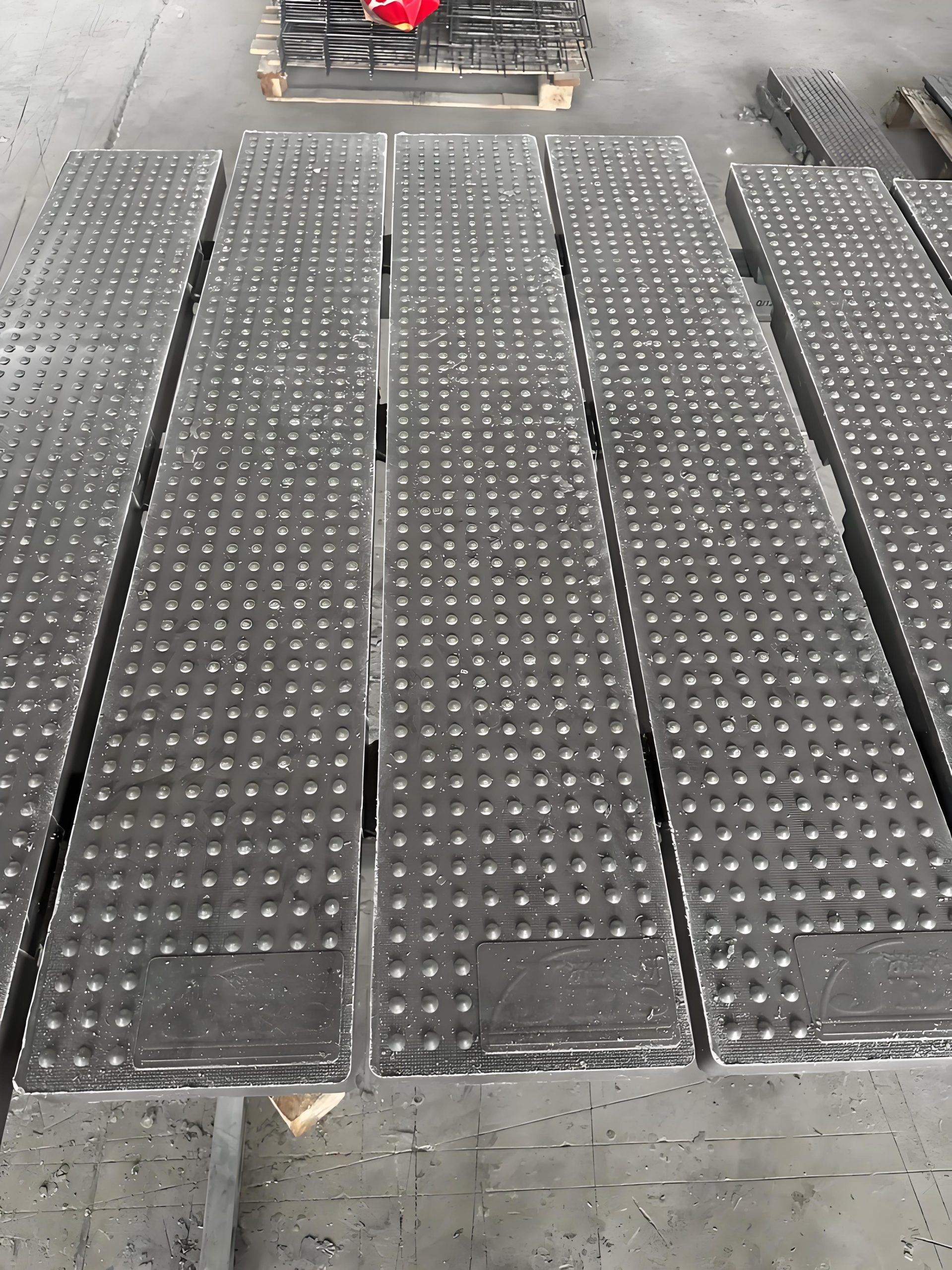
Load capacity is not only determined by material. Trench clear width, support ledge, panel thickness, rib structure, reinforcement design, and installation condition all affect performance. Buyers should provide clear trench width and expected load before quotation.
| Load Level | Typical Use | Design Focus |
|---|---|---|
| Pedestrian duty | Electrical rooms, telecom trenches, utility corridors | Walking safety, insulation, lightweight handling |
| Maintenance duty | Substations, factory cable trenches, inspection routes | Higher stiffness, anti-slip surface, repeated removal |
| Cart duty | Industrial utility channels and service areas | Wheel load, deflection control, support ledge |
| Light vehicle duty | Outdoor service roads and maintenance zones | Wheel load, reinforced structure, stable seating |
| Project-specific heavy duty | Vehicle access areas and special utility trenches | Engineering confirmation before production |
Outdoor cable trench cover plates may be exposed to rain, dust, mud, snow, oil, or industrial residue. An anti-slip surface helps improve walking safety. Composite cover plates can be molded with raised patterns, textured surfaces, roughened finish, or anti-slip ribs.
Raised surface patterns provide better traction than smooth covers. This is useful for substations, outdoor electrical yards, industrial parks, and utility corridors where workers may walk during wet conditions.
Textured composite surfaces can help increase friction. The surface design should be strong enough to resist wear during long-term use. For frequently accessed trenches, anti-slip pattern quality should be checked before bulk delivery.
Cable trench covers are usually solid or mostly closed to protect the cable trench, but surface water should not remain in unsafe puddles. Some covers may include drainage grooves, edge gaps, or slight surface design to reduce water accumulation.
Composite trench covers can be supplied in different colors depending on project requirements. High-visibility colors or warning markings may be used in some utility areas. Buyers should confirm whether color stability and UV resistance are needed for outdoor exposure.
| Anti-Slip Feature | Function | Suitable Area |
|---|---|---|
| Raised pattern | Improves foot grip | Outdoor cable trenches and substation walkways |
| Textured surface | Increases friction | Wet maintenance areas and utility routes |
| Surface ribs | Improves traction and panel stiffness | Long trench covers and outdoor corridors |
| Warning color | Improves cover visibility | Electrical facilities and public utility areas |
| Drainage groove | Helps reduce surface water accumulation | Rain-exposed outdoor covers |
Composite cable trench cover plates are selected for long-term outdoor and wet environments because they do not rust like steel and do not absorb water in the same way as ordinary concrete. In outdoor utility projects, cover plates may face rain, sunlight, temperature changes, moisture, salt air, industrial dust, and chemical exposure.
Steel covers can rust if the coating is damaged or if maintenance is poor. Composite trench covers do not rely on galvanizing or paint to prevent rust. This makes them attractive for outdoor cable trenches and humid industrial facilities.
Cable trenches may contain condensation or groundwater. Composite covers are suitable for moist environments if the material formulation and surface design are appropriate for the project.
Outdoor composite cover plates should include weather-resistant design. Buyers should confirm UV resistance, color stability, and expected outdoor service performance when the covers will be exposed to sunlight for long periods.
In coastal utility projects, chemical plants, and industrial parks, composite covers can resist many corrosion problems that affect steel covers. However, chemical exposure should still be described clearly before ordering so the supplier can recommend a suitable material formulation.
| Environmental Factor | Composite Cover Plate Performance | Buyer Should Confirm |
|---|---|---|
| Rain and humidity | No rusting like steel covers | Outdoor service requirement |
| Sunlight exposure | Can be designed for UV resistance | UV stability and color requirement |
| Industrial dust | Surface can be cleaned and maintained | Cleaning method and surface texture |
| Salt air | Good corrosion resistance compared with steel | Coastal environment details |
| Chemical exposure | Depends on resin system and formulation | Type and concentration of chemical contact |
Flame retardant performance is an important safety consideration for cable trench cover plates, especially in electrical rooms, substations, power plants, utility tunnels, and industrial cable systems. Cable trenches contain electrical cables, so project owners may require specific fire safety performance from cover plates.
Cable trench systems may carry power cables, control cables, communication cables, and other electrical lines. In safety-sensitive projects, cover materials should not increase fire risk. Composite cover plates can be designed with flame retardant additives, but the required level must be confirmed before production.
Not every cable trench project has the same flame retardant requirement. Indoor electrical rooms, substations, tunnels, power plants, and public utility corridors may require different safety levels. Buyers should provide the required standard, test method, or project specification if flame retardant performance is mandatory.
Material formulation can affect strength, surface quality, cost, and flame retardant behavior. A supplier should not simply claim “flame retardant” without explaining the grade, test basis, or project suitability when required.
Besides flame retardancy, buyers may also need anti-slip surface, non-conductive performance, weather resistance, color marking, low smoke requirements, or safe edge treatment. These should be included in the inquiry.
| Safety Requirement | Why It Matters | Buyer Should Provide |
|---|---|---|
| Flame retardant performance | Important for cable trench and electrical safety | Required test standard or project specification |
| Insulation performance | Reduces conductive surface risk | Electrical safety requirement |
| Anti-slip surface | Improves walking safety | Indoor or outdoor use condition |
| Weather resistance | Supports long-term outdoor use | UV, rain, temperature, and exposure details |
| Safe edge design | Reduces handling injuries | Removable cover and maintenance frequency |
Wholesale composite cable trench cover plate orders usually include both standard sizes and custom dimensions. Standard sizes are useful for long straight cable trenches. Custom dimensions are needed for turning points, junction boxes, equipment bases, cable entries, inspection openings, and irregular trench sections.
Standard cover plate sizes help reduce production cost and simplify installation. If the trench system uses repeated widths and lengths, the supplier can produce panels more efficiently. Standardization also helps packing, counting, labeling, and replacement.
Custom cover plates may be required when trench widths are different or when covers need special notches, holes, corners, or reinforced sections. Custom dimensions should be based on accurate project drawings.
Very long panels reduce joints but can be harder to lift. Shorter panels are easier to remove but increase the number of pieces. For cable trench maintenance, panel length should be practical for workers.
Composite covers may use different thicknesses or rib structures according to load. Buyers should not select thickness only by appearance. Load capacity, trench width, and support ledge are more important.
| Size Item | Wholesale Supply Consideration | Buyer Advice |
|---|---|---|
| Standard width | Improves production efficiency | Use repeated trench widths where possible |
| Standard length | Simplifies packing and installation | Balance panel length with lifting convenience |
| Custom cut size | Adds processing and sorting cost | Provide drawings and panel schedule |
| Thickness | Affects load capacity and price | Select according to span and load |
| Special shape | Requires mold, cutting, or extra fabrication | Confirm before mass production |
Composite cable trench cover plates and concrete cover plates are both used in utility trenches, but they perform differently in weight, handling, safety, durability, and maintenance. Concrete covers are common and economical in some civil projects, but they can be heavy and difficult to remove.
Concrete trench covers are usually heavy. This can make installation and maintenance difficult. Composite cover plates are lighter, which helps workers handle them more easily during cable inspection and repair.
Concrete covers may crack, chip, or break during transport, installation, or repeated lifting. Composite covers are generally more suitable for repeated access if the correct load grade is chosen.
Concrete is non-metallic, but composite covers can provide controlled insulation, lighter weight, and molded anti-slip surface. In electrical cable trench systems, composite covers are often chosen for safer and easier maintenance.
Concrete covers may become stained, cracked, or uneven over time. Composite covers can be supplied with colored surfaces, warning marks, textured anti-slip patterns, and cleaner appearance.
| Comparison Item | Composite Cable Trench Cover Plate | Concrete Cover Plate |
|---|---|---|
| Weight | Lightweight and easier to handle | Heavy and difficult to remove |
| Maintenance access | Convenient for repeated opening | Labor-intensive for frequent inspection |
| Cracking risk | Less likely to crack under normal handling | Can crack or chip during movement |
| Surface design | Can have molded anti-slip texture and color | Limited surface design |
| Electrical trench use | Lightweight, non-conductive, corrosion resistant | Non-metallic but heavy and less convenient |
Composite cable trench cover plates and steel trench cover plates are both used in industrial and utility projects. Steel covers provide high strength and are common for heavy-duty areas, but they are conductive and can rust if surface protection fails. Composite covers provide lightweight handling, insulation, and corrosion resistance.
Steel is conductive, while composite material is generally non-conductive. In cable trench systems, this is one of the main reasons buyers choose composite cover plates.
Steel trench covers require galvanizing, painting, or other surface protection to resist corrosion. Composite covers do not rust, making them useful for outdoor and wet cable trench environments.
Steel covers can be heavy, especially when high load capacity is required. Composite covers are easier to lift and remove, which helps routine cable maintenance.
Steel covers may be preferred for very heavy vehicle areas or extreme impact zones. Composite covers can be designed for different load grades, but buyers should confirm wheel load and project requirements before using them in vehicle areas.
| Comparison Item | Composite Cable Trench Cover Plate | Steel Trench Cover Plate |
|---|---|---|
| Electrical conductivity | Generally non-conductive | Conductive |
| Corrosion resistance | No rust like steel | Needs galvanizing, painting, or stainless steel |
| Weight | Lighter and easier to remove | Heavier, especially for thick plates |
| Heavy load performance | Available in load-rated designs | Strong for heavy-duty and vehicle applications |
| Maintenance | Low corrosion maintenance | May need coating repair or rust control |
| Best use | Electrical cable trenches and utility channels | Heavy industrial floors and vehicle load areas |
Wholesale price for composite cable trench cover plates depends on material formulation, size, thickness, reinforcement design, load grade, surface pattern, flame retardant requirement, color, mold cost, order quantity, packaging, and shipping. A low price should always be compared with the same material and load level.
Different resin systems, fiber reinforcement levels, fillers, UV additives, and flame retardant additives affect price. Covers for outdoor, flame retardant, or high-load projects usually cost more than simple indoor pedestrian covers.
Larger and thicker panels use more material and cost more. Reinforced rib structures can improve load capacity but also increase material and mold complexity.
Pedestrian-duty covers are usually cheaper than vehicle-duty covers. If the trench is in a maintenance road or cart area, buyers should not select the lowest load grade only to reduce price.
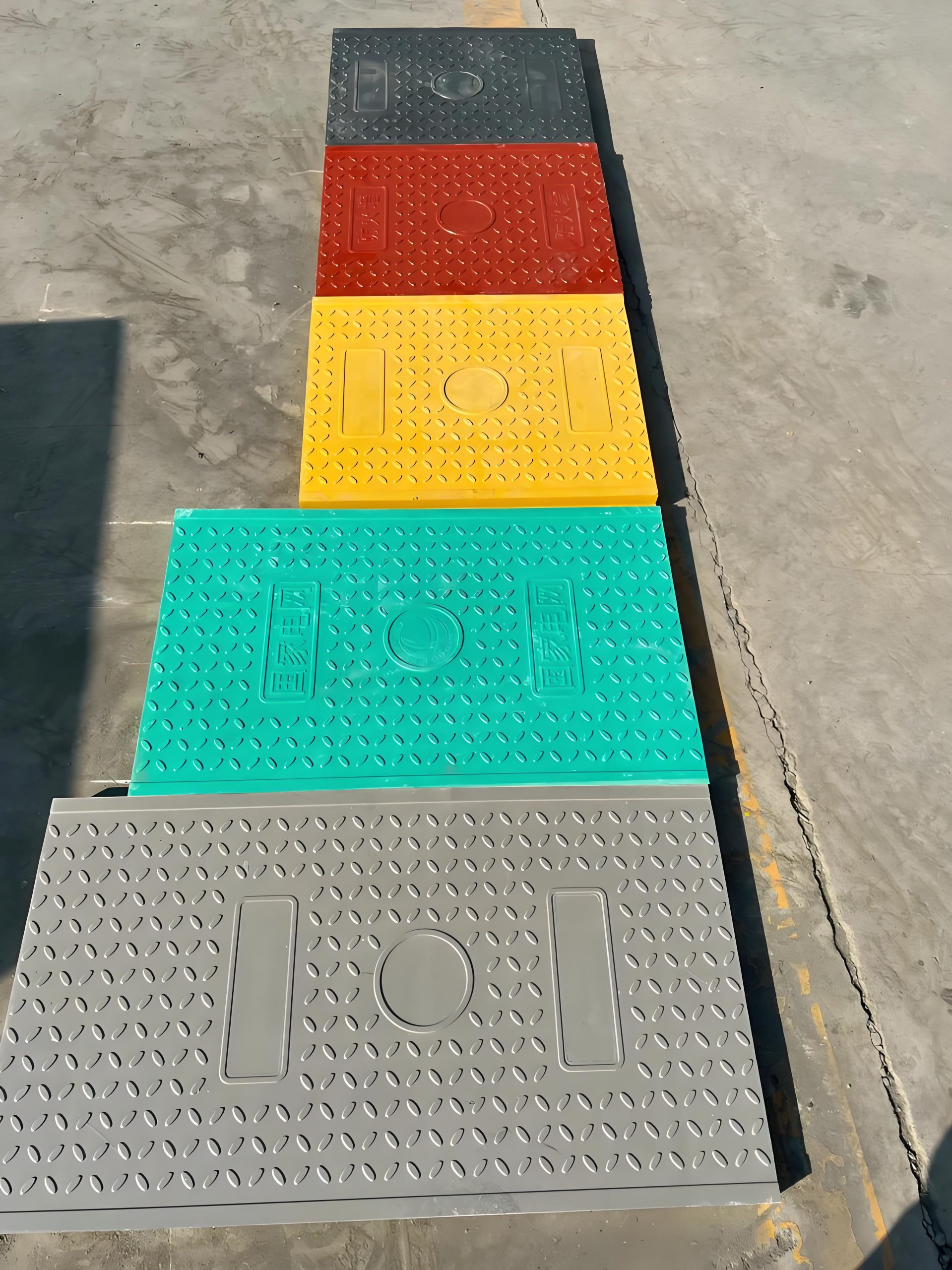
Anti-slip texture, warning color, identification marks, logo embossing, or special surface treatment may add cost. For wholesale projects, repeated color and standard surface design are usually more economical.
Wholesale quantity can reduce unit cost because production setup, mold use, packaging, and shipping can be arranged more efficiently. A full container or large batch order may be more economical than small mixed-size orders.
| Wholesale Price Factor | Lower Cost Option | Higher Cost Option | Buyer Advice |
|---|---|---|---|
| Material formulation | Standard composite formula | UV-resistant, flame retardant, high-strength formula | Choose according to project environment |
| Load grade | Pedestrian duty | Vehicle or heavy maintenance duty | Do not reduce load grade below requirement |
| Panel size | Standard repeated size | Many custom dimensions | Standardize sizes where possible |
| Surface design | Standard anti-slip pattern | Custom logo, marking, color, special texture | Use standard design for lower wholesale cost |
| Quantity | Small batch | Bulk order with repeated sizes | Bulk order usually improves unit price |
Bulk order packaging and delivery are important for composite cable trench cover plate wholesale. Large project orders may include many sizes, load grades, colors, and panel numbers. Good packing and labeling reduce installation confusion and transport damage.
Composite cover plates should be stacked and packed to avoid surface scratching, corner damage, deformation, and mixing of sizes. Pallet packing, bundle straps, protective layers, and clear labels may be used depending on order size and shipping method.
For project supply, panel labels should match the packing list or installation drawing. If the order includes custom dimensions, labels are important for fast site distribution and installation.
Bulk orders should be loaded according to panel size, weight, and unloading sequence. Strong loading support reduces transport risk and improves jobsite handling.
For export orders, buyers may require packing lists, commercial documents, product photos, loading photos, material information, and inspection records. A supplier with project export experience can reduce communication problems.
For buyers looking for wholesale trench cover and grating-related project supply, Anping County Chuansen Silk Screen Products Co., Ltd. can be considered when evaluating composite cable trench cover plates, trench covers, steel grating, galvanized grating, and custom cover solutions. Before placing an order, buyers should confirm material formulation, load grade, dimensions, color, anti-slip surface, flame retardant requirement, packing method, and delivery terms.
| Bulk Order Item | Recommended Practice | Buyer Benefit |
|---|---|---|
| Stacking | Stack panels by size and load grade | Reduces sorting time at site |
| Pallet packing | Use stable pallets or bundles for shipment | Improves loading and unloading safety |
| Surface protection | Use separation or protective layers when needed | Reduces scratches and edge damage |
| Panel labels | Mark size, quantity, batch, or drawing reference | Improves installation efficiency |
| Loading photos | Provide shipment records when required | Supports export order checking |
| Accessory packing | Pack fasteners or special parts separately | Prevents missing installation parts |
Why are composite cable trench cover plates used instead of concrete covers?
Composite cable trench cover plates are used instead of concrete covers because they are lighter, easier to lift, more convenient for maintenance, resistant to corrosion, and less likely to crack during repeated handling. In electrical and utility projects, composite covers also provide non-conductive performance and can be molded with anti-slip surface patterns for safer access.
Can composite cable trench cover plates support vehicles?
Composite cable trench cover plates can be designed for different load levels, including pedestrian, maintenance, cart, and some vehicle-duty applications. Whether they can support vehicles depends on panel thickness, reinforcement design, trench width, support ledge, wheel load, and project requirements. Buyers should provide load details before requesting a quotation for vehicle areas.
What affects the wholesale price of composite cable trench cover plates?
The wholesale price is affected by material formulation, cover size, thickness, load grade, anti-slip surface, flame retardant requirement, UV resistance, color, custom dimensions, order quantity, packaging, and shipping. Standard repeated sizes and bulk quantities usually help reduce unit cost, while special load grades, custom colors, and flame retardant requirements may increase price.