
Steel grating and FRP grating are both used for industrial walkways, platforms, stair treads, trench covers, drainage areas, and equipment access floors, but they perform differently in demanding environments. Steel grating provides high stiffness, strong impact resistance, predictable structural behavior, and excellent performance under heavy or concentrated loads. FRP grating, made from fiberglass reinforcement and polymer resin, is much lighter and offers strong resistance to many corrosive chemicals while also providing electrical insulation. The correct choice depends on the actual load, span, chemical exposure, fire requirements, temperature, maintenance plan, and installation conditions. This guide compares steel grating and FRP grating in practical terms so engineers, contractors, and purchasers can select the right material for each project.
Steel grating is an open grid manufactured from load-bearing steel bars connected by cross bars. It is commonly supplied in carbon steel, hot-dip galvanized steel, or stainless steel. The bearing bars span between supports and carry the primary load, while the cross bars hold the panel together and provide stability.
FRP stands for fiber-reinforced plastic. FRP grating combines glass fibers with a polymer resin to form a lightweight structural grid. Depending on the manufacturing process, FRP grating may be molded or pultruded. Resin options include polyester, vinyl ester, epoxy, and specialized fire-retardant or chemical-resistant formulations.
Neither material is universally better. Steel is normally favored where high stiffness, impact resistance, heavy vehicle loads, fire noncombustibility, and long spans are important. FRP is often favored where low weight, corrosion resistance, electrical insulation, and quick installation provide greater value.
| Selection Priority | Likely Advantage |
|---|---|
| Very high stiffness and concentrated load capacity | Steel grating |
| Low panel weight and easy manual handling | FRP grating |
| Resistance to many acids, alkalis, and salts | FRP, subject to resin compatibility |
| Noncombustible construction | Steel grating |
| Electrical insulation | FRP grating |
| Easy recycling through established metal channels | Steel grating |
| Heavy impact, vehicle traffic, and repeated mechanical abuse | Steel grating, when correctly designed |
For conventional industrial steel products, the steel grating product range includes different bearing bar sizes, mesh patterns, surface types, and material options.
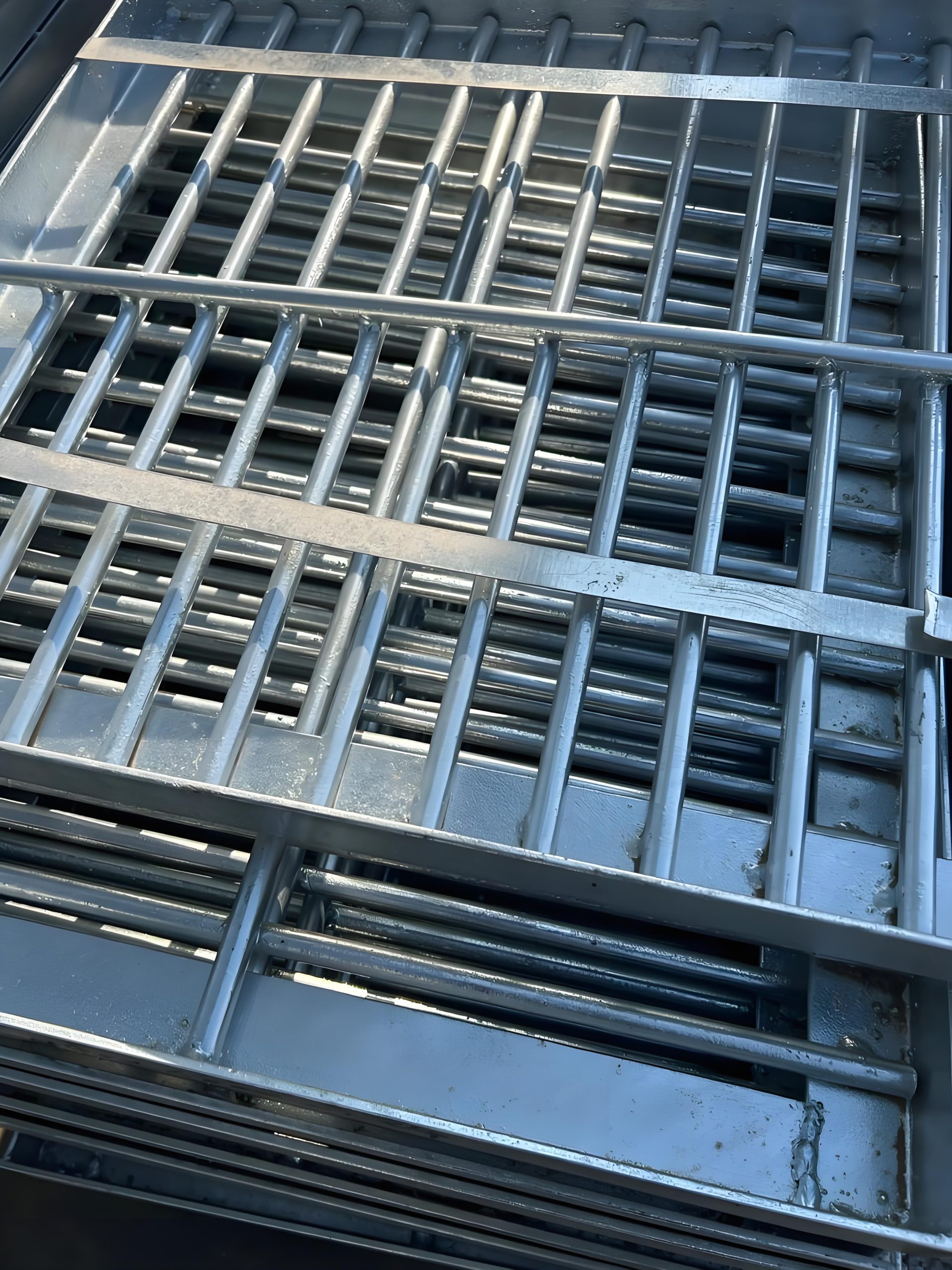
Steel grating consists of parallel bearing bars joined by cross bars. The bearing bars are installed in the direction of the span and are designed to resist bending. Cross bars may be round, square, twisted square, or another approved profile.
Steel grating may be welded, press-locked, swage-locked, or riveted. Welded grating is widely used for industrial platforms because of its rigidity and reliable panel stability. Press-locked and swage-locked grating can provide a clean appearance and special opening patterns. Heavy-duty riveted or welded grating may be selected for vehicle areas and high-impact service.
Plain bearing bars provide a relatively smooth walking surface and are easy to clean. Serrated bearing bars have notches that improve traction in wet, oily, muddy, or contaminated environments. Steel stair treads may also include a serrated nosing profile for improved edge visibility and slip resistance.
FRP grating is a composite grid made from continuous or chopped glass fibers embedded in a polymer resin. The glass fibers provide most of the structural reinforcement, while the resin binds the fibers together, protects them from the environment, and determines much of the chemical and temperature resistance.
Molded FRP grating is produced by placing layers of glass reinforcement into a mold and saturating them with resin. The resulting panel has a generally uniform structure in both directions and is commonly supplied with square or rectangular openings.
Pultruded FRP grating is manufactured by pulling continuous glass-fiber profiles through a resin bath and heated die. The bearing bars contain continuous fibers aligned along their length, which can provide high longitudinal stiffness and lower weight. Because the properties are directional, the bearing bar orientation and span direction must be clearly identified.
| Resin Type | Typical Characteristics | Typical Selection Areas |
|---|---|---|
| Polyester | Economical, general-purpose corrosion resistance | Walkways, platforms, water treatment, moderate chemical service |
| Vinyl ester | Improved chemical and moisture resistance | Chemical plants, wastewater, marine and aggressive wet areas |
| Epoxy | High bonding quality and selected chemical or temperature advantages | Specialized industrial and electrical applications |
| Phenolic or specialty resin | Improved fire, smoke, or toxicity performance in selected systems | Offshore, transit, enclosed, and fire-sensitive facilities |
FRP grating must be specified by resin type, glass-fiber construction, surface finish, fire rating, load data, and chemical compatibility. The term “FRP” alone does not identify a single performance level.
Steel grating production begins with steel flats and cross bars cut to size. Bearing bars and cross bars are assembled using resistance welding, pressure locking, swaging, riveting, or another approved method. Panels may then be trimmed, banded, drilled, and fitted with cutouts.
Carbon steel panels are often hot-dip galvanized after fabrication. Stainless steel panels may be pickled and passivated, brushed, polished, or electropolished depending on the application.
FRP production controls fiber orientation, resin saturation, curing temperature, panel thickness, opening size, and surface profile. Molded panels generally have glass reinforcement distributed through the panel, while pultruded panels use continuous fibers primarily along the bearing bars.
Steel has a long-established supply chain with standardized sections, load tables, welding procedures, and inspection practices. FRP quality depends heavily on resin formulation, fiber content, curing, fiber alignment, bonding, and surface coating. Buyers should request manufacturer test data rather than comparing products only by nominal panel depth.
Steel grating usually provides greater stiffness and more predictable behavior under heavy or concentrated loads. FRP grating can carry substantial pedestrian and maintenance loads, but it generally deflects more than an equivalent-depth steel panel and may require closer supports.
Steel is isotropic enough for many standard design calculations, meaning its properties are relatively consistent in different directions. Bearing bar depth, thickness, spacing, clear span, material grade, support width, and loading determine the panel capacity.
Steel also has useful ductility. Before failure, overloaded steel members may yield, bend, or visibly deform. This does not eliminate the need for design safety factors, but it can provide warning of excessive loading or impact.
FRP is anisotropic and its properties depend on fiber direction. Pultruded grating is especially directional because the continuous fibers run along the bearing bars. The supplier’s load tables must identify span direction, support spacing, load footprint, allowable deflection, and whether the data applies to molded or pultruded construction.
FRP can experience creep under sustained load. A panel that meets a short-term load test may deflect further over time if a constant load remains in place. Long-term deflection criteria should therefore be included in the design.
Small-footprint loads, pallet wheels, forklift tires, dropped tools, and impact can be more demanding than a uniformly distributed pedestrian load. Steel generally has an advantage in severe impact and vehicle service. FRP can be designed for certain wheel loads, but panel thickness, support spacing, resin system, and load distribution must be verified from project-specific data.
| Structural Characteristic | Steel Grating | FRP Grating |
|---|---|---|
| Stiffness | High, especially for deep bearing bars | Lower than steel at similar depth in many products |
| Heavy concentrated load | Generally strong and predictable | Possible, but requires specific load data |
| Impact resistance | Usually better because steel is ductile | Can crack, chip, or delaminate under severe impact |
| Creep under sustained load | Usually limited at normal temperatures | Must be considered, especially for polymer systems |
| Directional behavior | Less directional for standard steel designs | Strongly affected by fiber orientation and construction method |
| Long-span efficiency | Often favorable because of high stiffness | May require deeper sections or closer supports |
FRP grating is significantly lighter than steel grating because polymer resin and glass fibers have a much lower density than steel. Depending on the panel depth, resin type, opening size, and reinforcement, an FRP panel may weigh roughly one-quarter to one-half as much as a comparable steel panel.
Lower weight can reduce:
Steel panels are heavier, particularly when using deep bearing bars or heavy-duty designs. Lifting points, palletizing, mechanical handling, and a safe installation sequence should be planned before delivery.
FRP panels are easier to carry, but they should not be dragged across rough surfaces or dropped onto corners. Damage may appear as chipped edges, broken resin, exposed fibers, or local delamination. Workers cutting FRP must also use suitable respiratory, eye, skin, and dust protection.
A lighter FRP panel is not automatically a direct replacement for a steel panel of the same nominal thickness. Stiffness, bearing bar orientation, support spacing, concentrated loads, and long-term deflection must be checked before substitution.
Steel and FRP resist corrosion in different ways. Galvanized steel relies on a zinc coating, stainless steel relies on a passive chromium-rich surface, and FRP relies on the chemical resistance of its resin and the protection provided by the composite structure.
Hot-dip galvanized steel performs well in many outdoor industrial environments. Stainless steel performs well in clean atmospheres and offers a longer corrosion margin in many wet or contaminated areas. FRP does not rust and can perform well where moisture and atmospheric chemicals would consume a steel coating.
FRP is often attractive for wet wells, water-treatment platforms, drainage channels, and submerged access structures because it does not experience red rust or zinc consumption. Steel may also perform well when the correct stainless grade is selected, but carbon steel and galvanized steel require closer review of coating life and water chemistry.
FRP can resist saltwater and salt spray when the resin system is designed for marine exposure. 316 or 316L stainless steel is also widely considered for coastal and marine service. Galvanized steel may be economical for less severe zones, but salt spray and trapped deposits can shorten zinc-coating life.
FRP resins can degrade or change color under prolonged ultraviolet exposure unless a UV-resistant surface veil or topcoat is provided. Steel does not degrade from ultraviolet radiation, although its paint or organic coating may weather. Galvanized zinc also remains stable under ordinary sunlight but continues to weather according to the atmosphere.
FRP is often selected for chemical plants because properly formulated resin systems can resist many acids, alkalis, salts, and process chemicals. However, chemical resistance belongs to the complete resin system, not to “fiberglass” as a generic material.
Before selecting FRP, confirm:
Polyester resin may be suitable for general corrosion resistance, while vinyl ester is often selected for more aggressive chemical and wet environments. Some solvents, strong oxidizers, or high-temperature chemicals can attack particular resin systems.
Galvanized coatings can be consumed by strong acids, strong alkalis, and some chemical solutions. Carbon steel beneath the zinc can then corrode rapidly. Stainless steel may provide better resistance, but 304 and 316 have different chloride performance and neither is suitable for every chemical.
FRP does not suffer from electrochemical chloride pitting in the same way as steel. This is a major advantage in saltwater, brine, and chloride-bearing washdown areas. Stainless 316 provides better pitting resistance than 304 because of its molybdenum content, but severe chloride conditions still require engineering review.
FRP is electrically insulating and does not normally create galvanic couples with metal supports. Steel grating installed with dissimilar metals in a wet environment may require isolation or compatible fasteners to reduce galvanic corrosion.
Fire performance is one of the most important differences between steel and FRP grating. Steel is a noncombustible metallic material, while FRP contains a polymer resin that can burn, soften, char, produce smoke, or release combustion products depending on the formulation and fire exposure.
Steel does not provide unlimited fire resistance. Its strength and stiffness decrease as temperature rises, and unprotected steel structures can lose load capacity during a severe fire. Nevertheless, steel does not contribute fuel to a fire in the same way as an organic polymer.
FRP grating can be manufactured with fire-retardant resins, low-flame-spread surfaces, smoke-controlled formulations, or phenolic systems. These products may satisfy specific fire tests, but a fire-retardant grade is not the same as a noncombustible product.
Smoke generation and toxicity depend on resin chemistry, pigments, additives, ventilation, fire temperature, and the exact test method. Projects in enclosed buildings, offshore modules, tunnels, transit facilities, escape routes, and occupied spaces may require documented flame-spread, smoke-density, and toxicity data.
Do not replace steel with FRP in a fire-sensitive location solely because the FRP product is labeled “fire retardant.” Obtain the test report and confirm that it addresses the project’s actual requirements.
Both steel and FRP grating can be supplied with plain or anti-slip surfaces. The surface profile should be selected according to water, oil, mud, chemicals, slope, footwear, and cleaning practices.
Serrated steel bearing bars use notched upper edges to improve traction. The surface can be galvanized or stainless, depending on the environment. Serrated steel is widely used for industrial stairs, outdoor platforms, wastewater plants, chemical facilities, and marine walkways.
FRP grating often uses an integral grit top, bonded abrasive particles, concave surfaces, or molded-in textures. The grit can provide strong traction in wet or oily conditions, but it may wear under heavy traffic and can be uncomfortable for kneeling or frequent hand contact.
No grating surface is automatically slip-proof. Oil films, algae, ice, product residue, loose dust, and chemical deposits can reduce traction. Safe design also requires adequate drainage, lighting, handrails, toe plates, stair nosing, housekeeping, and inspection.
| Surface Option | Steel Grating | FRP Grating |
|---|---|---|
| Plain surface | Smooth bearing bars, easy to clean | May be molded with a relatively smooth profile |
| Serrated or textured surface | Notched bearing bars improve traction | Gritted or molded anti-slip top provides high traction |
| Oil and chemical areas | Choose serrated bars and compatible material | Choose resin and grit system rated for the chemicals |
| Cleaning effect | Serrations may retain residue if drainage is poor | Grit can trap dirt and may require pressure washing |
Electrical behavior is a major reason to consider FRP grating. Steel is electrically conductive and can be bonded to a grounding system. FRP is normally nonconductive and can provide electrical insulation between workers and energized equipment.
Steel platforms near electrical equipment may require bonding and grounding to control fault currents and touch potential. Galvanized coatings and painted surfaces can affect electrical continuity at connections, so grounding details should be designed and tested rather than assumed.
Standard FRP grating does not conduct electricity like steel. It is often used around switchgear, substations, transformers, electrical rooms, and cable-handling areas where accidental contact with energized components is a concern.
Insulation is not always desirable. In locations with flammable vapors, dust, solvents, or sensitive electronics, static accumulation may create a hazard. Conductive or static-dissipative FRP grating is available in some product ranges, but its resistance value, grounding method, and test documentation must be specified.
Even when the walking surface is FRP, the support structure may be steel. Electrical bonding, lightning protection, cable routing, and equipotential grounding should be addressed for the complete installation.
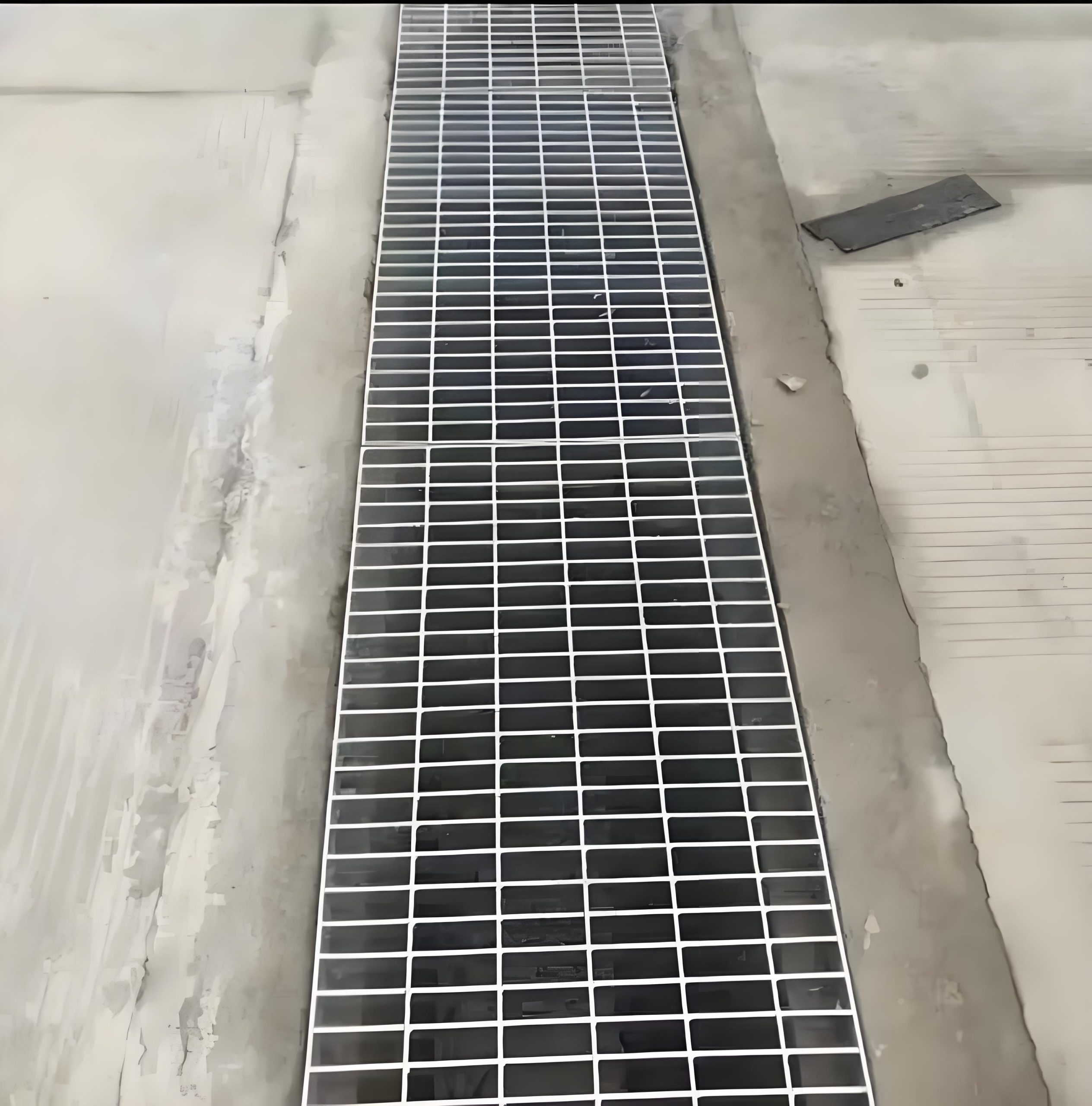
Steel generally tolerates higher operating temperatures than standard FRP grating. FRP performance depends strongly on the resin system and the glass-transition or heat-deflection characteristics of the composite.
Steel grating can be used in many hot industrial environments, but strength and stiffness decrease as temperature increases. Thermal expansion can affect panel clearances, support frames, clips, and connected equipment. Hot surfaces may also create burn hazards for workers.
Standard polyester or vinyl ester FRP grating often has a lower continuous service-temperature limit than steel. The exact limit depends on resin, curing, load duration, chemical exposure, and safety factor. Higher-temperature resin systems are available, but they may cost more and still have limits during fire or thermal shock.
FRP generally expands more with temperature changes than steel. Long walkways and large platforms may therefore require movement allowances, suitable clip details, and carefully planned panel joints. A rigid installation that does not allow for expansion can develop stress, distortion, or fastener problems.
Durability depends on environment, loading, fabrication, installation, and maintenance. Steel and FRP fail in different ways and should be inspected accordingly.
Steel has high toughness and generally resists dropped tools, maintenance impacts, wheel loads, and mechanical abuse well. Carbon steel requires effective coating protection, galvanized steel gradually consumes its zinc layer, and stainless steel can suffer localized pitting in chloride environments.
FRP does not rust and can have a long service life in compatible chemical environments. It can, however, be damaged by high impact, sharp objects, excessive deflection, UV exposure, resin attack, or prolonged high-temperature loading. Cracked resin, exposed glass fibers, delamination, broken bearing bars, and loose connections should be recorded during inspection.
| Condition | Steel Grating | FRP Grating |
|---|---|---|
| Dropped hand tools | Usually tolerates impact with local deformation possible | May chip or crack depending on impact energy |
| Forklift or vehicle traffic | Often preferred for severe traffic loads | Possible only with specific heavy-duty design |
| Abrasive particles | Steel section and coating may wear | Grit surface and resin may wear |
| UV exposure | Generally stable; coatings may weather | Requires UV-resistant resin, veil, or topcoat |
| Localized corrosion | Possible in carbon steel, zinc, and stainless grades | No electrochemical rusting, but resin or fibers can be attacked |
Galvanized grating should be inspected for coating damage, bare steel, red rust, abrasion, and zinc consumption. Damaged areas may require cleaning and zinc-rich repair. Stainless grating should be rinsed and cleaned to remove chlorides, iron contamination, grease, and chemical deposits.
Carbon steel grating may require repainting or recoating during its service life. Coating repairs can require shutdowns, surface preparation, ventilation, and access equipment.
FRP grating normally requires less corrosion-related maintenance. It can be cleaned with water, mild detergent, brushes, or pressure washing when compatible with the resin and surface finish.
Inspect FRP for:
Steel repairs may involve welding, grinding, coating, or replacement of a bearing bar. FRP repairs are more likely to involve panel replacement, mechanical reinforcement, or an approved composite repair procedure. Field repairs should not be improvised because cutting away damaged fibers or drilling new holes can reduce capacity.
Cleaning products should be checked against the material. Chloride cleaners can damage stainless steel and zinc coatings, while strong solvents or oxidizers can attack FRP resin. The cleaning procedure should state dilution, contact time, rinsing, and drying.
Steel grating panels are installed on structural supports with clips, bolts, welds, or other hold-down systems. Bearing bars must span perpendicular to the supports. Heavy panels may require cranes, hoists, lifting beams, or mechanical handling equipment.
FRP panels are often easier to position manually because of their low weight. They are installed using stainless steel clips, saddles, bolts, or specialized hold-down systems. The fasteners should not crush the composite or create stress concentrations.
Steel can be cut with saws, abrasive wheels, plasma, or other approved methods. Hot cutting may damage galvanized coatings, create fumes, and require fire controls. Cut edges should be deburred and repaired or treated according to the material and environment.
FRP can be cut with carbide-tipped saw blades or abrasive tools. Cutting produces fiberglass dust, so workers need suitable respiratory protection, eye protection, gloves, and local dust control. Cut edges should be sealed when required to protect exposed fibers and improve chemical resistance.
FRP may require closer support spacing than an equivalent steel panel because of lower stiffness and long-term creep. The manufacturer’s load tables must be used for the actual span, orientation, load, and deflection criteria.
Steel grating can tolerate some site abuse, but heavy impacts may distort panels. FRP should be handled carefully to avoid chipped edges and local cracking. Both materials require level, aligned supports and sufficient bearing at each end.
Steel fabrication may involve welding, grinding, and hot work permits. FRP avoids most hot work, which can be a major advantage in areas containing flammable vapors or chemicals. However, FRP cutting dust and the use of power tools still require a controlled work procedure.
FRP grating is commonly molded in gray, green, yellow, black, or other project colors. Yellow is often used for visual warning or edge identification. Color can be integrated into the resin, but prolonged UV exposure may cause fading unless the product includes appropriate UV protection.
Stainless steel offers a metallic architectural appearance, while galvanized steel provides an industrial zinc finish. FRP provides more color flexibility and can make walkways, stairs, and hazard zones easier to identify. The selected color should not be treated as a substitute for lighting, signage, or safety markings.
Scratches and cut edges on galvanized steel may require zinc repair. Stainless steel repairs should avoid cross-contamination and may require blending, pickling, and passivation. FRP repairs may be visible if resin color and surface texture do not match the original panel.
Galvanized steel grating often has the lowest initial cost among permanent industrial options, especially for standard panels and moderate environments. Stainless steel costs more because of alloy content and finishing requirements. FRP may have a higher purchase price than galvanized steel, but its low weight can reduce installation and handling costs.
| Cost Item | Steel Grating | FRP Grating |
|---|---|---|
| Material purchase price | Generally economical for carbon and galvanized grades | Often higher than galvanized steel; varies by resin and reinforcement |
| Weight and transport | Higher shipping and lifting weight | Lower weight can reduce freight and handling |
| Site installation | May require cranes, hot work, and more labor | Often quicker to position and cut, with less hot work |
| Fasteners | Clips, bolts, welds, or hold-down systems | Stainless clips and bolts are commonly required |
| Cutting cost | Established tools, but hot work controls may apply | Easy mechanical cutting, but dust control is necessary |
| Support steel | May require stronger frames because of panel weight | Lower dead load can benefit existing structures |
Steel is often more economical for large quantities of standard panels, heavy-duty platforms, vehicle areas, high-impact service, and projects with established steel fabrication and maintenance capabilities.
FRP may be more economical when corrosion would rapidly consume galvanized coatings, when stainless steel would be very expensive, when installation access is limited, or when the reduced panel weight significantly lowers labor and lifting costs.
The lowest purchase price does not always produce the lowest ownership cost. Life-cycle evaluation should include maintenance, coating repair, cleaning, replacement, access equipment, downtime, safety controls, and disposal.
| Life-Cycle Factor | Steel Grating | FRP Grating |
|---|---|---|
| Corrosion maintenance | May require galvanizing repair, painting, or stainless cleaning | Usually low if resin is chemically compatible |
| Replacement in corrosive service | Potentially higher for carbon or galvanized steel | Can be favorable in suitable chemical environments |
| Impact damage | Often repairable by straightening or welding | May require panel replacement after cracking or delamination |
| Fire-related requirements | Usually simpler because steel is noncombustible | May require upgraded resin, testing, and documentation |
| Electrical safety | Requires bonding and grounding where applicable | Provides insulation but may require static control |
| End-of-life recycling | Well-established steel recycling streams | Composite recycling is more difficult |
For a dry indoor platform, galvanized steel may have the best total value. For a chlorine-rich wastewater area, FRP or 316L stainless steel may reduce long-term maintenance. For a fire-sensitive, vehicle-loaded structure, steel may remain the safer and more economical choice even when the initial FRP quotation is attractive.
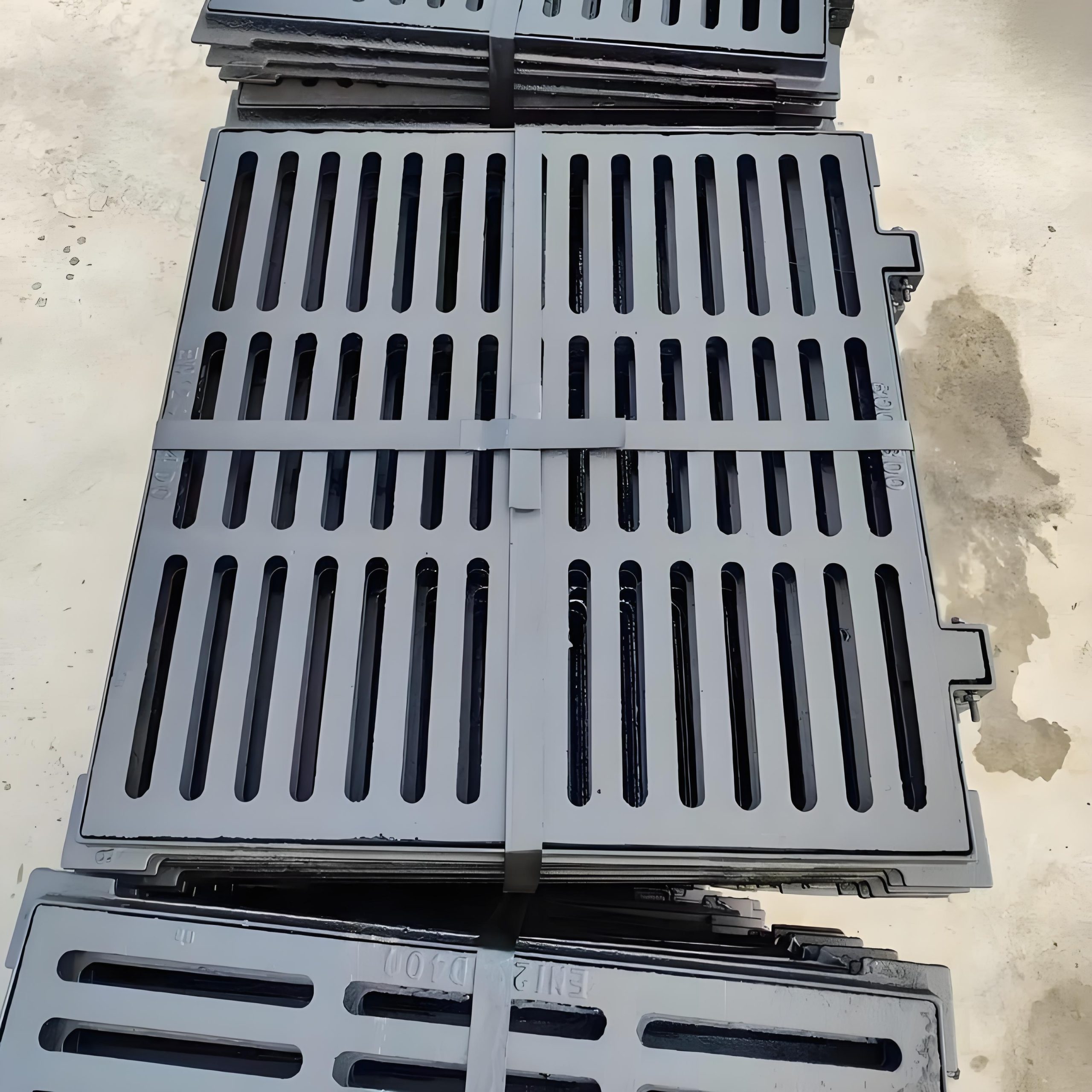
If FRP is proposed as a replacement for steel, request the following information:
Steel grating and FRP grating should be compared as complete systems, not simply by price per square meter. The panel, support frame, fasteners, surface, coating or resin, installation method, maintenance plan, and environmental exposure all affect the final result.
Which is stronger, steel grating or FRP grating? Steel grating is generally stiffer and better suited to heavy concentrated loads, vehicle traffic, impact, and long spans. FRP grating can safely carry many pedestrian and maintenance loads, but its capacity depends strongly on resin type, fiber orientation, panel construction, support spacing, and long-term deflection. The correct comparison must use load tables for the actual span and loading condition.
Is FRP grating better than steel grating for chemical plants? FRP can be better where the selected resin is compatible with the acids, alkalis, salts, solvents, and temperatures in the plant. It also avoids rust and provides electrical insulation. Steel may still be preferred in fire-sensitive areas, heavy-duty traffic zones, high-impact locations, or chemical conditions where a suitable stainless grade provides more reliable structural performance. Always verify the exact chemical compatibility rather than relying on the general term “FRP.”
Does FRP grating require less maintenance than steel grating? FRP usually requires less corrosion-related maintenance because it does not rust and does not need galvanizing repair or repainting. It still requires cleaning and inspection for cracked bars, delamination, resin attack, UV degradation, worn grit, loose fasteners, and long-term deflection. In severe service, the lower maintenance burden can offset a higher initial purchase price.
