

Steel grating price per square foot depends on the material, bearing bar dimensions, spacing, load requirements, fabrication, finish, and order quantity. For an initial factory-supply budget, standard hot-dip galvanized steel grating may be approximately US$2.32–7.43 per square foot, while heavy-duty, extensively fabricated, and stainless steel products can cost considerably more. These figures describe broad supply-side estimates, not a delivered or installed market price. Freight, import charges, support structures, fastening, labor, and access equipment must be added to estimate what the completed grating installation will actually cost.
For industrial buyers, the most useful quotation connects a unit price to a complete specification. A price of US$4 per square foot means little unless it identifies the bearing bar size, mesh, material, finish, panel dimensions, and included fabrication. This guide explains the major cost drivers, shows how to convert prices quoted per metric tonne or square meter, and provides a worked budget example for comparing industrial steel grating proposals.
The basic manufacturing cost starts with the quantity of metal required for each square foot. It then increases with processing, cutting, welding, finishing, inspection, and handling. Commercial factors such as order volume, production scheduling, delivery terms, and payment conditions also affect the final quotation.
Carbon steel is generally less expensive than stainless steel. Within stainless steel, 316 and 316L normally cost more than 304 because of their alloy composition. Raw-material prices change, so the quotation validity period matters, particularly for projects with a long gap between budgeting and purchase.
Grating weight also varies substantially. A deep, thick bearing bar at close centers uses more metal per square foot than a shallow, thin bar with wider spacing. Comparing those products only by area price hides the difference in structural performance and material content.
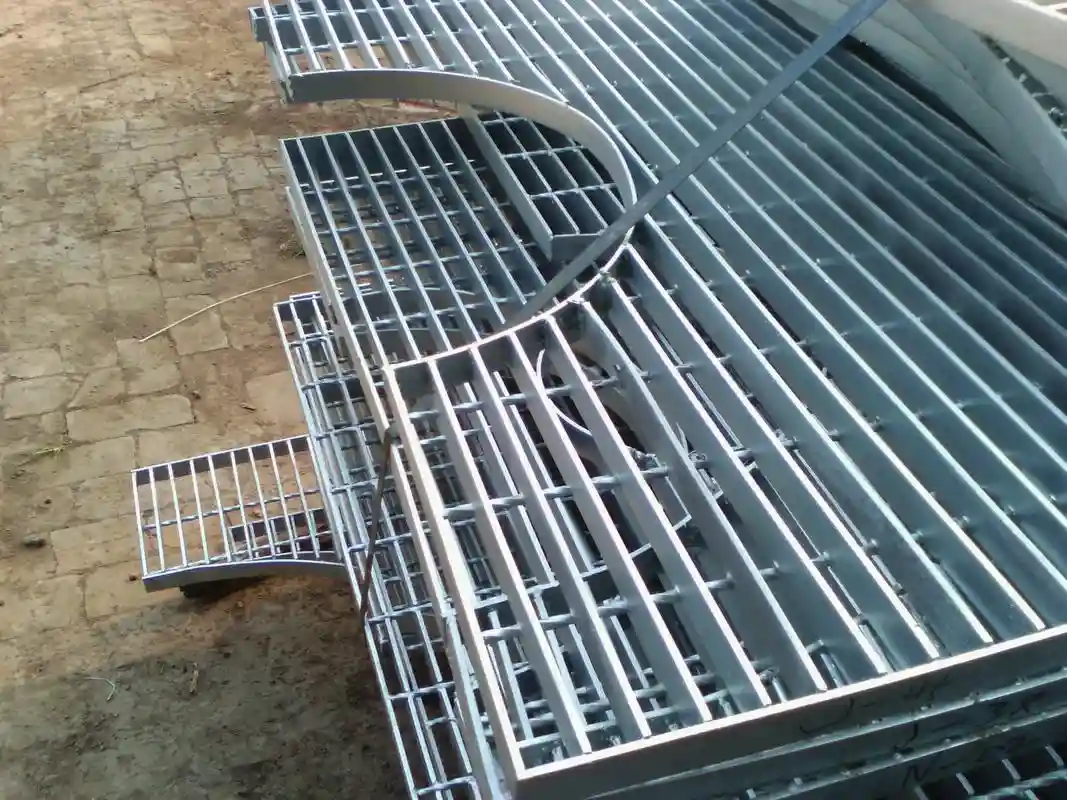
A repeated rectangular panel is easier to manufacture than an irregular panel with several pipe penetrations, welded toe plates, reinforced edges, and a hinged access section. Both may cover the same floor area, but they require different amounts of labor.
Hot-dip galvanizing, industrial paint, duplex coating systems, stainless pickling, and polishing each add different processing costs. The appropriate finish depends on the exposure. A cheap coating that needs frequent repair may create higher ownership costs than a more suitable system selected at the beginning.
Factory supply, delivered panels, and a fully installed platform are different purchasing scopes. An industrial platform may also require beams, columns, support angles, handrails, stairs, lifting equipment, permits, and site supervision. These items should be identified separately so that the grating supply price remains visible.
The following table converts the broad factory-budget ranges published in the CSSP steel grating prices, sizes, and load capacity guide into US dollars per square foot. These are preliminary planning ranges, rather than firm quotations, independently surveyed market averages, or guaranteed prices for a particular specification.
The conversion uses 1 m² = approximately 10.7639 ft². Freight, installation, duties, taxes, support steel, and accessories are excluded unless a supplier specifically includes them. The fabricated-grating category allows for some fabrication, but the actual scope still needs to be defined.
| Grating Category | Broad Factory Budget per m² | Equivalent Budget per ft² | Typical Budget Assumption |
|---|---|---|---|
| Basic untreated carbon steel | US$15–45 | US$1.39–4.18 | Standard mesh, plain surface, limited fabrication, no permanent corrosion coating |
| Painted carbon steel | US$20–65 | US$1.86–6.04 | Cost depends heavily on preparation and paint specification |
| Standard hot-dip galvanized steel | US$25–80 | US$2.32–7.43 | Conventional industrial panels with a defined galvanizing scope |
| Fabricated galvanized steel | US$40–140 | US$3.72–13.01 | Cut-to-size panels with specified banding, notches, holes, or marking |
| Close-mesh galvanized grating | US$50–170 | US$4.65–15.79 | Closer bar spacing and increased material per unit area |
| Heavy-duty galvanized grating | US$90–300 | US$8.36–27.87 | Deep or thick bars for specified industrial and concentrated loads |
| 304 stainless steel grating | US$55–150 | US$5.11–13.94 | General stainless supply; finish and fabrication must be confirmed |
| 316 or 316L stainless steel grating | US$70–220 | US$6.50–20.44 | Higher-alloy supply for more demanding environments |
The ranges overlap because alloy is only one cost variable. A light 316 panel can cost less per square foot than a very heavy galvanized panel. Conversely, a small quantity of custom stainless panels with polishing and detailed inspection can exceed the ranges shown.
A factory quotation for a production batch is not directly comparable with the price of one panel purchased from a local distributor. Stockholding, warehousing, small-order processing, local delivery, and immediate availability all have a cost. A distributor may offer the better total purchase for an urgent replacement even if its material price is higher.
There is no dependable universal installed price for industrial steel grating. Fitting rectangular panels onto an existing ground-level frame is very different from building an elevated platform inside an operating chemical plant. Installed budgets should be built from quantities and site activities, as shown later in this guide.
Grating costs are easier to manage when divided into three levels: supply, delivered supply, and installation. Each level includes the preceding level plus additional work.
| Cost Level | Typical Included Items | Items That May Remain Separate |
|---|---|---|
| Grating supply cost | Panels, specified material, construction, and agreed finish | Custom fabrication, clips, packing, testing, and delivery |
| Delivered grating cost | Supply plus agreed packing, transport, and delivery charges | Unloading, import duties, taxes, storage, and installation, depending on terms |
| Installed grating cost | Delivered panels plus labor, fastening, lifting, and site work within the contract | New structural frames, stairs, handrails, engineering, or foundations unless included |
The denominator also matters. Material prices may be based on purchased panel area, while installed prices should generally be divided by the agreed finished installation area. If the project buys 2,100 ft² to install 2,000 ft², the material expenditure per installed square foot is higher than the quoted panel rate.
Agree whether the measured area includes large openings, removable hatches, stair treads, and unused offcuts. Use the same area basis for every supplier comparison.
Untreated carbon steel usually offers the lowest initial price. It may be appropriate for controlled indoor conditions, temporary work, or projects where a separate coating contractor will apply the specified protective system.
If the panel will eventually be blasted and painted, include those costs immediately. Otherwise, untreated steel can appear cheaper simply because part of the required work has been left outside the quotation.
Galvanized grating combines carbon steel strength with a zinc coating. It is widely specified for outdoor industrial walkways, maintenance platforms, equipment access areas, and drainage covers.
The premium over untreated grating depends on panel weight, exposed surface area, galvanizer charging methods, batch size, steel chemistry, and handling. A coating specification should identify the applicable standard and acceptance requirements rather than asking only for a “galvanized finish.”
304 stainless steel is often considered for clean processing areas, freshwater washdown, architectural applications, and mildly corrosive environments. Its higher purchase price may be justified where coating repair would interfere with hygiene or production.
For the relationship between material selection and construction details, review 304 stainless steel grating sizes, specifications, and applications.
316 and 316L generally cost more than 304 but provide improved resistance to chloride-induced pitting and crevice corrosion. Coastal facilities, brine processing, chemical exposure, and some wastewater zones may justify the upgrade.
The correct comparison is the cost of two materials that can meet the operating requirement. A less expensive grade that is unsuitable for the exposure is not a viable saving. Severe chemical or seawater conditions may require a higher alloy beyond ordinary 316.
Bearing bars carry the primary load between supports. Increasing their height or thickness adds metal and generally increases the price per square foot.
For a continuous field of rectangular carbon steel bearing bars, an approximate bearing-bar-only weight is:
Bearing bar weight in kg/m² = 7.85 × height in mm × thickness in mm ÷ center spacing in mm
At 30 mm centers, the approximate bearing-bar contributions are:
| Bearing Bar Size | Spacing | Bearing-Bar-Only Weight | Cost Implication |
|---|---|---|---|
| 25 × 3 mm | 30 mm centers | 19.63 kg/m² | Lower metal content where the design permits this section |
| 30 × 3 mm | 30 mm centers | 23.55 kg/m² | Greater depth and weight than 25 × 3 mm |
| 30 × 5 mm | 30 mm centers | 39.25 kg/m² | Substantially more material than a 3 mm thick bar |
| 40 × 5 mm | 30 mm centers | 52.33 kg/m² | Higher material cost, with greater bending stiffness |
These values exclude cross bars, perimeter banding, attachments, coatings, and finite-panel edge effects. They are useful for understanding cost changes, not for certifying shipping weight or load capacity.
A deeper grating panel may cost more per square foot but allow a different support arrangement. If the engineer can reduce secondary support steel without compromising performance, the overall platform cost may fall. The comparison must include the grating, beams, connections, fabrication, and erection labor.
A lower quotation may use thinner bars or a different permitted dimensional tolerance. Require the same nominal dimensions, material specification, and acceptance tolerances in all quotations. Do not treat panels as equivalent merely because they share the same overall depth.
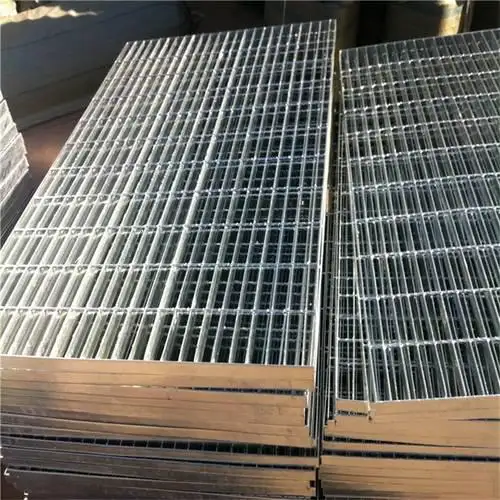
Closer bearing bar spacing places more bars within each square foot. It therefore increases steel consumption and often increases manufacturing and finishing cost.
For the same bar dimensions, reducing bearing bar centers from 40 mm to 30 mm increases the theoretical bearing-bar quantity per unit width by approximately one-third. The total finished-panel weight will not follow exactly the same percentage because cross bars, banding, and attachments also contribute.
Closer cross bar spacing increases the number of cross bars and intersections. The resulting price difference depends on the construction process and production setup. A denser cross bar pattern should not be assumed to provide the same structural benefit as increasing bearing bar depth.
Smaller openings may be necessary for tool retention, pedestrian access, or project-specific fall-through criteria. They can also affect drainage and cleaning. Specify the required opening performance first, then compare compliant mesh options.
Center spacing is different from clear opening. A 30 mm bearing bar pitch with a 5 mm thick bar gives an approximate 25 mm clear gap between the bars before coating and tolerances. The steel bar grating dimensions guide explains the dimensional terms used in supplier specifications.
Confirm whether the supplier uses theoretical steel weight, actual finished weight, galvanized weight, or gross packed weight. These figures serve different purposes. A price per tonne calculated on one basis cannot be compared accurately with a quotation calculated on another.
The design load and unsupported span determine which grating sections are acceptable. Longer spans and heavier loads normally require larger bearing bars, closer spacing, additional supports, or a combination of these changes.
A uniformly distributed load spreads demand over a broad area. A concentrated load from equipment feet, maintenance tools, or wheels can impose a much higher local demand. Specify the load footprint as well as its magnitude.
A general walkway panel should not be priced as suitable for forklifts or service vehicles without a separate wheel-load check. Vehicle applications can add requirements for reinforced edges, deeper bars, stronger frames, and positive restraint.
A panel may meet a strength criterion but still deflect more than the project permits. Walking comfort, alignment with adjacent floors, vibration, and clearance above equipment can all set tighter serviceability limits.
Ask the supplier to state the allowable deflection and the assumptions behind its load table. A cheaper panel based on a more permissive deflection limit is not an equivalent alternative.
Support beams may reduce the required grating depth, but adding them creates fabrication, coating, connection, and erection costs. In an operating facility, installing a new beam can be more disruptive than upgrading the panel. Compare options at system level before finalizing the purchase specification.
Manufacturing method affects production efficiency, material availability, tooling, and custom fabrication. No method is always the cheapest across every material and order size.
| Construction | Cost Characteristics | Details to Compare |
|---|---|---|
| Welded grating | Often economical for repeated industrial carbon steel panels produced on established equipment | Weld quality, bar dimensions, available mesh, banding, and finish |
| Press-locked grating | Cost reflects slotting, pressing, bar arrangement, and any special mesh or architectural requirements | Which bars are load-bearing, panel dimensions, surface appearance, and fabrication tolerances |
| Swage-locked grating | Cost depends on material, punched or drilled bar preparation, mechanical locking, and production availability | Product material, locking arrangement, load tables, and local supplier capability |
Swage-locked grating uses cross members mechanically secured to bearing bars through a swaging process; the cross-bar geometry depends on the product system. It should not be priced as interchangeable with a welded panel without checking the complete construction and performance.
For many industrial projects, a standard product already supported by the supplier’s production equipment will be more economical than a special configuration that requires setup changes or outsourced processing.
Serrated grating usually adds a fabrication cost because notches must be formed along the bearing bar tops. The premium depends on the producer’s equipment, order quantity, bar dimensions, and whether the serrated product is stocked.
Wet outdoor platforms, washdown areas, oily equipment access, and industrial stairs often benefit from a serrated surface. Traction should be selected according to the actual contaminant, footwear, drainage, and cleaning procedure.
Serrations remove material from the bar’s upper edge. Depending on the profile and design method, the serrated product may need a different nominal section to achieve the required rating. Use the supplier’s serrated-grating load data rather than automatically applying a plain-bar table.
There is no single reliable serration surcharge for all suppliers and sizes. Request a separate plain-versus-serrated option using the same design criteria. This produces a usable comparison without assuming that every serrated panel costs a fixed percentage more.
Surface treatment influences both the purchase price and the maintenance budget. Specify the process, preparation, coverage, inspection, and repair requirements before requesting prices.
Galvanizing costs may reflect weight, minimum batch charges, panel dimensions, handling, and the amount of finishing work after dipping. Large or unusual panels may need special arrangements. Banding, cutouts, and welded attachments are usually best completed before galvanizing when the fabrication sequence allows.
State whether the quotation includes post-fabrication galvanizing, inspection, removal of hazardous zinc projections, and repair of permitted uncoated or damaged areas.
A shop primer and a fully specified industrial coating system have very different costs. Abrasive blasting, surface profile, primer chemistry, intermediate coats, topcoats, dry-film thickness, curing time, and inspection all affect the price.
Compare the complete coating system rather than the label “painted.” A low-cost primer may be intended only for temporary protection before further coating.
A duplex system combines galvanizing with a compatible paint system. It can improve appearance and durability in suitable service, but it adds surface preparation and coating stages. Include the handling and curing schedule in the delivery plan.
Pickling, passivation, brushing, polishing, and electropolishing involve different work. Removing weld heat tint can be important in corrosive service. Specify the treatment explicitly so that a mill-finish quotation is not compared with a fully treated stainless panel.
Standard stock panels often have an attractive area price because they are made in repeated production runs. Their real economy depends on how efficiently they fit the installation.
If a project requires 1,000 ft² of installed grating and needs 1,080 ft² of stock panels after the cutting layout is prepared, the purchase quantity is 8% greater than the installed quantity. At a hypothetical US$6 per purchased square foot, the panel expenditure is US$6,480, or US$6.48 per installed square foot before cutting and installation.
This is an 8% overage relative to the installed area. It is different from saying that 8% of purchased material becomes waste. If an actual yield loss is stated as a percentage of purchased material, the calculation must use that yield basis.
Factory-cut panels may cost more per square foot but reduce site measuring, cutting, edge repair, and sorting. They can also arrive marked to a layout drawing, helping installers place panels in the correct sequence.
Ten small panels can require more banding, clips, marking, and handling than one large panel with the same combined area. Small removable panels may still be the right design choice, particularly where manual lifting and maintenance access matter.
A pipe opening removes steel, but making it adds layout, cutting, banding, and sometimes reinforcement. The opening may also leave unusable scrap. A supplier may therefore charge on gross panel area plus fabrication rather than deducting the opening area.
Confirm whether the quotation uses gross rectangular area, net finished area, or individual drawing-based panel prices.
Accessories and detailing can represent a substantial share of the budget on irregular platforms and maintenance access structures.
| Additional Item | Common Pricing Basis | What to Define |
|---|---|---|
| Perimeter banding | Per linear foot, per panel, or included in fabrication | Bar size, welding detail, and whether it must carry load |
| Pipe and equipment cutouts | Per opening or drawing-based fabrication price | Dimensions, position, edge treatment, and reinforcement |
| Toe plates and kick plates | Per linear foot or completed assembly | Height, thickness, attachment, and finish |
| Stair treads | Per tread | Width, depth, nosing, end plates, bolt holes, and load rating |
| Grating clips and hold-downs | Per assembly or installation package | Type, quantity, material, support compatibility, and restraint demand |
| Hinged access panels | Per completed assembly | Frame, hinges, locks, handles, stops, and lifting assistance |
| Identification and documentation | Per project or lot | Panel marks, drawings, material traceability, and inspection records |
Stair treads are best compared per completed tread because nosing and end plates do not scale directly with area. Likewise, a hinged trench cover should be quoted as an assembly when the frame and hardware are part of the required function.
Fastener quantities should follow the approved restraint design. An assumed universal clip allowance can miss requirements for wind uplift, vibration, removable panels, or unusual support geometry.
Larger repeated orders can spread machine setup, drawing preparation, galvanizing batches, and packing work over more area. This often reduces the unit price, but the benefit depends on how much repetition the order contains.
An order of 200 identical panels may be less costly to produce than 200 individually shaped panels, even when the total weight is the same. The number of unique drawing marks influences fabrication planning and inspection.
Some manufacturers require a minimum quantity for unusual bar sizes, stainless grades, special mesh, or custom finishes. Others accept small quantities but apply a minimum processing charge. Ask whether the minimum is based on area, weight, panel count, or total order value.
Combining compatible requirements across project zones can reduce repeated setup and shipment charges. Keep the technical distinction between zones clear: consolidating quantities should not lead to using an unsuitable finish or grade in a corrosive area.
Rush production, special material sourcing, partial shipments, and short notice for inspections can increase cost. A lower factory price may lose its advantage if a late delivery forces an expensive shutdown extension or urgent air shipment of missing components.
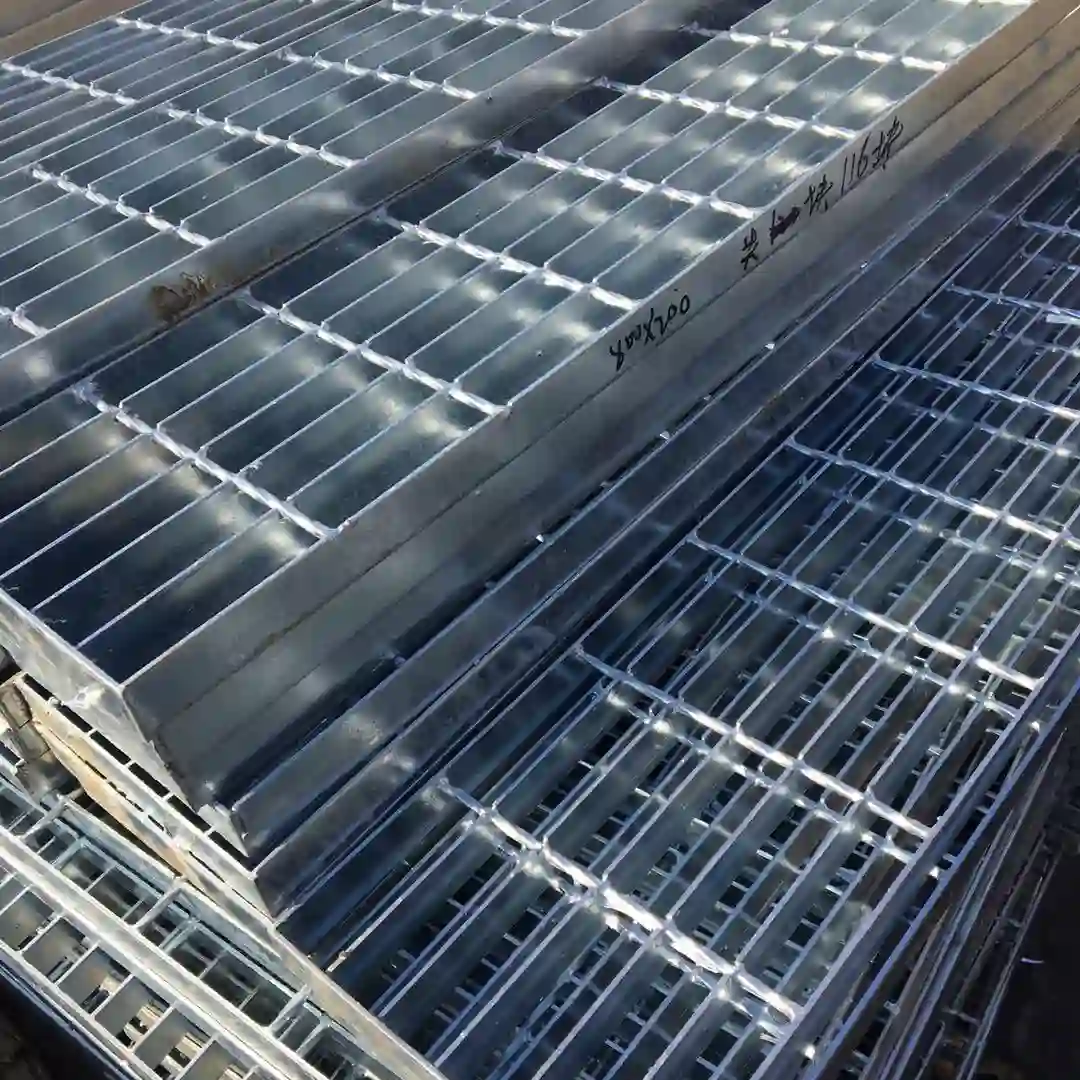
Steel grating is both heavy and bulky. Freight pricing can be affected by weight, bundle dimensions, usable truck or container space, route, unloading restrictions, and delivery sequence.
Bundles may need timber skids, steel straps, edge protection, lifting access, weather protection, or special separation for stainless surfaces. Export wood packaging may need to meet applicable treatment requirements. Confirm whether packing is included in the quoted panel price.
A commercial quotation should state the delivery rule and named place. Factory collection, shipment from an export port, and delivery to a project site allocate different transport costs and responsibilities. A term such as “FOB” without a named port and agreed scope is incomplete.
Check who pays for inland transport, export clearance, ocean freight, insurance, destination handling, customs clearance, final delivery, and unloading. Some delivery terms include insurance; others do not. Do not assume that a quoted freight amount covers every destination charge.
Import cost depends on destination, origin, tariff classification, customs value, and applicable trade measures. Additional duties or trade-remedy charges may apply to some products and origins. Obtain the classification and duty calculation from a qualified customs provider for the actual shipment rather than using a generic global percentage.
Limited unloading hours, crane reservations, restricted vehicle access, staged deliveries, temporary storage, and rehandling can all increase cost. Packing panels in installation order may reduce site labor even if it adds a small factory handling charge.
Installation should be estimated from the work involved, using local labor rates and realistic productivity. A single allowance per square foot can be useful early in planning, but it should be replaced by a detailed estimate as the layout develops.
Typical activities include receiving and checking panels, moving bundles, setting out, placing panels, aligning joints, fastening, making approved adjustments, repairing coatings, and completing inspection records.
Productivity falls when access is narrow, panels are irregular, installation is at height, or work must stop repeatedly around operating equipment. Include supervision, permits, and restricted work windows where they apply.
Grating prices usually do not include beams, columns, trench frames, concrete anchors, connections, or foundations. If these are required, list them as separate structural items. Calling a complete elevated platform a “grating installation” can conceal a large support-steel cost.
Cranes, forklifts, telehandlers, scaffolds, and mobile access platforms may be required. Include mobilization, minimum rental periods, operators, rigging, and standby time rather than budgeting only active lifting hours.
Replacement projects should allow for measuring and inspecting the existing frame before fabrication. Corroded supports, uneven bearing surfaces, and undocumented dimensions can require repairs that are unrelated to the new grating supply price.
Suppliers may quote by square foot, square meter, kilogram, metric tonne, or individual panel. Accurate conversion requires both the unit and the weight basis.
1 m² = 10.7639 ft²
Price per ft² = price per m² ÷ 10.7639
For a hypothetical quotation of US$60 per m²:
US$60 ÷ 10.7639 = approximately US$5.57 per ft²
Price per m² = price per ft² × 10.7639
A quotation of US$6 per ft² is therefore approximately US$64.58 per m².
A metric tonne contains 1,000 kg. When the supplier provides a finished grating rate per metric tonne and a matching unit weight in kg/m²:
Price per ft² = price per metric tonne × weight in kg/m² ÷ 1,000 ÷ 10.7639
For example, assume a finished grating rate of US$1,400 per metric tonne and a quoted grating weight of 40 kg/m²:
US$1,400 × 40 ÷ 1,000 = US$56 per m²
US$56 ÷ 10.7639 = approximately US$5.20 per ft²
This conversion is valid only when the tonnage rate and unit weight refer to the same product scope. A raw steel rate does not include conversion into finished grating unless the supplier explicitly says so.
A US short ton is 2,000 lb, while a metric tonne is 1,000 kg, approximately 2,204.62 lb. Confirm the unit whenever a quotation says only “per ton.”
If the rate is quoted per US short ton and the panel weight is given in lb/ft²:
Price per ft² = price per short ton × weight in lb/ft² ÷ 2,000
1 kg/m² = approximately 0.204816 lb/ft²
A panel weighing 40 kg/m² therefore weighs approximately 8.19 lb/ft². This conversion is useful for freight and handling, but the packed shipment weight will also include pallets, restraints, and accessories.
For a rectangular panel:
Price per ft² = panel price ÷ panel area in ft²
A 3 ft × 20 ft panel has an area of 60 ft². At a hypothetical US$360 per panel, its basic rate is US$6 per ft². Confirm whether the panel price includes banding, coating, and fabrication before comparing it with another supplier.
A useful estimate separates purchased quantity, fabrication, delivery, installation, and uncertainty. The following example demonstrates the method. Its rates are assumptions for calculation, not a quotation or a benchmark for a particular location.
| Budget Item | Calculation or Allowance | Example Cost |
|---|---|---|
| Galvanized grating panels | 2,100 ft² × US$6.00 | US$12,600 |
| Additional cutouts and banding | Drawing-based allowance | US$1,800 |
| Clips and fasteners | Approved fastening layout allowance | US$650 |
| Packaging | Separate allowance | US$450 |
| Freight and delivery | Illustrative transport allowance | US$2,200 |
| Drawings and inspection documentation | Separate project allowance | US$700 |
| Installation labor | Illustrative site allowance | US$4,500 |
| Lifting and access equipment | Illustrative equipment allowance | US$1,800 |
| Local support modifications | Illustrative fabrication and installation allowance | US$3,200 |
| Subtotal | Sum of listed costs | US$27,900 |
| Planning contingency | 10% of subtotal for this example | US$2,790 |
| Total example budget | Subtotal plus contingency | US$30,690 |
| Budget per installed square foot | US$30,690 ÷ 2,000 ft² | Approximately US$15.35/ft² |
The example begins with a panel rate of US$6 per purchased square foot and reaches approximately US$15.35 per installed square foot after the listed work and contingency. The difference comes from measurable scope, rather than a universal installation multiplier.
The 10% allowance is illustrative. Select contingency according to design maturity, site access, price validity, and unresolved quantities. Known items such as import duties, an access scaffold, or required structural repairs should be estimated explicitly rather than concealed in contingency.
If a supplier’s panel price already includes banding or packing, remove the separate allowance. If an installer includes lifting equipment in its labor package, do not add the same equipment again. A cost register with an “included by” column helps prevent overlapping scopes.
Issue the same drawings and specification to every bidder. Then compare the responses line by line, including exclusions and deviations.
| Quotation Item | Required Confirmation | Why It Changes the Comparison |
|---|---|---|
| Material | Grade, product specification, and traceability | Different steel grades and certification levels have different costs |
| Bearing bars | Height, thickness, spacing, and orientation | Controls weight, stiffness, and load capacity |
| Cross bars | Profile, spacing, and joining method | Affects construction and manufacturing cost |
| Load verification | Span, load footprint, deflection limit, and calculation basis | Confirms whether competing products meet the same duty |
| Finish | Process, preparation, acceptance standard, and repair scope | Separates complete protection from basic or temporary finishes |
| Fabrication | Cutouts, banding, nosing, holes, and panel marking | Prevents additional work appearing after order placement |
| Quantity basis | Gross area, net area, panel count, or chargeable weight | Ensures rates are multiplied by equivalent quantities |
| Accessories | Clips, bolts, hinges, handles, and frame components | Shows whether the shipment is ready for the intended installation |
| Delivery | Named destination, commercial terms, unloading, and exclusions | Reveals costs between the factory and the installation point |
| Commercial terms | Currency, validity, payment, lead time, and variation rules | Controls price and schedule exposure |
A supplier may offer a different mesh, finish, or bar size to reduce cost or shorten delivery. Record the deviation and obtain technical approval before considering the alternative equivalent. A low total that does not meet the required load or exposure is not a compliant bid.
Frequently omitted items include reinforced cutout edges, stair nosing, stainless fasteners, panel marking, coating repair, inspection attendance, destination charges, and unloading. The best time to resolve these is before the purchase order, when each party can price the same scope.
A low bid does not automatically indicate poor quality, and a high bid does not prove compliance. Use drawings, dimensional checks, material records, coating requirements, and agreed inspections to verify what will be delivered.
Long-term value depends on how well the selected material suits the environment and how much it costs to maintain or replace the panels. A modest purchase saving can be outweighed by one difficult shutdown or repeated coating repair.
Galvanized steel often provides good value in ordinary outdoor industrial environments. Stainless steel may justify its higher initial cost where hygiene, chloride exposure, or maintenance access makes coating deterioration expensive. Severe exposure should be assessed by its actual chemistry, temperature, and wetness rather than by an industry label alone.
Replacing a ground-level drain panel is different from replacing grating above operating equipment. Include isolation, scaffolding, lifting, production interruption, waste removal, and reinspection when comparing ownership costs.
For a formal comparison, calculate purchase, installation, cleaning, repairs, expected replacements, and residual value over the same number of years. Discount future costs using an agreed financial rate. Avoid dividing purchase price by an unsupported service-life estimate and treating the result as a reliable annual cost.
For an accurate project quotation, provide the installation area, panel schedule, bearing bar size, mesh, material, finish, clear span, design loads, cutout drawings, accessory requirements, and delivery location. These details allow the supplier to price the required product and identify possible savings in layout or fabrication before production begins.

How much does steel grating cost per square foot?
As a broad factory-supply planning reference, basic untreated carbon steel grating may be approximately US$1.39–4.18 per ft², standard galvanized grating approximately US$2.32–7.43 per ft², and 304 stainless steel grating approximately US$5.11–13.94 per ft². These ranges are converted from CSSP’s published square-meter budgeting guide and are not current binding quotations. Heavy-duty sections, custom fabrication, small orders, delivery, duties, and installation can increase the actual project cost.
How do you calculate steel grating price per square foot?
Divide a price per square meter by 10.7639. For a finished-grating rate per metric tonne, multiply the tonne price by the matching grating weight in kg/m², divide by 1,000, and then divide by 10.7639. For a panel quotation, divide the panel price by its area in square feet. Always confirm whether fabrication, finishing, packing, and accessories are included.
Is galvanized grating cheaper than stainless steel grating?
For comparable bar sizes, mesh, quantity, and fabrication, galvanized carbon steel generally has a lower initial purchase price than stainless steel. Stainless steel can offer better long-term value where corrosion, hygiene, or difficult replacement access would make galvanized coating repairs expensive. Compare both options against the same load, span, environment, delivery scope, and expected maintenance work.