
Steel grating and aluminum grating are both used for industrial platforms, walkways, stairs, equipment access, and drainage covers. Steel usually offers greater stiffness, impact resistance, and a wider range of heavy-duty configurations. Aluminum is much lighter and can resist corrosion well in many environments, making it easier to handle and useful where reducing structural weight matters. Neither material is right for every project. The choice depends on load, span, support conditions, exposure, temperature, electrical requirements, installation access, and lifetime maintenance. This guide compares their practical differences and explains what to check before specifying either material.
| Factor | Steel Grating | Aluminum Grating |
|---|---|---|
| Stiffness and load performance | Generally higher stiffness and well suited to heavy loads and longer spans | Can meet many pedestrian and industrial loads, but may need deeper sections or closer supports |
| Weight | Heavier, especially in deep-bar and heavy-duty designs | Much lighter, often easier to lift and install |
| Corrosion protection | Depends on coating or stainless steel grade | Forms a protective oxide film; compatibility still depends on exposure and alloy |
| Impact resistance | Usually better for severe mechanical impact | May dent or deform more easily under impact |
| Electrical behavior | Conductive; bonding and grounding may be required | Conductive but less than steel; it is not an electrical insulator |
| Temperature and fire | Noncombustible, although strength decreases at high temperature | Melts at a lower temperature than steel and loses strength as temperature rises |
| Installation | May require mechanical lifting and stronger handling equipment | Often faster to handle, but still needs engineered supports and fastening |
| Typical cost pattern | Carbon and galvanized steel can be economical for standard heavy-duty panels | Material price may be higher, but lower handling and support loads can offset some cost |
These are general tendencies, not design ratings. A specific steel panel and aluminum panel must be compared using their actual bar dimensions, span, load table, material condition, and support details.
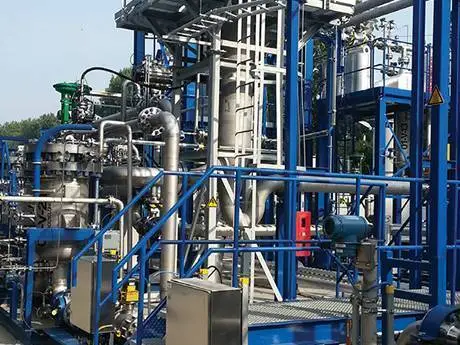
Steel grating is an open grid made from parallel bearing bars connected by cross bars. Bearing bars span between supports and carry the primary bending load. Cross bars hold the panel together and provide lateral stability.
Common steel options include untreated carbon steel, hot-dip galvanized steel, painted steel, and stainless steel. Construction methods include welded, press-locked, swage-locked, and riveted grating. The best option depends on the environment, load, appearance, and fabrication requirements.
Carbon steel provides high strength and is widely available in a range of bearing bar sizes. It generally requires a protective coating for outdoor or wet service. Without protection, rust can reduce appearance and eventually affect the section.
Hot-dip galvanized grating uses a zinc coating to protect the carbon steel. It is a common choice for industrial walkways, platforms, stairs, and drainage areas exposed to ordinary outdoor conditions.
Stainless grating is used where hygiene, appearance, or corrosion resistance is important. Grade 304 suits many indoor and mild environments; 316 or 316L is often considered for chloride-bearing or more corrosive service. Stainless steel remains conductive and still requires correct grade selection and maintenance.
For available steel configurations and materials, see the steel grating product range.
Aluminum grating is an open-grid product made from aluminum alloy bearing bars and cross members. It is commonly produced as pressure-locked, swage-locked, or welded grating, depending on the alloy, product design, and manufacturer.
Aluminum’s lower density makes it much lighter than steel. This can make panels easier to handle and reduce the dead load on support structures. Aluminum also forms a natural oxide film that protects it in many atmospheric environments.
Structural aluminum grating often uses alloys such as 6061 or 6063 in specified tempers. Mechanical properties vary by alloy, temper, product form, welding, and heat treatment. The alloy designation and temper should be stated in the purchase specification.
Aluminum can corrode in certain acidic or alkaline conditions and may suffer galvanic corrosion when connected to dissimilar metals in the presence of an electrolyte. Marine exposure, chemical contact, water chemistry, and fastener compatibility should be evaluated.
| Property | Steel | Aluminum |
|---|---|---|
| Density | Approximately 7,850 kg/m³ for carbon steel | Approximately 2,700 kg/m³ for common aluminum alloys |
| Elastic modulus | Approximately 200 GPa | Approximately 69 GPa |
| Corrosion mechanism | May rust; coatings or stainless alloys provide protection | Protective oxide film forms naturally, but some environments attack it |
| Fabrication | Welding, pressing, swaging, riveting, galvanizing, painting | Welding, pressing, swaging, anodizing, and other alloy-specific processes |
| Thermal expansion | Lower than aluminum | Higher; movement allowances may be needed on long runs |
Density alone does not determine panel weight or performance. Bar depth, thickness, spacing, cross-bar configuration, and panel size all matter. Aluminum grating may be lighter, but its lower elastic modulus means that a comparable design may need greater depth or closer supports to control deflection.
Welded steel grating is common in industrial applications. Aluminum grating may also be welded, but welding can affect alloy temper and mechanical properties around the heat-affected zone. The manufacturer’s design data should account for the actual joining method.
These mechanical assembly methods connect cross members and bearing bars through prepared slots or formed joints. Product availability and performance depend on the manufacturer’s system. Do not assume a pressure-locked aluminum panel has the same load behavior as a similarly sized welded steel panel.
Riveted steel grating is available for selected applications requiring a mechanical connection arrangement. It may be useful in demanding service, but the complete product must be checked for load, fatigue, vibration, corrosion, and maintenance requirements.
Steel grating generally provides greater stiffness per unit depth than aluminum grating. For the same panel depth and comparable geometry, steel will often deflect less under the same load. Aluminum can still be designed for substantial loads, but may require a deeper bearing bar, closer bar spacing, or shorter support spans.
A material can have adequate strength but still deflect too much. Strength describes resistance to failure; stiffness describes how much the panel bends under load. Aluminum’s lower elastic modulus often makes deflection a key design consideration, even when its alloy has sufficient strength.
Load tables may list uniform loads, concentrated loads, or wheel loads. These values are not interchangeable. A panel suitable for a distributed pedestrian load may not support a small wheel or equipment foot at the same nominal force.
Steel is often preferred for heavy vehicle traffic because it combines stiffness, impact resistance, and broad availability in heavy-duty configurations. Aluminum can be used in vehicle applications when the specific panel and support system have been designed and verified for the wheel loads, span, and operating conditions.
Do not select a grating based only on the vehicle’s total mass. Obtain wheel or axle reactions, tire contact area, travel direction, and dynamic effects from the equipment data or project engineer.
Steel load tables cannot be used to select aluminum grating, or vice versa. Confirm that the table matches the material, construction, bar size, span definition, load type, and deflection criterion.
The CSSP guide to steel bar grating dimensions explains how bearing bar sizes, mesh spacing, and panel dimensions affect steel grating design. Aluminum panels require the manufacturer’s aluminum-specific data.
Aluminum’s density is roughly one-third that of steel, so an aluminum panel can weigh much less than a steel panel with similar external dimensions. The actual weight difference depends on the bar geometry required to meet the same load and deflection limits.
Deep steel panels can be difficult to lift manually. Plan panel weights, lifting points, bundles, and access routes before delivery. Mechanical lifting can improve safety and reduce the risk of panel damage.
Aluminum panels are easier to carry, but they can be more susceptible to dents and local deformation from impacts. Avoid dropping panels or dragging them across rough surfaces. Lightweight products still require correct support and fastening after installation.
A steel panel and aluminum panel with the same depth may not have the same capacity or deflection. Compare the weight of products that meet the same design requirement rather than assuming that identical dimensions create equivalent performance.
Both materials can perform well indoors. Carbon steel may need paint or another finish depending on humidity and maintenance expectations. Aluminum can be suitable where weight reduction is valuable, though its surface can still be damaged or contaminated.
Hot-dip galvanized steel is often an economical choice for general atmospheric exposure. Aluminum may offer good corrosion resistance without a zinc coating, but its performance depends on alloy, water conditions, pollutants, and contact with other metals.
Aluminum is used in some marine structures, but seawater and crevices can still cause corrosion. Steel may use galvanized or stainless grades depending on the exposure. In either case, fasteners, supports, drainage, coatings, and maintenance access are part of the material selection.
Neither steel nor aluminum should be selected based on a generic claim such as “chemical resistant.” Acids, alkalis, salts, cleaning agents, process vapors, concentration, and temperature determine suitability. Aluminum is particularly vulnerable to some strongly acidic and alkaline environments.
Aluminum connected to stainless steel, copper, or other metals can experience galvanic corrosion if moisture creates an electrical path. Isolation washers, compatible fasteners, coatings, or connection details may be needed.
Steel can also experience galvanic corrosion in dissimilar-metal assemblies. Review the complete frame, clips, bolts, drainage, and exposure rather than only the grating panel.
Steel grating is commonly available with plain or serrated bearing bars. Serrations can improve traction in wet, oily, muddy, or contaminated areas. Aluminum grating can also be supplied with serrated surfaces or other textured profiles, depending on the product.
Surface profile is separate from material choice. Serrated steel is not automatically safer than textured aluminum in every application; the contaminant, footwear, slope, cleaning, and wear all matter.
Both steel and aluminum grating can provide open mesh for water drainage, airflow, and light transmission. The opening size affects small-object retention, shoe-heel safety, cleaning, and drainage.
Drainage performance depends on the channel or floor beneath the grating as well. Debris, sediment, and poor slope can obstruct flow even where the grating has a high open area.
Where tools, small components, or people could fall through, specify the required opening dimension and any secondary mesh or cover. Center spacing is not the same as clear opening, so both dimensions should be confirmed where they affect safety.
No grating surface is completely slip-proof. Handrails, toe plates, lighting, drainage, housekeeping, footwear, and inspection contribute to safe access.
Both materials can be supplied in different construction types and panel configurations, but the available sizes depend on manufacturer equipment, stock, alloy, and load requirements.
Large panels can reduce the number of joints but may require lifting equipment and special shipping. Smaller panels are easier to remove for maintenance but may require more banding and fasteners per square meter.
Custom openings for pipes, columns, valves, and equipment should be shown on the drawing. Cut bearing bars may require reinforcement and approved edge details.
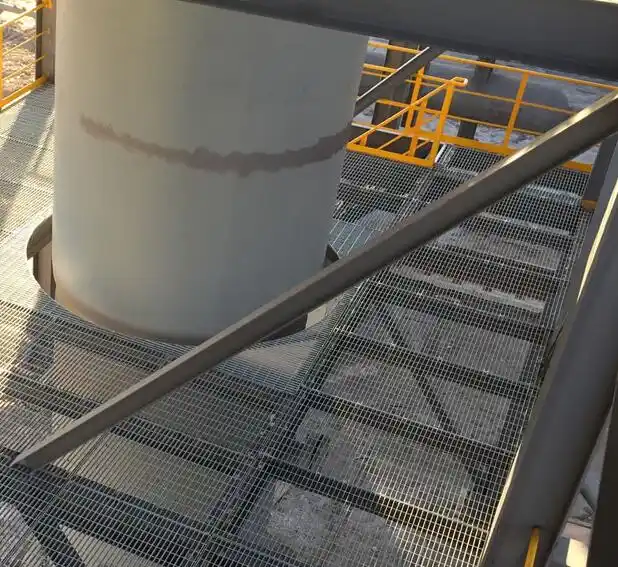
Panels must rest on supports with adequate bearing width. Bearing bars must span in the correct direction, perpendicular to the supports in a typical one-way design. Support frames should be level, aligned, and stiff enough to carry the reactions.
Steel grating is commonly installed on steel beams and angles. Aluminum grating may also be installed on steel structures, but the designer should check dissimilar-metal contact, isolation, fastener compatibility, and support load capacity.
Aluminum expands more than steel as temperature changes. Long runs may need expansion gaps and fastening details that allow movement. Rigidly fixing every panel without considering thermal movement can cause distortion or stress in the grating and supports.
Clips, bolts, welds, and hold-down systems prevent movement from traffic, vibration, wind, and maintenance activities. Aluminum panels are commonly mechanically fastened rather than welded to steel supports. The selected fastener material should be compatible with both the grating and frame.
Steel can be cut and re-banded using established fabrication methods. Cutting galvanized steel damages the zinc coating and requires an approved repair procedure. Aluminum can be cut with suitable tools, but edges should be deburred and treated as required by the alloy and environment.
Field modifications should be reviewed because cutouts can interrupt load-bearing bars and reduce panel capacity.
Steel grating often has a lower purchase price than aluminum for comparable standard industrial products, especially when carbon or galvanized steel is suitable. Stainless steel can cost more than both. Aluminum’s initial price varies with alloy, construction, section size, and finishing.
Include grating, supports, fasteners, coatings, freight, lifting, installation labor, cleaning, repair, replacement, and downtime. A lighter aluminum panel can cost more per square meter but reduce installation expense. A steel panel can cost less initially but require coating maintenance in an aggressive environment.
Use the same study period and assumptions for both options. Do not assume a service-life advantage without considering the actual exposure and maintenance plan.
Inspect carbon and galvanized steel for coating damage, zinc consumption, red rust, abrasion, loose fasteners, and distortion. Stainless steel requires cleaning to remove chlorides, deposits, and contamination, and should be checked for pitting and crevice attack.
Inspect for dents, cracks, loose connections, galvanic corrosion, surface wear, and permanent deformation. In corrosive environments, check contact points with dissimilar metals and areas where water or chemicals remain trapped.
Steel generally tolerates severe impact better because it is tougher and more ductile. Aluminum panels can dent or deform under a sharp impact. Repeated traffic and vibration should be considered for both products, including connections and support details.
There is no universal service-life figure for steel or aluminum grating. Durability depends on loading, environment, material grade, coating, fabrication quality, drainage, installation, and maintenance. A panel that is well suited to one site may fail prematurely in another with chemical deposits or repeated impact.
For severe vehicle loads, high temperatures, strong acids or alkalis, and high-impact service, material selection should be based on engineering verification rather than typical application lists.
Identify uniform loads, concentrated loads, wheel loads, equipment feet, impact, vibration, and traffic frequency. State the contact area and load position where relevant.
Provide clear span, support width, bearing length, intermediate supports, and bearing bar direction. The frame must be checked along with the panel.
List moisture, salts, chemicals, temperature, UV exposure, cleaning products, and whether the installation is indoors, outdoors, coastal, or immersed.
Define allowable deflection, vibration, movement, and alignment with adjacent surfaces. Aluminum’s lower stiffness can make these criteria especially important.
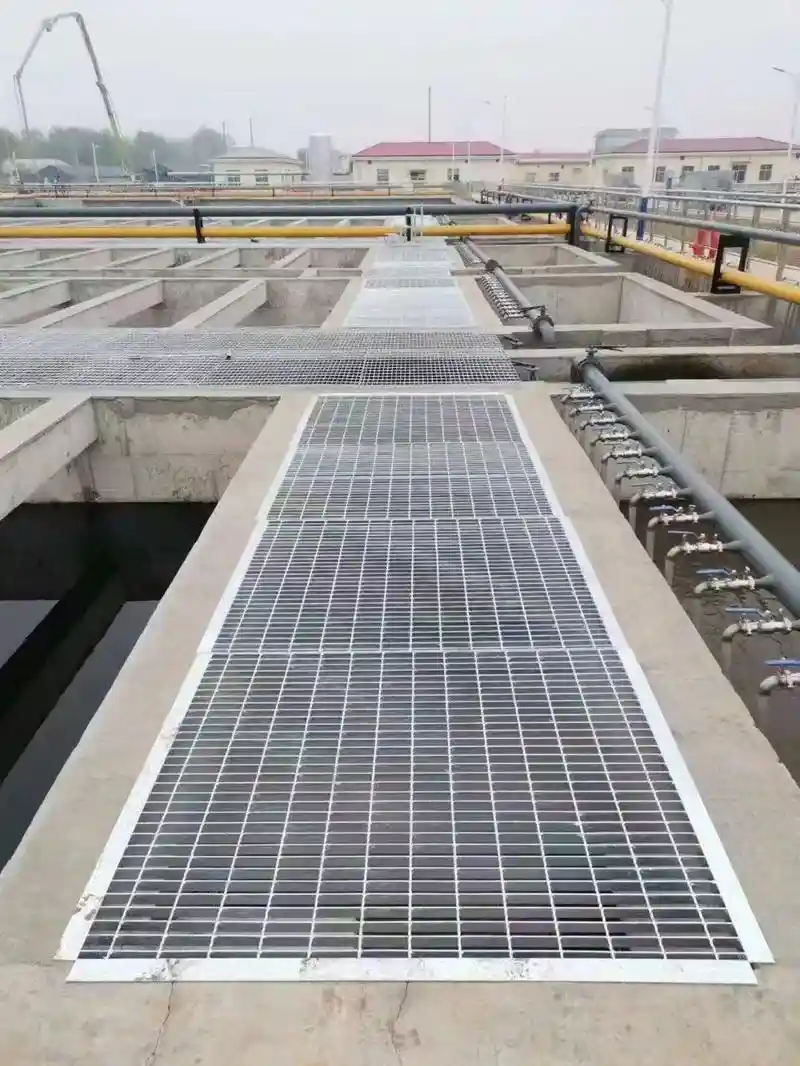
Choose plain, serrated, or textured surfaces according to slip exposure. Specify clear openings where small-object retention, wheel safety, or fall-through protection matters.
Include panel price, support modifications, fasteners, freight, lifting, installation, maintenance, and replacement access. A low material price does not always produce the lowest project cost.
Request material certificates, load tables, drawings, coating or finish details, and installation instructions. Confirm that the documents match the exact product, span, and load conditions.
| Project Priority | Starting Material to Evaluate | Critical Check |
|---|---|---|
| Heavy wheel loads and impact | Steel grating | Wheel-load capacity, span, frame, and restraint |
| Low panel weight | Aluminum grating | Deflection, alloy, and impact limits |
| Ordinary outdoor corrosion exposure | Galvanized steel or aluminum | Water chemistry, coating life, and dissimilar-metal contact |
| Chloride or chemical exposure | Suitable stainless steel or aluminum alloy | Specific chemical and temperature compatibility |
| Frequent panel removal | Aluminum may ease handling | Panel weight, lifting method, fasteners, and safe access |
| High-temperature or fire-sensitive area | Steel is often the starting point | Temperature-dependent structural capacity and fire design |
Is steel grating stronger than aluminum grating? Steel grating generally has greater stiffness and is often better suited to heavy concentrated loads, impact, and longer spans. Aluminum grating can carry substantial loads when designed for the application, but it may require deeper bars, closer supports, or a different panel configuration to control deflection. Compare product-specific load tables rather than material names alone.
Is aluminum grating better than steel for outdoor use? It can be a good choice where low weight and corrosion resistance are priorities, but it is not automatically better in every outdoor environment. Aluminum alloy, water chemistry, chemicals, temperature, dissimilar-metal connections, and traffic all affect performance. Galvanized or stainless steel may be more suitable for some sites.
Can aluminum grating replace steel grating without changing the supports? Not automatically. Even if the aluminum panel is lighter, its lower stiffness may require a shorter span or deeper bearing bars. The existing frame, support spacing, bearing length, fasteners, thermal movement, and required deflection should be checked before substitution.
