
Stainless steel gratings manufacturers supply grating panels for projects where corrosion resistance, clean appearance, drainage, ventilation, load capacity, and long service life are more important than the lowest initial cost. Stainless steel grating is commonly used in wet industrial areas, chemical plants, food processing facilities, wastewater treatment plants, marine walkways, coastal platforms, drainage channels, stair treads, and architectural access floors. For buyers, choosing reliable stainless steel grating manufacturers means checking material grades such as 304, 316, and 316L, manufacturing capability, welding quality, press-locked options, bearing bar design, custom drawing support, surface finish, packing protection, and whether the factory understands the corrosion environment of the project.
Stainless steel grating manufacturers are mainly selected for projects where carbon steel grating or ordinary galvanized steel grating may not provide enough corrosion resistance. In many industrial environments, grating panels are exposed to water, cleaning chemicals, salt air, food liquids, wastewater, mild acids, alkaline solutions, or humid air. If the wrong material is used, corrosion may appear around welded joints, cut edges, drainage areas, or contact points.
A professional stainless steel grating manufacturer should understand that stainless steel grating is not only a metal floor panel. It is often part of a larger access, drainage, safety, and maintenance system. The product must match the load requirement, support span, installation method, cleaning procedure, and corrosion exposure of the project.
Buyers choose stainless steel grating when they need better corrosion resistance, cleaner surface appearance, easier washing, longer service life, and lower coating maintenance. Stainless steel does not require hot-dip galvanizing, and in many corrosive areas it can reduce the need for repainting or coating repair. However, the correct grade must be selected. A 304 stainless steel grating panel may be suitable for general indoor use, while 316 or 316L may be needed for coastal, marine, chemical, or chloride-related environments.
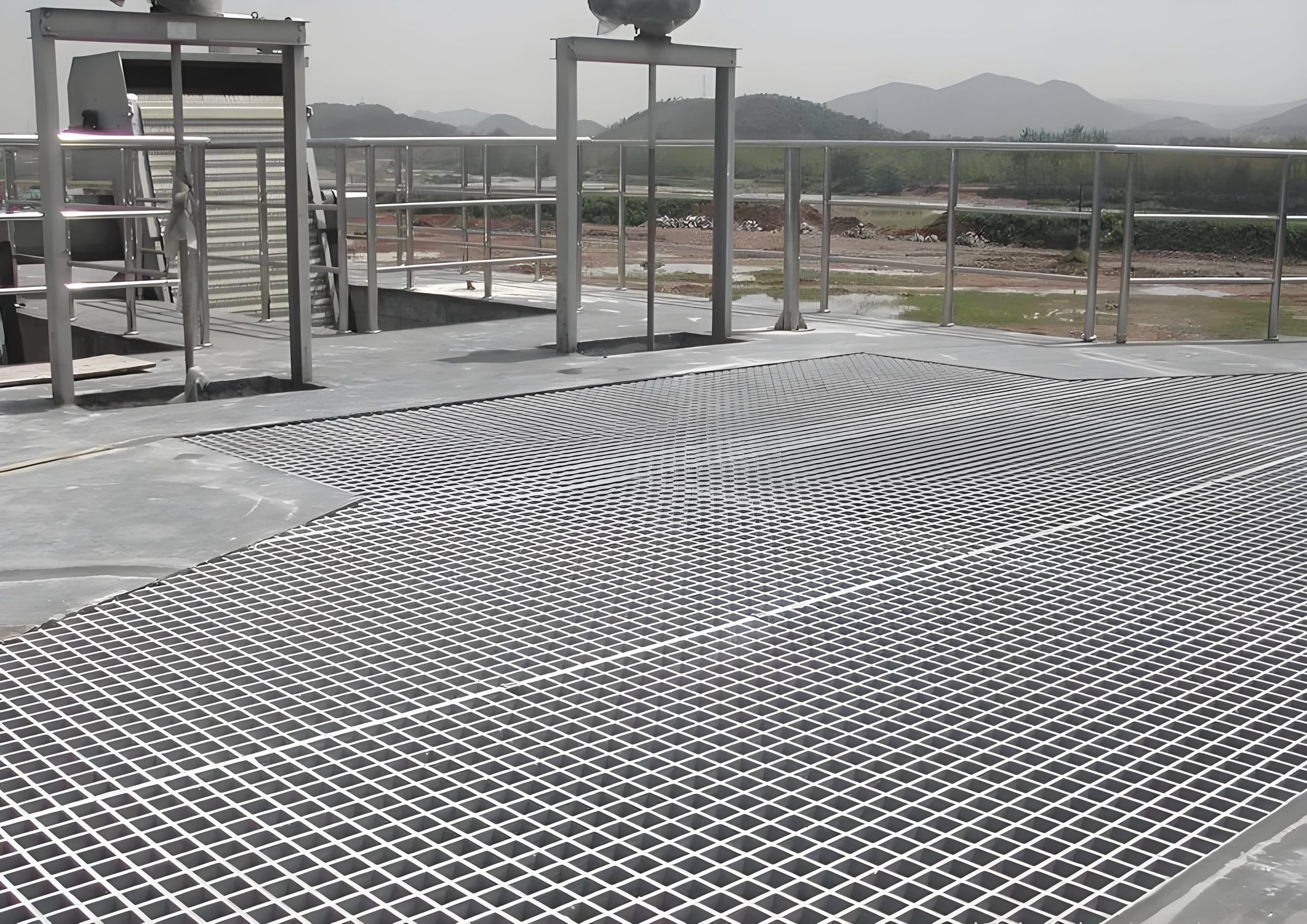
| Project Environment | Common Requirement | Manufacturer Support Needed |
|---|---|---|
| Food processing facility | Washdown resistance, clean surface, safe drainage | 304, 316, or 316L material selection and smooth finishing |
| Chemical plant | Resistance to chemical exposure and corrosion | Grade confirmation, weld treatment, surface finishing advice |
| Wastewater treatment plant | Wet service, drainage, and long-term durability | 316 or 316L options, custom panels, anti-slip surface |
| Marine or coastal walkway | Salt air and moisture resistance | 316 stainless steel recommendation and careful packing |
| Architectural access floor | Clean appearance and accurate grid pattern | Press-locked grating, brushed finish, dimensional control |
Manufacturing stainless steel grating requires more careful control than ordinary carbon steel grating because the material cost is higher and the final surface quality is often more important. A capable manufacturer should control material grade, bar straightness, cutting accuracy, welding heat, pressure locking quality, edge banding, surface treatment, panel flatness, and packing protection.
The factory should prepare stainless steel bearing bars, cross bars, banding bars, side plates, and accessories according to the required grade and specification. The raw material should be checked for thickness, width, straightness, surface condition, and certificate requirements. For 316 and 316L stainless steel grating, grade confirmation is especially important because the price difference and corrosion performance are different from 304.
Stainless steel bars are cut according to panel size and drawing requirements. Bearing bars must be arranged in the correct direction because they carry the main load. If a custom panel has cutouts, notches, pipe openings, or bolt holes, these details should be confirmed before fabrication.
Stainless steel grating can be welded, press-locked, or mechanically locked depending on the product type. Welded stainless steel grating is strong and practical for industrial use. Press-locked stainless steel grating is often preferred when a clean and uniform surface is required. The manufacturer should choose the right process according to the project’s load and appearance requirements.
After fabrication, stainless steel grating may need pickling, passivation, brushing, polishing, or cleaning. These treatments help remove welding discoloration, improve surface cleanliness, and enhance corrosion resistance. The required finish should be confirmed before production because it affects cost, lead time, packing, and appearance.
| Manufacturing Stage | Main Control Point | Why It Matters |
|---|---|---|
| Material inspection | Grade, thickness, width, straightness, certificate | Ensures correct corrosion resistance and strength |
| Cutting | Panel length, width, openings, bar direction | Improves installation accuracy |
| Welding or locking | Joint quality, spacing, flatness, heat control | Affects structure, appearance, and durability |
| Edge banding | Finished edges and cutout reinforcement | Improves handling safety and panel appearance |
| Surface finishing | Pickling, passivation, brushing, polishing, cleaning | Improves corrosion resistance and surface quality |
| Packing | Surface protection, labels, accessories, bundles | Prevents scratches, contamination, and delivery confusion |
Material selection is the most important decision when buying stainless steel grating. The common grades are 304, 316, and 316L. These grades look similar, but their corrosion resistance and price are different. A reliable stainless steel grating manufacturer should help buyers choose the grade according to the project environment rather than only quoting the cheapest option.
304 stainless steel grating is suitable for general corrosion-resistant applications. It is often used in indoor industrial platforms, food processing areas, commercial walkways, equipment access floors, and drainage covers where the corrosion level is moderate. It is usually more economical than 316 and 316L.
316 stainless steel grating contains molybdenum, which improves resistance to chloride-related corrosion compared with 304. It is often used in coastal areas, marine platforms, wastewater facilities, chemical plants, and outdoor projects where moisture and salts may be present.
316L stainless steel grating has lower carbon content than 316. This can be beneficial for welded grating used in corrosive environments because it helps reduce the risk of weld-related corrosion problems. For welded stainless steel gratings in chemical, marine, food, and hygienic projects, 316L is often a preferred option when the environment is demanding.
| Material Grade | Main Advantage | Typical Application | Buyer Note |
|---|---|---|---|
| 304 stainless steel | Good general corrosion resistance and economical cost | Indoor platforms, food areas, commercial walkways | Suitable for mild to moderate corrosion conditions |
| 316 stainless steel | Better chloride and marine corrosion resistance | Coastal areas, wastewater plants, marine walkways | Better than 304 for salt and wet outdoor environments |
| 316L stainless steel | Lower carbon content and better welded corrosion performance | Chemical, food, marine, hygienic, and welded applications | Often preferred for demanding welded grating projects |
Stainless steel grating manufacturers may supply welded grating, press-locked grating, swage-locked grating, serrated grating, stair treads, drainage covers, and custom grating panels. Each type has different advantages in strength, appearance, anti-slip performance, drainage, and cost.
Welded stainless steel grating is made by welding cross bars to bearing bars. It is practical, strong, and suitable for industrial floors, platforms, trench covers, wastewater areas, food plants, and chemical facilities. Weld quality and post-weld surface treatment should be controlled carefully.
Press-locked stainless steel grating is made by pressing cross bars into bearing bars. It usually has a cleaner and more uniform appearance than welded grating. It is used in architectural floors, commercial walkways, public access areas, mezzanine platforms, and places where appearance is important.
Serrated stainless steel grating uses toothed bearing bars to improve traction. It is suitable for wet, oily, outdoor, marine, or washdown areas. It is also common for stair treads and drainage walkways where slip resistance matters.
Stainless steel stair treads are fabricated with side plates, bolt holes, and sometimes anti-slip nosing. They are used in food plants, marine access, chemical plants, outdoor stairs, and industrial platforms.
Drainage cover grating is used over channels, floor drains, trench openings, and wastewater areas. The design should consider water flow, load capacity, support ledge, removability, surface finish, and cleaning access.
| Grating Type | Main Feature | Common Application |
|---|---|---|
| Welded stainless steel grating | Strong welded structure | Industrial platforms, drainage covers, chemical areas |
| Press-locked stainless steel grating | Clean and uniform grid appearance | Commercial walkways, architectural floors, mezzanines |
| Serrated stainless steel grating | Improved anti-slip surface | Wet floors, outdoor stairs, marine access, wastewater areas |
| Stainless steel stair treads | Side plates, bolt holes, nosing options | Industrial stairs and outdoor access steps |
| Stainless steel trench covers | Drainage and corrosion-resistant cover function | Food plants, chemical drainage, wastewater systems |
Welded stainless steel grating is selected when the project needs strong and stable flooring with corrosion resistance. It is commonly used in areas where workers need safe access and where the floor may be exposed to water, cleaning agents, chemicals, or outdoor moisture.
In welded stainless steel grating, cross bars are welded to bearing bars at regular intervals. The bearing bars carry the main load, while the cross bars keep the grid stable. This structure is suitable for platforms, walkways, drainage covers, stair treads, and maintenance floors.
Stainless steel welding needs careful control because excessive heat can create discoloration, distortion, or areas that need surface treatment. A manufacturer should inspect weld strength, alignment, flatness, and heat tint before final finishing.
After welding, pickling or passivation may be required to remove heat tint and improve corrosion resistance. For food, chemical, marine, and hygienic areas, post-weld treatment is often important. Buyers should confirm this requirement before quotation.
Welded stainless steel grating is suitable for industrial floors where strength and corrosion resistance are both required. It is practical for wastewater plants, food processing workshops, chemical access platforms, drainage covers, and outdoor maintenance walkways.
| Welded Grating Control Item | What the Manufacturer Should Check | Project Benefit |
|---|---|---|
| Weld strength | Firm cross bar and bearing bar connection | Improves structural stability |
| Heat control | Limit distortion and excessive heat tint | Improves appearance and corrosion performance |
| Panel flatness | Check warping after welding | Reduces installation and walking problems |
| Surface cleaning | Remove welding residue, scale, and contamination | Improves surface quality |
| Passivation or pickling | Apply when required by environment | Enhances corrosion resistance after fabrication |
Press-locked stainless steel grating is often selected when a clean appearance and precise grid pattern are important. It is made by pressing cross bars into bearing bars instead of relying on visible welded intersections at every crossing. This gives the panel a neat appearance that is suitable for architectural and commercial areas.
Press-locked stainless steel grating usually has straight lines, consistent openings, and a smooth visual effect. This makes it suitable for public walkways, building access areas, mezzanine floors, decorative platforms, drainage areas, and visible industrial spaces.
Architectural projects often require both function and appearance. Press-locked stainless steel grating provides drainage and ventilation while maintaining a clean surface pattern. It can also be combined with brushed, polished, or passivated finishes depending on the design requirement.
Press-locked grating requires accurate slotting, bar spacing, and pressure control. If the bars are not aligned properly, the final panel may look uneven or may not fit the support structure correctly. A manufacturer with good processing control is important for this product type.
| Feature | Press-Locked Stainless Steel Grating Advantage | Typical Use |
|---|---|---|
| Appearance | Clean, uniform, and architectural | Public walkways, mezzanines, commercial platforms |
| Grid accuracy | Consistent spacing and neat intersections | Visible access floors and decorative areas |
| Surface finish | Can be brushed, polished, pickled, or passivated | Architectural and hygienic applications |
| Open structure | Allows drainage, ventilation, and light passage | Walkways, drainage zones, building access areas |
Load capacity design is necessary for stainless steel grating because different applications require different strength levels. The manufacturer should select bearing bar size, bearing bar spacing, cross bar spacing, material grade, and panel direction according to the load and support span.
Bearing bars are the main load-carrying members. Common sizes include 25 x 3 mm, 30 x 3 mm, 30 x 5 mm, 40 x 5 mm, and customized sizes. Higher bearing bars are better for longer spans. Thicker bearing bars increase strength and durability but also increase cost and weight.
Bearing bar spacing affects load distribution, open area, walking comfort, and material cost. Closer spacing provides smaller openings and better walking comfort. Wider spacing reduces weight and increases drainage area but may not be suitable for every project.
Cross bar spacing affects panel stability and appearance. Common options include 50 mm, 76 mm, and 100 mm. For architectural stainless steel grating, consistent cross bar spacing is important for visual quality. For industrial grating, stability and welding strength are more important.
The bearing bars must span between supports. The clear span is the unsupported distance between beams or frames. A panel that is safe over a short span may deflect too much over a longer span. Buyers should provide span information before asking for final specification and price.
| Design Item | Common Options | Selection Advice |
|---|---|---|
| Bearing bar size | 25 x 3 mm, 30 x 3 mm, 30 x 5 mm, 40 x 5 mm or customized | Select according to load and clear span |
| Bearing bar spacing | 25 mm, 30 mm, 34 mm, 40 mm or customized | Closer spacing improves walking comfort and load distribution |
| Cross bar spacing | 50 mm, 76 mm, 100 mm or customized | Choose based on stability, appearance, and project standard |
| Surface type | Plain or serrated | Use serrated surface for wet or slippery areas |
| Load condition | Pedestrian, cart, equipment, or heavy load | Confirm before final design |
Stainless steel grating has clear advantages in wet and chemical environments because it does not depend on a zinc coating or paint layer for basic corrosion resistance. This is important in areas where coatings may wear, chip, or require frequent repair.
In wastewater treatment plants, washdown areas, drainage channels, and outdoor platforms, grating may remain wet for long periods. Stainless steel grating can resist moisture better than untreated carbon steel and may provide longer service life than galvanized steel in certain aggressive wet environments.
Chemical plants and process areas may expose grating to acids, alkalis, solvents, or vapors. The exact chemical condition should be reviewed before material selection. 316 or 316L stainless steel may be required where 304 is not enough.
Coastal and marine areas often contain chlorides. 316 stainless steel grating is usually preferred over 304 because it offers better chloride resistance. However, even stainless steel needs proper cleaning and maintenance in severe marine environments.
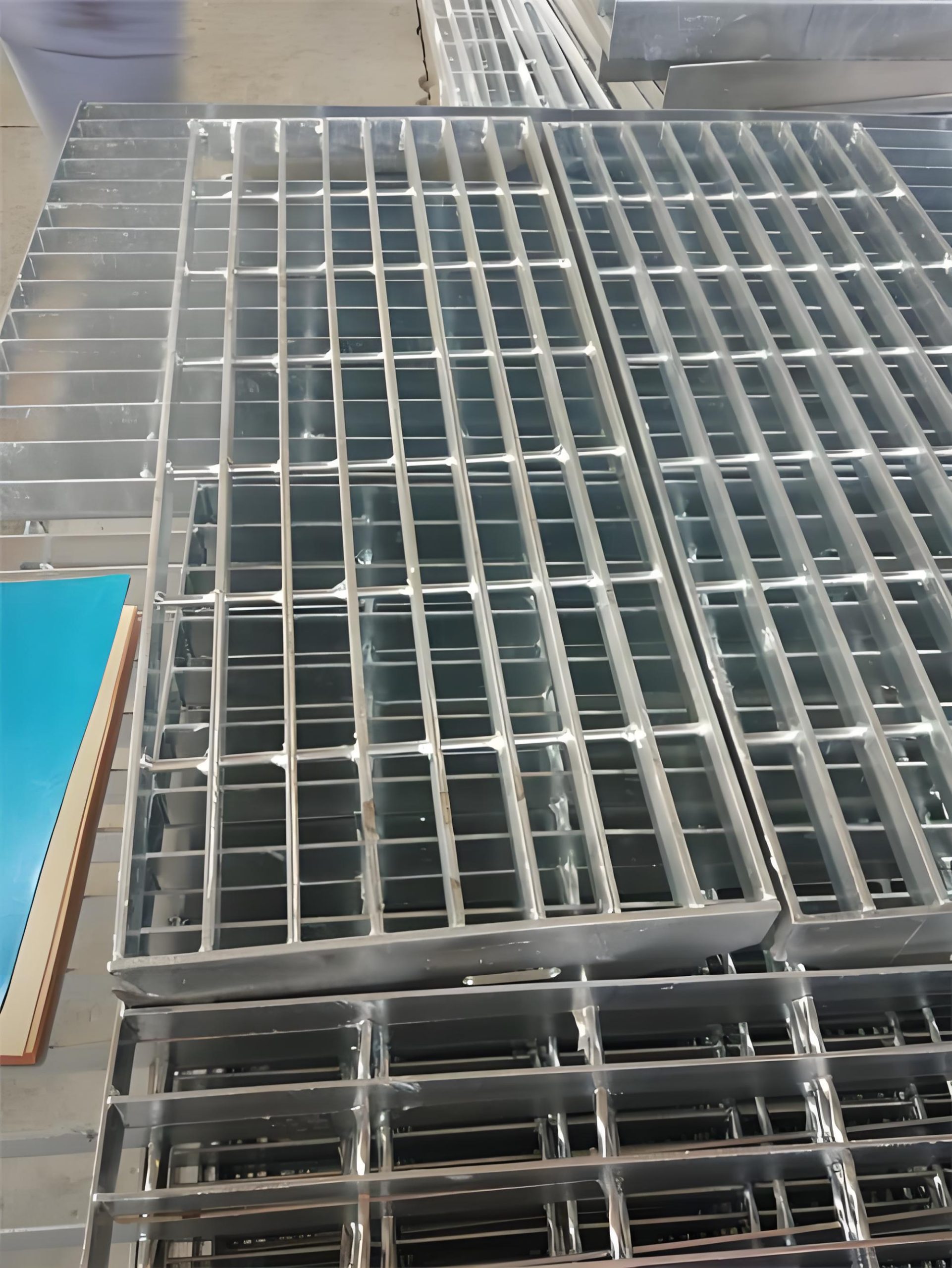
Food, beverage, pharmaceutical, and clean industrial areas often require washable surfaces. Stainless steel grating with proper finishing can help support cleaning requirements, especially when edges and weld areas are treated properly.
| Environment | Corrosion Concern | Recommended Stainless Steel Grating Approach |
|---|---|---|
| Indoor washdown area | Frequent water and cleaning exposure | 304 or 316 depending on chemicals used |
| Coastal walkway | Salt air and chloride exposure | 316 stainless steel grating |
| Chemical processing area | Acids, alkalis, vapors, splashes | 316 or 316L after reviewing chemical exposure |
| Wastewater plant | Wet service and corrosive atmosphere | 316 or 316L for demanding zones |
| Food facility | Hygiene and cleaning chemicals | 304, 316, or 316L with suitable surface finish |
Custom fabrication is a major advantage of working directly with stainless steel grating manufacturers. Many stainless steel grating projects require panels that fit around drains, pipes, tanks, columns, machines, handrails, and support beams. Factory fabrication improves accuracy and reduces site cutting.
Manufacturers can produce stainless steel grating panels in different lengths and widths. The panel size should match the support layout, handling method, and installation plan. Large panels cover more area with fewer joints, while smaller panels are easier to lift, remove, and clean.
Cutouts may be required around pipes, columns, valves, pumps, equipment bases, drainage outlets, and structural posts. Factory-made cutouts are usually cleaner and safer than rough site cutting. In hygienic or corrosion-sensitive areas, cut edges should be finished properly.
Edge banding closes the panel perimeter and cutout edges. It improves handling safety, appearance, and panel integrity. For stainless steel grating used in food, chemical, or public areas, smooth banded edges also help reduce dirt accumulation and make cleaning easier.
For project orders, buyers should provide CAD drawings, PDF drawings, or clear sketches. The manufacturer should confirm panel numbers, bearing bar direction, cutout positions, hole locations, surface finish, installation method, and accessories before production.
| Custom Fabrication Item | What It Includes | Project Benefit |
|---|---|---|
| Cut-to-size panels | Custom length and width | Improves installation fit |
| Pipe and column cutouts | Openings around site obstacles | Reduces field cutting and installation delay |
| Edge banding | Finished perimeter and cutout edges | Improves safety, appearance, and cleanliness |
| Stair tread fabrication | Side plates, bolt holes, nosing, serrated surface | Supports direct stair installation |
| Panel numbering | Marks panels according to layout drawings | Improves installation efficiency on site |
Surface finish affects the appearance, corrosion resistance, cleaning performance, and cost of stainless steel grating. Stainless steel grating is usually not hot-dip galvanized. Instead, manufacturers may offer natural finish, pickling, passivation, brushing, polishing, or blasting depending on the project requirement.
Natural stainless steel finish is suitable for many general industrial applications. It is often more economical than polished finishes. However, if the grating is welded, heat tint and scale may need to be removed if corrosion resistance or appearance is important.
Pickling removes welding scale, heat tint, and surface contamination. It is often used after stainless steel welding to improve surface cleanliness and corrosion resistance.
Passivation helps improve the stainless steel surface condition by supporting the protective oxide layer. It is commonly used in food, chemical, pharmaceutical, and hygienic environments.
Brushed or polished stainless steel grating may be used in architectural, public, or commercial areas where appearance matters. These finishes may require extra packing protection to prevent scratches during shipping and installation.
Serrated stainless steel grating improves slip resistance. It is commonly used for wet floors, stairs, marine walkways, drainage areas, and outdoor access routes. Buyers should consider cleaning requirements because serrations can retain more dirt than plain bars.
| Surface Finish | Main Benefit | Common Application |
|---|---|---|
| Natural finish | Simple and economical | General industrial platforms and access areas |
| Pickled finish | Removes heat tint and welding scale | Welded stainless steel grating |
| Passivated finish | Improves surface corrosion resistance and cleanliness | Food, chemical, pharmaceutical, and hygienic areas |
| Brushed finish | Improves visible appearance | Commercial and architectural projects |
| Polished finish | Cleaner appearance and smoother surface | Public areas, decorative grating, special projects |
| Serrated surface | Improves anti-slip performance | Wet floors, stairs, marine access, drainage covers |
Stainless steel grating is widely used because it combines corrosion resistance with open-grid function. It allows water, air, light, and small debris to pass through while providing a walking or covering surface. In wet and industrial areas, this makes stainless steel grating practical for drainage, ventilation, and anti-slip safety.
The open-grid structure allows water and liquids to drain through the grating. This is useful in food processing plants, wastewater facilities, washdown areas, chemical plants, marine platforms, and drainage channels. Good drainage reduces standing water and helps keep the walking surface safer.
Stainless steel grating allows air and light to pass through. This is useful for elevated platforms, mezzanines, machinery access areas, rooftop walkways, and industrial floors where airflow and visibility are helpful.
For wet or oily areas, serrated stainless steel grating improves traction. It is often selected for stair treads, walkways, outdoor access, marine areas, and drainage covers. The manufacturer should help buyers decide whether plain or serrated surface is more suitable.
Stainless steel grating can be cleaned more easily than many coated materials, especially when edges and welds are finished properly. In hygienic areas, smooth surfaces and reduced crevices are important for long-term maintenance.
| Function | How Stainless Steel Grating Helps | Typical Use |
|---|---|---|
| Drainage | Open grid allows water and liquid to pass through | Food plants, wastewater channels, floor drains |
| Ventilation | Openings allow air movement | Equipment platforms, mezzanines, rooftop access |
| Light transmission | Allows light through multi-level structures | Walkways, platforms, architectural floors |
| Anti-slip safety | Serrated surface increases foot traction | Wet walkways, stairs, marine and outdoor areas |
| Cleaning access | Removable panels and open spaces support maintenance | Drainage covers, inspection areas, hygienic floors |
Stainless steel grating is used in many industrial projects where corrosion resistance, cleanability, drainage, and safety are required. The correct grade and grating type should be selected according to the working environment.
Food and beverage facilities often require stainless steel drainage covers, walkways, platforms, and stair treads. The grating should support washdown cleaning and resist corrosion from water and cleaning agents. 304, 316, or 316L may be selected depending on the cleaning process and exposure.
Chemical plants may require stainless steel grating in areas exposed to chemical vapor, splashes, or corrosive liquids. Material grade should be selected carefully. 316 or 316L is often considered where corrosion risk is higher.
Wastewater plants use stainless steel grating around tanks, channels, pumps, filters, and maintenance platforms. Wet service, corrosive atmosphere, and cleaning access make stainless steel a practical option in many zones.
Marine walkways, dock platforms, coastal drainage covers, and ship access areas often require better chloride resistance. 316 stainless steel grating is commonly selected for these environments.
Clean industrial areas may use stainless steel grating where hygiene and surface quality are important. Passivated or polished surfaces may be requested depending on the cleaning and contamination control requirements.
| Industry | Common Grating Use | Recommended Focus |
|---|---|---|
| Food processing | Drainage covers, platforms, stairs, washdown areas | Clean finish, 304/316/316L grade, easy cleaning |
| Chemical plant | Access platforms, drainage areas, maintenance floors | Corrosion exposure review and suitable grade selection |
| Wastewater treatment | Tank walkways, channel covers, pump access | Wet service durability and anti-slip surface |
| Marine and coastal | Docks, walkways, outdoor platforms, drainage covers | 316 stainless steel and surface maintenance |
| Architectural projects | Public walkways, mezzanines, decorative floors | Press-locked structure and clean finish |
Quality control is essential for stainless steel grating manufacturers because the product is often used in corrosive, hygienic, or visible environments. A good quality system should cover raw material verification, fabrication inspection, welding inspection, dimensional control, surface finishing, flatness, packing, and accessories.
The factory should confirm the correct stainless steel grade before production. If the order requires 304, 316, or 316L, the manufacturer should check material markings and certificates when required. Wrong material grade may lead to corrosion problems later.
For welded stainless steel grating, welds should be checked for strength, consistency, heat tint, spatter, distortion, and contamination. Weld areas may need pickling or passivation depending on project requirements.
Panel length, width, diagonal difference, bearing bar spacing, cross bar spacing, cutout position, edge banding, hole position, and stair tread side plates should be inspected. Accurate dimensions reduce installation problems.
Stainless steel surfaces should be checked for scratches, burrs, sharp edges, heat tint, contamination, oil, and finish consistency. For brushed or polished grating, extra care is needed during packing and handling.
Panels should be checked for flatness, rocking, and twisting. A warped grating panel may be difficult to install and unsafe under foot. This is especially important for architectural and commercial projects.
| Quality Control Item | Inspection Focus | Purpose |
|---|---|---|
| Material grade | 304, 316, 316L, certificates, markings | Ensures correct corrosion resistance |
| Bar dimensions | Height, thickness, spacing, straightness | Maintains load capacity and appearance |
| Welding quality | Weld strength, heat tint, distortion, contamination | Improves structural reliability and surface performance |
| Panel size | Length, width, diagonal, holes, cutouts | Improves installation fit |
| Surface finish | Burrs, scratches, passivation, pickling, polishing | Improves appearance and corrosion resistance |
| Packing | Surface protection, labels, accessories, bundle strength | Prevents delivery damage and missing parts |
Choosing reliable stainless steel grating manufacturers requires more than comparing price. Buyers should evaluate material grade control, fabrication capability, corrosion experience, surface finishing ability, custom drawing support, quality inspection, packing protection, and export delivery experience.
The manufacturer should offer suitable stainless steel grades such as 304, 316, and 316L. More importantly, the factory should explain which grade fits the project environment. A lower price may not be useful if the selected grade cannot resist the actual corrosion exposure.
A good manufacturer should support welded grating, press-locked grating, serrated surface, stair treads, trench covers, cut-to-size panels, notches, openings, edge banding, and drawing-based fabrication. This is important for project orders with many panel types.
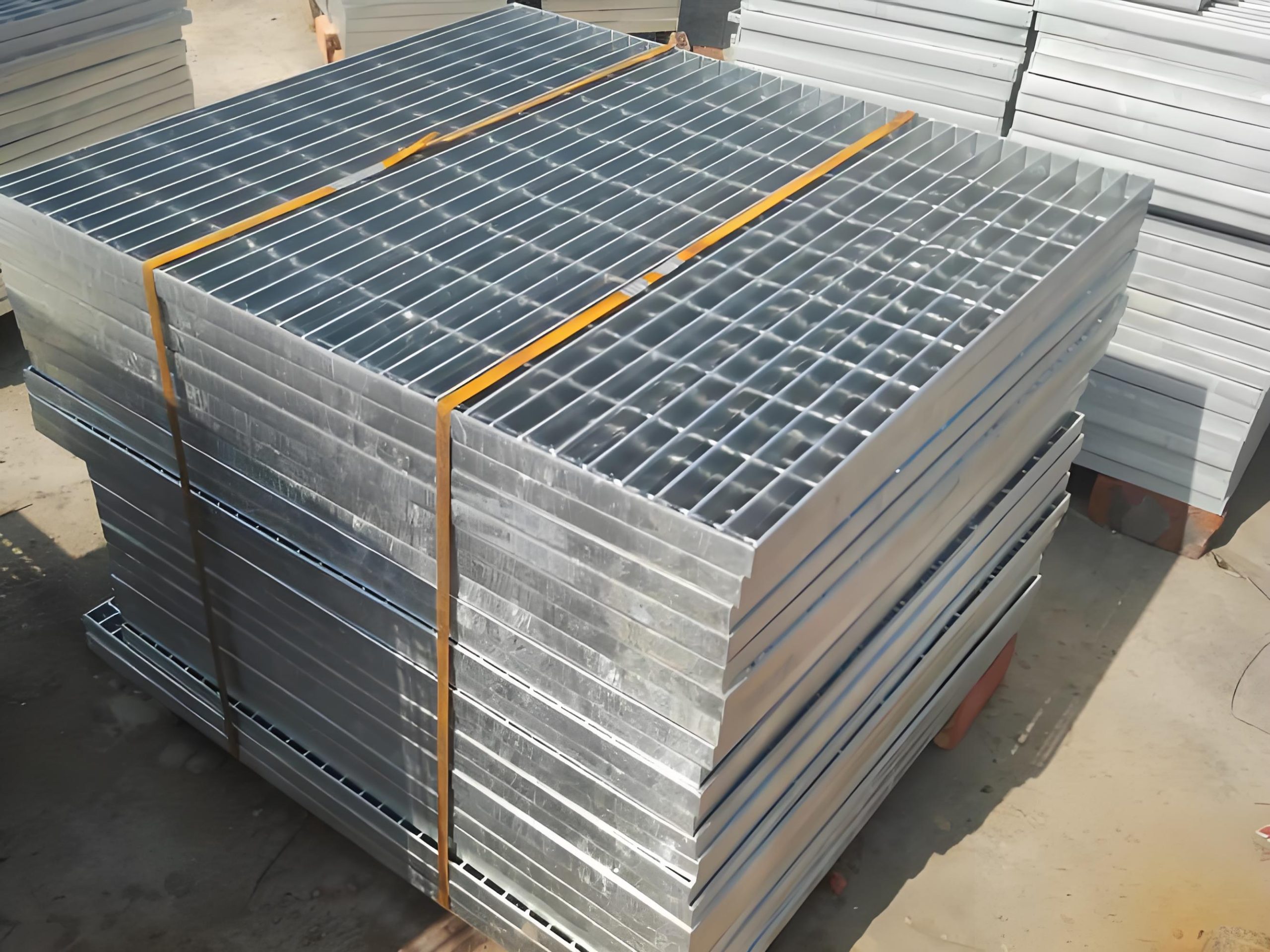
Surface finish is important for stainless steel grating. The manufacturer should be able to provide natural finish, pickling, passivation, brushing, polishing, or other required treatment. Buyers should confirm what is included in the quotation.
The factory should inspect material, welding, size, flatness, finish, packing, and accessories. For large or export orders, material certificates, inspection photos, packing lists, and loading photos may be useful.
Stainless steel surfaces can be scratched or contaminated during shipping. Reliable manufacturers should use suitable packing, clear labels, accessory packing, and careful loading. This is especially important for brushed, polished, or architectural stainless steel grating.
For buyers looking for factory-based stainless steel grating supply, Anping County Chuansen Silk Screen Products Co., Ltd. can be considered when evaluating stainless steel grating, galvanized steel grating, welded grating, drainage covers, stair treads, and custom grating panels. Buyers should still confirm material grade, drawings, load capacity, surface finish, corrosion environment, packing method, and delivery terms before ordering.
| Manufacturer Selection Point | What to Confirm | Why It Matters |
|---|---|---|
| Material control | 304, 316, 316L, certificates, grade verification | Controls corrosion resistance and project suitability |
| Product range | Welded, press-locked, serrated, stair tread, trench cover | Shows whether the factory can support different project needs |
| Custom fabrication | Cutouts, banding, holes, panel numbering, drawings | Improves installation accuracy |
| Surface finish | Pickling, passivation, brushing, polishing | Affects corrosion resistance, cleaning, and appearance |
| Quality inspection | Material, welding, dimensions, flatness, surface | Reduces installation problems and quality disputes |
| Packing and export | Surface protection, labels, accessories, loading photos | Reduces transport damage and missing parts |
How do I choose stainless steel grating manufacturers?
Choose stainless steel grating manufacturers by checking material grade options, fabrication capability, welding quality, surface finishing ability, custom drawing support, corrosion resistance experience, quality inspection, packing protection, and export delivery experience. A reliable manufacturer should help confirm whether 304, 316, or 316L stainless steel is suitable for the project environment.
Is 304 or 316 stainless steel better for grating?
304 stainless steel grating is suitable for general indoor and mild corrosion environments. 316 stainless steel grating is better for coastal, marine, wastewater, chloride, and more corrosive environments because it has better corrosion resistance than 304. For welded grating in demanding corrosion or hygienic areas, 316L may be preferred.
Can stainless steel grating be customized?
Yes, stainless steel grating can be customized according to project drawings. Common custom options include special panel sizes, pipe cutouts, column notches, edge banding, stair tread side plates, bolt holes, lifting holes, serrated surfaces, passivated finishes, polished surfaces, drainage covers, and panel numbering for easier installation.
