
A reliable steel walkway grating manufacturer supplies grating panels designed for safe pedestrian access, industrial platforms, maintenance walkways, catwalks, bridge service routes, rooftop access, drainage areas, and outdoor working floors. For walkway projects, buyers need more than a standard panel price. The manufacturer should help confirm load capacity, clear span, bearing bar direction, anti-slip surface, hot-dip galvanized finish, panel layout, fixing method, toe plates, edge banding, cutouts, packing, and delivery. A well-designed steel walkway grating system improves walking safety, drainage, ventilation, corrosion resistance, installation efficiency, and long-term maintenance performance.
A steel walkway grating manufacturer supports projects where workers, inspectors, operators, and maintenance teams need safe access across industrial or commercial areas. These walkways may be installed around machines, tanks, pipe racks, conveyor systems, water channels, rooftops, bridges, stair landings, and elevated platforms.
Walkway grating is different from ordinary floor material because it must provide a stable walking surface while allowing drainage, ventilation, and debris fall-through. In outdoor and industrial environments, the grating must also resist corrosion, support expected loads, and reduce slipping risks. A capable manufacturer should understand these working conditions before recommending a specification.
Walkway grating is often installed in areas where safety and fit are important. If the panel span is too long, the bearing bar is too small, or the bearing direction is wrong, the walkway may feel unstable. If the surface is too smooth for a wet area, slipping risks increase. If the panel size does not match the support structure, site cutting and coating repair may be required. A manufacturer with real project experience can reduce these problems before production.
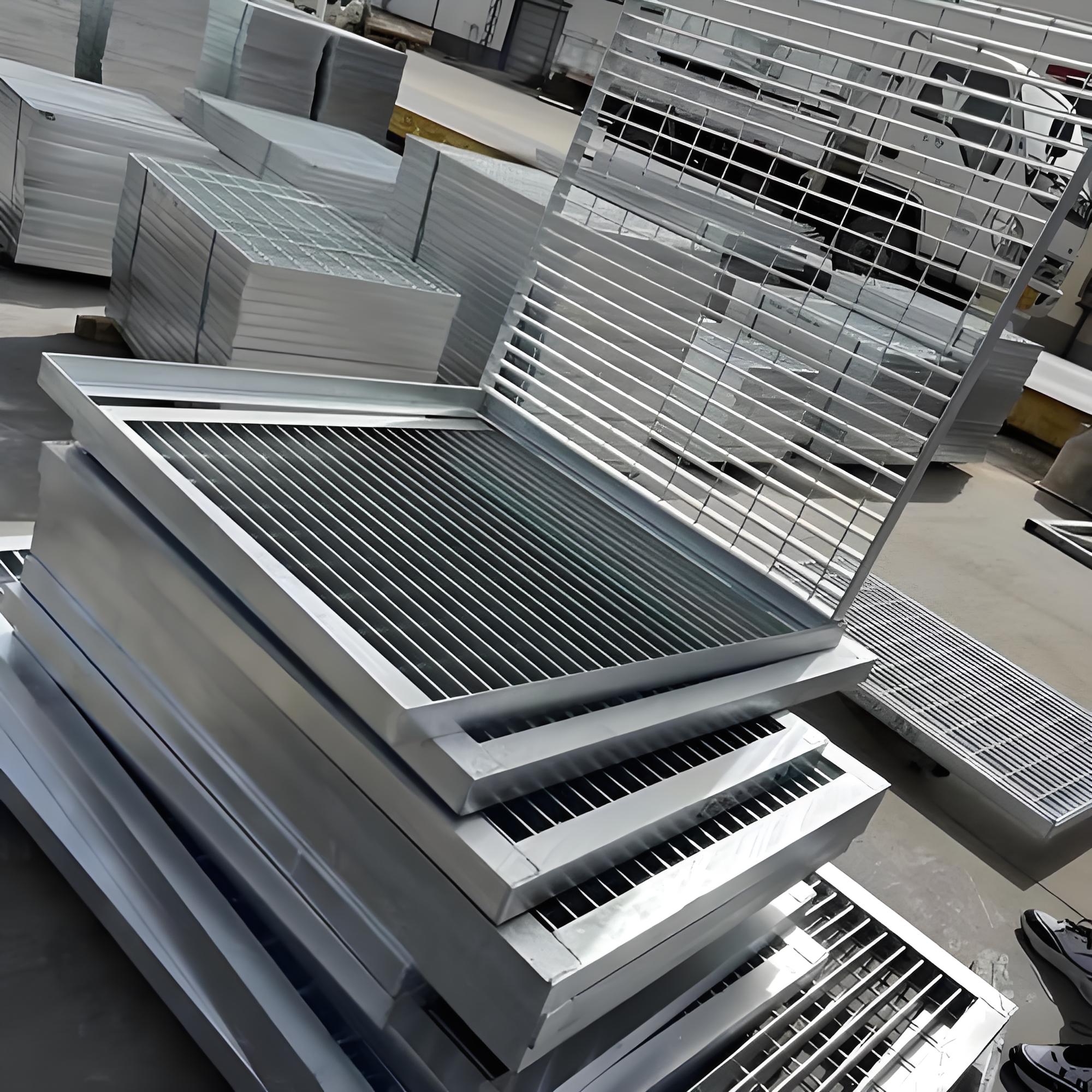
| Project Area | Walkway Grating Requirement | Manufacturer Support Needed |
|---|---|---|
| Industrial platform | Safe access around machines and equipment | Load design, bearing bar direction, custom panel layout |
| Catwalk | Light but strong elevated walking surface | Panel sizing, fixing method, anti-slip selection |
| Outdoor walkway | Corrosion resistance and drainage | Hot-dip galvanizing and serrated surface options |
| Bridge access route | Weather resistance and stable support | Strong bearing bars, galvanized finish, secure fixing |
| Maintenance passage | Removable or fixed panels for inspection access | Clip fixing, panel numbering, cutouts, edge banding |
Manufacturing capacity is one of the key points when selecting a steel walkway grating manufacturer. Walkway grating production requires stable control over bearing bars, cross bars, welding, cutting, banding, galvanizing, surface inspection, packing, and delivery. Even when the walkway load is not extremely heavy, poor fabrication can still cause installation and safety problems.
The factory should prepare steel flat bars, cross bars, edge banding bars, and accessories according to the required specification. Common materials include carbon steel, mild steel, stainless steel, and sometimes aluminum. For galvanized walkway grating, carbon steel or mild steel is usually fabricated first and then hot-dip galvanized.
Most steel walkway grating panels are welded. Cross bars are welded to bearing bars to form a rigid open-grid structure. The welding process must keep bearing bars straight, spacing consistent, and the panel stable. Weak welds or uneven spacing can affect walking comfort and panel durability.
Walkway projects often require panels in different sizes. The manufacturer may need to cut panels to length and width, add cutouts for pipes or columns, weld toe plates, prepare bolt holes, and add banding around edges. Factory fabrication is usually better than site cutting because it gives cleaner edges and better surface treatment control.
For outdoor walkways, hot-dip galvanizing is commonly used after fabrication. After galvanizing, the manufacturer should inspect coating coverage, zinc buildup, sharp points, blocked openings, panel flatness, and labels before packing.
| Production Stage | Main Control Point | Why It Matters for Walkways |
|---|---|---|
| Material preparation | Steel grade, bearing bar size, straightness | Controls load capacity and panel quality |
| Welding | Cross bar connection and spacing accuracy | Improves grid stability and walking safety |
| Cutting | Panel length, width, and bearing direction | Improves installation fit |
| Banding | Finished panel edges and cutout edges | Improves handling safety and appearance |
| Galvanizing | Coating coverage and corrosion protection | Extends service life for outdoor walkways |
| Packing | Bundle strength, labels, panel numbering | Reduces delivery damage and site confusion |
Steel walkway grating can be supplied in several types. The correct type depends on the walkway environment, load requirement, slip risk, corrosion exposure, appearance requirement, and installation method.
Welded walkway grating is one of the most common types used in industrial sites. It is made by welding cross bars to bearing bars. It offers practical strength, stable structure, and cost efficiency. It is widely used for platforms, catwalks, access floors, drainage walkways, and equipment maintenance routes.
Hot-dip galvanized walkway grating is carbon steel grating protected by a zinc coating after fabrication. It is suitable for outdoor walkways, wet environments, bridge access areas, rooftops, water treatment plants, and humid industrial sites.
Serrated walkway grating has toothed bearing bars for better traction. It is often selected for wet, oily, dusty, outdoor, or sloped walking areas. It is also commonly used for stair treads and elevated access routes where slipping risk must be reduced.
Plain walkway grating has smooth bearing bars. It is suitable for dry indoor walkways, maintenance platforms, and areas where slip risk is low. It is usually easier to clean and more economical than serrated grating.
Stainless steel walkway grating is used in food processing, chemical plants, marine areas, wastewater treatment, and high-corrosion environments. It costs more than galvanized carbon steel, but it can provide better corrosion resistance in demanding conditions.
| Walkway Grating Type | Main Feature | Common Use |
|---|---|---|
| Welded walkway grating | Strong and economical welded grid | Industrial platforms, catwalks, access floors |
| Hot-dip galvanized walkway grating | Zinc coating for corrosion resistance | Outdoor walkways, drainage areas, bridge access |
| Serrated walkway grating | Anti-slip toothed bearing bars | Wet areas, stairs, outdoor maintenance paths |
| Plain walkway grating | Smooth bearing bar surface | Dry indoor platforms and service walkways |
| Stainless steel walkway grating | Higher corrosion resistance | Food, chemical, marine, and wastewater projects |
Load capacity and span design are essential for steel walkway grating. Walkway grating must feel stable under foot and safely support expected loads. These loads may include workers, tools, maintenance parts, light carts, and occasional equipment movement. The manufacturer should confirm the clear span and application before recommending a grating size.
The clear span is the unsupported distance between beams or support frames. The longer the span, the stronger the bearing bars must be. A grating panel that works well over a short span may deflect too much over a longer span.
Bearing bars are the main load-carrying members. They must span between supports. If the panel is installed with the bearing bars in the wrong direction, the walkway may not meet the expected load capacity, even if the panel looks correct.
Most walkway grating is designed for pedestrian and maintenance access. However, some walkways may carry tools, small carts, valves, motors, or temporary loads. These conditions should be discussed before production.
Load capacity is not only about preventing failure. Excessive deflection can make workers feel unsafe and can reduce service life. The manufacturer should select a specification that controls both strength and deflection.
| Design Factor | Effect on Walkway Performance | Buyer Advice |
|---|---|---|
| Clear span | Longer span requires stronger bearing bars | Provide support spacing before quotation |
| Bearing bar direction | Controls main load transfer | Mark clearly on drawings |
| Bearing bar size | Affects strength and deflection | Select according to load and span |
| Bar spacing | Affects walking comfort and load distribution | Use closer spacing for safer pedestrian access |
| Support frame | Provides bearing area and structural stability | Confirm support width and strength |
The bearing bar size, bearing bar spacing, cross bar spacing, and open area determine how steel walkway grating performs in real use. These details affect load capacity, drainage, ventilation, walking comfort, panel weight, and price.
Common bearing bar sizes for walkway grating include 20 x 3 mm, 25 x 3 mm, 30 x 3 mm, 30 x 5 mm, and 40 x 5 mm. Light pedestrian walkways may use smaller bars, while industrial walkways with longer spans or heavier maintenance loads may require larger bars.
Common bearing bar spacing includes 25 mm, 30 mm, 34 mm, and 40 mm. Closer spacing provides smaller openings, better walking comfort, and better load distribution. Wider spacing reduces weight and cost while increasing open area.
Cross bar spacing affects panel stability and appearance. Common options include 50 mm, 76 mm, and 100 mm. A tighter cross bar spacing can make the grid feel more stable, while wider spacing is more economical.
Open area is important for walkway grating because it allows water, dust, snow, air, and light to pass through. In drainage or outdoor areas, a higher open area helps reduce surface accumulation. In public or frequent pedestrian areas, smaller openings may be preferred for walking comfort and safety.
| Specification Item | Common Options | Selection Advice |
|---|---|---|
| Bearing bar size | 20 x 3 mm, 25 x 3 mm, 30 x 3 mm, 30 x 5 mm, 40 x 5 mm | Select according to load, span, and deflection requirement |
| Bearing bar spacing | 25 mm, 30 mm, 34 mm, 40 mm | Closer spacing improves walking comfort and load distribution |
| Cross bar spacing | 50 mm, 76 mm, 100 mm | Choose based on stability, appearance, and cost |
| Open area | Varies by bar size and spacing | Balance drainage with walking safety |
| Surface type | Plain or serrated | Use serrated surface for wet or outdoor walkways |
Serrated steel walkway grating is designed to improve traction. It uses bearing bars with toothed top edges. This surface helps reduce slipping risks in wet, oily, dusty, muddy, or outdoor environments. For many walkway projects, anti-slip safety is one of the main reasons for selecting serrated grating.
Serrated walkway grating is recommended for outdoor platforms, water treatment facilities, chemical plants, drainage areas, bridge service walkways, stairs, sloped access routes, and industrial sites where workers may walk on wet or contaminated surfaces.
Plain walkway grating can be suitable for dry indoor areas. Serrated grating is better when traction is more important. The manufacturer should help buyers choose the surface based on the actual working environment, not only based on price.
Serrated grating may hold more dirt than plain grating in some environments. For food processing or clean areas, buyers should balance slip resistance with cleaning requirements. For outdoor industrial use, serrated surface is often worth the additional processing cost.
| Comparison Item | Plain Walkway Grating | Serrated Walkway Grating |
|---|---|---|
| Surface | Smooth bearing bar top | Toothed bearing bar top |
| Anti-slip performance | Suitable for dry areas | Better for wet, oily, and outdoor areas |
| Cleaning | Easier to clean | Serrations may retain more dirt |
| Cost | Usually lower | Usually higher due to serrated processing |
| Best use | Dry platforms and indoor access | Outdoor walkways, stairs, wet industrial platforms |
Outdoor walkway grating usually needs corrosion protection. Hot-dip galvanized walkway grating is widely used because the zinc coating protects carbon steel from rust and helps extend service life in rain, humidity, drainage, and industrial exposure.
Steel walkway grating has many edges, welded joints, and open surfaces. If untreated carbon steel is exposed outdoors, corrosion can develop quickly. Hot-dip galvanizing covers the grating with zinc after fabrication, protecting bearing bars, cross bars, welds, cut edges, and banding areas.
For walkway projects, fabrication should usually be completed before galvanizing. This includes cutting, welding, banding, drilling, and processing cutouts. When the full panel is galvanized after fabrication, the zinc coating can protect more exposed steel surfaces.
Hot-dip galvanized walkway grating is commonly used in bridge access, rooftop walkways, water treatment plants, outdoor platforms, drainage areas, chemical plants, power plants, mining sites, and general industrial access routes.
If panels are cut or welded after galvanizing, the damaged zinc coating should be repaired with zinc-rich paint or another approved repair method. This is important for long-term corrosion resistance.
| Surface Treatment | Main Advantage | Suitable Walkway Use |
|---|---|---|
| Black steel | Low initial cost | Temporary or dry indoor use |
| Painted steel | Color and basic protection | Indoor or low-corrosion walkway areas |
| Hot-dip galvanized steel | Good corrosion resistance | Outdoor walkways, platforms, drainage areas |
| Stainless steel | Higher corrosion resistance | Marine, food, chemical, coastal, wastewater projects |
Custom fabrication is a major part of walkway grating supply. Walkway systems often need panels that match beams, handrails, pipes, columns, tanks, drains, stairs, and equipment. A steel walkway grating manufacturer should be able to process panels according to drawings and installation layout.
Panel length and width should match the walkway layout and support structure. Large panels reduce joints but are harder to handle. Smaller panels are easier to lift and replace, but they require more fixing points. The manufacturer should help balance panel size with installation convenience.
Cutouts may be needed around pipes, columns, handrail posts, valves, drains, or equipment bases. Factory-made cutouts are usually more accurate than site cutting. If carbon steel grating is galvanized after fabrication, the cut edges can also be protected by zinc coating.
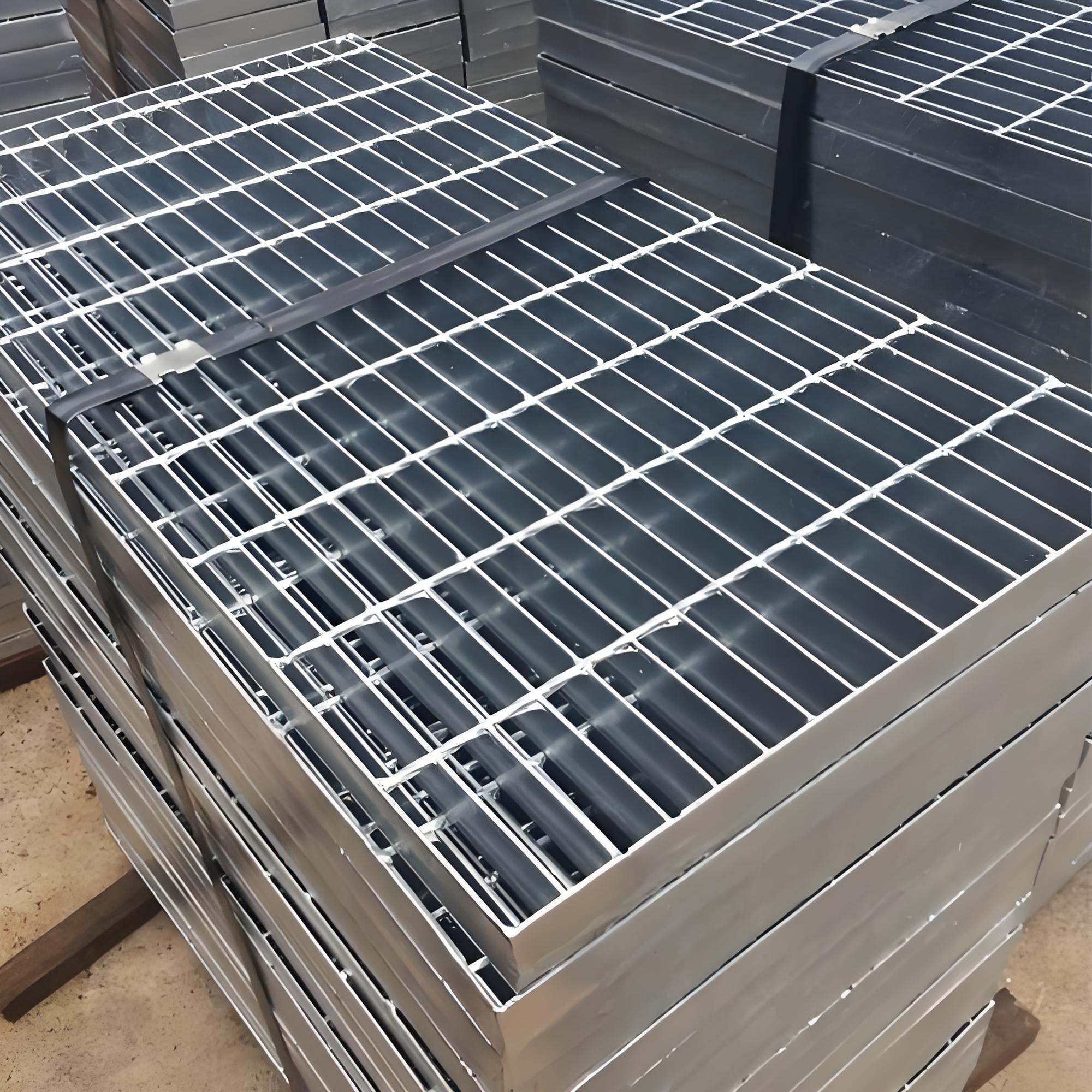
Toe plates may be required on elevated walkways and platforms to help prevent tools or small objects from falling. They are commonly used along open edges, around platforms, and near working areas where safety rules require object fall protection.
Edge banding closes open bar ends and improves handling safety. It also gives the walkway panel a finished appearance. Banding is recommended for exposed edges, cutouts, trench covers, stair treads, and custom-shaped panels.
| Custom Feature | What It Includes | Project Benefit |
|---|---|---|
| Custom panel size | Length and width made according to layout | Improves installation fit |
| Cutouts | Openings for pipes, columns, drains, and equipment | Reduces site cutting and installation delay |
| Toe plates | Raised plates along walkway edges | Helps prevent tools and objects from falling |
| Edge banding | Flat bars welded around panel edges | Improves safety, appearance, and edge strength |
| Panel numbering | Marks panels according to layout drawings | Improves site installation efficiency |
Installation method affects walkway grating safety, maintenance, coating condition, and long-term performance. Steel walkway grating can be fixed by welding, clips, bolts, or frame support depending on the project requirement.
Welding provides strong and permanent fixing. It is suitable for fixed walkways and platforms where panels do not need regular removal. If hot-dip galvanized grating is welded on site, the damaged zinc coating around weld points should be repaired after welding.
Clip fixing is common when panels need to be removable. It is useful for maintenance walkways, drainage areas, inspection zones, and areas where future access is required. Clips also reduce coating damage compared with welding.
Bolted installation is often used for stair treads, framed panels, and walkway sections that require secure but removable fixing. Bolt holes can be prepared by the manufacturer according to drawings.
The walkway support structure must be strong enough and properly aligned. The bearing bars should sit on the supports with enough bearing length. Uneven supports can create movement, noise, and unsafe walking conditions.
| Installation Method | Main Advantage | Suitable Use |
|---|---|---|
| Welding | Strong permanent fixing | Fixed industrial walkways and platforms |
| Clip fixing | Removable and less coating damage | Maintenance walkways and inspection access |
| Bolting | Secure and removable | Stair treads, framed walkway panels |
| Frame support | Good positioning and load transfer | Drainage walkways, trench covers, utility access |
Steel walkway grating is widely used because its open-grid structure provides practical advantages that solid steel plate cannot offer. These advantages include drainage, ventilation, light transmission, debris fall-through, easy inspection, and reduced surface accumulation.
Water can pass through the grating openings instead of collecting on the walking surface. This is useful in outdoor areas, water treatment plants, drainage channels, chemical facilities, bridge walkways, and washdown zones.
The open grid allows air to pass through the walkway. This is helpful in industrial plants, equipment platforms, rooftop access areas, and elevated structures where airflow is useful.
Steel walkway grating allows light to pass through between levels. This can improve visibility in multi-level platforms, mezzanines, service walkways, and industrial structures.
Walkway grating can be installed as removable panels when needed. Workers can lift panels to inspect pipes, drains, cables, or equipment below. In these areas, clip fixing or bolted fixing may be more practical than welding.
Dust, snow, small debris, and water can fall through the openings. This can reduce surface buildup and make the walkway easier to maintain, especially in outdoor or industrial environments.
| Advantage | Practical Value |
|---|---|
| Drainage | Reduces standing water on the walkway surface |
| Ventilation | Allows air movement around equipment and platforms |
| Light transmission | Improves visibility in multi-level access areas |
| Maintenance access | Removable panels allow inspection below the walkway |
| Lower surface buildup | Allows dust, snow, and small debris to pass through |
Steel walkway grating is used in many industrial sites because it provides strong access routes with drainage, ventilation, corrosion protection, and anti-slip options. The manufacturer should recommend specifications according to each application instead of using one standard panel for every project.
Power plants use steel walkway grating around boilers, turbines, pipe racks, cooling systems, platforms, and maintenance areas. Hot-dip galvanized or serrated grating may be selected depending on exposure and safety requirements.
Water treatment facilities require grating around tanks, channels, pumps, filters, and service walkways. Wet conditions often require galvanized or stainless steel grating, and serrated surfaces can improve safety.
Chemical plants may require corrosion-resistant walkway grating. Depending on chemical exposure, galvanized carbon steel, stainless steel, or special material may be selected. The manufacturer should ask about the environment before recommending a material.
Mining sites, steel mills, cement plants, and heavy industrial areas need strong walkway grating for platforms, conveyors, service routes, and drainage areas. These projects may need heavier bearing bars and strong fixing methods.
Warehouses may use walkway grating for mezzanines, access platforms, drainage covers, and maintenance routes. The grating should be selected according to pedestrian load, cart movement, and support span.
| Industrial Site | Common Walkway Use | Key Requirement |
|---|---|---|
| Power plant | Equipment access and elevated platforms | Load capacity, corrosion protection, safe fixing |
| Water treatment plant | Tank walkways and channel access | Wet-area corrosion resistance and anti-slip surface |
| Chemical plant | Service walkways and maintenance platforms | Material selection according to corrosion exposure |
| Mining site | Conveyor access and heavy-duty platforms | Strong structure and impact resistance |
| Warehouse | Mezzanine walkways and service routes | Walking comfort and accurate panel layout |
Quality control is important because walkway grating is used as a walking surface. A reliable manufacturer should inspect raw material, welding, dimensions, flatness, surface treatment, anti-slip surface, panel labels, and packing before delivery.
The factory should check bearing bar size, cross bar size, steel grade, thickness, straightness, and surface condition. Incorrect or inconsistent material can affect load capacity and final appearance.
Welded joints should be firm and consistent. Loose cross bars or weak banding can affect safety and service life. Welding quality should be checked before galvanizing or final surface treatment.
Panel length, width, diagonal difference, bearing bar spacing, cross bar spacing, cutouts, holes, toe plates, and edge banding should be checked according to drawings. This is especially important for custom walkway projects.
For galvanized walkway grating, the manufacturer should check zinc coating coverage, zinc buildup, bare spots, sharp points, blocked openings, and coating damage. For stainless steel grating, scratches, weld discoloration, burrs, and finish consistency should be reviewed.
Walkway panels should be flat and stable. Warped panels can create trip hazards or installation difficulty. Serrated surfaces should be checked to ensure the anti-slip profile is consistent.
| Inspection Item | What to Check | Purpose |
|---|---|---|
| Raw material | Grade, size, thickness, straightness | Ensures correct strength and fabrication quality |
| Welding | Cross bar welds, banding welds, panel rigidity | Improves structural reliability |
| Dimensions | Length, width, spacing, diagonal, cutouts | Reduces site installation problems |
| Surface finish | Galvanizing, coating, burrs, sharp zinc, scratches | Improves durability and handling safety |
| Flatness | Panel warping, rocking, uneven surface | Improves walking comfort and installation quality |
| Packing | Labels, bundle strength, accessories, quantity | Prevents delivery mistakes and damage |
Packaging and delivery affect the final condition of steel walkway grating when it reaches the jobsite. Walkway projects often include many different panel sizes, cutouts, toe plates, and installation marks. Good packing and labeling help reduce confusion during installation.
Steel walkway grating panels are usually packed in bundles with steel straps. The bundle should be strong enough for forklift handling, container loading, and site unloading. Large or heavy panels may require extra supports.
Hot-dip galvanized surfaces are durable, but rough handling can still damage zinc coating. Painted or stainless steel walkway grating may need more careful surface separation to reduce scratches.
For custom walkway systems, panel labels should match the layout drawing. This helps installers identify the correct panel position and bearing bar direction. Labels should remain readable after shipping.
Fixing clips, bolts, washers, stair tread fasteners, handles, and small accessories should be packed separately and clearly marked. Missing accessories can delay walkway installation.
For export orders, the manufacturer should provide packing lists, shipping marks, loading photos, and container loading plans when needed. Good export support helps buyers track order status and check goods before arrival.
| Delivery Item | Recommended Practice | Buyer Benefit |
|---|---|---|
| Bundle packing | Use strong straps and stable supports | Reduces bending and transport damage |
| Surface protection | Reduce rough rubbing and impact | Protects galvanized, painted, or stainless finish |
| Panel labels | Mark panel numbers according to layout drawings | Improves installation efficiency |
| Accessory packing | Pack clips and bolts separately with clear labels | Prevents missing installation parts |
| Loading record | Provide packing list and loading photos when needed | Supports export order checking |
Choosing a reliable steel walkway grating manufacturer requires checking more than price. Buyers should review production capability, technical communication, custom fabrication experience, quality control, surface treatment ability, packing quality, and export delivery support.
A manufacturer with walkway project experience understands bearing bar direction, support span, anti-slip surface, panel layout, toe plates, fixing methods, and site installation requirements. This experience helps reduce mistakes before production.
The manufacturer should be able to discuss load capacity, clear span, bearing bar size, spacing, surface type, corrosion environment, and fixing method. If the buyer does not know the best specification, the manufacturer should ask practical questions before recommending options.
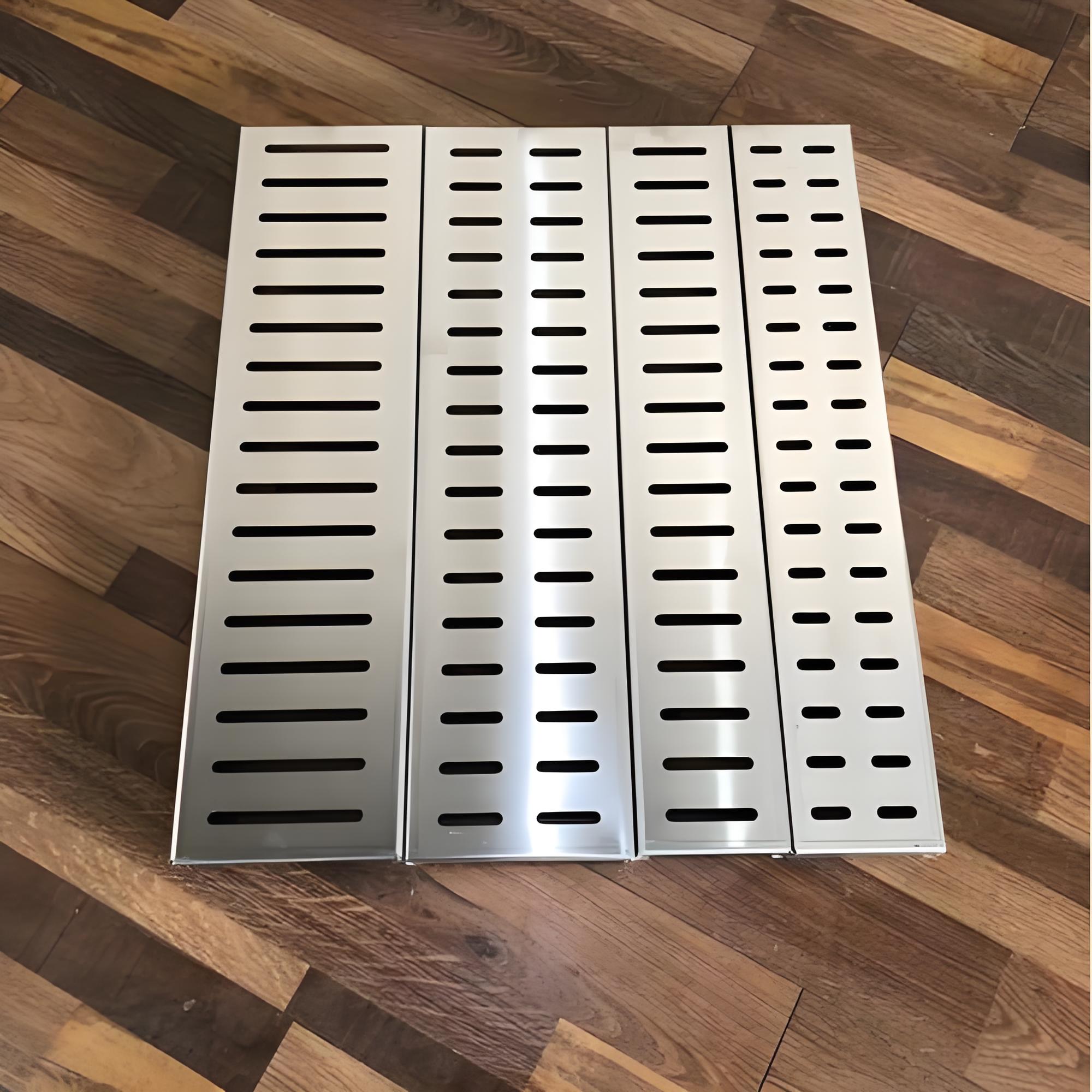
Walkway projects often need custom panels, cutouts, notches, edge banding, toe plates, stair tread details, and panel numbering. A capable factory should process these details according to drawings.
For outdoor walkway projects, hot-dip galvanizing quality is important. The manufacturer should inspect coating coverage, zinc buildup, bare spots, sharp points, and panel deformation. For stainless steel walkway grating, surface cleanliness and finishing should also be checked.
When comparing manufacturers, make sure each quotation uses the same material, bearing bar size, spacing, cross bar spacing, panel size, surface type, accessories, packing, and delivery terms. A lower price may mean lighter grating, wider spacing, fewer accessories, or weaker packing.
For buyers looking for factory-based steel walkway grating supply, Anping County Chuansen Silk Screen Products Co., Ltd. can be considered when evaluating galvanized walkway grating, welded steel grating, serrated grating, trench covers, stair treads, and custom grating panels. Before ordering, buyers should still confirm drawings, load requirements, bearing bar direction, surface treatment, installation method, packing details, and delivery terms.
| Manufacturer Selection Point | What to Confirm | Why It Matters |
|---|---|---|
| Production capability | Welded, serrated, galvanized, stainless, custom walkway grating | Shows whether the factory can support different walkway needs |
| Technical knowledge | Load, clear span, bearing direction, spacing, surface type | Reduces risk of wrong specification |
| Drawing support | Cutouts, toe plates, banding, panel numbering | Improves installation accuracy |
| Surface treatment control | Galvanizing quality, stainless finish, coating inspection | Improves corrosion resistance and appearance |
| Packing and export | Bundle strength, labels, accessories, loading photos | Reduces delivery damage and site confusion |
How do I choose a steel walkway grating manufacturer?
Choose a steel walkway grating manufacturer by checking production capacity, walkway project experience, custom fabrication ability, bearing bar and spacing options, load design support, serrated surface options, hot-dip galvanizing quality, installation accessory supply, packing method, and export delivery experience. A reliable manufacturer should confirm clear span, bearing bar direction, surface type, load condition, and drawings before production.
What is the best steel grating for walkways?
The best steel grating for walkways depends on the environment and load. For dry indoor walkways, plain welded steel grating may be enough. For outdoor or wet walkways, serrated hot-dip galvanized steel grating is often better because it provides corrosion protection and improved slip resistance. For marine, chemical, or food-related areas, stainless steel walkway grating may be more suitable.
Can steel walkway grating manufacturers make custom panels?
Yes, steel walkway grating manufacturers can make custom panels according to project drawings. Custom options include cut-to-size panels, pipe openings, column notches, toe plates, edge banding, stair tread details, bolt holes, lifting holes, fixing clips, and panel numbering. Custom fabrication helps reduce site cutting, improve installation fit, and protect the surface finish.
