
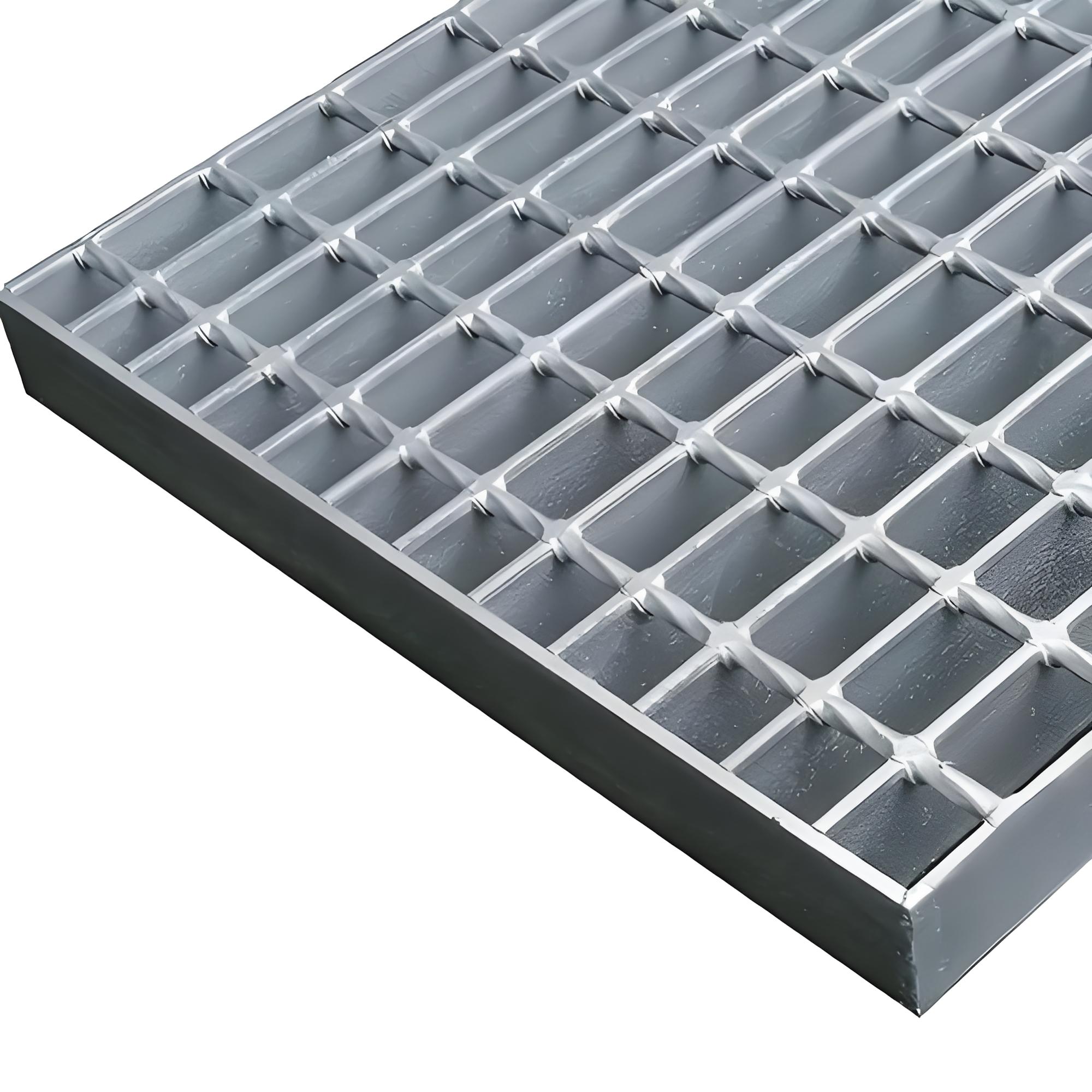
Safety walkway grating is designed to give workers and visitors a stable, slip-resistant, load-bearing surface in wet, oily, outdoor, industrial, marine, chemical, and high-traffic environments. A safe grating system is not defined by serration alone. It must combine the right surface profile, material, bearing-bar size, mesh opening, support span, corrosion protection, toe-plate detail, fixing method, and inspection plan. Manufacturer prices vary because these safety requirements directly affect finished weight, fabrication time, coating cost, and long-term service life.
A walkway grating is safe when it supports the intended load, provides reliable traction, drains liquids effectively, has openings suitable for the people and equipment using it, remains securely fixed to its supports, and resists corrosion or damage in its working environment.
Safety should be considered as a complete system. A high-quality serrated grating panel can still create a hazard if it is installed in the wrong span direction, left loose without clips, supported on insufficient bearing width, heavily corroded, or used in an area where the openings trap heels or narrow wheels.
| Safety Factor | What It Means | Common Failure if Ignored |
|---|---|---|
| Slip resistance | The surface must provide enough grip for wet, oily, icy, muddy, or contaminated conditions. | Slips and falls despite an otherwise strong platform. |
| Load capacity | The grating must support workers, tools, equipment, and other expected loads. | Excessive deflection, bent bars, cracked welds, or structural failure. |
| Opening design | The mesh must suit footwear, dropped-object risk, wheel size, and drainage needs. | Heel traps, dropped tools, unstable footing, or blocked drainage. |
| Fixing and support | Panels must be secured and correctly supported on all bearing edges. | Panel movement, uplift, rattle, edge damage, or trip hazards. |
| Corrosion resistance | The material and finish must suit moisture, salt, chemicals, and weather exposure. | Reduced bearing-bar thickness, weak connections, sharp edges, and early replacement. |
For U.S. general-industry workplaces, OSHA requires walking-working surfaces to be kept free of hazards including corrosion, leaks, spills, snow, and ice. It also requires each surface to support the maximum intended load. The official OSHA 1910.22 requirements address the installed walking-working surface, not simply the individual grating panel.
Different safety walkway grating types are suitable for different environments. A serrated steel bar grating panel may be ideal for an outdoor factory platform, while gritted FRP can be better for a corrosive chemical area. Perforated metal can suit commercial or food-processing access, and expanded metal can provide economical anti-slip performance for light industrial stairs and platforms.
Serrated bar grating uses bearing bars with notched upper edges. These serrations improve grip for safety footwear and are especially useful where water, oil, mud, frost, snow, or industrial residue may be present.
Serrated bar grating can be manufactured from carbon steel, galvanized steel, stainless steel, and aluminum. It is commonly used for refinery walkways, wastewater-treatment platforms, marine accessways, industrial stairs, outdoor catwalks, towers, loading areas, and maintenance routes.
Expanded metal is produced by cutting and stretching steel or aluminum sheet to create a raised mesh pattern. It provides an open, lightweight surface with good grip and drainage. Expanded metal can be formed into plank-style walkways, stair treads, ramps, and maintenance access panels.
Expanded metal is often economical, but its load capacity depends on sheet thickness, mesh pattern, profile depth, panel width, and support spacing. It should be selected from verified load data rather than only by visual appearance.
Perforated walkway panels are made from metal sheet with punched holes, slots, raised buttons, dimples, or formed anti-slip patterns. They can offer a more continuous walking surface than open bar grating while still allowing water and debris to pass through.
Perforated safety grating is useful in commercial buildings, food-processing facilities, public access systems, equipment platforms, and stairways where smaller openings, a clean surface, or additional foot support are needed.
FRP, also known as fiberglass reinforced plastic grating, is a corrosion-resistant composite product made from resin and glass-fiber reinforcement. It is lightweight, nonconductive, nonmagnetic, and often supplied with an integrally bonded gritted top surface.
FRP safety grating is commonly used in chemical plants, wastewater facilities, electroplating workshops, cooling towers, offshore structures, desalination plants, electrical areas, and marine projects. The resin type, panel thickness, support span, fire requirement, and grit surface should be specified before purchase.
| Safety Grating Type | Main Strength | Best Environment | Points to Check |
|---|---|---|---|
| Serrated steel bar grating | High strength and strong mechanical grip. | Outdoor industrial, wet, oily, and high-traffic platforms. | Galvanizing, span, bar size, fixing clips, corrosion exposure. |
| Expanded metal grating | Lightweight open surface with good traction. | Maintenance stairs, light industrial walkways, fire escapes. | Sheet thickness, mesh profile, support spacing, edge reinforcement. |
| Perforated safety grating | Fine openings and anti-slip formed surface. | Commercial, public, food, and equipment-access areas. | Drainage, hole size, cleaning, load capacity, slip pattern. |
| FRP grating | Corrosion resistance and gritted anti-slip surface. | Chemical, wastewater, marine, electrical, and wet-process areas. | Resin type, fire properties, UV exposure, support span, fastening. |
The environment determines the safest surface and material. A walkway that performs well indoors may become hazardous outdoors in rain or ice. A plain galvanized panel may suit a dry warehouse but not an oil-exposed loading platform. A gritted FRP panel may be excellent around chemicals but may not suit a high-temperature or heavy point-load location.
Wet areas include wastewater plants, cooling towers, rain-exposed platforms, washdown zones, food plants, marine decks, and drainage channels. Serrated metal grating or gritted FRP is often preferred because both provide traction and allow water to drain through the open mesh.
The support structure should also allow water to escape. A grating panel that drains well can still leave standing water if the platform beneath it is flat, blocked, or poorly detailed.
Oil, grease, fuel, lubricants, and process residue can reduce traction even on many textured surfaces. Serrated steel grating, coarse-grit FRP, and aggressive formed safety tread are common choices for these areas. Cleaning procedures remain important because no surface can remain safe if it is covered by a thick layer of oil or sludge.
Outdoor walkways in cold climates need strong drainage and a surface that offers mechanical grip. Serrated galvanized steel or serrated stainless steel bar grating is frequently used on access stairs, towers, rooftop walkways, and utility platforms exposed to frost, ice, and snow.
Open grating can reduce standing water, but snow and ice can still accumulate. The platform design should include maintenance access, safe snow removal practices, handrails, lighting, and secure panel fixing.
High-traffic pedestrian areas require sufficient stiffness, smaller opening sizes where appropriate, and reliable fixing. The grating should not feel flexible, shift under foot traffic, or create a discomfort point at panel joints. For public access, heel safety, accessibility, visual appearance, and edge alignment may be as important as basic load capacity.
| Condition | Practical Starting Option | Additional Design Focus |
|---|---|---|
| Rain and washdown water | Serrated galvanized steel or gritted FRP. | Drainage, corrosion resistance, clip fixing, cleaning access. |
| Oil and grease | Serrated metal or coarse-grit FRP. | Cleaning procedure, spill control, chemical compatibility. |
| Snow and ice | Serrated galvanized or stainless steel. | Open area, handrails, lighting, de-icing compatibility. |
| Chemical splash | FRP with suitable resin or selected stainless steel. | Chemical concentration, temperature, fire requirement, support spacing. |
| High pedestrian traffic | Close-mesh metal grating or perforated panel. | Deflection, opening size, joints, accessibility, aesthetics. |
| Marine platform | 316 stainless steel, aluminum, or marine-grade FRP. | Chlorides, galvanic isolation, fasteners, wind uplift. |
Anti-slip performance comes from the way the surface interacts with footwear, water, debris, and walking direction. Different surface designs offer different levels of grip and cleaning performance.
Serrated bearing bars provide mechanical bite against the sole of a work boot. They are especially effective on stairs, ramps, outdoor walkways, offshore platforms, and industrial accessways where the surface can be wet or dirty.
Perforated safety panels can have punched and raised lugs, dimples, or buttons. These features provide traction while the perforations allow water to drain. They are useful for stair treads, light-duty ramps, equipment access, and public or commercial walkways.
FRP grating commonly uses an integrally bonded silica-grit surface. Fine grit is suitable for moderate wet exposure and easier cleaning. Coarse grit provides more aggressive traction for oily, muddy, offshore, or severe wet areas but may retain debris more easily.
Checker plate has raised diamond or chequer patterns that improve grip on a solid sheet. It can be useful where small objects must not fall through the walking surface. It provides less drainage than open grating, so it should be used carefully in wet outdoor locations.
| Surface Design | Slip-Resistance Benefit | Cleaning and Drainage Consideration |
|---|---|---|
| Plain bar grating | Suitable for dry, controlled environments. | Good drainage, but limited traction in oil or ice. |
| Serrated bar grating | High mechanical grip in wet and contaminated conditions. | Open drainage; serrations may retain debris in some applications. |
| Fine grit FRP | Good traction for moderate wet exposure. | Moderate cleaning effort and good corrosion resistance. |
| Coarse grit FRP | Strong traction for severe wet, oily, and muddy areas. | More difficult to clean than fine-grit surfaces. |
| Perforated raised-lug panel | Good grip with fine distributed openings. | Good drainage but small holes can need cleaning. |
| Checker plate | Raised pattern improves grip on a solid surface. | Requires separate drainage strategy in wet areas. |
Safety walkway grating must support the expected service load without excessive deflection. A panel can look strong but be unsafe if the bearing bars run in the wrong direction or the support span is greater than the product was designed for.
For metal bar grating, bearing bars carry the main load. They should run from one support to the other across the clear span. Cross bars hold the panel together but are not normally the primary load-bearing members.
A common installation error is rotating a grating panel ninety degrees from its intended orientation. This can reduce capacity and stiffness substantially. Drawings should clearly mark the bearing-bar direction before installation.
Deflection is the amount the panel bends under load. Even if a grating panel does not fail structurally, excessive deflection can make a walkway feel unstable, create a trip point at a panel edge, damage clips, affect drainage, or reduce confidence for workers carrying tools.
FRP and aluminum grating can require particular attention to deflection because their stiffness differs from carbon steel. The manufacturer should select the panel using the actual clear span, support arrangement, intended load, and allowable deflection rather than only the outside panel dimensions.
The ANSI/NAAMM MBG 531-24 Metal Bar Grating Manual includes technical data, specifications, recommended practices, load tables, and installation details for steel, stainless steel, and aluminum grating. These resources are useful for specifying bar grating in industrial walkway applications.
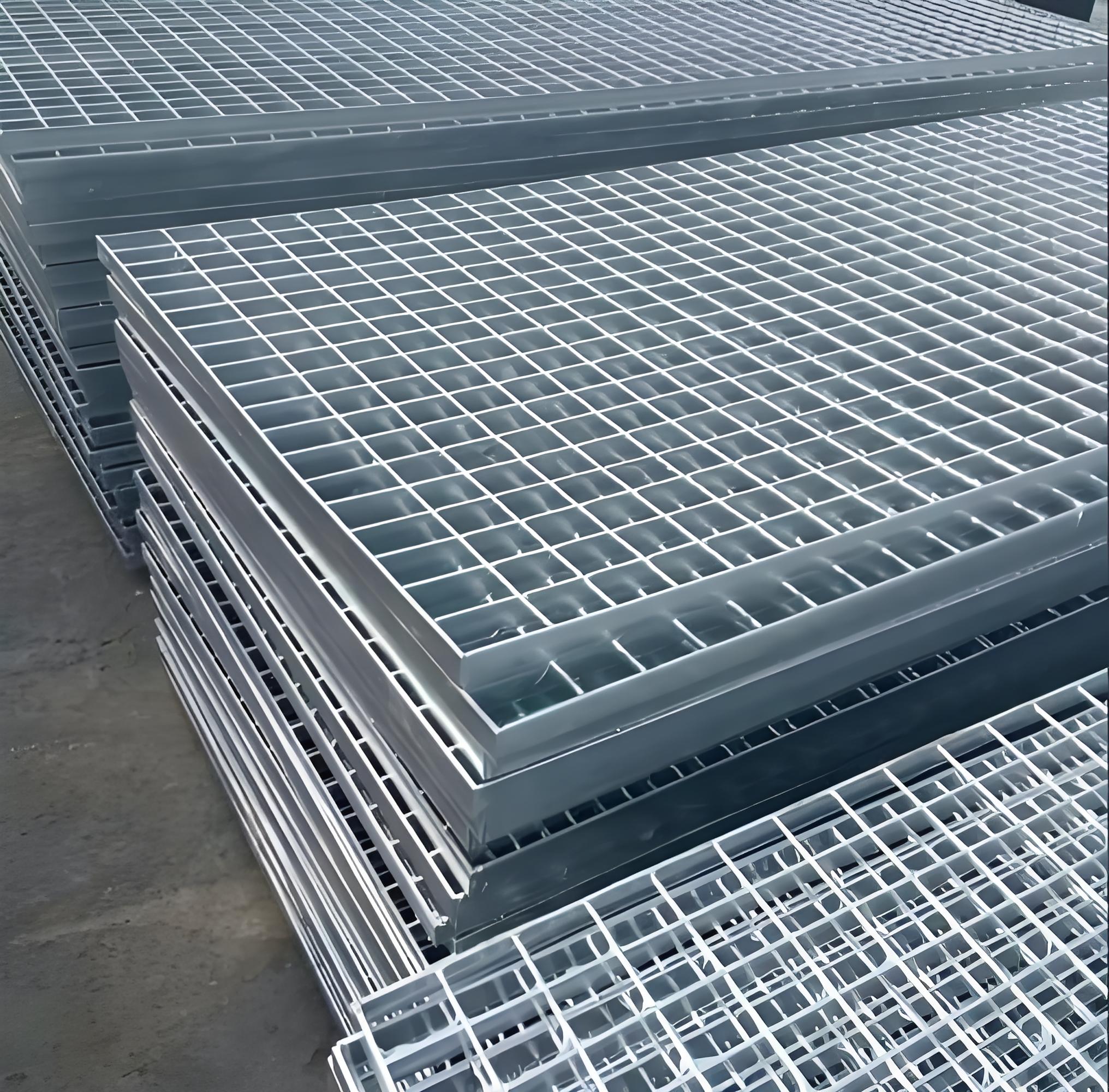
Opening size affects three important walkway characteristics: foot safety, dropped-object control, and drainage. The most open panel is not always the safest choice, and the smallest opening is not always the best for drainage.
Typical metric bar grating patterns include 25 mm × 100 mm, 30 mm × 100 mm, 30 mm × 50 mm, 32 mm × 100 mm, and 40 mm × 100 mm. The first dimension generally refers to bearing-bar spacing and the second to cross-bar spacing.
| Opening or Mesh Type | Main Advantage | Potential Limitation | Typical Application |
|---|---|---|---|
| Close mesh | Better foot support and reduced dropped-object risk. | Higher material cost and lower open area. | Public walkways, tool-sensitive platforms, close-access areas. |
| Standard industrial mesh | Balanced drainage, strength, and price. | May not suit high heels or very small wheels. | Factories, platforms, catwalks, maintenance walkways. |
| Open mesh | High drainage, ventilation, and light transmission. | Less support for small footwear and objects. | Outdoor industrial and low-traffic utility areas. |
| Perforated small holes | Continuous foot support and heel-safe options. | May clog more easily than open bar grating. | Commercial, food, public, and hygiene-sensitive areas. |
| FRP square mesh | Good drainage with integral gritted surface. | Support span and resin selection must be verified. | Chemical plants, wastewater, marine, electrical areas. |
For public or commercial walkways, the opening size should suit the expected footwear and mobility equipment. High heels, canes, wheelchairs, stroller wheels, trolley casters, and bicycle tyres can all be affected by open grating patterns.
If a walkway is used by the public, the project should check local accessibility requirements and building regulations. A standard industrial 30 mm bar grating mesh may not be appropriate for every public-access surface.
Open grating helps water pass through the platform, but the space below must also drain. Where dust, leaves, product residue, or sediment accumulates, a cleaning plan is necessary. A grating surface should not be selected on drainage performance alone if it creates a difficult-to-clean hazard in the actual process environment.
Material choice affects safety, corrosion resistance, structural behavior, installation effort, maintenance, and price. The most economical option at purchase may not provide the lowest life-cycle cost in a corrosive or difficult-to-maintain location.
Carbon steel is strong and economical but requires protection in wet or outdoor environments. Hot-dip galvanized steel is a common choice for factory platforms, outdoor walkways, stairs, power plants, utility facilities, and general industrial access systems.
Galvanized steel performs well in many atmospheric environments but may not be suitable for strong acids, continuous chemical splash, severe salt spray, or high-chloride marine conditions. The coating should be inspected after field cutting, drilling, welding, or mechanical damage.
Aluminum grating is lightweight and corrosion resistant. It is useful for removable panels, roof access, marine-adjacent platforms, pedestrian bridges, and structures where reducing dead load matters. Aluminum should be checked for deflection and should be isolated appropriately from dissimilar metals in wet conditions.
Stainless steel grating is selected for high-hygiene, washdown, coastal, marine, chemical, and architectural projects. Grade 304 is commonly used for many indoor wet environments. Grade 316 or 316L is usually preferred for higher chloride exposure, coastal air, saltwater proximity, swimming pools, and selected chemical applications.
FRP grating is a strong option for corrosive, wet, and electrically sensitive areas. It does not rust and is available with high-traction gritted surfaces. Its structural performance depends on panel thickness, mesh type, resin system, support span, temperature, and fire-performance requirements.
ASTM F3059-24 provides testing and performance requirements for FRP gratings used in marine construction and shipbuilding, including personnel-safety performance. It is specifically a marine and shipbuilding standard, so it should not be treated as a universal substitute for all local building, fire, or industrial regulations. See ASTM F3059-24 for the scope.
| Material | Safety Benefit | Best Application | Important Check |
|---|---|---|---|
| Galvanized steel | High strength with economical corrosion protection. | Outdoor industrial and general factory walkways. | Coating condition, salt exposure, bar size, fixing clips. |
| Aluminum | Low weight and good atmospheric corrosion resistance. | Roof access, removable panels, marine-adjacent structures. | Deflection, galvanic isolation, chemical exposure. |
| 304 stainless steel | Durable and hygienic in many wet environments. | Food plants, commercial access, washdown platforms. | Cleaning chemicals and chloride exposure. |
| 316 or 316L stainless steel | Higher resistance in many coastal and chloride environments. | Marine, coastal, pool, and selected chemical applications. | Actual chemical concentration, surface cleaning, fastener compatibility. |
| FRP grating | Corrosion resistance, nonconductive properties, gritted traction. | Chemical, wastewater, marine, and electrical areas. | Resin type, fire requirement, support span, UV exposure. |
Corrosion protection changes both the initial price and the long-term maintenance requirement of safety walkway grating. The correct finish depends on moisture, salt, chemicals, abrasion, cleaning practice, and access for future maintenance.
Hot-dip galvanizing is one of the most common corrosion-protection methods for carbon steel walkway grating. It adds zinc coating and handling cost but can significantly improve service life in many outdoor and industrial conditions.
The final galvanizing cost depends on the finished grating weight, surface area, fabrication detail, number of cut edges, panel size, galvanizing standard, and inspection requirement. Heavy bar grating may cost more to galvanize than light grating because it has more steel and surface area.
Powder coating and paint may provide color, identification, architectural appearance, and additional barrier protection. These finishes can be useful for controlled environments but may be damaged by impact, abrasion, clips, bolts, field cutting, or heavy footwear. Damaged coating should be repaired according to the project requirement.
Stainless steel grating may be supplied with mill finish, pickled finish, passivated finish, brushed finish, or polished finish. Pickling and passivation can be valuable after welding and fabrication in corrosion-sensitive or hygiene-sensitive projects. These processes add cost but can improve the final surface condition.
For FRP safety grating, the resin system and grit surface affect price. Standard polyester resin may be suitable for general wet conditions, while vinyl ester or phenolic systems can be required for more demanding chemical or fire-related applications. Coarse grit can increase traction but may also add material and finishing cost.
Custom safety walkway grating is often required around columns, pipes, cable trays, valves, ladders, machinery, drainage openings, and handrail posts. A manufacturer can fabricate grating panels from approved drawings and provide the edge treatment needed to maintain safety around openings.
Cutouts should be accurately dimensioned and properly banded. A large opening can reduce panel strength if it cuts through bearing bars without reinforcement. The manufacturer may add edge banding, flat-bar trim, support angles, or reinforced frames around the opening.
Toe plates help prevent tools, components, and loose materials from falling from elevated platforms. They are often required around the edge of walkways, mezzanines, and maintenance platforms where there is a dropped-object risk. Toe plates can be welded to the support structure or supplied as part of the grating and handrail system.
Grating clips prevent removable panels from shifting, lifting, rattling, or being displaced by vibration, wind, foot traffic, or maintenance work. Common fixing methods include saddle clips, clamp clips, welded clips, bolted angles, self-tapping fasteners, and custom brackets.
The clip material should suit the grating material and environment. Galvanized clips are common for galvanized steel grating, while stainless steel clips may be required for stainless steel, coastal, marine, or corrosive installations.
| Custom Detail | Purpose | Information Needed for Fabrication |
|---|---|---|
| Pipe cutout | Allows grating to fit around process piping or columns. | Pipe diameter, center position, clearance, reinforcement requirement. |
| Toe plate | Reduces dropped-object risk at exposed platform edges. | Plate height, thickness, mounting method, edge location. |
| Lifting handle | Allows safe removal of access panels for maintenance. | Panel weight, handle location, flush or raised requirement. |
| Fixing clips | Prevents movement, uplift, rattle, and panel displacement. | Support type, grating type, material, clip spacing, environment. |
| Frame or support angle | Provides stable bearing support around the panel. | Clear opening, support width, steel size, weld or bolt detail. |
| Custom panel marking | Helps correct installation of large projects. | Drawing number, panel reference, marking method, location. |
Safety walkway grating should be manufactured under a consistent process because small variations in bearing-bar size, welding, mesh spacing, flatness, coating, or edge treatment can affect installation and performance.
The manufacturer should confirm the material grade, dimensions, and source before production. For stainless steel projects, buyers may request material test certificates, heat traceability, or positive material identification. For FRP products, resin type, panel thickness, grit surface, and reinforcement system should be documented.
For welded bar grating, the connections between bearing bars and cross bars should be secure and consistent. For custom panels, edge banding, cutout reinforcement, clip locations, and frame details should follow approved drawings.
Manufacturers producing steel, stainless steel, and aluminum bar grating can reference technical guidance such as the ANSI/NAAMM MBG 531-24 Metal Bar Grating Manual. It includes technical data, recommended practices, load tables, and typical installation details.
Typical checks include panel length, width, diagonal measurement, bearing-bar direction, bearing-bar spacing, cross-bar spacing, edge banding, cutout position, flatness, and panel identification. Accurate dimensions reduce installation problems and prevent unsafe gaps between panels.
Galvanized grating should be checked for coating coverage and handling damage. Powder-coated grating should be inspected for scratches, chips, and exposed metal. Stainless steel panels should be protected from carbon steel contamination and surface damage. FRP grating should be checked for resin coverage, grit consistency, cracks, voids, and edge quality.
Walkway grating is often heavy and can be damaged if packed poorly. Panels should be bundled safely, marked clearly, protected from movement during transport, and packed to suit forklift handling and container loading. For export projects, the supplier should provide packing lists, gross weight, net weight, bundle dimensions, and loading information.
Safety walkway grating prices are commonly calculated by square meter, by finished panel, or by kilogram plus fabrication. The correct pricing method depends on the product type and order quantity. Standard rectangular panels are often quoted by square meter, while custom panels with cutouts, frames, toe plates, and clips are usually priced individually.
For preliminary budgeting, basic untreated carbon steel grating may be approximately US$15–45 per square meter. Standard hot-dip galvanized steel grating may be approximately US$25–80 per square meter. Aluminum grating may be approximately US$50–170 per square meter, and common stainless steel grating may be approximately US$55–180 per square meter.
Safety-focused features such as serrated bearing bars, close mesh, heavy-duty bar sizes, toe plates, reinforced frames, custom cutouts, corrosion-resistant clips, special coatings, and drawing-based fabrication can increase the price to US$100–350 per square meter or more. These are general factory-budget references only; the actual quotation depends on the complete specification, order size, material market, packing, and delivery term.
| Product Type | Typical Factory Budget Range | Price Includes or Depends On |
|---|---|---|
| Untreated carbon steel bar grating | Approximately US$15–45/m² | Finished weight, bearing-bar size, mesh, panel dimensions, and order quantity. |
| Galvanized serrated steel grating | Approximately US$25–80/m² | Steel weight, serration, zinc coating, banding, and fabrication. |
| Aluminum safety grating | Approximately US$50–170/m² | Alloy, bar depth, locking method, finish, and panel configuration. |
| Stainless steel safety grating | Approximately US$55–180/m² | 304 or 316 grade, bar size, finish, welding, and custom details. |
| FRP grating | Approximately US$35–120/m² | Resin type, thickness, mesh, grit surface, fire performance, and cuts. |
| Heavy-duty custom safety panel | Approximately US$100–350+/m² | Load requirement, frame, reinforcement, special finish, and engineering. |
For a custom panel, a useful pricing method is:
Panel price = grating area × base material price + cutout and banding charges + toe plate and frame charges + clips and fasteners + surface-treatment cost + packing and freight allocation.
For example, a simple 1000 mm × 1000 mm galvanized serrated panel may be priced mainly by its finished kg/m². A 1000 mm × 1000 mm panel with two pipe cutouts, reinforced edges, a toe plate, stainless clips, and custom marking will cost more because of the additional fabrication work.
Current factory price references for industrial metal grating show broad ranges by material and indicate that close mesh, serrated surfaces, heavy bearing bars, special finishes, and custom fabrication can significantly increase the unit cost. See this industrial metal grating factory price guide for a general comparison.
An accurate safety walkway grating quote requires a complete description of the panel and its use. The more detail supplied at the beginning, the less likely the project will need redesign, rework, or additional charges after production begins.
“Please quote serrated hot-dip galvanized steel walkway grating for an outdoor maintenance platform. Panel size: 1000 mm × 1200 mm. Bearing bars: 30 mm × 3 mm at 30 mm centers, spanning 1000 mm between supports. Cross bars: 100 mm centers. Include four-side edge banding, two 150 mm pipe cutouts with reinforced trim, 100 mm toe plate on one side, and galvanized saddle clips. The platform is exposed to rain and occasional oil. Please state finished kg/m², load-table reference, galvanizing standard, clip quantity, packing method, lead time, FOB price, and CIF destination price.”
What is the safest walkway grating for wet areas?
Serrated galvanized steel grating and gritted FRP grating are common choices for wet areas because both provide traction and allow water to drain through the surface. The best option depends on corrosion exposure, chemical contact, required load, support span, cleaning method, and whether the area is indoor, outdoor, coastal, or industrial.
How much does safety walkway grating cost per square meter?
Standard galvanized safety walkway grating often costs about US$25–80 per square meter at factory level, while FRP may cost about US$35–120 per square meter, aluminum about US$50–170 per square meter, and stainless steel about US$55–180 per square meter. Custom cutouts, serrated surfaces, heavy-duty bars, frames, toe plates, clips, and special finishes increase the final price.
Should walkway grating be serrated?
Serrated grating is usually recommended for wet, oily, muddy, icy, outdoor, and industrial locations because it provides stronger mechanical grip. Plain grating can be suitable for dry, clean, controlled environments or applications where easier washdown and a smoother surface are more important.
