

A Reticuline steel grate is a roadway drainage grate built with riveted bar-grating construction rather than conventional welded cross bars. It is commonly associated with curb inlets, gutter inlets, drop inlets, ditch drains, and other stormwater collection points in North American roadway work. Reticuline grate geometry is used in several highway-drainage references and municipal specifications, but it is not a universal substitute for every standard steel bar grate. A reliable manufacturer must match the riveted grate, frame, hydraulic opening pattern, traffic load, support condition, corrosion protection, and local DOT or municipal drawing requirements as one complete drainage assembly.
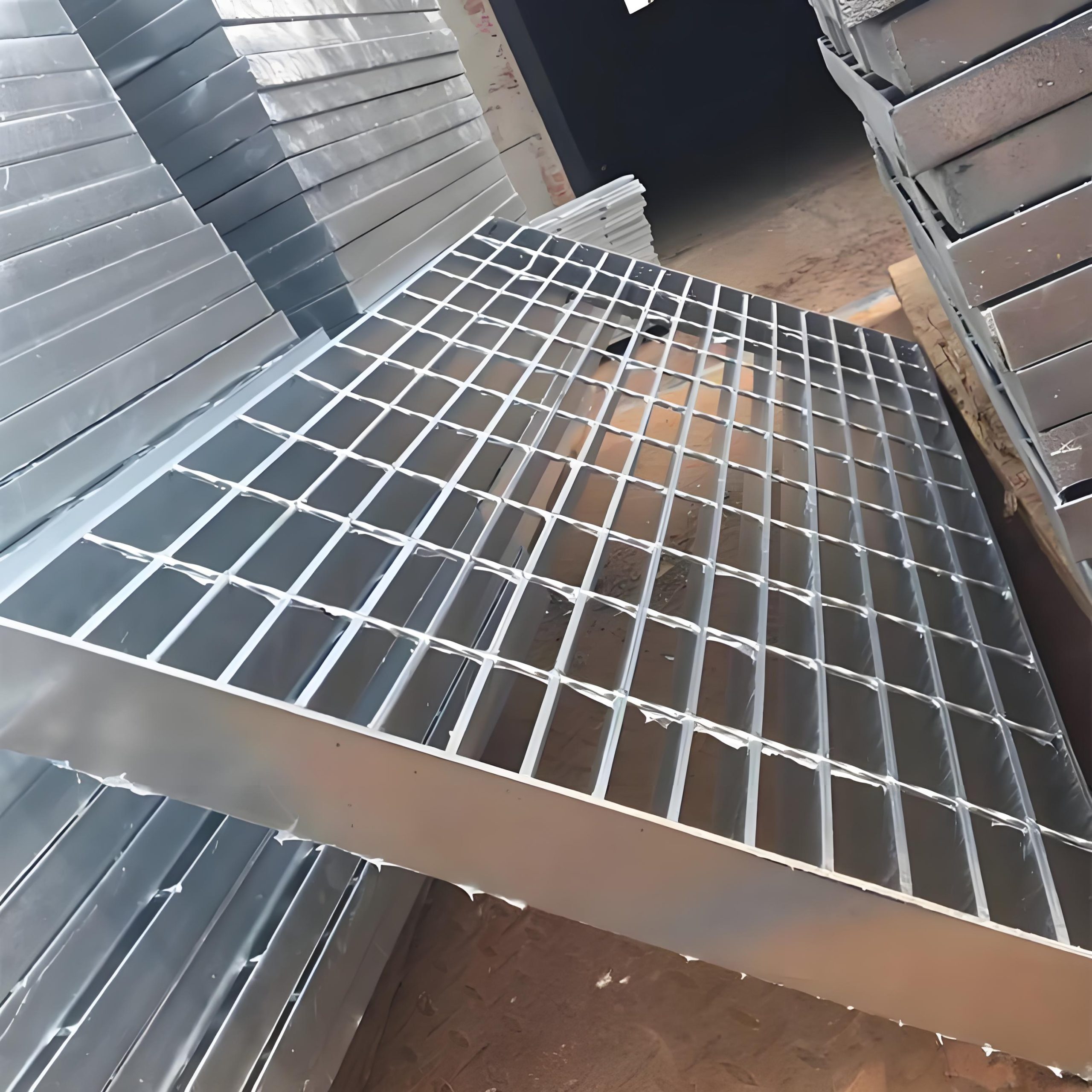
A Reticuline steel grate is a type of riveted bar grating. It uses straight load-bearing bars connected to crimped rectangular cross bars, commonly called Reticuline bars, by cold press riveting. The crimped cross bars are raised slightly above the top plane of the bearing bars during assembly, creating a distinctive grid pattern and a textured walking or traffic surface.
In roadway drainage work, “Reticuline grate” is often used as a specific grate geometry in hydraulic design manuals, stormwater-inlet details, DOT drawings, and municipal specifications. It should not be treated as a generic description for all welded steel grating, cast iron grates, or standard trench-drain covers.
Riveted grating is one of the oldest bar-grating constructions. Because the bearing bars and crimped cross bars are mechanically joined by rivets, it can provide strong resistance to repeated loading, fatigue, and impact when properly designed and supported. This is one reason riveted grating is used in heavy-duty applications such as roadway drainage, bridge decking, utility infrastructure, and municipal drain systems.
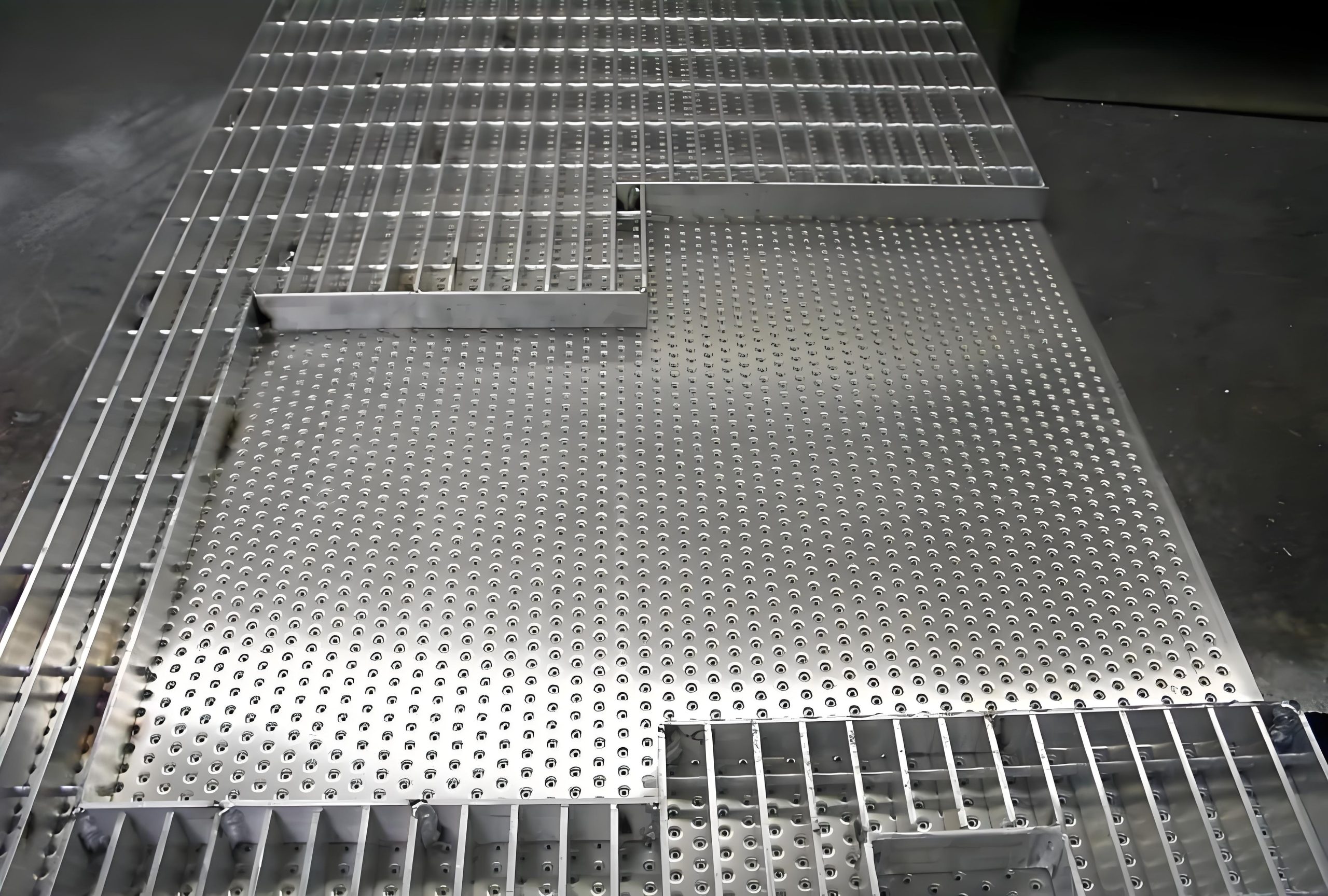
| Component | Function | Why It Matters |
|---|---|---|
| Bearing bars | Carry the primary load between frame supports. | Bar depth, thickness, and span direction control strength and deflection. |
| Reticuline bars | Crimped rectangular cross bars riveted to the bearing bars. | Create the open pattern, support the grid, and provide surface texture. |
| Rivets | Mechanically connect bearing bars and Reticuline bars. | Rivet quality and spacing affect fatigue resistance and long-term rigidity. |
| Perimeter banding | Closes and reinforces exposed bearing-bar ends. | Improves edge strength, frame fit, and finished appearance. |
| Frame or angle support | Transfers grate loads into the inlet structure or concrete surround. | A traffic-rated grate needs a matching traffic-rated frame and support detail. |
| Bolts, clips, or welded lugs | Secure the grate to the frame where required. | Prevent movement, rattle, uplift, theft, or displacement under traffic. |
Reticuline grates are used in roadway drainage systems because they combine an open water-entry surface with a mechanically connected steel grid that can be adapted to specific inlet frames and traffic conditions. They are commonly supplied for curb-and-gutter inlets, drop inlets, stormwater structures, roadside ditches, medians, bridge approaches, and other locations where runoff must enter a drainage system safely.
Roadway drainage selection is not based only on the visible grate. The grate pattern affects water interception, debris behavior, bicycle safety, maintenance access, and traffic performance. The frame, inlet throat, gutter depression, pavement slope, drainage chamber, and outlet system also affect the final result.
Grate inlets collect water through openings in the top surface rather than through a curb opening alone. They can be used in sag locations, V-shaped ditches, medians, areas beside concrete barriers, roadside channels, and locations where a curb opening is not practical.
The Texas Department of Transportation notes that grate inlets are commonly used in sag configurations, gutters, ditches, and locations adjacent to barriers or rails. It also notes that grate configuration and orientation should be compatible with bicycle and wheelchair safety, and that debris accumulation is an important maintenance consideration. See the TxDOT storm drain inlet guidance for examples of these design considerations.
Roadway grates may be exposed to repeated wheel loading, vibration, braking, impact, and seasonal expansion and contraction. Riveted construction can be a practical solution where repetitive loading and fatigue resistance are important, provided the bearing bars, rivet spacing, frame support, and anchoring details are designed for the actual service condition.
A riveted Reticuline grate should not automatically be considered vehicle-rated simply because it uses rivets. The traffic rating depends on the full assembly: bar size, bearing-bar span, grate dimensions, frame stiffness, support width, concrete or steel structure, fasteners, and the local agency’s specification.
Riveted Reticuline grates and welded bar grates are both made with bearing bars and cross bars, but their construction methods are different. The correct choice depends on the drainage structure, traffic conditions, hydraulic requirement, project drawings, and agency specification.
| Feature | Riveted Reticuline Grate | Welded Bar Grate |
|---|---|---|
| Cross-bar connection | Crimped Reticuline bars are cold press-riveted to bearing bars. | Cross bars are resistance-welded or otherwise welded to bearing bars. |
| Typical appearance | Raised crimped cross-bar pattern with riveted construction. | Regular straight cross-bar pattern with welded intersections. |
| Repeated-load performance | Often selected for impact, fatigue, and repetitive-load applications. | Suitable for many industrial and pedestrian uses when properly specified. |
| Roadway drainage use | Common in specified curb inlet, gutter inlet, and DOT-type drainage details. | Common for fabricated trench drains, industrial covers, and custom drainage panels. |
| Custom fabrication | Can be customized, but rivet layout and bar geometry should be engineered. | Often economical for standard rectangular panels and custom cut sizes. |
| Surface traction | Raised Reticuline bars can provide texture; additional serration is available. | Plain or serrated bearing bars can be selected. |
| Specification control | Often tied to agency-standard inlet and frame drawings. | Often selected from standard grating load tables and fabrication details. |
Riveted Reticuline construction is often preferred when the project specification calls for a Reticuline grate, when the inlet design has been hydraulically evaluated with this grate type, or when the application requires a riveted structure for fatigue and repetitive loading.
It may also be selected for bridge-style grating, roadway inlet covers, municipal drainage structures, utility trenches, ditch drains, and custom frames where the raised cross-bar design and riveted connection are beneficial.
Welded bar grating may be more practical for standard industrial trench covers, maintenance platforms, pedestrian drainage channels, factory walkways, stair treads, and custom panels where the project does not require a Reticuline pattern.
Welded grating can be supplied in many standard patterns and materials, including carbon steel, galvanized steel, stainless steel, and aluminum. It remains important to confirm that the bar size, mesh, support span, and fixing method meet the required load and safety conditions.
The hydraulic behavior of a Reticuline grate is influenced by its overall length and width, bar spacing, open area, gutter slope, cross slope, road surface roughness, flow depth, approach velocity, debris loading, and inlet location. A grate with a large visual open area does not always provide the highest interception efficiency under fast roadway flow.
In riveted grating, straight bearing bars are connected to crimped rectangular Reticuline bars. The crimped bars are commonly raised slightly above the bearing-bar plane, and standard serration can be applied to the Reticuline bars. Full serration can be specified when both the bearing bars and cross bars require serrated surfaces.
A North American riveted grating reference describes typical bearing-bar spacings of 1-1/8 in or 3/4 in, with standard rivet spacing of 7 in on center and optional closer rivet spacing of 3-1/2 in on center. These are product examples, not universal dimensions. The final spacing should follow the approved project drawing and required structural or hydraulic performance.
Open area is important because the grate must allow water to enter the inlet while retaining enough steel to carry loads. Wider openings can improve water entry and help larger debris pass through, but they may create bicycle, wheel, or pedestrian hazards. Smaller openings can improve wheel and heel safety but may clog more easily with leaves, sediment, litter, or ice.
Reticuline grate design should be coordinated with the maintenance plan. A grate inlet in a sag location receives water and debris from the entire upstream drainage area. It may require a clogging allowance, additional inlets, flanking inlets, accessible cleaning points, or a curb opening that provides overflow capacity if the grate becomes partially blocked.
Roadway grate interception changes with flow velocity. At lower velocities, several grate geometries may intercept a similar share of frontal flow. At higher velocities and steeper roadway slopes, water can splash over or bypass a grate rather than entering it.
The Federal Highway Administration’s Highway Engineering Circular 12 includes Reticuline grate geometry and hydraulic examples. The guidance shows that Reticuline grates can have reduced interception efficiency compared with some parallel-bar or curved-vane grate configurations at higher velocities. This is why the final inlet type should be selected by roadway hydraulic design rather than assumed from grate appearance alone. See the FHWA drainage guidance for the Reticuline grate reference and hydraulic context.
| Hydraulic Factor | Effect on Reticuline Grate Performance | Design Response |
|---|---|---|
| Gutter flow depth | Greater water depth near the inlet can increase available flow for interception. | Confirm gutter depression, curb geometry, and inlet location. |
| Roadway longitudinal slope | Higher slope increases flow velocity and can increase splash-over or bypass. | Use project hydraulic calculations and consider longer or additional inlets. |
| Cross slope | Affects how much water reaches the grate width. | Coordinate inlet width with pavement and gutter geometry. |
| Grate length | Longer grates may collect more flow, but side-flow capture can be limited. | Evaluate cost and hydraulic benefit rather than increasing length automatically. |
| Debris accumulation | Reduces effective open area and hydraulic capacity. | Apply clogging factors and provide maintenance access. |
| Slot orientation | Affects wheel safety, bicycle safety, and water entry direction. | Follow DOT, municipal, accessibility, and traffic-safety requirements. |
Reticuline steel grates can be fabricated for a range of roadway drainage structures. The inlet type determines the frame configuration, hydraulic performance, opening pattern, and fixing requirements.
Curb inlets collect water flowing along a curb and gutter line. A grate may be positioned in the gutter portion, combined with a curb opening, or used as part of a specially shaped inlet structure. Combination curb-and-grate inlets can provide additional water collection capacity and may offer an overflow path if debris blocks part of the grate.
In high-speed or high-flow roadway applications, the hydraulic engineer should evaluate whether a Reticuline grate, curved-vane grate, parallel-bar grate, curb opening, or combination inlet provides the required interception performance.
Gutter inlets are commonly installed at roadway low points, along kerb lines, near intersections, beside traffic barriers, and in urban drainage systems. A removable grate can provide access for inspection and cleaning, but the fixing system must prevent unintended movement under traffic.
Municipal and DOT projects may require a standard grate profile, frame size, curb type, inlet throat, concrete detail, and marking. A supplier should manufacture to the issued drawing rather than substitute a visually similar grating pattern.
Ditch drains and drop inlets are used in medians, roadside ditches, embankments, drainage swales, and areas without a conventional curb. The grate may be set into a concrete collar or frame that directs runoff toward the inlet structure.
These locations can collect sediment, leaves, grass, gravel, and roadside debris. The grate should provide enough open area for water flow while maintaining structural strength and safe access for maintenance equipment.
| Inlet Type | Typical Reticuline Grate Role | Key Design Concern |
|---|---|---|
| Curb-and-grate inlet | Collects flow in the gutter near the curb opening. | Interception efficiency, curb geometry, bypass flow, debris. |
| Gutter inlet on grade | Captures runoff flowing along a sloped gutter. | Flow velocity, splash-over, grate length, roadway slope. |
| Gutter inlet in sag | Acts as a low-point collection inlet. | Clogging allowance, ponding risk, redundant or flanking inlets. |
| Barrier-adjacent inlet | Provides drainage where curb openings are impractical. | Traffic exposure, maintenance access, secure grate fixing. |
| Ditch or median drain | Covers a drop inlet or drainage chamber. | Debris, sediment, concrete collar, mowing and maintenance access. |
| Trench or linear drain | May be used as a riveted cover for a long drainage opening. | Continuous support, panel joints, traffic load, locking detail. |
Traffic requirements should be defined before manufacturing. A Reticuline grate may be used in pedestrian, light-traffic, heavy-traffic, or special roadway applications, but the required bar size, frame, rivet pattern, support, and fixing detail change substantially with the load.
Roadway grate performance depends on more than the grate itself. The frame must provide adequate bearing width, the supporting concrete or steel structure must resist transferred loads, and the grate must be secured against movement. A heavy riveted grate placed in a weak frame or poorly supported concrete opening can still fail.
Riveted grating can offer strong resistance to repetitive loading, but vehicular applications usually require project-specific design. Additional welding, closer rivet spacing, heavier bearing bars, reinforced frames, and larger or more frequent fasteners may be required depending on the specifying authority.
For bridge, roadway, airport, port, and heavy industrial applications, the manufacturer should receive the governing DOT standard, AASHTO requirement, municipal detail, wheel-load data, or project engineering calculation. A general “heavy duty” description is not enough to select a safe grate.
The frame is the structural interface between the Reticuline grate and the inlet structure. It supports the grate around the opening, transfers loads into concrete or steel, and controls whether the panel sits flush, stable, and safe.
Frames may be fabricated from steel angles, channels, flat bars, structural shapes, or custom welded assemblies. They can be embedded in concrete, bolted to steelwork, welded to a drainage structure, or supplied as part of a complete grate-and-frame package.
The frame should provide enough bearing width for the grate ends. Insufficient support can cause edge bending, cracking, rocking, and early failure. The bearing surfaces should be level and continuous so the grate does not twist or rattle under traffic.
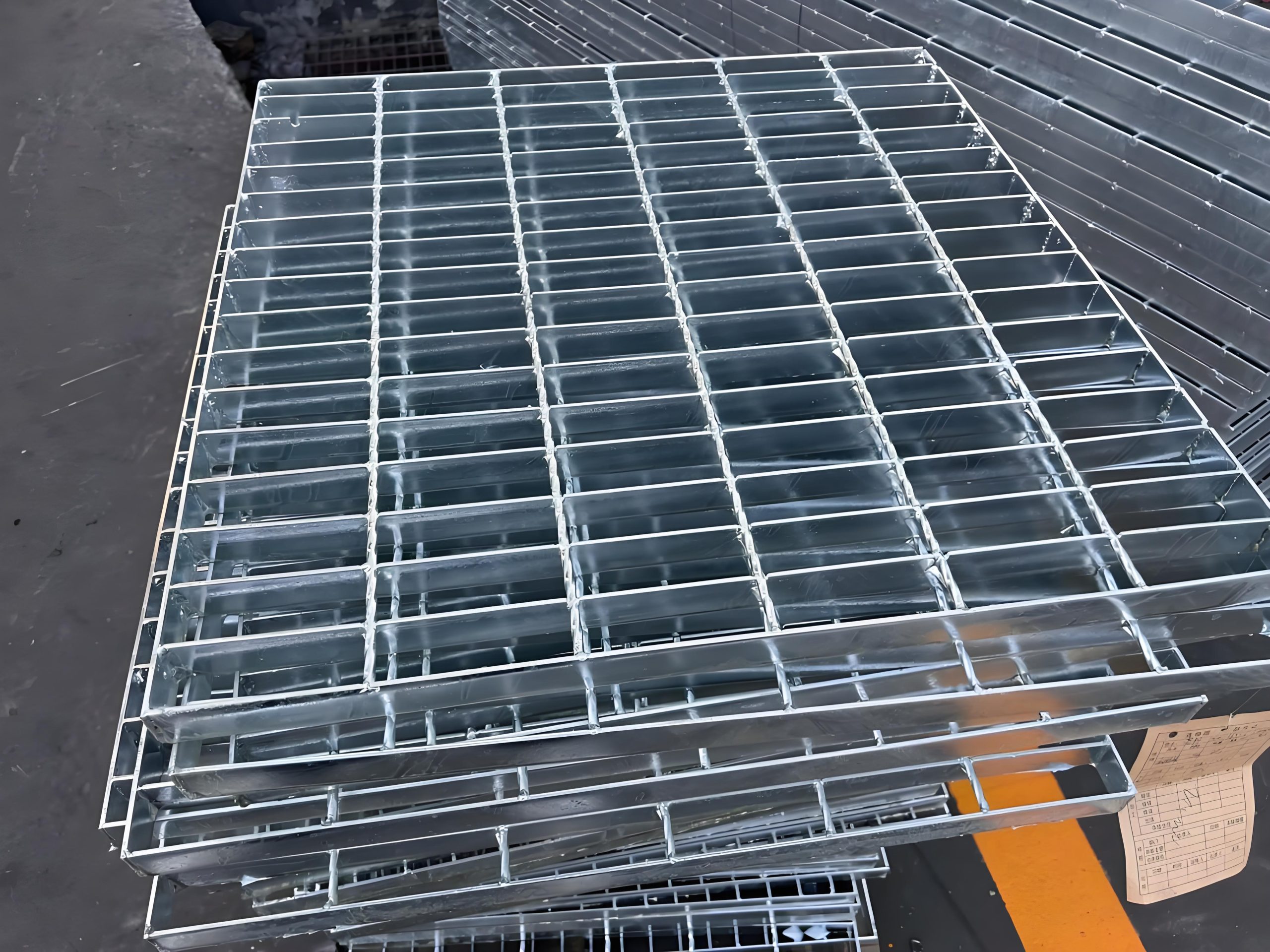
Bolted or clipped connections are often used where grates must be removed for cleaning, inspection, or storm-drain access. Common options include saddle clips, countersunk bolt lands, welded lugs, G clips, J clips, and custom locking brackets.
For roadway traffic, the required connection spacing should follow the project specification. A fixing arrangement suitable for a pedestrian panel may not be sufficient for a grate exposed to repeated wheel loads or traffic vibration.
| Connection Method | Main Benefit | Typical Use | Important Check |
|---|---|---|---|
| Welded perimeter connection | Permanent and rigid fixing. | Non-removable roadway grates and permanent industrial covers. | Coating repair, weld quality, future maintenance access. |
| Saddle clip | Simple mechanical fixing across bearing bars. | Removable grating panels and standard support angles. | Clip spacing, bolt material, uplift and vibration resistance. |
| Welded lug with bolt | Provides positive bolted connection to the frame. | Custom roadway frames and heavy-duty removable panels. | Lug position, bolt access, corrosion protection. |
| Countersunk bolt land | Allows a flush top surface with recessed fasteners. | Close-mesh riveted grating and traffic-sensitive surfaces. | Bar spacing, countersink detail, bolt maintenance. |
| Custom lock or hinge | Improves access control and maintenance handling. | Municipal inlets, secure facilities, high-theft-risk locations. | Hinge orientation, lock accessibility, traffic load. |
Roadway Reticuline grates are commonly made from carbon steel and protected by hot-dip galvanizing. Material and finish should be selected according to road salt, water exposure, coastal atmosphere, chemical contact, maintenance access, and expected service life.
Carbon steel provides high strength and economical fabrication. It is commonly used for custom roadway grates, frames, trench covers, trash racks, debris screens, and municipal drainage products. Unprotected carbon steel should not be used in wet outdoor environments unless a separate coating system is specified.
Hot-dip galvanizing is often applied after the grate, frame, end banding, and welded details have been completed. It provides zinc protection over the fabricated steel surface and can be a practical finish for outdoor roadway drainage systems.
ISO 1461:2022 specifies general properties and test methods for hot-dip galvanized coatings on fabricated iron and steel articles. Projects may alternatively require ASTM A123/A123M or another governing local standard. The purchase order should identify the required coating standard, inspection documents, and treatment of field cuts or repairs.
Stainless steel Reticuline-type riveted grating may be selected for severe corrosion environments, washdown facilities, marine structures, or visible architectural drainage. Grade 304 is common in many wet industrial settings, while 316 or 316L is often selected for higher chloride exposure.
Aluminum riveted grating can be useful where lower weight, atmospheric corrosion resistance, and manual handling are important. Its deflection, support span, galvanic isolation, and chemical compatibility should be checked before use in roadway drainage applications.
Custom Reticuline grates are often manufactured to fit an existing or new inlet frame. The manufacturer should work from a dimensioned drawing rather than a verbal size description because roadway drainage grates may be identified by clear opening, outside frame size, gutter width, grate width, or overall inlet dimensions.
Typical riveted grating products may use bearing-bar spacing of 3/4 in or 1-1/8 in, with standard rivet spacing around 7 in on center and closer rivet spacing around 3-1/2 in on center for selected designs. These values are common product references, not a universal roadway specification.
For roadway inlet applications, the final bar spacing should be selected according to hydraulic intake, debris passage, bicycle safety, wheel safety, traffic load, DOT requirements, and project drawings. Close spacing may improve wheel safety and panel stiffness, while more open spacing can improve drainage and reduce material weight.
Reticuline grate requirements are often controlled by a state DOT, county, city, transportation authority, drainage district, airport authority, or civil-engineering project specification. The manufacturer should not substitute a different grate style unless the engineer or authority approves the change.
Roadway drainage details vary by jurisdiction. A municipality may require a specific Reticuline grate size, bar spacing, frame shape, curb-top configuration, traffic rating, finish, logo, or marking. State DOT standard drawings can also define inlet geometry, reinforcement, grate anchoring, and drainage performance assumptions.
For example, some municipal specifications expressly call for a standard Reticuline grate at catch basin inlets on commercial streets. Other agencies use parallel-bar or cascade grates instead. The correct choice depends on the authority’s standard details and the hydraulic design for that location.
| Requirement Category | Information the Supplier May Need |
|---|---|
| Governing authority | DOT, municipal, county, utility, airport, port, or project standard reference. |
| Inlet type | Curb inlet, gutter inlet, ditch inlet, drop inlet, trench drain, or combination inlet. |
| Hydraulic design | Design flow, rainfall criteria, gutter slope, inlet location, clogging factor, and bypass allowance. |
| Traffic requirement | Vehicle type, wheel load, traffic frequency, speed, braking, turning, and impact condition. |
| Material and finish | Carbon steel, galvanized steel, stainless steel, aluminum, coating standard, and inspection requirement. |
| Frame and support | Frame drawing, support width, concrete detail, anchoring, and installation level. |
| Safety requirement | Bicycle-safe, wheelchair-safe, pedestrian-safe, lockable, non-removable, or anti-rattle features. |
| Documentation | Shop drawings, material certificates, galvanizing report, load calculations, and third-party inspection. |
Riveted Reticuline grate production requires careful control of material, bar layout, rivet spacing, assembly pressure, frame fit, and finish. Consistent manufacturing is important because roadway drainage products must fit their frames accurately and resist repeated service loading.
| Inspection Item | Purpose |
|---|---|
| Material verification | Confirms specified steel grade, bar size, and traceability requirements. |
| Overall dimensions | Ensures the grate fits the required clear opening and frame. |
| Bearing-bar direction | Confirms that the grate spans in the intended structural direction. |
| Bar and rivet spacing | Verifies the approved Reticuline grid pattern and fabrication consistency. |
| Rivet quality | Checks secure cold-riveted connections and assembly integrity. |
| Frame fit and seating | Prevents rocking, rattling, uneven support, and installation problems. |
| Weld inspection | Checks banding, lugs, frames, anchors, and custom reinforcement. |
| Galvanizing or coating inspection | Confirms corrosion-protection coverage and surface condition. |
| Marking and packing | Ensures correct identification and safe transport to the project site. |
The most accurate Reticuline steel grate quotation is based on a dimensioned drawing and project specification. Because roadway inlet products are often custom, a simple length and width may not provide enough information for safe fabrication.
A complete supplier submittal can include a general arrangement drawing, detailed grate drawing, frame section, bar layout, rivet pattern, material list, finish requirement, fixing method, product weight, installation notes, and quality documentation. For larger projects, panel numbers and matching frame labels can reduce installation errors.
The drawing should clearly show which direction the bearing bars span, the support width provided by the frame, and whether the grate is removable or permanently fixed. These details are critical for roadway safety and maintenance access.
A reliable Reticuline steel grate manufacturer should understand both riveted grating fabrication and roadway drainage requirements. The supplier should be able to manufacture from a DOT or municipal drawing, provide a matching frame, confirm bar orientation, explain the fixing method, and supply documentation for the required material and finish.
A manufacturer that only quotes a low price from a rough outside dimension may not be providing a usable roadway drainage product. The correct supplier should confirm the grate geometry, frame fit, loading, hydraulic opening, corrosion protection, and project-standard requirements before production.
What is a Reticuline grate?
A Reticuline grate is a riveted bar grating made with straight bearing bars and crimped rectangular Reticuline cross bars connected by cold press riveting. It is commonly used in North American roadway drainage systems, including curb inlets, gutter inlets, drop inlets, and municipal stormwater structures.
Are Reticuline grates safe for bicycles?
Reticuline grates can be used near bicycle traffic only when the grate opening pattern, orientation, frame level, and local roadway specification are suitable for bicycle safety. The project engineer or governing authority should verify that tyres cannot enter or become trapped in the openings. A grate should never be selected only because it is called Reticuline.
Can riveted steel grates carry truck traffic?
Riveted steel grates can be designed for truck traffic, but traffic capacity depends on bearing-bar size, rivet spacing, frame design, support structure, fastening, wheel load, and the governing DOT or project specification. A pedestrian-grade riveted grate should not be used for vehicles without a verified traffic-rated design.