
Serrated stair treads are widely used on industrial stairs, access towers, platforms, outdoor steel structures, power plants, warehouses, wastewater facilities, marine sites, and maintenance walkways. Their main advantage is the serrated top surface, which creates more gripping edges under work boots and helps reduce slipping when water, oil, dust, mud, snow, or process residue is present. A proper serrated stair tread is not simply a cut piece of grating. It should be selected according to stair width, tread depth, bearing bar direction, clear span, load, nosing design, end plates, bolt-hole position, material, and corrosion-protection requirement.
Serrated stair treads are fabricated steps made from metal grating or formed safety plank with a notched, toothed, or serrated walking surface. The serrations are normally formed along the top edge of the bearing bars or around punched openings, creating repeated contact points that improve traction under footwear.
Most industrial serrated stair treads include a grating or safety-plank walking surface, a front nosing, two end plates, and holes or slots for bolting to stair stringers. The finished tread is designed to transfer pedestrian and maintenance loads into the stringers while allowing water, dirt, and small debris to pass through the open surface.
For standard industrial stairs, serrated welded steel grating is one of the most common choices. For highly corrosive, hygienic, marine, or lightweight projects, serrated stainless steel, aluminum grating, or serrated safety-plank treads may be more suitable.
For more information about tread construction, dimensions, side plates, and installation details, see our grating stair treads size, weight, and standard guide.
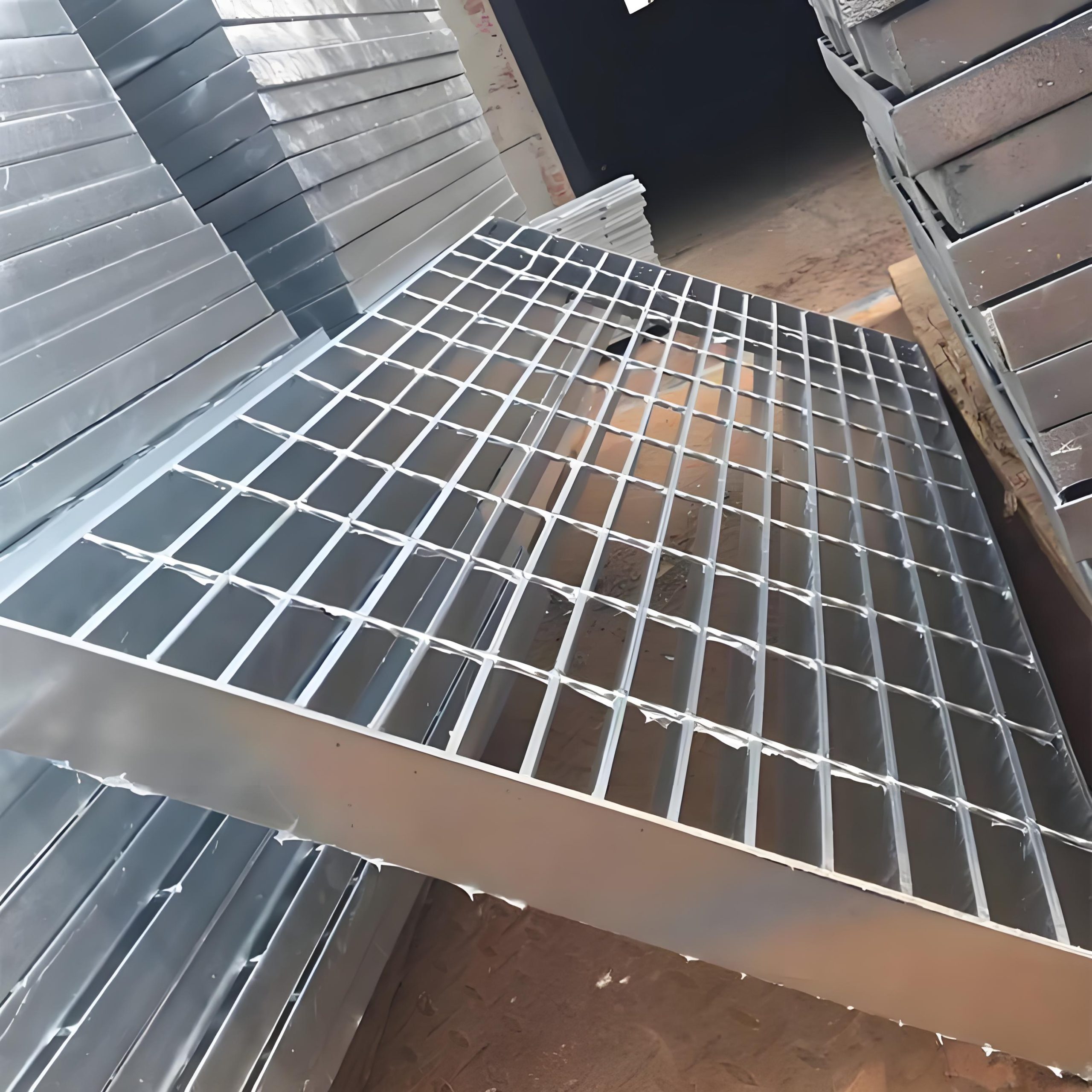
Serrated tread surfaces have small repeated notches or teeth along the top walking edge. These teeth help interrupt thin films of water, oil, mud, or other contaminants that can reduce friction on a plain steel surface. When a worker steps on the tread, the boot sole contacts many raised edges instead of resting only on smooth flat bar tops.
On industrial stairs, the leading edge of each step is especially important because it receives the front of the foot during climbing and descending. A serrated surface combined with a visible, rigid nosing can improve footing and help users identify the edge of each step.
Serrations improve traction, but they do not remove every slip risk. Performance also depends on footwear, the type of contaminant, tread slope, drainage, maintenance, lighting, nosing visibility, and the condition of the stair structure. A stair that remains covered with ice, thick grease, or compacted mud still requires regular cleaning and safe operating procedures.
Our serrated carbon steel bar grating guide explains how serrated bearing bars create additional grip in wet, oily, and debris-prone industrial areas.
Serrated bar grating treads and serrated safety-plank treads are both used for industrial stairs, but their structure and best applications are different. The selection should be based on required opening size, drainage, load capacity, foot comfort, corrosion environment, and project appearance.
Serrated bar grating treads are made from bearing bars and cross bars. The bearing bars carry the main load between the stair stringers, while cross bars hold the grating pattern together. Serrations are formed along the top of the bearing bars to provide improved traction.
These treads are commonly used for industrial stairs because they offer high strength, good drainage, a broad range of bar sizes, and practical fabrication options. Welded steel grating is usually the most economical material for standard industrial stair projects.
Serrated safety-plank treads are produced from punched and formed sheet metal. They may use diamond-shaped serrations, raised perforated buttons, or other anti-slip patterns. The sheet is formed into a channel or tread profile, often with a built-in front edge and open drainage pattern.
Safety-plank treads can be useful where a lighter formed channel, aggressive traction pattern, or smaller opening arrangement is preferred. They are often used on maintenance stairs, industrial ladders, narrow access routes, outdoor platforms, and applications with frequent moisture or debris.
| Feature | Serrated Bar Grating Tread | Serrated Safety-Plank Tread |
|---|---|---|
| Construction | Bearing bars and cross bars welded or mechanically locked together | Punched and formed one-piece metal sheet or channel |
| Main Strength | High structural capacity and wide range of bar sizes | Lightweight channel profile and aggressive formed traction pattern |
| Drainage | High open area with open bar spacing | Depends on the punched opening pattern |
| Common Materials | Carbon steel, galvanized steel, stainless steel, aluminum | Galvanized steel, HRPO steel, aluminum, stainless steel |
| Typical Applications | Industrial stairs, platforms, towers, outdoor access systems | Maintenance stairs, ladders, ramps, narrow access routes |
| Price Basis | Usually based on weight, bar size, fabrication, and coating | Usually based on plank width, channel depth, gauge, and cut length |
For general industrial stairs with longer tread widths and defined load requirements, serrated bar grating is often the preferred option. For narrow stairs or applications requiring a formed anti-slip pattern, safety-plank treads may be more appropriate.
Industrial stair tread dimensions should match the approved stair design. The two most important dimensions are tread length and tread depth. Tread length is the distance between the stringers or side supports. Tread depth is the front-to-back walking surface dimension.
Common industrial serrated stair treads are often supplied in lengths from approximately 600 mm to 1200 mm, although custom lengths are available for wider stairs. Typical walking depths are often between 240 mm and 350 mm. The right depth depends on the stair rise, nosing arrangement, user comfort, applicable code, and overall stair geometry.
| Tread Feature | Common Industrial Range | Selection Guidance |
|---|---|---|
| Tread Length | 600 mm to 1200 mm or custom | Match the clear distance between stair stringers or side supports |
| Tread Depth | 240 mm to 350 mm or custom | Match stair layout, walking comfort, and project requirements |
| Bearing Bar Height | 25 mm, 30 mm, 40 mm, 50 mm or custom | Select from load and span requirements |
| Bearing Bar Thickness | 3 mm, 4 mm, 5 mm or custom | Heavier thickness increases strength, weight, and price |
| End Plate Thickness | Commonly selected by stair connection details | Must suit bolt load, stringer thickness, and installation tolerance |
A frequently used industrial configuration is a tread approximately 900 mm long × 270 mm deep, made with 30 mm × 3 mm serrated bearing bars at approximately 30 mm spacing and cross bars at approximately 100 mm spacing. This is only a common reference arrangement. It should not replace a project-specific load and span check.
More standard stair tread size examples are available in our galvanized steel grating size guide.
The nosing is the front edge of a stair tread. It improves tread visibility, protects the grating edge, provides a defined stepping line, and can improve slip resistance where the front of the foot contacts the step.
There is no single universal nosing size for all industrial stairs. The correct design depends on the stair geometry, tread depth, local requirements, material, load, and the type of grating or safety plank. A fabrication drawing should show the nosing projection, vertical face, material thickness, weld location, and finish.
| Nosing Type | Description | Typical Use |
|---|---|---|
| Checker Plate Angle Nosing | Folded or welded checker plate angle at the tread front | General industrial stairs and outdoor access systems |
| Serrated Flat-Bar Nosing | Front edge using a serrated flat bar or formed anti-slip edge | Stairs requiring additional front-edge grip |
| Perforated Safety-Plank Nosing | Formed perforated or button-pattern front edge | Safety-plank treads and formed metal stairs |
| Solid Angle Nosing | Plain steel or stainless angle reinforcing the front edge | Heavy-duty or custom fabricated stairs |
| High-Visibility Nosing | Colored coating, contrasting strip, or visual edge treatment | Public, commercial, emergency, and low-light access stairs |
Common industrial fabricated nosings may use a front projection in the approximate 25 mm to 50 mm range, but the final dimension should follow the approved stair drawing rather than a generic rule. A larger front edge may increase visibility and stiffness, while an excessive projection can affect stair comfort or conflict with code requirements.
For outdoor steel stairs, a checker plate angle nosing combined with serrated grating is a practical solution because it creates a clear front edge while retaining open drainage through the main tread surface.
Bearing bars are the primary structural members of a serrated bar grating tread. They run in the span direction between stair stringers. Their height and thickness determine much of the tread’s load capacity and deflection performance.
Cross bars connect the bearing bars and maintain the grating spacing. They may be twisted square bars, round bars, flat bars, or other profiles depending on the grating type. Cross bars help stabilize the panel, but the bearing bars normally carry the main bending load.
| Bearing Bar Size | Typical Use | Price Effect |
|---|---|---|
| 25 mm × 3 mm | Shorter spans and light industrial stairs | Lower steel weight and lower base cost |
| 30 mm × 3 mm | Common general-purpose industrial stair treads | Balanced cost and structural performance |
| 30 mm × 5 mm | Higher load, wider tread, or more demanding service | Higher weight and higher cost |
| 40 mm × 3 mm or 40 mm × 5 mm | Longer spans or reduced deflection requirements | Higher material and galvanizing cost |
| 50 mm and deeper bars | Heavy-duty, wide, or special engineered stair systems | Higher fabrication, handling, and freight cost |
Common industrial bearing-bar spacing is often around 30 mm on center. Closer spacing can provide more contact points underfoot, smaller openings, better support distribution, and improved small-object retention. However, closer spacing also increases steel weight, the number of weld intersections, and the price per tread.
Cross bars are frequently spaced around 100 mm on center for standard welded grating, although 50 mm, 75 mm, 100 mm, and custom spacings can be specified. A closer cross-bar spacing can improve appearance and lateral stability but may increase weight and manufacturing cost.
For a complete technical comparison, every quotation should state bearing bar height, thickness, spacing, cross-bar type, cross-bar spacing, surface type, and bearing-bar direction. A description such as “serrated stair treads” is not enough to confirm structural performance or price.
Most industrial serrated stair treads are supplied with end plates welded to both sides. The end plates connect the tread to the stair stringers, angles, channels, or supporting steelwork. Correct plate size and hole position are essential for quick installation.
When end plates or bolt holes are wrong, the installation team may need to drill, cut, or weld on site. This can delay the project and may damage galvanized coatings or stainless steel surfaces.
Round bolt holes provide a fixed installation position. Slotted holes provide more adjustment during erection and can be useful when stair stringers have normal fabrication or site-installation tolerances. The slot direction should be selected according to the anticipated adjustment direction.
For galvanized steel treads, all cutting, drilling, end-plate welding, and fabrication should preferably be completed before hot-dip galvanizing. This allows the zinc coating to protect welds, cut edges, and drilled areas.
The correct tread size begins with the stair drawing. The manufacturer should know the clear stair width, tread depth, riser height, stringer arrangement, support span, nosing detail, and required load before selecting the grating type.
The clear span is the distance between the supporting stringers or side supports. This is the span that the bearing bars must bridge. Wider stairs may require deeper bearing bars, thicker bars, closer spacing, or intermediate support details.
The tread depth should match the stair geometry and required walking comfort. A tread that is too shallow may feel unsafe, while an unnecessarily deep tread can add material cost and may not fit the intended stair rise and run.
For dry indoor environments, plain grating may be acceptable if the project specification allows it. For outdoor, wet, oily, dusty, icy, or industrial service areas, serrated grating is usually the better choice.
Carbon steel is economical for dry indoor stairs or for projects with a separate paint system. Hot-dip galvanized carbon steel is often selected for outdoor industrial stairs. Aluminum reduces weight and resists corrosion. Stainless steel is suitable for food, marine, chemical, hygienic, and highly corrosive environments.
The end plate, hole pattern, bolt type, and stringer connection must be checked before fabrication. A correct tread can still be difficult to install if the bolt-hole layout does not match the stair frame.
Serrated stair tread load capacity depends on bearing bar size, bar spacing, tread length, support conditions, material strength, grating construction, and allowable deflection. The same tread may be suitable for a 700 mm span but not for a 1200 mm span.
Load should be checked using the appropriate manufacturer load table or project-specific calculation. Do not choose tread thickness only by visual appearance. A deep-looking grating may still deflect too much if the bearing bars run in the wrong direction or the support span is longer than expected.
Deflection is the amount the tread bends under load. Excessive deflection can make a stair feel unstable, affect bolt connections, create noise, reduce walking confidence, or cause damage to adjacent finishes. The correct tread should meet both strength requirements and the project’s permitted deflection limit.
For serrated grating, use the corresponding serrated load information where available. Serrations remove material from the top edge of the bearing bar, so plain-bar calculations should not automatically be used without checking the manufacturer’s guidance.
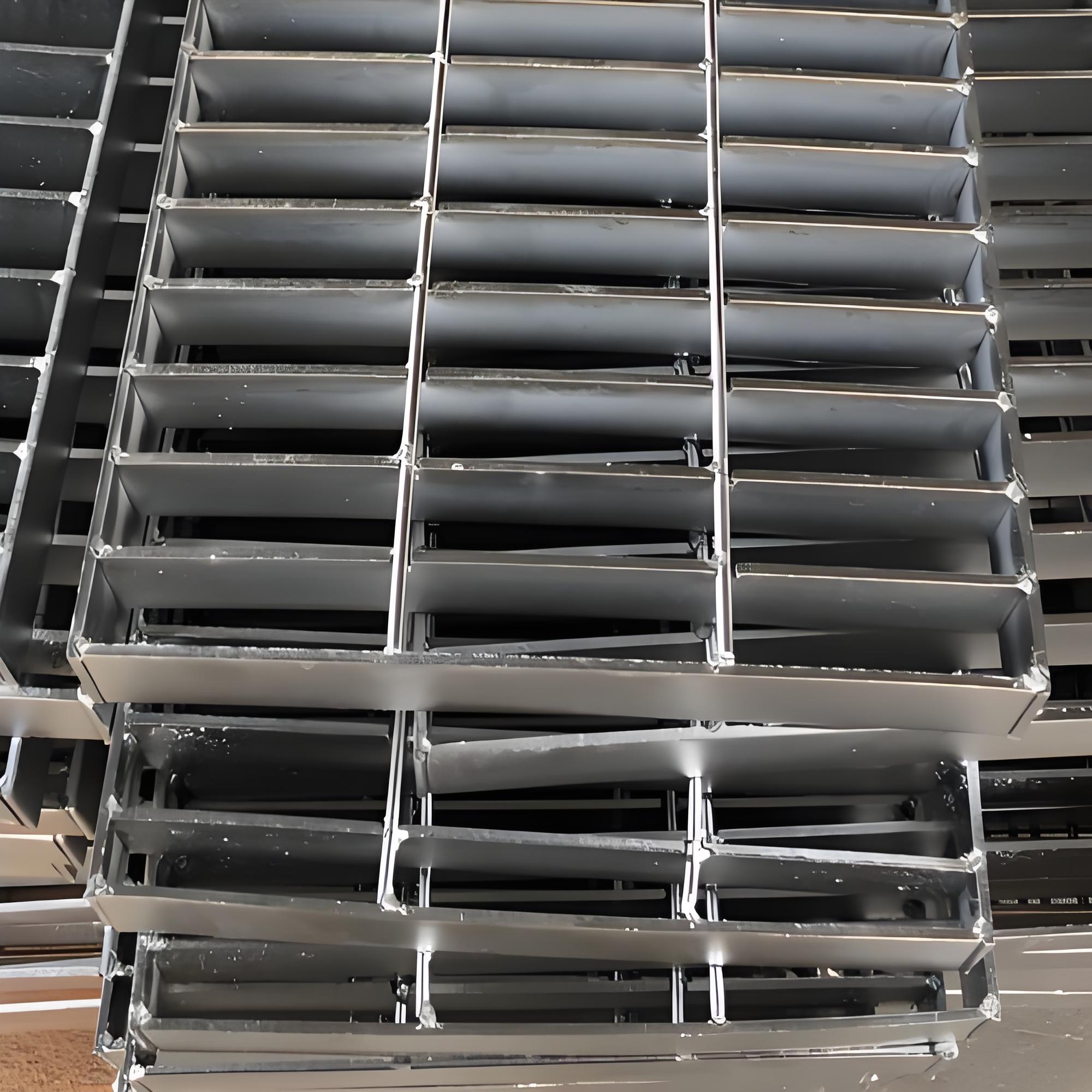
Material selection has a major effect on serrated stair tread price, corrosion resistance, maintenance, fabrication method, and service life.
Carbon steel is usually the lowest-cost base material for industrial stair treads. It is strong, easy to weld, and widely available. Bare carbon steel is suitable for dry indoor environments, temporary structures, or projects that will receive a specified site-applied coating.
Uncoated carbon steel will rust when exposed to water, humidity, outdoor weather, or corrosive process conditions. For exterior stairs, bare carbon steel is rarely the best long-term choice.
Hot-dip galvanized steel is the most common material option for outdoor industrial stairs. The tread is fabricated first and then immersed in molten zinc. This process coats the bearing bars, cross bars, end plates, nosing, welds, and cut edges with protective zinc.
Galvanized serrated treads are widely used on outdoor platforms, towers, wastewater facilities, warehouses, power plants, loading areas, mines, and general industrial steel structures. They provide a practical balance of strength, corrosion protection, availability, and cost.
Learn more about corrosion protection and typical applications in our hot-dip galvanized steel grating guide.
Aluminum serrated treads are lighter than steel and naturally corrosion resistant in many outdoor and marine environments. They are suitable for rooftop stairs, mobile equipment, marine access, offshore structures, lightweight platforms, and projects where reducing dead load is important.
Aluminum should be selected using its own load data. It should not be assumed to carry the same load as a steel tread of similar dimensions. When aluminum treads are installed on steel stringers, isolation details may be needed to reduce galvanic corrosion risk in wet environments.
Stainless steel treads are selected where corrosion resistance, hygiene, appearance, or long service life justifies a higher initial price. Type 304 stainless steel is commonly used in general wet, food-processing, commercial kitchen, and architectural environments. Type 316 or 316L stainless steel is often preferred for marine, coastal, chloride-rich, chemical, and aggressive washdown conditions.
Our serrated stainless steel grating page provides more information about corrosion-resistant serrated grating for stairs, platforms, drainage covers, and industrial access areas.
| Material | Relative Initial Cost | Best Use |
|---|---|---|
| Carbon Steel | Lowest | Dry indoor stairs, temporary work, site-painted structures |
| Hot-Dip Galvanized Steel | Low to moderate | Outdoor industrial stairs, platforms, towers, general wet service |
| Aluminum | Moderate to high | Lightweight, marine, rooftop, and corrosion-resistant applications |
| 304 Stainless Steel | Moderate to high | Food processing, commercial kitchens, wet industrial areas |
| 316 or 316L Stainless Steel | High | Marine, coastal, chemical, wastewater, and chloride exposure |
Surface treatment protects steel stair treads from corrosion and can affect both the initial price and long-term maintenance cost. The right finish depends on the environment, expected service life, project appearance, and maintenance access.
Bare carbon steel is the lowest-cost finish. It may be suitable for dry indoor stair systems, temporary access structures, or products that will receive a site-applied coating. It should not be treated as a corrosion-resistant finish.
Painted steel is commonly used for indoor factory stairs, color-coded equipment access, and controlled environments. Cost depends on surface preparation, primer, paint system, coating thickness, curing, masking, and inspection requirement.
Hot-dip galvanizing usually costs more than bare or lightly painted steel, but it provides more durable corrosion protection for many outdoor and wet industrial applications. Galvanizing cost is often related to finished product weight and may include minimum batch charges for small orders.
Heavy treads with thick bearing bars, large end plates, toe plates, and reinforced nosings cost more to galvanize because they contain more steel. Small orders may also have a higher galvanizing cost per tread because of minimum processing charges.
A duplex system combines hot-dip galvanizing with paint or powder coating. It offers additional corrosion protection and color control but has a higher initial price. Duplex finishes are useful for severe outdoor, coastal, or visually important stair systems.
Stainless steel treads may require pickling, passivation, brushing, bead blasting, or polishing after fabrication. These processes improve cleanability, remove weld discoloration, and help restore corrosion resistance in the heat-affected areas. They add cost but are often important in food, pharmaceutical, chemical, and marine applications.
Many industrial stairs require custom serrated treads because stair widths, stringer profiles, equipment clearances, and support details vary from project to project. Factory fabrication can reduce site work and improve installation accuracy.
Custom tread fabrication increases price because it involves cutting, welding, drilling, grinding, inspection, handling, and packing. However, supplying finished treads from the factory can reduce installation labor and helps avoid inaccurate field drilling that can damage galvanized coatings or create poor fit-up.
For a staircase with many different tread sizes, provide a tread schedule or fabrication drawing. The drawing should identify every tread mark, length, depth, end plate, hole pattern, nosing detail, material, finish, and quantity.
Serrated stair tread prices are most accurately quoted per piece because each tread may have a different width, depth, end plate, hole pattern, nosing, material, and finish. A square-meter price is useful for early budgeting, but it does not show the full cost of stair-specific fabrication.
For factory planning, basic untreated carbon steel grating may be broadly budgeted around US$12 to US$35 per m², standard hot-dip galvanized grating around US$20 to US$70 per m², fabricated galvanized grating around US$35 to US$110 per m², 304 stainless steel grating around US$45 to US$125 per m², and 316 or 316L stainless steel grating around US$65 to US$170 per m². Serrated, close-mesh, heavy-duty, small-quantity, or highly fabricated stair treads can exceed these normal panel-based ranges. See our steel grating price and manufacturer guide.
A tread measuring 900 mm × 270 mm has a surface area of approximately 0.243 m². At a fabricated galvanized grating reference range of US$35 to US$110 per m², the area-based grating value is approximately US$8.50 to US$26.75 before allowing for stair-specific end plates, bolt holes, nosing, minimum fabrication charges, galvanizing minimum charges, packaging, and freight.
This is why a finished serrated stair tread cannot be priced accurately by multiplying only the tread area by a standard panel rate. A short custom tread may cost more per square meter than a large walkway panel because each tread needs individual fabrication and handling.
| Price Factor | Effect on Serrated Stair Tread Cost |
|---|---|
| Material Type | Carbon steel is generally lowest cost; galvanized steel, aluminum, and stainless steel increase price. |
| Bearing Bar Height and Thickness | Deeper and thicker bars increase steel weight, load capacity, and cost. |
| Bar Spacing | Closer bearing-bar spacing increases material content and welded intersections. |
| Serrated Surface | Serration adds processing compared with plain grating but improves traction. |
| Nosing Type | Checker plate, serrated, reinforced, or high-visibility nosings add material and fabrication. |
| End Plates and Holes | Custom side plates, slots, bolts, and welding add cost per tread. |
| Custom Cuts and Notches | Irregular shapes, pipe cutouts, and rail notches increase labor and waste. |
| Surface Finish | Galvanizing, painting, powder coating, passivation, or polishing changes price. |
| Order Quantity | Repeated tread sizes and larger quantities reduce unit setup and packing costs. |
| Packaging and Shipping | Export packing, total weight, destination, and Incoterm affect the final delivered price. |
When comparing serrated stair tread quotations, make sure every supplier is quoting the same finished product. A lower price may exclude galvanizing, end plates, holes, clips, packaging, inspection, or freight.
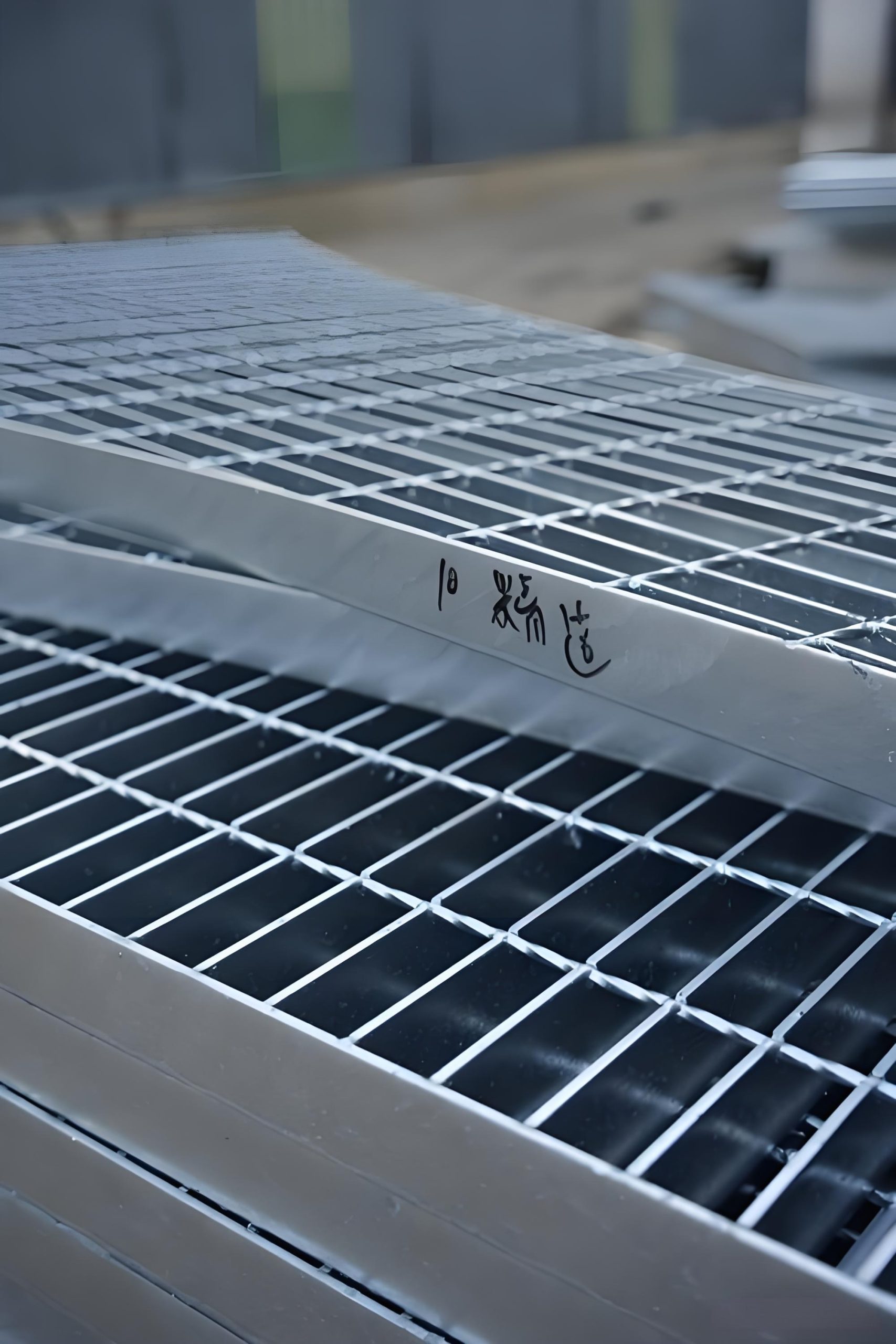
A reliable supplier should provide a clear drawing or tread schedule before production. The drawing should show each tread mark, overall size, grating direction, nosing, end plates, hole positions, material, surface finish, and quantity. This reduces installation problems and makes it easier to inspect the delivered products.
For a detailed steel stair tread pricing reference, you can also review our steel bar grating stair treads factory price guide.
Are serrated stair treads safer than plain grating treads?
Serrated stair treads usually provide better grip than plain grating treads because the notched bearing bar tops create more contact edges under footwear. They are especially useful for outdoor, wet, oily, dusty, muddy, and industrial stair applications. The final safety performance also depends on drainage, nosing design, lighting, maintenance, and suitable footwear.
What is the standard size of a serrated grating stair tread?
Common serrated grating stair treads are often 600 mm to 1200 mm long and approximately 240 mm to 350 mm deep. Common bearing bar sizes include 25 mm × 3 mm, 30 mm × 3 mm, and 30 mm × 5 mm. The final tread size should match the stair drawing, clear stringer span, required load, and connection detail.
How much do serrated stair treads cost?
Serrated stair treads are normally quoted per piece because end plates, bolt holes, nosings, material, coating, and tread size vary. A fabricated galvanized tread may have an area-based grating value of roughly US$8 to US$27 for a 900 mm × 270 mm tread before stair-specific fabrication and shipping are added. Carbon steel is generally the lowest-cost option, while galvanized steel, aluminum, 304 stainless steel, and 316 stainless steel increase the finished price.
