
Steel grating prices generally range from approximately US$12 to US$35 per square meter for basic untreated carbon steel factory panels, US$20 to US$70 per square meter for standard hot-dip galvanized grating, and US$45 to US$160 per square meter for common stainless steel grating. Cut-to-size, close-mesh, framed, serrated, press-locked, heavy-duty, or specially fabricated products may cost US$80 to US$300 per square meter or more. Small retail orders and locally stocked panels can be considerably more expensive than large factory orders. The final price depends on the steel grade, bearing bar height and thickness, bar spacing, cross bar construction, grating weight, surface treatment, panel dimensions, loading, fabrication requirements, order quantity, packaging, and delivery terms. Buyers comparing steel grating manufacturers should therefore evaluate the technical specification and total delivered scope instead of selecting a supplier only by the lowest advertised square meter price.
Steel grating is an open-grid metal product made from parallel bearing bars connected by cross bars. It is used for industrial platforms, walkways, stair treads, drainage covers, trench covers, mezzanine floors, catwalks, machine access areas, marine platforms, ventilation grilles, and architectural flooring.
The bearing bars carry the main load between supports. Cross bars maintain the spacing between bearing bars and stabilize the finished panel. The dimensions and spacing of these components determine the grating weight, open area, walking performance, load capacity, and manufacturing cost.
Steel grating manufacturers may produce welded grating, press-locked grating, swage-locked grating, riveted grating, close-mesh grating, I-bar grating, plain grating, and serrated grating. Some factories focus on standard carbon steel panels, while others specialize in custom fabrication, heavy-duty vehicle grating, stainless steel products, architectural grating, or complete trench cover assemblies.
The word “manufacturer” can also describe different types of suppliers. A primary grating factory manufactures the grid panel from bearing bars and cross bars. A fabricator purchases stock panels and performs cutting, banding, framing, notching, and stair tread production. A distributor holds standard panels in stock and supplies small quantities quickly. A trading company may coordinate manufacturing through one or more partner factories.
| Supplier Type | Main Capability | Typical Price Characteristic |
| Primary grating manufacturer | Produces welded, press-locked, or other grating panels from raw bars | Competitive for standard panels and large-volume production |
| Custom grating fabricator | Cuts, bands, frames, notches, labels, and assembles project panels | Higher unit price but supplies installation-ready products |
| Stocking distributor | Maintains standard grating panels and stair treads in local inventory | Higher material price but faster delivery and lower minimum quantity |
| Trading or export supplier | Coordinates production, inspection, packaging, and international shipping | Price includes service and sourcing margin |
| Specialty engineering manufacturer | Produces vehicle-rated, architectural, stainless, or unusual grating systems | Higher price because of engineering, testing, and specialized production |
Factory pricing is usually based on the theoretical or actual product weight, raw material price, production method, fabrication time, surface treatment, packaging, and commercial margin. A square meter price can be useful for budgeting, but it should always be linked to a specific bearing bar size and spacing.
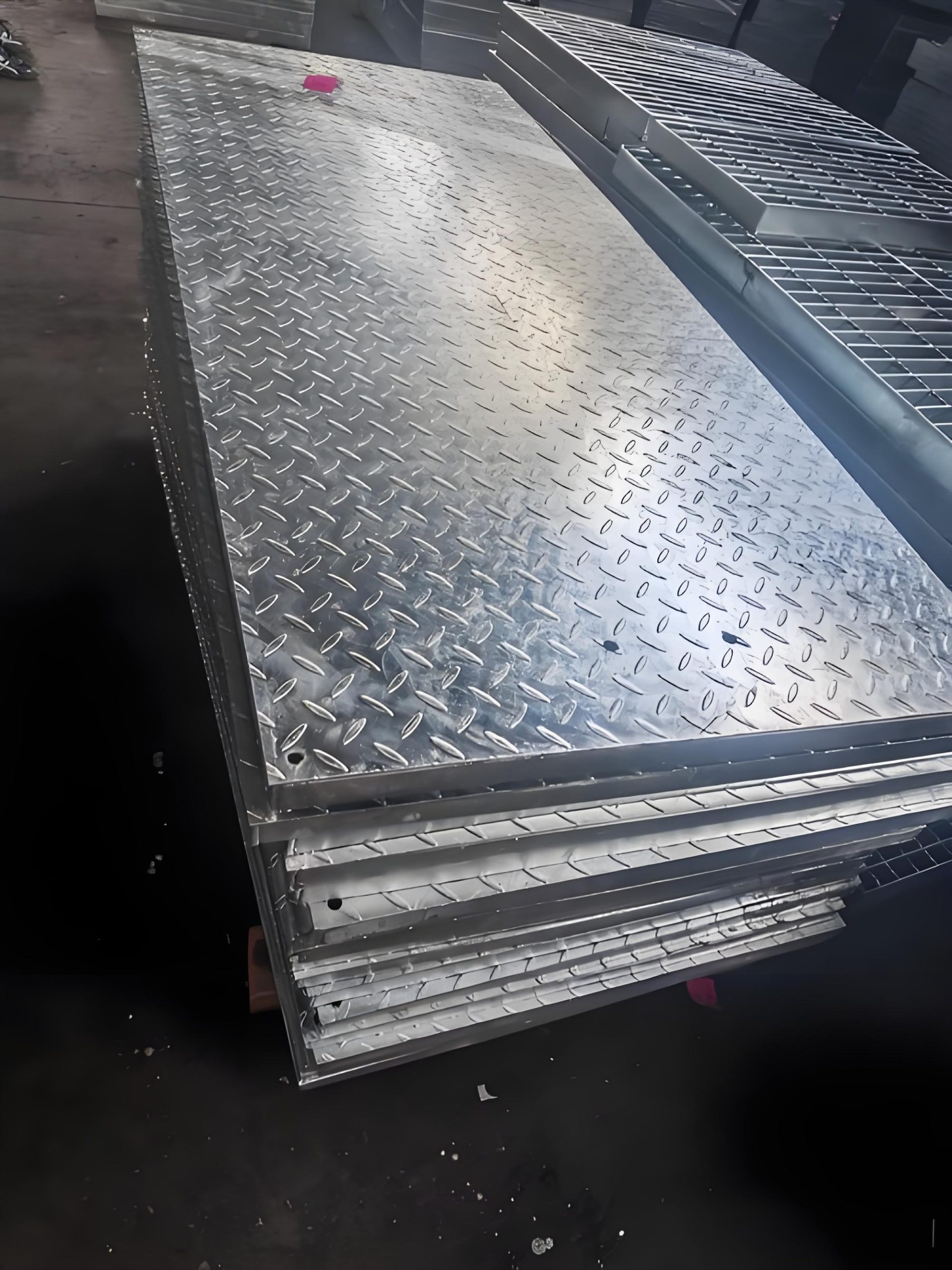
For preliminary budgeting, steel grating can be divided into several common price ranges. The following figures represent broad international factory references rather than fixed quotations. Steel markets, exchange rates, energy costs, labor costs, production region, quantity, and delivery date can change the final price.
| Steel Grating Type | Typical Factory Reference Price | General Description |
| Basic untreated carbon steel grating | US$12–35 per m² | Standard mesh, common bars, large panels, no coating, and limited fabrication |
| Painted carbon steel grating | US$18–50 per m² | Basic industrial grating with primer or painted finish |
| Standard hot-dip galvanized grating | US$20–70 per m² | Common platforms, walkways, stair treads, and drainage covers |
| Fabricated galvanized grating | US$35–110 per m² | Cut-to-size panels with banding, notches, and project identification |
| Close-mesh galvanized grating | US$45–140 per m² | Closer bearing bar spacing, higher weight, and additional welding |
| Heavy-duty carbon steel grating | US$70–220 per m² | Deep or thick bearing bars for heavy industrial and vehicle applications |
| 304 stainless steel grating | US$45–125 per m² | General wet, food processing, architectural, and industrial applications |
| 316 or 316L stainless steel grating | US$65–170 per m² | Marine, chemical, coastal, hygienic, and chloride-exposed environments |
| Custom framed stainless steel grating | US$120–320 per m² | Banding, frames, cutouts, passivation, polishing, or hygienic fabrication |
| Engineered vehicle-rated grating | US$150–400+ per m² | Heavy wheel loads, reinforced frames, calculations, and load testing |
A standard hot-dip galvanized steel grating panel for pedestrian platforms and walkways may be budgeted at approximately US$20 to US$70 per square meter for a factory order. Once the panels are cut, banded, notched, galvanized, marked, inspected, and export packed, a more realistic project-ready price may be approximately US$35 to US$110 per square meter.
Heavy-duty grating should not be priced by applying a simple percentage increase to standard grating. Heavy-duty products may contain two, three, or more times the steel weight of light grating. They may also require larger welding equipment, special fixtures, thicker banding, reinforced frames, and engineering verification.
Factory prices normally assume a minimum quantity and repeated specifications. They may exclude inland freight, export documentation, international shipping, import duty, local taxes, and installation. A local distributor may charge a much higher square meter price but offer immediate delivery, one-panel quantities, cutting services, and local technical support.
A raw panel is a full-size grating sheet without project-specific cutting or banding. A fabricated panel is prepared according to installation drawings and may include edge banding, cutouts, toe plates, fixing clips, frames, identification marks, and surface treatment.
A raw factory panel advertised at a low price may become considerably more expensive after fabrication. Buyers should confirm whether the quotation is for stock sheets or finished installation panels.
Many factories calculate steel grating prices from the product weight. A price per kilogram is then converted into a square meter price according to the theoretical weight of the specified grating.
Price per kilogram can be useful when comparing products made from similar materials, but it does not include all fabrication costs. A complex panel with multiple cutouts may have the same weight as a simple rectangular panel but require much more labor.
Material selection has a direct effect on the initial purchase price, corrosion resistance, maintenance requirement, surface appearance, and expected service life.
Untreated carbon steel normally has the lowest initial price. It is suitable for temporary structures, dry indoor areas, products receiving site-applied coatings, and applications where corrosion is not a major concern.
Bare carbon steel can develop rust quickly when exposed to water, humidity, industrial chemicals, or outdoor weather. Its low purchase price may therefore lead to higher maintenance or replacement costs in wet environments.
Painted grating provides economical surface protection for indoor factories, warehouses, equipment platforms, cable trenches, and controlled industrial environments. The coating system may include shop primer, alkyd paint, epoxy paint, or another project-specific coating.
The price depends on surface preparation, coating type, dry film thickness, number of layers, color, curing, masking, and inspection. Painting is normally less expensive than hot-dip galvanizing but may require more frequent maintenance outdoors.
Hot-dip galvanizing is one of the most common surface treatments for carbon steel grating. After fabrication, the grating is cleaned and immersed in molten zinc. The zinc coating protects the bearing bars, cross bars, cut edges, and welded intersections.
Galvanized steel grating normally costs more than bare or lightly painted grating, but it offers improved outdoor corrosion resistance and lower maintenance in many environments. It is widely used for platforms, walkways, trench covers, stair treads, drainage systems, power plants, factories, and municipal projects.
304 stainless steel grating has a higher initial price than galvanized carbon steel. It provides general corrosion resistance without depending on an external zinc or paint coating. It is commonly used in food processing, commercial kitchens, water treatment, clean production areas, architectural flooring, and general wet environments.
316 and 316L contain molybdenum, which improves resistance to chloride pitting compared with 304. They are commonly selected for marine facilities, coastal locations, chemical plants, wastewater systems, salt-containing food production, and aggressive washdown areas.
316L has a lower maximum carbon content than standard 316 and is frequently selected for welded grating used in corrosion-sensitive environments. Its material price is normally higher than 304, and post-weld pickling or passivation can add further cost.
| Material | Relative Initial Price | Corrosion Protection | Typical Application |
| Bare carbon steel | Lowest | No permanent surface protection | Dry indoor, temporary, or site-coated applications |
| Painted carbon steel | Low | Paint or coating system | Factories, warehouses, and controlled industrial areas |
| Hot-dip galvanized steel | Low to moderate | Zinc coating | Outdoor walkways, platforms, stair treads, and drainage covers |
| 304 stainless steel | Moderate to high | Stainless alloy passive layer | Food processing, wet areas, architectural floors, and clean facilities |
| 316 or 316L stainless steel | High | Improved stainless alloy resistance to chlorides | Marine, coastal, chemical, wastewater, and hygienic environments |
Galvanized carbon steel is often the most economical choice for general outdoor industrial applications. Stainless steel may provide better long-term value where coating damage, repeated washdown, chemical exposure, contamination, or difficult maintenance access would make galvanized grating expensive to maintain.
The correct comparison should include purchase cost, installation, coating repair, cleaning, shutdown time, replacement access, expected service life, and environmental exposure.
The bearing bars are the main load-carrying members of steel grating. Their height, thickness, spacing, shape, and unsupported span determine much of the grating weight and structural performance.
Bearing bar height is measured vertically. Increasing the height usually provides a significant increase in bending stiffness and load capacity. Common bearing bar heights include 20 mm, 25 mm, 30 mm, 32 mm, 35 mm, 40 mm, 45 mm, 50 mm, 60 mm, 65 mm, 75 mm, and deeper sections for special heavy-duty products.
A deeper bearing bar contains more steel. It may also require greater welding energy and heavier handling equipment. The price therefore increases as bearing bar height increases.
Common bearing bar thicknesses include 2 mm, 3 mm, 4 mm, 5 mm, 6 mm, 8 mm, 10 mm, and heavier sizes. Increasing thickness improves local strength, impact resistance, durability, and load capacity, but it can substantially increase product weight.
For example, changing from a 30 × 3 mm bearing bar to a 30 × 5 mm bearing bar increases the bearing bar cross-sectional area by approximately two-thirds. The actual grating price will also be affected by cross bars, welding, and spacing, but the material increase is substantial.
Bearing bar spacing is normally measured from the center of one bearing bar to the center of the next. Common spacings include approximately 15 mm, 19 mm, 20 mm, 25 mm, 30 mm, 30.2 mm, 32 mm, 34 mm, 35 mm, 40 mm, and wider arrangements for restricted-access applications.
Closer spacing places more bearing bars in every meter of panel width. It increases steel weight, welded intersections, walking support, load distribution, and price.
Cross bars stabilize the grating and maintain bearing bar spacing. Common cross bar spacing includes approximately 50 mm, 76 mm, and 100 mm.
Reducing the cross bar spacing increases the number of cross bars and welded intersections. The price increase is generally smaller than the increase caused by changing bearing bar thickness, but it can still be important on large orders.
| Specification Change | Effect on Performance | Typical Price Effect |
| Increase bearing bar height | Improves stiffness and span capacity | Moderate to significant increase |
| Increase bearing bar thickness | Improves strength, durability, and impact resistance | Significant increase |
| Reduce bearing bar spacing | Improves load distribution and walking support | Significant increase |
| Reduce cross bar spacing | Improves panel stability | Small to moderate increase |
| Increase panel size | Reduces the number of panel joints but increases handling weight | May reduce fabrication cost per m² but increase transport difficulty |
| Add serrations | Improves traction in wet or oily areas | Small to moderate increase |
Weight per square meter is one of the most useful values for comparing quotations. If two suppliers offer the same material but one product weighs 28 kg per square meter and the other weighs 52 kg per square meter, their prices and load capacities should not be expected to match.
Buyers should request the theoretical unit weight and total order weight. This information also helps estimate galvanizing cost, packaging, crane requirements, freight, and installation labor.
A price based only on kilograms can be misleading when the order contains complex fabrication. A small irregular panel with multiple cutouts may weigh less than a large standard panel but cost more per kilogram because of cutting, fitting, welding, inspection, and labeling.
The manufacturing method affects the grating structure, appearance, available material, production speed, and cost.
Welded grating is produced by joining cross bars to bearing bars using pressure and electrical resistance or another controlled welding process. It is the most common structure for industrial carbon steel and stainless steel grating.
Welded grating provides a rigid panel and is efficient for standard mesh patterns and large production quantities. For ordinary industrial applications, it is often the most economical manufacturing method.
Secondary fabrication can include cutting, edge banding, notching, toe plates, stair tread side plates, and support frames. Carbon steel panels may then be painted or hot-dip galvanized. Stainless steel panels may be pickled, passivated, blasted, or polished.
Press-locked grating is produced by pressing cross bars into pre-punched or pre-slotted bearing bars. It creates straight, clean intersections and a uniform grid appearance.
The slotting and pressing process requires accurate material preparation and alignment. Press-locked grating may therefore cost more than standard welded grating. It is widely used for architectural floors, public walkways, ventilation grilles, facades, platforms, entrance grating, and applications where appearance is important.
Swage-locked grating uses cross bars that are mechanically locked into bearing bars through pressure or deformation. It is often associated with aluminum and stainless steel products, although availability depends on the manufacturer.
The price depends on bearing bar profiles, cross bar design, material grade, production quantity, and panel fabrication. Standard swage-locked panels may be competitively priced, while unusual dimensions and custom layouts increase the cost.
| Manufacturing Type | Relative Price | Main Advantages | Typical Applications |
| Welded grating | Low to moderate | Strong, widely available, efficient, and practical | Industrial platforms, walkways, stair treads, and trench covers |
| Press-locked grating | Moderate to high | Accurate spacing, clean intersections, and architectural appearance | Public buildings, facades, ventilation, entrances, and visible flooring |
| Swage-locked grating | Moderate | Mechanically locked structure and clean surface | Stainless steel, aluminum, marine, and architectural applications |
| Custom hand-fabricated grating | High | Supports unusual spacing, shapes, and project-specific construction | Special machinery, restoration, curved panels, and low-volume projects |
Welded grating is usually the practical choice for general industrial platforms. Press-locked grating may justify its higher price where appearance, close spacing, or cross-bar alignment is important. Swage-locked products can be appropriate for stainless steel and aluminum applications where a clean mechanically locked structure is preferred.
Bearing bar surface and shape affect walking performance, material weight, appearance, and price.
Plain grating uses flat bearing bars with smooth top edges. It has the lowest processing cost and is suitable for dry or controlled walking areas. The smooth surface is easier to clean than serrated grating.
Serrated grating has teeth or notches formed along the top edge of the bearing bars. These serrations improve grip in wet, oily, muddy, or outdoor environments.
Serrated bars require additional production steps and may create more material waste, so serrated grating normally costs slightly more than comparable plain grating. A common preliminary price difference is approximately 5 to 15 percent, although the actual premium depends on bar size and production quantity.
I-bar grating uses bearing bars with an I-shaped cross section rather than conventional rectangular flat bars. The shape can reduce grating weight while maintaining useful stiffness for appropriate applications.
I-bar grating may reduce material consumption and panel weight, but the specialized bar profile and manufacturing process can affect availability and price. It should not be assumed to have the same load capacity as a rectangular bar of the same overall height.
| Bearing Bar Type | Relative Price | Main Advantage | Main Limitation |
| Plain flat bar | Base price | Economical, easy to clean, and widely available | Lower traction in wet or oily conditions |
| Serrated flat bar | Approximately 5–15% above comparable plain grating | Improved anti-slip performance | More difficult to clean and slightly higher cost |
| I-bar | Specification-dependent | Reduced weight and efficient section shape | Requires matching load data and may have limited availability |
Plain grating is suitable for dry indoor platforms, mezzanines, clean processing areas, and locations where carts move over the surface. Serrated grating is preferred for exterior stairs, wet walkways, oily factories, marine platforms, and washdown areas.
Serrations improve traction but do not make a surface completely slip-proof. Oil, grease, ice, mud, biological growth, and chemical deposits can still create unsafe conditions. Cleaning, drainage, footwear, lighting, and handrails remain important.
Standard factory panels normally have the lowest price per square meter. Custom fabrication increases the price because the factory must convert large panels into installation-ready pieces.
Stock panels use common bearing bar sizes, mesh patterns, lengths, and widths. They are produced in repeated batches and use material efficiently. Buyers with local fabrication capability can purchase stock panels and complete cutting and banding near the project site.
Rectangular cutting is the simplest fabrication service. The factory cuts standard panels into the required length and width and may apply edge banding to the cut sides.
Non-standard widths can create material waste. The factory may need to cut a larger panel and discard the remaining strip. The final edge spacing may also need adjustment to avoid an unusually large or small opening.
Triangular, trapezoidal, circular, curved, tapered, and multi-sided panels require more drawing review, cutting, fitting, welding, and inspection. Their square meter price is normally higher than rectangular panels.
Small panels have a high perimeter-to-area ratio. A small trench cover may require four-sided banding, several welds, individual marking, and separate packaging even though it contains little steel.
| Panel Type | Relative Price per m² | Main Reason |
| Full standard panel | Lowest | Efficient production and minimal secondary work |
| Rectangular cut panel | Low to moderate | Cutting, banding, and identification |
| Custom-width panel | Moderate | Special layout and possible material waste |
| Irregular panel | High | Complex cutting, fitting, and individual inspection |
| Small removable panel | High | High fabrication effort relative to panel area |
| Complete framed assembly | High to very high | Grating, frame, fitting, welding, accessories, and trial assembly |
A well-designed panel layout can reduce waste and fabrication. Repeated rectangular panels are easier to manufacture, identify, package, and install than many unique shapes.
When possible, structural supports, pipe locations, and platform boundaries should be coordinated with standard grating modules. This can reduce special cutting and simplify future replacement.
Duty level describes the general loading category, but terms such as light duty and heavy duty are not complete engineering specifications. The manufacturer still needs the support span, uniform load, concentrated load, wheel load, contact area, and allowable deflection.
Light-duty grating is commonly used for short-span pedestrian platforms, small drainage covers, ventilation grilles, maintenance access, and restricted industrial areas.
It normally uses shallow or thin bearing bars and standard or relatively wide spacing. Basic carbon steel light-duty grating may fall near the lower end of the factory price range.
Standard-duty grating is used for regular industrial walkways, platforms, stair treads, mezzanines, and drainage covers. It offers a balance between weight, load capacity, availability, and price.
The final bearing bar must be selected according to the actual span. A standard-duty label does not mean that one bar size is suitable for every platform.
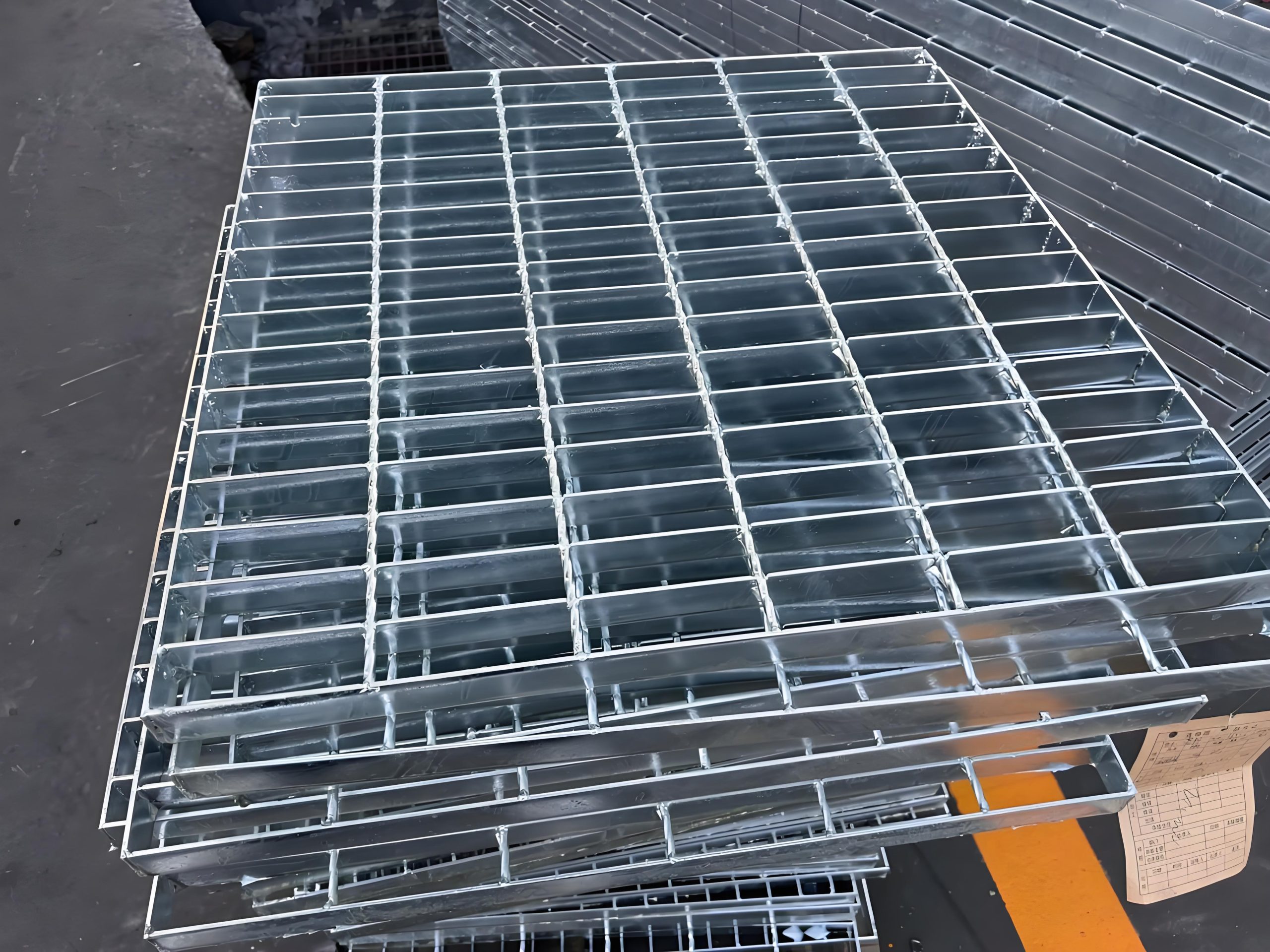
Heavy-duty grating is designed for high concentrated loads, industrial vehicles, forklifts, trucks, loading areas, bridge flooring, docks, and large unsupported spans. It uses deeper and thicker bearing bars than ordinary pedestrian grating.
Heavy-duty products may require manual welding, larger cross bars, reinforced banding, special frames, and more complex lifting and packaging. The price can therefore be several times higher than standard grating.
| Duty Level | Typical Application | General Carbon Steel Price Direction |
| Light duty | Pedestrians, ventilation, narrow trenches, and light maintenance access | Approximately US$12–45 per m² before extensive fabrication |
| Standard duty | Walkways, platforms, stair treads, and industrial drainage | Approximately US$20–90 per m² depending on coating and fabrication |
| Medium duty | Carts, maintenance equipment, and frequent industrial traffic | Approximately US$45–140 per m² |
| Heavy duty | Forklifts, cars, high concentrated loads, and industrial vehicles | Approximately US$70–220 per m² |
| Engineered traffic duty | Trucks, roads, ports, loading areas, and special equipment | Approximately US$150–400+ per m² |
A bearing bar that performs well across a 500 mm span may deflect excessively across a 1,200 mm span. Wider spans generally require deeper bars and increase the product weight.
Adding intermediate supports can sometimes reduce the required bearing bar size. The design should compare the cost of heavier grating with the cost of additional support steel.
Small hard wheels can create high local stresses. A grating designed for pedestrian uniform loading may not be suitable for pallet trucks, carts, or forklifts.
Manufacturers should be given the maximum wheel load, wheel contact dimensions, wheel spacing, direction of travel, support span, and expected impact. Vehicle traffic may also require close bearing bar spacing so that wheels do not drop into the openings.
Surface treatment protects carbon steel from corrosion and controls the appearance of the finished product. Treatment cost depends on product weight, surface area, preparation, coating specification, color, and order quantity.
Bare steel is the least expensive finish. It may be supplied when the buyer will apply a coating locally or when the grating is used in a dry temporary environment.
A shop primer provides basic temporary protection during storage and installation. It is not normally a complete long-term coating system for wet outdoor exposure.
Painted grating may receive one or more layers of primer, epoxy, polyurethane, alkyd, or another project-specific coating. The cost depends on surface blasting, coating thickness, number of coats, curing, masking, inspection, and required color.
Powder coating can provide a uniform decorative finish. It is commonly used for architectural and controlled environmental applications. Large heavy panels may be limited by coating oven size.
Hot-dip galvanizing is commonly applied after cutting and welding so that fabricated edges and connections receive zinc protection. The grating is cleaned, fluxed, immersed in molten zinc, cooled, and inspected.
Galvanizing cost is often calculated by weight, with minimum batch charges for small orders. Thin grating can distort during heating if the design and handling are not controlled.
A duplex system combines hot-dip galvanizing with paint or powder coating. It offers enhanced corrosion protection and a selected color but has a higher initial price.
Stainless steel grating may require pickling to remove welding heat tint and oxide scale. Passivation removes free iron contamination and helps establish a clean passive surface.
Brushing or polishing improves appearance and cleanability. It is labor-intensive on grating because the panel has many edges, intersections, and internal spaces.
| Surface Treatment | Relative Cost | Typical Application |
| Bare carbon steel | Lowest | Temporary, dry indoor, or locally coated grating |
| Shop primer | Low | Temporary protection and indoor structures |
| Painted system | Low to moderate | Factories, equipment platforms, and color-coded areas |
| Powder coating | Moderate | Architectural and decorative grating |
| Hot-dip galvanizing | Moderate | Outdoor and wet industrial applications |
| Duplex galvanized and painted | High | Severe outdoor, coastal, and long-service applications |
| Stainless pickling and passivation | Moderate addition | Marine, chemical, hygienic, and wet stainless grating |
| Stainless polishing | High addition | Architectural, food, pharmaceutical, and visible applications |
A light grating and heavy-duty grating may have similar panel dimensions but very different galvanizing costs because galvanizers often charge by weight. Heavy frames and toe plates also increase the galvanized weight.
Galvanizing, blasting, painting, passivation, and polishing suppliers may apply minimum batch charges. This makes small orders more expensive per square meter than large orders.
Most construction projects require fabricated panels rather than full factory sheets. Fabrication cost depends on the number of operations, total cut length, welding length, panel quantity, complexity, tolerance, and inspection level.
Rectangular cutting is normally the least expensive operation. Plasma cutting, saw cutting, abrasive cutting, laser cutting, and manual cutting may be used depending on material and thickness.
Stainless steel cutting usually requires greater contamination control than carbon steel cutting. Cut edges may also require grinding, pickling, or passivation.
Banding bars close the exposed bearing bar ends. Banding improves handling, appearance, safety, and panel stability. Drain covers, stair treads, removable floor panels, and visible edges are commonly banded.
Trim banding closes the panel edge but may not be intended to transfer a major load. Load banding uses a larger section and stronger connections so the edge can receive concentrated loading or transfer force to adjacent supports.
Notches allow the grating to fit around beams, columns, pipes, walls, equipment legs, and platform braces. Each notch requires measurement, cutting, edge finishing, and sometimes additional banding.
Round, rectangular, and irregular cutouts may be required for pipes, valves, drains, equipment, or access openings. Complex cutouts increase programming, cutting, fitting, and inspection time.
Toe plates are installed around platform edges to reduce the risk of tools and materials falling. The price depends on toe plate height, thickness, total length, welding, corners, and surface treatment.
Angle frames, flat bar frames, or structural frames may be supplied with trench covers and removable grating. Frame fabrication includes cutting, corner welding, anchors, straightening, trial fitting, and surface treatment.
Steel grating stair treads may include carrier plates, fixing holes, welded nosing, edge banding, and serrated bearing bars. The tread price depends on width, depth, bearing bar size, nosing type, and quantity.
Large platform projects require each panel to be marked according to the installation drawing. Marks can be applied by tags, stamps, paint, or other agreed methods. Detailed panel schedules increase drawing and production control costs but reduce installation errors.
| Fabrication Item | Typical Cost Effect |
| Simple rectangular cutting | Small increase |
| Two-sided edge banding | Small increase |
| Four-sided edge banding | Small to moderate increase |
| Heavy load banding | Moderate increase |
| Simple notch | Small increase per notch |
| Multiple irregular cutouts | Moderate to significant increase |
| Toe plates | Moderate increase according to total length |
| Matching support frame | Moderate to significant increase |
| Stair tread carrier plates and nosing | Moderate increase per tread |
| Curved or irregular panels | Significant increase |
A small panel may have a higher price per square meter than a large panel because it still requires cutting, banding, welding, inspection, labeling, and packaging. Buyers should provide the number and dimensions of individual panels, not only the total area.
Production capacity affects pricing, lead time, quality consistency, and the manufacturer’s ability to complete large projects. A factory suitable for a small drainage order may not have the equipment or capacity required for thousands of square meters of heavy-duty grating.
The factory should be able to control bearing bar width, thickness, straightness, and material grade. Serrated products require accurate tooth forming, while I-bar products require access to the correct bearing bar profiles.
Automatic or controlled welding equipment improves bar spacing, cross bar alignment, connection consistency, and production output. Heavy-duty grating may require equipment capable of handling thicker bearing bars and larger cross bars.
Press-locked manufacturers need accurate punching or slotting equipment and hydraulic pressing capacity. The factory should control bar alignment, slot depth, panel squareness, and pressure.
Custom manufacturers should have suitable cutting, grinding, drilling, welding, straightening, and frame fabrication equipment. CNC cutting can improve repeatability on large projects with many panel marks.
Some grating factories operate their own galvanizing lines, while others use approved external galvanizers. In either case, the grating manufacturer should remain responsible for coating quality, distortion, drainage, sharp zinc projections, and final inspection.
Stainless steel production should be separated from carbon steel contamination where practical. Dedicated tools, worktables, abrasives, brushes, and storage areas help prevent embedded iron and rust-colored staining.
Custom projects require panel layouts, fabrication drawings, stair tread schedules, frame details, and bearing bar direction. A capable manufacturer should review drawings for manufacturability and identify missing dimensions before production.
Monthly production capacity should be considered together with the project schedule. A high quoted capacity is useful only if the factory can maintain material supply, welding quality, galvanizing capacity, fabrication accuracy, and packaging control.
| Factory Capability | Why It Matters |
| Automatic welded grating line | Improves panel consistency and production efficiency |
| Heavy-duty welding capacity | Supports thick bearing bars and high-load products |
| Press-locking equipment | Allows accurate architectural and close-mesh grating production |
| Serration forming | Supports consistent anti-slip bearing bars |
| CNC cutting and fabrication | Improves repeatability for custom panels and large layouts |
| Frame and stair tread fabrication | Allows complete installation-ready assemblies |
| Surface treatment capability | Supports galvanizing, painting, pickling, passivation, or polishing |
| Engineering and drawing team | Reduces specification and installation errors |
| Inspection equipment | Supports dimensional, coating, material, weld, and load checks |
| Export packing experience | Reduces transport damage and panel identification problems |
Quality control should begin with raw material inspection and continue through welding, fabrication, surface treatment, final inspection, and packaging.
The manufacturer should confirm the required carbon steel or stainless steel grade. Material certificates may be required to show chemical composition, mechanical properties, heat number, and applicable product standard.
For stainless steel or critical projects, positive material identification may be requested. This helps verify that 304, 316, 316L, or another specified alloy has not been mixed during production.
Bearing bar height, thickness, straightness, and surface condition should be measured. Serrated bars should have consistent teeth without unacceptable cracks, burrs, or damaged sections.
Bearing bar and cross bar spacing should be checked at multiple locations. Irregular spacing affects overall panel width, open area, walking performance, alignment, and load distribution.
Welded intersections should be checked for secure connection, missing welds, cracking, incomplete fusion, excessive burn-through, and unacceptable deformation. Secondary welds at banding bars, frames, toe plates, and stair tread plates also require inspection.
Panel length, width, diagonal dimensions, cutouts, notches, frame dimensions, stair tread holes, and panel marks should be checked against approved drawings.
A grating panel should sit on its supports without excessive rocking. Welding, cutting, and galvanizing can introduce distortion, so straightening and final flatness inspection are important.
Painted products may require checks for surface preparation, coating thickness, coverage, color, runs, and damage. Galvanized grating may require inspection for coating thickness, uncoated areas, excessive zinc lumps, drainage, and distortion.
Stainless steel products may require inspection for heat tint, free iron contamination, scratches, grinding marks, passivation, and polishing quality.
A load calculation should identify the bearing bar size, material, spacing, support span, uniform load, concentrated load, wheel load, and deflection limit. The calculation basis should match the actual installation condition.
Load testing may be required for custom heavy-duty grating, vehicle-rated trench covers, public infrastructure, or products without established load data. The test should define the support arrangement, load position, contact area, loading rate, maximum load, deflection, permanent deformation, and acceptance criteria.
The purchase specification should identify the applicable grating, material, welding, galvanizing, coating, dimensional, and load requirements. Standards vary by country and project, so manufacturers should not assume that one regional specification is acceptable everywhere.
| Quality Document | Main Purpose |
| Material certificate | Confirms the steel grade and material properties |
| Dimensional report | Records panel size, bar dimensions, spacing, and fabrication details |
| Welding inspection record | Documents grating and secondary fabrication weld checks |
| Coating thickness report | Records paint or galvanized coating measurements |
| Load calculation | Shows the structural basis for bearing bar selection |
| Load test report | Records physical test conditions and results |
| PMI report | Verifies stainless steel or alloy identity |
| Third-party inspection report | Provides independent verification before shipment |
| Packing list and panel schedule | Connects shipped panels with installation drawings |
Material traceability, third-party inspection, coating reports, welding documentation, load testing, and sample approval add cost and time. These requirements should be included in the inquiry rather than added after production begins.
The minimum order quantity depends on the material, production method, panel specification, and manufacturer. Standard carbon steel grating may have a relatively low minimum order, while custom press-locked, stainless steel, or heavy-duty products may require more material or setup.
A one-panel sample normally has a high unit price because the manufacturer must review the drawing, prepare material, adjust equipment, fabricate the panel, inspect it, and package it without the efficiency of a production run.
Small orders may include minimum production, galvanizing, passivation, painting, packaging, or documentation charges. The price per square meter can therefore be much higher than the advertised bulk price.
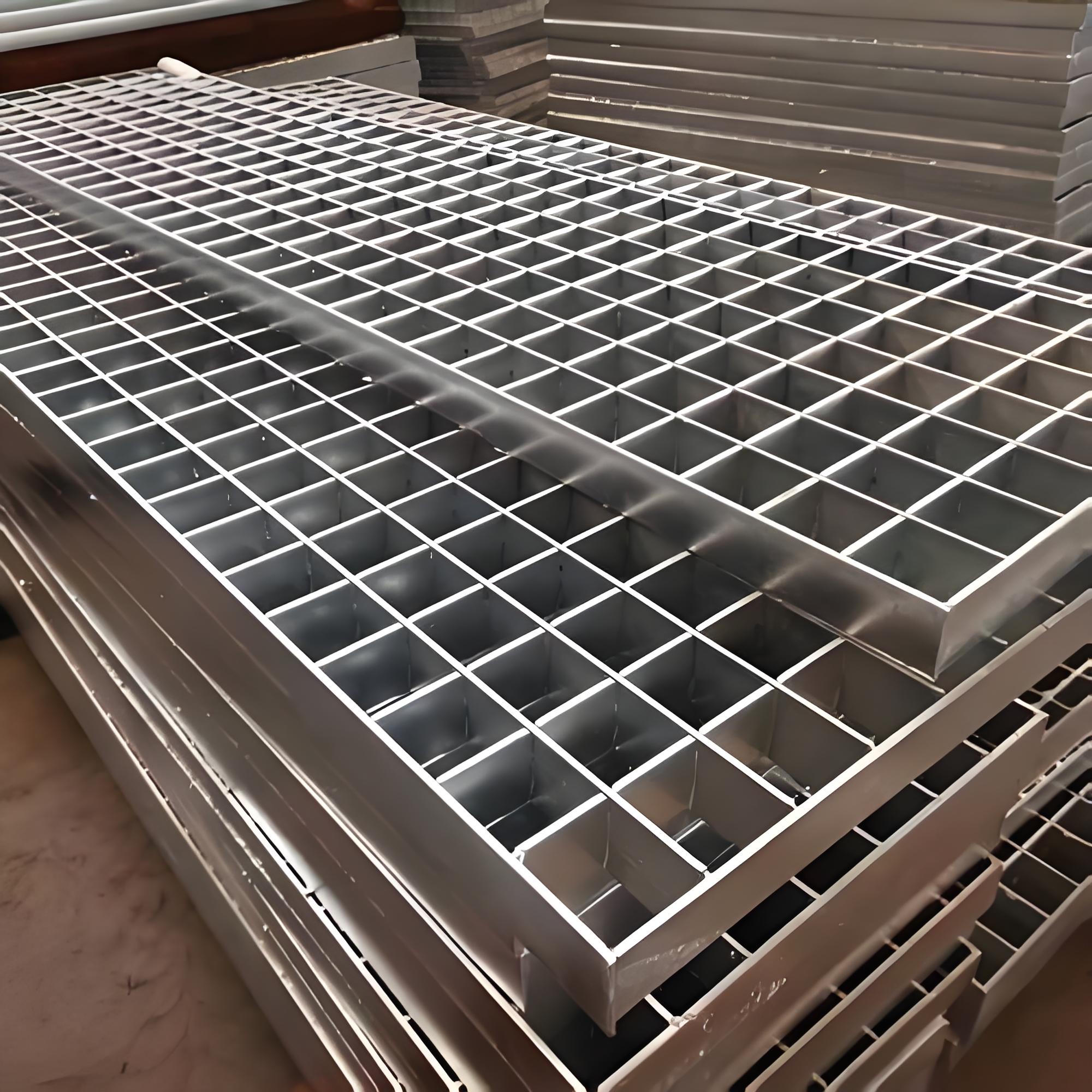
Medium orders with repeated specifications provide better material utilization and production efficiency. Setup and drawing costs are distributed across more panels.
Large standard orders can receive better steel purchasing, manufacturing, galvanizing, and packaging rates. The largest discounts normally apply when bearing bar sizes, mesh, panel dimensions, and surface treatments are repeated.
| Order Size | General Unit Price Effect |
| Prototype or one panel | Highest price because of setup and minimum charges |
| Below 20 m² | Small-order pricing |
| 20–100 m² | Improved production efficiency |
| 101–500 m² | Competitive project pricing |
| 501–2,000 m² | Potential volume discount |
| More than 2,000 m² | Strong purchasing efficiency when specifications are standardized |
Standard galvanized panels may be stacked and strapped into bundles. Fabricated panels may require wooden pallets, steel frames, separators, corner protection, and panel labels.
Stainless steel, painted, polished, or architectural grating may require protective materials to prevent scratching, carbon steel contamination, coating damage, and moisture traps.
For large projects, panel marks should remain visible after packaging. Bundles should be organized according to installation sequence or platform area when practical.
Steel grating is dense and can create significant freight cost. A project with 500 square meters of grating at 40 kg per square meter has a net grating weight of approximately 20 tonnes before frames and packaging are added.
Long panels may create oversize transport problems even when the weight is acceptable. Dividing panels into shorter lengths can simplify shipping and installation but increase cutting and banding costs.
Sea freight is normally economical for large export orders. The manufacturer should provide package dimensions, gross weight, container loading quantity, and a loading plan.
Air freight is usually suitable only for small urgent samples or replacement panels because the freight cost can exceed the grating value.
| Trade Term | General Price Scope |
| EXW | Product available at the manufacturer’s factory |
| FOB | Product and export delivery to the named port are generally included |
| CIF | FOB scope plus ocean freight and insurance to the destination port |
| DAP | Delivery to the named destination, normally excluding import duty and tax |
| DDP | Delivery including agreed import clearance, duties, and taxes |
An EXW quotation should not be compared directly with a DDP quotation. Buyers should calculate the delivered cost after packaging, inland freight, export charges, ocean freight, destination fees, import duty, tax, and local delivery.
A reliable steel grating manufacturer should be evaluated by technical capability, product consistency, quality documentation, communication, lead time, and total delivered value.
Buyers can ask which processes are completed in-house, including bar preparation, welding, press locking, cutting, banding, framing, galvanizing, passivation, inspection, and packing.
A trading company is not automatically unsuitable, but the buyer should understand who controls production and quality.
All manufacturers should quote the same material grade, bearing bar dimensions, spacing, surface type, panel dimensions, load requirement, fabrication, coating, documentation, packaging, and delivery term.
Unit weight can reveal major specification differences. A quotation that is significantly cheaper may use thinner bearing bars, wider spacing, smaller cross bars, lighter banding, or no frame.
A reliable manufacturer should ask for the support span and loading before confirming the bearing bar. Suppliers that select a product only from the panel dimensions may not be considering structural performance.
Custom panels should be based on approved drawings. The drawings should show bearing bar direction, panel size, cutouts, banding, toe plates, frames, stair treads, fixing details, and panel marks.
Ask for examples of grating produced for similar materials, loads, and environments. Experience with light pedestrian grating does not automatically demonstrate the ability to manufacture vehicle-rated heavy-duty panels.
Review sample material certificates, dimensional reports, coating reports, weld inspection records, and load test reports. Confirm whether documents will be specific to the supplied batch.
The manufacturer should provide a realistic production schedule covering drawing approval, raw material preparation, panel production, fabrication, surface treatment, inspection, packing, and shipment.
Poor packaging can cause bent panels, damaged serrations, scratched stainless steel, broken coating, mixed panel marks, and lost clips. Export experience is particularly important for fabricated project panels.
| Manufacturer Comparison Item | What to Check |
| Manufacturer type | Primary factory, fabricator, distributor, or trading supplier |
| Material specification | Steel grade, certificates, thickness, and traceability |
| Product weight | Weight per square meter and total shipment weight |
| Production method | Welded, press-locked, swage-locked, or custom fabrication |
| Load selection | Span, uniform load, concentrated load, wheel load, and deflection |
| Fabrication | Cutting, banding, notching, frames, toe plates, and stair treads |
| Surface treatment | Painting, galvanizing, passivation, polishing, and inspection |
| Quality control | Material, welding, dimensions, flatness, coating, and testing |
| Capacity | Monthly output, current workload, and realistic lead time |
| Packaging | Bundle design, panel marks, protection, and loading plan |
| Commercial scope | Currency, validity, tax, freight, payment, and trade term |
An accurate quotation requires more than the total square meter quantity. The manufacturer needs enough information to calculate product weight, production method, fabrication time, surface treatment, packaging, and freight.
| Required Information | Example |
| Application | Walkway, platform, trench cover, stair tread, mezzanine, or vehicle floor |
| Material | Carbon steel, 304 stainless steel, or 316L stainless steel |
| Grating construction | Welded, press-locked, swage-locked, or another specified type |
| Bearing bar size | For example, 30 × 3 mm or 40 × 5 mm |
| Bearing bar spacing | For example, 30 mm on center |
| Cross bar type | Twisted square bar, round bar, flat bar, or other profile |
| Cross bar spacing | For example, 50 mm or 100 mm on center |
| Surface type | Plain, serrated, or I-bar |
| Panel dimensions | Length and width of each panel |
| Bearing bar direction | Clearly shown on the drawing |
| Clear support span | Unsupported distance between supports |
| Uniform load | Required distributed load |
| Concentrated or wheel load | Maximum load and contact dimensions |
| Allowable deflection | Project limit or applicable standard requirement |
| Edge treatment | Open edge, trim banding, or load banding |
| Custom fabrication | Cutouts, notches, toe plates, frames, nosing, or carrier plates |
| Surface treatment | Bare, painted, hot-dip galvanized, passivated, or polished |
| Total quantity | Square meters, number of panels, or total project weight |
| Documentation | Material certificate, coating report, load calculation, or test report |
| Packaging | Standard bundle, pallet, wooden case, or seaworthy export packing |
| Delivery destination | City, port, and country |
| Trade term | EXW, FOB, CIF, DAP, or DDP |
Total area does not show how much fabrication is required. One hundred square meters divided into twenty large panels costs less to fabricate than the same area divided into several hundred small panels.
A layout drawing should show panel divisions, support beams, trench edges, columns, pipes, stairs, handrails, openings, and bearing bar direction. This helps the manufacturer optimize panel dimensions and reduce waste.
Descriptions such as pedestrian, heavy duty, or forklift use are helpful but may not be sufficient. The manufacturer may need the actual uniform load, wheel load, contact area, traffic direction, and allowable deflection.
The buyer should confirm whether the price includes cutting, banding, frames, stair tread plates, clips, galvanizing, material certificates, inspection, packaging, freight, duty, and tax.
How much does steel grating cost per square meter?
Basic untreated carbon steel grating may cost approximately US$12 to US$35 per square meter for factory bulk orders. Standard hot-dip galvanized grating commonly ranges from approximately US$20 to US$70 per square meter, while fabricated galvanized panels may cost US$35 to US$110 per square meter. Stainless steel and heavy-duty grating can range from US$45 to more than US$300 per square meter. The exact price depends on material, bearing bar size, spacing, weight, fabrication, surface treatment, quantity, and delivery terms.
Is galvanized steel grating cheaper than stainless steel?
Yes. Hot-dip galvanized carbon steel grating normally has a lower initial price than 304, 316, or 316L stainless steel grating. Galvanized steel is economical for general outdoor and industrial applications, while stainless steel is often selected for food processing, marine, chemical, hygienic, and highly corrosive environments. The final choice should consider both the purchase price and long-term maintenance cost.
How do I choose a reliable steel grating manufacturer?
Choose a manufacturer that confirms the material grade, bearing bar dimensions, spacing, unit weight, support span, and design load before quoting. The manufacturer should provide clear drawings, suitable production equipment, controlled welding and fabrication, material certificates, surface treatment inspection, reliable packaging, and a complete commercial scope. Compare manufacturers using the same specification and delivery term rather than selecting only the lowest advertised price.
