
Stainless steel plank grating prices generally range from approximately US$45 to US$180 per square meter for standard factory-produced 304 stainless steel planks ordered in commercial quantities. Comparable 316 or 316L stainless steel plank grating may cost approximately US$60 to US$240 per square meter. Custom walkway panels, stair treads, heavy-duty planks, reinforced sections, polished surfaces, end plates, connectors, and low-volume fabrication can increase the price to US$150 to US$450 per square meter or more. In the retail market, an individual stainless steel safety plank may cost approximately US$190 to US$450 or higher, depending on its width, length, profile, thickness, and supplier. The final price depends on the stainless steel grade, plank width, channel height, material gauge, perforation pattern, load capacity, support span, surface finish, fabrication details, quantity, packaging, and shipping terms.
Stainless steel plank grating is a one-piece safety flooring product manufactured by punching, perforating, embossing, and forming stainless steel sheet into a rigid channel-shaped plank. Unlike welded bar grating, which is assembled from separate bearing bars and cross bars, plank grating is normally formed from a single sheet or strip of stainless steel.
The finished plank usually has perforated or raised anti-slip openings on the walking surface and formed side channels along its length. The side channels increase structural stiffness and allow the plank to span between supports. Depending on the profile, the surface may contain serrated diamonds, round holes, embossed buttons, slotted openings, or combinations of drainage holes and raised traction points.
Stainless steel plank grating is widely used for walkways, stair treads, maintenance platforms, rooftop access, marine walkways, food processing areas, chemical plants, wastewater facilities, machinery access, loading platforms, and other locations where corrosion resistance and slip resistance are required.
The product may be quoted by square meter, linear meter, individual plank, stair tread, walkway assembly, or complete project. Price comparisons are meaningful only when the material grade, plank width, length, channel height, sheet thickness, profile, load requirement, and included fabrication are the same.
| Quotation Unit | Common Use | Important Limitation |
| Price per square meter | Comparing different plank widths and project areas | Must use the same thickness, profile, grade, and load capacity |
| Price per linear meter | Long walkways and repeated channel-shaped planks | Plank width must be stated |
| Price per plank | Standard stock lengths and small orders | Different widths and lengths cannot be compared directly |
| Price per stair tread | Preformed treads with end plates and fixing holes | Width, depth, side plates, and nosing affect the price |
| Price per walkway assembly | Wide walkways with integral side channels or toe boards | Supports, connectors, rails, and fasteners may be excluded |
A low advertised price often refers to a basic carbon steel or galvanized plank rather than stainless steel. It may also apply to a large minimum order, a thin material gauge, a narrow plank, a standard mill finish, or a product without end plates, fasteners, surface treatment, or export packaging.
A complete quotation should clearly state whether the price includes the plank only or also includes end plates, side channels, splice plates, support angles, connectors, clips, bolts, stair tread carrier plates, surface treatment, inspection documents, packaging, and delivery.
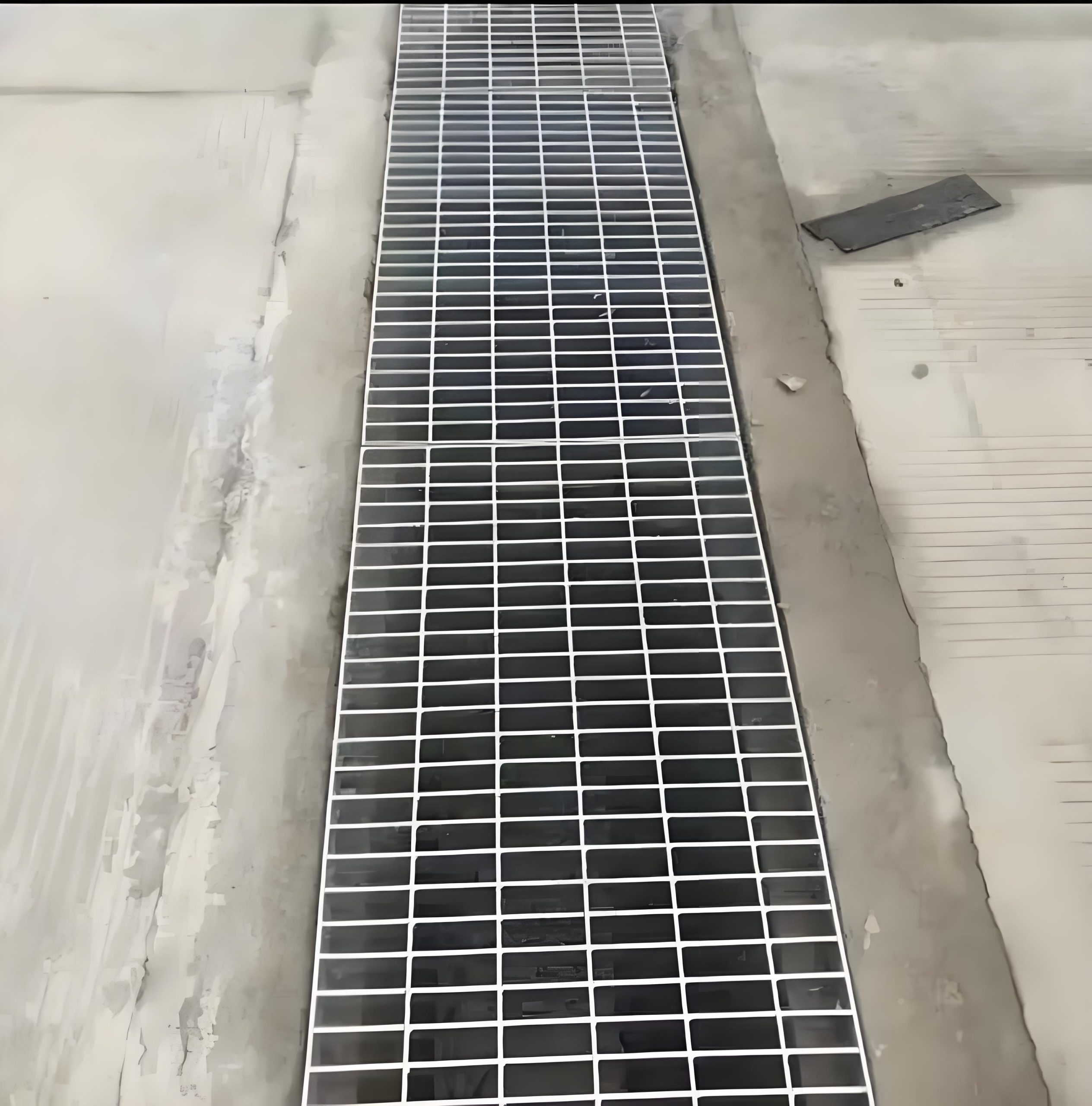
For preliminary purchasing and project budgeting, stainless steel plank grating can be divided into several price levels. The following figures are general factory and international market references rather than fixed quotations.
| Stainless Steel Plank Product | Typical Factory Reference Price | General Description |
| Basic 304 perforated plank grating | US$45–90 per m² | Standard width, standard length, light-duty section, and mill finish |
| Standard 304 safety plank grating | US$65–140 per m² | Serrated or embossed profile for industrial walkways and platforms |
| Heavy or close-profile 304 plank grating | US$100–220 per m² | Thicker sheet, deeper side channel, wider plank, or higher load requirement |
| Standard 316 stainless steel plank grating | US$75–190 per m² | Improved corrosion resistance for coastal, food, and chemical environments |
| Standard 316L stainless steel plank grating | US$80–210 per m² | Low-carbon grade for welded end plates and corrosion-sensitive fabrication |
| Fabricated walkway panels | US$120–280 per m² | Cut-to-length planks with end closures, connectors, and project marking |
| Stainless steel plank stair treads | US$35–180 per tread | Price depends on tread width, depth, end plates, holes, and material grade |
| Heavy-duty reinforced walkway plank | US$180–450+ per m² | Thick material, deep channels, wide walkway sections, or high concentrated loads |
| Polished or electropolished hygienic plank | US$180–500+ per m² | Food, pharmaceutical, architectural, or high-purity applications |
A practical factory budget for common 304 stainless steel Grip Strut-style plank grating is approximately US$65 to US$140 per square meter when ordered in repeated commercial quantities. A comparable 316L product may fall between approximately US$80 and US$210 per square meter.
Small retail orders are often much more expensive. A single stock plank may cost approximately US$190 to US$450 or more. When a narrow plank is converted into a square meter rate, the retail equivalent can exceed US$300 to US$1,000 per square meter because the supplier is selling an individual cut length rather than a bulk factory project.
Factory pricing normally assumes repeated sizes, standard tooling, commercial quantities, simplified packaging, and delivery from the manufacturing location. Retail pricing includes warehousing, inventory financing, individual handling, local distribution, small-quantity service, and sometimes immediate availability.
A factory quotation of US$100 per square meter and a retail price equivalent to US$600 per square meter do not necessarily represent the same purchasing conditions. The retail product may be available as one plank with no minimum order, while the factory price may require tens or hundreds of square meters.
A raw plank price normally covers the formed safety grating profile without project-specific end plates, support clips, cutouts, labels, or special finishing. An installation-ready plank may include cutting, deburring, end closures, fixing holes, splice connectors, pickling, passivation, and protective packaging.
For this reason, a low raw plank price can increase by 20 to 80 percent or more after all fabrication and finishing requirements are included.
Linear meter pricing depends strongly on the plank width. A 120 mm wide plank contains much less stainless steel than a 300 mm wide plank. Approximate factory reference prices for common 304 stainless steel products may be organized as follows:
| Plank Width | Typical 304 Price per Linear Meter | Typical 316 or 316L Price per Linear Meter |
| 100–150 mm | US$15–40 per meter | US$20–55 per meter |
| 151–220 mm | US$25–65 per meter | US$35–85 per meter |
| 221–300 mm | US$40–90 per meter | US$55–120 per meter |
| 301–500 mm | US$65–160 per meter | US$85–210 per meter |
| Heavy-duty walkway section | US$120–300+ per meter | US$160–400+ per meter |
These ranges depend on thickness, channel depth, perforation pattern, quantity, and finishing. They should not be used as final quotations without confirming the complete specification.
The stainless steel grade affects the material price, corrosion resistance, welding performance, and suitability for the service environment. The most common grades for plank grating are 304, 316, and 316L.
304 is the most widely used general-purpose stainless steel grade. It offers good resistance to normal atmospheric corrosion, fresh water, humidity, many food products, and routine industrial cleaning.
It is commonly selected for indoor walkways, commercial kitchens, food packaging areas, rooftop access, machine platforms, utility plants, wastewater buildings, and general industrial flooring.
Because 304 does not contain the same molybdenum content as 316 and 316L, its raw material cost is normally lower. It often provides the best price-performance balance where chloride exposure is limited.
316 stainless steel contains molybdenum, which improves resistance to chloride-induced pitting and many chemical environments. It is more suitable for coastal facilities, marine platforms, seafood processing, brine production, swimming pool areas, wastewater systems, and some chemical plants.
The additional nickel and molybdenum generally make 316 plank grating more expensive than a comparable 304 product.
316L is the low-carbon version of 316 stainless steel. The lower carbon content reduces the risk of chromium carbide precipitation in heat-affected areas during welding.
Most plank grating profiles are formed from a single sheet and do not require welding across the walking surface. However, end plates, carrier plates, reinforcing channels, frames, handles, and special supports may be welded to the plank. For these fabricated products, 316L can provide an advantage in corrosion-sensitive environments.
| Material Grade | Typical Price Relationship | Suitable Environments |
| 304 | 100% baseline | General indoor, fresh-water, food, and mild industrial conditions |
| 316 | Approximately 15–30% above comparable 304 products | Coastal, salt-containing, wastewater, pool, and chemical environments |
| 316L | Approximately 18–35% above comparable 304 products | Welded marine, hygienic, chemical, and corrosion-sensitive applications |
The percentage difference is not fixed. Nickel and molybdenum market prices, regional availability, material thickness, purchase volume, and the required stainless steel standard can change the premium.
A heavy-duty plank contains more stainless steel per square meter than a light plank. The price difference between 304 and 316L is therefore greater in absolute dollars on a thick, wide, reinforced product.
On a narrow light-duty plank, punching, forming, cutting, and packaging may represent a large part of the final price. In that situation, the material grade premium may have a smaller percentage effect.
304 is often sufficient for dry indoor areas, ordinary food handling, fresh-water washdown, warehouse access, rooftop maintenance, and general industrial platforms. Specifying 316L for a mild environment can increase cost without providing a meaningful service-life benefit.
316 or 316L should be evaluated where the plank is exposed to coastal air, seawater spray, salt-containing products, brine, chloride cleaning agents, pool chemicals, wastewater, or aggressive process liquids.
Material selection should be based on the actual chemical, concentration, temperature, wetting time, cleaning practice, and maintenance conditions. No stainless steel grade is universally resistant to every chemical environment.
Plank dimensions directly affect stainless steel consumption, forming difficulty, structural capacity, shipping size, and final price.
Plank width is measured across the walking surface. Common safety plank widths may include approximately 120 mm, 180 mm, 240 mm, 300 mm, 450 mm, 600 mm, 750 mm, and 900 mm, depending on the product profile.
Narrow planks are commonly used as individual walkway strips, stair treads, ladder rungs, and maintenance access. Wider products may be used as walkway panels with integral side channels or toe boards.
Increasing the width increases the sheet area per linear meter. It can also require more punch rows, a larger forming die, thicker material, or additional reinforcement.
| Plank Width | Area per Linear Meter | Relative Material Use |
| 120 mm | 0.12 m² | Very low |
| 180 mm | 0.18 m² | Low |
| 240 mm | 0.24 m² | Moderate |
| 300 mm | 0.30 m² | Moderate to high |
| 450 mm | 0.45 m² | High |
| 600 mm | 0.60 m² | Very high |
| 750–900 mm | 0.75–0.90 m² | Walkway assembly level |
Standard plank lengths are often selected to match factory sheet dimensions, transport limits, and common support arrangements. Typical stock lengths may include approximately 1.8 m, 2.4 m, 3 m, 3.6 m, or corresponding 6, 8, 10, and 12-foot lengths.
Longer planks use more material per piece and are more difficult to handle. They may require stronger packaging, longer transport vehicles, additional supports during forming, and more careful control of straightness.
Short cut lengths normally have a higher price per meter because each piece requires cutting, deburring, handling, identification, and packaging.
The side channel height increases the structural depth of the plank. Common channel heights may include approximately 25 mm, 38 mm, 50 mm, 64 mm, 75 mm, or deeper heavy-duty profiles.
A deeper channel can improve stiffness and allow the plank to span farther, but it requires more sheet width before forming and may require more powerful equipment.
| Channel Height Change | Structural Effect | Price Effect |
| Low side channel | Suitable for short spans and light loads | Lowest |
| Medium channel depth | Improves walkway stiffness | Moderate |
| Deep side channel | Supports wider spans and heavier loading | Moderate to high |
| Integral high toe board | Provides edge protection and greater section depth | High because of additional material and forming |
Plank grating thickness is often specified by gauge or millimeters. Depending on the profile and loading, stainless steel plank may be produced from thicknesses such as approximately 1.2 mm, 1.5 mm, 1.6 mm, 2 mm, 2.5 mm, 3 mm, or heavier material.
Increasing thickness adds material across the full width and length of the plank. It also affects punching force, die wear, forming power, weight, and shipping cost.
| Thickness Direction | Typical Application | Relative Price |
| Thin light-duty sheet | Short-span pedestrian access and light stair treads | Lowest |
| Standard industrial thickness | Walkways, platforms, and maintenance access | Moderate |
| Heavy sheet | Longer spans and higher concentrated loads | High |
| Heavy sheet with reinforcement | Special industrial and vehicle-adjacent applications | Highest |
The walking surface profile affects slip resistance, drainage, comfort, cleaning, tooling, and price. Stainless steel plank grating can be produced with perforated holes, raised embossments, serrated openings, or combinations of these features.
A basic perforated plank contains punched holes that allow liquid, air, light, and debris to pass through. If the holes are flat and do not require aggressive serration or complex forming, the production cost may be relatively low.
Flat perforated surfaces are easier to clean but provide less traction than aggressively serrated profiles.
Embossed plank grating contains raised buttons or formed projections around the openings. The raised areas increase friction and lift footwear above water, grease, or debris.
Embossing requires matched tooling and controlled forming pressure. The production cost is normally higher than a simple flat-perforated sheet but may be lower than a complex multi-directional serrated profile.
Serrated plank grating has raised tooth-like edges around perforations or diamond-shaped openings. These edges provide aggressive traction in wet, oily, muddy, snowy, or industrial conditions.
Serrated profiles require more complex tooling and can create greater die wear. They may therefore cost more than simple perforated or lightly embossed products.
| Surface Profile | Relative Price | Slip Resistance | Typical Use |
| Flat perforated | Low | Basic | Ventilation, drainage, controlled indoor access, and screens |
| Embossed round-hole | Low to moderate | Moderate | Walkways, stairs, rooftops, and light industrial access |
| Serrated diamond opening | Moderate | High | Wet, oily, marine, outdoor, and industrial areas |
| Multi-directional aggressive profile | Moderate to high | Very high | Severe anti-slip service and maintenance platforms |
| Custom decorative or hygienic pattern | High | Profile-dependent | Architectural, food, public, and special-purpose applications |
The open area is the percentage of the plank surface occupied by openings. A higher open area reduces retained liquid and may reduce the finished weight, but it does not automatically reduce the price.
A profile with many openings may require more punching operations and more complex tooling. Structural capacity must also be maintained after material is removed.
A highly serrated profile offers strong traction but can hold food residue, grease, fibers, and cleaning deposits. For food processing and hygienic areas, the cleaning requirements should be considered together with slip resistance.
A smoother embossed pattern may be more suitable where workers kneel, carts move across the plank, or frequent cleaning is required.
Stainless steel plank grating is available in several recognized safety profiles. Product names and exact geometries vary by manufacturer, but the general categories include Grip Strut-style diamond openings, Diamond-Strut profiles, Perf-O-Grip-style round openings, Traction Tread-style embossments, interlocking planks, and custom anti-slip patterns.
Grip Strut-style safety planks use diamond-shaped openings surrounded by serrated edges. The profile provides aggressive multi-directional traction and allows water, mud, oil, and debris to pass through.
This product is commonly used for industrial walkways, maintenance platforms, stair treads, marine access, rooftops, wastewater facilities, and slippery production areas.
The price is normally in the middle to upper part of the plank grating range because the surface requires specialized punching and forming tools.
Diamond-Strut and similar diamond-pattern plank profiles also use raised or serrated diamond openings. Depending on the manufacturer, the exact opening shape, serration, channel design, open area, and load data may differ from Grip Strut-style products.
Price differences are usually caused by material thickness, tooling availability, order quantity, licensing or branded distribution, and whether the product is stocked or custom manufactured.
Perf-O-Grip-style planks use larger round openings with raised perforated edges or buttons around the holes. They provide drainage and slip resistance while offering a different walking feel from aggressive diamond profiles.
The cost may be similar to or slightly below a comparable diamond-serrated plank, depending on sheet thickness and production tooling.
Traction Tread-style products use smaller perforations and raised buttons. They provide moderate slip resistance and can be more comfortable for hands, knees, light carts, and frequent pedestrian use.
Because the pattern may contain many smaller punched and embossed features, production cost depends strongly on press speed, tooling condition, and material thickness.
Interlocking plank systems use formed edges that connect adjacent planks. They can create a continuous floor without wide gaps and may simplify installation on suitable support structures.
The edge-locking profile requires additional forming precision. Connectors and joint details can increase the system price.
Custom profiles may be designed for architectural appearance, hygienic drainage, barefoot areas, small-wheel traffic, or specialized industrial requirements. Custom tooling can make low-volume production expensive.
| Plank Profile | Relative Cost | Main Performance Characteristic |
| Basic perforated plank | Low | Drainage and ventilation |
| Embossed traction plank | Low to moderate | Moderate slip resistance and walking comfort |
| Grip Strut-style diamond plank | Moderate to high | Aggressive multi-directional traction |
| Diamond-Strut or similar profile | Moderate to high | High traction and open drainage surface |
| Interlocking plank | Moderate to high | Continuous flooring and controlled panel joints |
| Custom proprietary profile | High | Special appearance, safety, hygiene, or wheel performance |
Brand names should not be treated as interchangeable technical specifications. When replacing an existing plank, buyers should confirm the exact width, height, thickness, opening pattern, support span, load rating, and connection details.
Load capacity has a major effect on stainless steel plank grating price. The formed side channels act as structural members, while the perforated walking surface distributes local loads across the plank.
The support span is the clear distance between structural supports. As the span increases, plank deflection and bending stress increase. A plank that performs adequately over a 600 mm span may not be suitable over a 1,500 mm span.
Longer spans may require deeper side channels, thicker stainless steel, narrower plank widths, intermediate supports, or additional reinforcement.
A uniform load is distributed over the plank area. It may represent workers, stored materials, snow, or a general platform loading requirement.
Uniform load capacity should be considered together with allowable deflection. A plank may remain below its material strength limit but still feel flexible or unstable underfoot.
A concentrated load is applied over a smaller area. Examples include a worker’s foot, a tool box, an equipment leg, a maintenance trolley wheel, or a pipe support.
Concentrated loads can govern the design of perforated plank because the local surface around the punched openings must distribute the force to the side channels.
Small hard wheels can create high local contact pressure. Highly serrated plank profiles may also create vibration or rolling resistance for carts.
When wheeled traffic is expected, the manufacturer should know the wheel load, wheel width, wheel diameter, wheel spacing, direction of travel, and frequency of use.
Allowable deflection affects user comfort, panel alignment, joint performance, and long-term fatigue. A stricter deflection limit may require a heavier plank even when a thinner product can carry the load without permanent failure.
The side channels may be reinforced by increasing their depth, increasing sheet thickness, adding return flanges, adding formed ribs, or welding additional channels or angles.
Reinforcement increases material, fabrication, welding, finishing, and inspection costs.
Adding intermediate supports can reduce the required plank span and may allow a lighter product. The project should compare the cost of heavier plank grating with the cost of additional structural steel and installation.
| Load Design Change | Possible Product Change | Price Effect |
| Longer support span | Deeper side channel or thicker stainless steel | Moderate to significant increase |
| Higher uniform load | Thicker plank or closer structural support | Moderate increase |
| High concentrated load | Local reinforcement or heavy-duty profile | Significant increase |
| Small wheel traffic | Alternative surface profile or reinforcement | Moderate to high increase |
| Strict deflection limit | Stiffer section than strength alone requires | Moderate increase |
| Integral toe boards | Deeper formed side channels | Moderate to significant increase |
Load data from one manufacturer should not automatically be applied to another plank profile. Small differences in hole pattern, material thickness, channel geometry, return flange, and stainless steel grade can change the allowable load.
The selected load table should match the exact profile, width, height, thickness, material, support condition, and loading direction.
Standard plank sizes generally have a lower price because the factory can use existing tooling, established material widths, repeated forming settings, and efficient production runs.
Standard stock planks use established widths, channel depths, material gauges, profiles, and lengths. They are the most economical option when the project can adapt its support layout to the available dimensions.
Cut-to-length stock planks require additional handling, cutting, deburring, identification, and packaging. The price per meter is higher than a full stock length, especially when the required pieces are short.
A custom width may require special sheet slitting, non-standard tooling, modified punches, or a new forming die. Unless the order quantity is large, custom tooling can make the unit price high.
A special channel height may require modified forming tools or multiple bending operations. The factory must also verify load capacity because existing load tables may not apply.
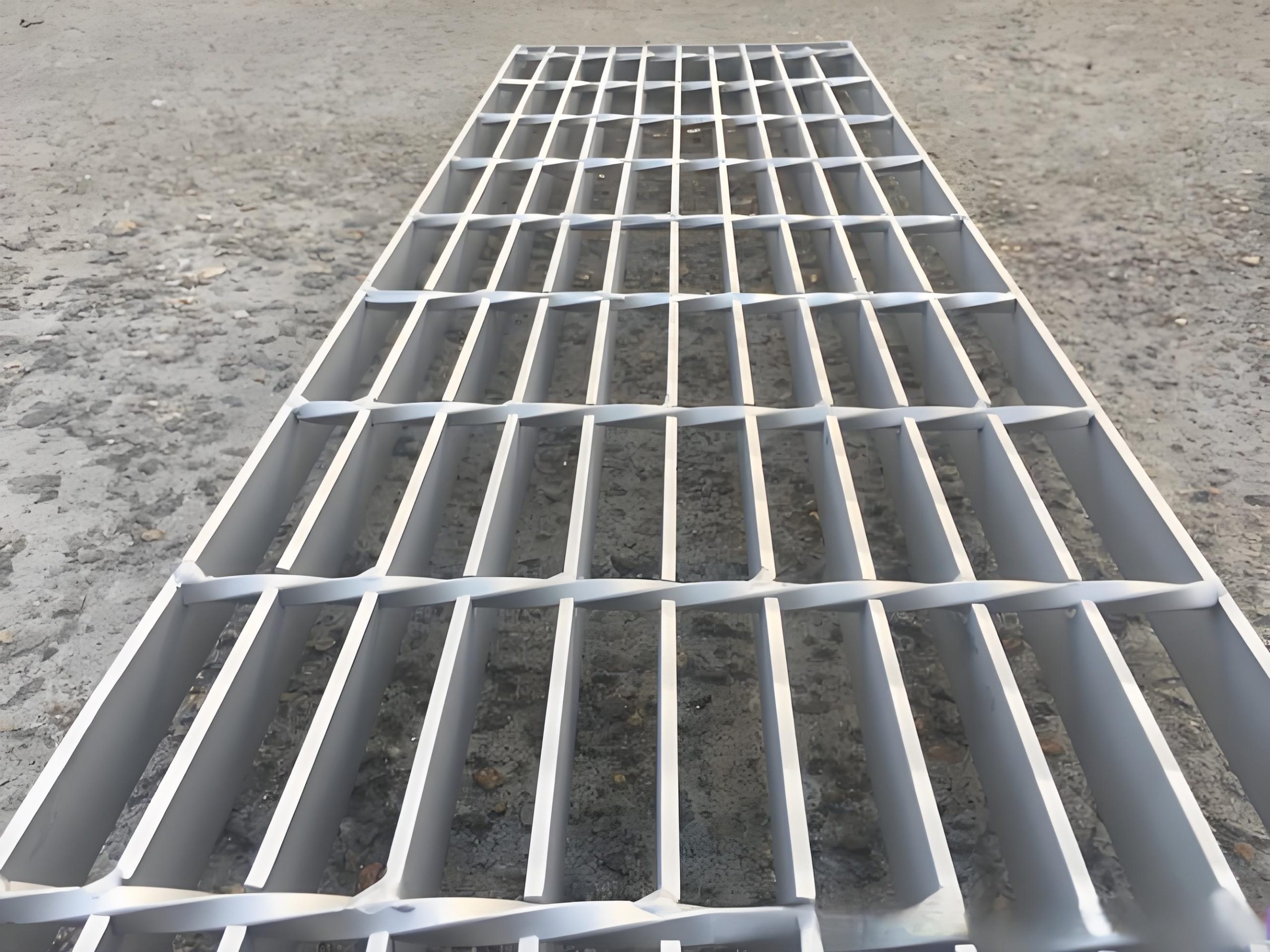
Custom hole sizes, spacing, logos, decorative patterns, or project-specific anti-slip profiles may require new punching tools or CNC punching programs. New hard tooling can carry a substantial one-time charge.
Cutouts may be required around pipes, columns, equipment legs, walls, and structural connections. Each opening adds cutting, deburring, local reinforcement, and inspection.
| Product Type | Relative Price | Main Reason |
| Standard full-length plank | Lowest | Existing tooling and minimal secondary work |
| Standard plank cut to length | Low to moderate | Cutting, deburring, identification, and packing |
| Custom length with end plates | Moderate | Additional cutting, welding, and drilling |
| Custom width or channel height | High | Tooling changes and non-standard production |
| Custom perforation profile | High to very high | New punching tools, testing, and minimum quantity |
| Irregular fabricated plank | High | Cutouts, reinforcement, fitting, and individual inspection |
Factories may accept a small custom order, but the tooling and setup cost must be divided across a limited number of planks. A custom pattern becomes more economical when the order quantity is large enough to distribute the tooling cost.
Using repeated plank widths, lengths, support spans, and fixing details can reduce drawing work, setup changes, fabrication mistakes, and packaging complexity.
Platform designers can often reduce cost by coordinating support spacing with available stock plank lengths and load tables.
Stainless steel plank grating is supplied as individual planks, wide walkway panels, stair treads, ladder rungs, and complete platform assemblies. Each product has a different fabrication scope.
An individual plank is the basic formed product. It may be supplied in a standard length with open ends and no additional hardware. This normally has the lowest fabrication cost.
Walkway panels may be wider than standard planks and can include integral side channels or toe boards. Some systems use multiple planks connected together to create a wider walking surface.
Walkway assemblies may require splice plates, support clips, lateral connectors, end closures, and structural verification. Their price is higher than the basic sheet area alone would suggest.
Stair treads are normally cut to a specific width and fitted with end carrier plates, mounting holes, or formed end closures. They may also include reinforced nosing or a contrasting front edge.
Because stair treads are short individual components, the fabrication cost per square meter is high. Each tread requires cutting, end preparation, drilling or punching, inspection, and separate handling.
Platform planks may require repeated lengths, support clips, end plates, toe boards, openings, and panel identification. Large platform projects often include a mixture of standard planks and specially cut infill pieces.
| Product Form | Typical Price Direction | Main Included Work |
| Full-length standard plank | Lowest per m² | Punching and forming only |
| Cut-to-length plank | Low to moderate | Cutting, deburring, and identification |
| Walkway panel | Moderate to high | Wide section, toe boards, joints, and connectors |
| Stair tread | High per m² | Short cutting, end plates, mounting holes, and nosing |
| Custom platform assembly | High | Layouts, cutouts, supports, connectors, and panel marking |
A basic 304 stainless steel plank stair tread may cost approximately US$35 to US$90 per piece for repeated factory quantities. Wider, thicker, 316L, reinforced, polished, or low-volume treads may cost approximately US$80 to US$180 or more per piece.
Retail pricing can be higher, particularly when the tread is stocked locally, supplied as one piece, or manufactured under a proprietary profile.
Accessories and finishing components can represent a significant part of the installed plank grating price.
Side channels are normally formed as an integral part of the plank. Their height, return flange, and geometry affect stiffness and material consumption.
Heavy-duty walkways may use deeper side channels or integral toe boards. These features increase sheet width and forming complexity.
End plates close the open ends of the plank and provide a connection point to stringers or structural supports. They may be welded, bolted, riveted, or formed as part of the plank.
Welded end plates add material, cutting, fitting, welding, distortion control, and post-weld cleaning. Stainless steel end plates may also require pickling and passivation after welding.
Carrier plates are attached to both ends of stair treads and contain fixing holes for connection to stair stringers. Their thickness and hole pattern should match the structural design.
Splice connectors join the ends of adjacent planks or connect multiple planks into a walkway. They can help align the walking surface and distribute movement between sections.
Clips secure the plank to structural supports while allowing removal when necessary. Clip design depends on the plank profile and support structure.
Stainless steel bolts, washers, nuts, self-tapping screws, and specialty clips are more expensive than ordinary carbon steel fasteners. The grade should be compatible with the plank and service environment.
Vibrating equipment, public areas, marine platforms, and vehicle-adjacent walkways may require lock nuts, security fasteners, thread-locking systems, or concealed clips.
| Accessory | Typical Price Effect |
| Simple support clip | Small increase per fixing point |
| Stainless steel bolt set | Small increase per connection |
| End closure plate | Small to moderate increase per plank |
| Stair tread carrier plates | Moderate increase per tread |
| Splice connector | Small to moderate increase per joint |
| Integral toe board | Moderate to significant material increase |
| Security or anti-loosening fastener | Moderate increase |
| Custom support bracket | Moderate to high increase |
Some suppliers quote planks without any installation hardware. Others include a standard number of clips per plank. Buyers should confirm the number, material, and type of fasteners included.
Insufficient clips can allow vibration, uplift, movement, or noise. The required spacing should be based on plank dimensions, loading, wind, vibration, and support arrangement.
Surface finishing affects corrosion resistance, appearance, cleanability, and final price. The required finish should be specified before production because aggressive punching and forming can leave marks that are difficult to remove after the plank is completed.
Mill finish is normally the lowest-cost stainless steel surface. It is suitable for general industrial walkways where appearance is secondary.
Punching, forming, handling, and welding marks may remain unless additional cleaning is specified. Mill finish does not automatically mean that welded heat tint or embedded iron contamination has been removed.
Pickling removes oxide scale, welding heat tint, and certain metallic contaminants through controlled chemical treatment. It is commonly specified for welded 304, 316, and 316L plank assemblies used in wet, chemical, marine, or food processing environments.
A pickled surface normally has a matte industrial appearance.
Passivation removes free iron contamination and supports the formation of a clean chromium-rich passive surface. The plank must be cleaned before passivation.
Passivation is particularly relevant when stainless steel has been cut or fabricated using equipment that could transfer carbon steel particles.
A brushed finish produces a directional surface texture. It may be used on visible architectural planks, commercial kitchen stairs, public access systems, and decorative walkways.
Punching and forming can disturb the grain direction, so the required appearance should be agreed before production.
Polishing improves appearance and can improve cleanability. However, aggressively serrated plank surfaces are difficult to polish uniformly because of the many raised teeth and internal openings.
The quotation should identify whether polishing is required on the top surface, side channels, end plates, welds, or all accessible areas.
Electropolishing removes a thin surface layer through an electrochemical process. It can improve surface cleanliness, smoothness, and corrosion performance.
Electropolishing is generally used for pharmaceutical, hygienic, laboratory, and high-purity applications and is normally one of the highest-cost finish options.
| Surface Finish | Relative Cost | Typical Use |
| Mill finish | Lowest | General industrial walkways and maintenance platforms |
| Basic cleaned finish | Low | Indoor industrial and non-visible applications |
| Pickled | Low to moderate | Welded marine, food, chemical, and wet-area plank |
| Passivated | Moderate | Hygienic, pharmaceutical, and corrosion-sensitive applications |
| Brushed | Moderate to high | Architectural, commercial kitchen, and visible installations |
| Polished | High | Decorative and hygienic surfaces |
| Electropolished | Very high | High-purity and specialized processing environments |
| Treatment | Possible Addition to Base Price |
| Basic cleaning | Approximately 2–5% |
| Pickling | Approximately 5–12% |
| Pickling and passivation | Approximately 8–18% |
| Brushed finish | Approximately 10–25% |
| Detailed polishing | Approximately 20–50% or more |
| Electropolishing | Approximately 30–70% or project-specific |
The actual premium depends on plank profile, dimensions, weld quantity, surface roughness requirement, accessible areas, treatment batch size, and inspection requirements.
Stainless steel plank grating production involves more than the cost of the stainless steel sheet. Punching dies, press capacity, bending equipment, tool wear, setup time, scrap, and secondary fabrication all affect the final price.
Stainless steel coil or sheet may need to be slit to the correct blank width before punching. Non-standard plank widths can create additional slitting setup and material waste.
The walking surface pattern is produced by a punching press or progressive die. Stainless steel is more difficult to punch than mild steel because it work-hardens and creates greater tool wear.
Thicker sheet, complex serrations, high punch density, and special patterns increase punching force and production cost.
Raised buttons, teeth, and traction points are formed during or after punching. Consistent embossment height is important for both slip resistance and appearance.
After punching, the plank edges are bent to form structural side channels. Multiple bends, return flanges, and high toe boards require more complex tooling and forming operations.
Cutting may be completed before or after forming, depending on the production method. Cut edges should be deburred to remove sharp projections.
Welding may be used to attach end plates, carrier plates, reinforcement, handles, frames, and support brackets. Welding stainless steel adds fitting, distortion control, cleaning, and finishing costs.
Stair treads and platform planks may require accurately positioned mounting holes. Repeated hole patterns are economical, while different patterns for every piece increase setup and inspection time.
Special cutouts may be required around structural supports, pipes, equipment, or handrail posts. Cut edges may require local reinforcement to maintain plank stiffness.
| Fabrication Operation | Typical Cost Effect |
| Standard progressive punching | Included in basic profile price |
| Non-standard sheet slitting | Small to moderate increase |
| Complex serrated punching | Moderate increase |
| Multiple channel bends | Moderate increase |
| Cut-to-length production | Small increase per piece |
| End plate welding | Moderate increase per plank |
| Fixing holes | Small increase when repeated |
| Irregular cutouts | Moderate to significant increase |
| Added reinforcement | Significant increase |
| Custom tooling | High one-time cost |
A new anti-slip profile may require a custom punch and die set. The tooling cost can be significant, especially for hardened progressive tooling. The cost may be charged separately or included in the product price.
For large orders, tooling cost can be distributed across many planks. For small orders, a standard existing profile is usually more economical.
Order quantity affects material purchasing, production efficiency, tooling setup, finishing, packaging, and unit price.
A prototype or one-piece order normally has the highest unit price. The factory must prepare material, set up equipment, produce the plank, inspect it, and package it without the efficiency of a longer production run.
Small orders may be subject to minimum charges for sheet purchasing, punching setup, forming, pickling, passivation, polishing, certification, and export packaging.
Medium orders with repeated dimensions allow better material utilization and production efficiency. Setup time is divided over more pieces.
Large repeated orders may receive better raw material purchasing rates and lower production cost per square meter. The greatest savings normally occur when the order uses one grade, one thickness, one profile, and repeated lengths.
| Order Size | Typical Unit Price Effect |
| Prototype or one plank | Highest unit price |
| Below 10 m² | Small-order and minimum-charge pricing |
| 10–50 m² | Improved production efficiency |
| 51–200 m² | Competitive project pricing |
| 201–1,000 m² | Potential volume discount |
| More than 1,000 m² | Best factory efficiency when specifications are standardized |
Stainless steel prices change with nickel, chromium, molybdenum, energy, scrap, freight, and regional supply conditions. Grade 316 and 316L prices can be more sensitive to molybdenum and nickel changes than 304.
Factories may limit quotation validity when raw material prices are volatile. Buyers should check the quotation validity period and whether the price is based on current stock or future material purchasing.
Standard mill-finish planks may be bundled and strapped on pallets. Brushed, polished, or passivated products may require separators, protective film, edge protection, wooden cases, or individual wrapping.
Long narrow planks require support along their length to prevent bending during lifting and transport.
Long planks can create transport limitations even when their weight is moderate. Oversized lengths may require special trucks, open-top containers, or different shipping arrangements.
Dividing long walkways into shorter planks can reduce freight difficulty but increases the number of joints, connectors, cuts, and end details.
Stainless steel plank grating is lighter than many solid plates, but a large walkway project can still weigh several tonnes. Freight should be calculated from gross weight and package dimensions.
Air freight is normally practical only for urgent samples, replacement treads, or small quantities. Freight can exceed the product price for long or heavy planks.
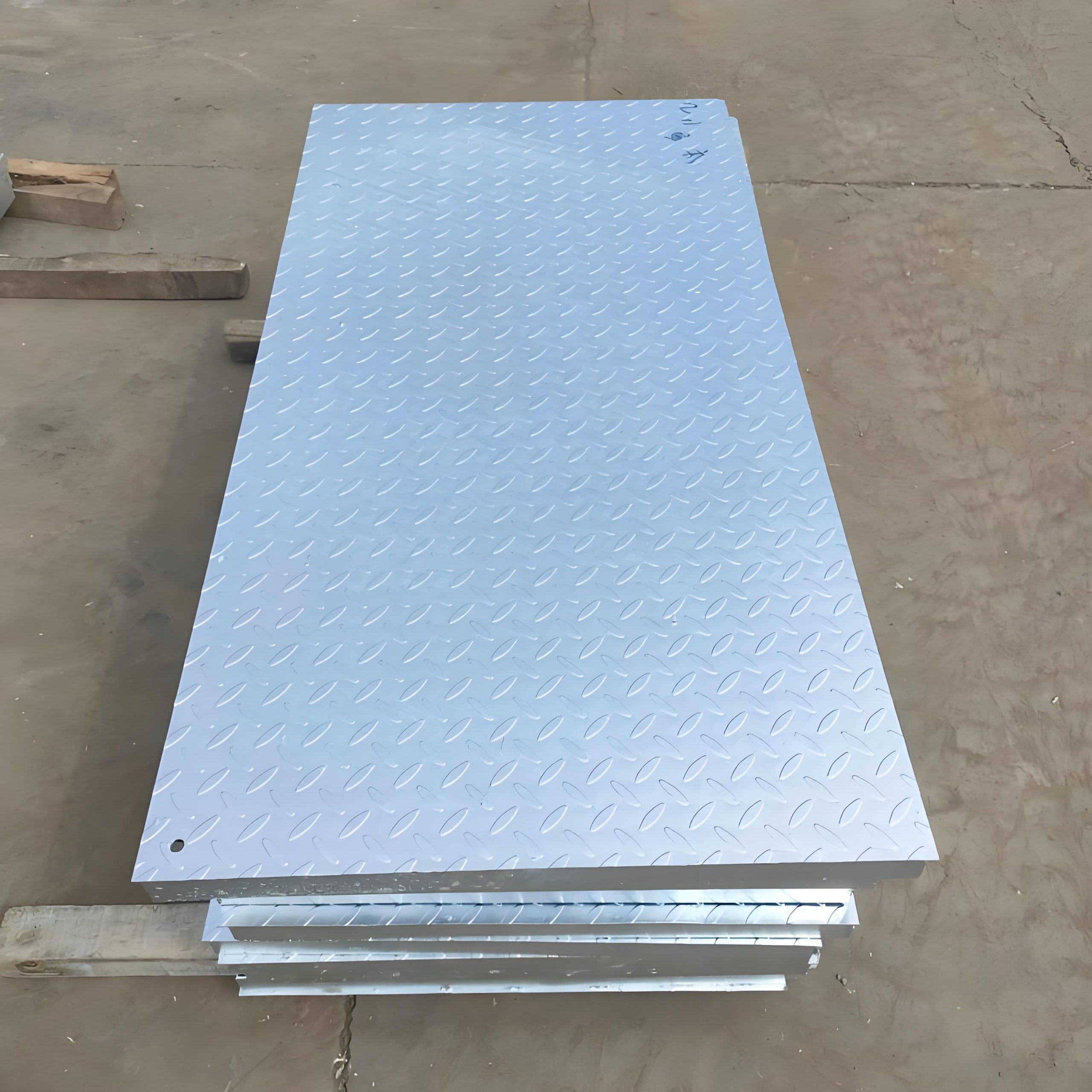
Sea freight is generally more economical for large export orders. The manufacturer should provide package dimensions, gross weight, container quantity, and loading arrangement.
| Trade Term | General Price Scope |
| EXW | Product available at the factory; most transport costs are excluded |
| FOB | Product and export delivery to the named port are generally included |
| CIF | FOB scope plus ocean freight and insurance to the destination port |
| DAP | Delivery to the named destination, normally excluding import duty and tax |
| DDP | Delivery including the agreed import clearance, duty, and taxes |
A factory EXW price should not be compared directly with a local delivered price. Packaging, inland transport, port handling, ocean freight, import duty, tax, and final delivery can make a major difference.
A preliminary budget can be calculated from the total walkway area, selected square meter price, fabrication, accessories, finishing, packaging, and freight.
Total walkway area = walkway length × walkway width
Basic plank cost = total area × estimated plank price per square meter
Estimated project cost = basic plank cost + cutting + end plates + connectors + finish + packaging + freight
| Item | Example Value |
| Walkway length | 30 meters |
| Walkway width | 600 mm, equal to 0.60 meter |
| Total walkway area | 30 × 0.60 = 18 m² |
| Estimated 304 plank price | US$105 per m² |
| Basic plank cost | 18 × US$105 = US$1,890 |
| Cutting, connectors, and clips | Approximately US$350–600 |
| Packaging | Approximately US$150–300 |
| Preliminary total | Approximately US$2,390–2,790 before freight |
| Item | Example Value |
| Walkway length | 20 meters |
| Walkway width | 750 mm, equal to 0.75 meter |
| Total walkway area | 20 × 0.75 = 15 m² |
| Estimated 316L plank price | US$160 per m² |
| Basic plank cost | 15 × US$160 = US$2,400 |
| End plates and connectors | Approximately US$400–700 |
| Pickling and passivation | Approximately US$250–450 |
| Packaging | Approximately US$180–320 |
| Preliminary total | Approximately US$3,230–3,870 before freight |
| Item | Example Value |
| Quantity | 30 stair treads |
| Material | 304 stainless steel |
| Tread size | 900 mm wide × 240 mm deep |
| Estimated tread price | US$55–90 per tread |
| Basic tread total | US$1,650–2,700 |
| Special nosing or passivation | Approximately US$200–500 |
| Preliminary total | Approximately US$1,850–3,200 before freight |
These examples are budgeting methods rather than final offers. The required thickness and channel depth must be confirmed from a matching load table before the product price is finalized.
Two suppliers may provide very different quotations because the products differ in material, dimensions, load capacity, accessories, or commercial scope.
| Possible Difference | Effect on Quotation |
| 304 quoted instead of 316L | Lower price but different chloride resistance |
| Thinner material gauge | Lower weight, price, and structural capacity |
| Lower side channel | Lower stiffness and reduced span capacity |
| Different plank width | Different material area per linear meter |
| Simple perforation instead of aggressive serration | Lower tooling and production cost |
| Raw plank instead of fabricated tread | End plates, holes, and cutting are excluded |
| No connectors or clips | Installation accessories are excluded |
| Mill finish instead of passivation | Post-fabrication surface treatment is excluded |
| Factory bulk quantity instead of one-piece retail | Different production and inventory cost basis |
| EXW instead of delivered pricing | Freight, duty, and local delivery are excluded |
The quotation should identify the material thickness, plank width, channel depth, profile, length, weight per meter, accessories, surface finish, quantity, and delivery term.
A reliable quotation requires enough information to calculate material consumption, tooling, forming, structural capacity, secondary fabrication, finishing, packaging, and transport.
| Required Information | Example |
| Application | Walkway, platform, stair tread, rooftop access, marine walkway, or food plant |
| Stainless steel grade | 304, 316, or 316L |
| Plank profile | Grip Strut-style, diamond profile, round-hole, embossed, or custom |
| Plank width | For example, 300 mm |
| Plank length | For example, 3,000 mm |
| Channel height | For example, 50 mm |
| Material thickness | For example, 1.5 mm or 2 mm |
| Surface profile | Perforated, embossed, serrated, or combination pattern |
| Open area | Required percentage or drainage performance |
| Support span | Clear unsupported distance between structural supports |
| Uniform load | Required distributed load |
| Concentrated load | Required point load and contact area |
| Wheel traffic | Wheel load, width, diameter, spacing, and direction |
| Deflection limit | Required project or standard limit |
| End treatment | Open ends, closed ends, welded plates, or formed closures |
| Fixing system | Clips, bolts, splice plates, or custom brackets |
| Stair tread details | Carrier plates, holes, tread width, depth, and nosing |
| Surface finish | Mill, pickled, passivated, brushed, polished, or electropolished |
| Quantity | Total square meters, linear meters, planks, or stair treads |
| Documentation | Material certificate, dimensional report, load data, or test report |
| Packaging | Bundle, pallet, wooden case, or protective export packing |
| Delivery destination | City, port, and country |
| Trade term | EXW, FOB, CIF, DAP, or DDP |
The support span is essential because it determines the required channel depth and material thickness. A supplier cannot confirm a safe plank only from the walkway width and length.
Terms such as pedestrian, heavy duty, or industrial are not precise enough for final structural selection. The manufacturer should know the uniform load, concentrated load, wheel load, and allowable deflection.
A layout drawing should show walkway dimensions, support positions, plank direction, joints, stairs, handrails, pipes, equipment, cutouts, and access openings.
Total square meters do not show the number of cuts, end plates, or connections. Twenty square meters divided into ten long planks normally costs less to fabricate than twenty square meters divided into one hundred short stair treads.
The buyer should confirm whether the price includes the planks, end plates, carrier plates, support clips, connectors, bolts, surface treatment, material certificates, packaging, freight, import duty, and tax.
How much does stainless steel plank grating cost?
Standard factory-produced 304 stainless steel plank grating generally costs approximately US$45 to US$180 per square meter, depending on the material thickness, width, channel depth, profile, quantity, and fabrication. Comparable 316 or 316L plank grating may cost approximately US$60 to US$240 per square meter. Heavy-duty, framed, polished, custom-profile, or low-volume products can exceed US$180 to US$450 per square meter. Individual retail stock planks may cost approximately US$190 to US$450 or more per piece.
Is 316L stainless steel plank grating more expensive than 304?
Yes. Comparable 316L stainless steel plank grating is commonly around 18 to 35 percent more expensive than 304 because 316L contains molybdenum and usually has a higher alloy cost. It provides better resistance to chloride pitting and is often selected for marine, coastal, chemical, seafood, brine, pharmaceutical, and heavily fabricated applications.
What details are needed to quote stainless steel plank grating?
An accurate quotation normally requires the stainless steel grade, plank profile, width, length, channel height, material thickness, perforation or serration pattern, support span, uniform and concentrated loads, required deflection, stair tread or walkway details, end plates, connectors, fasteners, surface finish, quantity, packaging, destination, and trade term. A platform layout and load requirement provide the best basis for selecting the correct plank and calculating its price.
