
Industrial metal grating factory prices generally range from approximately US$15 to US$45 per square meter for basic untreated carbon steel grating, US$25 to US$80 per square meter for standard hot-dip galvanized steel grating, US$55 to US$180 per square meter for common stainless steel grating, and US$50 to US$170 per square meter for aluminum grating. Safety plank grating, close-mesh panels, serrated surfaces, heavy-duty bearing bars, reinforced frames, special finishes, and drawing-based fabrication can increase the price to US$100 to US$350 per square meter or more. Vehicle-rated, marine, architectural, hygienic, and specially engineered grating systems may exceed US$200 to US$500 per square meter. The final factory price depends on the material, construction method, bearing bar dimensions, mesh spacing, grating weight, load requirement, support span, surface treatment, fabrication complexity, order quantity, documentation, packaging, and delivery terms.
Industrial metal grating is a broad category of open metal flooring, platform, walkway, stair tread, trench cover, drainage cover, ventilation, and safety-access products. The category includes conventional bar grating, pressure-locked grating, mechanically locked grating, perforated safety plank, expanded metal flooring, and specially fabricated load-bearing panels.
Different products may all be described as industrial metal grating, but their structures and prices can be substantially different. A welded carbon steel bar grating panel is manufactured from separate bearing bars and cross bars. A press-locked panel uses slotted bars assembled under pressure. A swage-locked product uses mechanically locked cross bars. Safety plank grating is punched and formed from a sheet or coil into a channel-shaped walking surface.
The factory price is therefore not determined only by panel length and width. The manufacturer must calculate the material grade, metal weight, production process, tooling, welding, cutting, forming, surface treatment, inspection, packaging, and commercial scope.
Industrial grating is commonly quoted by square meter, square foot, kilogram, ton, panel, stair tread, linear meter, individual plank, set, or complete project. Each quotation unit has limitations.
| Quotation Unit | Common Application | Important Limitation |
| Price per square meter | Comparing bar grating panels and platform areas | Only meaningful when material, bar size, spacing, and finish are identical |
| Price per kilogram | Weight-based carbon steel and stainless steel factory calculations | Does not fully reflect complex cutting, welding, or framing |
| Price per ton | Large standard carbon steel or galvanized orders | Fabrication, treatment, and packaging may be charged separately |
| Price per panel | Standard stock panels and fabricated trench covers | Panel dimensions, bearing direction, and load must be stated |
| Price per stair tread | Finished stair treads with side plates and nosing | Width, depth, side plates, holes, and surface affect price |
| Price per plank | Perforated safety grating and Grip Strut-style products | Width, length, channel height, thickness, and profile must be compared |
| Price per complete project | Platforms, walkways, stairs, trench systems, and access structures | The scope must identify frames, clips, drawings, testing, packaging, and freight |
The lowest advertised price generally applies to a standard factory panel with common material, light or standard bearing bars, normal mesh spacing, minimal secondary processing, a commercial minimum order, and basic packaging. It may not include project drawings, edge banding, openings, frames, stair tread fabrication, surface treatment reports, load calculations, clips, export documents, or shipping.
Buyers should compare the complete technical and commercial scope instead of comparing only one price per square meter.
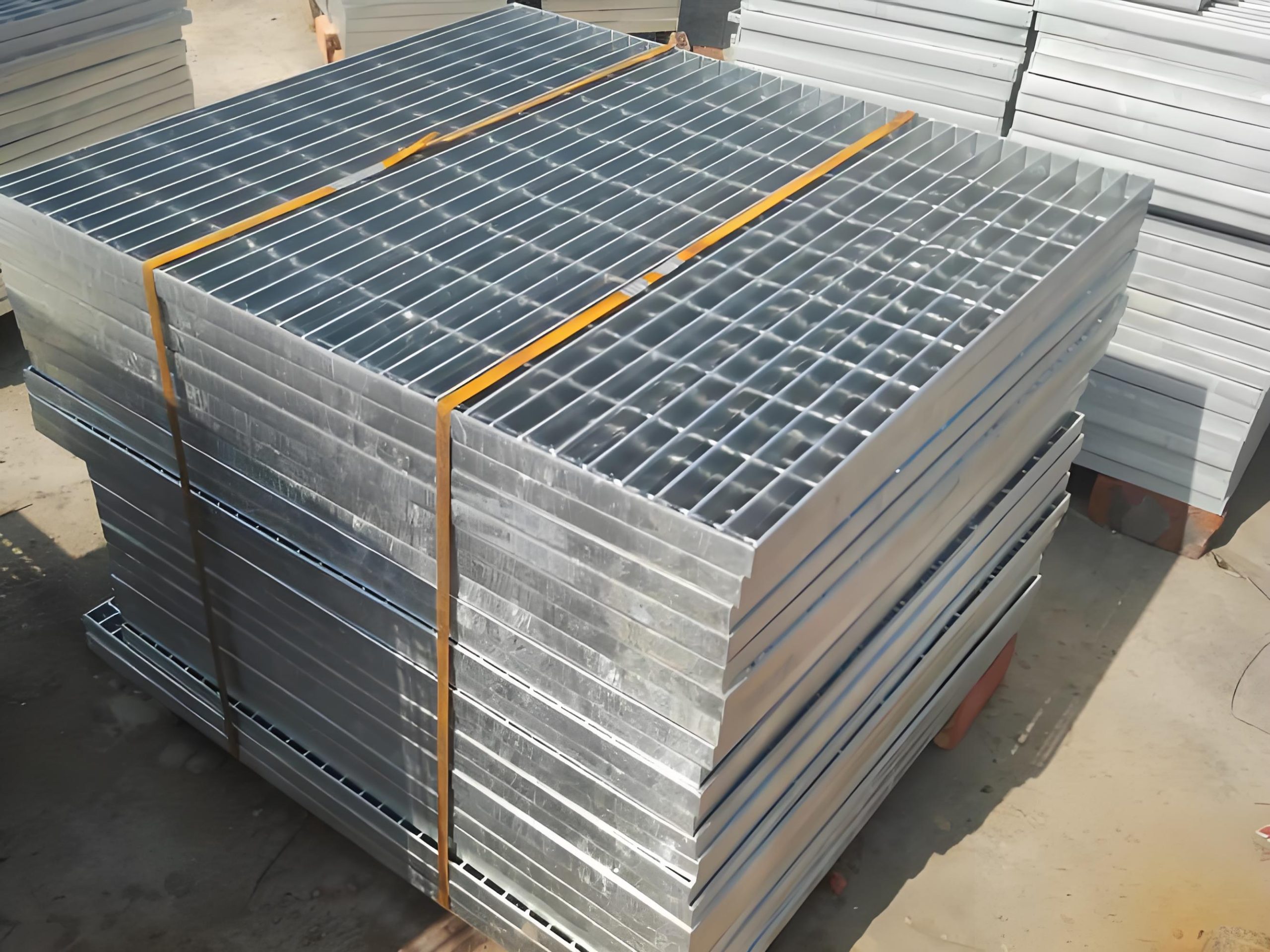
For preliminary budgeting, common industrial metal grating products can be divided into the following factory price ranges. These are broad purchasing references rather than binding quotations. Raw material markets, exchange rates, production location, quantity, delivery schedule, and specifications can move the final price outside these ranges.
| Industrial Grating Product | Typical Factory Price Range | General Description |
| Basic untreated carbon steel bar grating | US$15–45 per m² | Standard panel, common mesh, plain surface, and no permanent coating |
| Painted carbon steel bar grating | US$20–65 per m² | Carbon steel grating with primer or industrial paint |
| Standard hot-dip galvanized bar grating | US$25–80 per m² | Industrial platforms, walkways, stair treads, and drainage covers |
| Fabricated galvanized grating | US$40–140 per m² | Cut-to-size panels with banding, notches, openings, and identification |
| Close-mesh galvanized grating | US$50–170 per m² | Closer bearing bar spacing and higher steel weight |
| Heavy-duty galvanized steel grating | US$90–300 per m² | Deep and thick bars for high concentrated loads and industrial vehicles |
| 304 stainless steel bar grating | US$55–150 per m² | General wet, food processing, architectural, and industrial applications |
| 316 or 316L stainless steel grating | US$70–220 per m² | Marine, coastal, wastewater, chemical, and chloride-exposed environments |
| Fabricated or polished stainless steel grating | US$120–350+ per m² | Custom panels, frames, passivation, polishing, and hygienic fabrication |
| Standard aluminum bar grating | US$50–170 per m² | Lightweight platforms, marine access, architectural floors, and walkways |
| Custom aluminum grating | US$90–260 per m² | Press-locked, swage-locked, I-bar, framed, or specially fabricated panels |
| Carbon or galvanized safety plank grating | US$35–140 per m² | Punched and formed anti-slip channel planks |
| Stainless steel safety plank grating | US$80–300 per m² | Grip Strut-style, perforated, embossed, or serrated stainless planks |
| Framed industrial trench-cover grating | US$100–350+ per m² | Grating, matching frame, handles, locks, and fitting work |
| Engineered vehicle-rated metal grating | US$180–500+ per m² | Heavy wheel loads, structural calculations, reinforcement, and testing |
A standard hot-dip galvanized carbon steel grating used for pedestrian platforms may be budgeted at approximately US$25 to US$80 per square meter at the basic factory level. After the panels are cut, banded, notched, galvanized after fabrication, inspected, marked, and packed for export, a project-ready price of approximately US$40 to US$140 per square meter may be more realistic.
A standard 304 stainless steel grating may cost approximately US$55 to US$150 per square meter. A comparable 316L panel with close spacing, welded banding, custom openings, pickling, and passivation may cost approximately US$110 to US$260 per square meter.
Aluminum bar grating may have a higher material price than ordinary galvanized steel but offers lower panel weight. Its total installed cost can be competitive when lifting, transport, corrosion resistance, and structural dead load are important.
A raw panel price normally covers a standard factory grating sheet before project-specific fabrication. The product may have standard panel dimensions, open bearing bar ends, and basic factory packaging.
Cutting, banding, openings, frames, toe plates, clips, stair tread plates, surface treatment, inspection documents, and freight may be excluded.
A project-ready panel is produced according to a platform, walkway, trench, or stair layout. It may include cutting, edge banding, column notches, pipe openings, frames, toe plates, fixing holes, handles, locks, surface treatment, panel identification, and protected packaging.
The project-ready price can be 20 to 100 percent or more above the basic panel price, depending on the number of individual pieces and the complexity of fabrication.
A factory normally offers its best unit price for repeated commercial quantities. The quotation may require a minimum order and allow time for raw material purchasing and production.
A local distributor may charge a higher unit price but provide stock availability, one-panel quantities, local cutting, faster delivery, and local technical service.
One square meter of light grating and one square meter of heavy-duty grating may contain completely different quantities of metal. The unit weight should therefore be reviewed whenever square meter prices are compared.
For steel, stainless steel, and aluminum bar grating, the manufacturer should be able to provide the theoretical or actual kilograms per square meter.
The material affects initial cost, weight, corrosion resistance, maintenance, fabrication, appearance, service life, and recycling value.
Untreated carbon steel generally has the lowest factory price. It is suitable for temporary use, dry indoor facilities, products receiving site-applied coatings, and applications where corrosion exposure is limited.
Bare carbon steel can begin to rust when exposed to moisture, humidity, washdown water, outdoor weather, or process chemicals. Its low initial price may therefore be offset by painting, maintenance, shutdown, and replacement costs.
Painted carbon steel is commonly used for indoor factories, warehouses, machine platforms, cable areas, mezzanines, and controlled industrial environments.
The coating may consist of shop primer, alkyd paint, epoxy, polyurethane, powder coating, or another specified system. Cost depends on surface preparation, coating type, number of coats, dry-film thickness, color, curing, masking, and inspection.
Hot-dip galvanized grating is normally fabricated before being immersed in molten zinc. The zinc coating protects the bearing bars, cross bars, welds, cut edges, banding bars, and other fabricated surfaces.
Galvanized steel is widely used for outdoor platforms, walkways, stair treads, trench covers, drainage systems, power plants, wastewater facilities, mines, ports, and general industrial structures.
It normally costs more than untreated or simply painted carbon steel but less than stainless steel and many aluminum products of comparable construction.
304 stainless steel provides good resistance to ordinary atmospheric exposure, fresh water, humidity, food products, and many mild cleaning agents.
It is widely used in commercial kitchens, food-processing plants, clean production areas, architectural platforms, indoor wet areas, water facilities, and drainage systems.
Its initial price is higher than galvanized carbon steel, but it does not depend on an external zinc or paint coating for general corrosion resistance.
316 and 316L stainless steel contain molybdenum, which improves resistance to chloride-induced pitting compared with 304.
They are commonly used in marine facilities, coastal locations, wastewater plants, seafood processing, salt production, chemical facilities, swimming pool areas, and aggressive washdown environments.
316L has a lower maximum carbon content than standard 316 and is frequently selected for extensively welded products in corrosion-sensitive applications.
Aluminum grating provides a low structural weight and natural resistance to atmospheric corrosion. It is commonly used for marine walkways, water treatment facilities, rooftop access, architectural platforms, ships, offshore structures, pedestrian bridges, and equipment access systems.
Aluminum is much lighter than steel, which can reduce transportation, lifting, support-structure, and installation requirements. However, the aluminum material price is normally higher than ordinary carbon steel.
Aluminum also has a lower modulus of elasticity than steel. A thicker or deeper section may be required to achieve the same deflection performance over a given span.
| Material | Relative Initial Price | Weight Direction | Typical Application |
| Bare carbon steel | Lowest | Heavy | Dry indoor, temporary, or locally coated grating |
| Painted carbon steel | Low | Heavy | Factories, warehouses, and controlled industrial areas |
| Hot-dip galvanized steel | Low to moderate | Heavy | Outdoor platforms, stairs, drainage, and general industry |
| 304 stainless steel | High | Heavy | Food, clean production, architecture, and ordinary wet areas |
| 316 or 316L stainless steel | Highest among common steel options | Heavy | Marine, coastal, wastewater, salt, and chemical service |
| Aluminum | Moderate to high | Light | Marine, rooftop, architectural, lightweight, and corrosion-resistant access |
A lightweight aluminum panel can cost more at the factory than galvanized steel but may require smaller lifting equipment and lighter support structures. Stainless steel may cost more initially but avoid coating maintenance. Carbon steel may have the lowest purchase price but require periodic repainting.
The correct comparison should include the product, support steel, installation labor, surface maintenance, lifting, shutdown, replacement access, and expected service life.
The manufacturing method affects material form, connection design, appearance, production speed, load behavior, available profiles, and price.
Welded bar grating is manufactured by placing cross bars perpendicular to the bearing bars and joining the intersections through resistance welding, forge welding, pressure welding, or another controlled process.
It is the most common structure for carbon steel and stainless steel industrial platforms, walkways, stair treads, trench covers, and drainage grating.
For standard meshes and commercial quantities, welded grating is normally one of the most economical industrial grating types.
Press-locked grating is manufactured by pressing cross bars into slots formed in the bearing bars. It creates straight grid lines, clean intersections, and accurate rectangular openings.
The slotting, positioning, and pressing operations require accurate equipment and material preparation. Press-locked grating normally costs more than standard welded grating of comparable weight.
It is commonly used for architectural flooring, entrance grilles, public walkways, facades, ventilation panels, close-mesh flooring, and visible industrial areas.
Swage-locked grating uses cross bars inserted through openings in the bearing bars and mechanically locked by pressure or deformation.
This construction is particularly common in aluminum and stainless steel grating. It offers a clean appearance and can provide an efficient strength-to-weight ratio.
The price depends on bearing bar profile, cross bar type, material, spacing, quantity, and custom fabrication.
Safety plank grating is produced by punching, perforating, embossing, serrating, and forming a sheet or coil into a channel-shaped section.
Common profiles include diamond-opening safety planks, round-hole grating, embossed traction planks, interlocking planks, and other anti-slip sheet products.
Plank grating pricing depends on material grade, sheet thickness, plank width, channel height, surface profile, length, end plates, connectors, and quantity.
| Grating Construction | Relative Factory Price | Main Advantages | Typical Applications |
| Welded bar grating | Low to moderate | Strong, economical, widely available, and efficient | Factories, platforms, walkways, stairs, and drainage |
| Press-locked grating | Moderate to high | Accurate mesh, clean appearance, and architectural flexibility | Entrances, facades, public areas, and decorative platforms |
| Swage-locked grating | Moderate | Mechanically locked construction and good weight efficiency | Aluminum, stainless steel, marine, and architectural floors |
| Safety plank grating | Moderate | Aggressive traction, lightweight channel construction, and drainage | Maintenance walkways, rooftops, stairs, machinery, and slippery areas |
| Custom hand-fabricated grating | High | Supports unusual profiles, shapes, and low-volume replacement work | Special machinery, curved floors, and unique structures |
A light press-locked aluminum panel may cost less than a heavy-duty welded stainless steel panel. A safety plank may be economical for pedestrian access but unsuitable for a high wheel load.
Meaningful comparisons require the same material, dimensions, loading, finish, quantity, and fabrication scope.
The bearing bar surface and profile affect traction, walking comfort, cleaning, weight, structural behavior, and price.
Plain grating uses rectangular bearing bars with smooth top edges. It is normally the lowest-cost bar-grating option because no serration-forming process is required.
Plain grating is suitable for dry platforms, indoor factories, clean production areas, mezzanine floors, architectural walkways, and locations where easy cleaning or cart movement is important.
Serrated grating has notches or teeth formed along the top edges of the bearing bars. The surface improves footwear grip in wet, oily, muddy, icy, marine, or washdown conditions.
Serrated grating commonly costs approximately 5 to 15 percent more than otherwise comparable plain grating. The premium covers serration forming, tooling wear, material handling, lower production speed, and inspection.
Serrations improve traction but do not make a surface completely slip-proof. Cleaning, drainage, lighting, footwear, handrails, and maintenance remain necessary.
I-bar grating uses bearing bars with an I-shaped cross section. The profile places more material near the upper and lower parts of the bar and can reduce total grating weight for suitable pedestrian applications.
I-bar grating should be selected using load data for the exact profile. It should not be assumed to perform identically to a rectangular bar of the same overall height.
The specialized profile can reduce material and freight costs, but limited availability or dedicated manufacturing can increase the unit production price.
| Bearing Bar Design | Relative Price | Main Advantage | Main Limitation |
| Plain rectangular bar | Base price | Economical, widely available, and easy to clean | Lower traction in wet or oily conditions |
| Serrated rectangular bar | Approximately 5–15% above plain | Improved anti-slip performance | More difficult to clean and slightly more expensive |
| I-bar | Specification-dependent | Lower weight and efficient section shape | Requires profile-specific load data |
| Custom anti-slip profile | Moderate to high | Application-specific traction | Special tooling and minimum order may be required |
A highly serrated surface can retain food particles, grease, fibers, and cleaning deposits. Food, beverage, and pharmaceutical facilities should balance slip resistance with cleanability.
Plain grating, fine serrations, perforated plank, or another hygienic flooring profile may be more suitable depending on the process.
The bearing bars are the primary structural members of conventional bar grating. Their height, thickness, spacing, shape, and material determine much of the grating weight and load capacity.
Common metric bearing bar heights include 20 mm, 25 mm, 30 mm, 32 mm, 35 mm, 40 mm, 45 mm, 50 mm, 60 mm, 65 mm, 75 mm, and larger heavy-duty sections.
Common inch-based heights include 3/4 inch, 1 inch, 1-1/4 inches, 1-1/2 inches, 1-3/4 inches, 2 inches, 2-1/2 inches, and larger sizes.
Increasing the bearing bar height generally improves bending stiffness and span capacity. It also adds material and increases the factory price.
Common thicknesses include 2 mm, 3 mm, 4 mm, 5 mm, 6 mm, 8 mm, 10 mm, 1/8 inch, 3/16 inch, and 1/4 inch.
Increasing thickness improves strength, local durability, impact resistance, and concentrated-load performance. Because the additional thickness applies to every bearing bar, it can substantially increase metal weight.
Common bearing bar spacing includes approximately 15 mm, 19 mm, 20 mm, 25 mm, 30 mm, 30.2 mm, 32 mm, 34 mm, 35 mm, and 40 mm on center.
Closer spacing places more bearing bars across the panel width. It improves walking support, wheel performance, object retention, and load distribution but increases material consumption and connection quantity.
Cross bars may be twisted square bars, round bars, flat bars, pressed bars, swaged tubes, riveted members, or other profiles.
Their dimensions and connection method affect panel stability, appearance, production speed, and cost.
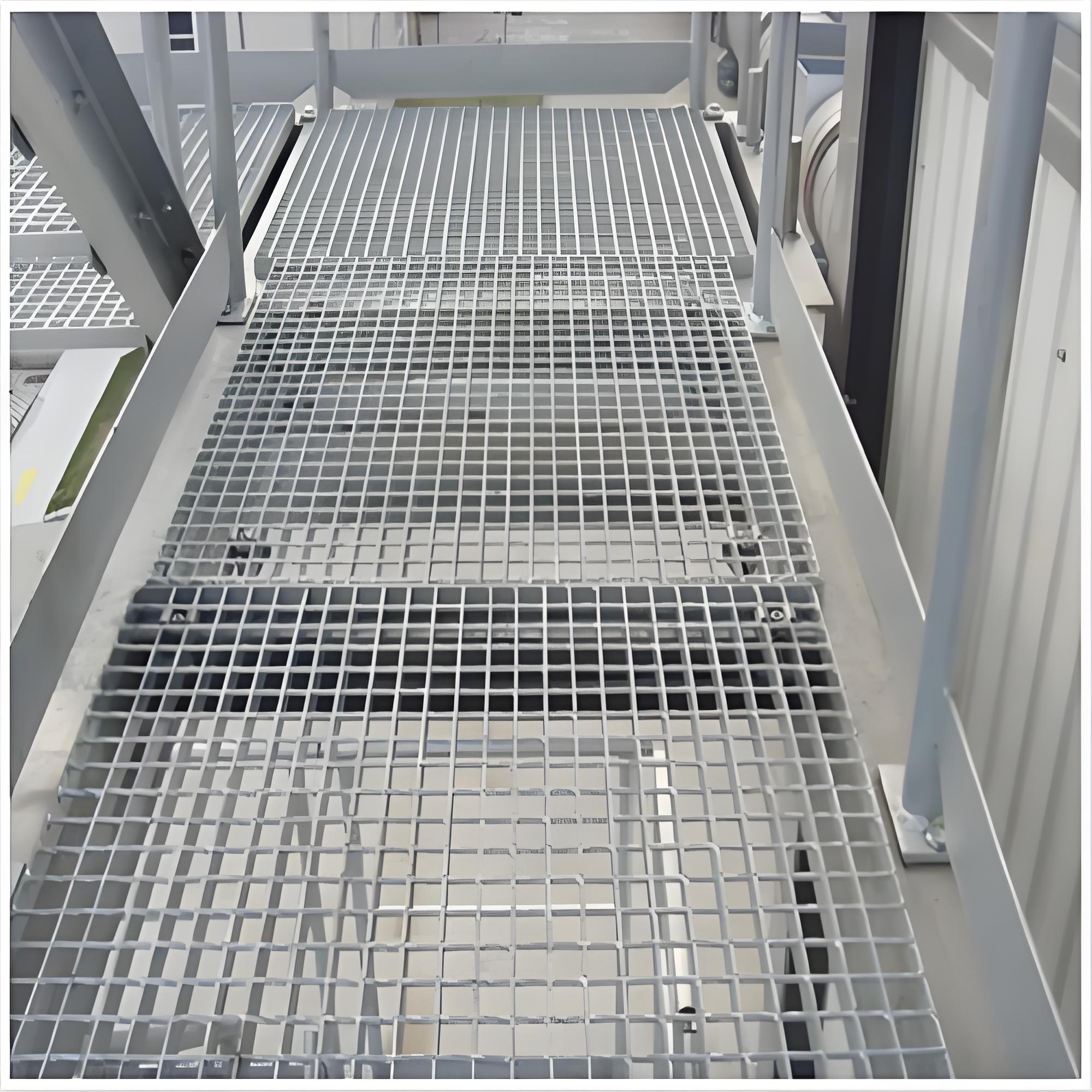
Common cross bar spacing includes approximately 50 mm, 76 mm, 100 mm, 2 inches, and 4 inches.
Reducing the spacing adds more cross bars and welded or locked intersections. The price effect is normally smaller than increasing bearing bar thickness but can be significant across a large project.
| Specification Change | Performance Effect | Price Effect |
| Increase bearing bar height | Improves stiffness and span capacity | Moderate to significant increase |
| Increase bearing bar thickness | Improves strength and impact resistance | Significant increase |
| Reduce bearing bar spacing | Improves load distribution and walking support | Significant increase |
| Reduce cross bar spacing | Improves panel stability | Small to moderate increase |
| Add serrations | Improves traction | Small to moderate increase |
| Add heavy edge banding | Improves edge strength and load transfer | Moderate increase |
Theoretical or actual weight per square meter is one of the most useful values for comparing factory quotations. Two panels with the same overall dimensions may contain very different quantities of metal.
| General Construction | Weight Direction | Factory Price Direction |
| Shallow, thin, wide-spaced grating | Low kg/m² | Lowest |
| Standard pedestrian grating | Moderate kg/m² | Moderate |
| Close-mesh or thick-bar grating | High kg/m² | High |
| Heavy-duty industrial grating | Very high kg/m² | Very high |
| Heavy grating with frames and reinforcement | Highest system weight | Highest material and freight cost |
A lower quotation may be based on smaller bearing bars, wider spacing, smaller cross bars, lighter edge banding, or an excluded frame. Buyers should request both the unit weight and the total shipment weight.
Stainless steel and carbon steel have broadly similar density, while aluminum is much lighter. An aluminum panel can therefore weigh substantially less than a steel panel with similar dimensions, although the required section geometry may be different.
Weight reduction can lower lifting and transport costs, but structural stiffness and span requirements must still be verified.
Duty descriptions provide a general indication of intended use but do not replace actual engineering information. A manufacturer still needs the support span, uniform load, concentrated load, wheel load, contact area, and allowable deflection.
Pedestrian grating is used for inspection access, maintenance walkways, stairs, rooftop paths, narrow trench covers, and platforms carrying workers and hand tools.
It normally uses relatively light or standard bearing bars and falls near the lower end of the factory price range.
Standard-duty grating is used for industrial platforms, factory walkways, catwalks, mezzanines, stair landings, drainage covers, and regular maintenance access.
It provides a practical balance between weight, availability, load capacity, and cost.
Medium-duty grating may carry loaded carts, maintenance equipment, small wheels, pallet trucks, or more frequent industrial traffic.
It normally requires deeper or thicker bearing bars, closer spacing, heavier edge treatment, and stronger supports.
Heavy-duty grating is used for forklifts, cars, trucks, loading areas, ports, docks, industrial vehicles, large machinery, and high concentrated loads.
Heavy-duty products may use deep rectangular bearing bars, close spacing, large cross bars, reinforced banding, heavy frames, locks, and special fixing systems.
| Duty Level | Typical Application | General Factory Price Direction |
| Pedestrian duty | Inspection paths, platforms, stairs, and narrow drainage covers | US$15–100 per m² depending on material |
| Standard industrial duty | Walkways, platforms, mezzanines, and regular personnel access | US$25–180 per m² depending on material and finish |
| Medium duty | Carts, maintenance equipment, and repeated industrial traffic | US$55–250 per m² |
| Heavy duty | Forklifts, cars, high point loads, and industrial vehicles | US$100–350 per m² |
| Engineered traffic duty | Trucks, ports, road traffic, and specialized equipment | US$180–500+ per m² |
The support span is the unsupported distance between beams, frames, or trench ledges. Increasing the span raises bending stress and deflection.
A bearing bar that is suitable across a 500 mm span may not be suitable across a 1,200 mm span under the same load.
A uniform load is distributed across the grating area. It may represent personnel, stored material, snow, or a general floor design load.
A concentrated load acts over a smaller area. Examples include equipment feet, machinery supports, tools, maintenance trolleys, and pipe supports.
Forklifts, pallet trucks, carts, and vehicles apply concentrated wheel loads. Narrow hard wheels can create high local stress on individual bearing bars.
The manufacturer may need the maximum wheel load, wheel width, diameter, wheel spacing, direction of travel, impact condition, and traffic frequency.
A grating panel can remain below its material strength limit and still move excessively. Excessive deflection can create rocking, noise, joint movement, trip hazards, fatigue, and damage to frames or clips.
| Load Input | Effect on Price |
| Longer support span | Requires deeper or thicker sections |
| Higher uniform load | Increases required bearing bar capacity |
| High concentrated load | May require close spacing or local reinforcement |
| Small wheel contact area | Requires more bearing bars to support the local load |
| Strict deflection limit | May require a stiffer panel than strength alone requires |
| Impact or vibration | May require heavier frames, clips, and fatigue control |
Standard panels normally have the lowest factory price because they use established material sizes, production programs, tooling, mesh arrangements, and packaging methods.
Standard panels require minimal secondary fabrication and are suitable for distributors, stockholders, and projects capable of completing cutting and fitting locally.
Cut-to-length service adds handling, cutting, edge preparation, identification, and packaging. It may reduce site labor and waste but increases the factory price.
Custom widths can create material waste when cut from standard grating sheets. The bearing bar layout may also need to be adjusted to avoid an excessively wide or narrow edge opening.
Small panels have more perimeter per square meter. Each panel may require cutting, four-sided banding, welding, inspection, marking, and separate handling.
Ten square meters divided into ten large panels normally costs less to fabricate than ten square meters divided into one hundred small trench covers.
Triangular, trapezoidal, circular, curved, tapered, sector-shaped, and multi-cutout panels require more drawing, programming, cutting, fitting, banding, welding, and inspection.
Safety plank grating may be supplied in standard stock lengths or custom cut lengths. Short pieces have a higher price per meter because every piece requires cutting, deburring, identification, and packaging.
| Product Form | Relative Price per Square Meter | Main Reason |
| Standard full panel or plank | Lowest | Efficient production and minimal secondary work |
| Standard rectangular cut panel | Low to moderate | Cutting, identification, and optional edge treatment |
| Custom-width panel | Moderate | Special layout and possible material waste |
| Small removable panel | High | High perimeter and fabrication effort relative to area |
| Irregular or curved panel | High | Complex drawing, cutting, fitting, and welding |
| Complete framed assembly | High to very high | Grating, frame, fitting, accessories, and trial assembly |
Repeated rectangular panel dimensions reduce drawing work, production setup, material waste, identification errors, packaging complexity, and installation time.
Platform and trench designs can often be adjusted to use more standard panels and fewer irregular infill pieces.
Surface treatment affects corrosion protection, appearance, cleaning, maintenance, and factory price.
Bare carbon steel is the lowest-cost finish. It may be suitable for temporary use, dry indoor areas, or products that will receive a local coating.
A shop primer provides temporary protection during storage, transport, and construction. It is not normally a complete long-term system for wet or outdoor service.
Painted grating may receive alkyd, epoxy, polyurethane, zinc-rich, powder-coated, or other specified finishes.
The price depends on blasting, cleaning, coating type, number of coats, film thickness, color, curing, masking, and inspection.
Hot-dip galvanizing is normally applied after carbon steel panels are cut, welded, banded, and fabricated. This allows the zinc coating to protect cut edges and welded connections.
The galvanizing cost depends on product weight, zinc prices, steel chemistry, panel dimensions, minimum batch fees, required coating standard, inspection, and packaging.
Aluminum can be supplied in mill finish or anodized condition. Anodizing improves surface appearance and can increase resistance to atmospheric staining and wear.
The price depends on anodized thickness, color, panel dimensions, pretreatment, and batch quantity.
Pickling removes welding heat tint, oxide scale, and certain metallic contaminants. It is commonly specified for welded stainless steel grating used in food, marine, chemical, and wet environments.
Passivation removes free iron contamination and supports formation of a clean chromium-rich passive surface.
The grating must be properly cleaned before passivation. Passivation alone does not remove heavy weld scale or thick oxide.
Brushing and polishing improve appearance and may improve cleanability. Bar grating is labor-intensive to polish because it contains many intersections, edges, internal surfaces, and welds.
Electropolishing removes a thin surface layer through an electrochemical process. It is commonly specified for pharmaceutical, high-purity, laboratory, food, and hygienic applications.
| Surface Treatment | Relative Cost | Typical Use |
| Bare carbon steel | Lowest | Dry, temporary, or locally coated applications |
| Shop primer | Low | Temporary protection and indoor construction |
| Industrial painted system | Low to moderate | Factories, warehouses, and color-coded structures |
| Hot-dip galvanized steel | Moderate | Outdoor, wet, drainage, and general industrial applications |
| Duplex galvanized and painted | High | Severe outdoor, coastal, and long-service conditions |
| Mill-finish aluminum | Base aluminum finish | General marine, rooftop, and industrial access |
| Anodized aluminum | Moderate addition | Architectural and appearance-sensitive applications |
| Stainless steel pickling | Low to moderate addition | Welded marine, food, chemical, and wet-area grating |
| Pickling and passivation | Moderate addition | Hygienic and corrosion-sensitive stainless products |
| Detailed polishing or electropolishing | High to very high addition | Architectural, food, pharmaceutical, and high-purity use |
| Treatment | Possible Addition to Base Price |
| Shop primer | Approximately 3–8% |
| Industrial paint system | Approximately 8–25% |
| Hot-dip galvanizing | Approximately 10–30%, depending on weight and batch size |
| Duplex coating | Approximately 25–60% or project-specific |
| Aluminum anodizing | Approximately 10–30% or project-specific |
| Stainless steel pickling | Approximately 5–12% |
| Pickling and passivation | Approximately 8–18% |
| Detailed polishing | Approximately 20–50% or more |
| Electropolishing | Approximately 30–70% or project-specific |
These percentages are preliminary budgeting references. Actual treatment costs depend on material, panel weight, dimensions, batch quantity, surface condition, finish standard, and inspection requirements.
Secondary fabrication converts standard industrial grating into installation-ready panels. Fabrication cost is often related to the number of pieces and operations rather than only the total area.
Straight rectangular cutting is normally the simplest custom operation. The price depends on material, bar size, sheet thickness, cutting method, quantity, and tolerance.
Banding closes exposed bearing bar ends. It improves handling, appearance, safety, local stiffness, and panel fit.
Trim banding closes an edge but is not necessarily designed to carry or transfer a major load.
Load banding uses a heavier section and stronger connections so the panel edge can receive a concentrated load or transfer force to a support.
Notches allow panels to fit around beams, columns, walls, handrails, equipment legs, pipe supports, and braces.
Each notch requires accurate positioning, cutting, finishing, possible banding, and inspection.
Round, square, rectangular, and irregular openings may be required around pipes, valves, drains, cable trays, ducts, equipment supports, and access hatches.
Large openings that interrupt several bearing bars may require load banding or additional structural support.
Toe plates can be welded around platform edges to reduce the risk of tools and materials falling. Their price depends on material, height, thickness, total length, corners, welding, and finish.
Frames may be produced from angle, channel, flat bar, extruded aluminum, or custom formed sections. They provide seating for removable grating and protect trench or floor-opening edges.
Stair treads may include carrier plates, mounting holes, nosing, edge banding, anti-slip surfaces, and fixing hardware.
Stair treads have a high fabrication cost per square meter because every tread requires individual cutting, side components, holes, inspection, and handling.
Access covers may require hinges, recessed handles, lifting slots, keyholes, security locks, bolts, or assisted opening systems.
| Fabrication Feature | Typical Price Effect |
| Simple rectangular cutting | Small increase |
| Two-sided trim banding | Small increase |
| Four-sided trim banding | Small to moderate increase |
| Heavy load banding | Moderate increase |
| Simple notch | Small increase per notch |
| Multiple irregular openings | Moderate to significant increase |
| Toe plates | Moderate increase according to total length |
| Matching support frame | Moderate to significant increase |
| Stair tread plates and nosing | Moderate increase per tread |
| Hinges, handles, or locks | Moderate increase per access panel |
| Curved or irregular panel | Significant increase |
Carbon steel is generally economical to cut and weld. Galvanized products should normally be fabricated before zinc coating. Stainless steel requires contamination control and possible post-weld pickling or passivation. Aluminum requires suitable welding procedures and care to avoid distortion.
The application determines the appropriate material, mesh, load capacity, surface, finish, fasteners, and fabrication scope.
General factory platforms commonly use welded carbon steel or galvanized bar grating. Plain surfaces may be suitable for dry areas, while serrated grating is preferred in wet or oily zones.
The specification should consider personnel traffic, hand tools, maintenance equipment, dropped-object risk, and support span.
Petrochemical facilities may require serrated grating, hot-dip galvanizing, stainless steel, toe plates, removable panels, detailed panel marking, material certificates, and coating reports.
Chemical exposure should be reviewed before selecting galvanized steel, stainless steel, or aluminum.
Food plants commonly use 304 or 316L stainless steel grating. Cleanability, corrosion resistance, washdown chemicals, food acids, salt, and contamination control are important.
Plain, fine-serrated, close-mesh, or hygienic plank surfaces may be selected according to the process.
Wastewater facilities use grating around tanks, channels, clarifiers, screens, pumps, chemical dosing systems, and maintenance areas.
Hot-dip galvanized steel, stainless steel, aluminum, or composite flooring may be selected according to moisture, chemicals, gases, span, and maintenance requirements.
Marine platforms require consideration of salt spray, seawater, wet-dry cycles, galvanic corrosion, maintenance access, and structural weight.
316L stainless steel and aluminum are often evaluated, while galvanized steel may be suitable in less severe or maintainable locations.
Mining platforms may be exposed to mud, abrasive material, impact, heavy boots, equipment, and severe loading.
Heavy-duty galvanized serrated grating is commonly considered, with close attention to bearing bar size, frames, and panel fixing.
Power plants use grating on boiler access platforms, turbine areas, cable routes, cooling systems, stairs, and maintenance structures.
Large projects may require panel schedules, toe plates, clips, stair treads, material traceability, coating inspection, and export packaging.
Lightweight aluminum or safety plank grating can reduce roof loading and provide drainage around equipment. The design should consider wind uplift, fixing, corrosion, and worker access.
Public areas may require close mesh, heel resistance, accessibility, controlled openings, decorative finishes, and lower trip risk.
Press-locked stainless steel or aluminum grating is commonly evaluated where appearance and regular grid alignment are important.
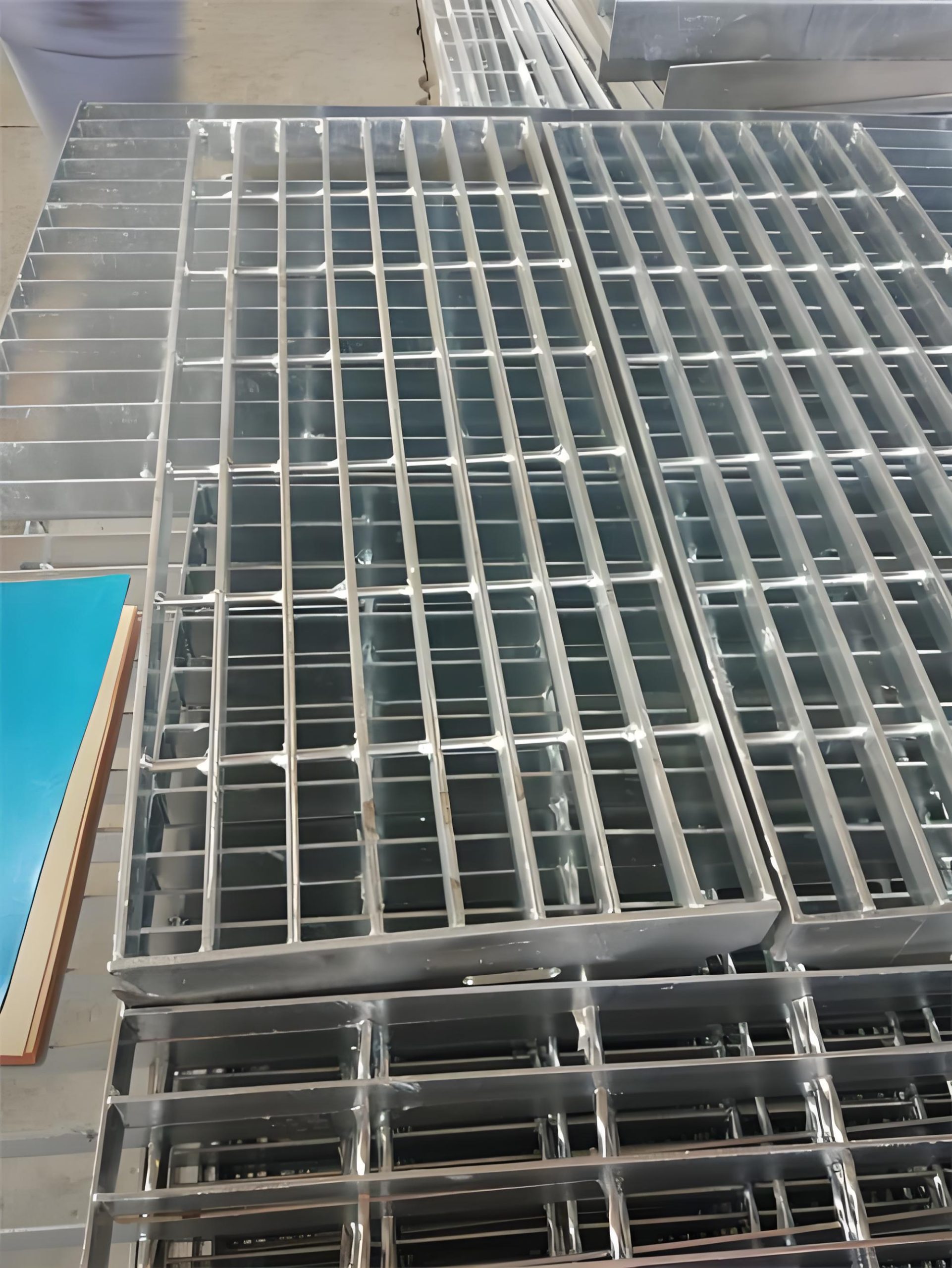
Forklifts, cars, and trucks require heavy-duty grating selected for actual wheel loads. Total vehicle weight alone may not provide enough information.
The manufacturer should know the wheel load, contact area, wheel spacing, traffic direction, impact, span, and allowable deflection.
| Industrial Application | Common Material Direction | Main Specification Drivers |
| General factory platform | Painted or galvanized steel | Span, personnel load, serration, cutouts, and toe plates |
| Petrochemical plant | Galvanized or stainless steel | Chemical exposure, anti-slip surface, traceability, and fire environment |
| Food processing | 304 or 316L stainless steel | Hygiene, cleaning, salt, corrosion, and surface finish |
| Wastewater treatment | Galvanized steel, stainless steel, or aluminum | Moisture, chemicals, gases, span, and maintenance |
| Marine platform | 316L stainless steel or aluminum | Chlorides, galvanic compatibility, weight, and maintenance |
| Mining facility | Heavy galvanized steel | Impact, abrasion, mud, serration, and heavy loads |
| Rooftop access | Aluminum or safety plank | Low weight, wind uplift, drainage, and fixing |
| Architectural walkway | Press-locked stainless or aluminum | Appearance, close mesh, finish, and public safety |
| Vehicle area | Heavy-duty steel or stainless steel | Wheel loads, contact area, frames, locks, and load testing |
A capable industrial metal grating factory should have equipment and procedures appropriate for the required product type, material, bar size, panel dimensions, fabrication complexity, and order volume.
The factory should control material grade, bar width, thickness, straightness, surface condition, sheet thickness, and alloy identity.
Equipment may include slitting lines, flat-bar rolling, straightening machines, sheet leveling, cutting machines, and serration-forming equipment.
Automatic or controlled welding equipment improves bearing bar spacing, cross bar alignment, intersection consistency, panel squareness, and production output.
Heavy-duty grating requires equipment capable of handling thick bars, high welding energy, large panels, and substantial product weight.
Press-locked grating requires accurate slotting, punching, positioning, and hydraulic pressing equipment.
The factory should control slot depth, bar alignment, panel dimensions, squareness, and flatness.
Swage-locked production requires bearing bars with prepared openings, cross-bar insertion equipment, and controlled mechanical locking.
The manufacturer should confirm which aluminum and stainless steel profiles are available.
Safety plank manufacturing may require coil slitting, progressive punching, perforating, embossing, serrating, roll forming, press braking, cutting, and end-plate fabrication.
Custom surface profiles may require dedicated tooling and minimum production quantities.
Custom project production may require saw cutting, plasma cutting, laser cutting, CNC punching, drilling, bending, grinding, welding, frame fabrication, stair tread production, and panel straightening.
Large projects require panel layouts, cutting drawings, stair tread schedules, frame details, bearing bar direction, panel marks, and packing schedules.
A capable drawing team should identify missing dimensions, unsupported edges, unsuitable panel sizes, and conflicts before production.
Monthly capacity should be evaluated according to the required product. A factory may have high output for standard welded carbon steel panels but lower capacity for stainless steel, press-locked, aluminum, plank, heavy-duty, or highly fabricated products.
| Factory Capability | Why It Matters |
| Automatic welded grating line | Improves consistency and output for standard panels |
| Heavy-duty welding equipment | Supports thick bearing bars and vehicle-load products |
| Press-locking equipment | Allows architectural and close-mesh grating |
| Swage-locking equipment | Supports aluminum and stainless steel mechanically locked grating |
| Plank punching and forming line | Produces perforated and serrated safety planks |
| Serration-forming equipment | Controls anti-slip tooth shape and consistency |
| CNC cutting and fabrication | Improves accuracy for drawing-based panels |
| Frame and stair tread production | Allows complete installation-ready assemblies |
| Surface treatment access | Supports galvanizing, painting, anodizing, pickling, and passivation |
| Engineering and drawing team | Reduces design, fabrication, and installation errors |
| Inspection equipment | Supports material, weld, dimension, coating, and load verification |
Custom panels should be manufactured from approved drawings. The drawings should show panel dimensions, bearing direction, support positions, openings, frames, toe plates, stair treads, clips, and identification marks.
A sample may be required for a new plank profile, architectural finish, unusual mesh, frame design, custom serration, or high-volume order.
Samples have a high unit cost because material preparation, tooling setup, fabrication, finishing, and inspection cannot be distributed across a full production run.
Production lead time may include drawing approval, raw material purchasing, panel manufacturing, cutting, welding, surface treatment, inspection, marking, packaging, and export preparation.
| Order Type | Delivery-Time Direction |
| Standard stock panel | Shortest when material is available |
| Repeated cut-to-size panels | Moderate due to cutting, banding, and treatment |
| Custom platform schedule | Longer due to drawings, fabrication, and panel identification |
| Press-locked or swage-locked order | Depends on tooling, profile, material, and quantity |
| Custom safety plank | Depends on punch tooling, forming setup, and minimum quantity |
| Heavy-duty engineered grating | Longer due to material, welding, calculations, and testing |
Quality control should begin with incoming material and continue through grating production, custom fabrication, surface treatment, final inspection, marking, and packaging.
Material certificates may identify the metal grade, heat or batch number, chemical composition, mechanical properties, and applicable material standard.
The buyer should confirm whether the documents are traceable to the material used in the supplied grating rather than being generic samples.
Positive material identification may be required for stainless steel and alloy verification. It is particularly useful where mixing 304, 316, 316L, or another grade would create a serious service risk.
Bearing bar height, thickness, profile, straightness, spacing, and surface should be checked against the approved specification.
Cross bar size, spacing, alignment, and connection quality should be inspected at multiple locations.
Welded intersections should be checked for secure attachment, missed welds, incomplete fusion, cracking, excessive burn-through, and unacceptable deformation.
Secondary welds at banding bars, frames, toe plates, stair tread plates, handles, hinges, and reinforcement require separate inspection.
Press-locked panels should be checked for slot engagement, bar alignment, squareness, and loose components. Swage-locked panels should be checked for secure mechanical locking and cross-bar movement.
Safety planks should be checked for material thickness, plank width, channel height, surface profile, punch quality, sharp burrs, straightness, cracks, and forming consistency.
Panel length, width, diagonals, bearing direction, openings, notches, frames, tread holes, channel dimensions, and panel marks should be checked against approved drawings.
Welding, punching, forming, cutting, galvanizing, and secondary fabrication can introduce distortion. Panels should sit on their supports without excessive rocking.
Painted products may require coating thickness, coverage, color, adhesion, and damage checks. Galvanized products may require coating thickness measurements and inspection for uncoated areas, zinc projections, drainage, and distortion.
Stainless steel products may require checks for heat tint, contamination, pickling, passivation, polishing, and cleanliness. Aluminum products may require finish and anodizing inspection.
Load calculations should identify the material, construction, bearing bar or plank profile, span, load type, contact area, and allowable deflection.
Physical testing may be required for vehicle-rated grating, custom frames, new plank profiles, unusual meshes, public infrastructure, or products without established load data.
The test should define the support condition, load position, contact area, loading steps, measured deflection, permanent deformation, and acceptance criteria.
| Quality Document | Main Purpose |
| Material certificate | Confirms metal grade and material properties |
| PMI report | Verifies stainless steel or alloy identity |
| Dimensional inspection report | Records panel, bar, mesh, opening, and frame dimensions |
| Welding inspection report | Documents main panel and secondary fabrication welds |
| Mechanical-lock inspection record | Confirms press-locked or swage-locked connection quality |
| Coating or finish report | Records galvanizing, painting, anodizing, pickling, or passivation |
| Load calculation | Shows the engineering basis for product selection |
| Load test report | Records test setup, loading, deflection, and results |
| Panel schedule and packing list | Links shipped panels to fabrication and installation drawings |
Inspection and documentation requirements should be included in the inquiry. Adding third-party inspection, PMI, special coating reports, or physical load testing after production can increase cost and delay delivery.
Order quantity affects material purchasing, production setup, tooling, welding, fabrication, surface treatment, inspection, packaging, and unit price.
A prototype normally has the highest unit price because drawing review, material preparation, machine setup, fabrication, finishing, and inspection are divided across only one or a few products.
Small orders may be subject to minimum material, welding, galvanizing, painting, anodizing, pickling, passivation, tooling, inspection, and packaging charges.
Repeated material, mesh, profile, and panel dimensions improve production efficiency. Setup, drawings, and material waste are distributed across more products.
Large orders using one material, one bar size, one mesh, one finish, and repeated dimensions normally receive the strongest factory pricing.
A large project containing hundreds of unique panels may still have high fabrication costs because each product requires individual drawing control, cutting, marking, and inspection.
| Order Condition | Typical Unit Price Effect |
| Prototype or one panel | Highest unit price |
| Below 20 m² | Small-order pricing and minimum charges |
| 20–100 m² | Improved factory efficiency |
| 101–500 m² | Competitive project pricing |
| 501–2,000 m² | Potential volume discount |
| More than 2,000 m² | Best efficiency when specifications are repeated |
| Large order with many unique pieces | Discount reduced by drawing and fabrication complexity |
Carbon steel prices can change with iron ore, coking coal, scrap, energy, mill production, construction demand, freight, currency, and regional trade conditions.
Stainless steel prices are influenced by nickel, chromium, molybdenum, scrap, energy, mill surcharges, and regional availability.
316 and 316L prices can be especially sensitive to nickel and molybdenum changes.
Aluminum prices are influenced by primary metal markets, energy costs, alloy surcharges, extrusion or rolling costs, and regional supply.
Zinc prices affect hot-dip galvanizing charges. Heavy panels and large orders use more zinc in total and may be more sensitive to zinc-market changes.
Standard galvanized panels may be stacked and strapped into bundles. Fabricated panels may require pallets, timber supports, separators, edge protection, panel labels, and detailed packing lists.
Stainless steel, aluminum, painted, polished, or architectural products require additional protection against scratching, contamination, coating damage, and movement.
Steel and stainless steel grating can create substantial freight costs. Aluminum may reduce gross shipment weight but can still occupy considerable volume.
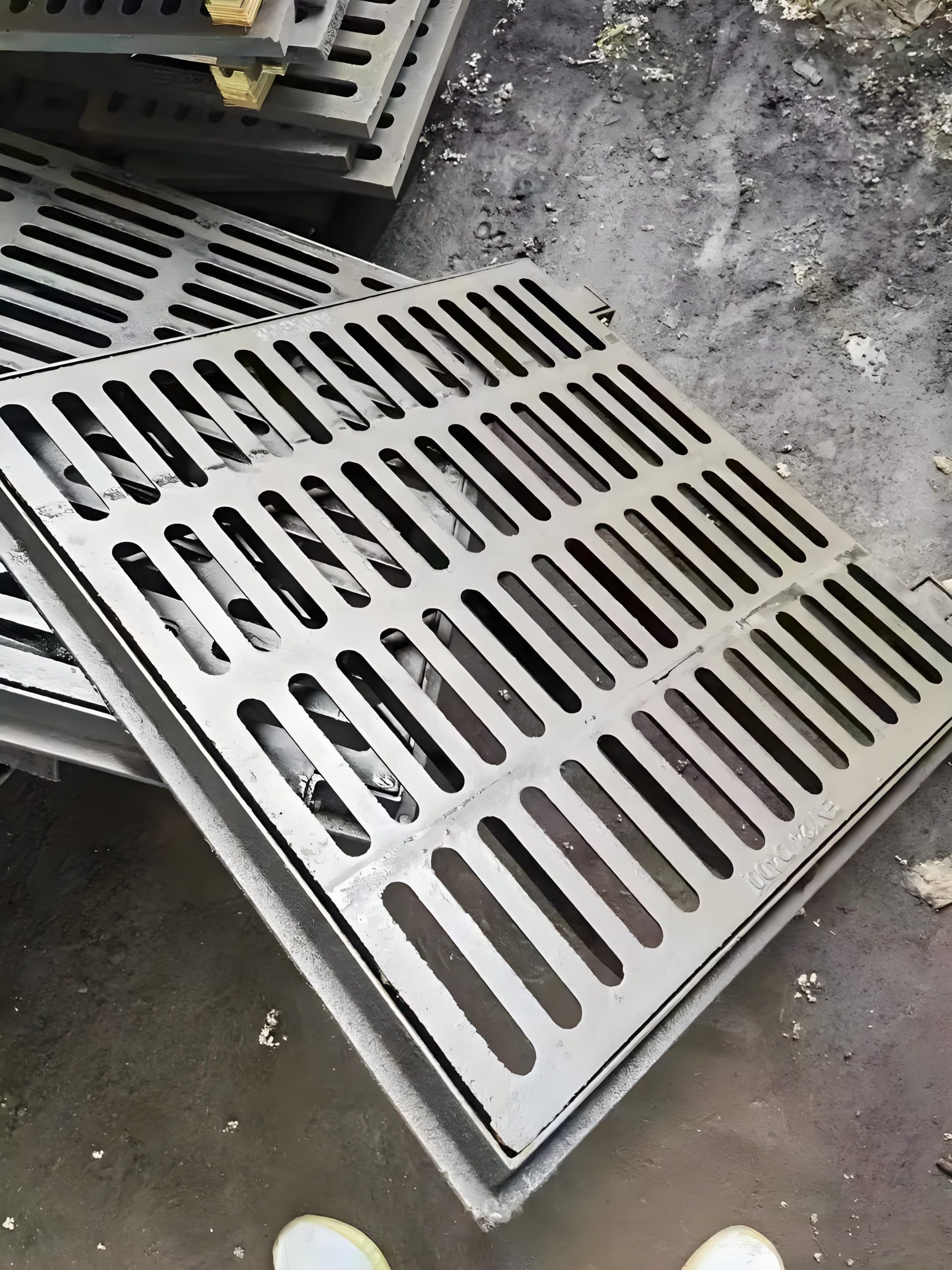
Long panels may create oversize transport problems. Shorter panels are easier to ship but require more cuts, banding, joints, clips, and identification.
Air freight is normally practical only for samples, clips, small stair treads, or urgent replacement panels because metal grating has a high weight-to-value ratio.
Sea freight is generally economical for large export orders. The factory should provide package dimensions, net weight, gross weight, package quantity, and container-loading information.
| Trade Term | General Price Scope |
| EXW | Products available at the factory |
| FOB | Products and export delivery to the named port are generally included |
| CIF | FOB scope plus ocean freight and insurance to the destination port |
| DAP | Delivery to the named destination, normally excluding import duty and tax |
| DDP | Delivery including agreed customs clearance, duties, and taxes |
An EXW price should not be compared directly with a DDP delivered price. Manufacturers should be compared using the same technical scope, packaging, destination, and trade term.
A complete inquiry allows the factory to calculate metal consumption, structural performance, production setup, fabrication, surface treatment, inspection, packaging, and delivery.
| Required Information | Example |
| Application | Platform, walkway, trench cover, stair tread, rooftop access, or vehicle floor |
| Material | Carbon steel, galvanized steel, 304 stainless steel, 316L stainless steel, or aluminum |
| Grating construction | Welded, press-locked, swage-locked, plank, or another specified type |
| Bearing bar or plank profile | Rectangular bar, I-bar, perforated plank, or formed channel |
| Bearing bar size | For example, 30 × 3 mm or 40 × 5 mm |
| Bearing bar spacing | For example, 30 mm on center |
| Cross bar type | Twisted square, round, flat, pressed, or swaged bar |
| Cross bar spacing | For example, 50 mm or 100 mm on center |
| Plank dimensions | Width, length, channel height, and sheet thickness |
| Surface design | Plain, serrated, I-bar, perforated, embossed, or another anti-slip profile |
| Panel dimensions | Length and width of every individual panel type |
| Bearing direction | Clearly shown on the fabrication drawing |
| Clear support span | Unsupported distance between structural supports |
| Uniform load | Required distributed loading |
| Concentrated load | Maximum point load and contact area |
| Wheel load | Wheel load, width, spacing, and direction of travel |
| Allowable deflection | Project or standard requirement |
| Edge treatment | Open edge, trim banding, load banding, or formed end plate |
| Custom fabrication | Notches, openings, curves, frames, toe plates, handles, or locks |
| Surface treatment | Bare, painted, galvanized, anodized, pickled, passivated, or polished |
| Panel or plank quantity | Quantity of every individual size and total area |
| Installation accessories | Clips, bolts, anchors, connectors, or stair tread fasteners |
| Documentation | Material certificates, PMI, coating reports, calculations, or load tests |
| Packaging | Standard bundle, pallet, wooden case, or seaworthy export packing |
| Delivery destination | City, port, and country |
| Trade term | EXW, FOB, CIF, DAP, or DDP |
Total square meters do not show the number of cuts, banded edges, end plates, openings, frames, or panel marks. The factory should receive a detailed item schedule.
The layout should show structural supports, panel divisions, stairs, columns, pipes, equipment, openings, frames, toe plates, and bearing direction.
Descriptions such as pedestrian, industrial, or heavy duty are not sufficient for final structural selection. The manufacturer should receive the clear span, uniform load, concentrated load, wheel load, contact area, and allowable deflection.
The inquiry should clearly identify the metal grade and surface treatment. “Corrosion-resistant metal grating” is not a complete material specification.
The buyer should confirm whether the quotation includes drawings, engineering, material, production, cutting, banding, frames, stair treads, accessories, surface treatment, inspection, packaging, freight, import duty, and tax.
How much does industrial metal grating cost per square meter?
Basic untreated carbon steel grating generally costs approximately US$15 to US$45 per square meter for factory quantities. Standard hot-dip galvanized grating commonly costs approximately US$25 to US$80 per square meter, while 304 stainless steel and aluminum grating may cost approximately US$50 to US$180 per square meter. Fabricated, close-mesh, framed, polished, safety-plank, or heavy-duty grating can cost US$100 to US$500 per square meter or more. The final price depends on material, weight, construction, loading, finish, fabrication, quantity, and delivery terms.
Which industrial metal grating material is the most economical?
Untreated carbon steel normally has the lowest initial factory price, while hot-dip galvanized carbon steel often provides the most economical combination of load capacity, outdoor corrosion protection, and availability. Stainless steel is more expensive but may reduce maintenance in hygienic, marine, chemical, and chloride-containing environments. Aluminum has a higher material cost than ordinary carbon steel but offers lower weight and good atmospheric corrosion resistance. The best economic choice depends on the full installed and life-cycle cost.
What information is needed for an accurate industrial grating factory quotation?
An accurate quotation normally requires the material grade, grating construction, bearing bar or plank profile, bar dimensions, mesh spacing, panel sizes, bearing direction, support span, uniform and concentrated loads, wheel loading, allowable deflection, surface design, edge treatment, openings, frames, accessories, finish, quantity, inspection documents, packaging, destination, and trade term. Detailed drawings and actual load information provide the most reliable basis for factory pricing.
