
Platform grating suppliers typically provide a wide range of products including welded bar grating, press-locked grating, swage-locked grating, and fabricated platform systems for industrial walkways, mezzanines, maintenance platforms, and structural flooring. The final price depends not only on material cost but also on supplier capability, production method, engineering support, and customization level. In most global industrial supply chains, platform grating pricing varies significantly between basic stock suppliers and full-service factory manufacturers.
Typical platform grating prices range from around US$18–45 per m² for basic carbon steel welded grating, US$25–85 per m² for hot-dip galvanized steel platform grating, US$60–180 per m² for stainless steel platform systems, and US$55–160 per m² for aluminum platform grating. When structural reinforcement, drawings, frames, stair integration, and heavy-duty load requirements are included, supplier prices can increase to US$120–400+ per m² depending on complexity and specification.
Platform grating suppliers can generally be divided into three categories: stock distributors, fabrication workshops, and integrated manufacturers. Each type has different pricing logic.
Stock distributors usually offer fast delivery but limited customization. Fabrication workshops focus on cut-to-size and small batch orders. Integrated manufacturers provide full production lines, engineering support, load calculation assistance, and large-scale project supply.
Because of this difference, two suppliers quoting the same platform grating can present completely different prices depending on included services such as cutting, galvanizing, drawing design, or export packaging.
| Supplier Type | Price Level | Service Scope | Typical Use |
| Stock distributor | Medium to high | Ready panels, limited processing | Small orders, urgent replacement |
| Fabrication workshop | Medium | Cutting, basic welding, simple customization | Project modifications |
| Integrated manufacturer | Low to high (depends on spec) | Full engineering + production + testing | Industrial projects, export contracts |
Platform grating prices vary based on material grade, load requirement, and structural complexity. The following ranges are widely used for preliminary budgeting in industrial procurement.
| Platform Grating Type | Typical Price Range | Description |
| Carbon steel welded grating | US$18–45/m² | Basic platform use, dry or coated environments |
| Hot-dip galvanized steel grating | US$25–85/m² | Outdoor industrial platforms and walkways |
| Heavy-duty galvanized grating | US$80–220/m² | Forklift, vehicle, and high load platforms |
| 304 stainless steel platform grating | US$60–160/m² | Food, architectural, general corrosion resistance |
| 316/316L stainless steel grating | US$80–220/m² | Marine, chemical, chloride environments |
| Aluminum platform grating | US$55–160/m² | Lightweight structures, marine and rooftop use |
| Fabricated platform system | US$120–400+/m² | Includes frames, cutting, stairs, accessories |
It is important to note that supplier quotations often differ because some include fabrication and surface treatment, while others only quote raw grating panels.
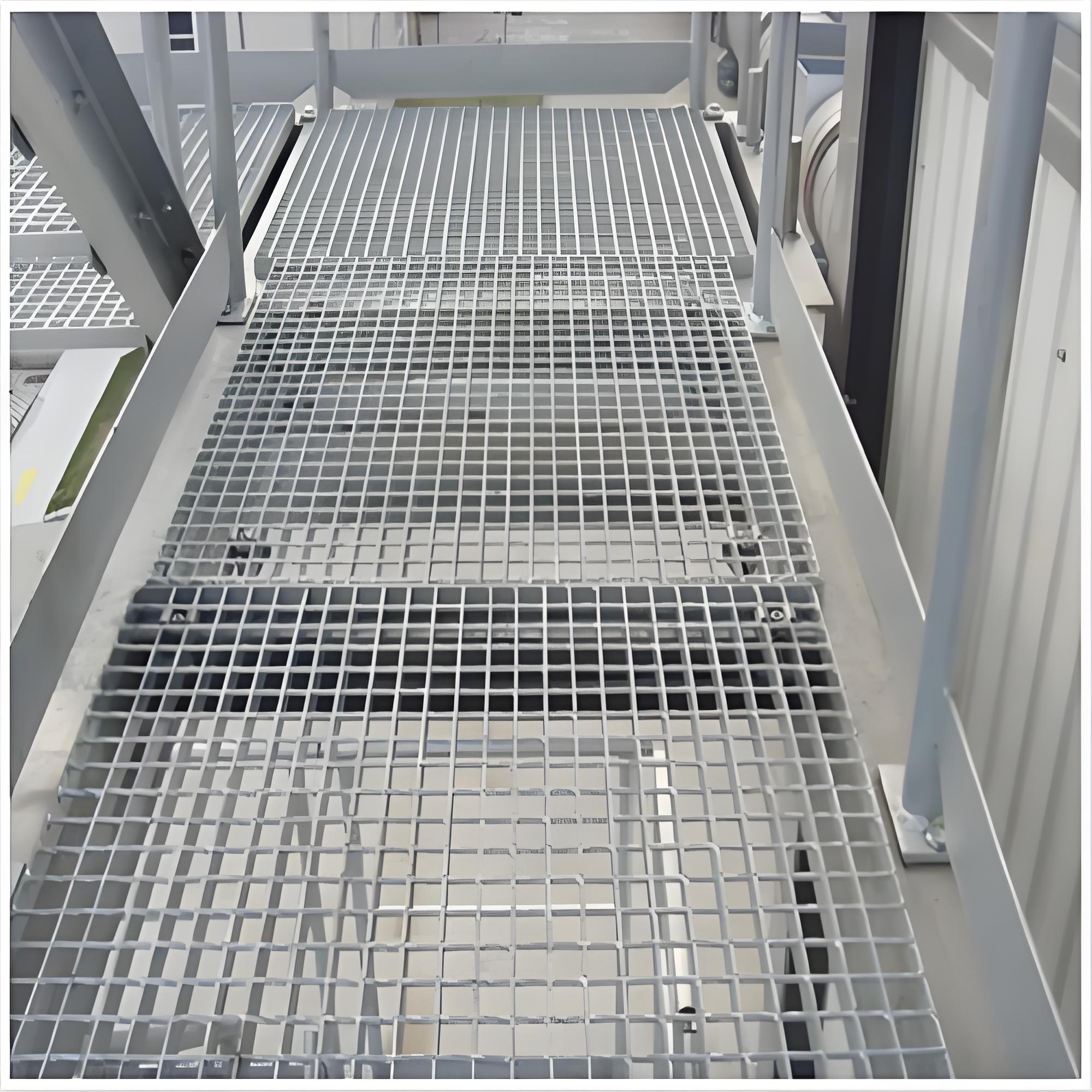
Carbon steel is the most economical base material. It is widely used for industrial platforms, factory floors, and maintenance walkways. However, it requires protective coatings such as painting or galvanizing to prevent corrosion in outdoor or wet environments.
Hot-dip galvanized grating is one of the most commonly supplied industrial solutions. Zinc coating protects both surface and welded joints. The price depends on steel weight and zinc coating thickness.
Stainless steel (304, 316, 316L) is selected for corrosion resistance and hygiene. 316L performs better in chloride environments. The higher material cost significantly increases supplier price but reduces maintenance requirements.
Aluminum grating is lightweight and corrosion-resistant. It is commonly used in marine platforms, rooftop walkways, and structures where weight reduction is critical. Although material cost may be higher than carbon steel, installation and support structure costs may be reduced.
Welded grating is the most cost-effective manufacturing method. It uses resistance welding between bearing bars and cross bars. It is widely used for standard industrial platforms.
Press-locked grating requires precision slotting and pressing. It provides a more decorative appearance and tighter mesh control, but costs more than welded structures.
Swage-locked grating is mechanically locked and commonly used in aluminum and stainless steel systems. It offers good structural stability with moderate cost levels.
| Type | Price Level | Main Advantage |
| Welded | Lowest | Economical and strong |
| Press-locked | Medium to high | Precision appearance |
| Swage-locked | Medium | Good strength-to-weight ratio |
Platform grating price is strongly influenced by steel weight per square meter. Larger bearing bars, thicker sections, and closer spacing increase both load capacity and cost.
Larger bearing bars (height and thickness) significantly increase steel consumption and price.
Smaller spacing improves safety and load distribution but increases material usage and cost.
Most suppliers calculate base pricing using kg/m² before adding processing, surface treatment, and fabrication costs.
| Specification Change | Price Effect |
| Larger bearing bar height | Increase |
| Thicker bar thickness | Significant increase |
| Smaller bar spacing | Increase |
| Heavy-duty reinforcement | Large increase |
Platform grating suppliers must design based on load and span conditions. Longer spans require stronger bars or closer spacing to control deflection.
Load categories include pedestrian load, industrial load, maintenance equipment, and vehicle traffic. Deflection limits can also affect price because stiffer structures require more material.
Standard panels are the most economical because they use fixed tooling and optimized production. Custom fabrication increases cost due to cutting, welding, and handling.
| Type | Price Impact |
| Standard panel | Lowest |
| Cut-to-size panel | Moderate increase |
| Irregular shapes | High increase |
| Full platform system | Highest |
Common for outdoor industrial platforms. Cost depends on steel weight and zinc market.
Used for indoor or controlled environments. Multi-layer systems increase cost.
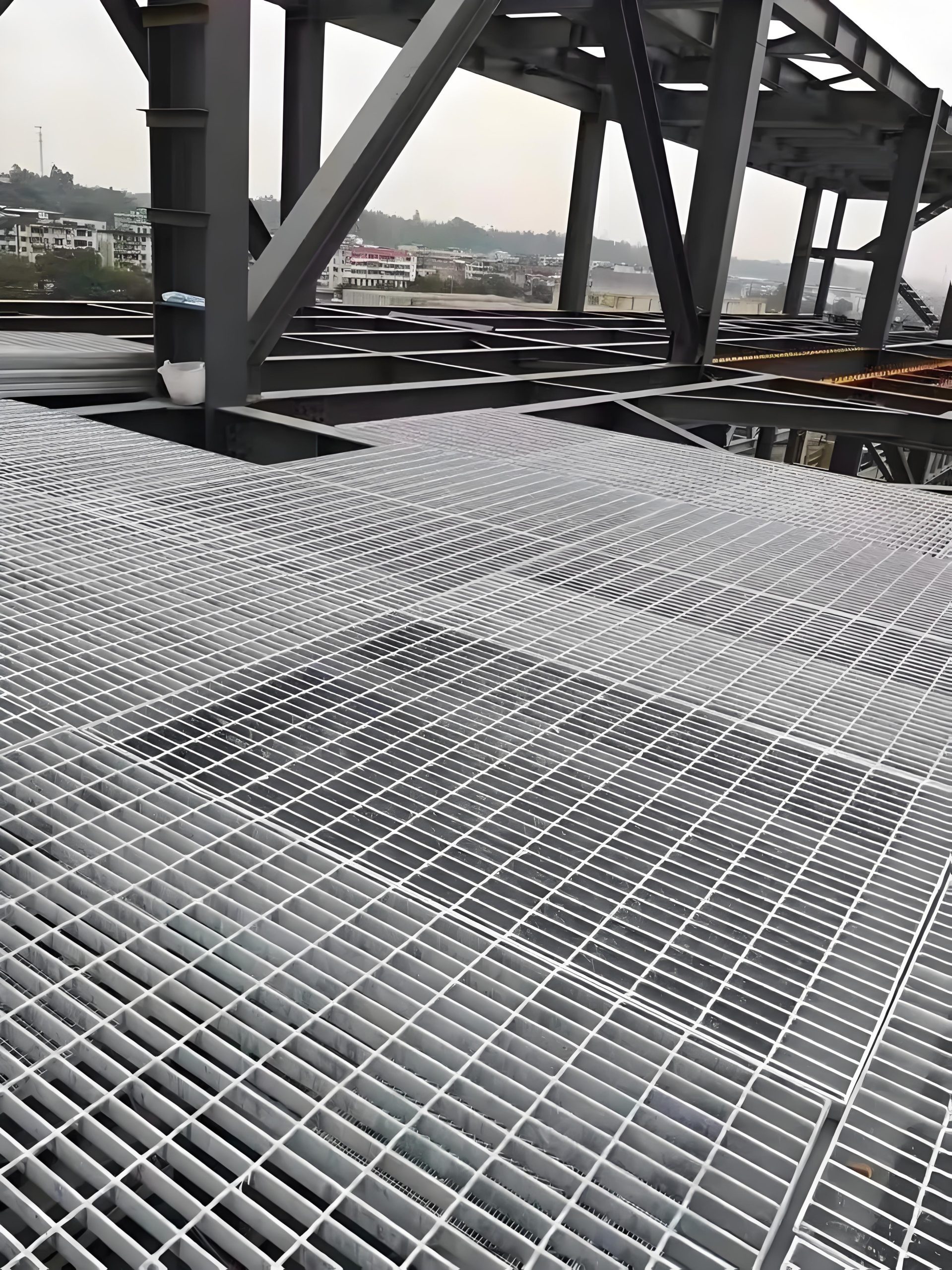
Applied to stainless steel to improve corrosion resistance and surface cleanliness.
A supplier with full production lines, welding systems, CNC cutting, and engineering support can offer better pricing for large projects. However, small suppliers may be competitive for low-volume or simple products.
Production capacity also affects lead time. High-capacity factories are better suited for bulk platform systems and export projects requiring consistent quality.
Price comparison should not be based only on unit cost per square meter. Buyers should compare steel weight, bar size, spacing, surface treatment, fabrication scope, and included accessories.
A lower quote may exclude frames, clips, cutting, or galvanizing. A higher quote may include full fabrication and installation-ready delivery.
| Comparison Factor | Why It Matters |
| Unit weight | Directly affects strength and material cost |
| Fabrication scope | Determines final installation readiness |
| Surface treatment inclusion | Affects corrosion resistance and price |
| Load design support | Ensures safety and compliance |
| Delivery terms | Affects total landed cost |
What is the average price of platform grating per square meter?
Average prices range from about US$18–85/m² for carbon steel and galvanized types, and US$60–220/m² for stainless steel and aluminum, depending on specifications and fabrication.
Why do platform grating prices vary between suppliers?
Prices vary due to differences in material grade, steel weight, production method, surface treatment, fabrication scope, and included services such as cutting, frames, and engineering support.
Which platform grating type is most cost-effective?
For most industrial applications, hot-dip galvanized welded steel grating provides the best balance of cost, strength, and corrosion protection, especially for outdoor and general industrial platforms.
