
Trench cover suppliers price is mainly decided by material, load capacity, trench width, span design, surface treatment, production method, custom details, order quantity, packaging, and shipping terms. For industrial plants, municipal drainage channels, road projects, utility trenches, cable trenches, and factory drainage systems, buyers should not compare trench cover prices only by square meter or piece price. A lower unit price may become expensive if the cover has insufficient load capacity, poor galvanizing quality, weak edge banding, inaccurate size, difficult installation, or high replacement frequency. This guide explains how trench cover suppliers calculate price, what information buyers should provide before quotation, and how to compare different suppliers in a practical way.
When buyers search for trench cover suppliers price, they usually want a direct answer: how much does a trench cover cost, which supplier offers a reasonable price, and what specifications are needed to get an accurate quotation. In real projects, trench cover price is not a fixed number because trench covers are not simple flat plates. They are structural covering products designed for specific trench openings, load conditions, traffic areas, drainage requirements, corrosion environments, and installation methods.
For pedestrian drainage channels, the price may be relatively economical because the load requirement is light and the cover can use thinner plates, smaller bearing bars, or lightweight composite material. For factory forklift areas, the price rises because the cover must resist repeated wheel loads, impact, vibration, and possible deformation. For municipal roads, heavy vehicle lanes, ports, logistics yards, and industrial platforms, the supplier needs to consider heavier bearing bars, closer spacing, reinforced frames, thicker chequered plates, better welding, and stronger surface treatment.
In supplier quotation work, trench cover price is usually calculated by one of the following methods: price per square meter, price per piece, price per set with frame, or price per project according to drawings. Standard grating trench covers are often quoted by square meter when the specifications are clear. Custom trench covers with frames, handles, hinges, locks, drainage holes, bolt fixing, or irregular shapes are more often quoted by piece because fabrication time and accessories affect the cost.
| Quotation Method | Common Use | Price Feature |
| Price per square meter | Steel grating trench covers, standard drainage covers | Easy to compare, but must confirm load capacity and material size |
| Price per piece | Custom trench covers, chequered plate covers, small batches | More accurate for fabricated covers with handles, frames, or special sizes |
| Price per set | Cover plus supporting frame | Suitable for municipal drainage, cable trench, and utility trench projects |
| Project quotation | Large construction, factory drainage, road trench, or utility corridor projects | Includes different sizes, load grades, packaging, and shipping conditions |
For international buyers, trench cover suppliers price should also include export packaging, container loading method, delivery time, port charges, and shipping terms such as EXW, FOB, CFR, or CIF. A supplier may offer a low factory price, but if packaging is weak or loading is inefficient, the final landed cost may still be high. Therefore, a professional quotation should explain not only the product price but also the specification basis behind the price.
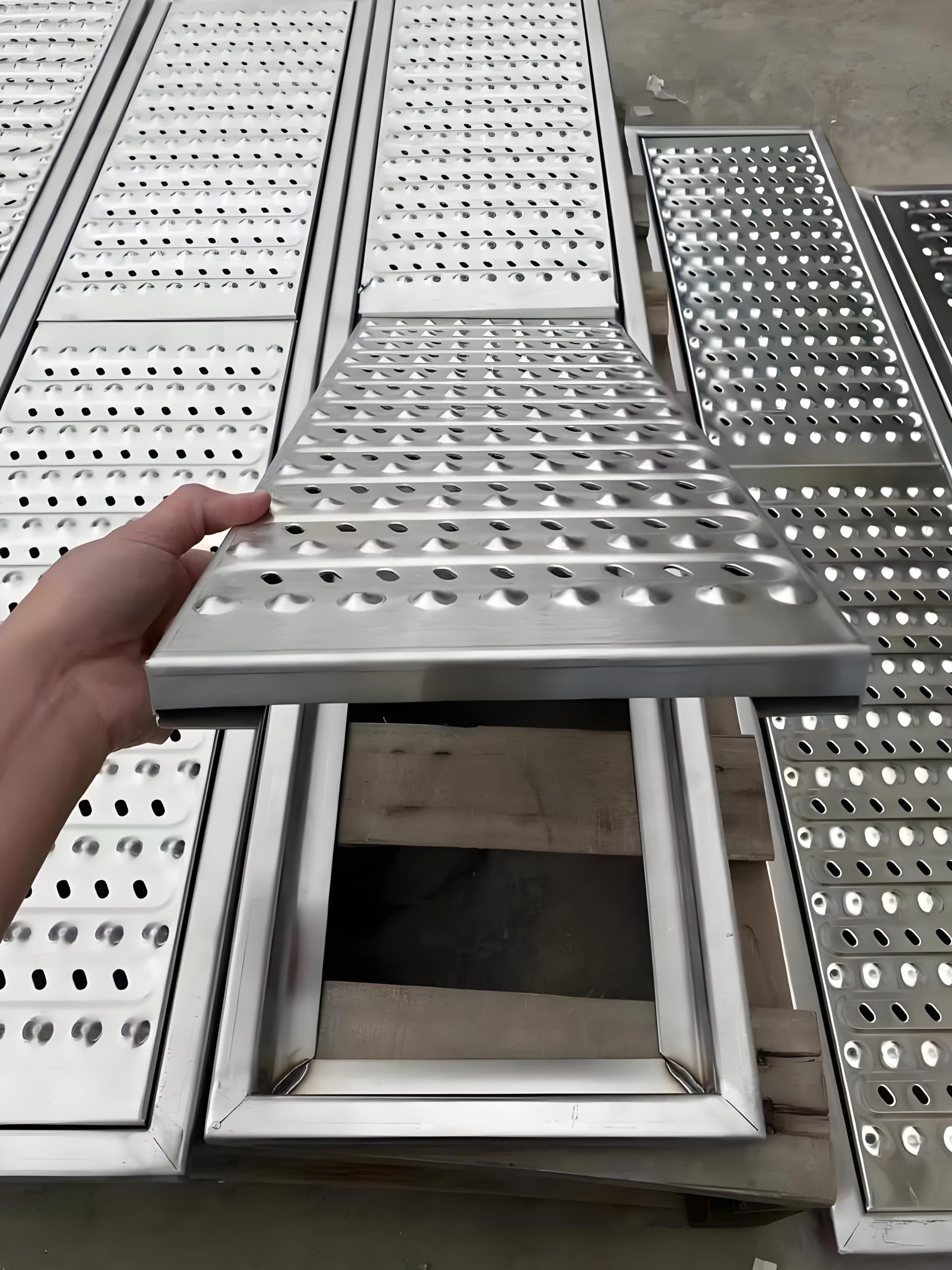
The most direct factor affecting trench cover price is material consumption. A trench cover with thicker bearing bars, larger flat bars, heavier frame angles, or reinforced steel plates naturally costs more because it uses more raw material. For steel trench covers, the supplier usually calculates the steel weight first, then adds fabrication, welding, galvanizing, packaging, and profit. For stainless steel trench covers, material cost becomes more significant because stainless steel is much more expensive than carbon steel.
A cover for foot traffic and a cover for truck traffic may look similar from above, but their internal strength requirements are completely different. Heavy-duty trench covers need stronger sections, smaller spacing, more reliable welding, and better support conditions. If a buyer only asks for the cheapest trench cover without specifying load requirements, the supplier may quote a light-duty product that cannot safely meet the actual working condition.
Simple rectangular trench covers are easier to produce. However, covers with cut-outs, irregular edges, lifting holes, recessed handles, hinges, locks, welded frames, anti-theft devices, anchor plates, or special drainage patterns require more labor and machining. Even if the material weight is not very high, the price may increase because fabrication time is longer.
For outdoor trench covers, surface treatment is not optional. Hot-dip galvanizing, powder coating, painting, pickling, passivation, and stainless steel polishing all affect price. A cheap untreated steel cover may save money at first, but it can rust quickly in outdoor drainage systems. In many municipal and industrial projects, the long-term cost of corrosion is much higher than the initial surface treatment cost.
| Cost Factor | How It Affects Price | Buyer Should Check |
| Material type | Different materials have very different raw material costs | Carbon steel, stainless steel, composite, or concrete |
| Load capacity | Higher load needs heavier structure | Pedestrian, forklift, car, truck, or heavy-duty vehicle |
| Trench span | Wider span requires stronger cover | Clear opening width and support method |
| Surface treatment | Galvanizing, coating, or stainless finish adds cost | Indoor, outdoor, coastal, chemical, or sewage environment |
| Customization | Special shapes and accessories increase labor cost | Handles, frames, hinges, locks, bolt holes, edge banding |
| Quantity | Larger orders reduce unit production and setup cost | Total pieces, total square meters, repeated sizes |
| Shipping | Heavy and bulky products affect freight cost | Package size, container loading, destination port |
Carbon steel is one of the most widely used materials for trench covers because it provides high strength at a competitive cost. For industrial drainage, road trenches, factory channels, and utility access covers, carbon steel can be made into welded steel grating covers, chequered plate covers, solid covers, or framed trench cover sets. The final price depends on steel grade, thickness, bearing bar size, fabrication type, and galvanizing requirement.
Carbon steel trench covers are often selected when buyers need a balance between load capacity and budget. They are especially suitable for factories, warehouses, outdoor drainage systems, construction sites, municipal sidewalks, and general road drainage. However, carbon steel should normally receive hot-dip galvanizing or another protective coating when used outdoors or in wet environments.
Stainless steel trench covers are more expensive than carbon steel covers, but they offer better corrosion resistance, cleaner appearance, and longer service life in harsh environments. Common stainless steel grades include 304 and 316. Grade 304 is suitable for many humid, food processing, architectural, and general industrial environments. Grade 316 is more suitable for coastal areas, chemical plants, marine environments, wastewater areas, and places exposed to chloride or corrosive liquids.
The price of stainless steel trench cover is affected by stainless steel grade, sheet thickness, bar size, surface finish, welding requirements, polishing, pickling, passivation, and custom fabrication. For buyers comparing trench cover suppliers price, stainless steel should not be compared only with galvanized carbon steel by initial cost. In corrosive areas, stainless steel may reduce maintenance and replacement cost over the full project life.
Composite trench covers are usually made from fiberglass reinforced plastic, resin, or other non-metallic composite systems. They are lightweight, corrosion-resistant, and easy to handle. In some cable trench, pedestrian drainage, power plant, chemical, and municipal applications, composite covers are attractive because they reduce lifting weight and are resistant to rust.
Composite trench cover price depends on resin type, reinforcement structure, cover thickness, anti-slip surface, fire performance, UV resistance, and load rating. Composite covers can be cost-effective for medium-duty applications, but for heavy vehicle traffic, buyers must confirm load test data and deflection performance carefully.
Concrete trench covers are widely used in municipal drainage, utility channels, and heavy-duty infrastructure. They can be economical when produced locally, especially for large drainage channels. However, concrete covers are heavy, harder to remove, more difficult to ship internationally, and may crack under impact if not properly reinforced.
For export projects, concrete trench cover suppliers price may be less competitive due to high weight and freight cost. For local municipal work, concrete may still be suitable when heavy mass, low material cost, and simple access requirements are more important than easy handling.
| Material | Price Level | Main Advantage | Common Use |
| Carbon steel | Low to medium | High strength and economical fabrication | Factory drainage, road trench, industrial floor, utility trench |
| Hot-dip galvanized steel | Medium | Strong load capacity with corrosion protection | Outdoor drainage, municipal road, warehouse, construction project |
| Stainless steel 304 | Medium to high | Good corrosion resistance and clean appearance | Food plants, commercial drainage, humid environments |
| Stainless steel 316 | High | Better chloride and chemical resistance | Coastal, chemical, marine, wastewater, corrosive areas |
| Composite | Medium | Lightweight and rust-free | Cable trench, pedestrian trench, chemical areas, utility projects |
| Concrete | Low to medium locally | Heavy-duty mass and simple production | Municipal drainage, local infrastructure, utility channels |
Load capacity has a direct relationship with trench cover price because it determines the structural size of the cover. In steel grating trench covers, the bearing bar height, bearing bar thickness, cross bar spacing, bearing bar pitch, edge banding size, and support span all influence strength. In chequered plate covers, plate thickness, reinforcement ribs, frame support, and welding method affect load-bearing performance.
A pedestrian trench cover can use a lighter structure because the load is distributed and relatively small. A forklift trench cover must handle concentrated wheel loads. Forklift wheels create high local pressure, especially when the forklift carries goods and turns over the cover. A road trench cover must consider cars, trucks, emergency vehicles, and repeated traffic loads. For heavy-duty municipal or industrial projects, the cover should be designed according to the actual wheel load, not only the total vehicle weight.
For steel grating trench covers, bearing bar size is one of the clearest price indicators. A larger bearing bar increases steel weight and strength. For example, a steel grating cover made from 25 mm high bearing bars will usually be lighter and cheaper than one made from 40 mm or 50 mm high bearing bars. Closer bearing bar spacing also increases material quantity and price, but it may be necessary for smaller wheel contact areas, pedestrian comfort, or safety requirements.
| Load Area | Typical Requirement | Price Influence | Important Design Point |
| Pedestrian walkway | Light load, walking safety | Lower material cost | Anti-slip surface and safe opening size |
| Shopping area or public sidewalk | Pedestrian plus carts | Low to medium | Flatness, appearance, heel-safe spacing if required |
| Factory floor | Workers, trolleys, light equipment | Medium | Corrosion resistance and cleaning access |
| Forklift area | Concentrated wheel load | Medium to high | Bearing bar size, span, and reinforcement |
| Vehicle road | Cars and light trucks | High | Deflection control and frame support |
| Heavy-duty traffic | Trucks, machinery, industrial vehicles | High to very high | Engineering calculation, heavy frame, strong fixing |
Some buyers try to reduce bearing bar size, cover thickness, or frame weight to lower price. This may be acceptable if the real load is light, but it is risky in forklift and vehicle areas. A cover that bends, rattles, cracks the surrounding concrete, or causes wheel impact will create maintenance cost and safety risk. A professional trench cover supplier should explain why a certain bearing bar size or thickness is recommended for the trench span and traffic condition.
Trench width is one of the most important details when requesting a trench cover quotation. The supplier needs to know the clear opening width, not only the outside channel width. The clear opening is the unsupported span that the cover must bridge. A wider clear opening creates higher bending stress and deflection, so the cover may need thicker plates, taller bearing bars, reinforcement ribs, or a stronger frame.
For example, a 300 mm wide drainage trench and a 900 mm wide utility trench cannot use the same cover thickness if the load condition is similar. Even if both covers are made from the same material, the wider span will usually require a heavier design and higher price. If intermediate supports can be added, the supplier may reduce cover weight while maintaining safe performance.
In chequered plate trench covers, thickness is a major cost factor. A thicker plate increases material cost and cutting cost, but it improves stiffness and impact resistance. For larger spans, suppliers may add welded ribs under the plate instead of simply increasing plate thickness. This can sometimes control cost while improving strength. However, reinforcement ribs require additional welding and fabrication time, so the final price depends on the design.
Many trench cover projects require steel frames, angle frames, embedded frames, or support seats. The frame helps distribute load, protects concrete trench edges, improves installation accuracy, and reduces cover movement. Adding a frame increases material and fabrication cost, but it often improves long-term performance. For municipal projects and high-traffic areas, a cover without a proper frame may become loose, noisy, or unsafe.
| Design Item | Lower-Cost Option | Higher-Cost Option | When Higher Cost Is Necessary |
| Trench width | Narrow span | Wide span | Utility trenches, cable channels, vehicle areas |
| Cover thickness | Thin plate or small bearing bar | Thick plate or heavy bearing bar | Forklift, truck, long span, high impact load |
| Support frame | No frame or simple support | Angle frame, embedded frame, reinforced frame | Road drainage, municipal work, repeated removal |
| Reinforcement | None | Ribs, stiffeners, stronger edge banding | Large cover size, concentrated wheel load |
| Fixing method | Loose laid | Bolted, hinged, locked, welded | Security, vibration, anti-theft, traffic safety |
Hot-dip galvanizing is one of the most common surface treatments for carbon steel trench covers. It provides zinc protection around the steel surface, including edges, gaps, and welded areas. For outdoor drainage trenches, rainwater channels, municipal sidewalks, factory yards, and road projects, hot-dip galvanized trench covers are often more practical than painted steel because they offer better corrosion protection and lower maintenance.
The price impact of hot-dip galvanizing depends on product weight, zinc coating requirements, product shape, and galvanizing process cost. Steel grating trench covers are suitable for galvanizing because the open structure allows zinc flow and drainage. Chequered plate covers can also be galvanized, but design details should avoid closed cavities, poor drainage points, and sharp untreated edges.
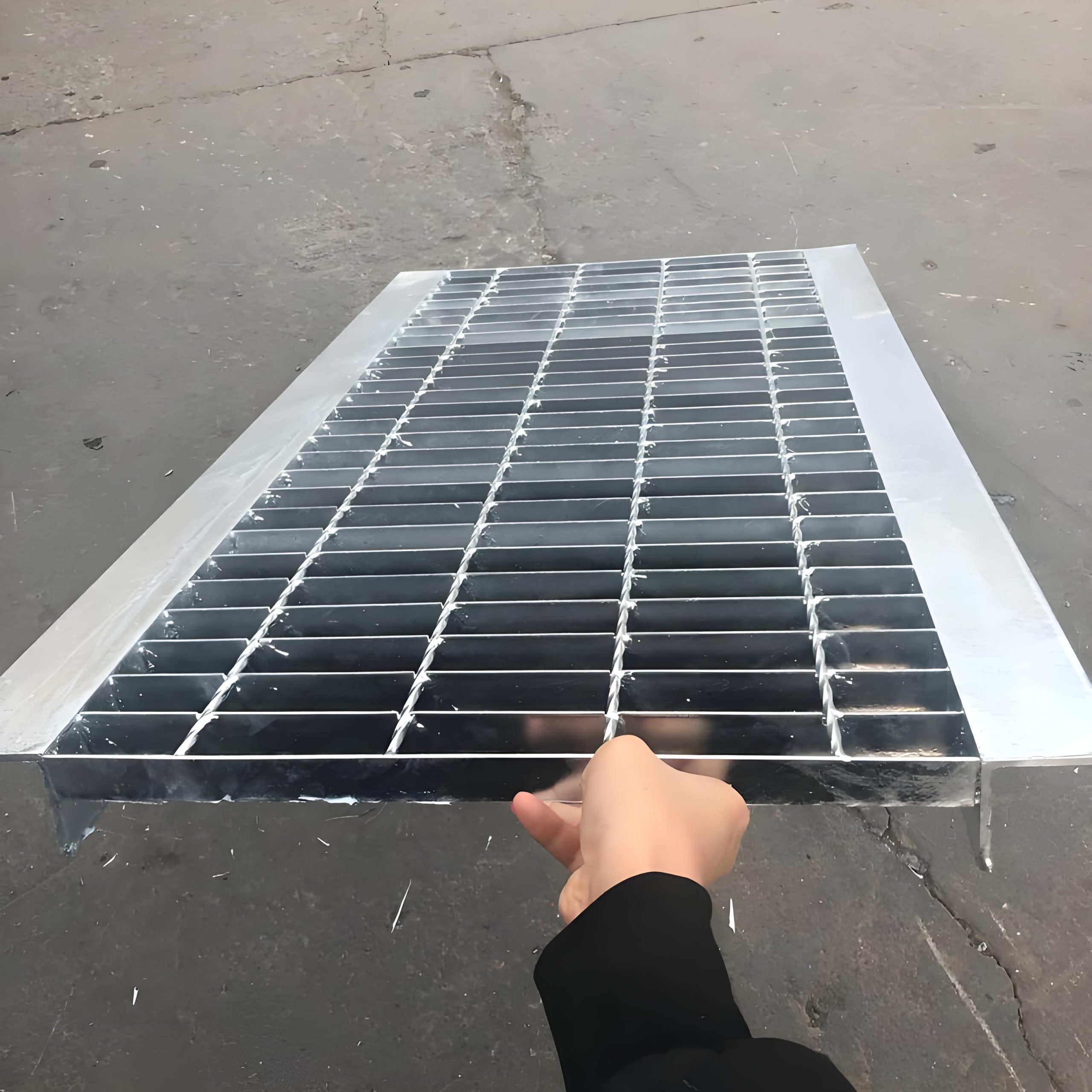
Painting and powder coating may be used when the project needs a specific color, appearance, or additional surface protection. These treatments can improve appearance, but they may not be as durable as hot-dip galvanizing in high-wear or constantly wet environments unless the coating system is properly selected. In industrial floors, coating damage caused by forklift wheels, dragging, and impact should be considered.
Stainless steel trench covers may use pickling, passivation, brushing, polishing, or bead blasting depending on appearance and hygiene requirements. For food factories, pharmaceutical plants, kitchens, and clean drainage systems, surface finish may be more important than for ordinary outdoor trenches. Better surface finishing increases cost but improves cleanliness, corrosion resistance, and visual quality.
| Surface Treatment | Suitable Material | Price Impact | Suitable Environment |
| Untreated black steel | Carbon steel | Lowest initial cost | Temporary use or indoor dry areas only |
| Painted finish | Carbon steel | Low to medium | Indoor or low-corrosion areas |
| Powder coating | Carbon steel, aluminum, some fabricated covers | Medium | Decorative or controlled environments |
| Hot-dip galvanized | Carbon steel | Medium | Outdoor drainage, road, factory yard, municipal use |
| Pickled and passivated | Stainless steel | Medium | Food, chemical, wastewater, humid areas |
| Polished or brushed | Stainless steel | Medium to high | Commercial, architectural, clean drainage areas |
Plain trench covers are usually easier to produce and may have a lower price than serrated or specially textured covers. Plain steel grating trench covers are suitable for many general drainage areas where slip risk is not high. Plain chequered plate covers already have a raised pattern, but plain flat plate covers may become slippery when exposed to water, oil, mud, or dust.
For indoor cable trenches, low-traffic utility channels, and dry maintenance areas, plain covers can be economical. However, for outdoor drainage channels, pedestrian walkways, ramps, factory washing areas, food processing floors, and oily industrial zones, anti-slip performance should be considered before choosing the lowest price option.
Serrated steel grating trench covers use bearing bars with serrated edges to improve traction. They are often selected for wet, oily, sloped, or high-risk walking areas. Serrated design may increase price because of additional processing and sometimes higher fabrication complexity. However, the additional cost is often justified where safety is important.
Plain trench cover price may be lower, but serrated trench covers may reduce slip accidents and improve safety compliance. When the project involves public access, workers walking with tools, drainage channels near machinery, or outdoor platforms, the buyer should compare total risk rather than only purchase cost.
| Cover Surface | Price Level | Main Advantage | Common Application |
| Plain grating | Lower | Economical and easy drainage | General drainage, dry utility trench, low-risk areas |
| Serrated grating | Slightly higher | Better slip resistance | Outdoor walkways, factory drainage, wet or oily areas |
| Chequered plate | Medium | Closed surface with raised anti-slip pattern | Pedestrian trench, cable trench, floor access cover |
| Perforated or slotted plate | Medium to high | Controlled drainage opening and closed support | Commercial drainage, utility access, special drainage channels |
Standard trench covers are generally more cost-effective because suppliers can use common materials, repeated production settings, and regular cutting plans. If the project can accept standard widths, lengths, bar spacing, and frame sizes, the unit price may be lower and delivery time may be shorter. Standard steel grating covers are especially suitable for long straight drainage channels where repeated panel sizes can be used.
Custom trench covers are required when the trench has special width, curved layout, irregular shape, existing frame dimension, special loading point, pipe penetration, manhole connection, or architectural requirement. Custom production may increase cost, but it reduces installation problems. A cheap standard cover that does not fit the trench properly can cause gaps, rocking, noise, water flow problems, or safety hazards.
Custom size does not always create a very high price. If the buyer provides clear drawings and repeated dimensions, the supplier can optimize cutting and production. The price increases more significantly when each cover has a different size, special hole, complex edge, separate marking, or individual packaging requirement.
| Size Type | Price Advantage | Possible Limitation | Best Use |
| Standard size | Lower unit cost and faster production | May not match existing trenches exactly | New drainage channels, repeated project sizes |
| Custom rectangular size | Good fit with moderate added cost | Needs accurate dimensions | Factories, utility trenches, municipal repair |
| Custom irregular shape | Solves complex site problems | Higher labor and cutting cost | Renovation projects, curved channels, equipment areas |
| Custom cover with frame | Better installation and long-term stability | Higher material and fabrication cost | Roads, high-traffic areas, removable access covers |
Removable trench covers are designed for easy lifting, inspection, cleaning, and maintenance. They are common in cable trenches, utility corridors, drainage channels, pump rooms, industrial floors, and wastewater treatment facilities. Removable covers may include handles, lifting holes, recessed grips, frames, marking numbers, or anti-theft locking systems.
From a price perspective, removable covers may cost more than simple loose covers because they require additional accessories and more accurate fabrication. However, they reduce maintenance difficulty. In projects where the trench needs regular cleaning or cable inspection, removable design is usually more practical than fixed installation.
Fixed trench covers may be welded, bolted, anchored, or permanently installed into a frame. They are suitable for areas where access is not frequent and movement must be prevented. Fixed installation is often used in public areas, road traffic zones, security-sensitive locations, and places where cover theft or accidental displacement is a concern.
Fixed installation can add cost due to anchor plates, bolts, welding, installation frames, or special site work. However, it may reduce noise, vibration, and unauthorized removal. The supplier price may not include on-site installation labor, so buyers should confirm whether the quotation includes only product supply or also installation accessories.
The best installation method depends on how often the trench must be opened. If workers need weekly or monthly access, removable covers with handles and proper numbering will save time. If access is rare and traffic safety is more important, fixed or bolted covers may be better. Buyers should tell the supplier whether the trench carries drainage water, cables, pipelines, valves, pumps, or inspection points before requesting price.
| Installation Type | Cost Level | Main Benefit | Common Accessories |
| Loose laid | Lower | Simple and economical | Basic edge support |
| Removable with handles | Medium | Easy maintenance | Lifting handles, recessed holes, marking plates |
| Bolted cover | Medium to high | Better security and stability | Bolts, clips, anchor nuts, support frame |
| Hinged cover | High | Convenient opening without full removal | Hinges, locks, reinforced frame |
| Welded fixed cover | Medium to high | Permanent and stable | Welding points, embedded frame, anti-corrosion repair |
Batch quantity strongly affects trench cover suppliers price. Small orders often have higher unit prices because production setup, drawing confirmation, cutting arrangement, welding fixtures, galvanizing preparation, and packing work are spread across fewer pieces. Larger orders can reduce unit cost because materials are purchased more efficiently and repeated sizes are easier to produce.
For example, a supplier may need similar drawing work and production preparation for 10 pieces or 500 pieces, but the setup cost per piece is much lower in a large batch. If the project has many different sizes, the supplier may group similar sizes to optimize production. Buyers can often get a better price by providing a full size list instead of requesting one size at a time.
Trench covers are heavy products with sharp edges, galvanized surfaces, or finished stainless surfaces. Export packaging must prevent deformation, surface damage, rust, and unsafe handling. Wooden pallets, steel frames, plastic wrapping, edge protection, labels, and loading straps may add cost, but they protect the goods during sea transportation and unloading.
For galvanized trench covers, good packaging should avoid excessive rubbing that damages the zinc surface. For stainless steel covers, packaging should prevent scratches and contamination from carbon steel. For composite covers, packaging should protect corners and anti-slip surfaces. A supplier offering a very low price may use weak packaging, which can create hidden cost after delivery.
Trench covers are usually heavy, and freight cost can be significant. In international trade, buyers should compare FOB, CFR, and CIF prices carefully. A low EXW price does not show the full cost if inland transportation, export handling, port charge, ocean freight, insurance, and destination cost are not included. For large trench cover projects, container loading efficiency matters. A good supplier will design package dimensions and stacking method to improve container utilization without damaging the covers.
| Cost Item | Small Order | Large Order | Buyer Tip |
| Material purchase | Less bargaining space | Better material planning | Provide total quantity and future batch plan |
| Production setup | Higher unit setup cost | Lower unit setup cost | Use repeated sizes when possible |
| Drawing confirmation | Similar work for fewer pieces | More efficient for project orders | Send clear drawings and size schedule |
| Packaging | Higher unit packing cost | More efficient pallet design | Confirm export packing method |
| Shipping | Higher freight share per piece | Better container utilization | Compare total landed cost, not only unit price |
Hot-dip galvanized steel trench covers are often the preferred solution for outdoor drainage, road channels, factory yards, logistics areas, and municipal projects because they combine high strength with corrosion resistance at a reasonable cost. Compared with stainless steel, galvanized carbon steel usually has a lower initial purchase price. It is suitable when the environment is wet but not highly chemical or chloride-rich.
The price of hot-dip galvanized trench covers depends on steel weight, galvanizing cost, zinc coating requirements, product shape, and order quantity. Heavy-duty galvanized steel grating covers may still be expensive because they use large bearing bars and strong frames, but they are often more economical than stainless steel covers with similar load capacity.
Stainless steel trench covers are selected when corrosion resistance, hygiene, appearance, or long service life is more important than the lowest initial cost. Stainless steel 304 is widely used in general corrosion-resistant drainage systems, while stainless steel 316 is preferred for coastal, chemical, marine, wastewater, and chloride environments.
If a galvanized steel cover is used in a highly corrosive environment, it may require more frequent maintenance or replacement. In that case, stainless steel can be more economical over the full service period even though the initial supplier price is higher. Buyers should consider lifecycle cost when comparing galvanized and stainless steel trench cover prices.
For dry indoor factory channels, painted or galvanized carbon steel may be enough. For outdoor rainwater drainage, hot-dip galvanized steel is usually practical. For food processing, chemical drainage, coastal plants, or wastewater systems, stainless steel may be the safer long-term option. A professional trench cover supplier should ask about the working environment before recommending material.
| Item | Hot-Dip Galvanized Steel | Stainless Steel |
| Initial price | Lower to medium | Medium to high |
| Load capacity | Very good with proper bar size | Very good with proper design |
| Corrosion resistance | Good for many outdoor environments | Better in humid, chemical, coastal, and hygiene areas |
| Maintenance | Low to medium depending on environment | Usually lower in corrosive environments |
| Appearance | Industrial galvanized finish | Clean and more refined surface |
| Best use | Roads, factory yards, drainage channels, municipal projects | Food plants, chemical plants, coastal projects, clean drainage systems |
Trench cover suppliers price should be evaluated together with supplier experience. A supplier with experience in steel grating, trench covers, drainage covers, cable trench covers, chequered plate covers, and municipal utility products can usually understand project requirements faster and reduce specification mistakes. Experienced suppliers know that trench cover design must consider span, load, support, surface treatment, installation clearance, drainage opening, and site maintenance.
A low price from an inexperienced supplier may not include the correct material thickness, frame design, galvanizing quality, or load capacity. If the cover arrives with wrong dimensions, poor flatness, weak welding, or insufficient anti-corrosion treatment, the buyer may face installation delay and replacement cost. Therefore, price and quality should not be separated.
Professional quality control includes raw material inspection, dimensional checking, welding inspection, flatness control, load design review, galvanizing inspection, surface finish checking, and packing inspection. For trench covers, flatness is especially important because uneven covers can create trip hazards, noise, rocking, and water flow problems. Edge banding and welding must also be strong enough to handle handling, traffic, and repeated removal.
For steel grating trench covers, suppliers should check bearing bar size, spacing, panel size, diagonal tolerance, edge banding, weld quality, and surface treatment. For chequered plate trench covers, suppliers should check plate thickness, reinforcement ribs, anti-slip pattern, cutting edge, handle position, and frame fit. For stainless steel covers, suppliers should control welding discoloration, surface contamination, pickling, and passivation.
A supplier using accurate cutting equipment, skilled welding, proper fixtures, reliable galvanizing partners, and export packaging will usually have a higher cost than a workshop producing low-grade covers without strict inspection. However, better quality can reduce installation adjustment, corrosion problems, deformation, and after-sales disputes. For municipal and industrial projects, stable quality is often more important than saving a small amount on the initial unit price.
| Quality Item | Low-Quality Risk | Professional Supplier Practice |
| Material thickness | Weak load capacity and early deformation | Confirm thickness and bar size before production |
| Welding quality | Broken joints, loose frame, noise | Use suitable welding process and inspect welds |
| Flatness | Trip hazard and unstable installation | Control distortion during fabrication and galvanizing |
| Galvanizing | Rust, poor coating, sharp zinc lumps | Check zinc coverage, drainage, and surface quality |
| Dimension tolerance | Installation failure or excessive gaps | Follow drawings and verify final sizes |
| Packaging | Damage during shipping | Use suitable pallets, protection, marking, and loading plan |
To receive an accurate trench cover supplier price, buyers should first provide trench width, clear opening, required cover length, total channel length, support edge size, frame condition, and installation layout. If the trench already exists, the buyer should measure the internal clear width and support seat width carefully. If the project is new, drawings should show the trench structure and cover support detail.
The supplier needs to know whether the cover is for pedestrians, bicycles, carts, forklifts, cars, trucks, or heavy machinery. For forklift areas, the buyer should provide forklift weight, wheel type, wheel load, and traffic frequency if possible. For roads, the buyer should clarify whether the cover is placed in a vehicle lane, parking area, curbside drainage channel, or maintenance access area.
The buyer should specify whether the cover should be carbon steel, hot-dip galvanized steel, stainless steel 304, stainless steel 316, composite, or concrete. If the buyer is not sure, the working environment should be described clearly. Useful details include indoor or outdoor use, rain exposure, chemical exposure, saltwater or coastal conditions, sewage, food processing, cleaning chemicals, and temperature.
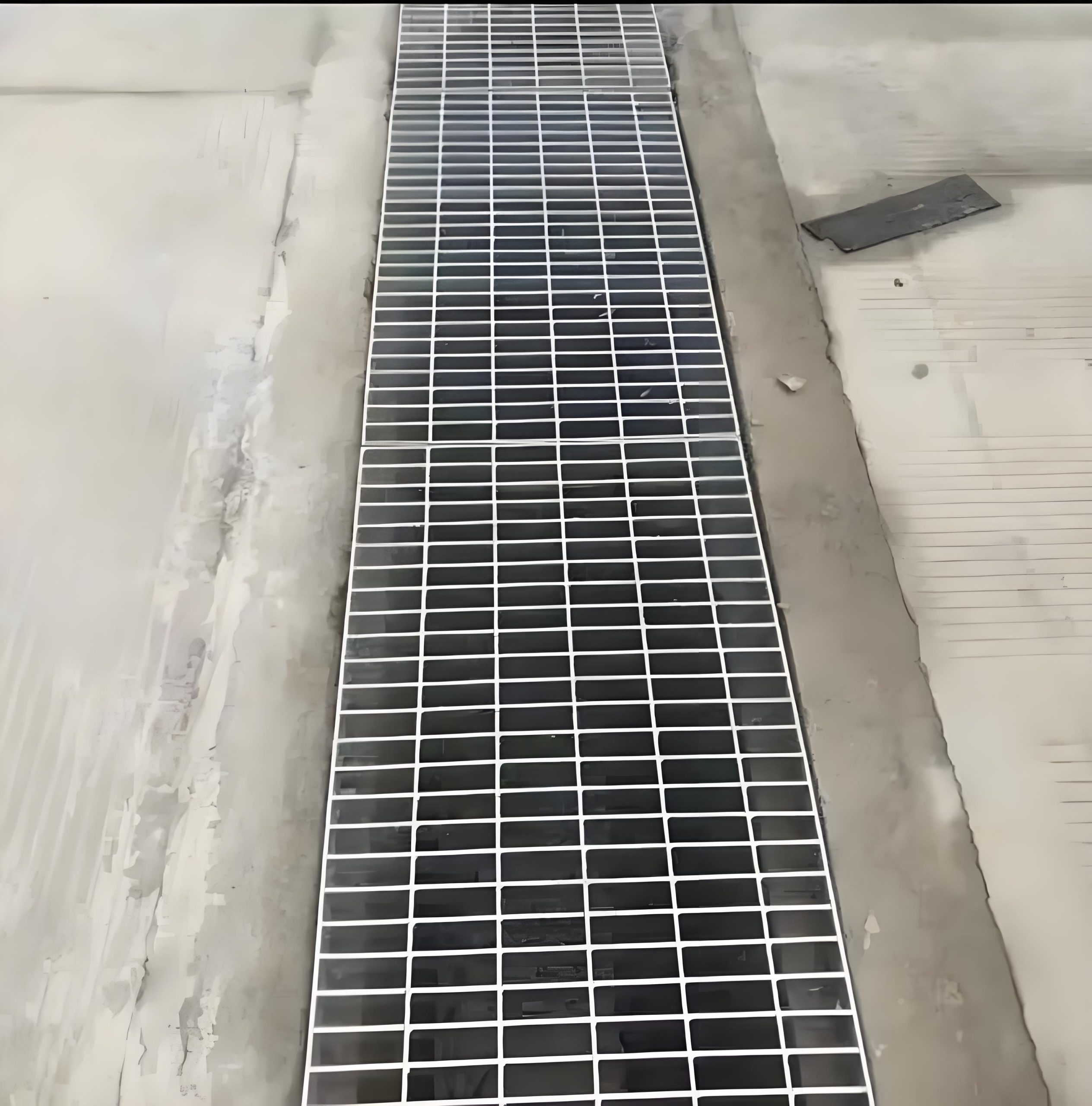
Drawings and photos help the supplier understand the real project. A simple size list should include each cover width, length, quantity, material, surface treatment, frame requirement, handle requirement, and special notes. For irregular trench covers, a CAD drawing or detailed sketch is much better than a verbal description.
| Information Needed | Why It Matters | Example Detail |
| Trench clear opening | Determines span and strength design | 300 mm, 500 mm, 800 mm, or project-specific width |
| Cover length | Affects panel size and handling | 500 mm, 1000 mm, 1200 mm, or custom length |
| Load type | Determines bearing bar size or plate thickness | Pedestrian, forklift, car, truck, heavy vehicle |
| Material | Controls raw material cost and service life | Carbon steel, galvanized steel, stainless steel 304/316, composite |
| Surface treatment | Affects corrosion resistance and price | Hot-dip galvanized, painted, powder coated, passivated |
| Installation method | Affects frame, fixing, and accessories | Loose, bolted, removable, hinged, welded fixed |
| Quantity | Affects unit cost and production efficiency | Pieces, square meters, sets, or full project list |
| Destination | Affects packaging and shipping quotation | Destination port, country, delivery term |
Buyers can use the following structure when asking for trench cover suppliers price:
| Item | Required Information |
| Product type | Steel grating trench cover, chequered plate trench cover, composite cover, or cover with frame |
| Size | Width x length x thickness, or clear opening and support detail |
| Load | Pedestrian, forklift, vehicle, truck, or special load |
| Material | Carbon steel, stainless steel 304, stainless steel 316, composite, or concrete |
| Surface | Hot-dip galvanized, painted, powder coated, pickled, passivated, or polished |
| Accessories | Frame, handles, hinges, locks, bolt holes, clips, anti-theft system |
| Quantity | Total pieces, total square meters, or project schedule |
| Delivery term | EXW, FOB, CFR, CIF, or local delivery |
| Project environment | Indoor, outdoor, coastal, chemical, food factory, sewage, road, or municipal use |
Different suppliers may use the same product name but quote completely different structures. One supplier may quote a light-duty steel grating cover, while another supplier quotes a heavy-duty galvanized cover with frame. The price difference may look large, but the products are not the same. Buyers should compare bearing bar size, plate thickness, material grade, load capacity, frame design, surface treatment, and accessories before deciding which quotation is cheaper.
Some trench cover prices include only the cover panel. Others include support frames, bolts, handles, hinges, locks, clips, or anchor parts. If these details are not clear, the buyer may discover additional cost later. For municipal and industrial projects, frame and fixing parts are often important for installation, so they should be included in the quotation comparison.
Hot-dip galvanized cover price should mention galvanizing clearly. Stainless steel price should mention grade and surface finish. Painted or powder coated products should mention coating type if the project has corrosion requirements. A quotation that does not define surface treatment may not be reliable for outdoor drainage projects.
For steel trench covers, product weight is a useful way to compare prices. If two suppliers quote the same size cover but one product is much lighter, the lower price may come from thinner material or reduced load capacity. Asking for approximate weight, bearing bar size, plate thickness, or drawing can help buyers avoid unsafe comparisons.
Price is important, but delivery time also affects project cost. If the trench covers are delayed, road construction, factory installation, or municipal handover may be affected. A professional supplier should provide realistic lead time according to material availability, production schedule, galvanizing time, inspection, and packing.
Trench covers often need technical confirmation before production. A supplier who can review drawings, ask the right questions, and provide practical suggestions may save the buyer from mistakes. If a supplier only gives a low price without checking load, span, support, and installation details, the quotation may not be dependable.
| Comparison Point | Low-Price Risk | Better Comparison Method |
| Material grade | Wrong steel or stainless grade | Confirm carbon steel, 304, 316, composite type, or concrete grade |
| Thickness or bar size | Insufficient load capacity | Compare structural dimensions and approximate weight |
| Surface treatment | Early corrosion | Confirm hot-dip galvanizing, coating, or stainless finish |
| Frame and accessories | Hidden additional cost | Check whether quotation includes frame, handles, bolts, locks |
| Packaging | Shipping damage | Ask for export packing method and loading plan |
| Lead time | Project delay | Confirm production time and delivery schedule |
| Quality control | Installation and safety problems | Ask for inspection process, drawings, photos, and previous project experience |
Because trench cover suppliers price changes with steel cost, stainless steel cost, resin cost, labor cost, galvanizing cost, and freight cost, any price range should be used only as a reference for early budget planning. The final quotation must be based on drawings, size, load capacity, quantity, material, surface treatment, and delivery term.
| Trench Cover Type | Typical Price Level | Why Price Changes | Common Buyer Use |
| Light-duty steel grating trench cover | Economical | Bearing bar size, spacing, galvanizing, quantity | Pedestrian drainage, factory walkways, utility channels |
| Heavy-duty steel grating trench cover | Medium to high | Large bearing bars, closer spacing, frame, load design | Forklift paths, road drainage, industrial traffic |
| Chequered plate trench cover | Medium | Plate thickness, reinforcement ribs, handle design, surface treatment | Cable trench, pedestrian cover, floor access cover |
| Stainless steel trench cover | High | 304 or 316 grade, thickness, welding, polishing, passivation | Food plants, chemical plants, coastal projects |
| Composite trench cover | Medium | Resin type, thickness, reinforcement, anti-slip surface, load rating | Cable trench, corrosive areas, lightweight access |
| Concrete trench cover | Low to medium locally | Reinforcement, mold, thickness, transport distance | Municipal drainage, utility trench, local road projects |
For buyers who need price comparison, the more useful method is not asking “What is the cheapest trench cover?” but asking “What is the correct trench cover structure for my load, span, and environment?” Once the technical basis is clear, supplier prices can be compared more fairly.
Drainage trench covers must balance water flow, debris control, surface safety, and load capacity. Open steel grating covers are common because they allow water to pass quickly. Chequered plate covers may be used where a more closed surface is needed, but drainage holes or side gaps may be required. Price depends on opening design, anti-slip requirement, and corrosion environment.
Cable trench covers are often removable because cables may need inspection, replacement, or expansion. They may require handles, numbering, anti-theft fixing, and lighter weight for manual handling. Composite trench covers and chequered plate covers are often used in cable trench projects. Price depends on access frequency, cover weight, fire performance, insulation considerations, and corrosion resistance.
Road trench covers require stronger load capacity, reliable frame support, and secure installation. They must resist repeated vehicle loads, wheel impact, noise, and displacement. Road trench cover price is usually higher than pedestrian drainage cover price because the structural requirement is more demanding. For municipal roads, the supplier may need to provide drawings, load design, and project-specific fabrication.
| Application | Main Requirement | Price Tendency | Important Supplier Check |
| Drainage trench cover | Water flow and safety | Low to high depending on load | Opening pattern, anti-slip surface, corrosion protection |
| Cable trench cover | Access and protection | Medium | Removable design, handles, weight, anti-theft parts |
| Factory trench cover | Forklift and equipment traffic | Medium to high | Wheel load, span, flatness, impact resistance |
| Road trench cover | Vehicle load and stability | High | Frame design, load capacity, fixing, noise control |
| Municipal utility trench cover | Durability and maintenance access | Medium to high | Standard compliance, marking, frame, corrosion protection |
The lowest unit price may not include the same material, thickness, load capacity, galvanizing, packaging, or accessories. If the product fails after installation, the replacement cost can be much higher than the initial saving. For industrial and municipal projects, buyers should compare full specification and long-term use cost.
If the buyer does not tell the supplier whether the cover will carry pedestrians, forklifts, cars, trucks, or heavy machinery, the quotation may be based on a general assumption. This can lead to under-designed covers or unnecessary over-design. Both situations are costly: one creates safety risk, and the other increases purchase price.
Even a strong trench cover may fail if the support condition is poor. The supplier must know how the cover is supported on both sides, whether a frame is installed, and whether the trench edge is concrete, steel, or masonry. Without proper support information, price comparison is incomplete.
Outdoor drainage trench covers need corrosion protection. If untreated carbon steel is used in wet areas, it may rust quickly. If the environment contains chemicals or chloride, galvanized steel may not be enough and stainless steel or composite may be better. Surface treatment should be selected according to environment, not only price.
Trench covers are heavy and often shipped in large bundles. Poor packaging may damage the products. Inefficient loading may increase freight cost. Buyers should compare total cost including packaging and shipping, especially for international procurement.
From a manufacturer’s perspective, a reasonable trench cover price comes from efficient design, material optimization, stable production, and proper quality control. Anping County Chuansen Silk Screen Products Co., Ltd. focuses on practical trench cover solutions for drainage channels, road trenches, factory floors, cable trenches, municipal utility channels, and industrial platforms. The goal is not to make the cover unnecessarily heavy, but to match load requirement, span, environment, and installation method with a suitable structure.
For steel grating trench covers, production efficiency can be improved by using repeated panel sizes, standard bearing bar spacing, optimized cutting plans, and clear drawings. For chequered plate trench covers, cost can be controlled through suitable plate thickness, rational reinforcement design, and accurate edge processing. For hot-dip galvanized covers, proper venting and drainage design can improve galvanizing quality and reduce rework. For export orders, correct pallet size and stacking method can reduce shipping damage and improve container loading efficiency.
Price control should not mean reducing quality blindly. It should mean avoiding unnecessary material waste while keeping the cover safe, durable, and easy to install. A good supplier helps buyers choose the right specification instead of simply quoting the cheapest possible option.
| Cost Control Method | How It Helps | What Should Not Be Sacrificed |
| Standardize repeated sizes | Reduces cutting and setup cost | Correct fit and site requirement |
| Optimize bearing bar selection | Balances strength and steel weight | Load capacity and deflection safety |
| Use proper frame design | Improves installation and reduces site problems | Support strength and stability |
| Choose suitable surface treatment | Controls maintenance cost | Corrosion resistance for the environment |
| Improve packing and loading | Reduces shipping damage and freight waste | Surface protection and handling safety |
How much does a trench cover cost?
A trench cover cost depends on material, size, load capacity, span, thickness, surface treatment, frame design, accessories, quantity, and shipping terms. Light-duty pedestrian covers are usually more economical, while heavy-duty road, forklift, stainless steel, or framed trench covers cost more because they require stronger structure and more fabrication work. To get an accurate price, buyers should provide drawings, trench clear opening, load requirement, material, surface treatment, quantity, and destination.
Which trench cover is cheapest?
For many projects, plain carbon steel trench covers or light-duty steel grating covers are usually among the lowest-cost options. However, the cheapest cover is not always the best choice. Outdoor drainage areas often need hot-dip galvanizing, forklift areas need stronger bearing bars, and corrosive environments may need stainless steel or composite covers. Buyers should choose the most suitable cover according to load and environment, not only the lowest unit price.
How to get trench cover price?
To get trench cover price from suppliers, send the trench width, clear opening, cover length, quantity, load type, material requirement, surface treatment, installation method, frame or handle requirement, and destination port or delivery location. If possible, provide drawings or site photos. Clear information helps the supplier calculate material weight, fabrication cost, galvanizing or finishing cost, packaging, and shipping more accurately.
