

Trench cover grating is a removable or fixed grate installed over a drainage channel, cable trench, utility trench, equipment pit, or linear drain. It provides a walking or traffic surface while allowing water, debris, air, and process liquids to enter the channel below. The price of a trench cover grating depends on the clear opening it must span, load class, material, bar size, open area, frame details, locking method, corrosion protection, fabrication work, quantity, and delivery terms. A light pedestrian grate and a heavy forklift or roadway cover may have similar outside dimensions but require completely different structures and factory costs.
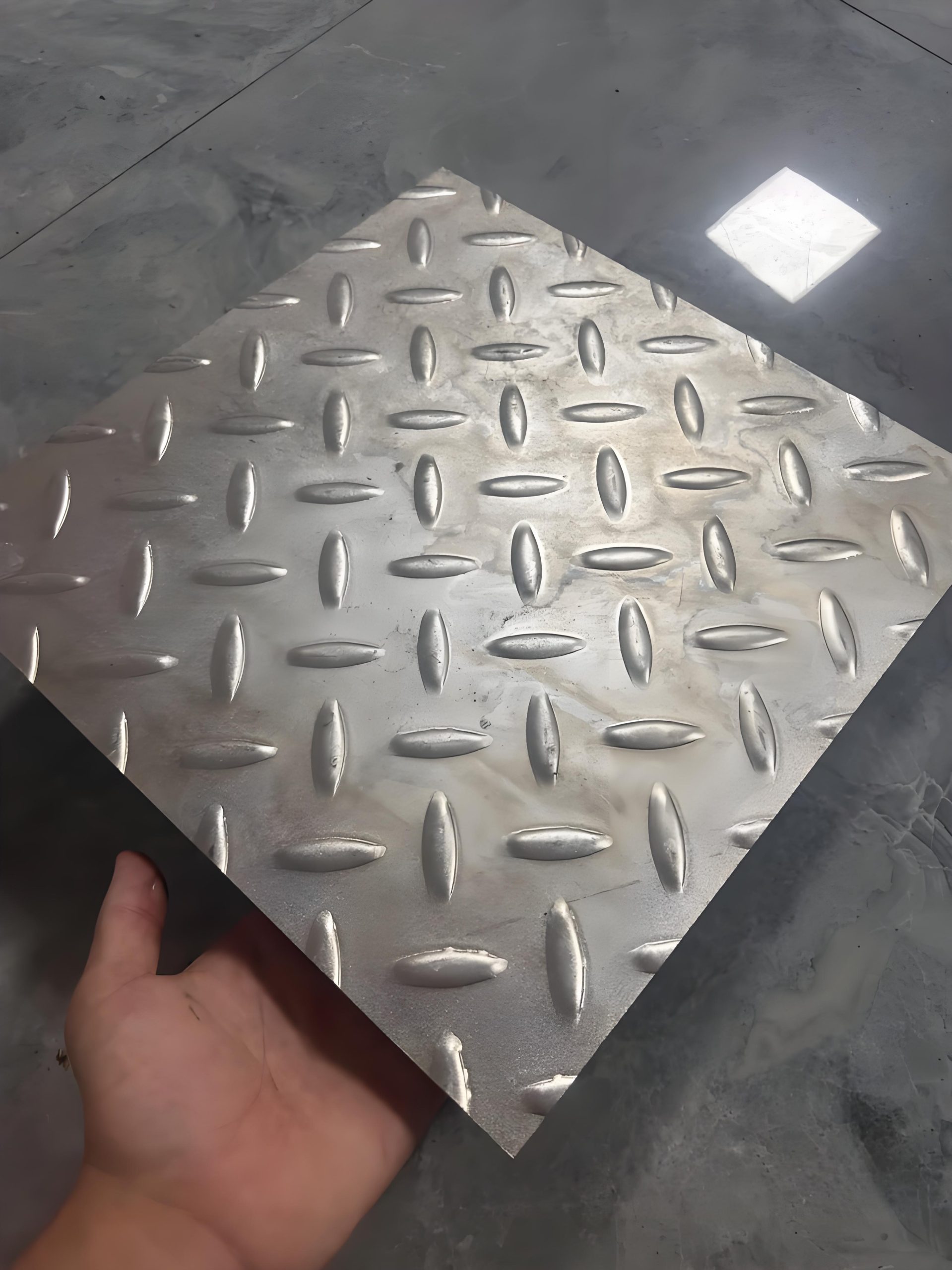
A trench cover grating is an open-grid cover designed to sit on support ledges or frames along both sides of a trench. It protects the opening while allowing surface water or process liquid to enter a drainage system.
Typical applications include:
The grating may be made from welded steel bar grating, slotted stainless steel, perforated plate, cast iron, ductile iron, composite material, or another purpose-designed drainage grate system.
Trench cover grating can be quoted per linear meter, square meter, panel, or individual piece. The best pricing method depends on the product type and project layout.
| Quotation Unit | Best Used For | Important Information Needed |
|---|---|---|
| Price per linear meter | Long continuous drainage channels with repeated grate widths | Channel width, grate width, depth, material, load class, fixing method |
| Price per m² | Steel bar grating trench covers and large fabricated panels | Bearing-bar size, mesh, span, galvanizing, cutouts, frames |
| Price per panel | Removable covers, framed covers, access panels, custom lengths | Exact outside dimensions, clear opening, ledge width, handles, locks |
| Price per piece | Cast iron, ductile iron, composite, and modular drainage grates | Grate model, channel system, load class, locking system, quantity |
For preliminary factory budgeting, standard galvanized steel trench cover grates for pedestrian or light commercial areas may often be around US$20–80 per linear meter, depending on width, bearing-bar size, mesh pattern, coating, and quantity. Heavier traffic grates, stainless steel grates, cast or ductile iron systems, framed panels, and custom fabricated covers can cost substantially more.
| Trench Cover Type | Indicative Factory Budget Range | Typical Scope |
|---|---|---|
| Light galvanized bar grating cover | About US$20–60 per linear meter | Pedestrian channels, narrow covers, standard mesh, repeated sizes |
| Standard galvanized bar grating cover | About US$40–100 per linear meter | Industrial walkways, wider channels, serrated or banded panels |
| Heavy-duty galvanized steel cover | About US$80–220 per linear meter or more | Forklift, vehicle, or high-load industrial areas with stronger bars and frames |
| 304 stainless steel drain grate | About US$60–180 per linear meter or more | Food, commercial kitchen, washdown, wet and hygienic environments |
| 316 stainless steel drain grate | About US$90–250 per linear meter or more | Coastal, marine, chemical, chloride-exposed environments |
| Cast iron, ductile iron, or composite system grate | Project-specific | Modular channel systems, public areas, vehicle zones, load-rated products |
These figures are broad planning references, not fixed offers. Final price depends on load class, material market movement, exact dimensions, channel type, frame design, coating, quantity, packing, destination, and trade term.
Correct measurement is essential when ordering a trench cover grating. The outside width of the existing trench is not enough. The supplier needs the actual clear opening, support ledge width, frame condition, and required finished cover size.
| Measurement | What It Means | Why It Matters |
|---|---|---|
| Clear opening | The unsupported distance between the two bearing supports | Determines the span that the grate must safely carry |
| Support ledge width | The width of the frame or concrete seat supporting the grate on each side | Controls stable seating and resistance to rocking or displacement |
| Overall cover width | Total finished width of the grate, including bearing on both sides | Must fit the frame without excessive gap or interference |
| Frame outside width | Total width of the supporting frame assembly | Useful for replacement, fabrication, and channel integration |
| Cover length | Length of each removable grate section | Affects handling weight, joints, drainage continuity, and packing |
| Channel depth | Depth below the grate surface | Influences drainage capacity and frame design |
For a bar grating trench cover, the bearing bars must span across the clear trench opening. If the bearing bars run parallel to the trench instead of across it, the cover may have much lower load capacity than intended.
When measuring an existing trench, take several width measurements along its length. Old concrete channels and damaged frames are not always perfectly straight. For replacement covers, photographs with a tape measure, frame details, and existing panel dimensions can help, but critical dimensions should be confirmed on site.
A trench cover grating must balance drainage capacity with safety and load requirements. More open area generally allows water to enter the channel more easily, but larger openings can increase the risk of heels, wheels, tools, and debris passing through.
Drainage capacity depends on more than the grate opening. The complete system must consider rainfall intensity, surface slope, channel width, channel depth, outlet size, pipe capacity, hydraulic gradient, debris type, and maintenance access.
| Feature | Effect on Drainage | Effect on Safety and Use |
|---|---|---|
| Higher open area | Usually improves water entry into the channel | May allow more debris, tools, heels, or small objects through |
| Narrower slots | Can reduce direct water entry compared with wide slots | May improve heel safety and object retention |
| Wider slots | Can improve drainage intake in high-flow areas | May not suit public pedestrian or small-wheel areas |
| Bar grating pattern | Provides open area along the channel | Requires correct bearing-bar direction and load selection |
| Perforated pattern | Can provide controlled drainage through repeated holes | May restrict larger debris and improve walking comfort |
Open area should not be selected only for maximum water flow. An oversized opening can create a safety problem, while an overly dense grate can clog with leaves, food waste, sediment, plastic film, hair, grease, or process residue.
Load class is one of the most important trench cover specifications. The grate, frame, channel body, support structure, and surrounding installation must all be suitable for the heaviest expected traffic.
EN 1433 is a widely used standard for drainage channels and grates. It includes load classes from A15 to F900. The number refers to the test load in kilonewtons.
| EN 1433 Load Class | Test Load | Typical Application |
|---|---|---|
| A15 | 15 kN | Pedestrian areas, bicycle paths, patios, walkways |
| B125 | 125 kN | Walkways, light-vehicle parking, residential driveways |
| C250 | 250 kN | Commercial areas, curb zones, car and light-truck parking |
| D400 | 400 kN | Roadways, loading areas, pneumatic forklift traffic, commercial vehicles |
| E600 | 600 kN | Industrial yards, docks, high wheel loads, heavy commercial traffic |
| F900 | 900 kN | Airports, ports, container areas, heavy industrial and extreme wheel loads |
Load class should be selected according to the actual traffic, not only the intended traffic. For example, a pedestrian drainage channel may occasionally be crossed by cleaning equipment, delivery carts, lift trucks, fire vehicles, or maintenance machinery. Where there is uncertainty, the system should be reviewed for the higher realistic load condition.
Forklift traffic requires special attention. Forklift wheel loads are concentrated over relatively small contact areas, and dynamic movement can be more demanding than a simple evenly distributed load. The wheel load, axle load, tire type, speed, travel direction, turning locations, and support structure should all be considered.
Trench cover design affects drainage, appearance, safety, cleaning, and structural performance. The most suitable pattern depends on channel width, load class, debris type, foot traffic, wheel traffic, and environment.
| Grate Design | Main Characteristics | Typical Application |
|---|---|---|
| Bar grating | Parallel bearing bars with cross bars, high strength-to-weight ratio | Industrial platforms, trench covers, plant drainage, outdoor access |
| Slotted grate | Long narrow slots, often stainless steel or cast design | Commercial drainage, kitchens, public areas, architectural drainage |
| Mesh grate | Smaller repeated openings for controlled drainage and object retention | Pedestrian areas, food processing, special drainage conditions |
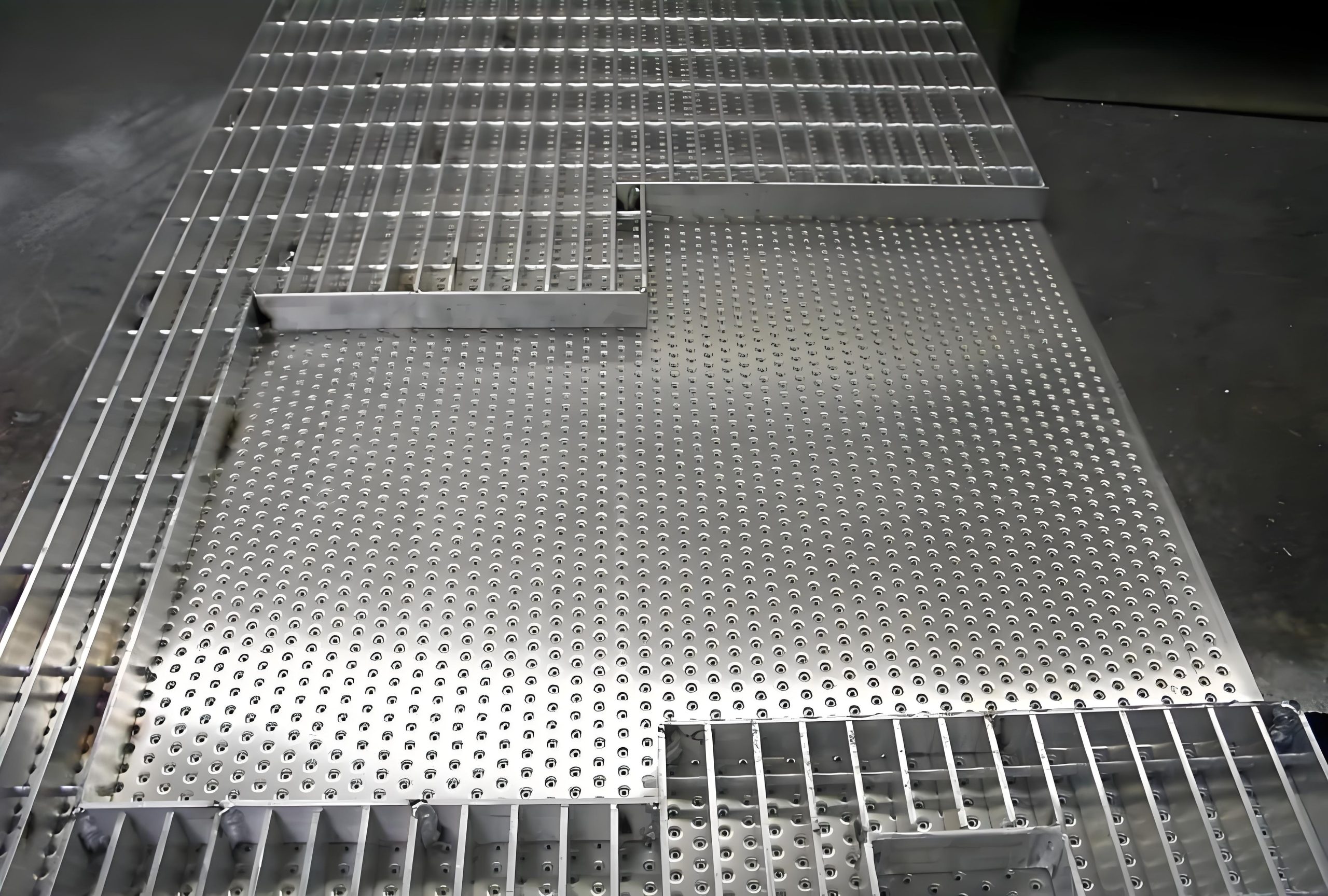
| Perforated grate | Round, square, or decorative holes in plate material | Commercial, hygienic, architectural, and controlled-opening applications |
| Decorative grate | Custom patterns combining drainage and visual design | Public landscapes, commercial entrances, architectural projects |
Bar grating trench covers are widely used in industrial applications because they provide high open area, good drainage, and strong load capacity relative to weight. The bearing bars should span across the trench opening, while the cross bars run along the trench length.
Slotted grates use long narrow openings to direct water into the drain while providing a cleaner surface appearance than open bar grating. They are often used in commercial areas, kitchens, pool decks, public walkways, and architectural drainage systems.
Mesh and perforated covers provide smaller openings. They can be useful where heel safety, debris control, small-object retention, or pedestrian comfort is more important than maximum open area. Their load capacity must still be checked because perforated plate and mesh designs behave differently from bar grating.
Material selection should consider load class, corrosion exposure, sanitation, maintenance, appearance, weight, and budget. No single material is best for every trench cover application.
| Material | Main Advantages | Typical Limitations |
|---|---|---|
| Galvanized carbon steel | Strong, economical, easy to fabricate, suitable for many outdoor industrial areas | Not ideal for severe chemical exposure, constant immersion, or aggressive chloride service |
| 304 stainless steel | Good corrosion resistance, clean appearance, suitable for food and wet areas | Higher initial cost than galvanized steel |
| 316 or 316L stainless steel | Improved resistance in marine, coastal, chloride, and chemical environments | Higher material and fabrication cost |
| Cast iron | Strong, durable, cost-effective for many drainage systems | Heavy, may require corrosion protection, less convenient for frequent removal |
| Ductile iron | High strength and toughness for vehicle-related applications | Heavy and generally supplied as system-specific cast components |
| Composite or polymer | Corrosion resistant, lightweight, non-metallic, easy to handle | Load rating, temperature, UV exposure, and channel compatibility must be checked |
Galvanized steel is often the economical choice for industrial walkways, plant floors, trench covers, and outdoor access areas. Stainless steel is commonly selected for commercial kitchens, food plants, chemical environments, washdown areas, and coastal projects where corrosion or hygiene requirements are higher.
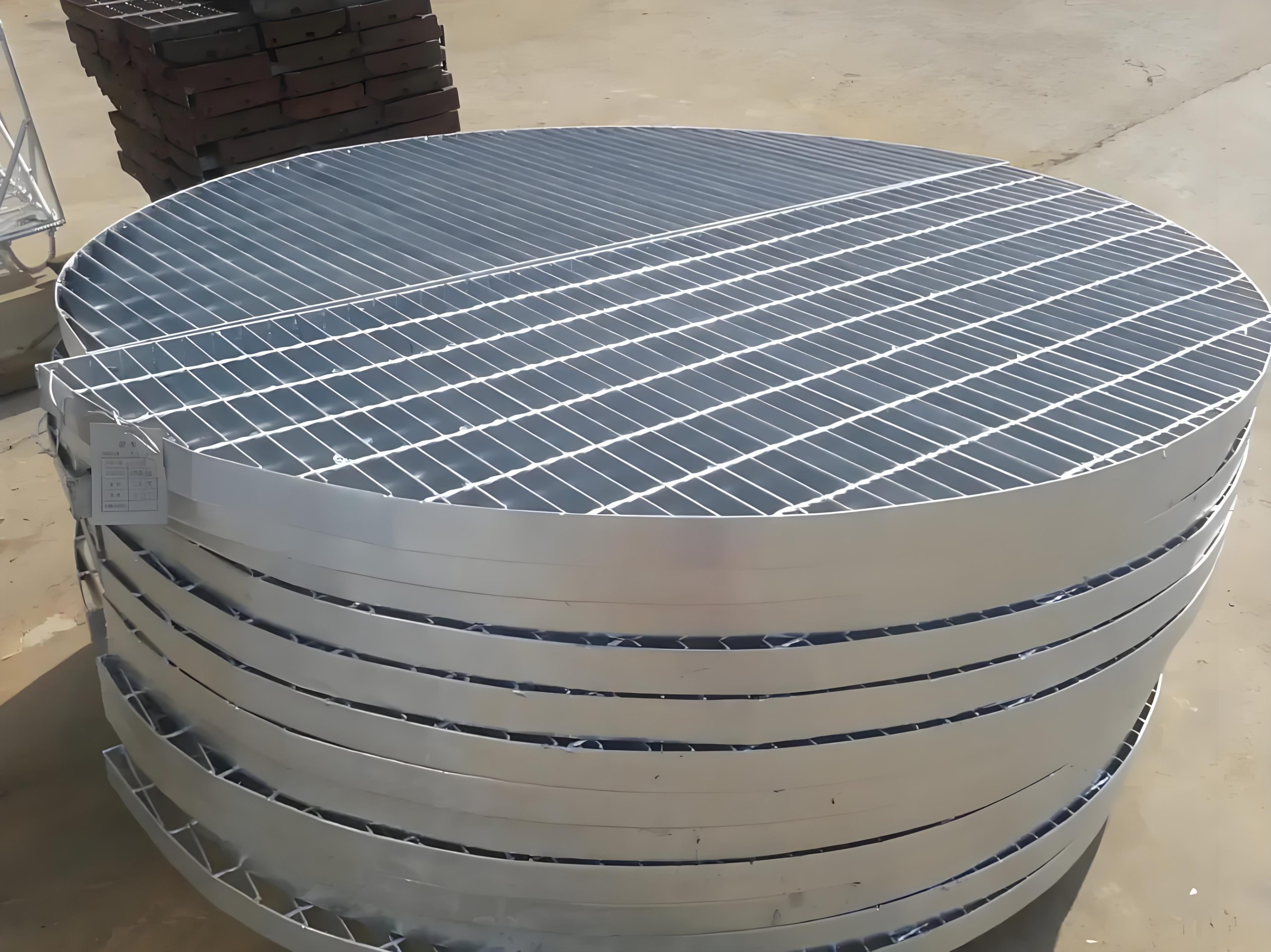
Galvanized carbon steel normally has a lower initial price than stainless steel. It combines carbon steel structural strength with zinc corrosion protection and is suitable for many outdoor and industrial environments.
Stainless steel has a higher material cost, but it can provide better long-term value in environments with frequent washdown, food residue, chemical splash, chlorides, salt exposure, or strict hygiene requirements.
| Material Option | Initial Cost Level | Typical Application |
|---|---|---|
| Painted carbon steel | Lower | Indoor, dry, or controlled environments |
| Hot-dip galvanized carbon steel | Moderate | Outdoor plant areas, walkways, stairs, trench covers, industrial drainage |
| 304 stainless steel | Higher | Commercial kitchens, food processing, general wet service, washdown areas |
| 316 or 316L stainless steel | Higher still | Marine, chemical, coastal, chloride-exposed, and aggressive environments |
The correct material should be selected from the actual environment. Galvanized steel may be practical for general rain and atmospheric exposure but may not be suitable for strong acids, continuous chemical immersion, high chloride levels, or retained corrosive deposits.
Heel-safe drainage grates use smaller openings or slot arrangements intended to reduce the risk of footwear, heels, wheels, or walking aids becoming caught in the grate. The required opening size depends on local code, project requirements, location, user group, and travel direction.
For public pedestrian areas, accessibility and walking safety should be reviewed together with drainage performance. A grate that is suitable for a factory platform may not be suitable for a public sidewalk, entrance, transit area, or wheelchair route.
| Safety Requirement | Possible Grate Feature |
|---|---|
| Heel safety | Narrower slots, smaller openings, controlled bar spacing |
| Slip resistance | Serrated bars, raised profiles, textured plate, anti-slip finish |
| Small-wheel access | Closer openings, properly oriented slots, smoother transitions |
| Public safety | Flush seating, secure frames, locking systems, no sharp edges |
| Drainage performance | Open area sized for expected water flow and debris conditions |
Anti-slip performance is influenced by material, surface profile, water, oil, mud, grease, footwear, slope, cleaning, and lighting. Serrated bar grating is common for industrial drainage areas, while slotted or perforated stainless steel grates are often used in commercial and hygienic areas.
For steel bar grating trench covers, the bearing-bar depth and thickness are the main structural factors. Wider trench openings and heavier traffic generally require deeper or thicker bearing bars.
| Grating Feature | Structural Effect | Price Effect |
|---|---|---|
| Deeper bearing bars | Higher bending resistance and lower deflection | Higher steel weight and cost |
| Thicker bearing bars | Improved section strength and local durability | Higher material and galvanizing cost |
| Closer bearing-bar spacing | Smaller openings and improved load distribution | More bearing bars per square meter |
| Closer cross-bar spacing | Denser panel pattern and improved transverse integrity | More cross-bar material and manufacturing work |
| Stronger edge banding | Improves perimeter performance and safe handling | Additional steel, welding, and coating cost |
For a trench cover, the bearing bars should cross the trench opening. If the grating is installed in the wrong direction, the actual structural span can be much greater than intended and the cover may deflect or fail under load.
Trench cover grates can be supplied as lift-out panels, hinged panels, bolted panels, clip-fixed grates, or locked covers. The best option depends on access frequency, traffic level, safety, theft risk, cleaning needs, and maintenance requirements.
| Cover Type | Main Benefit | Typical Use |
|---|---|---|
| Lift-out grate | Simple removal for cleaning and maintenance | Industrial walkways, plant drains, light-access channels |
| Hinged grate | Cover remains attached to the frame during access | Frequent maintenance points and service channels |
| Bolted or locked grate | Improves security and resists unauthorized removal | Public areas, vehicle zones, high-theft-risk sites |
| Clip-fixed grating | Helps resist uplift, vibration, and movement | Platforms, walkways, drainage covers, exposed industrial areas |
| Framed removable panel | Creates a finished access opening with stable support | Equipment pits, utility trenches, inspection points |
Removable panels should be sized according to the available lifting method. A very heavy cover may be structurally suitable but difficult or unsafe to remove during cleaning or maintenance.
Custom trench cover grating is often required because drainage channels rarely remain perfectly straight from one end of a project to the other. Factories can fabricate special lengths, mitred corners, curved sections, radius panels, transitions, outlet sections, and irregular covers from approved drawings.
Common custom details include:
Custom fabrication increases price because it requires drawing review, cutting, welding, material yield planning, finishing, inspection, and individual packing. For complex layouts, the supplier should receive a dimensioned CAD drawing or a clearly marked panel schedule.
Drainage grates are often exposed to water, cleaning chemicals, food residue, salt, oil, sludge, chlorides, acids, and other corrosive materials. Material selection should match the actual exposure rather than only the initial budget.
| Environment | Common Material Direction | Important Consideration |
|---|---|---|
| Outdoor industrial walkway | Hot-dip galvanized carbon steel | Suitable for many atmospheric and rain-exposed conditions |
| Commercial kitchen | 304 stainless steel | Cleaning chemicals, hygiene, food residue, washdown, appearance |
| Food and beverage processing | 304 or 316 stainless steel | Sanitation procedure, chemicals, temperature, corrosion exposure |
| Coastal or marine area | 316 or 316L stainless steel | Chlorides and salt deposits can be aggressive |
| Chemical plant | Project-specific stainless, composite, or lined system | Must match the exact chemical concentration and temperature |
| Heavy roadway drainage | Ductile iron, engineered steel, or approved heavy-duty system | Load class, frame, channel body, and traffic condition are critical |
Galvanized carbon steel is not a universal corrosion solution. Strong acids, continuous immersion, severe salt exposure, high chloride concentrations, and retained aggressive deposits can consume zinc quickly. In these environments, stainless steel, composite materials, specialty linings, or another drainage system may be more appropriate.
The lowest price is not always the lowest delivered cost. A quote may appear cheaper because it uses lighter bars, a lower load class, reduced support bearing, fewer locks, thinner frames, a different material, or excludes fabrication and packing.
| Quote Item | What to Compare |
|---|---|
| Clear trench opening | Confirm the actual unsupported span used for design |
| Support ledge and frame | Check support width, frame material, alignment, and load transfer |
| Load class | Compare the same EN 1433, project, or traffic requirement |
| Material | Galvanized steel, stainless steel grade, cast iron, ductile iron, or composite |
| Bar size and mesh | Confirm bearing-bar direction, depth, thickness, and spacing |
| Surface safety | Check serration, slip resistance, heel-safe openings, and edge finish |
| Fixing method | Lift-out, hinged, bolted, locked, clip-fixed, or anti-theft design |
| Fabrication scope | Banding, frames, corners, curves, transitions, cutouts, handles, labels |
| Finish | Galvanizing standard, stainless finish, paint system, or composite specification |
| Packing and delivery | Compare the same packing method, destination, and trade term |
A clear inquiry could read: “Please quote hot-dip galvanized welded steel bar grating trench covers for a 300 mm clear channel opening, 40 mm wide steel support ledges on both sides, 1000 mm panel length, bearing bars spanning across the channel, serrated surface, banded on all sides, suitable for the stated pedestrian or forklift load class. Please provide finished panel weight, frame details, galvanizing requirement, locking option, packing method, lead time, and FOB price.”
How do I measure a trench cover grate?
Measure the clear opening between supports, support-ledge width on both sides, overall cover width, panel length, channel depth, and frame condition. For bar grating covers, also confirm that the bearing bars will span across the trench opening.
What load class is needed for a forklift trench drain?
Forklift applications often require a heavy-duty drainage system, but the correct class depends on wheel load, tire contact area, vehicle weight, speed, traffic frequency, channel width, and support structure. EN 1433 Class D400 or higher is often considered for forklift and roadway conditions, but the complete channel-and-grate system must be verified.
Which trench drain grate material is best for a commercial kitchen?
304 stainless steel is commonly selected for commercial kitchens because it provides corrosion resistance, cleanability, and a hygienic appearance. Where chloride exposure, aggressive chemicals, or coastal conditions are present, 316 stainless steel may be more appropriate.