
Metal walkway grating is widely used for industrial access routes, platforms, catwalks, drainage channels, maintenance bridges, stair landings, marine facilities, and outdoor service areas. The price of metal walkway grating depends on the material, finished weight, bearing-bar size, mesh spacing, surface treatment, anti-slip requirement, panel fabrication, order quantity, and delivery term. To compare quotations correctly, buyers should evaluate the complete specification rather than selecting a supplier only by the lowest price per square meter.
Metal walkway grating is an open-grid flooring panel designed to support pedestrians, equipment, tools, and selected maintenance loads while allowing water, air, light, and debris to pass through. Its open construction helps reduce standing water and can improve drainage compared with solid plate flooring.
A standard metal walkway grating panel is made from bearing bars and cross bars. Bearing bars carry the primary load and should run in the direction of the support span. Cross bars lock the panel together, maintain the mesh pattern, and contribute to the overall rigidity of the grating.
Metal grating is commonly selected because it offers a practical combination of strength, drainage, durability, and low maintenance. It can be supplied as plain or serrated bar grating, welded or press-locked grating, galvanized steel grating, aluminum grating, stainless steel grating, stair treads, trench covers, and custom fabricated panels.
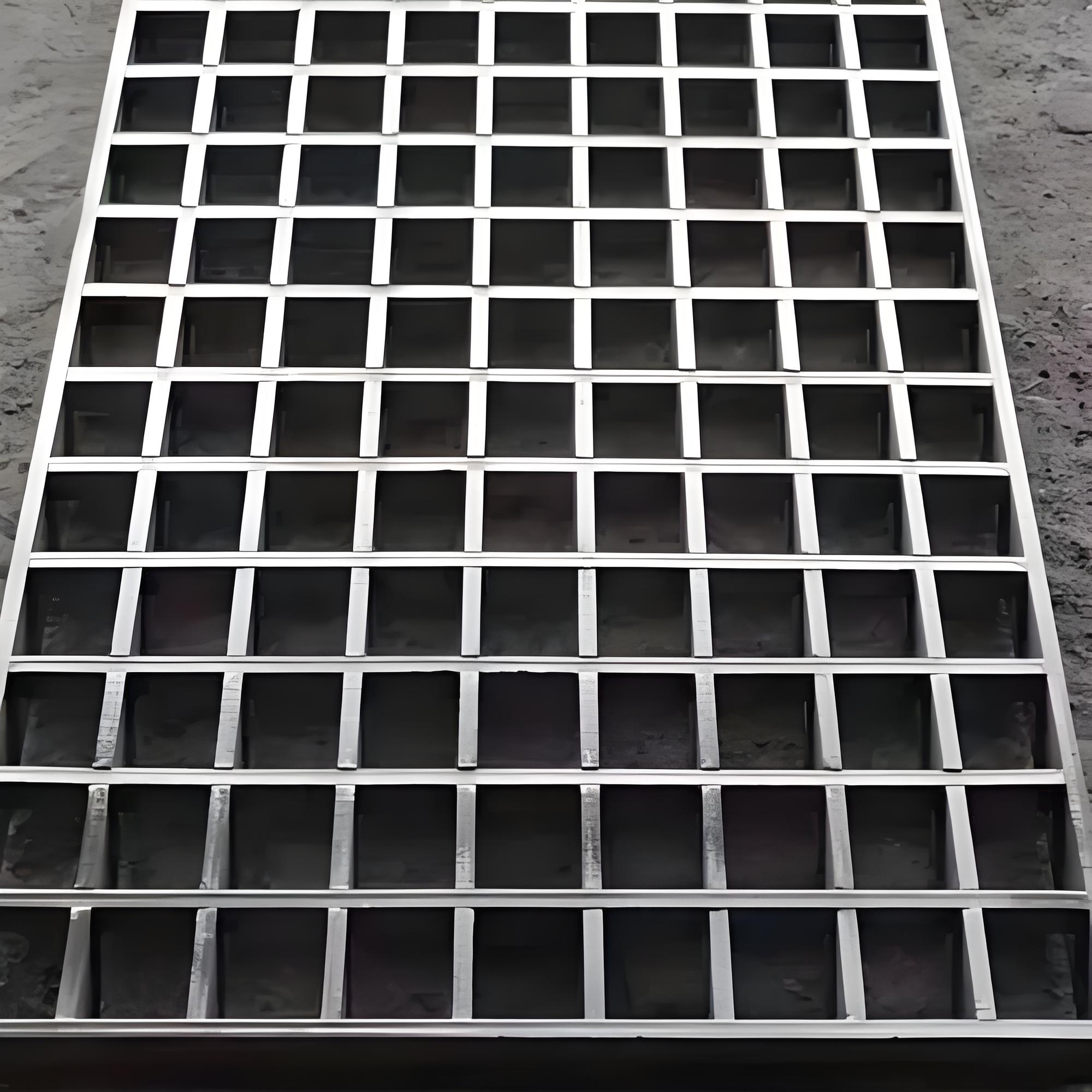
Different walkway conditions require different grating constructions. A dry indoor maintenance platform may use plain welded steel grating, while an offshore access route may require serrated aluminum or stainless steel grating. The selection should consider the environment, span, load, slip risk, installation method, and expected service life.
| Grating Type | Construction | Main Advantages | Typical Applications |
|---|---|---|---|
| Welded bar grating | Cross bars are resistance-welded to bearing bars. | Strong, rigid, economical, and widely available. | Industrial walkways, platforms, catwalks, stair treads. |
| Press-locked grating | Notched bearing bars and cross bars are mechanically interlocked. | Clean appearance and flexible mesh options. | Architectural walkways, public areas, drainage covers. |
| Serrated bar grating | Bearing-bar tops have a notched anti-slip profile. | Better traction in wet, oily, icy, or muddy conditions. | Outdoor accessways, refinery platforms, marine stairs. |
| Heavy-duty grating | Uses deeper and thicker bearing bars. | Higher load capacity and greater stiffness. | Heavy platforms, loading zones, maintenance areas. |
| Stair tread grating | Grating panel with nosing, end plates, and fixing holes. | Safe access with drainage and anti-slip performance. | Industrial stairs, towers, emergency exits, outdoor stairs. |
| Trench and drainage grating | Grating panel fitted into a channel frame. | Allows drainage while maintaining a walkable surface. | Factory drainage, washdown areas, utility trenches. |
The material has the largest influence on walkway grating price, corrosion resistance, panel weight, and expected maintenance. Carbon steel, galvanized steel, aluminum, and stainless steel each serve different project conditions.
Carbon steel grating is the most economical metal option for dry indoor areas, temporary walkways, protected equipment platforms, and projects that will receive a separate paint system. It has high strength and is easy to fabricate, but it needs protection if exposed to moisture or corrosive industrial conditions.
Hot-dip galvanized steel grating is fabricated from carbon steel and then coated with zinc after welding and finishing. It is one of the most common walkway grating products for outdoor industrial use because it provides good strength and practical corrosion protection at a reasonable price.
Galvanized steel is suitable for many factory platforms, power plants, water-treatment sites, outdoor stairs, utility facilities, drainage covers, and general industrial walkways. It is not the best choice for every chemical environment, especially where strong acids, constant chemical splash, or severe chloride exposure are present.
Aluminum grating is lightweight, corrosion resistant, and easy to handle. It is often used where panels must be removed frequently, where structural dead load must be limited, or where the installation is exposed to weather and marine air.
Typical applications include roof walkways, offshore access platforms, pedestrian bridges, water-treatment equipment areas, shipyards, marine facilities, and maintenance catwalks. Aluminum costs more than carbon steel per kilogram, but its low weight can reduce handling, freight, and installation effort.
Stainless steel grating is used where corrosion resistance, hygiene, chemical compatibility, or appearance are important. Grade 304 is commonly used in food-processing, washdown, pharmaceutical, and moderately corrosive environments. Grade 316 or 316L is often selected for higher chloride exposure, coastal projects, marine conditions, and selected chemical applications.
| Material | Relative Initial Cost | Corrosion Resistance | Weight | Typical Use |
|---|---|---|---|---|
| Untreated carbon steel | Lowest | Low without additional protection. | Heavy | Dry indoor platforms and temporary applications. |
| Hot-dip galvanized steel | Low to medium | Good for many outdoor industrial environments. | Heavy | Walkways, stairs, platforms, drainage covers. |
| Aluminum | Medium to high | Good atmospheric and marine-adjacent resistance. | Light | Removable panels, roof access, marine walkways. |
| 304 stainless steel | High | High in many wet and washdown applications. | Heavy | Food plants, hygiene areas, drainage systems. |
| 316 or 316L stainless steel | Premium | Higher resistance in many chloride and marine conditions. | Heavy | Marine projects, coastal plants, chemical facilities. |
Walkway grating is often fabricated from standard production panels and then cut to project-specific dimensions. Standard panel sizes help control waste and reduce price, but custom dimensions are normal for industrial platforms, catwalks, trench covers, and equipment-access routes.
Common metric panel widths include 600 mm, 800 mm, 1000 mm, 1200 mm, and 1500 mm. Standard panel lengths can reach 6000 mm, depending on the material, manufacturing line, galvanizing capacity, transport method, and final handling requirements.
| Walkway Width | Typical Application | Practical Consideration |
|---|---|---|
| 400–600 mm | Narrow maintenance access, trench covers, service routes. | Suitable for limited-access areas but may not allow easy passing. |
| 600–800 mm | Standard industrial catwalks and maintenance walkways. | Common choice for single-person access. |
| 800–1000 mm | General factory walkways and equipment platforms. | Provides more comfortable worker movement and tool handling. |
| 1000–1200 mm | High-traffic walkways, platforms, stair landings. | Panel weight and lifting method should be reviewed. |
| 1200 mm and wider | Large maintenance platforms and special access areas. | May be divided into multiple removable panels for safe handling. |
The finished panel size should also consider support spacing, handrail-post positions, equipment openings, installation access, container loading, and future maintenance. Large panels can reduce joints, but they may be difficult to remove safely when access below the walkway is required.
The mesh pattern is created by the spacing between bearing bars and cross bars. It affects load capacity, open area, drainage, foot support, dropped-object protection, weight, and price.
Common metric bearing-bar spacing includes 25 mm, 30 mm, 32 mm, and 40 mm. A 30 mm bearing-bar pitch is widely used for industrial walkways because it provides a practical balance of strength, drainage, open area, and cost.
Cross bars are often spaced at 50 mm or 100 mm. A 100 mm cross-bar spacing is common for standard welded steel walkway grating. A 50 mm cross-bar spacing creates a tighter mesh that may be preferred for public-access surfaces, tool-drop prevention, or improved walking comfort.
| Mesh Pattern | Typical Characteristics | Typical Application | Relative Cost |
|---|---|---|---|
| 25 mm × 100 mm | Close bearing-bar spacing with standard cross-bar spacing. | Walkways with improved foot support and drainage covers. | Medium to high. |
| 30 mm × 100 mm | Common industrial mesh with good open area. | General platforms, catwalks, and stair treads. | Medium. |
| 30 mm × 50 mm | Closer cross-bar pattern and more contact points. | Public access, equipment areas, close-mesh floors. | Medium to high. |
| 32 mm × 100 mm | Common metric alternative for general industrial use. | Factory walkways and platforms. | Medium. |
| 40 mm × 100 mm | Open mesh with lower material use. | Low-traffic industrial areas and drainage zones. | Lower to medium. |
Smaller openings can improve pedestrian safety and reduce the chance of tools falling through the grating. Larger openings are useful where fast drainage, airflow, and self-cleaning performance are priorities. The mesh should be chosen according to actual users, footwear, equipment, and safety requirements.
Grating weight and load capacity are closely related. Heavier panels usually contain deeper, thicker, or more closely spaced bearing bars. This improves strength and stiffness but increases material cost, galvanizing cost, freight, and installation labor.
The final load capacity depends on bearing-bar size, bearing-bar spacing, span direction, support condition, steel grade, cross-bar construction, panel orientation, and the type of load applied. A panel designed for pedestrian use should not be assumed suitable for forklifts, pallet jacks, wheel loads, or heavy machinery.
The following figures are approximate grating-body weights for welded carbon steel grating using a common 30 mm bearing-bar spacing and 100 mm cross-bar spacing. Finished panel weight can be higher after banding, serration, galvanizing, frames, cut-out reinforcement, clips, or stair fittings are added.
| Bearing Bar Size | Approximate Weight | Typical Walkway Use |
|---|---|---|
| 25 mm × 3 mm | Approximately 22–24 kg/m² | Short-span light-duty access platforms. |
| 30 mm × 3 mm | Approximately 26–28 kg/m² | General pedestrian walkways and industrial platforms. |
| 32 mm × 3 mm | Approximately 28–30 kg/m² | Walkways requiring slightly greater stiffness. |
| 40 mm × 3 mm | Approximately 34–37 kg/m² | Longer pedestrian spans and stiffer platform areas. |
| 30 mm × 5 mm | Approximately 42–45 kg/m² | Medium to heavy industrial walkways. |
| 40 mm × 5 mm | Approximately 55–58 kg/m² | Heavy-duty platforms and special support conditions. |
When requesting a quote, provide the clear span between supports, expected live load, concentrated load, equipment load, and required deflection limit. The bearing bars must run between the supports. If they are installed perpendicular to the intended span, the grating can lose much of its designed capacity.
For U.S. workplaces, OSHA requires walking-working surfaces to support their maximum intended load. It defines that load as the total weight and force from employees, tools, equipment, vehicles, materials, and other reasonably anticipated loads applied at one time. See the current OSHA guidance on maximum intended load for the official explanation.
For standard metal bar grating, the ANSI/NAAMM MBG 531-24 Metal Bar Grating Manual provides technical data, recommended practices, load tables, and typical installation details for steel, stainless steel, and aluminum grating. Critical structures and non-standard loads should be verified by a qualified engineer.
Plain and serrated grating have different performance characteristics. The choice should be based on the risk of slipping, expected contamination, cleaning method, and user comfort.
Plain bearing bars have a smooth top edge. They are suitable for dry indoor locations, protected equipment rooms, and areas where the surface is not regularly exposed to water, oil, mud, frost, or chemical residue. Plain grating is generally easier to clean and often costs less than serrated grating.
Serrated grating has notches on the top of the bearing bars. These notches provide better grip for safety footwear and help reduce slip risk in wet or contaminated areas. Serrated grating is commonly used for outdoor walkways, steel stairs, marine platforms, refineries, wastewater facilities, loading areas, and maintenance routes exposed to rain or oil.
| Surface Type | Best Environment | Main Benefit | Price Effect |
|---|---|---|---|
| Plain bar grating | Dry indoor and controlled environments. | Economical, clean appearance, easier washdown. | Base price. |
| Serrated bar grating | Wet, oily, muddy, icy, and outdoor environments. | Better anti-slip traction. | Moderately higher. |
| Serrated stair tread grating | Industrial stairways and access towers. | Grip at the tread and nosing area. | Higher due to nosing and end-plate fabrication. |
Walkway safety depends on more than grating strength. Wet, oily, icy, dusty, or muddy walking surfaces can become hazardous even when the panel has sufficient load capacity. Anti-slip selection should be integrated with drainage design, cleaning practice, footwear, and fall-protection measures.
The open grid allows rainwater, washdown water, process liquids, and loose debris to pass through the panel. This can reduce standing water and help maintain a drier walking surface. The drainage performance depends on open area, mesh size, panel slope, support layout, and whether the space below the grating is kept clear.
Very small openings may improve foot support but can retain debris. Very large openings improve drainage but may not suit small tools, high heels, narrow wheels, or public-access conditions. The best mesh pattern is the one that balances drainage with safe use.
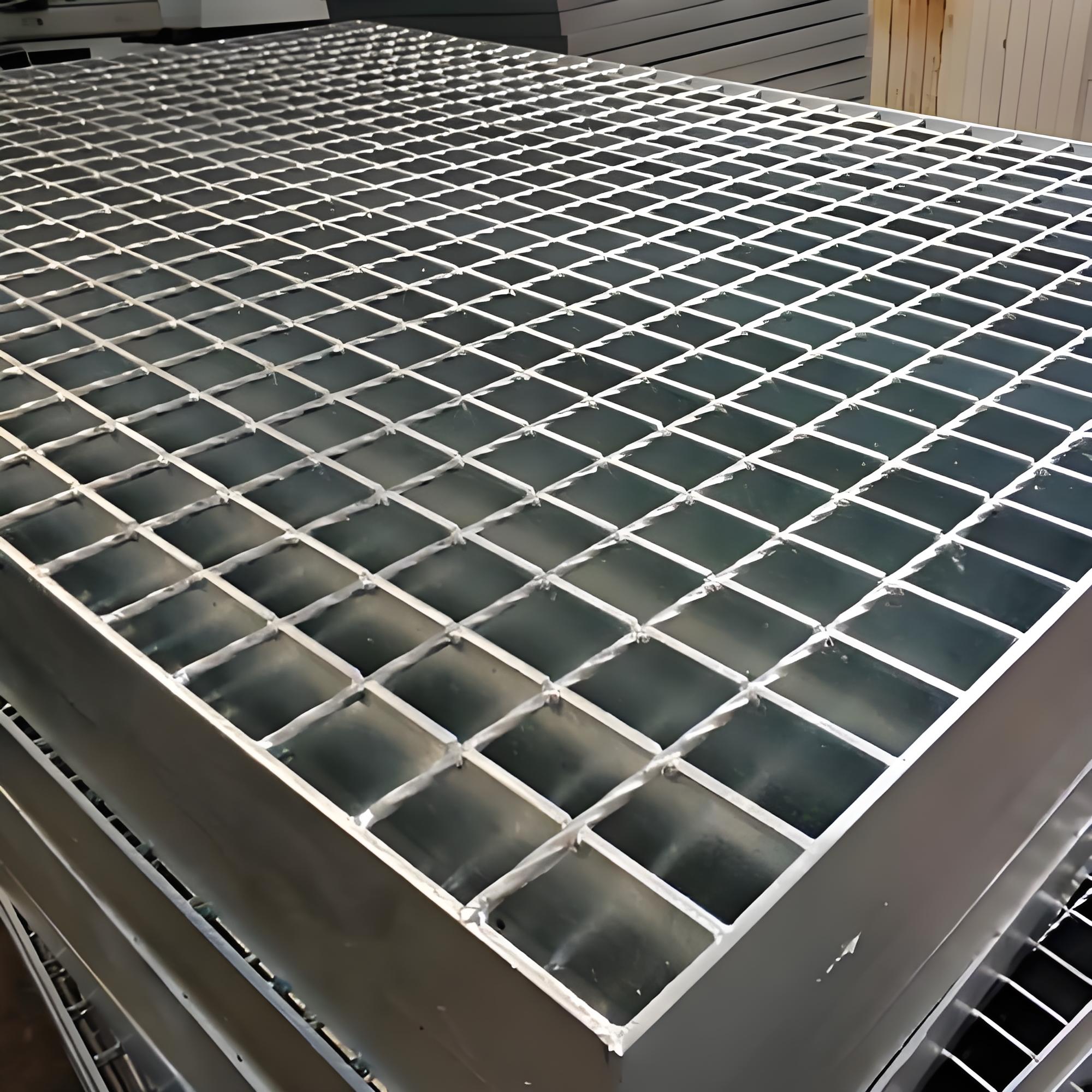
Hot-dip galvanized steel walkway grating is one of the most cost-effective options for industrial access systems. It provides the strength of carbon steel with zinc protection for many outdoor and humid environments.
For preliminary factory budgeting, standard hot-dip galvanized steel walkway grating often falls around US$25–80 per square meter. Lighter, standard-size pedestrian panels may be near the lower end of the range, while heavy-duty, serrated, close-mesh, framed, or highly fabricated panels can cost more.
Hot-dip galvanizing is commonly applied after fabrication, allowing the zinc coating to cover the bars, welds, and cut edges produced during normal production. ISO 1461:2022 covers general properties and test methods for hot-dip galvanized coatings on fabricated iron and steel articles. A purchase order should clearly state the required coating standard and inspection documents.
Stainless steel and aluminum walkway gratings usually cost more than galvanized steel, but they can provide lower maintenance, better corrosion resistance, reduced panel weight, or a more suitable finish for demanding environments.
Standard stainless steel walkway grating may be budgeted broadly at about US$55–180 per square meter for factory supply, depending on grade, bar size, mesh, finish, fabrication, and quantity. Grade 316 or 316L normally costs more than grade 304 because of its alloy content and corrosion-resistance properties.
Stainless grating is often justified in food-processing facilities, pharmaceutical plants, chemical areas, coastal installations, public spaces, and washdown zones where painted or galvanized steel would need frequent maintenance.
Aluminum grating may be budgeted broadly at approximately US$50–170 per square meter for standard factory products. Price depends on the aluminum alloy, bearing-bar depth, bar thickness, mesh pattern, locking method, finish, fabrication detail, and market aluminum cost.
Although aluminum can have a higher purchase price than galvanized steel, it is much lighter. This can reduce support demand, manual handling effort, offshore lifting requirements, and maintenance time for removable walkway panels.
| Material | Typical Factory Budget Range | Major Price Drivers | Best Value Situation |
|---|---|---|---|
| Untreated carbon steel | Approximately US$15–45/m² | Weight, mesh, fabrication, and panel size. | Dry indoor or temporary applications. |
| Hot-dip galvanized steel | Approximately US$25–80/m² | Finished weight, zinc coating, serration, and custom work. | General outdoor industrial walkways. |
| Stainless steel | Approximately US$55–180/m² | 304 vs 316L, finished weight, surface finish, fabrication. | Washdown, marine, hygiene, and corrosion-sensitive projects. |
| Aluminum | Approximately US$50–170/m² | Alloy, bar size, locking method, finish, and market price. | Lightweight and removable access systems. |
These figures are for preliminary planning only and do not represent a fixed market price. Material prices, exchange rates, coating cost, labor, duties, packaging, and freight can change quickly. Standard industrial metal grating references also show broad factory ranges based on material and specification; see this industrial metal grating price guide for comparison.
Surface treatment affects both the initial purchase price and the maintenance cost of a walkway system. The correct protection level should be selected according to rain, humidity, chemical exposure, salt spray, cleaning chemicals, abrasion, and expected service life.
Hot-dip galvanizing is a practical choice for many carbon steel walkways. It adds cost compared with untreated steel, but it provides broad protection for outdoor industrial use and usually offers better long-term value than frequent repainting in suitable environments.
Painted or powder-coated steel grating can provide color coding, decorative appearance, and additional barrier protection. It is often used in controlled industrial or architectural settings. However, damaged coating around cut edges, welds, clips, and bolt holes can allow corrosion to begin beneath the finish.
Stainless steel grating may require a particular surface finish, weld treatment, passivation process, or polished appearance for hygiene-sensitive or visible applications. These requirements can affect fabrication time and total price, especially for custom panels with many cuts or welded details.
Aluminum grating can be supplied with mill finish, anodized finish, or powder coating depending on the project. Anodizing and specialized coatings add cost but can improve appearance and surface durability in suitable applications.
Custom fabrication is common because walkway layouts often include columns, pipes, valves, cable trays, handrail posts, machinery bases, drainage channels, and structural changes. The more complex the panel shape, the more fabrication time is required.
Custom work often raises the unit price more on small orders than on large orders. A small panel with multiple reinforced openings may require more labor than a large standard rectangular panel. Complete approved drawings help the supplier calculate accurately and reduce the risk of site changes after fabrication begins.
Quantity has a major effect on the price of metal walkway grating. Large orders allow factories to buy raw material efficiently, use standard production setups, optimize galvanizing batches, reduce scrap, and spread packaging and inspection costs across more square meters.
A small custom order may require the same drawing review, machine setup, welding adjustment, coating preparation, packing, and export documentation as a much larger project. Stainless steel and aluminum minimum material purchases can also affect small orders. For this reason, the unit price of a low-volume project may be much higher than the price for a full container or repeat production order.
Metal walkway grating is normally supplied in bundles or on steel or timber pallets. Galvanized steel panels need secure bundling to prevent shifting. Aluminum, stainless steel, and coated panels may require additional protective film, separators, or wrapping to reduce surface damage during transport.
Freight should be compared using the same trade term. EXW pricing normally covers factory collection only. FOB pricing generally covers export handling and delivery to the named loading port. CIF includes ocean freight and insurance to the named destination port, but destination-port fees, duty, tax, customs clearance, and inland delivery may remain separate.
Galvanized steel grating is heavy, so ocean freight and inland trucking can be a significant part of the landed cost. Aluminum panels are lighter but may require more careful packing. Buyers should ask for total shipment weight, package dimensions, container loading estimate, number of bundles, and freight-price validity.
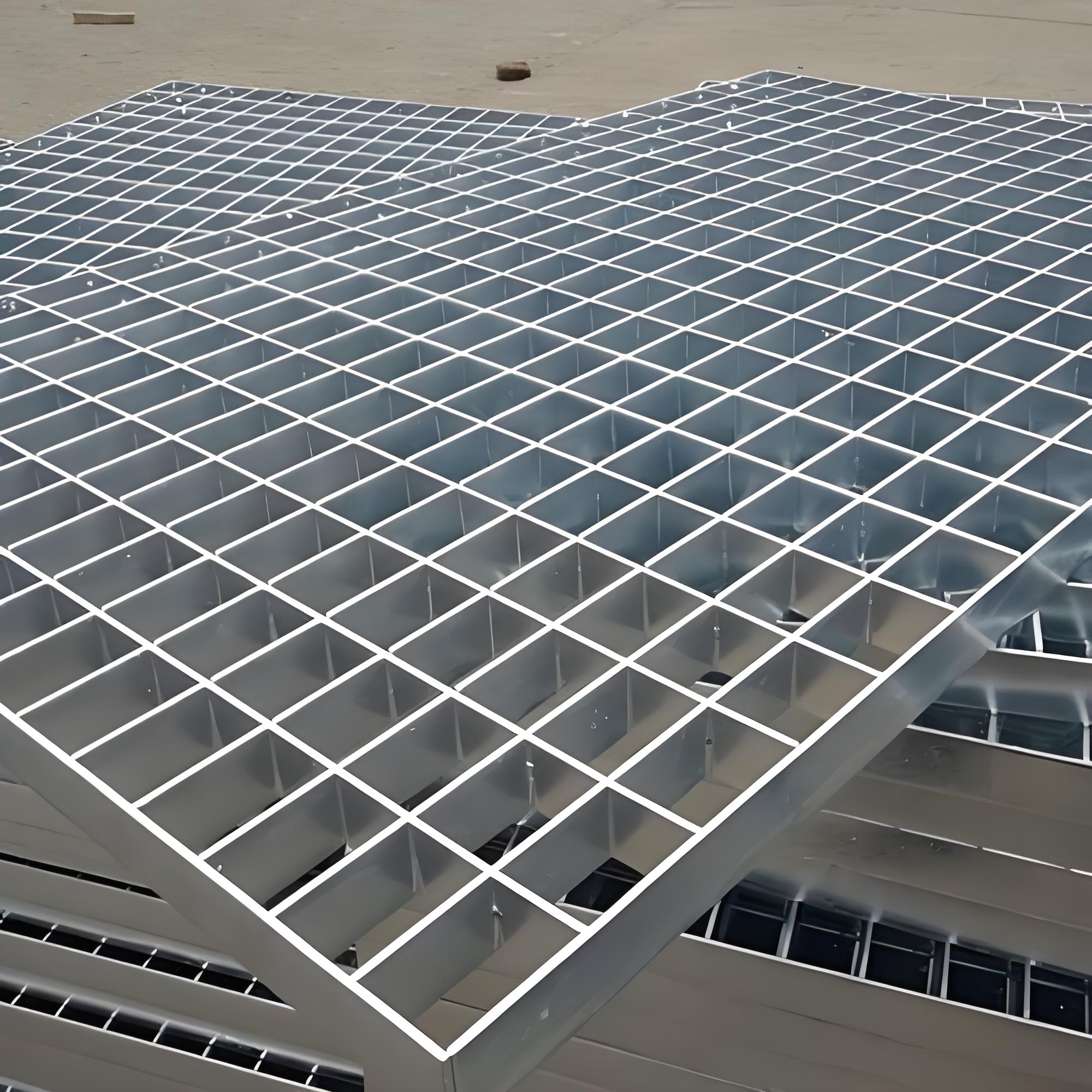
A fair quotation comparison requires matching the technical specification line by line. Do not compare only the total amount or the square-meter price. Two suppliers may quote panels with different weights, materials, surface finishes, or load capacities.
| Quote Item | What to Compare | Why It Matters |
|---|---|---|
| Material | Carbon steel, galvanized steel, aluminum alloy, 304 stainless, or 316L stainless. | Determines corrosion resistance, maintenance, and cost. |
| Bearing bars | Depth, thickness, spacing, and span direction. | Controls load capacity and stiffness. |
| Cross bars and mesh | Cross-bar spacing, opening size, and open area. | Affects safety, drainage, material use, and price. |
| Finished weight | kg/m² and total order weight. | Useful indicator of material quantity and freight cost. |
| Surface | Plain, serrated, galvanized, powder-coated, anodized, or polished. | Affects slip resistance, corrosion performance, and appearance. |
| Fabrication | Banding, cut-outs, reinforcement, frames, clips, stair details. | Custom work can materially change the final price. |
| Load requirement | Clear span, live load, concentrated load, wheel load, and deflection limit. | Ensures the proposed grating is fit for the intended use. |
| Quality documents | Material certificate, galvanizing report, inspection record, packing list. | Important for industrial and export projects. |
| Trade term | EXW, FOB, CFR, CIF, DAP, or another agreed Incoterm. | Prevents hidden differences in freight and export cost. |
How much does metal walkway grating cost?
Basic carbon steel walkway grating may cost about US$15–45 per square meter at factory level, while standard hot-dip galvanized steel grating often costs about US$25–80 per square meter. Aluminum and stainless steel walkway gratings usually cost more because of their material value and corrosion resistance. Final pricing depends on weight, mesh, load requirement, fabrication, quantity, and shipping terms.
Is serrated grating better for outdoor walkways?
Yes, serrated grating is usually a better choice for outdoor walkways exposed to rain, ice, oil, mud, or marine moisture because the notched bearing-bar surface provides stronger traction. Plain grating can be suitable for dry, protected areas where cleaning and a smoother surface are more important.
What is the best metal grating for a marine walkway?
Aluminum, stainless steel, and carefully specified galvanized steel can all be used for marine walkways. Aluminum is lightweight, stainless steel offers strong corrosion resistance when the correct grade is selected, and galvanized steel is often the most economical option for moderate exposure. The final choice should consider chloride exposure, direct saltwater splash, load, galvanic-corrosion risk, support materials, maintenance access, and budget.
