
Steel floor grating is a durable open-grid flooring product used for industrial walkways, platforms, stair treads, trenches, catwalks, mezzanines, drainage areas, and equipment access systems. Its price depends mainly on material grade, finished weight, bearing-bar size, mesh spacing, corrosion protection, fabrication details, and order quantity. A reliable purchase decision requires more than comparing price per square meter: the panel must also meet the required span, load, deflection, slip-resistance, drainage, and service-environment conditions.
Steel floor grating is made from load-bearing bars and cross bars arranged in a regular open pattern. The bearing bars run in the direction of the span and carry the primary load. Cross bars hold the structure together, maintain the mesh pattern, and improve the rigidity of the panel.
Compared with solid steel plate, floor grating provides high strength with less material while allowing water, air, light, debris, and process liquids to pass through. This makes it particularly useful in industrial plants where drainage, ventilation, and safe access are important.
The term “steel floor grating” can describe several products, including welded bar grating, press-locked grating, serrated grating, heavy-duty grating, galvanized grating, and stainless steel grating. The correct type depends on whether the project is a pedestrian walkway, an equipment platform, a stair tread, a trench cover, or a wheel-load application.
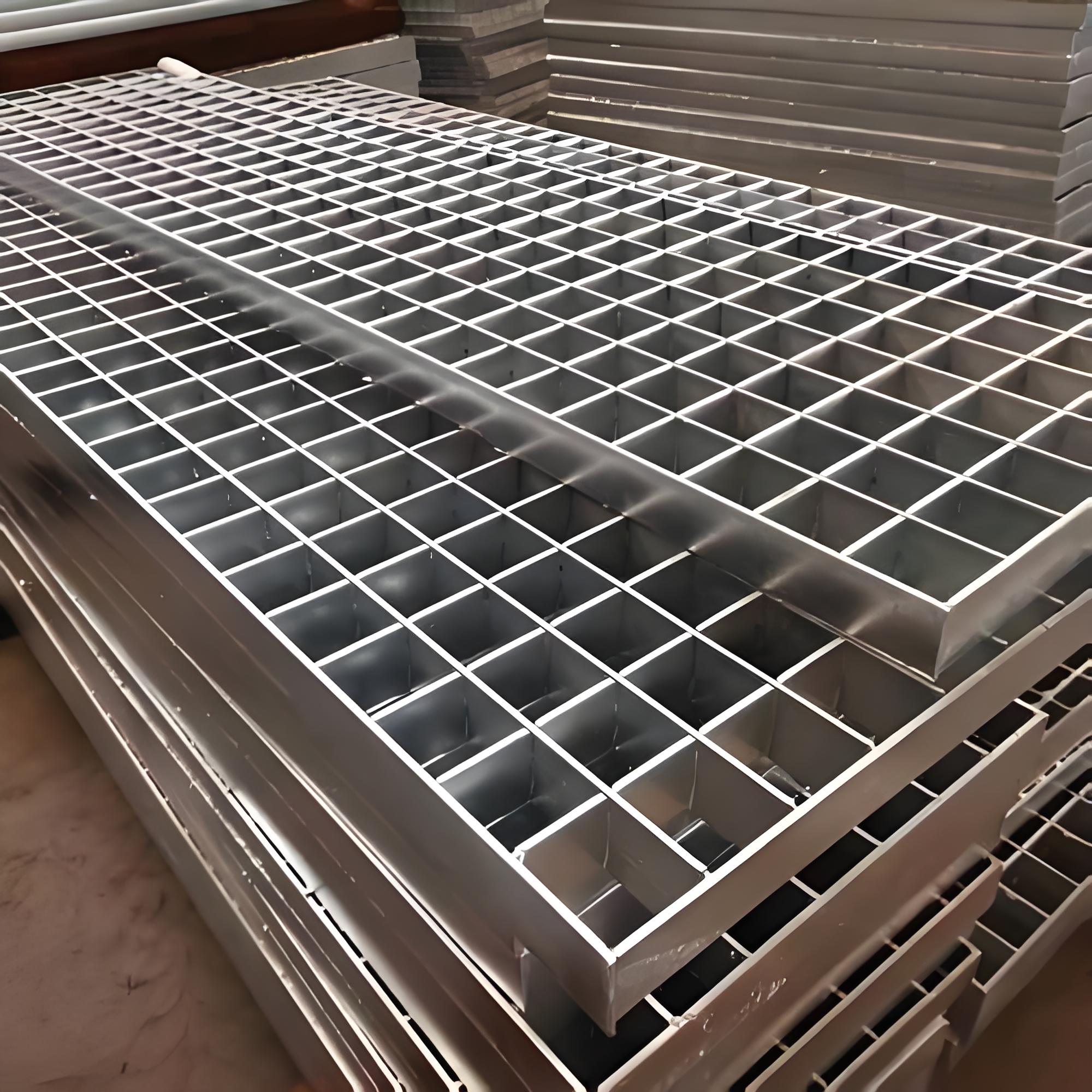
Different grating types are manufactured for different load levels, environments, and appearance requirements. Selecting the right construction method is as important as selecting the steel grade.
| Grating Type | Construction | Typical Advantages | Common Applications |
|---|---|---|---|
| Welded steel bar grating | Cross bars are resistance-welded to bearing bars. | Strong, rigid, economical, and widely available. | Industrial walkways, platforms, stairs, trenches, catwalks. |
| Press-locked steel grating | Notched bearing bars and cross bars are mechanically interlocked. | Clean appearance and flexible mesh layouts. | Architectural platforms, drainage covers, facades, pedestrian areas. |
| Serrated steel grating | Bearing-bar tops have a serrated anti-slip profile. | Improved traction in wet, oily, muddy, or icy conditions. | Outdoor stairs, ramps, refinery platforms, marine walkways. |
| Heavy-duty steel grating | Uses deeper and thicker bearing bars for higher loads. | High load capacity and improved stiffness. | Forklift zones, vehicular trench covers, docks, heavy industrial flooring. |
| Stainless steel grating | Welded or press-locked stainless steel construction. | Excellent corrosion resistance and hygienic appearance. | Food plants, chemical facilities, washdown zones, marine projects. |
| Hot-dip galvanized steel grating | Fabricated carbon steel grating galvanized after production. | Cost-effective corrosion protection for many outdoor environments. | Factory platforms, outdoor accessways, utility plants, drainage covers. |
Steel floor grating can be made to order, but many factories use standard bar sizes, mesh patterns, and panel dimensions to improve production efficiency and reduce cost. Standard dimensions differ by manufacturer and export market, so they should be treated as practical references rather than universal rules.
In metric projects, common grating panels are often produced in widths of 800 mm, 900 mm, 1000 mm, 1200 mm, or 1500 mm, with lengths up to 6000 mm. In inch-based markets, common stock widths may include 24 in, 36 in, and 48 in, with longer standard lengths available for cutting into project panels.
| Panel Width | Panel Length | Typical Use | Notes |
|---|---|---|---|
| 600 mm | 1000–6000 mm | Narrow walkways, trench covers, removable maintenance panels. | Easy to handle but may require more support joints. |
| 800 mm | 1000–6000 mm | Industrial catwalks and access platforms. | Common walkway width for maintenance access. |
| 1000 mm | 1000–6000 mm | Platforms, walkways, stair landings, trench covers. | Widely used standard fabrication width. |
| 1200 mm | 1000–6000 mm | Large access platforms and equipment areas. | May require lifting equipment depending on panel weight. |
| 1500 mm or wider | Custom length | Heavy-duty floors, large platforms, custom industrial structures. | Support layout, transport, and handling should be reviewed. |
Panel size should not be chosen only for material efficiency. A very large panel can reduce the number of joints, but it may become difficult to lift, remove for maintenance, galvanize, transport, or install safely. Removable grating panels should be sized according to the available lifting method and the likely maintenance frequency.
Bearing bars are the most important structural part of steel floor grating. Their depth, thickness, spacing, and span direction determine how much load the panel can carry and how much it will deflect under service conditions.
Common carbon steel bearing-bar sizes are often expressed as depth × thickness, such as 25 mm × 3 mm, 30 mm × 3 mm, 32 mm × 5 mm, 40 mm × 3 mm, or 50 mm × 5 mm. Larger and thicker bars increase load capacity but also increase the weight and price per square meter.
| Bearing Bar Size | Typical Relative Weight | Typical Application Level | Price Impact |
|---|---|---|---|
| 20 mm × 3 mm | Light | Short-span light-duty platforms and drainage covers. | Lower material cost. |
| 25 mm × 3 mm | Light to medium | General walkways, stairs, and short-span access areas. | Economical standard option. |
| 30 mm × 3 mm | Medium | Common industrial floor grating for pedestrian platforms. | Balanced cost and performance. |
| 32 mm × 5 mm | Medium to heavy | Higher load or longer pedestrian spans. | Higher cost due to added steel thickness. |
| 40 mm × 3 mm | Medium to heavy | Longer spans and stiffer industrial walkways. | Higher material weight per m². |
| 40 mm × 5 mm | Heavy | Heavy industrial platforms and demanding access areas. | Significant increase in finished weight and price. |
| 50 mm × 5 mm or larger | Heavy-duty | Vehicle-related loads, heavy equipment zones, special engineering applications. | Usually requires project-specific design and quotation. |
A deeper bearing bar is not always the best solution. The supplier may recommend adjusting bar thickness, reducing bearing-bar spacing, adding intermediate supports, or changing the grating orientation. The final selection should be based on the clear span and required load, not only on a general rule of thumb.
The mesh pattern of steel floor grating is created by bearing-bar spacing and cross-bar spacing. A tighter mesh provides more contact points for footwear and small objects, while a more open mesh improves drainage, ventilation, and light transmission.
Typical metric bearing-bar spacing includes 25 mm, 30 mm, 32 mm, and 40 mm. A 30 mm bearing-bar spacing is widely used for general industrial platforms because it balances open area, foot support, and material cost.
Common cross-bar spacing includes 50 mm and 100 mm. A 100 mm cross-bar spacing is often used for standard industrial grating, while a 50 mm spacing creates a closer mesh that can improve foot safety, reduce dropped-object risk, and provide a more finished appearance.
| Mesh Pattern | Typical Feature | Common Use | Relative Cost |
|---|---|---|---|
| 25 mm × 100 mm | Closer bearing-bar spacing with standard cross bars. | Walkways, drainage covers, small-object protection areas. | Medium to high. |
| 30 mm × 100 mm | Common open industrial mesh. | General platforms, walkways, stair treads. | Medium. |
| 30 mm × 50 mm | Closer mesh and more cross bars. | Public access areas, equipment platforms, safer walking surfaces. | Medium to high. |
| 32 mm × 100 mm | Common metric alternative for industrial flooring. | Factory platforms, access bridges, walkways. | Medium. |
| 40 mm × 100 mm | More open mesh and lower material use. | Drainage areas, low-traffic industrial zones. | Lower to medium. |
| 40 mm × 50 mm | Open bearing-bar pitch with closer cross bars. | Special drainage, architectural, and custom applications. | Medium. |
Mesh spacing should be checked against the intended use. A very open mesh may not be suitable for high heels, small wheels, thin equipment legs, or dropped-object control. A close mesh may be safer for people but can increase weight, cost, and cleaning effort.
Standard factory panels are normally cut into project-specific sizes after the grating structure is manufactured. Common cut sizes include 500 mm × 500 mm, 600 mm × 1000 mm, 800 mm × 1000 mm, 1000 mm × 1000 mm, 1000 mm × 1200 mm, and 1000 mm × 1500 mm.
When panels require cut-outs for pipes, columns, valves, drains, ladders, cable trays, or handrail posts, the opening should be shown on an approved drawing. Large cut-outs may need edge banding or reinforcement so that the remaining grating structure keeps its required load capacity.
Banding is a flat bar welded around the panel perimeter or around a cut-out. It protects exposed bearing-bar ends, improves rigidity, provides a neat edge, and helps distribute load near openings. Standard banding is usually included on four sides of a finished panel, but complex shapes and reinforced cut-outs may be charged separately.
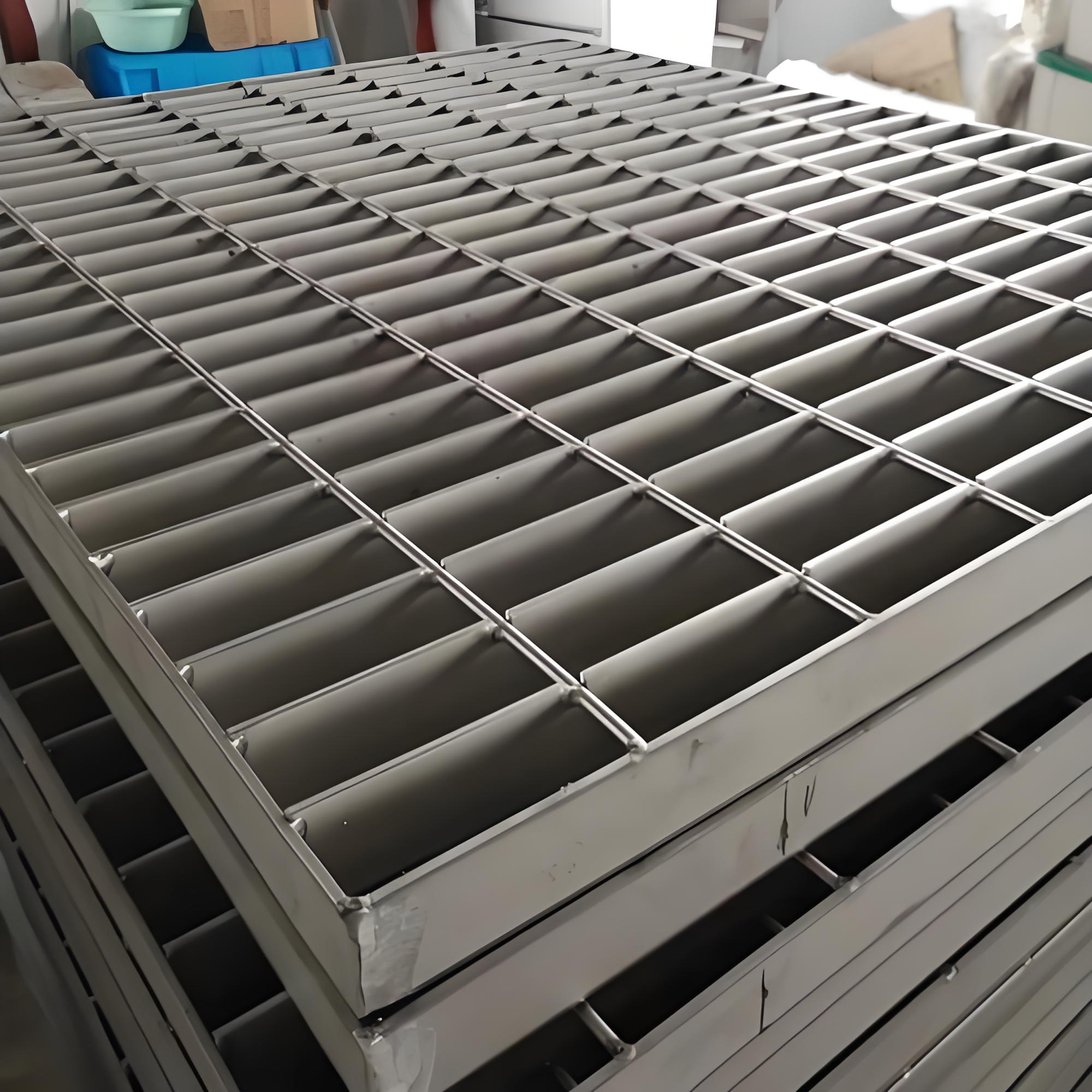
Large grating panels can be heavy and difficult to handle safely. Before finalizing panel dimensions, consider the lifting equipment available on site, access openings, stairways, maintenance routes, and whether panels must be removed by one person or a team. Dividing a large platform into practical panel sizes can improve maintenance even if it adds a small amount of fabrication cost.
Steel floor grating weight is one of the most useful figures for comparing quotations. It affects material cost, freight, lifting methods, support loading, galvanizing cost, and installation labor. The final weight depends on bearing-bar size, bar spacing, cross-bar spacing, edge banding, surface treatment, and custom fabrication.
The following table provides approximate weights for common carbon steel welded grating bodies using a typical 30 mm bearing-bar pitch and 100 mm cross-bar spacing. Actual finished weight may differ according to the cross-bar type, weld pattern, banding, serration, and galvanizing allowance.
| Bearing Bar Size | Approximate Grating Body Weight | Typical Use | Weight Notes |
|---|---|---|---|
| 25 mm × 3 mm | Approximately 22–24 kg/m² | Light-duty industrial walkways and short spans. | Actual panel weight increases with edge banding and fittings. |
| 30 mm × 3 mm | Approximately 26–28 kg/m² | General industrial floor grating. | Common economical platform specification. |
| 32 mm × 3 mm | Approximately 28–30 kg/m² | General access platforms with slightly greater stiffness. | Useful where 30 mm depth is not sufficient. |
| 40 mm × 3 mm | Approximately 34–37 kg/m² | Longer pedestrian spans and stiffer platforms. | Freight and installation weight increase noticeably. |
| 25 mm × 5 mm | Approximately 35–38 kg/m² | Applications needing thicker bars with limited depth. | Thickness has a strong effect on material cost. |
| 30 mm × 5 mm | Approximately 42–45 kg/m² | Medium to heavy industrial flooring. | Often used where load or span exceeds standard pedestrian duty. |
| 40 mm × 5 mm | Approximately 55–58 kg/m² | Heavy-duty platforms and demanding support conditions. | Confirm lifting, support, and freight requirements. |
For a fast preliminary calculation, the weight contribution of rectangular carbon steel bearing bars can be estimated as:
Bearing-bar mass in kg/m² = 7.85 × bearing-bar depth in mm × bearing-bar thickness in mm ÷ bearing-bar spacing in mm
This calculation estimates the main bearing bars only. Cross bars, edge banding, stair nosing, end plates, clips, galvanized coating, and cut-out reinforcement must be added to estimate the finished panel weight.
Load capacity should be the first technical requirement in a steel floor grating inquiry. The clear span is the unsupported distance between grating supports. As the span becomes longer, the grating needs deeper, thicker, or more closely spaced bearing bars to carry the same load safely.
The bearing bars must run from one support to the other. Installing a panel with the bearing bars in the wrong direction can reduce capacity dramatically. This is one of the most common installation errors with steel floor grating.
For standard steel, stainless steel, and aluminum bar grating, technical guidance is available in the ANSI/NAAMM MBG 531-24 Metal Bar Grating Manual. It includes technical data, specifications, load tables, and typical installation details for steel, stainless steel, and aluminum grating. Heavy-duty wheel-load applications should be reviewed separately rather than treated as normal pedestrian flooring.
A grating panel may be strong enough not to fail but still deflect too much under normal use. Excessive deflection can make a walkway feel unstable, create drainage problems, damage nearby finishes, or cause users to lose confidence in the platform. This is why a good supplier quote should state both the design load and the assumed clear span.
Plain steel grating uses smooth bearing-bar tops. Serrated steel grating uses notched bearing-bar tops to provide stronger traction. The right choice depends on the surface condition, footwear, cleaning method, and risk of water, oil, mud, frost, or chemical residue.
| Surface Type | Main Benefit | Best Application | Price Effect |
|---|---|---|---|
| Plain steel grating | Smooth, simple, and easier to clean. | Dry indoor platforms, equipment rooms, protected industrial areas. | Base price. |
| Serrated steel grating | Improved anti-slip performance. | Outdoor stairs, marine walkways, oil and gas sites, wet platforms. | Usually moderately higher. |
| Serrated stair tread with nosing | High grip at the leading edge of stairs. | Industrial stairs, emergency access, towers, and outdoor escape routes. | Higher due to nosing, end plates, and fabrication. |
Serrated grating is usually recommended when water, oil, snow, ice, mud, or process residue can make the platform slippery. For food, pharmaceutical, and washdown environments, however, the surface must also be easy to clean. The choice should balance traction with hygiene and maintenance needs.
The material and surface finish have a major influence on steel floor grating price, corrosion resistance, maintenance demand, and service life.
Plain carbon steel grating is the most economical option for dry indoor use, temporary work platforms, or projects where the grating will receive a separate paint system. It has high strength and is easy to fabricate, but unprotected carbon steel will corrode when exposed to moisture or aggressive industrial conditions.
Hot-dip galvanized grating is fabricated from carbon steel and then dipped in molten zinc after welding and fabrication. The zinc coating protects the steel and is widely used for outdoor industrial platforms, factory stairs, drainage covers, utility areas, and general accessways.
For many projects, hot-dip galvanized steel provides the best balance between price, strength, and corrosion resistance. It is generally more expensive than untreated carbon steel but much less expensive than stainless steel for comparable bar sizes.
Stainless steel grating is used where corrosion resistance, cleanliness, appearance, or chemical compatibility are especially important. Grade 304 is common for indoor washdown, food-processing, and moderately corrosive environments. Grade 316 or 316L is often selected for higher chloride exposure, coastal locations, marine projects, and selected chemical environments.
Stainless steel grating costs more than galvanized steel, but the higher first cost can be justified in locations where repainting, replacement, shutdown, or corrosion-related maintenance would be expensive.
| Material Option | Relative Initial Price | Corrosion Resistance | Typical Use |
|---|---|---|---|
| Untreated carbon steel | Lowest | Low without additional coating. | Dry indoor or temporary applications. |
| Painted carbon steel | Low to medium | Moderate, depending on coating system and maintenance. | Indoor industrial floors and controlled environments. |
| Hot-dip galvanized steel | Medium | Good for many outdoor and industrial environments. | Walkways, platforms, stairs, trenches, utility facilities. |
| 304 stainless steel | High | High in many wet and washdown environments. | Food plants, pharmaceutical facilities, drainage areas. |
| 316 or 316L stainless steel | Premium | Higher resistance in many chloride and marine applications. | Coastal, marine, chemical, and demanding washdown projects. |
Surface treatment can significantly affect the final price of steel floor grating. It should be selected according to the service environment rather than only for appearance.
Hot-dip galvanizing is the most common corrosion-protection method for carbon steel floor grating. It adds zinc coating cost, handling cost, and inspection cost, but it can greatly reduce long-term maintenance in suitable environments.
ISO 1461:2022 specifies general properties and test methods for hot-dip galvanized coatings on fabricated iron and steel articles. Buyers can request galvanizing to this standard or another project-specified equivalent, together with inspection documentation when required.
Painted or powder-coated steel grating can provide color coding, architectural appearance, and additional corrosion protection. These finishes are useful in controlled environments, but they can be damaged at cut edges, welded areas, bolt holes, and during installation. In severe outdoor or chemical environments, a more durable material or a properly specified duplex system may be more suitable.
Custom floor grating is common in industrial projects because platforms rarely consist of simple rectangles. A supplier can manufacture panels to match structural drawings and can add cut-outs, edge banding, stair details, lifting points, clips, frames, toe plates, and identification marks.
Custom work can increase the price per square meter because fabrication labor is not proportional to panel area. A small panel with a complex cut-out can cost more per square meter than a large standard panel. To control cost, provide accurate approved drawings before production and use standard mesh patterns where practical.
Steel floor grating prices are usually calculated from material weight, fabrication, surface treatment, packing, and delivery terms. The following factors have the greatest effect on the final price.
| Price Factor | How It Affects Cost | What Buyers Should Check |
|---|---|---|
| Steel grade | Stainless steel costs more than carbon steel; 316L generally costs more than 304. | Confirm the grade is appropriate for the service environment. |
| Finished weight per m² | More steel means higher cost, freight, and galvanizing weight. | Compare kg/m², not only US$/m². |
| Bearing-bar size | Deeper and thicker bars increase capacity and price. | Check span, load, and deflection requirement. |
| Mesh spacing | Closer bar spacing uses more material and increases fabrication. | Confirm whether close mesh is actually required. |
| Serrated surface | Adds processing cost. | Use where slip risk justifies the added cost. |
| Galvanizing or coating | Adds processing and inspection cost. | Confirm coating standard and whether repairs are included. |
| Custom fabrication | Cut-outs, banding, frames, and special shapes add labor. | Provide complete drawings before production. |
| Order quantity | Large orders reduce setup and packing cost per m². | Ask about MOQ and volume discounts. |
| Packaging and shipping | Heavy steel panels can have significant export freight cost. | Compare the same Incoterm and destination. |
For initial budgeting, basic untreated carbon steel floor grating may be approximately US$12–35 per square meter, standard hot-dip galvanized steel grating approximately US$20–70 per square meter, and common stainless steel grating approximately US$45–160 per square meter. Heavy-duty, close-mesh, serrated, framed, cut-to-size, or highly customized products can cost US$80–300 per square meter or more.
These figures are planning references only. A finished price depends on exact specification, material market movement, destination, quantity, packing, and trade term. Recent factory-market guidance also notes that standard galvanized grating can be budgeted around US$20–70/m², while custom or heavy-duty products can be substantially higher. See this steel grating price reference for a current general comparison.
Comparing supplier quotes correctly can prevent costly specification errors. The lowest price is not always the best quote if it uses lighter bearing bars, wider mesh, lower coating quality, or excludes fabrication and fittings.
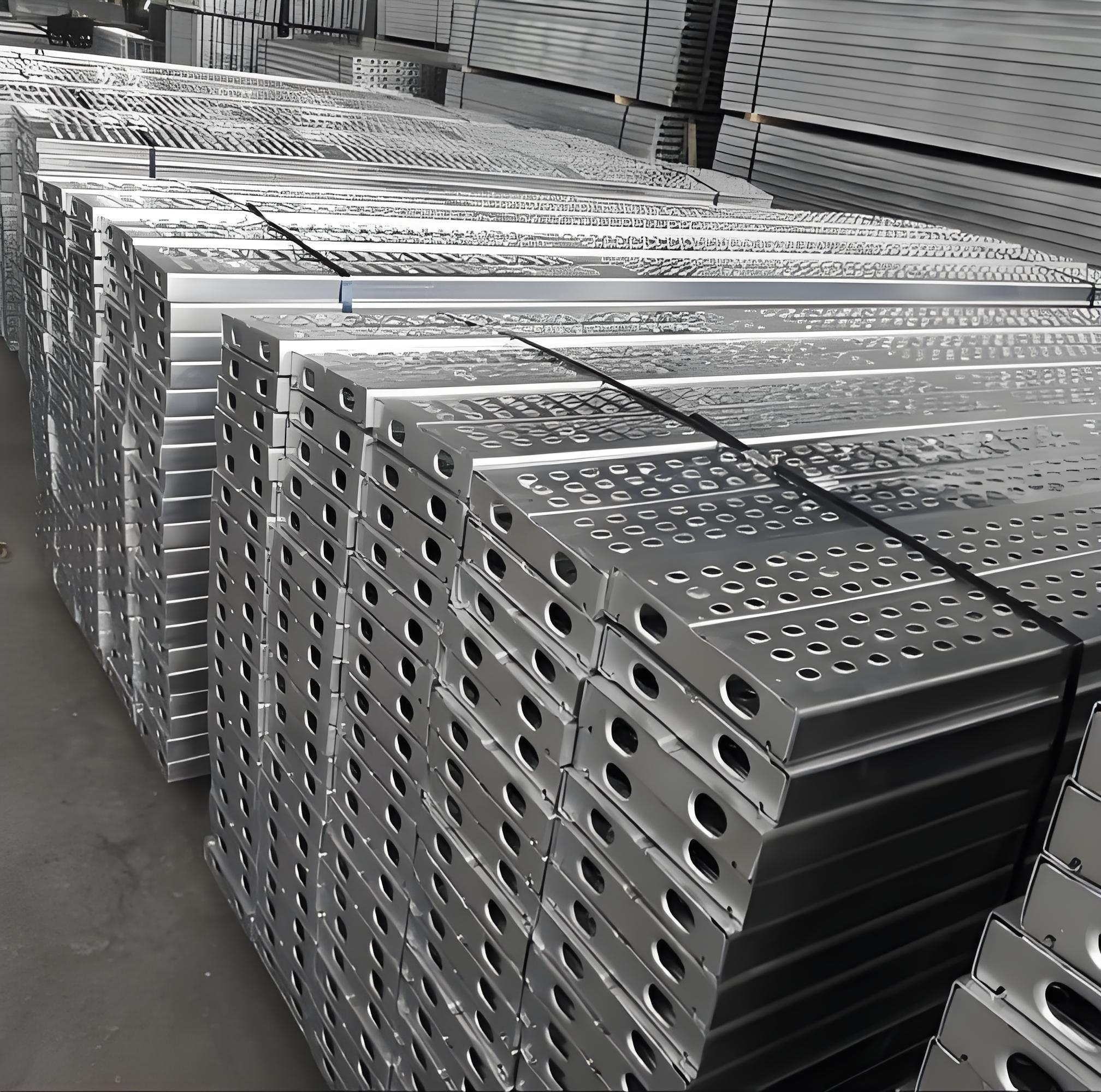
A detailed inquiry produces a more accurate quotation. For example: “Please quote hot-dip galvanized welded steel floor grating, bearing bars 30 mm × 3 mm, bearing-bar spacing 30 mm, cross-bar spacing 100 mm, serrated top surface, panel size 1000 mm × 1200 mm, bearing bars spanning 1000 mm, banded on four sides, suitable for a pedestrian platform. Please state kg/m², load-table reference, galvanizing standard, clip quantity, packing, lead time, and FOB price.”
This level of detail lets the supplier calculate a technically suitable product instead of guessing from panel area alone.
How much does steel floor grating cost per square meter?
Basic untreated carbon steel floor grating commonly costs about US$12–35 per square meter at factory level, while standard hot-dip galvanized grating may cost about US$20–70 per square meter. Stainless steel grating is usually higher, often starting around US$45 per square meter and increasing with grade, weight, mesh, and fabrication.
What is the most common steel floor grating size?
A common industrial specification is welded steel grating with 30 mm bearing-bar spacing and 100 mm cross-bar spacing. Popular panel widths include 800 mm, 1000 mm, and 1200 mm, while 30 mm × 3 mm bearing bars are widely used for standard pedestrian platforms when the span and load allow.
How do I choose the right steel grating thickness?
Choose bearing-bar depth and thickness according to the clear span, design load, concentrated load, deflection limit, and support arrangement. A 25 mm × 3 mm or 30 mm × 3 mm bar may suit short pedestrian spans, while longer spans and heavier loads often require deeper or thicker bearing bars. Always confirm the selection with the supplier’s load table or a qualified engineer for critical applications.
