

Corrosion-resistant grating prices per square meter vary widely because the material is only one part of the finished cost. Stainless steel, aluminum, FRP fiberglass, hot-dip galvanized steel, and coated steel gratings have different raw-material values, fabrication methods, weights, load capacities, and export requirements. For a realistic budget, buyers should compare the same panel size, bearing-bar specification, mesh pattern, surface finish, and trade term. A low price per square meter may indicate a lighter bar size, wider spacing, lower coating requirement, or an incomplete quotation rather than a true cost advantage.
There is no single fixed corrosion-resistant grating price per square meter. The final price depends on the selected material, finished panel weight, corrosion-protection method, load requirement, fabrication complexity, order quantity, packaging, and shipping destination.
For early project budgeting, the following ranges can be useful as broad factory-reference levels for standard industrial panels. They are not binding prices and should not be used as a substitute for a formal quotation. Prices can change with metal markets, local labor, zinc and resin costs, exchange rates, destination-country duties, and the required Incoterm.
| Grating Material | Typical Budget Range per m² | Suitable Applications | Important Price Note |
|---|---|---|---|
| Hot-dip galvanized steel grating | Approximately US$25–80/m² | Outdoor walkways, industrial platforms, stair treads, drainage covers. | Price rises quickly with bearing-bar depth, thickness, serration, and zinc coating requirements. |
| FRP fiberglass grating | Approximately US$35–120/m² | Chemical plants, wastewater facilities, cooling towers, electrical areas. | Resin type, panel thickness, grit surface, fire rating, and load capacity have major influence. |
| Aluminum grating | Approximately US$50–170/m² | Marine walkways, lightweight removable panels, roof access, public platforms. | Alloy, bar depth, swage-locking method, finish, and market aluminum price affect cost. |
| Stainless steel grating | Approximately US$55–180+/m² | Food plants, chemical areas, washdown zones, coastal and high-hygiene projects. | Grade 316 or 316L normally costs more than 304; custom fabrication can raise the price substantially. |
| PVC-coated or powder-coated steel grating | Approximately US$30–95/m² | Light industrial, architectural, indoor, and controlled outdoor environments. | Coating type, surface preparation, color, thickness, and touch-up requirements must be defined. |
These indicative ranges assume conventional industrial grating dimensions and do not automatically include freight, customs duty, local tax, installation, engineering approval, testing, special certificates, or destination-port charges. A common market reference for standard factory-made products places hot-dip galvanized steel grating around US$25–80/m², stainless steel around US$55–180/m², and aluminum grating around US$50–170/m², but actual project quotations can fall outside those ranges when the specification changes. See this industrial grating price reference for a general comparison.
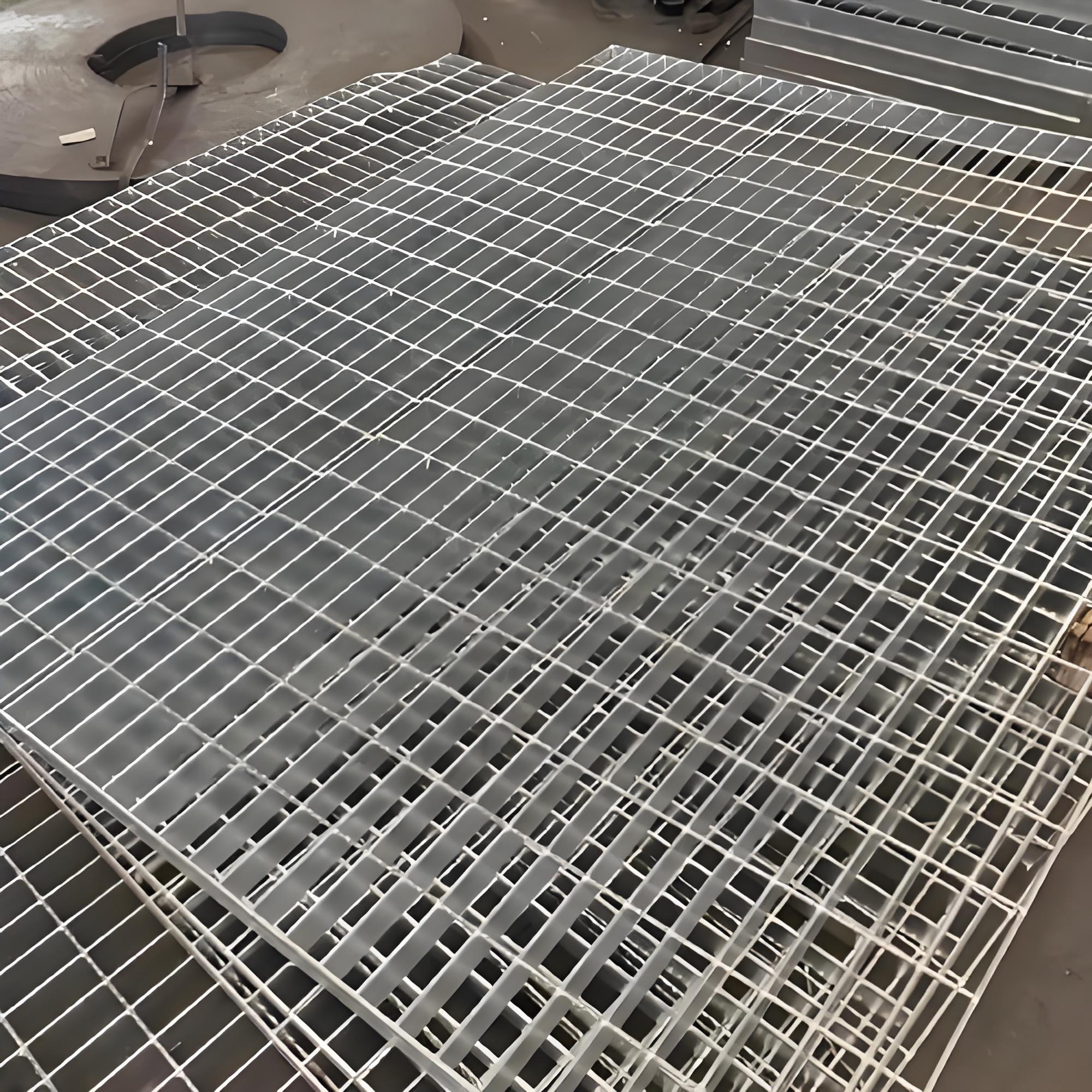
Before comparing corrosion-resistant grating prices, buyers should confirm exactly what the supplier includes. “US$ per square meter” can mean only the grating body, or it can include fabrication, edge banding, coating, clips, packing, and delivery. Two quotations may look similar but describe completely different products.
A reliable quotation should identify whether the price is EXW, FOB, CFR, CIF, DAP, or another agreed trade term. EXW pricing normally covers collection from the factory. FOB pricing generally includes delivery and export handling up to the named loading port. CIF includes ocean freight and insurance to the named destination port, while local import charges and inland delivery may still be excluded.
Stainless steel grating is usually the highest-cost mainstream metal option, but it can provide strong long-term value in corrosive, wet, hygienic, and visible installations. Its price per square meter is driven by stainless grade, finished weight, grating construction, fabrication detail, and surface finish.
For standard industrial stainless grating, a broad factory budget range is often around US$55–180/m². Lightweight 304 stainless panels with open mesh may fall toward the lower end, while 316L serrated panels with close mesh, heavy bearing bars, cut-outs, banding, and custom dimensions can cost much more.
Grade 304 stainless steel is commonly used for indoor washdown areas, food plants, pharmaceutical facilities, architectural drainage, and moderately corrosive industrial environments. Grade 316 or 316L contains molybdenum and is often selected for higher chloride exposure, marine locations, coastal installations, and selected chemical applications.
Because of the alloy content, 316 and 316L grating normally cost more than 304. The premium is not only related to the raw metal price. It can also affect material sourcing, welding requirements, fabrication lead time, and the cost of matching stainless fasteners or fittings.
| Stainless Grating Type | Typical Relative Cost | Common Use | Price Driver |
|---|---|---|---|
| 304 plain welded grating | Medium | Indoor food, washdown, drainage, general industrial platforms. | Panel weight, mesh, finish, and order quantity. |
| 304 serrated grating | Medium to high | Wet stairs, outdoor accessways, industrial walkways. | Serrated bearing bars and additional processing. |
| 316 or 316L plain grating | High | Coastal, marine, chloride-exposed, and selected chemical environments. | Higher alloy cost and material availability. |
| 316L custom press-locked grating | High to premium | Architectural, pharmaceutical, marine, and special drainage projects. | Close mesh, custom spacing, cut-outs, finishing, and fabrication labor. |
Stainless steel should not be selected by price alone. A lower-cost 304 panel may be unsuitable for a high-chloride coastal area, while a 316L panel could be excessive for a dry indoor platform. The best choice depends on the actual exposure, cleaning chemicals, temperature, trapped moisture, and expected service life.
Aluminum grating is valued for low weight, atmospheric corrosion resistance, easy handling, and clean appearance. It is commonly used on roof walkways, offshore access systems, water-treatment structures, pedestrian bridges, marine facilities, and removable maintenance panels.
A typical aluminum grating budget range is approximately US$50–170/m² for standard industrial products. The lower end often applies to lighter open panels with standard dimensions. The upper end may include deeper bearing bars, close mesh, serrated surfaces, special alloy requirements, custom fabrication, anodizing, or difficult export packing.
Aluminum has lower density than steel, so an aluminum grating panel can be much lighter to lift, transport, and install. However, aluminum raw material generally costs more per kilogram than carbon steel. In addition, aluminum bar grating is often produced with swage-locked or press-locked construction, which may require specialized tooling and fabrication processes.
For a project with many removable panels or limited support capacity, aluminum can reduce labor and structural demand. In those cases, the higher price per square meter may be offset by easier installation, lower handling cost, and reduced maintenance.
Global metal prices can move quickly. The World Bank reported that its base-metals price index was projected to reach record levels in 2026, with aluminum among the major contributors. This is one reason aluminum grating quotations should carry a clear validity period rather than being treated as fixed for long project schedules. See the World Bank’s 2026 metals market update for the broader market context.
FRP grating, also called fiberglass reinforced plastic grating, is often selected for chemical plants, wastewater facilities, electroplating areas, cooling towers, offshore platforms, and electrical installations. It does not rust, is lightweight, and can provide strong anti-slip performance with a gritted surface.
A practical budget range for standard FRP grating is often around US$35–120/m². Lightweight molded polyester grating with a standard mesh can be relatively economical, while vinyl ester, phenolic, high-load pultruded, fire-rated, close-mesh, or custom-cut FRP panels can cost substantially more.
Molded FRP grating is produced as a grid panel with glass reinforcement and resin distributed through the structure. It is widely used where corrosion resistance and multidirectional strength are important. Its price is normally influenced by panel thickness, mesh size, resin type, grit surface, and requested color.
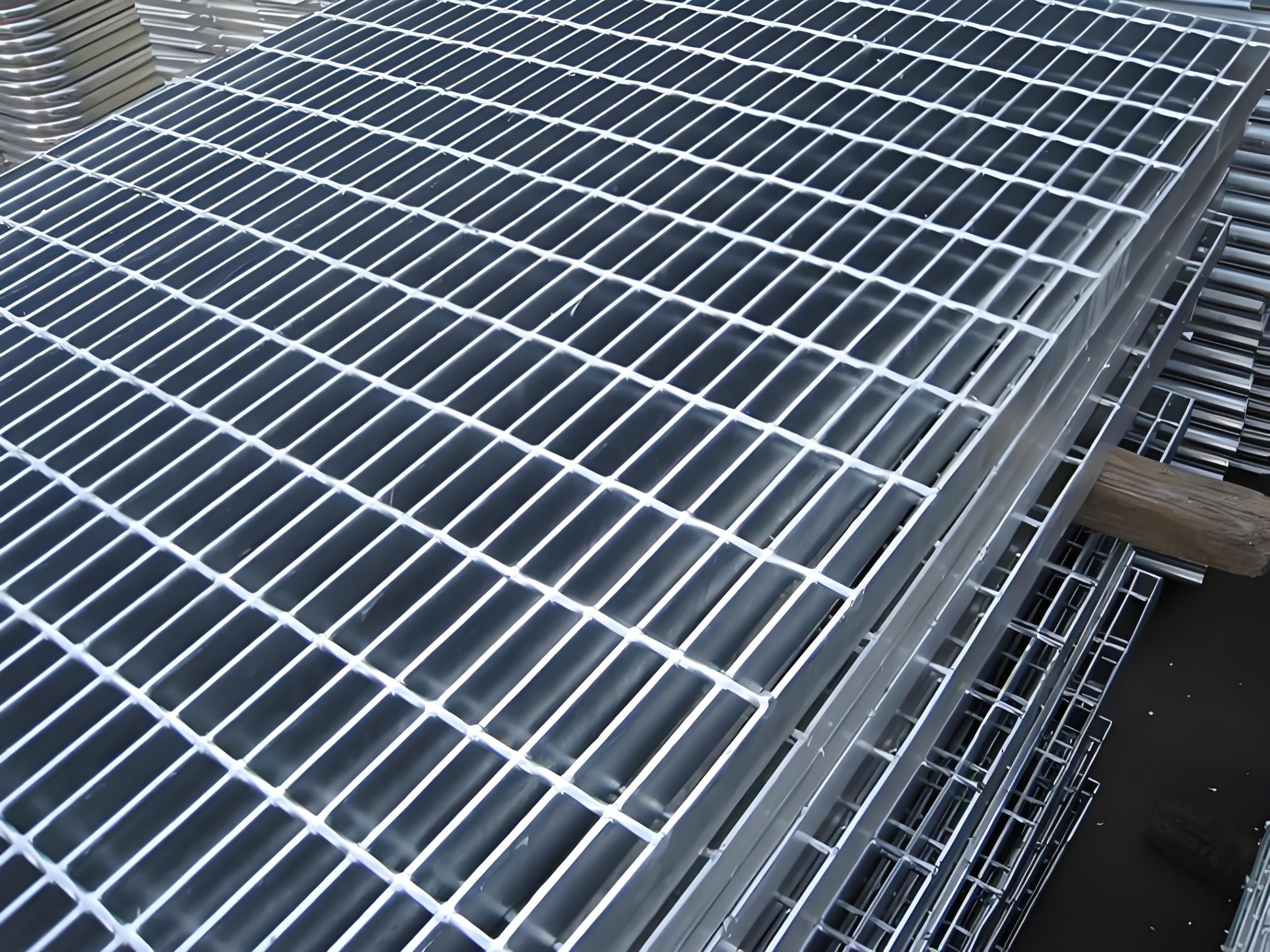
Pultruded FRP grating uses load-bearing profiles produced through a pultrusion process. It can provide higher strength in the bearing-bar direction and is often selected for longer spans or more demanding loads. Because of the structural profile and production method, pultruded FRP may cost more than standard molded grating, especially when a high-performance resin or fire-rated system is required.
| FRP Specification | Relative Price Level | Typical Benefit | Common Applications |
|---|---|---|---|
| Standard polyester molded grating | Lower to medium | Economical corrosion resistance for general wet industrial service. | Walkways, wastewater platforms, utility areas. |
| Vinyl ester molded grating | Medium to high | Improved resistance for many aggressive chemical environments. | Chemical plants, pickling areas, electroplating facilities. |
| Fine-mesh FRP grating | Medium to high | Smaller openings for foot safety and dropped-object control. | Platforms, public areas, maintenance accessways. |
| Pultruded FRP grating | Medium to high | Higher bearing-direction capacity for selected spans. | Long-span walkways, structural platforms, access bridges. |
| Phenolic FRP grating | Premium | Used where fire and smoke performance is a key project requirement. | Offshore, transport, tunnel, and specialized industrial projects. |
For FRP, buyers should request the resin type rather than ordering only “fiberglass grating.” Chemical resistance, UV stability, fire performance, operating temperature, surface grit, panel thickness, and load capacity all depend on the specific product system.
Hot-dip galvanized steel grating is one of the most economical corrosion-resistant products for industrial use. It combines the strength of carbon steel with a zinc coating that protects the steel surface in many outdoor, humid, and general industrial environments.
Standard hot-dip galvanized steel grating commonly falls around US$25–80/m² for factory pricing, depending mainly on finished weight and galvanizing requirements. Thin, light-duty panels for short spans may be lower in cost, while heavy-duty panels with deep serrated bearing bars, close mesh, custom cuts, and substantial banding can exceed the normal range.
Steel grating is usually priced from its finished weight per square meter, then adjusted for fabrication and coating. A panel using 40 mm × 5 mm bearing bars at close spacing contains far more steel than a panel using 25 mm × 3 mm bars at wider spacing. Therefore, two panels with the same outside dimensions can have very different prices and load capacities.
For a rough comparison, a standard light industrial steel grating may weigh around 20–30 kg/m², while a heavier platform panel can exceed 40–50 kg/m² before allowing for banding, cut-out reinforcement, frames, and fittings. Buyers should compare the quoted kg/m² as well as the price per m².
Hot-dip galvanizing adds a direct processing cost and can also increase the finished weight through the zinc coating. The coating is normally applied after fabrication, protecting bearing bars, cross bars, welded joints, and cut edges created during production.
The applicable project requirement may refer to standards such as ISO 1461:2022, which covers general properties and test methods for hot-dip galvanized coatings on fabricated iron and steel articles. A quotation should state whether galvanizing is included, what standard applies, whether inspection documents are needed, and how field modifications will be treated.
Galvanized steel is economical for many outdoor applications, but it may not be the lowest long-term cost in strong acid, continuous chemical splash, severe chloride exposure, or difficult-to-access maintenance areas. If recoating, replacement, shutdown, or worker access is expensive, FRP, aluminum, or stainless steel can provide better value over the service life of the facility.
Material grade and bearing-bar size can change the price per square meter more than the panel dimensions. A good quotation should identify the material grade, bearing-bar depth, bearing-bar thickness, bar spacing, cross-bar spacing, and finished panel weight.
| Specification Change | Effect on Price | Reason |
|---|---|---|
| Increase bearing-bar depth | Usually increases price | More material and greater load/span capability. |
| Increase bearing-bar thickness | Usually increases price significantly | Higher steel, aluminum, stainless, or FRP material consumption. |
| Reduce bearing-bar spacing | Increases price | More bearing bars are required per square meter. |
| Reduce cross-bar spacing | Increases price | More cross bars and a tighter mesh pattern are required. |
| Upgrade 304 to 316L stainless steel | Increases price | Higher alloy content and more demanding material procurement. |
| Upgrade polyester FRP to vinyl ester or phenolic FRP | Increases price | Higher-performance resin systems for demanding chemical or fire conditions. |
| Change plain bars to serrated bars | Increases price moderately | Additional processing improves slip resistance. |
It is risky to reduce bar size simply to achieve a lower price per square meter. If the panel later deflects excessively or fails to meet the required load, the cost of replacement is much greater than the original saving. Structural selection should be based on the clear span, load type, support arrangement, and acceptable deflection.
Panel dimensions affect price, but mesh pattern often has a larger influence. A 1000 mm × 1000 mm panel with a 30 mm bearing-bar pitch contains fewer bearing bars than a panel with a 25 mm pitch. The tighter panel may offer better foot support or dropped-object control, but it usually costs more because it contains more material.
Typical industrial metric patterns include 25 mm × 100 mm, 30 mm × 100 mm, 30 mm × 50 mm, 32 mm × 100 mm, 40 mm × 100 mm, and 40 mm × 50 mm. The first dimension normally refers to bearing-bar spacing and the second to cross-bar spacing, but the exact notation should always be confirmed with the supplier.
Smaller openings can improve safety for footwear, tools, and small objects. Larger openings generally improve drainage, ventilation, and light transmission. The correct choice depends on how the platform will be used.
Higher open area often means less material per square meter, but this is not always the cheapest solution. A very open panel may require deeper bearing bars to reach the required load and deflection performance. Conversely, a tighter mesh may use more cross bars but permit a shallower structural arrangement in some applications.
When comparing quotes, ask for the open-area percentage, bearing-bar spacing, cross-bar spacing, finished weight per square meter, and load-table reference. These figures make it easier to compare products fairly.
Load capacity is one of the largest hidden cost factors in corrosion-resistant grating. The bearing bars carry the main load between supports. Deeper and thicker bars increase capacity and stiffness but also increase the price per square meter.
A pedestrian walkway carrying workers and hand tools requires a different product from a forklift-access trench cover, a heavy maintenance platform, or a bridge deck. Uniform live load, concentrated load, impact, wheel load, vibration, support width, and deflection limits all need consideration.
As the clear span increases, the grating must usually become deeper, thicker, or more closely supported. A panel that works over a 600 mm span may be unsuitable over a 1200 mm span even if the panel dimensions are the same. The bearing bars must run in the span direction; installing the panel in the wrong orientation can dramatically reduce its capacity.
For steel, stainless steel, and aluminum bar grating, technical manuals and load tables are normally used to select the appropriate bearing-bar size. The current ANSI/NAAMM MBG 532-24 heavy-duty metal bar grating manual includes technical information on carbon steel and stainless steel heavy-duty gratings, fabrication, dimensions, load tables, and installation guidance.
One supplier may quote 30 mm × 3 mm galvanized grating for a short pedestrian span, while another quotes 40 mm × 5 mm serrated grating for a heavier industrial load. The second price may be much higher, but it may also be the only panel that meets the project requirement. The finished kg/m², clear span, loading condition, and deflection limit must be compared before judging the price.
Surface treatment protects the grating or improves safety, but it also adds cost. The required finish should match the actual environment rather than being selected only for appearance.
Hot-dip galvanizing is one of the most common finishes for carbon steel grating. It offers broad corrosion protection for outdoor and industrial applications. The cost is affected by panel weight, fabrication detail, coating requirements, transport to the galvanizing plant, inspection, and any special post-treatment.
Powder coating and PVC coating can provide color, additional barrier protection, and a more decorative finish. They are often used for architectural or controlled industrial applications. However, they should not be assumed to replace stainless steel, FRP, or specialized chemical protection in highly corrosive service.
Anodizing can improve aluminum surface appearance and corrosion performance in suitable applications. It adds processing cost and may be selected for visible architectural walkways, access panels, facades, and marine-adjacent installations. The required anodized finish, color, and coating thickness should be specified in the inquiry.
Serrated metal bearing bars usually cost more than plain bars because they require additional forming or cutting. They are widely used on wet, oily, muddy, icy, and outdoor stair or platform surfaces. FRP grating may be supplied with fine, medium, or coarse grit; more aggressive grit can improve traction but may affect cleaning and price.
| Finish or Surface Option | Relative Cost Impact | Best Use |
|---|---|---|
| Plain unfinished carbon steel | Lowest | Dry indoor or temporary applications where corrosion protection is not required. |
| Hot-dip galvanized steel | Moderate increase | Outdoor industrial platforms, stairs, walkways, and drainage covers. |
| Powder-coated steel | Moderate increase | Architectural and controlled atmospheric environments. |
| Serrated metal grating | Moderate increase | Wet, oily, outdoor, and high-slip-risk access areas. |
| Gritted FRP grating | Usually included or moderate increase | Chemical, wastewater, cooling-tower, and marine walkways. |
| Anodized aluminum | Moderate to high increase | Architectural and corrosion-sensitive aluminum projects. |
Custom fabrication is often necessary because industrial structures include columns, pipe penetrations, cable trays, valves, ladders, drains, handrail posts, and irregular platform edges. These details can add significant labor even when the total square meter quantity is small.
For a small custom order, fabrication cost per square meter can be much higher than for full standard panels. In some cases, ordering a slightly larger standard panel and cutting it on site may be economical, but that decision must consider coating repair, edge protection, structural integrity, site safety, and the project specification.
Quantity has a strong influence on corrosion-resistant grating prices. Standard panels are more efficient to produce in volume because material purchasing, machine setup, welding, cutting, galvanizing, packing, and inspection can be spread across more square meters.
Small orders may require the same production setup, drawing review, packaging preparation, and export paperwork as larger orders. A supplier may also need to buy a non-standard material grade in a quantity greater than the finished order requires. This is why a small batch of custom stainless steel or FRP grating can have a much higher unit cost than a container-scale purchase.
MOQ does not always mean a strict minimum square meter quantity. It can also refer to minimum raw-material purchase, minimum galvanizing batch, minimum color batch for FRP or powder coating, or minimum value required for export handling. Buyers should ask whether the supplier can combine different panel sizes under one material and finish specification.
For export projects, the product price is only part of the landed cost. Corrosion-resistant grating can be bulky, heavy, and irregularly shaped. Freight cost may become especially important for galvanized steel and stainless steel because of their weight.
Aluminum and FRP can reduce shipment weight compared with galvanized steel, which may lower freight cost and make manual handling easier. However, FRP panels can occupy significant volume, while aluminum and stainless steel require surface protection to avoid damage or staining during transport. The best export package depends on the material, container type, destination climate, unloading method, and storage conditions.
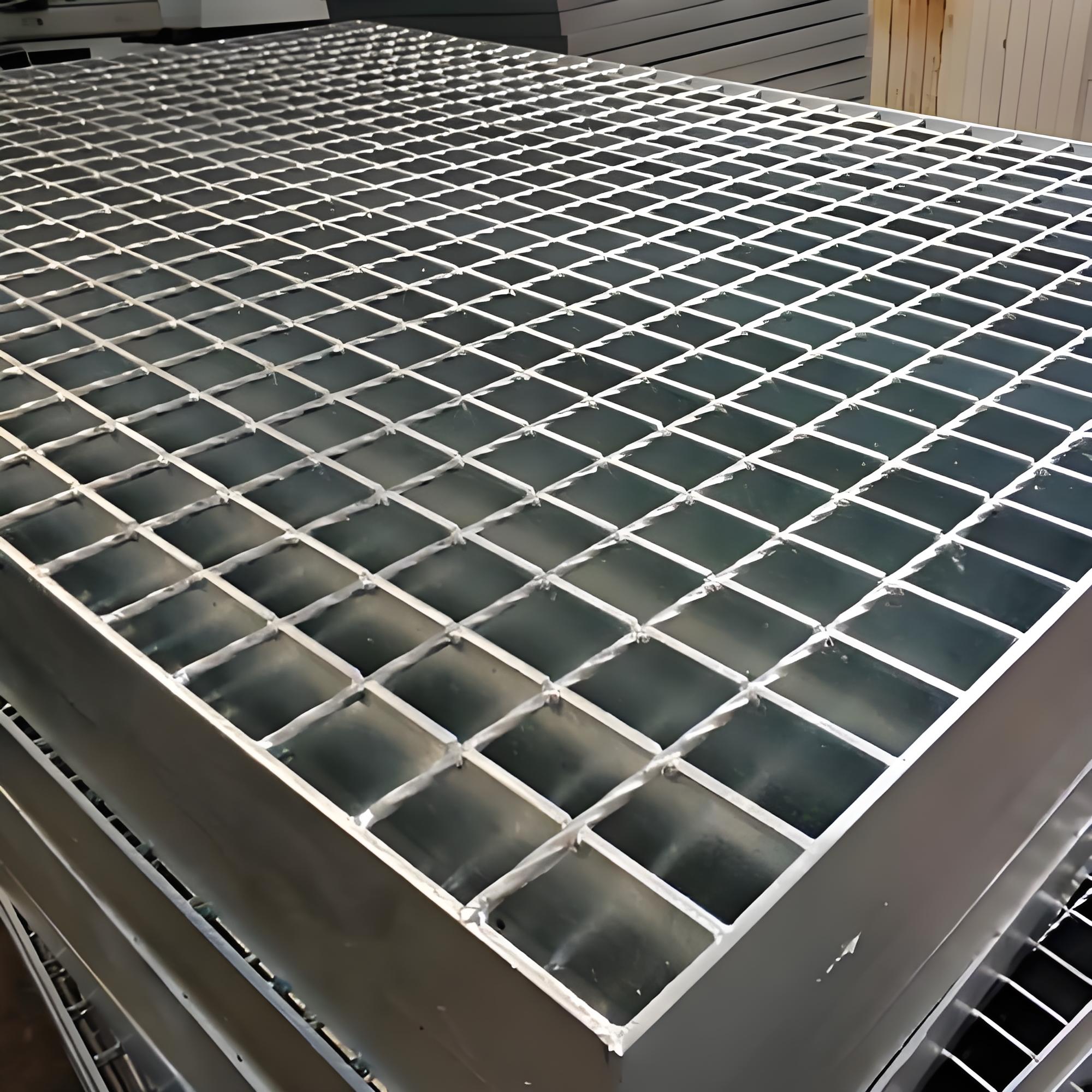
For a fair comparison, ask suppliers to quote the same trade term and to state the estimated total shipment weight, package dimensions, number of bundles, container loading plan, and freight validity period. A low FOB price can still result in a high landed cost if the goods are packed inefficiently or require special handling.
The best way to compare grating quotations is to create a line-by-line specification sheet. Do not compare only the total value or the price per square meter. The quotation with the lowest unit price may have less material, lower corrosion resistance, lower load capacity, missing fasteners, or a different delivery term.
| Quote Comparison Item | What to Verify | Why It Prevents Costly Errors |
|---|---|---|
| Material | 304, 316L, aluminum alloy, FRP resin type, galvanized carbon steel, or coated steel. | Material choice controls corrosion resistance and long-term service life. |
| Finished weight | kg/m² and total shipment weight. | Weight is a direct indicator of material consumption and affects freight. |
| Bearing bars | Depth, thickness, spacing, and span direction. | These determine load capacity and stiffness. |
| Cross bars and mesh | Cross-bar spacing, opening dimensions, and open-area percentage. | Mesh affects safety, drainage, material usage, and price. |
| Surface finish | Plain, serrated, gritted, galvanized, anodized, coated, or passivated. | Surface treatment affects corrosion and slip performance. |
| Fabrication | Banding, cut-outs, stair parts, clips, frames, lifting handles, and marking. | Custom work can materially change the total price. |
| Load requirement | Clear span, uniform load, concentrated load, and deflection limit. | Ensures the quoted grating is structurally suitable. |
| Quality documents | Material certificates, galvanizing report, FRP resin data, inspection report, and origin documents. | Important for industrial, export, marine, and regulated projects. |
| Trade term | EXW, FOB, CIF, DAP, or other agreed Incoterm. | Prevents hidden differences in freight and export cost. |
A clear inquiry can read: “Please quote 30 mm × 3 mm hot-dip galvanized serrated steel grating, 30 mm bearing-bar spacing, 100 mm cross-bar spacing, panel size 1000 mm × 6000 mm, bearing bars spanning 1000 mm, with banded edges, suitable for a 3 kN/m² pedestrian platform load. Please state kg/m², galvanizing standard, clip quantity, packing method, MOQ, lead time, FOB port price, and CIF destination price.”
For FRP, the request should include resin type and panel thickness. For stainless steel, include the required grade. For aluminum, include alloy, finish, load requirement, and whether the panel will be exposed to marine conditions or dissimilar-metal supports.
How much does galvanized steel grating cost per square meter?
Standard hot-dip galvanized steel grating often costs about US$25–80 per square meter at factory level, depending on finished weight, bearing-bar size, mesh pattern, serrated surface, cut-outs, galvanizing, and order quantity. Heavy-duty or highly customized panels can cost more.
Is FRP grating cheaper than stainless steel grating?
In many corrosive industrial applications, standard FRP grating is less expensive than stainless steel grating and may offer better chemical resistance. However, high-load pultruded FRP, vinyl ester resin, phenolic resin, close mesh, fire-rated products, and custom fabrication can narrow the price difference.
What should I send to get an accurate grating price?
Send the material requirement, panel dimensions, bearing-bar size and direction, mesh pattern, clear span, design load, surface type, corrosion environment, cut-outs, edge banding, fastening requirement, total quantity, quality documents, destination port, and preferred trade term. The more complete the information, the more accurate the price per square meter will be.