

Trench cover prices can range from less than US$20 per square meter for basic bulk-produced steel grating panels to several hundred dollars per square meter or per piece for stainless steel, cast iron, composite, traffic-rated, framed, hinged, or specially engineered covers. The final price depends on the cover material, trench width, panel dimensions, support span, load requirement, surface design, corrosion protection, frame construction, customization, order quantity, testing, packaging, and delivery terms. Buyers comparing trench cover factory manufacturers should therefore look beyond the lowest unit price. A reliable manufacturer should be able to confirm the material grade, calculate the required load-bearing structure, provide drawings, fabricate custom panels, control dimensions and welding, supply inspection documents, and package the covers correctly for delivery and installation.
Trench covers are used to protect drainage trenches, cable trenches, utility channels, factory floor openings, roadside drains, wastewater channels, service pits, and underground access systems. Depending on the project, a trench cover may need to support pedestrians, carts, forklifts, cars, trucks, industrial equipment, or maintenance personnel.
The term “trench cover” includes several different product structures. A buyer may be looking for an open steel grating cover, a solid checker plate cover, a stainless steel drainage cover, a ductile iron grate, a composite cable trench cover, or a complete framed and hinged assembly. These products cannot be compared only by length and width because their weight, load capacity, corrosion resistance, installation method, and service life differ substantially.
Factory manufacturers commonly quote trench covers by square meter, linear meter, kilogram, ton, piece, set, or complete project. Steel grating covers are frequently priced by square meter or weight. Cast iron covers are often quoted by kilogram, ton, or piece. Composite covers are commonly quoted per piece. Custom framed assemblies may be quoted per set because the frame, cover, hinge, lock, and lifting mechanism are produced as one system.
| Trench Cover Type | Common Quotation Unit | Main Pricing Basis |
| Steel bar grating cover | Square meter, kilogram, or piece | Steel weight, bearing bar size, spacing, welding, and galvanizing |
| Steel plate cover | Square meter, kilogram, or piece | Plate thickness, reinforcement, cutting, and surface treatment |
| Stainless steel cover | Square meter, linear meter, or piece | Stainless grade, weight, fabrication, and surface finish |
| Cast iron cover | Kilogram, ton, set, or piece | Casting weight, load class, frame, pattern, and production quantity |
| Composite cover | Piece or set | Resin system, reinforcement, mold size, load rating, and quantity |
| Complete hinged assembly | Set | Cover, frame, hinges, locking system, fabrication, and testing |
For accurate comparison, buyers should ask each factory to quote the same technical specification and clearly state what is included. One quotation may include only an unfinished cover panel, while another may include the supporting frame, hot-dip galvanizing, installation clips, hinges, locking devices, inspection reports, export packaging, and freight.
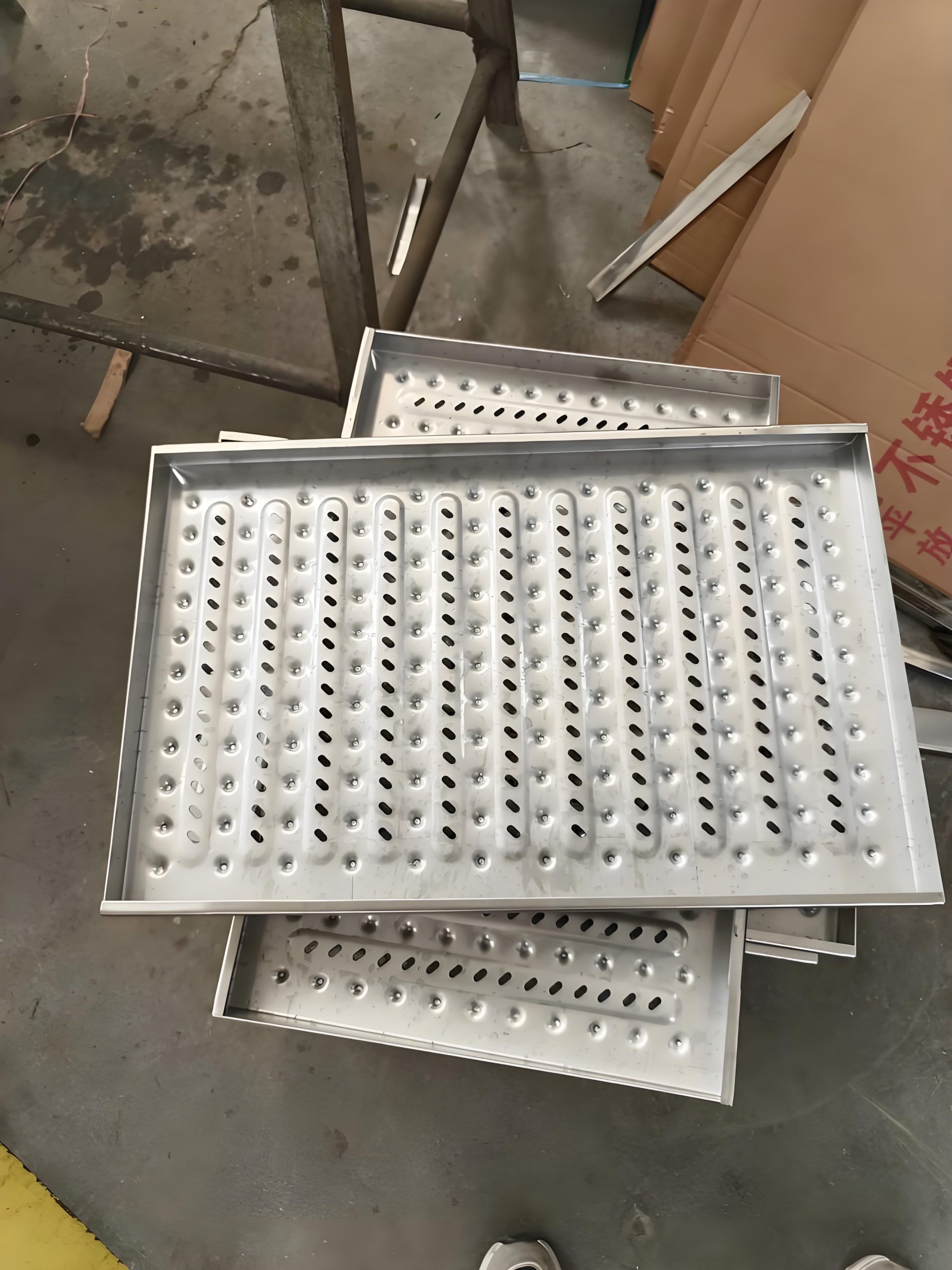
For preliminary budgeting, common trench cover products can be divided into the following factory-reference price ranges. These figures are not fixed offers. Raw material prices, dimensions, load requirements, minimum order quantity, production country, and delivery terms can move the final quotation outside these ranges.
| Trench Cover Product | Typical Factory Reference Price | General Description |
| Basic untreated steel grating panel | US$10–35 per m² | Standard spacing, light fabrication, no galvanizing or frame |
| Hot-dip galvanized steel grating cover | US$20–65 per m² | Standard pedestrian or industrial drainage cover |
| Fabricated galvanized trench cover | US$35–100 per m² | Cut-to-size panels with edge banding and normal industrial loading |
| Heavy-duty galvanized grating cover | US$70–180 per m² | Deep bearing bars, thicker bars, close spacing, or reinforced frame |
| Carbon steel solid plate cover | US$45–150 per m² | Plain or checker plate, depending on plate thickness and reinforcement |
| Heavy reinforced steel plate cover | US$120–350+ per m² | Thick plate, underside stiffeners, frame, hinges, or traffic loading |
| 304 stainless steel grating cover | US$45–140 per m² | General wet, food processing, kitchen, and industrial applications |
| 316 or 316L stainless steel cover | US$65–210 per m² | Marine, chemical, salt-containing, and corrosion-sensitive environments |
| Custom framed stainless steel cover | US$120–350+ per m² | Frame, polishing, passivation, handles, cutouts, or hygienic fabrication |
| Basic cast iron trench grate | US$20–100 per piece | Small or standard cast product, depending on weight and load rating |
| Heavy ductile iron cover with frame | US$80–500+ per set | Traffic-rated product with frame and locking features |
| Basic composite cable trench cover | US$10–50 per piece | Light or medium-duty utility and cable trench applications |
| Heavy-duty composite trench cover | US$80–350+ per piece | Higher load rating, larger size, specialized resin, or branded system |
A practical budget for a normal hot-dip galvanized steel grating trench cover is approximately US$35 to US$100 per square meter after standard cutting and edge banding. A heavier industrial cover with a matching angle frame may cost approximately US$80 to US$180 per square meter. Stainless steel, traffic-rated frames, hinges, locking systems, and special load testing can increase the price further.
A 300 mm wide galvanized steel grating cover used over a short pedestrian drainage trench may use standard bearing bars, normal mesh spacing, welded edge banding, and a simple support frame. For a repeated factory order, the cover may fall within a preliminary range of US$25 to US$65 per linear meter, depending on bar size and whether the frame is included.
A 500 mm wide galvanized cover intended for factory carts or maintenance equipment may require deeper bearing bars, thicker edge banding, shorter panel lengths, and a reinforced frame. A preliminary budget may be approximately US$80 to US$200 per linear meter.
A trench cover intended for forklifts, cars, trucks, or roadway traffic may require structural calculation, heavy bearing bars or solid plate, reinforced support frames, locking devices, and load verification. Depending on trench width and wheel loading, the price can exceed US$200 to US$700 per linear meter or several hundred dollars per individual cover.
Price ranges should always be checked against the product weight and included accessories. A low-priced cover may use thinner material, wider bar spacing, lower load capacity, or no support frame.
The price of a trench cover is primarily determined by the amount of material and the complexity of converting that material into a safe, installation-ready product. Material grade is important, but it is only one part of the calculation.
| Price Factor | How It Affects Cost |
| Material type | Carbon steel, stainless steel, ductile iron, and composite have different raw material and production costs. |
| Cover dimensions | Wider, longer, and thicker covers contain more material and may require stronger frames. |
| Support span | A wider unsupported opening requires deeper or thicker load-bearing sections. |
| Load requirement | Pedestrian, cart, forklift, and road traffic loads require different structures. |
| Mesh or opening size | Close spacing adds bearing bars, cross bars, welds, and weight. |
| Surface type | Serrated, checker plate, perforated, and decorative surfaces add processing. |
| Corrosion protection | Painting, galvanizing, pickling, passivation, and polishing add cost. |
| Frame design | Angle frames, embedded frames, reinforced frames, and anchors use additional material. |
| Panel quantity | Many small panels require more cutting, banding, handling, and identification. |
| Custom fabrication | Cutouts, curves, hinges, handles, locks, and special shapes increase labor. |
| Inspection and testing | Material certificates, dimensional reports, load tests, and third-party inspection add cost. |
| Packaging and delivery | Heavy, oversized, painted, or polished products require different packing and transport. |
For steel and stainless steel covers, product weight is often the largest component of the price. Increasing plate thickness, bearing bar height, bar thickness, or frame size increases kilograms per square meter. Factories normally calculate material consumption before adding cutting, welding, treatment, overhead, and margin.
A rectangular grating panel cut from a standard sheet is relatively efficient to produce. A hinged cover with a recessed handle, locking system, irregular cutouts, reinforced underside, and custom frame requires more drawings, machine setup, welding, fitting, and inspection.
One hundred identical covers are more economical to produce than one hundred covers with different dimensions. Repeated sizes reduce drawing work, machine adjustment, jig changes, fabrication errors, and inspection time.
The most suitable trench cover material depends on loading, corrosion, installation, weight, maintenance, and budget. Each material has different manufacturing methods and cost structures.
| Material | Initial Price Level | Main Advantages | Main Limitations |
| Carbon steel | Low to moderate | High strength, easy fabrication, broad size range, economical custom production | Requires painting or galvanizing for corrosion protection |
| Stainless steel | Moderate to high | Corrosion resistance, clean appearance, hygienic surface, no zinc coating | Higher raw material and fabrication cost |
| Cast iron or ductile iron | Moderate | Good traffic performance, durable casting, integrated patterns and frames | Heavy, mold-dependent, less economical for unique small quantities |
| Composite | Low to high depending on rating | Lightweight, corrosion-resistant, non-conductive options, reduced theft value | Temperature, fire, impact, UV, and long-term loading must be checked |
Carbon steel is commonly used for drainage trenches, cable trenches, utility channels, factory floors, platforms, and road projects. It can be manufactured as welded grating, solid plate, checker plate, perforated plate, or reinforced fabricated panels.
Its main advantage is economical structural performance. Carbon steel is easy to cut, weld, drill, bend, band, and frame. Standard grating panels can be produced in large quantities and later fabricated into project-specific covers.
The main cost addition is corrosion protection. Bare steel has the lowest initial price but may rust quickly in wet outdoor conditions. Painted steel is economical for dry or controlled environments. Hot-dip galvanizing is commonly selected for outdoor and drainage applications.
Stainless steel is normally selected for commercial kitchens, food plants, pharmaceutical areas, chemical facilities, coastal environments, wastewater systems, hotels, architectural projects, and locations requiring a clean metallic finish.
304 stainless steel is suitable for many general wet and hygienic environments. Grade 316 or 316L is more suitable for chloride, salt, coastal, marine, and some chemical conditions. Stainless steel costs more than carbon steel, and polishing, pickling, passivation, or hygienic welding can increase the finished price.
Cast iron and ductile iron covers are widely used in roads, parking areas, municipal drainage, industrial yards, airports, and heavy traffic locations. Ductile iron provides greater toughness than traditional gray cast iron and is commonly used for traffic-rated products.
Casting is efficient when a factory produces a repeated design in large quantities. A custom logo, special dimension, unique locking system, or new frame shape may require a new mold. Mold development can make a small custom order expensive.
Composite covers may be manufactured from SMC, BMC, fiberglass-reinforced polymer, resin systems, or other reinforced materials. They are commonly used over cable trenches, utility trenches, pedestrian areas, chemical facilities, and locations where low weight or electrical insulation is important.
Composite products can be easier to lift than steel or cast iron. They also have low scrap value, which can reduce theft risk. However, buyers should verify the resin system, reinforcement, fire performance, UV resistance, load rating, temperature limits, and long-term creep behavior.
The required load level can change the price more than the material finish. A light-duty pedestrian cover may use relatively small load-bearing sections, while a traffic-rated cover may require several times more material.
| Duty Level | Typical Use | General Price Level |
| Light duty | Pedestrians, gardens, indoor cable trenches, light maintenance access | Lowest |
| Standard duty | Walkways, factories, commercial drainage, frequent personnel traffic | Low to moderate |
| Medium duty | Loaded carts, pallet trucks, maintenance equipment, industrial yards | Moderate to high |
| Heavy duty | Forklifts, cars, service vehicles, high-impact industrial traffic | High |
| Traffic rated | Roads, trucks, municipal streets, loading areas, airports | Highest |
Light-duty covers are suitable for controlled pedestrian areas and narrow trenches. Common products include thin grating panels, small composite covers, and light steel plates. Their lower weight makes them easier to handle and cheaper to ship.
Medium-duty covers require more attention to bearing bar size, panel span, wheel contact, and frame support. They may be used in factories where workers, carts, or maintenance equipment cross the trench regularly.
Heavy-duty trench covers may use deep steel grating bars, thick checker plate, underside stiffeners, heavy cast iron, reinforced composite construction, or a combination of cover and structural frame. Their price is higher because load capacity depends on the complete system rather than only the visible top panel.
Traffic-rated covers must be selected for the actual vehicle and installation location. A passenger car, forklift, delivery truck, and highway truck create different wheel loads and impact conditions. The factory may need wheel-load data, tire contact area, axle arrangement, traffic direction, support span, and required safety factor.
Buyers should not rely only on descriptions such as “heavy duty” or “vehicle rated.” These terms can be interpreted differently by different manufacturers. The quotation and drawing should state the design load or applicable load classification.
Standard sizes are generally less expensive because the factory can use established material widths, molds, production fixtures, welding programs, and packaging methods. Custom dimensions increase cost when they create material waste or require individual fabrication.
| Cover Type | Relative Price | Reason |
| Standard stock panel | Lowest | Minimal secondary fabrication and efficient material utilization |
| Standard width cut to length | Low to moderate | Requires cutting, edge finishing, and panel identification |
| Custom rectangular panel | Moderate | Non-standard setup, dimensions, and possible material waste |
| Irregular or curved panel | High | Drawing, programming, complex cutting, and individual inspection |
| Custom cast product | High for small quantity | May require mold or pattern development |
| Fully engineered assembly | Highest | Cover, frame, hinges, locks, reinforcement, calculations, and testing |
Steel grating factories normally produce large panels with standard bearing bar spacing and cross bar spacing. Cutting covers from these modules reduces setup cost. The buyer can still specify panel length, width, surface type, and edge banding.
A custom width may require the factory to cut a larger panel and discard a narrow remainder. It may also produce an uneven final bearing bar gap unless the panel layout is designed carefully. Both material waste and layout work can increase the unit price.
A long trench is often divided into short removable covers for cleaning and maintenance. Short panels are easier to lift, but they create more edges. Each panel may need four-sided banding, labeling, straightening, and packaging.
Ten square meters divided into ten panels normally costs less to fabricate than the same area divided into one hundred small panels.
Cast iron manufacturing is economical when an existing mold matches the project. A unique trench width, logo, pattern, or frame may require new tooling. The factory may charge a mold fee or require a higher minimum order quantity.
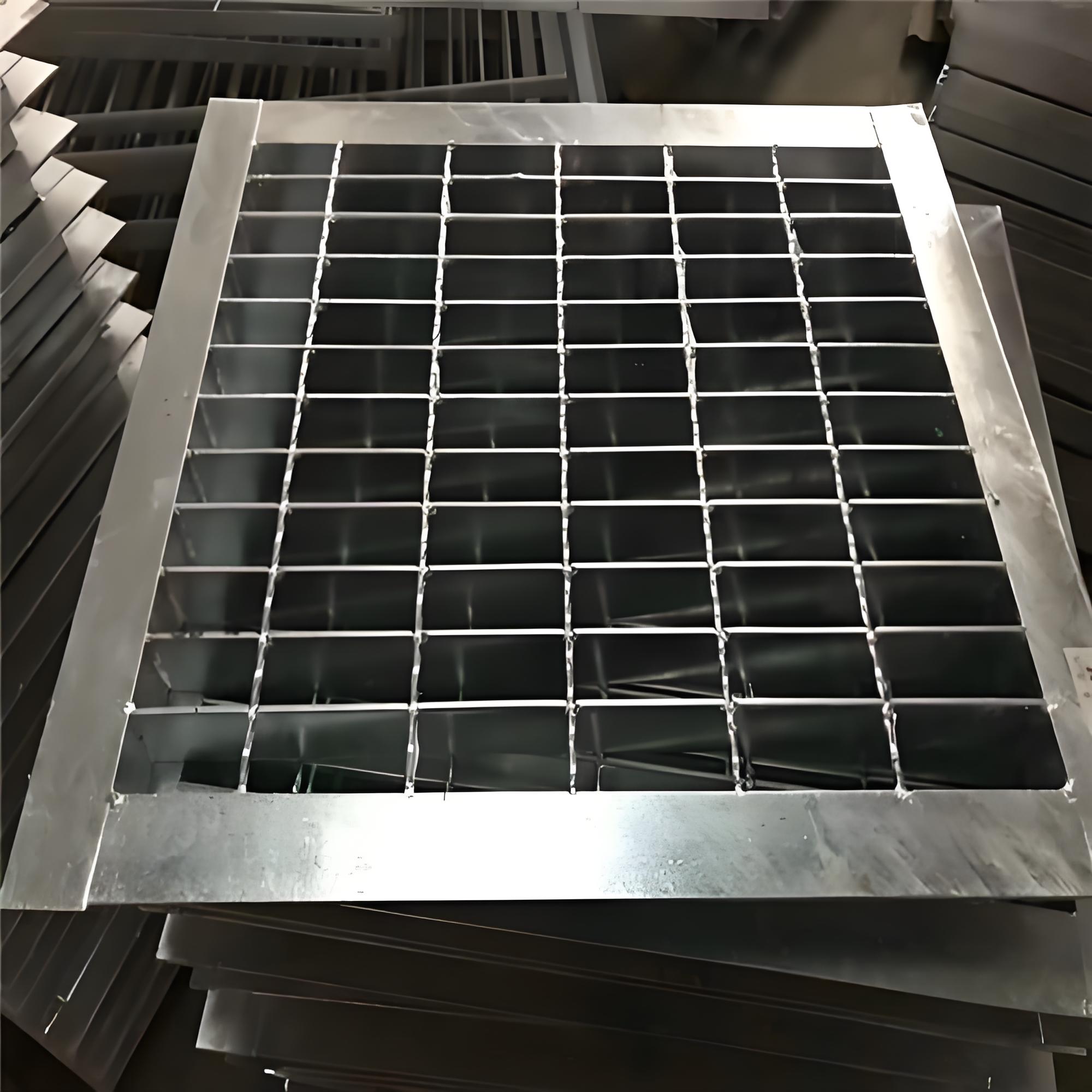
Steel trench covers can be made from open bar grating, checker plate, plain plate, perforated plate, or reinforced solid assemblies. The correct choice depends on drainage, ventilation, object containment, load, weight, and maintenance.
| Cover Structure | Relative Price | Main Advantages | Main Limitations |
| Open steel grating | Low to moderate | Drainage, ventilation, lower weight, efficient structural use | Allows small objects and liquids to pass through |
| Checker plate cover | Moderate | Solid surface, anti-slip pattern, prevents object drop-through | Collects water unless drainage openings are provided |
| Plain solid plate | Moderate | Simple fabrication and complete trench closure | Can be slippery and may require reinforcement |
| Perforated or slotted plate | Moderate to high | Controlled drainage openings and architectural appearance | Laser cutting or punching increases processing cost |
| Reinforced solid cover | High | High load capacity and full trench closure | Heavy, expensive, and more difficult to remove |
Steel grating is material-efficient because the bearing bars are oriented vertically to resist bending. It provides drainage and ventilation while using less material than a solid plate of comparable area. For many industrial trenches, grating is the most economical solution.
Checker plate provides a solid walking surface with a raised pattern. The required plate thickness depends on the support span and load. Thin checker plate may need underside stiffeners to prevent excessive deflection.
A reinforced plate cover uses welded channels, angles, ribs, or flat bars below the plate. The reinforcement can carry heavy loads without requiring the entire top plate to be extremely thick. However, the assembly involves more cutting, fitting, and welding.
Open grating is normally preferred where water must enter the trench along its length. Solid covers are more suitable for cable trenches, utility channels, odor control, or areas where tools and debris must not fall into the opening.
Surface treatment protects carbon steel and affects the appearance and cleanliness of stainless steel. The finish should be selected for the environment rather than only for the lowest initial price.
| Surface Treatment | Relative Cost | Common Application |
| Bare carbon steel | Lowest | Temporary use, dry indoor areas, or products receiving site treatment |
| Primer or painted finish | Low | Indoor factories, cable trenches, and controlled environments |
| Powder-coated finish | Moderate | Architectural areas and controlled outdoor applications |
| Hot-dip galvanized | Moderate | Outdoor drainage, factories, municipal projects, and humid environments |
| Duplex galvanized and painted | High | Severe outdoor, coastal, or long-service-life projects |
| Stainless steel mill finish | Material-dependent | General stainless industrial applications |
| Pickled and passivated stainless steel | Moderate addition | Food, chemical, marine, and welded stainless products |
| Brushed or polished stainless steel | High addition | Architectural, hygienic, hotel, and visible public applications |
Paint is one of the lowest-cost corrosion protection methods. It is suitable for indoor cable trenches, dry factories, utility areas, and projects where the coating can be inspected and repaired. Edges, welds, and damaged areas require proper preparation.
Hot-dip galvanizing coats the fabricated carbon steel cover with zinc. It is commonly selected for exterior trench covers because the coating reaches many edges and welded areas. The galvanizing cost depends partly on product weight, dimensions, zinc market conditions, and required coating specification.
Designs should include drainage and vent holes where hollow sections or overlapping components could trap chemicals during galvanizing.
Welding stainless steel creates heat tint and surface oxides. Pickling removes these oxides, while passivation removes free iron contamination and supports a clean passive surface. These treatments are often specified for food processing, pharmaceutical, marine, and chemical applications.
Polishing increases labor cost, especially on grating with many intersections and internal corners. The buyer should define whether polishing is required only on visible top surfaces or on all accessible surfaces.
The support span is the unsupported distance that the trench cover must bridge. Increasing the span generally requires a deeper bearing bar, thicker plate, larger reinforcement, or stronger frame.
A cover spanning 300 mm does not require the same structure as a cover spanning 1,000 mm. Even when the trench length and total area remain the same, the wider opening can significantly increase steel weight and fabrication cost.
For grating covers, the bearing bars must span across the trench from one support ledge to the other. Cross bars maintain spacing but should not be treated as the principal spanning members.
A uniform load is distributed over the cover area. It may represent groups of pedestrians, stored materials, or a general floor design load.
A concentrated load acts over a smaller contact area. A trolley wheel, forklift tire, machine foot, or vehicle wheel can create higher local stress than a distributed pedestrian load.
Factories need the wheel load, tire or wheel contact size, wheel spacing, and direction of travel to select a safe cover. Hard narrow wheels are often more demanding than wider pneumatic tires of similar total load.
A cover can remain below its material failure limit and still deflect too much for comfortable or safe use. Excessive deflection can cause movement, noise, frame damage, trip hazards, and fatigue at welded connections.
| Engineering Input | Effect on Price |
| Longer support span | Requires deeper, thicker, or reinforced cover structure |
| Higher uniform load | Increases required section size and material weight |
| High wheel load | May require close bar spacing, thicker plate, or local reinforcement |
| Strict deflection limit | May require a stiffer cover even when material strength is sufficient |
| Impact or dynamic loading | Requires stronger structure, fixing, and frame design |
| Reduced support width | May require heavier edge construction or a redesigned frame |
Changing the support design can sometimes reduce the cover price. Adding an intermediate support may allow lighter panels, although it adds cost to the trench structure. The total installed system should be evaluated rather than optimizing the cover alone.
A trench cover factory manufacturer should have production equipment suitable for the required material and structure. A factory that produces standard steel grating may be highly efficient for galvanized drainage covers but may not have the polishing, casting, or composite molding capabilities needed for other products.
Steel grating factories may use resistance welding, pressure welding, press locking, or manual fabrication. Important capabilities include bearing bar preparation, automatic spacing control, panel welding, serration forming, cutting, straightening, banding, and galvanizing coordination.
Solid steel cover manufacturers may use laser cutting, plasma cutting, shearing, punching, bending, drilling, and CNC machining. Heavy plate covers may also require structural welding and distortion control.
Frames must match the trench opening and finished cover. The manufacturer should be able to fabricate angle frames, flat bar frames, embedded frames, anchor tabs, leveling supports, and reinforced vehicle frames.
Stainless steel production should be separated from carbon steel contamination where practical. Dedicated tools, grinding media, work surfaces, and cleaning processes help prevent rust-colored contamination.
A cast iron manufacturer should control pattern making, molding, melting, chemical composition, pouring, heat treatment when applicable, machining, coating, and load inspection. The buyer should confirm whether the factory produces gray iron or ductile iron.
Composite trench cover manufacturers may use compression molding, pultrusion, hand lay-up, resin transfer, or other processes. Buyers should ask about resin type, fiber content, reinforcement design, curing control, fire additives, UV protection, and mold ownership.
| Factory Capability | Why It Matters |
| In-house drawing and engineering | Supports load selection, panel layouts, and fabrication approval |
| Automatic or controlled production | Improves spacing, repeatability, output, and welding consistency |
| Cutting and forming equipment | Allows accurate custom dimensions and special shapes |
| Frame fabrication | Ensures the cover and support frame fit as a complete assembly |
| Surface treatment access | Supports galvanizing, painting, passivation, or polishing requirements |
| Inspection equipment | Allows dimensional, material, coating, and load verification |
| Export packaging experience | Reduces damage, corrosion, and missing-panel problems during transport |
Extra fabrication costs are often calculated per panel or per operation rather than per square meter. This is why small, complex covers may have a high unit price even when their material area is limited.
Rectangular cutting is usually the least expensive custom operation. Irregular cuts, arcs, pipe openings, and tapered edges require more machine time and inspection.
Steel grating panels are commonly banded to close the ends of bearing bars. Banding improves handling, appearance, edge stability, and fit. Heavy load banding may use larger bars and stronger welds than normal trim banding.
Frames can be supplied loose, welded into complete assemblies, or manufactured with anchor tabs for concrete installation. The price depends on section size, material grade, welding length, corner accuracy, anchors, and surface treatment.
Hinged covers remain attached to the frame during opening. Hinges can reduce the risk of covers being misplaced and simplify access. Heavy covers may require multiple hinges, reinforced hinge plates, and assisted lifting.
Recessed handles, folding handles, lifting slots, keyholes, and removable lifting tools improve maintenance access. The design should avoid creating a trip hazard on the walking surface.
Locks may be required to prevent unauthorized access, theft, vibration, or vehicle uplift. Options include bolts, security screws, locking bars, spring locks, and concealed mechanisms.
Large solid covers may be too heavy for safe manual lifting. Gas springs, torsion systems, counterweights, or mechanical lifting devices can be added, but these significantly increase design and fabrication cost.
| Extra Feature | Typical Cost Effect |
| Simple rectangular cutting | Small increase |
| Four-sided edge banding | Small to moderate increase |
| Heavy load banding | Moderate increase |
| Matching angle frame | Moderate to significant increase |
| Simple lifting handle | Small increase per panel |
| Heavy-duty hinges | Moderate increase |
| Locking or anti-theft system | Moderate increase |
| Gas-assisted opening | Significant increase |
| Multiple irregular cutouts | Significant increase |
| Custom logo or identification | Small to high increase depending on process and quantity |
The lowest advertised trench cover price is usually based on a minimum order quantity. Small orders may be accepted, but the factory must spread drawing, setup, cutting, welding, inspection, treatment, and packing costs across fewer products.
Steel grating factories may accept one custom panel but offer their best square meter price only for larger quantities. Cast iron and molded composite manufacturers may require higher quantities when a new mold is needed.
| Order Size | General Price Effect |
| Prototype or one piece | Highest unit price because setup and drawing costs are not distributed |
| Small order | Limited material and production efficiency |
| Medium repeated order | More competitive unit price |
| Large standard order | Best opportunity for material and production discounts |
| Large order with many unique panels | Discount may be reduced by high drawing and fabrication complexity |
Bulk discounts are easier when the order uses one material grade, repeated cover dimensions, one surface treatment, and standard packaging. Discounts may be smaller when every panel is unique or when the project requires extensive documentation.
Steel grating covers are often bundled on pallets with steel straps. Painted, stainless, polished, or composite covers may require separators and protective wrapping. Hinged assemblies and frames may need wooden cases or custom supports.
Panel identification should remain visible after packing. Large projects benefit from packing lists that match panel marks to installation drawings.
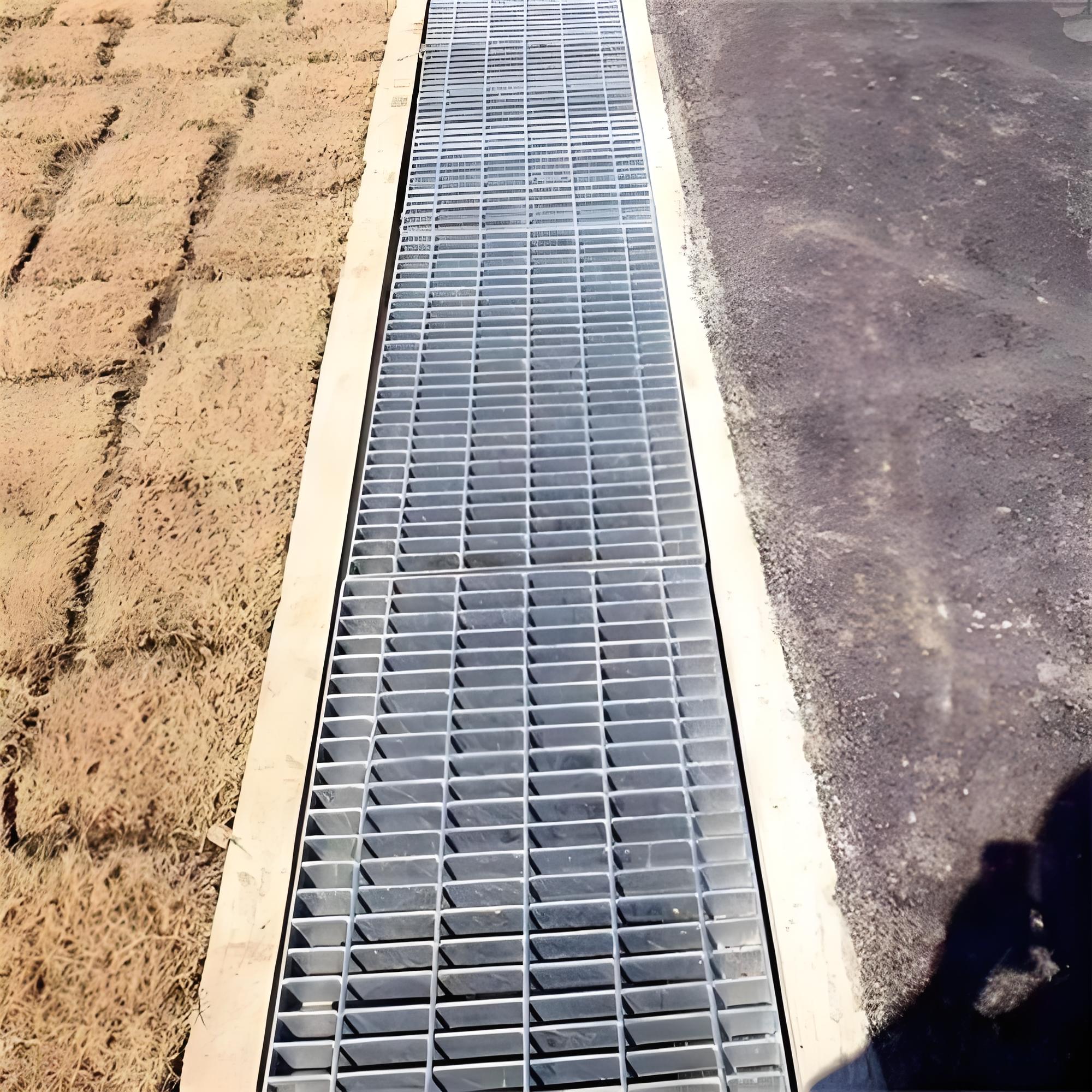
Heavy steel and cast iron covers can create substantial freight costs. Buyers should request the net weight, gross weight, package dimensions, package quantity, and loading plan before comparing delivered prices.
Flat covers can often be stacked efficiently, but large welded frames may occupy considerable volume. Oversized dimensions can reduce container utilization even when the product weight remains within the transport limit.
| Trade Term | General Scope |
| EXW | Product collected from the factory; transport and export arrangements are mainly the buyer’s responsibility |
| FOB | Product and export delivery to the named port are generally included |
| CIF | FOB scope plus ocean freight and insurance to the destination port |
| DAP | Delivery to the named destination, normally excluding import duty and tax |
| DDP | Delivery including agreed import clearance, duties, and taxes |
A lower EXW unit price may result in a higher delivered cost after inland freight, port handling, export documents, ocean freight, destination charges, duty, and local delivery are included.
Quality control should match the risk of the application. A light cable trench cover in a restricted indoor area does not require the same inspection level as a traffic-rated cover installed on a public road.
The factory should verify material grade, thickness, bar dimensions, casting grade, or composite formulation as applicable. Steel and stainless steel projects may require mill material certificates. Ductile iron projects may require chemical and mechanical test reports.
Overall length, width, thickness, diagonals, frame opening, support seating, cutout positions, hinge alignment, and bolt holes should be checked against approved drawings.
Welds should be checked for incomplete fusion, missed connections, cracks, excessive distortion, sharp projections, and unacceptable spatter. Load-bearing frames and reinforcements require particular attention.
A cover that is strong but warped may rock inside the frame, create noise, or become a trip hazard. The factory should assemble or trial-fit matching cover and frame sets when close tolerances are required.
Painted and galvanized products may require visual inspection and coating thickness measurement. Stainless steel products may require verification of pickling, passivation, polishing, or contamination removal.
Load testing may be required for traffic covers, public infrastructure, special composite products, or custom designs without established load data. The test should define the applied load, contact area, loading position, support condition, acceptance deflection, permanent deformation, and failure criteria.
A factory test is normally less expensive and faster. Third-party testing provides independent verification but adds sample preparation, laboratory, inspection, travel, and reporting costs.
| Quality Document | Purpose |
| Material certificate | Confirms steel, stainless steel, or alloy grade |
| Dimensional inspection report | Confirms panel and frame dimensions |
| Coating thickness report | Records paint or zinc coating thickness |
| Welding inspection record | Documents weld quality and fabrication checks |
| Load calculation | Shows the design basis for the selected cover structure |
| Load test report | Records actual test conditions and cover performance |
| PMI report | Verifies stainless steel or alloy identity when required |
| Third-party inspection report | Provides independent verification before shipment |
Inspection and documentation requirements should be stated before the factory issues the final quotation. Adding third-party testing after production can delay delivery and increase cost substantially.
A reliable trench cover factory should be selected according to technical capability, quality control, communication, delivery performance, and total project value. The lowest quotation is not always the lowest-risk option.
Buyers should determine whether the supplier is a steel grating factory, plate fabricator, stainless steel drainage specialist, cast iron foundry, composite molding factory, or trading company. A manufacturer specializing in the required product is more likely to understand load, fabrication, and installation details.
The quotation should state material grade, bearing bar or plate size, mesh spacing, panel dimensions, frame section, surface treatment, load basis, quantity, packaging, and trade term. Avoid quotations that describe the product only as “heavy-duty trench cover.”
Product weight is a useful comparison tool for steel and cast iron covers. A quotation that is much cheaper may use thinner plate, smaller bearing bars, wider spacing, or a lighter frame.
A competent manufacturer should provide fabrication drawings for custom work. Drawings should show overall dimensions, bearing direction, support frame, cutouts, hinges, handles, locking devices, weld details, and panel marks.
Factories should have appropriate equipment for welding, cutting, bending, machining, casting, molding, straightening, and surface treatment. Equipment alone does not guarantee quality, but it indicates whether the manufacturer can control key processes internally.
Ask for examples of covers used under similar loads and environmental conditions. A manufacturer experienced with pedestrian drainage may not automatically be qualified for road traffic or chemical plant applications.
Material certificates, inspection reports, welding records, coating measurements, and load calculations show whether the factory can provide traceable quality control. Buyers should verify that the documents refer to the supplied batch rather than generic samples.
If galvanizing, painting, passivation, or polishing is subcontracted, the trench cover manufacturer should still remain responsible for final inspection and delivery quality.
A reliable factory should identify missing information and ask about trench width, support span, loading, environment, and installation. A supplier that immediately gives a final price without confirming these details may be quoting a generic product rather than a suitable cover.
For custom projects, each panel and frame should be marked according to the installation schedule. Packaging should prevent deformation, coating damage, stainless steel contamination, and loss of small accessories.
| Factory Evaluation Item | What the Buyer Should Check |
| Product specialization | Experience with the required material, structure, and load level |
| Engineering support | Ability to review span, load, frames, and installation drawings |
| Production capacity | Equipment, monthly output, lead time, and ability to handle custom work |
| Material control | Certificates, grade identification, heat traceability, and thickness checks |
| Fabrication quality | Welding, cutting, flatness, frame fit, hinges, and edge finishing |
| Surface treatment | Galvanizing, painting, passivation, polishing, and inspection capability |
| Testing | Load calculations, factory tests, or third-party inspection support |
| Export experience | Packaging, documents, container loading, and international delivery |
| Quotation clarity | Complete scope, unit, currency, validity, lead time, and trade term |
Providing complete information allows the factory to select a suitable structure and calculate material weight accurately. The following details should be included in an inquiry whenever possible.
| Required Information | Example |
| Trench application | Drainage, cable, utility, factory floor, road, or wastewater trench |
| Clear trench width | 500 mm unsupported opening |
| Required cover width | 560 mm including support seating |
| Total trench length | 80 meters |
| Individual panel length | 1,000 mm removable panels |
| Material | Galvanized carbon steel, 304 stainless steel, ductile iron, or composite |
| Cover structure | Grating, checker plate, solid plate, cast grate, or composite panel |
| Design load | Pedestrian, cart, forklift, car, truck, or specified wheel load |
| Support condition | Angle frame, concrete ledge, steel beam, or continuous support |
| Surface requirement | Plain, serrated, checker plate, anti-slip coating, or decorative pattern |
| Corrosion protection | Painted, hot-dip galvanized, pickled, passivated, or polished |
| Frame requirement | Cover only or cover with matching frame |
| Opening method | Loose removable, bolted, hinged, locked, or assisted lifting |
| Special fabrication | Handles, cutouts, curves, logos, toe plates, or anchor tabs |
| Documentation | Material certificates, inspection reports, calculation, or load test |
| Order quantity | Total pieces, square meters, or sets |
| Delivery destination | City, port, and country |
| Trade term | EXW, FOB, CIF, DAP, or DDP |
A cross-section should show the clear opening, support ledge, frame, floor level, cover thickness, and bearing direction. This prevents confusion between trench width and finished cover width.
For vehicle areas, total vehicle weight alone may not be enough. The manufacturer should know the maximum wheel or axle load, wheel contact area, traffic direction, and possible impact.
A plan drawing should show total trench length, panel divisions, corners, intersections, outlets, removable sections, and special access points. Each custom panel should have a unique mark.
The buyer should confirm whether the price includes the support frame, hinges, handles, locks, clips, anchors, surface treatment, testing, packaging, freight, duty, tax, and installation. This allows quotations from different trench cover factory manufacturers to be compared on the same basis.
How much does a steel trench cover cost?
A basic steel grating trench cover may cost approximately US$10 to US$40 per square meter before extensive fabrication. A project-ready hot-dip galvanized cover commonly costs approximately US$35 to US$100 per square meter, while heavy-duty framed or traffic-rated steel covers may cost US$100 to US$350 per square meter or more. The final price depends on cover width, bearing bar or plate size, span, load, frame, surface treatment, quantity, and delivery terms.
Which trench cover material is cheapest?
For many custom industrial projects, painted or galvanized carbon steel normally provides the lowest initial cost for its load capacity. Basic composite cable trench covers can also be economical for light-duty applications. Cast iron is competitive for repeated traffic-rated sizes, while stainless steel normally has the highest initial material cost but may reduce corrosion maintenance in food, chemical, marine, and wet environments.
How do I choose a trench cover manufacturer?
Choose a manufacturer that has experience with the required material and load level, can provide clear drawings and weight calculations, controls cutting and welding, supplies material certificates, offers suitable surface treatment, and can verify cover dimensions and load performance. Quotations should be compared using the same material, dimensions, support span, load requirement, frame design, finish, testing, packaging, and delivery term.