

Carbon steel grating is one of the most widely used open-grid flooring products for industrial walkways, platforms, catwalks, stair treads, trench covers, drainage areas, mezzanines, equipment access floors, and maintenance structures. Its factory cost is mainly determined by finished steel weight, bearing-bar size, mesh pattern, manufacturing method, corrosion protection, fabrication work, quantity, packing, and delivery terms. For preliminary budgeting, standard carbon steel grating may be priced by square meter, panel, kilogram, or ton, but a meaningful comparison requires the full specification. Two panels with the same outside dimensions can have very different prices if one uses deeper bearing bars, closer mesh, serrated tops, hot-dip galvanizing, or custom cutouts.
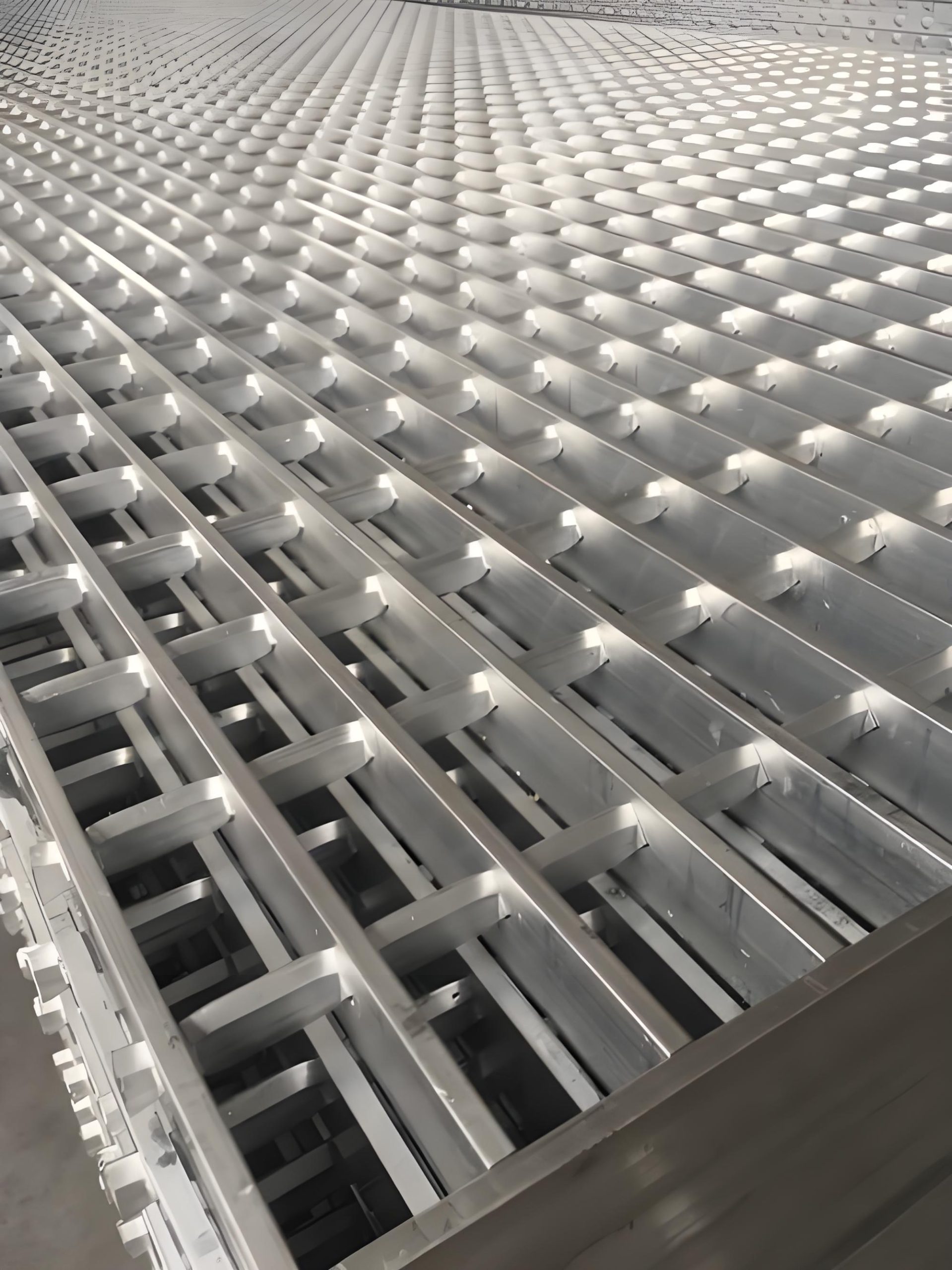
Carbon steel grating cost begins with the amount of steel in the finished panel. Bearing bars normally make up the largest share of the product weight, followed by cross bars, edge banding, frames, toe plates, clips, and other fabrication parts.
A factory quotation usually includes the following cost elements:
A simple way to understand the pricing logic is:
Finished grating price = steel weight + manufacturing + fabrication + surface treatment + inspection + packing + delivery-related cost
The steel price per ton is important, but it is not the only factor. A rectangular stock panel may be efficient to manufacture, while a panel with multiple pipe cutouts, curved edges, lifting handles, toe plates, and individual labels may require much more labor even if the total steel weight is similar.
| Cost Driver | How It Changes Factory Cost |
|---|---|
| Finished kg/m² | More steel increases material, galvanizing, packing, and freight cost |
| Bearing-bar depth | Deeper bars improve span capacity but use more steel |
| Bearing-bar thickness | Thicker bars improve strength and durability but increase weight quickly |
| Mesh pattern | Closer bearing bars or cross bars increase material and processing |
| Serrated surface | Adds anti-slip processing and normally raises the unit price |
| Galvanizing | Adds zinc, handling, inspection, and finished weight |
| Custom fabrication | Cutouts, banding, frames, holes, and special shapes add labor |
| Order quantity | Repeated large orders normally have lower unit costs |
Carbon steel grating can be quoted in several units. The right unit depends on the project stage and the level of detail available.
| Quotation Method | Best Used For | Important Check |
|---|---|---|
| Price per m² | Early project budgeting and comparison of similar specifications | Compare the same bearing-bar size, mesh, finish, and kg/m² |
| Price per panel | Fabricated platform panels, trench covers, stair treads, access covers | Confirm cutting, banding, holes, frames, and accessories |
| Price per kg | Large industrial orders with clear finished weights | Check whether fabrication and galvanizing are included |
| Price per ton | Bulk procurement with repeated specifications | Confirm theoretical weight, actual weight, finish, and packing scope |
For preliminary factory budgeting, the following ranges can be used as broad references for carbon steel grating. They are not fixed offers, and actual pricing changes with steel markets, zinc price, factory location, project quantity, fabrication requirements, and delivery conditions.
| Carbon Steel Grating Type | Indicative Factory Price Range | Typical Description |
|---|---|---|
| Light plain black steel grating | About US$20–35/m² | Standard mesh, lighter bars, limited fabrication |
| Standard plain black steel grating | About US$25–45/m² | General industrial platforms and walkway panels |
| Standard hot-dip galvanized carbon steel grating | About US$30–55/m² | Outdoor platforms, walkways, stairs, and drainage covers |
| Serrated galvanized carbon steel grating | About US$35–65/m² | Wet, oily, sloped, or outdoor anti-slip applications |
| Heavy-duty carbon steel grating | About US$55–120/m² or more | Deep or thick bearing bars, stronger support conditions, higher loads |
| Fabricated galvanized carbon steel grating | About US$50–120/m² or more | Cut-to-size panels with banding, cutouts, frames, labels, and packing |
For bulk projects, a standard untreated carbon steel grating order may be quoted in a broad range of roughly US$800–1,250 per metric ton, while standard hot-dip galvanized grating may fall around US$950–1,500 per metric ton. Heavily fabricated, serrated, heavy-duty, small-quantity, or specially packed products can be higher.
Price per ton is useful when comparing products with the same specification. It is less useful when one supplier includes cutouts, edge banding, galvanizing, fasteners, and export packing while another supplier offers only uncut stock panels.
Carbon steel grating is usually made from low-carbon structural steel. Common project references may include Q235, S235, SS400, ASTM A36, ASTM A1011, or another approved structural grade depending on the application, project location, and procurement standard.
| Material Category | General Cost Position | Typical Use |
|---|---|---|
| Standard low-carbon structural steel | Most economical | General industrial grating, walkways, platforms, stair treads |
| Specified structural steel grade | May be moderately higher | Projects requiring mill certificates or specific mechanical properties |
| Higher-strength low-alloy structural steel | Usually higher | Selected engineered structures and special load requirements |
A higher-grade steel does not automatically mean that a lighter grating will be suitable. Bearing-bar geometry, support span, deflection limit, welding method, and load type still determine the practical performance of the finished panel.
When a material grade is specified, the quotation should state whether mill certificates, traceability documents, chemical analysis, mechanical-property reports, or third-party inspection are required. These requirements can affect cost and lead time.
Carbon steel grating can be produced by several manufacturing methods. Each method affects appearance, load behavior, fabrication flexibility, and factory cost.
| Grating Type | Manufacturing Method | Typical Cost Position | Common Application |
|---|---|---|---|
| Welded carbon steel grating | Cross bars are resistance welded to bearing bars | Usually the most economical standard industrial choice | Walkways, platforms, catwalks, stairs, trench covers |
| Press-locked carbon steel grating | Cross bars are pressed into slots in bearing bars | Often higher because of slotting and alignment control | Architectural floors, screens, commercial areas, visible platforms |
| Riveted carbon steel grating | Bars are mechanically connected with riveted assembly details | Often higher for specialty or heavy-duty fabrication | Traffic-related covers and project-specific heavy service |
Welded grating is the common choice for industrial applications because it provides a rigid, economical, and durable open-grid structure. It can be fabricated into custom panels, stair treads, trench covers, and access floors before hot-dip galvanizing.
Press-locked grating has a cleaner, more regular appearance because the cross bars are mechanically locked into slotted bearing bars. It is often selected where spacing accuracy, visual quality, or architectural appearance matters. It should still be checked for the actual load and span requirement.
Riveted grating is generally used for specialty or heavy-duty applications where a mechanically assembled structure is required. It may involve additional parts, closer fabrication control, and heavier structural elements, so it is normally quoted from project drawings rather than a simple standard square meter price.
The bearing bar is the primary load-bearing component of carbon steel grating. It carries the bending load between supports. Bearing-bar depth has a strong effect on stiffness, while thickness adds steel area and improves section capacity.
| Bearing-Bar Size | General Duty Level | Typical Application |
|---|---|---|
| 20×3 mm | Light duty | Short-span access panels, light covers, small maintenance areas |
| 25×3 mm | Light to standard duty | Short-span walkways and pedestrian access platforms |
| 30×3 mm | Standard duty | General industrial walkways, catwalks, and platform flooring |
| 32×3 mm | Standard duty | Metric industrial flooring with moderate support spans |
| 30×5 mm | Medium duty | Higher-load industrial routes and stronger access panels |
| 32×5 mm | Medium duty | Industrial platforms, machinery access, longer controlled spans |
| 40×3 mm | Medium duty | Longer pedestrian spans and lower-deflection applications |
| 40×5 mm | Heavy duty | Heavy platforms, demanding industrial service, stronger covers |
| 50×5 mm or larger | Heavy duty | Long-span, high-load, vehicle-related, or engineered applications |
The correct bearing-bar section should be selected from a verified load table or engineering calculation. A deeper bearing bar may cost more initially, but it can be necessary to meet span and deflection requirements safely.
Mesh pattern affects open area, drainage, steel weight, panel appearance, walking comfort, and factory cost. A common metric mesh description gives the bearing-bar pitch first and cross-bar pitch second.
| Mesh Pattern | General Characteristic | Typical Use |
|---|---|---|
| 25×50 mm | Close mesh with smaller openings and higher steel weight | Controlled openings, dense industrial floors, special access areas |
| 25×100 mm | Close bearing-bar pitch with standard cross-bar spacing | Smaller-opening industrial flooring |
| 30×50 mm | Standard bearing-bar pitch with closer cross bars | Stair treads, denser access surfaces, special industrial flooring |
| 30×100 mm | Balanced open area, weight, drainage, and factory efficiency | General platforms, walkways, catwalks, trench covers |
| 40×100 mm | More open pattern with lower steel consumption | Light to standard access areas where larger openings are acceptable |
| 40×50 mm | Open bearing-bar layout with closer transverse pattern | Selected industrial floors and special fabrication |
Closer bearing-bar spacing means more bearing bars per meter width. This increases material consumption and normally improves load distribution. Closer cross-bar spacing adds more cross bars and production work, creating a denser panel but not automatically increasing the main span capacity in the same way as deeper bearing bars.
Carbon steel grating is often produced in large rectangular stock panels and then cut into final project pieces. Standard panel sizes depend on the factory’s welding line, raw material length, galvanizing capacity, lifting equipment, and export packing plan.
| Common Panel Size | Typical Application | Practical Consideration |
|---|---|---|
| 600×1000 mm | Narrow access routes and removable covers | Easy to lift and replace |
| 800×1000 mm | Compact catwalks and maintenance platforms | Useful where handling limits are important |
| 1000×1000 mm | Modular platform and floor panels | Simple to coordinate with structural framing |
| 1000×3000 mm | Walkway strips and medium platform sections | Support spacing and lifting method must be checked |
| 1000×6000 mm | Common factory production-panel reference | Often cut into smaller installation panels |
| 1200×6000 mm | Large industrial platforms and equipment access floors | May require lifting equipment and special packing |
Large panels can reduce installation joints, but they may be difficult to galvanize, transport, lift, remove, and replace. Small panels are easier to maintain, but they require more supports, joints, clips, and installation time.
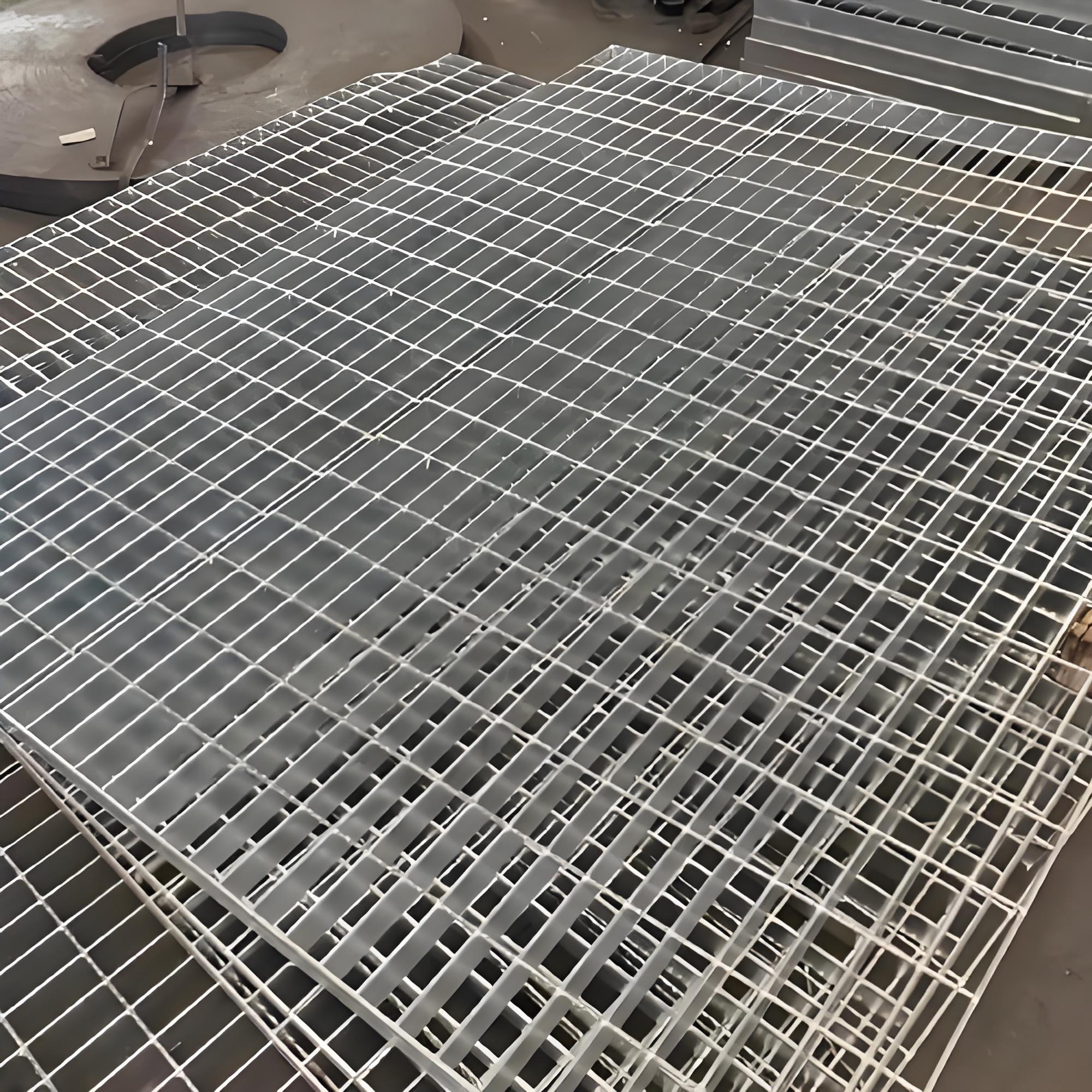
Grating weight is one of the most useful figures for factory costing. It affects raw steel consumption, galvanizing cost, shipping weight, container loading, structural dead load, lifting plans, and installation labor.
For rectangular carbon steel bearing bars, a preliminary calculation can be made with this formula:
Bearing-bar mass (kg/m²) ≈ 7.85 × bearing-bar depth (mm) × bearing-bar thickness (mm) ÷ bearing-bar pitch (mm)
This formula calculates only the bearing-bar portion. Cross bars, welds, edge banding, clips, frames, galvanizing, and custom fabrication need to be added.
For example, a 30×3 mm bearing bar at 30 mm centers has an estimated bearing-bar mass of:
7.85 × 30 × 3 ÷ 30 = 23.55 kg/m²
After adding cross bars and standard welded construction, a typical 30×3 mm, 30×100 carbon steel grating body may weigh approximately 26–28 kg/m² before special fabrication and coating allowances.
| Bearing-Bar Size | Typical 30×100 Grating Body Weight | Weight Trend |
|---|---|---|
| 25×3 mm | About 22–24 kg/m² | Light to standard duty |
| 30×3 mm | About 26–28 kg/m² | Common industrial flooring weight |
| 32×3 mm | About 28–30 kg/m² | Moderately increased stiffness and mass |
| 30×5 mm | About 42–45 kg/m² | Higher steel use and stronger bearing bars |
| 32×5 mm | About 45–46 kg/m² | Medium-duty industrial platform range |
| 40×5 mm | About 55–58 kg/m² | Heavy-duty carbon steel grating range |
Finished panel weight can increase when perimeter banding, frames, toe plates, reinforcement around cutouts, stair-tread end plates, lift handles, fasteners, or galvanizing are included.
Carbon steel grating must be selected based on its actual support and loading condition. The bearing bars carry the primary bending load, so they must run between the supports.
The key information required for a load check includes:
Clear span is the distance between effective supports beneath the bearing bars. It is not necessarily the same as the overall panel length. A 6000 mm long panel can have a design span of only 1000 mm if supports are placed every 1000 mm under the bearing bars.
Uniform load is spread over a large area and is normally expressed in kN/m², kg/m², or pounds per square foot. Concentrated load is applied over a small area, such as a worker, equipment foot, tool box, valve, or machine support point.
A panel that meets a uniform pedestrian load may not meet a concentrated equipment load. For carts, pallet jacks, forklifts, vehicles, or repeated impact loads, the wheel arrangement, contact area, travel path, support frame, and deflection requirement must be checked separately.
Deflection is the movement of the grating under load. A panel may remain below the steel yield limit but still deflect too much for comfortable walking, drainage, machinery access, vibration control, or panel alignment.
There is no universal maximum span for carbon steel grating. The allowable span must be confirmed from a verified load table or an engineering calculation for the exact bearing-bar section, mesh pattern, load condition, support arrangement, and deflection limit.
Plain grating has smooth bearing-bar tops. It is commonly used for dry indoor platforms, equipment access floors, warehouse walkways, and controlled industrial environments. It is normally the most economical surface option.
Serrated grating has notches or teeth on the top of the bearing bars. It is commonly selected for outdoor walkways, stairs, ramps, wet process areas, oil-exposed floors, drainage zones, and industrial environments where improved traction is needed.
Heavy-duty grating uses deeper and thicker bearing bars, stronger edge treatment, and project-specific support design. It may be used for heavy plant floors, industrial vehicle areas, equipment routes, ports, loading zones, and engineered drainage covers.
| Grating Type | Main Benefit | Typical Cost Level |
|---|---|---|
| Plain grating | Economical and easy to clean | Lower |
| Serrated grating | Improved traction in many wet and oily conditions | Moderate to higher |
| Heavy-duty grating | Greater capacity for larger spans and higher loads | Higher |
Serration should be selected where the slip risk justifies it. Heavy-duty grating should be selected from load requirements, not simply because a heavier panel appears safer.
Carbon steel grating can be supplied with several finish options. The finish affects initial cost, corrosion resistance, maintenance needs, appearance, and service life.
| Finish | Cost Position | Typical Use |
|---|---|---|
| Mill finish or black steel | Lowest initial cost | Dry indoor environments, temporary use, or later coating |
| Painted carbon steel | Moderate | Indoor industrial structures and controlled environments |
| Hot-dip galvanized carbon steel | Moderate to high | Outdoor walkways, platforms, stairs, trench covers, humid areas |
Mill-finish grating is supplied without a corrosion-protection coating. It can be economical for dry indoor applications, but it will rust when exposed to moisture or corrosive conditions.
Paint provides basic protection and color control, but paint can be damaged during transport, installation, impact, or field cutting. Damaged edges may need repair to prevent corrosion.
Hot-dip galvanizing is normally applied after welding and fabrication. This allows the zinc coating to cover welded intersections, cut edges, serrated tops, edge banding, toe plates, and other exposed carbon steel details. It is often the preferred finish for outdoor industrial use.
Custom fabrication can make installation faster and safer, but it adds factory cost. The finished grating panel may require much more work than a plain rectangle cut from stock material.
| Fabrication Item | Purpose | Cost Effect |
|---|---|---|
| Edge banding | Closes exposed bearing-bar ends and improves panel stiffness | Adds steel, welding, finishing, and galvanizing area |
| Load banding | Creates a stronger edge where structural loading requires it | Higher than standard trim banding |
| Pipe cutouts | Allows grating to fit around pipes and equipment | Requires cutting, banding, and possible reinforcement |
| Column notches | Fits panels around structural columns | Increases fabrication time and may reduce steel yield |
| Toe plates | Helps reduce objects falling from exposed platform edges | Adds steel, welding, and surface-treatment cost |
| Frames and support angles | Creates finished trench covers and removable access assemblies | Adds structural steel and fitting work |
| Holes, clips, and locking details | Secures panels against uplift, movement, or theft | Adds drilling, accessories, and packing complexity |
Irregular panels often cost more than standard rectangles because they can create offcuts that are difficult to use in other panels. Curves, angles, fan shapes, mixed panel schedules, and many unique cutouts require more drawing review, cutting, welding, inspection, and handling.
Quality control is important because carbon steel grating is used as a walking, working, access, drainage, and load-bearing surface. A reliable factory should inspect the product from raw material receiving through final packing.
| Inspection Stage | What Should Be Checked | Why It Matters |
|---|---|---|
| Raw material inspection | Steel grade, bar dimensions, straightness, surface condition | Supports correct production and load performance |
| Mesh inspection | Bearing-bar pitch, cross-bar pitch, alignment | Ensures the correct specification and regular panel appearance |
| Welding inspection | Weld consistency, cross-bar attachment, missing welds, loose bars | Prevents rattling, weak joints, and unstable panels |
| Fabrication inspection | Cutouts, banding, holes, frames, toe plates, labels | Ensures panels match the approved drawings |
| Dimensional inspection | Length, width, diagonal, flatness, bearing-bar direction | Reduces site fit-up and installation problems |
| Galvanizing inspection | Coating coverage, drainage, surface condition, visible defects | Supports corrosion resistance and service life |
| Packing inspection | Bundle stability, labels, protection, total quantity | Reduces shipment damage and site sorting time |
For custom trench covers, stair treads, removable access panels, and close-fitting frames, dimensional control is especially important. A panel that is too large may not seat properly; a panel that is too small can create unsafe gaps or poor support bearing.
A clear inquiry produces a more accurate quotation. Sending only the total square meter quantity may result in an estimate, but it is not enough for final production pricing.
| Information to Provide | Example |
|---|---|
| Grating type | Welded carbon steel bar grating |
| Bearing-bar size | 30×3 mm, 32×5 mm, or 40×5 mm |
| Mesh pattern | 30×100 mm, 30×50 mm, or 40×100 mm |
| Surface type | Plain or serrated |
| Material grade | Specified carbon steel grade if required |
| Finish | Mill finish, painted, or hot-dip galvanized after fabrication |
| Panel dimensions | 1000×1200 mm or a complete panel schedule |
| Bearing-bar direction | Bars span 1000 mm between supports |
| Load requirement | Uniform load, concentrated load, wheel load, and deflection limit |
| Fabrication details | Banding, cutouts, toe plates, frames, clips, bolt holes, lift handles |
| Commercial details | Quantity, packing, destination, trade term, required lead time |
When comparing quotations, confirm that every supplier is quoting the same finished specification. The lowest price may use lighter bearing bars, wider mesh, a lower coating requirement, fewer fabrication details, or a different delivery term.
A practical inquiry can read: “Please quote welded carbon steel grating with 30×3 mm bearing bars, 30×100 mm mesh, serrated top surface, hot-dip galvanized after fabrication, finished panel size 1000×1200 mm, bearing bars spanning 1000 mm, banded on four sides, suitable for the stated pedestrian load and deflection requirement. Please provide finished kg/m², fabrication scope, packing method, lead time, and FOB price.”
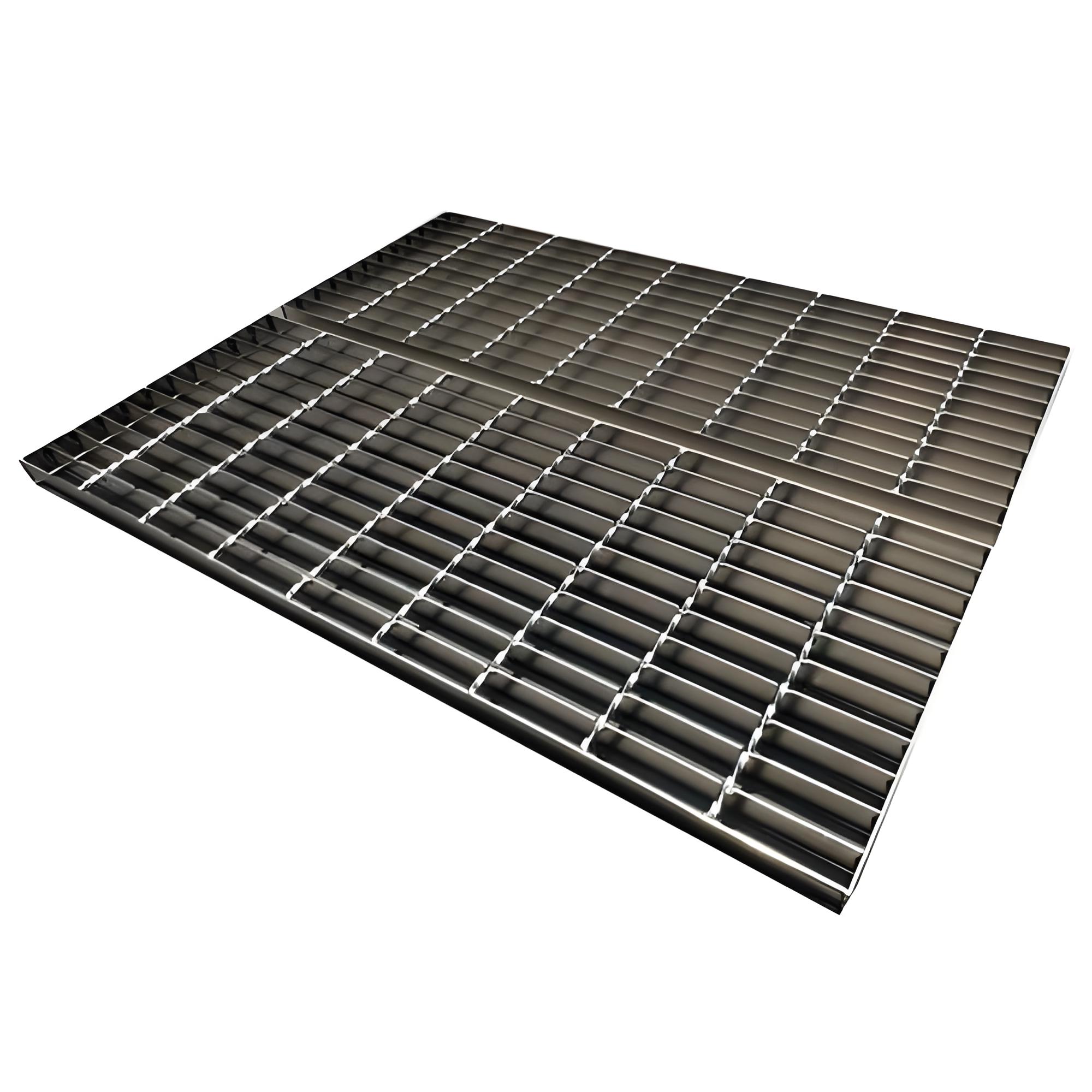
How much does carbon steel grating cost per square meter?
For preliminary factory budgeting, plain carbon steel grating may cost about US$20–45/m², standard hot-dip galvanized carbon steel grating about US$30–55/m², and serrated galvanized grating about US$35–65/m². Bearing-bar size, weight, fabrication, quantity, and delivery terms determine the final price.
What is the most common carbon steel grating size?
Common industrial specifications include 25×3 mm, 30×3 mm, 32×5 mm, and 40×5 mm bearing bars with 30×100 mm or 40×100 mm mesh. The best choice depends on the clear span, load requirement, opening size, and corrosion environment.
Is hot-dip galvanized carbon steel grating better than painted grating?
For many outdoor and humid industrial applications, hot-dip galvanized grating provides more durable coverage because zinc protects the finished grating, including welded joints and cut edges. Painted grating can be suitable for controlled indoor environments but may need maintenance after impact, abrasion, or coating damage.