
Removable and hinged trench covers are both designed to protect open channels while allowing access for drainage, inspection, cleaning, cable maintenance, utility work, and equipment servicing. A removable cover can be lifted completely away from the trench, while a hinged cover remains connected to its frame and opens from one side. The right choice depends on how often the trench must be accessed, whether workers can safely lift the panel, whether unauthorized opening is a concern, the required pedestrian or vehicle load, the support frame, drainage conditions, corrosion exposure, and the available installation space. This guide compares removable and hinged trench covers in detail, including steel grating, solid plate, stainless steel, aluminum, ductile iron, and composite options.
| Comparison factor | Removable trench cover | Hinged trench cover |
|---|---|---|
| Opening method | Lifted completely from the frame or support ledge | Rotates upward while remaining attached to the frame |
| Access convenience | Good for occasional access and full panel removal | Very convenient for frequent inspection and cleaning |
| Storage requirement | Requires a safe place to store the removed cover | Does not need separate storage |
| Handling | May require lifting holes, handles, hooks, or mechanical lifting | May use hinges, gas struts, springs, or lifting assistance |
| Security | Can be bolted, clipped, or locked to prevent removal | Can remain attached and be fitted with locks or anti-lift devices |
| Maintenance access | Provides full opening when removed | Provides convenient access but may obstruct part of the opening when raised |
| Traffic suitability | Suitable for pedestrian, forklift, or vehicle areas when correctly designed | Suitable for traffic areas only when hinges and frame are protected and engineered |
| Manufacturing cost | Usually lower for a simple framed panel | Higher because of hinges, stops, locks, and lifting assistance |
| Typical application | Drainage channels, cable trenches, floor trenches, inspection covers | Utility pits, pump rooms, service trenches, frequently inspected channels |
Neither design is universally better. A removable cover is often the most economical solution for a long drainage channel that is opened only during periodic cleaning. A hinged cover is often safer and more convenient for a utility pit that operators inspect every day. Heavy covers require an engineered lifting or opening method regardless of whether they are removable or hinged.
A removable trench cover is a panel that sits on support ledges, angles, frames, or rebates and can be lifted out of the opening. It may be made from welded steel grating, press-locked grating, solid steel plate, stainless steel, aluminum, ductile iron, or composite material.
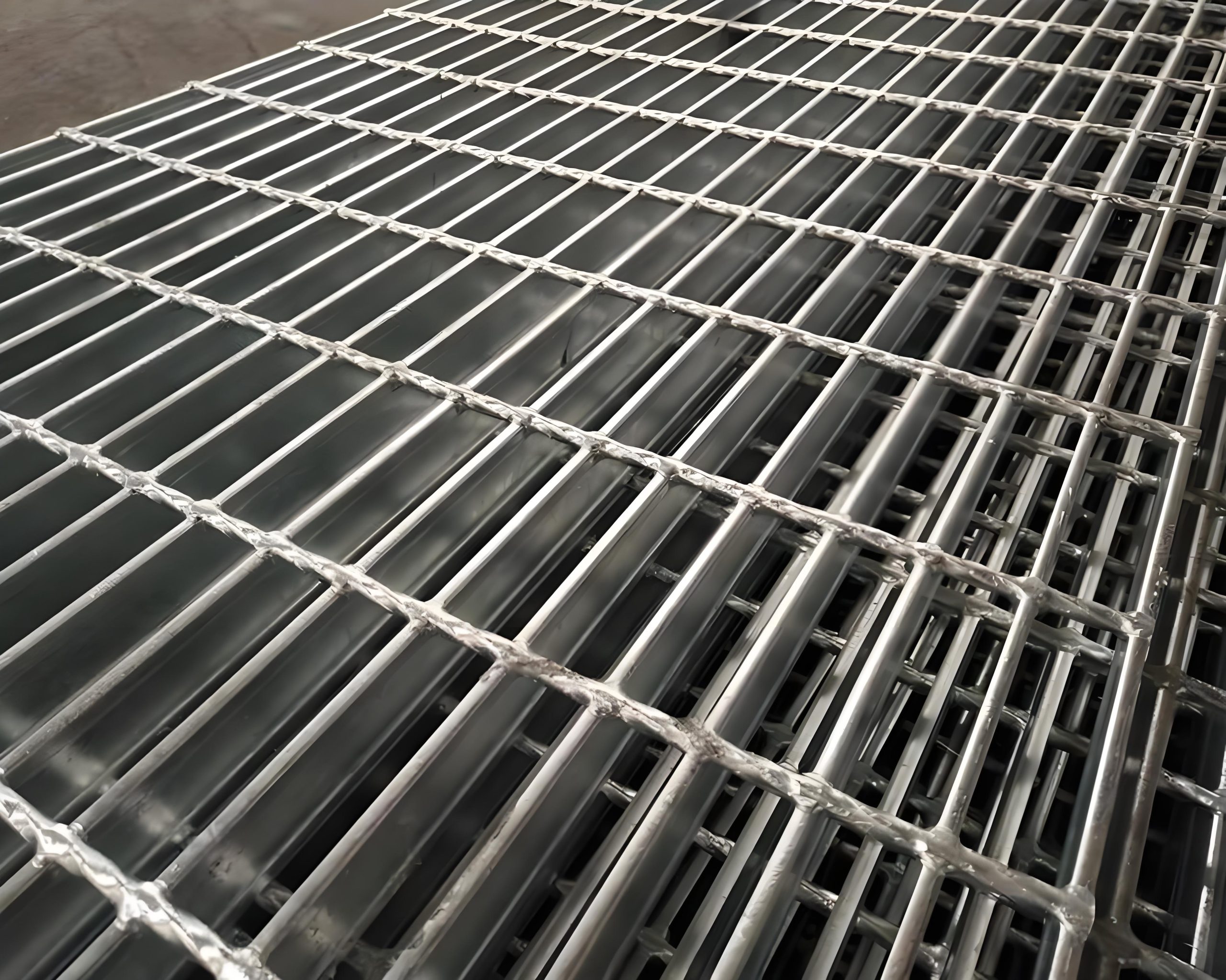
Removable covers are common in factory floors, cable trenches, utility corridors, drainage channels, pump rooms, workshops, kitchens, wastewater plants, and inspection pits. They are easy to remove when the panel weight is manageable and the surrounding area provides enough space for lifting.
A hinged trench cover is connected to the support frame by one or more hinges. The panel opens upward or sideways while remaining attached to the trench. Hinged covers may be supplied as a single lid, paired leaves, multiple short sections, or a continuous hinged system.
Hinged covers are useful where operators need frequent access to pumps, valves, cables, instruments, inspection points, and drainage equipment. Because the cover remains attached, it cannot be set down in a traffic lane or accidentally left away from the opening.
Welded steel grating uses load-bearing bars joined to cross bars through welded intersections. It is commonly selected for open trench covers because it provides drainage, ventilation, strength, and an economical manufacturing process. It can be supplied plain or serrated and finished with paint, hot-dip galvanizing, or stainless steel treatment.
Press-locked grating is made by pressing cross bars into slots in the bearing bars. It provides a regular appearance and flexible mesh patterns. It may be suitable for commercial drainage channels, architectural walkways, visible factory floors, and utility covers where appearance matters.
Solid plate covers prevent small objects from entering the trench and may be suitable for cable trenches, equipment pits, and areas where a closed walking surface is required. They do not provide the same drainage and ventilation as open grating and may be heavier.
304 stainless steel is common for food, clean, indoor wet, and moderate corrosion environments. 316 or 316L stainless steel is often selected for chloride, marine, chemical, wastewater, and more aggressive wet exposure.
Aluminum covers are lightweight and convenient for frequent manual removal. They may be used for pedestrian access, roof drainage, water treatment, and architectural projects, but deflection, impact, chemical compatibility, and galvanic contact with steel must be checked.
Ductile iron covers are often used in roads, parking areas, and vehicle zones because of their high compressive strength and established access-cover designs. They are heavier than grating and may provide less open drainage unless slots or grates are incorporated.
Composite covers may reduce weight, resist selected chemicals, and provide electrical insulation. Their load capacity, fire behavior, ultraviolet resistance, resin system, and support spacing must be confirmed from the manufacturer’s data.
| Material | Main benefit | Typical trench cover application | Important limitation |
|---|---|---|---|
| Carbon steel | Strong and economical | Dry indoor trenches and protected industrial floors | Requires corrosion protection when exposed to moisture |
| Hot-dip galvanized steel | Good outdoor protection and structural capacity | Factories, drainage channels, platforms, utility trenches | Zinc coating may deteriorate in severe chemical exposure |
| 304 stainless steel | Clean appearance and general corrosion resistance | Food plants, clean areas, commercial drainage | Less resistant to chloride than 316 |
| 316 or 316L stainless steel | Improved chloride and chemical resistance | Marine, chemical, wastewater, and coastal facilities | Higher initial price and not immune to severe attack |
| Aluminum | Low weight and easy handling | Pedestrian covers, roof access, water facilities | Lower stiffness and galvanic compatibility concerns |
| Ductile iron | High vehicle-load capability | Roadways, parking areas, municipal drainage | Heavy and less convenient for frequent manual removal |
| Composite | Corrosion resistance, low weight, insulation | Chemical zones, cable trenches, utility access | Resin, fire, impact, and temperature limits |
Trench covers are often misunderstood because their outside dimensions do not determine their load capacity. A narrow cover over a short span may carry a higher wheel load than a wider cover over a long unsupported opening.
The clear opening is the unsupported distance between the inside edges of the support frames or ledges. This is one of the most important dimensions in the load calculation.
For grating covers, the bearing bars should span across the trench opening. The drawing should show the direction clearly. If the panel is installed with the bearing bars parallel to the trench instead of across it, the intended capacity may be lost.
Pedestrian-only covers can often use lighter panels, provided the support frame and opening size are suitable. Public areas may require closer mesh, anti-slip surfaces, flush edges, and anti-theft or anti-movement features.
Forklift and vehicle covers require concentrated wheel-load analysis. The design should include wheel load, tire contact area, axle spacing, impact, braking, traffic direction, support frame stiffness, and allowable deflection.
A panel can be strong enough not to fail but still move, bounce, or rock under traffic. Excessive deflection can loosen clips, damage frame edges, create noise, and produce trip hazards. A hinged cover may also impose additional loads on the hinge side when open or closed.
For a vehicle-rated hinged cover, the hinge barrel, hinge plate, pins, frame, and adjacent support must be designed for the load path. The hinge should not be treated as a decorative attachment. The cover must seat on the frame or support ledges so that traffic loads do not rely only on the hinge.
| Design input | Why it matters |
|---|---|
| Clear trench span | Controls bending and deflection |
| Cover width and length | Influences handling, panel weight, joints, and support layout |
| Uniform load | Represents general pedestrian or distributed platform loading |
| Concentrated load | Represents feet, wheels, equipment, or point loads |
| Wheel load | Required for forklifts, trucks, and roadway traffic |
| Frame support | Transfers load into concrete, steel, or surrounding pavement |
| Allowable deflection | Controls movement, comfort, noise, and serviceability |
| Fixing method | Controls movement, uplift, vibration, theft, and opening safety |
Removable covers are suitable when the trench is opened only during periodic cleaning, cable replacement, inspection, or major maintenance. A hook hole or recessed lifting point may be sufficient for light panels.
Hinged covers are generally more convenient when operators need to open the trench daily or weekly. The cover remains attached and can be closed immediately after inspection. This reduces the risk of a loose panel being misplaced or left beside the opening.
Emergency access points may require quick opening without searching for a lifting tool. Hinged covers with handles, gas struts, safety stops, and clearly marked locks can provide faster access. The opening direction should not block an emergency escape route.
Large removable covers can become difficult or unsafe to lift manually. Options include smaller panel sections, recessed handles, lifting eyes, removable lifting beams, davit points, gas struts, springs, counterweights, or powered lifting equipment.
Removed panels should never be placed where they create trip hazards, obstruct vehicles, or cover emergency equipment. If no safe storage area exists, a hinged or multi-leaf design may be more practical.
Removable covers must sit flat on their support ledges or frames and should not rock, slide, or lift during normal use. Locating lugs, stops, clips, bolts, and anti-movement brackets can improve stability.
A hinged cover should include a reliable hold-open device, such as a locking arm, stay bar, safety chain, or gas strut. The panel should not fall unexpectedly due to wind, vibration, or accidental contact.
When a cover is open, the trench becomes an exposed fall hazard. Barriers, warning signs, temporary guards, lockout procedures, or safety grilles may be required during inspection and maintenance.
Utility trenches, chemical channels, electrical pits, and restricted areas may require locks, captive bolts, anti-theft fasteners, tamper-resistant hinges, or controlled access. A removable panel without any restraint may be unsuitable in a public or security-sensitive location.
The cover and surrounding pavement or floor should align properly. Uneven frames, protruding handles, raised hinges, and damaged edges can create trip hazards. Recessed handles and flush frame installation can improve walking safety.
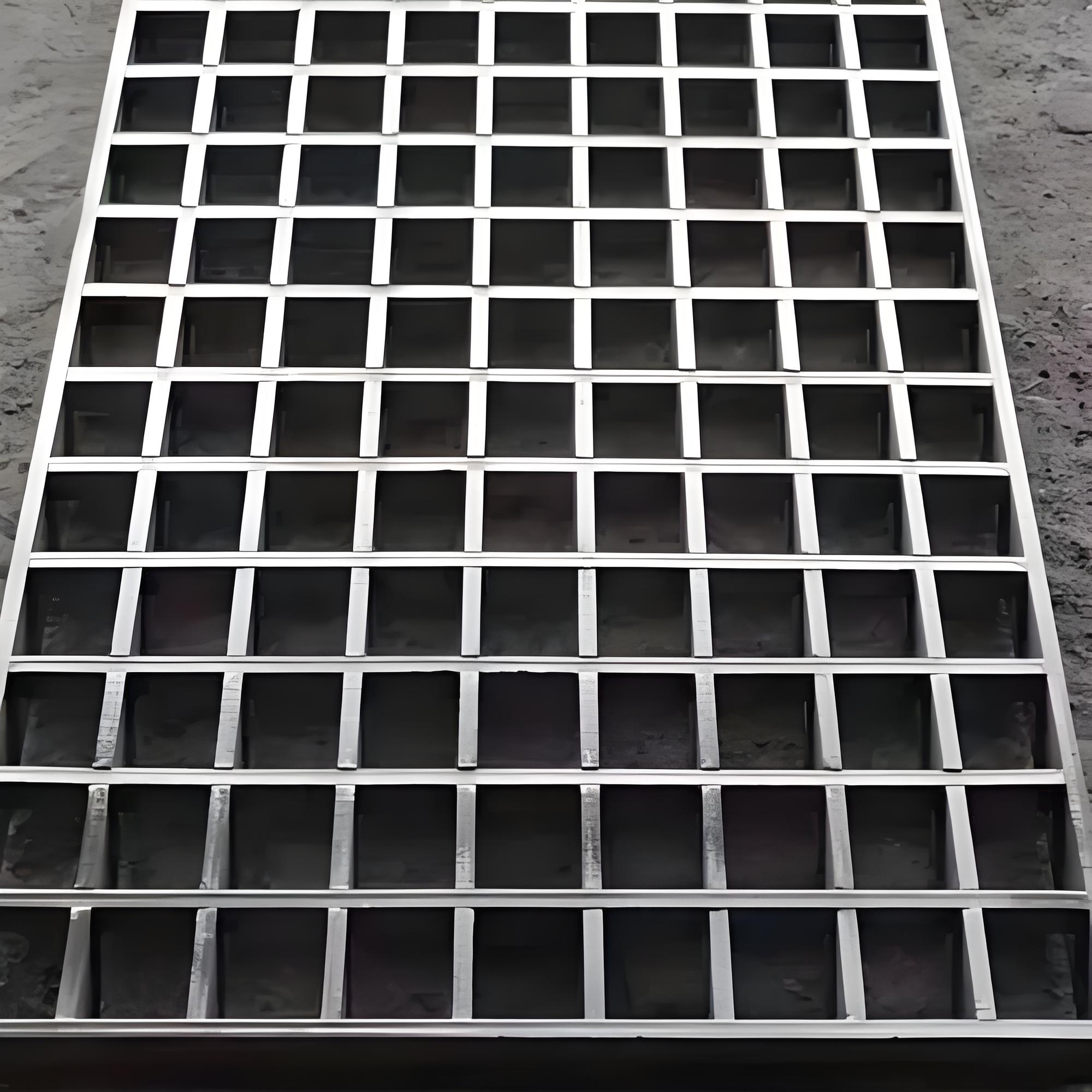
Plain grating is easy to clean and provides a smooth appearance. It may be suitable for dry indoor utility trenches, clean workshops, and areas where slip risk is controlled.
Serrated grating has notches on the bearing bars that improve traction in wet, oily, muddy, outdoor, and industrial areas. It is commonly selected for drainage channels, wastewater plants, factories, chemical plants, and external walkways.
Solid plate covers may use checker plate, embossed patterns, abrasive coatings, or textured inserts. These surfaces prevent small objects from passing through but may hold water unless the cover includes drainage holes, slots, or a suitable slope.
Composite covers may use grit, molded concave profiles, or textured resin surfaces. Chemical compatibility and wear should be verified, especially where cleaning equipment or vehicle traffic is involved.
Open grating provides direct drainage into the trench. Drainage performance depends on open area, mesh size, blockage, trench slope, water flow, and debris. A cover with a very small opening may be safer for pedestrians but can require more frequent cleaning.
For general steel grating trench cover selection, buyers can review the CSSP Grating steel grating trench cover guide.
Hot-dip galvanized steel is a common choice for outdoor industrial trench covers. It provides good structural performance and economical corrosion protection in many atmospheric environments. The coating may deteriorate faster in strong chemicals, saltwater, acidic condensate, or continuous wet exposure.
304 stainless steel is suitable for many hygienic and moderately corrosive areas. 316 or 316L is often selected for marine, chemical, coastal, and wastewater environments. Stainless steel may be supplied with plain, serrated, pickled, passivated, brushed, or polished surfaces.
Aluminum is lightweight and useful where covers must be removed frequently by hand. It may be suitable for pedestrian trenches, roof drainage, water facilities, and architectural applications. Long spans, wheel loads, impact, and contact with steel frames require careful review.
Ductile iron is suitable for heavy roadway, parking, and municipal drainage covers. It is strong under compression but significantly heavier than grating panels and may require lifting equipment or hinged assistance.
Composite covers can provide corrosion resistance, electrical insulation, and low weight. Their resin, reinforcement, fire classification, temperature, impact, and load capacity should be specified rather than relying on a general composite label.
Trench cover dimensions should be based on the actual frame and opening, not only the nominal trench width. A complete drawing should show the clear opening, bearing ledge, frame angle, cover thickness, edge gaps, joint locations, and installation level.
| Dimension or feature | What to specify |
|---|---|
| Clear opening | Unsupported width between inside frame edges |
| Cover width | Overall panel dimension including bearing or edge banding |
| Cover length | Individual panel length and joint arrangement |
| Bearing bar depth | Selected according to span, load, and deflection |
| Support ledge | Width, level, material, and continuous bearing condition |
| Frame section | Angle, channel, flat bar, fabricated frame, or concrete rebate |
| Edge gap | Required clearance for installation, movement, and drainage |
| Opening direction | Hinge side, lift side, access side, and hold-open clearance |
| Handle or lifting point | Type, location, flushness, and rated lifting capacity |
| Locking device | Padlock, captive bolt, latch, anti-theft, or controlled-access system |
Single panels are simple and have fewer joints, but they may become heavy. They are suitable for narrow openings and occasional access.
Multi-panel systems reduce lifting weight and can be easier to handle. Panel joints should be located over supports and designed to prevent rocking or height differences.
Wide or long hinged openings may use multiple leaves. Each leaf should have an independent hinge, handle, support stop, and locking detail where required.
Trenches around tanks, curved roads, equipment bases, and irregular channels may require custom-shaped covers. A site survey or approved CAD drawing is strongly recommended.
Hinges should be selected according to cover weight, opening frequency, corrosion exposure, traffic vibration, and required opening angle. Stainless steel hinges may be preferred for wet or corrosive environments.
Recessed handles reduce trip hazards and make frequent opening easier. Lifting holes are economical for hook tools but may require a separate lifting bar. The handle must be strong enough for the cover weight and positioned to avoid unbalanced lifting.
Locks prevent unauthorized access and reduce the risk of covers being opened by pedestrians, children, or untrained personnel. Chemical plants, electrical trenches, public drainage, and restricted utility areas may require controlled access.
Gas struts, torsion springs, counterweights, and assist arms reduce the force required to open heavy hinged covers. They should be rated for the cover weight, temperature, corrosion exposure, and number of operating cycles.
A hinged cover should remain securely open during inspection. A friction hinge alone may not be sufficient. Use a positive stay, locking arm, chain, or approved support device.
| Accessory | Purpose | Typical application |
|---|---|---|
| Recessed handle | Provides lifting grip without a raised obstruction | Pedestrian floors and removable panels |
| Lifting hole | Allows a hook or bar to lift the cover | Light and medium removable covers |
| Hinge | Keeps the cover attached during opening | Frequent inspection and utility access |
| Lock or latch | Controls unauthorized opening | Public, electrical, chemical, and security-sensitive areas |
| Gas strut | Reduces manual opening force | Heavy hinged covers and frequent access |
| Safety stay | Prevents accidental closing | Maintenance and inspection openings |
| Locating lug | Prevents panel movement and incorrect positioning | Vehicle and industrial traffic areas |
A frame-supported cover sits on a continuous angle, channel, flat bar, or fabricated frame. The frame transfers load into concrete, steel, or surrounding pavement and protects the trench edge from impact.
Concrete trenches may include a recessed rebate that supports the cover. The rebate must be level, continuous, strong enough for the design load, and protected from breaking or spalling.
Steel frames can be welded to structural steel or anchored to concrete. Frame corners should be square, joints should be fully supported, and anchor positions should be coordinated with reinforcement and services.
Hinged covers require accurate hinge alignment. Misaligned hinges can cause binding, uneven loading, difficult opening, and premature pin wear. The frame should include stops that support the closed cover independently of the hinge where traffic loads are present.
The cover should sit flush with the surrounding floor or pavement where pedestrian and vehicle traffic passes. Excessive gaps, raised edges, rocking, and uneven joints create trip and impact risks.
Anchors, bolts, welds, clips, and locating lugs should be selected according to uplift, sliding, vibration, traffic, theft, and maintenance requirements. A cover that is removable for maintenance can still require positive restraint during normal operation.
| Area type | Removable cover | Hinged cover | Recommended consideration |
|---|---|---|---|
| Pedestrian-only drainage | Usually practical and economical | Useful where access is frequent | Control movement, gaps, and slip risk |
| Factory floor trench | Good for periodic cleaning and maintenance | Good for frequent equipment access | Consider lifting weight and traffic |
| Forklift route | Suitable with proper frame, restraint, and wheel-load design | Suitable only with protected hinges and engineered seating | Do not rely on hinge pins to carry traffic load |
| Roadway or parking area | Bolted or frame-mounted removable covers are common | Possible for inspection points with protected hardware | Check vehicle load, impact, and anti-theft requirements |
| Utility pit | Suitable for occasional access | Often preferred for regular inspection | Use locks or controlled access where necessary |
| Electrical trench | May be used with lifting handles and safety controls | Useful where access is frequent | Consider electrical clearance and worker protection |
| Wastewater channel | Suitable for cleaning and periodic inspection | Useful for pumps, valves, and frequent maintenance | Review corrosion, gas exposure, and hold-open safety |
Vehicle loads should transfer through the cover into the frame and surrounding structure. The frame must be stiff enough to prevent local deformation, edge crushing, and rocking. Hinges should be placed outside the primary tire contact path where possible.
Pedestrian areas require flush edges, stable seating, safe mesh openings, anti-slip surfaces, and clear maintenance procedures. If a panel is frequently removed, barriers or temporary protection should be used while the trench is open.
Drainage trenches often use open grating to allow rapid water entry. Removable panels are practical where the channel is cleaned periodically, while hinged sections can be placed at regular inspection points.
Utility trenches may use solid or close-mesh covers to protect cables, pipes, and services. Hinged covers are convenient around switchgear, valves, pumps, and instrumentation that require regular access.
Factories may need covers that support carts, pallet trucks, cleaning equipment, and workers. Removable grating can simplify floor maintenance, while bolted or hinged covers can prevent movement in areas with vibration.
Wastewater plants use trench covers around channels, pump stations, sludge systems, clarifiers, screens, and chemical-dosing areas. Material selection should consider moisture, hydrogen sulfide, chlorides, treatment chemicals, deposits, and cleaning.
Food facilities often require stainless steel or hygienic finishes, while chemical facilities may require 316 stainless, FRP, specialized coatings, or removable covers for spill control. Surface design should support drainage without creating difficult-to-clean recesses.
Drainage openings should remain free of leaves, sludge, grit, grease, packaging, and process debris. Cleaning frequency depends on the process and local conditions. Covers in food, chemical, and wastewater areas may need more frequent cleaning than covers in a dry indoor utility corridor.
Replacement panels should match the original clear opening, bearing direction, frame support, load rating, surface, and fixing method. For hinged covers, replacement must also match the hinge location, pin diameter, opening direction, and lock position.
Hot-dip galvanized steel is widely used for outdoor trench covers because it combines strength and corrosion protection at a practical price. Service life depends on humidity, salt, pollution, abrasion, coating thickness, and drainage.
Salt spray can consume zinc coatings and attack carbon steel at damaged areas. 316 or 316L stainless steel may be preferred for marine and coastal trenches, although continuous seawater, deposits, and crevices can still cause localized corrosion.
Zinc, stainless steel, aluminum, ductile iron, and composite materials have different chemical compatibility limits. The buyer should provide chemical names, concentration, temperature, splash or immersion conditions, and cleaning agents.
Wastewater trenches may contain moisture, hydrogen sulfide, chlorides, biological deposits, and treatment chemicals. Ventilation, cleaning, drainage, and material compatibility should be considered together.
Service life cannot be determined from cover material alone. It depends on exposure, load, impact, support condition, opening frequency, fastener compatibility, cleaning, and maintenance. A properly detailed galvanized cover may last for many years in a moderate environment, while a stainless or composite cover may provide better value in a severe chemical zone.
| Cost category | Removable cover | Hinged cover |
|---|---|---|
| Panel manufacturing | Usually lower for a simple framed panel | Higher because of hinge plates, pins, stops, and locks |
| Handling equipment | May require lifting hooks, handles, beams, or cranes | May require gas struts, springs, or counterweights |
| Installation | Simple frame seating or bolting | Requires accurate hinge alignment and hold-open details |
| Maintenance access | Full opening but requires moving the panel | Fast opening with the cover remaining attached |
| Security | Locks or bolts may be required to prevent removal | Attached cover reduces loss risk; locks can control access |
| Replacement | Simple if the panel schedule is recorded | Must match hinge and frame details |
| Lifecycle value | Strong for occasional access and repeated standard panels | Strong for frequent access, safety, and controlled opening |
Removable covers are usually more economical for long drainage channels, cable trenches, factory floors, and inspection areas that are opened infrequently. Standard panels, simple frames, and lifting holes can keep the design straightforward.
Hinged covers may provide better value where workers open the trench frequently, where covers are too heavy to store safely, where unauthorized removal is a concern, or where a loose panel could create a serious hazard.
Trench cover requirements may involve product standards, structural design codes, road or traffic load classifications, occupational safety rules, drainage regulations, and owner specifications. The applicable documents depend on the country, project type, loading, and installation environment.
The specification may reference standards for steel grating, stainless steel, aluminum, ductile iron, composite materials, galvanizing, paint, welding, fasteners, and corrosion protection. The exact edition should be identified.
Load tests may be required for custom covers, vehicle areas, unusual spans, or products with uncertain support conditions. Testing should reproduce the design load, contact area, support condition, and allowable deflection as closely as possible.
A complete compliance package may include:
The CSSP Grating safety trench cover guide provides additional information about removable, bolted, welded, hinged, and frame-supported cover arrangements.
Identify whether the trench is for surface drainage, process liquid, cables, pipes, valves, pumps, inspection, wastewater, or utility access.
Use a removable cover for occasional access when the panel can be lifted and stored safely. Use a hinged cover for frequent inspection or maintenance when keeping the cover connected improves safety and convenience.
State pedestrian, cart, forklift, vehicle, wheel, equipment, impact, and temporary construction loads. Provide the clear opening and support span.
Choose galvanized steel, stainless steel, aluminum, ductile iron, composite, or another material according to corrosion, weight, temperature, chemical, and fire requirements. Select plain, serrated, checker plate, grit, or another surface according to slip risk.
Specify frame section, support width, anchor method, level, drainage, corner details, bearing seat, hinge side, edge gap, and anti-movement features.
Specify handles, lifting holes, hinges, locks, gas struts, springs, hold-open devices, safety chains, anti-theft bolts, locating lugs, and warning markings.
Show clear opening, panel dimensions, bearing direction, frame layout, joint locations, hinge positions, lifting points, cut-outs, surface, finish, and panel identification.
| RFQ category | Information to provide |
|---|---|
| Cover type | Removable, hinged, bolted, welded, frame-mounted, or multi-leaf |
| Application | Drainage, cable trench, utility pit, factory, road, wastewater, or chemical area |
| Clear opening | Unsupported width and length of the trench |
| Load | Pedestrian, cart, forklift, vehicle, equipment, impact, and allowable deflection |
| Material | Galvanized steel, stainless steel, aluminum, ductile iron, composite, or approved alternative |
| Surface | Plain, serrated, checker plate, grit, concave, or covered surface |
| Frame | Angle, channel, flat bar, concrete rebate, fabricated frame, anchors, and bearing seat |
| Opening system | Hinges, handles, locks, gas struts, springs, safety stays, and lifting points |
| Corrosion protection | Galvanizing, paint, stainless finish, coating repair, or composite resin system |
| Installation | Support, alignment, anchors, clips, bolts, welds, edge gaps, and access clearance |
| Documentation | Drawings, calculations, certificates, inspections, test reports, and packing list |
For additional product comparisons, buyers can review the CSSP Grating trench cover range and the trench cover plate guide. The final design should be based on the actual trench dimensions, traffic load, maintenance frequency, environment, and frame condition.
Are hinged trench covers better than removable covers? Hinged trench covers are better when the trench must be opened frequently, when storing a loose panel is inconvenient, or when unauthorized removal could create a hazard. Removable covers are often better for long drainage channels, occasional inspections, and applications where simple construction and lower cost are priorities. The choice should consider panel weight, opening frequency, traffic, security, and available space.
Can a hinged trench cover support vehicles or forklifts? A hinged trench cover can support vehicles or forklifts if the complete system is engineered for the required wheel load. The grating or plate, hinge, frame, support ledges, stops, anchors, and surrounding concrete or pavement must all be checked. Traffic loads should transfer through the closed cover and frame, not rely only on hinge pins. A pedestrian-rated hinged cover should never be used for vehicle traffic without approval.
What information is needed to order a removable or hinged trench cover? Provide the clear trench opening, support ledge, frame dimensions, cover length and width, bearing direction, load class, traffic type, material, surface, corrosion environment, opening frequency, hinge or lifting requirements, locks, gas struts, installation method, and quantity. Drawings or accurate site measurements are strongly recommended, especially for custom frames, irregular openings, vehicle areas, and replacement covers.
