

Steel grating price per linear meter for a drainage channel depends first on the width of each cover panel. A supplier may quote grating by square meter, panel, kilogram, or metric tonne, but a linear-meter rate only makes sense when the cover width and specification are known. For example, a 500 mm wide cover uses 0.5 m² of grating per linear meter, while a 300 mm cover uses 0.3 m². The grating rate is only part of the drainage system cost: frames, supports, fixings, custom fabrication, freight, and installation may be quoted separately. This guide explains how to convert pricing units, compare pedestrian and traffic-rated covers, and estimate a complete channel grating budget.
A price per linear meter is the cost for a continuous one-meter length of channel cover. Since the grating is a two-dimensional panel, the price per linear meter changes with its width. A 600 mm wide cover contains twice as much grating area per meter as a 300 mm wide cover, before accounting for differences in bar size, load rating, frame, or accessories.
For an initial calculation, use the finished panel width, not only the channel’s nominal clear opening. A channel with a 400 mm clear opening may require a wider cover to achieve adequate bearing on both sides. Confirm the overall grating width and bearing length from the drawing.
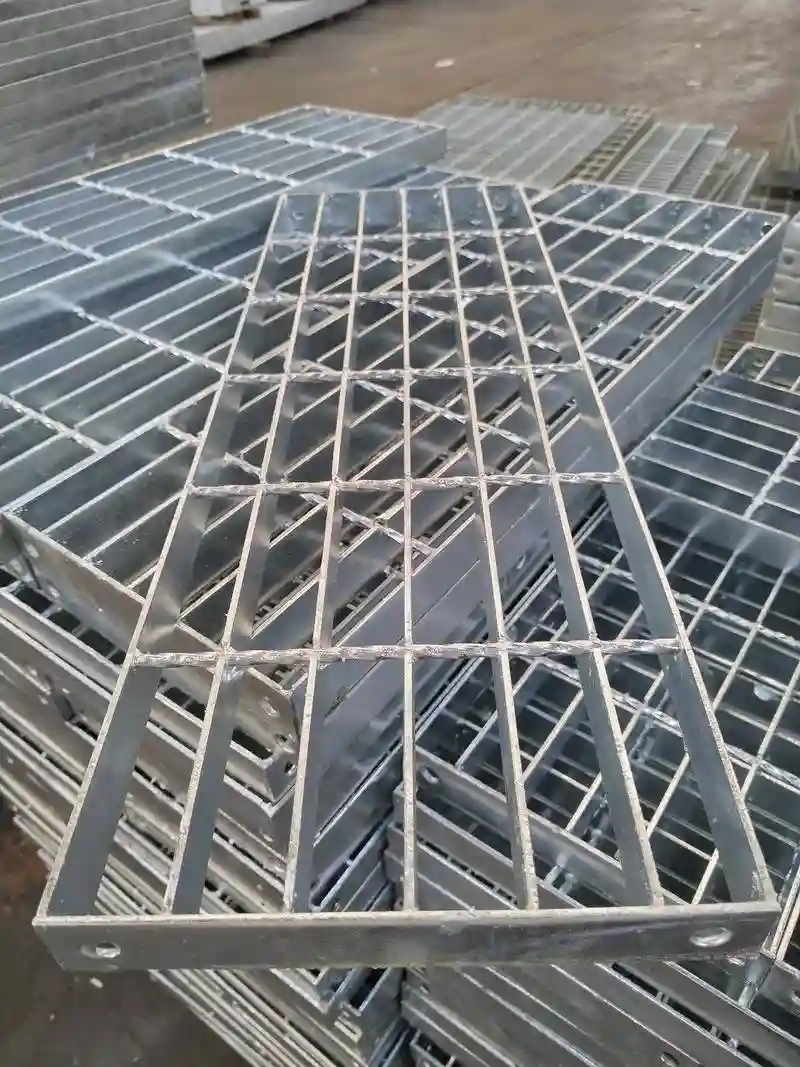
Price per linear meter can refer to different scopes:
When requesting a quotation, state which of these scopes you want. Otherwise, two suppliers may quote different products while both label the price “per meter.”
For a rectangular cover panel, the basic conversion is:
Grating price per linear meter = price per square meter × overall cover width in meters
If the price is quoted per square foot, convert the cover width to feet or convert the square-foot rate to a square-meter rate first. For metric calculations, 1 m² equals approximately 10.7639 ft².
If grating costs US$60 per m² and the overall cover width is 500 mm:
US$60/m² × 0.5 m = US$30 per linear meter
That is the basic area-based panel cost only. It does not include frame, cutouts, banding, clips, freight, installation, or taxes unless the quotation says those items are included.
| Overall Cover Width | Grating Area per Linear Meter | At US$60/m² |
|---|---|---|
| 300 mm | 0.30 m² | US$18.00 per linear meter |
| 400 mm | 0.40 m² | US$24.00 per linear meter |
| 500 mm | 0.50 m² | US$30.00 per linear meter |
| 600 mm | 0.60 m² | US$36.00 per linear meter |
| 800 mm | 0.80 m² | US$48.00 per linear meter |
When a supplier quotes per square foot, use:
Price per linear meter = price per square foot × cover width in feet × 3.28084
The 3.28084 factor converts one linear meter to feet. For example, a 2 ft wide cover quoted at US$8 per square foot has an area-based cost of US$16 per linear foot. Per linear meter, that is approximately US$52.49.
If the supplier quotes per metric tonne and provides the finished grating weight per square meter, estimate the area price first:
Price per m² = price per metric tonne × weight in kg/m² ÷ 1,000
Then multiply the area price by the overall cover width in meters. Make sure the unit rate and weight use the same basis. A raw steel price per tonne does not include grating fabrication, finishing, or packing unless the supplier explicitly includes those costs.
The following figures are broad factory-budget references converted from area rates into linear-meter rates. The underlying square-meter ranges are published in the CSSP steel grating prices, sizes, and load capacity guide. They are not live quotations or guaranteed market prices. Actual offers vary with country, order quantity, steel markets, bar dimensions, load class, fabrication, finish, delivery terms, and purchase date.
The examples assume overall cover widths of 300, 500, and 600 mm. They calculate panel-area cost only and exclude frames, accessories, delivery, installation, duties, and taxes.
| Grating Type | Indicative Factory Range | 300 mm Cover | 500 mm Cover | 600 mm Cover |
|---|---|---|---|---|
| Basic untreated carbon steel | US$15–45/m² | US$4.50–13.50/m | US$7.50–22.50/m | US$9–27/m |
| Standard hot-dip galvanized steel | US$25–80/m² | US$7.50–24/m | US$12.50–40/m | US$15–48/m |
| Fabricated galvanized grating | US$40–140/m² | US$12–42/m | US$20–70/m | US$24–84/m |
| Heavy-duty galvanized grating | US$90–300/m² | US$27–90/m | US$45–150/m | US$54–180/m |
| 304 stainless steel grating | US$55–150/m² | US$16.50–45/m | US$27.50–75/m | US$33–90/m |
| 316 or 316L stainless steel grating | US$70–220/m² | US$21–66/m | US$35–110/m | US$42–132/m |
The “fabricated” and “heavy-duty” categories can cover a wide range of work and designs. Confirm exactly what each supplier includes. A heavy-duty designation should be supported by bearing bar dimensions, span, load data, and support assumptions.
Once the cover width is known, the next major price drivers are the required load performance, steel weight per square meter, material grade, finish, fabrication details, and order quantity.
The cover width determines the area consumed per linear meter. The clear channel opening affects structural span, but the overall grating width usually includes bearing at both sides and may be greater than the opening itself.
Suppose a channel has a 400 mm clear opening and the cover rests on support ledges on both sides. If the design requires a 25 mm bearing at each edge, the overall panel width might be at least 450 mm, subject to the frame detail and tolerances. The area-based price should use the actual panel width, not just the 400 mm clear opening.
The required bearing length is a design matter. It must account for loading, support material, panel edge configuration, installation tolerance, and the applicable design criteria.
For a drainage cover, the bearing bars normally span across the channel width. A wider channel therefore creates a longer grating span. Longer spans typically require deeper or thicker bearing bars, closer support spacing, or a different structural arrangement. This raises price per square meter and therefore price per linear meter.
A long drainage run may use multiple standard panel lengths. Panel joints need support and alignment. If panels are made in nonstandard lengths to avoid joints, transport and handling limits may affect cost. A detailed panel schedule helps identify the economical mix of standard and custom pieces.
Bearing bars carry the main bending load. Their height, thickness, and center spacing influence both structural performance and weight. Typical industrial choices vary by manufacturer and standard, so the project specification should give exact dimensions rather than using a general term such as “heavy grating.”
Increasing bar height is a common way to increase stiffness for a wider channel span. Deeper bars can reduce deflection, but they add weight and may require more clearance beneath the cover or a deeper frame.
Increasing thickness adds steel and can improve section capacity and resistance to local wear or damage. Thickness is not a substitute for adequate bar height or correct span design.
Closer bearing bar spacing reduces the size of openings and increases the number of bars across a panel. This can help retain smaller objects and provide a firmer walking surface, but it generally raises weight and material cost.
When comparing a price per linear meter, ask for the finished panel weight per square meter or per piece. Confirm whether the stated weight includes cross bars, banding, coating, and attachments. A price per kilogram and a price per linear meter cannot be compared without matching the unit weight and scope.
Drainage channels may be located in pedestrian walkways, parking areas, loading yards, roads, warehouses, or industrial traffic routes. Each location can impose a different load, and the cover must be designed for the actual traffic rather than selected by appearance or nominal bar size alone.
Pedestrian covers usually have lower design loads than vehicle covers, but they still need to account for concentrated footfall, maintenance equipment, opening dimensions, slip resistance, and any risk of tools or objects falling through.
Passenger vehicles and light service vehicles impose wheel loads over a limited contact area. The cover and frame must be checked for the wheel load, its position, support conditions, and dynamic effects. A pedestrian-rated panel should not be assumed suitable because a car is expected to cross only occasionally.
Forklifts, trucks, loaders, and industrial vehicles can impose high concentrated and impact loads. Heavy-duty covers may need deeper bearing bars, reinforced banding, closer support, or a stronger frame. The system should be designed as a cover-and-frame assembly.
Some projects specify a traffic load class under a regional standard; others provide wheel loads and design criteria directly. Identify the governing standard, test method, load position, allowable deflection, and safety factor. Do not compare “heavy duty” labels unless they represent the same test and design basis.
| Material | Typical Initial Cost Position | Suitable Conditions | Cost Considerations |
|---|---|---|---|
| Untreated carbon steel | Lowest material price | Controlled indoor service or projects with a separate coating system | Include coating and future maintenance rather than comparing bare steel alone |
| Hot-dip galvanized steel | Moderate initial cost | General outdoor and industrial drainage | Cost depends on weight, coating specification, batch size, and fabrication sequence |
| 304 stainless steel | Higher than galvanized steel | Freshwater, hygienic, and mildly corrosive environments | May reduce coating repair; check chloride exposure |
| 316 or 316L stainless steel | Usually higher than 304 | Marine, coastal, brine, and chloride-bearing environments | Higher alloy cost can be justified by corrosion risk and difficult replacement access |
For wastewater, coastal, chemical, or salt-exposed channels, material selection should reflect the water chemistry and cleaning regime. A stainless steel premium may be economical if replacing a corroded cover would require road closure, confined-space work, or process shutdown.
Welded grating is common for industrial drainage covers and is often economical for standard carbon or galvanized steel panels manufactured in repeated sizes. Welded intersections provide a rigid grid. Stainless welded products may require additional cleaning and passivation after fabrication.
Press-locked grating uses cross bars mechanically pressed into notches in the bearing bars. Its price depends on the product design, bar dimensions, material, tooling, and whether the required configuration is a standard production item.
Heavy-duty grating costs more because it generally uses larger sections, more material, and stronger edge details. If the cover crosses a vehicle route, the cost should include adequate frame strength and panel restraint, not only the heavier grating itself.
Request each construction option at the same overall width, clear span, load, deflection criterion, material, and finish. Otherwise, the price comparison does not show a true manufacturing difference.
Plain grating has smooth bearing bar tops and is often easier to clean. Serrated grating has notched upper edges that can improve traction where water, mud, oil, or process residue is present.
Serrations can add fabrication cost, and the exact surcharge depends on bar size and production method. They do not make a surface completely slip-proof. Drainage, cleaning, footwear, lighting, and handrails remain part of a safe access design.
Hot-dip galvanizing is widely used for carbon steel channel covers in outdoor service. The purchase specification should identify the applicable standard, coating requirement, inspection scope, and how damaged or uncoated areas will be handled.
Ask whether the price includes galvanizing after all cutouts, banding, and welding are complete. Coating a panel before final fabrication may leave cut edges or welds exposed.
Paint costs depend on surface preparation, primer, number of coats, dry-film thickness, curing, and inspection. A duplex system combines galvanizing with paint and may improve durability or appearance, but it adds process steps.
Stainless grating may be supplied as fabricated, pickled and passivated, brushed, or polished. Pickling and passivation can be important around welds in corrosive service. State the finish and acceptance requirements so that a basic mill finish is not compared against a treated product.
More coating is not always better if the coating is incompatible with the liquid or the channel’s operating temperature. Specify the exposure: freshwater, seawater, brine, wastewater, chemicals, deicing salt, or washdown solution. Select the protection system for those conditions.
Standard grating panels may be cheaper per square meter, but they are economical only if their dimensions fit the channel layout with acceptable cutting and waste. A custom panel may reduce site labor and avoid unsafe field modifications.
Custom covers may require unique lengths, nonstandard widths, corner cuts, pipe notches, lifting features, identification marks, or reinforced openings. Each feature adds drawing, setup, fabrication, inspection, or finishing work.
For a long channel, a panel schedule can reduce offcuts and simplify joints. The schedule should identify each cover length, panel mark, support location, and installation direction. Plan around the available grating production and shipping lengths before finalizing the frame layout.
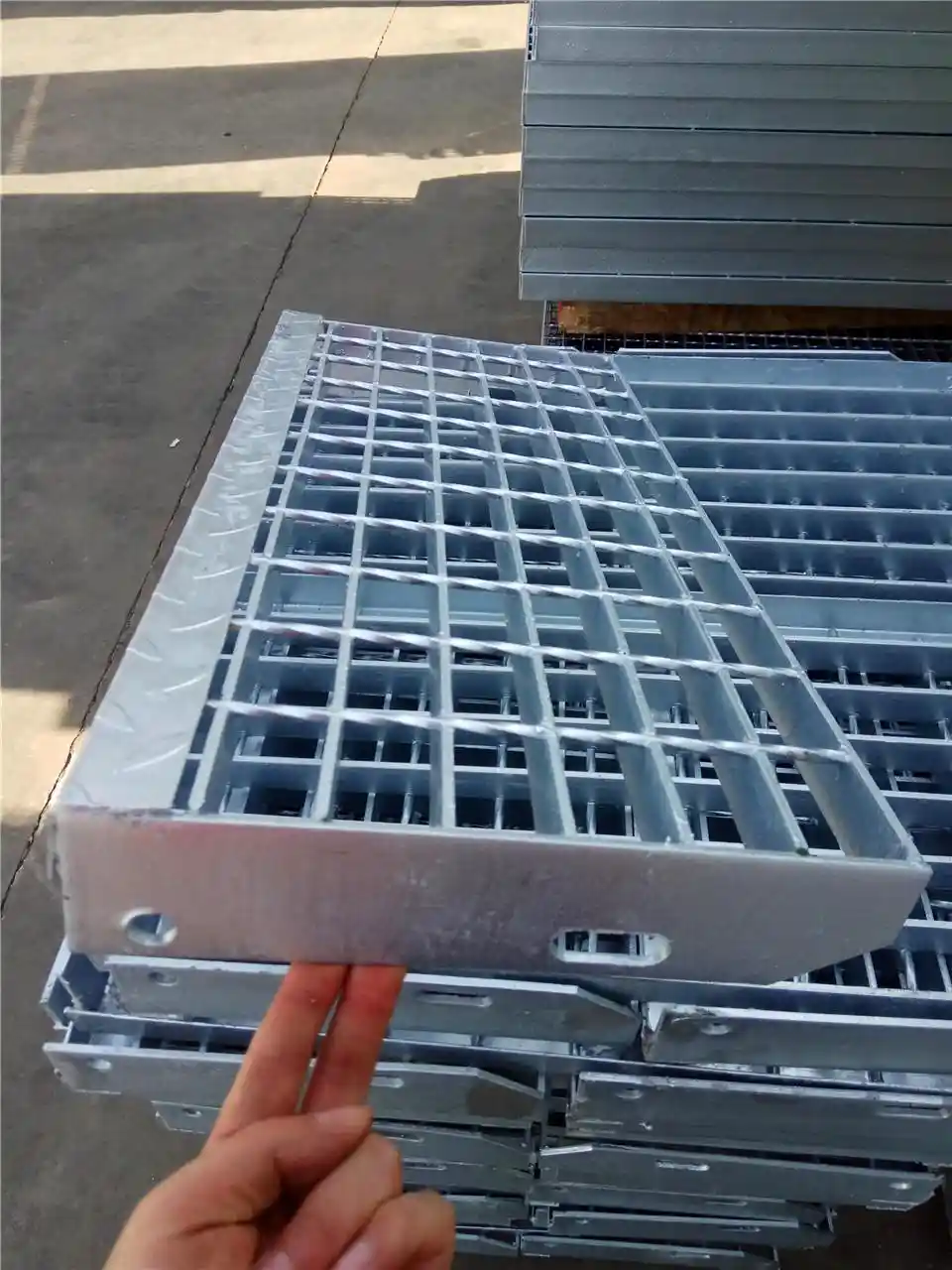
The grating panel is only one component of a drainage cover system. The following items should be shown in the quotation or explicitly excluded:
| Component | Cost Driver | Specification Detail |
|---|---|---|
| Banding | Panel perimeter, bar size, and welded detail | State whether banding is decorative or load-bearing |
| Cutouts and notches | Size, quantity, location, and edge reinforcement | Provide dimensioned drawings and tolerances |
| Frame or support angle | Section size, material, anchors, and corrosion treatment | Confirm if the frame is included per meter or supplied separately |
| Clips and fixings | Number per panel, material, and restraint requirements | Specify removable or permanent fastening |
| Hinges, handles, and locks | Hardware type, opening frequency, and security requirement | Quote as a complete access assembly |
| Traffic-rated cover details | Load rating, support width, and reinforcement | Include frame and panel calculations |
For drainage channels that require regular cleaning, removable or hinged panels may improve maintenance access but add hardware and fabrication costs. Consider the access frequency and safe lifting method during design rather than adding handles later.
Installation cost depends on site conditions and scope, so there is no universal labor rate per linear meter. A straightforward ground-level channel with an existing frame is faster to cover than an elevated process channel requiring scaffold access, confined-space precautions, or shutdown coordination.
If the drainage channel has no suitable bearing frame, include the frame, anchoring, concrete interfaces, support steel, and corrosion treatment. These may cost more than the grating, especially on long channels or heavy-traffic routes.
Crane or forklift time, lifting beams, scaffolding, traffic control, temporary barriers, and restricted work windows should be budgeted separately when they are not included in the installer’s rate.
Channel covers can be heavy relative to their area, and long panels can consume substantial truck or container space. Freight is affected by both weight and package dimensions.
Confirm whether the price includes pallets, bundles, steel strapping, edge protection, weather protection, and panel identification. Marking covers in installation sequence can reduce time and handling at the site.
Clarify the delivery point and who pays inland transport, export handling, ocean freight, insurance, customs clearance, duties, destination handling, final delivery, and unloading. Import charges vary by country, product classification, origin, and applicable trade measures.
Delivering covers in installation order can reduce on-site storage and rehandling. However, multiple shipments may increase freight and coordination costs. Compare a consolidated shipment with staged delivery based on the project schedule and storage conditions.
Start with the channel length and the actual overall cover width, then add system components and site costs. Keep the unit basis consistent throughout the calculation.
Grating area in m² = channel length in m × overall cover width in m
For a 40 m channel with a 500 mm overall cover width:
40 m × 0.5 m = 20 m²
At an illustrative rate of US$60/m²:
20 m² × US$60/m² = US$1,200
The equivalent basic panel rate per linear meter is:
US$60/m² × 0.5 m = US$30 per linear meter
Add documented amounts for banding, cutouts, lifting features, clips, frames, hinges, and other items. Use drawing-based prices where possible rather than a percentage allowance.
Include packing, freight, duties, unloading, installation labor, access equipment, traffic control, and any support-frame work.
The figures below are assumptions to demonstrate the method, not a supplier quote:
| Budget Item | Example Calculation | Example Cost |
|---|---|---|
| Galvanized grating panels | 20 m² × US$60/m² | US$1,200 |
| Banding and cutouts | Drawing-based allowance | US$250 |
| Frames and fixings | 40 m channel, specified frame and clips | US$900 |
| Packing and freight | Illustrative shipment allowance | US$450 |
| Installation labor | Site-specific labor allowance | US$600 |
| Subtotal | Sum of listed items | US$3,400 |
| Installed system cost per linear meter | US$3,400 ÷ 40 m | US$85/m |
This example separates US$30 per linear meter for the grating area from the broader system cost of US$85 per linear meter. Actual figures depend on the verified design, delivery destination, and site scope.
Send the same channel drawings, panel schedule, and technical requirements to each supplier. Then compare price, included scope, and deviations side by side.
| Check | What to Confirm |
|---|---|
| Price basis | Per linear meter, square meter, panel, kilogram, or tonne |
| Cover width | Overall panel width and bearing at both channel supports |
| Grating geometry | Bearing bar height, thickness, spacing, and cross bar arrangement |
| Load performance | Clear span, wheel load or pedestrian load, deflection limit, and calculation basis |
| Material and finish | Steel grade, galvanizing or coating specification, stainless finish |
| Fabrication | Banding, openings, notches, marking, lifting details, and tolerances |
| System components | Frames, clips, bolts, hinges, handles, and anchors |
| Commercial scope | Packing, delivery location, freight, duties, unloading, validity, and lead time |
A low unit price may reflect a narrower panel, smaller bearing bars, a lower load rating, missing banding, or excluded fixings. Record every deviation and obtain engineering approval before treating an alternative as equivalent.
| Application | Main Design Demand | Typical Cost Direction |
|---|---|---|
| Pedestrian channel | Foot traffic, maintenance loads, slip resistance, object retention | Usually the lowest structural cost if spans are short |
| Light-vehicle channel | Passenger-car wheel load, occasional crossing, frame support | Higher than pedestrian covers; requires wheel-load verification |
| Forklift or service-vehicle channel | High concentrated wheel loads, impact, repeated traffic | Often requires heavy-duty bars and stronger frames |
| Road or heavy industrial traffic | Specified traffic class, dynamic load, fatigue, robust support | May require a purpose-designed cover system and testing |
Traffic classification should be established before the supplier selects the bar size. Increasing panel strength without strengthening the frame may not produce a safe system.
The lowest initial price may not be the least expensive option over the service life. Life-cycle cost includes cleaning, inspection, coating repair, panel replacement, access equipment, road closure, and operational interruption.
Galvanized covers are often cost-effective in general outdoor service. Inspect areas where the coating is abraded, where water or chemicals collect, and around field cuts. Repair procedures should follow the specified coating standard.
Stainless steel avoids zinc-coating repair, but it still needs inspection and cleaning. Chloride deposits and crevices can cause localized corrosion, particularly when the grade is not suited to the exposure. Select 304 or 316 according to water chemistry and site conditions.
Removable or hinged covers can simplify channel cleaning and inspection. The additional hardware cost may be offset by reduced maintenance labor and safer access. Consider how often the channel must be opened and how workers will lift the covers.
For a life-cycle comparison, use the same study period and include future repair and replacement costs for every option. Base service-life assumptions on the environment, coating or alloy, maintenance plan, and manufacturer information rather than assigning a generic number of years.
How do I calculate steel grating price per linear meter for a drainage channel? Multiply the grating price per square meter by the overall cover width in meters. For example, at US$60/m² and a 500 mm overall cover width, the basic panel cost is US$30 per linear meter. Add frames, fixings, custom fabrication, freight, and installation separately unless they are included in the quotation.
Does channel width mean the clear opening or the grating panel width? Use the overall grating panel width for the area-price conversion. The panel may be wider than the channel’s clear opening because it needs to bear on support ledges on both sides. Confirm the frame and bearing dimensions on the project drawing.
Why does a heavy-traffic drainage cover cost more per linear meter? Heavy-traffic covers usually need larger bearing bars, stronger edge details, and a frame designed for concentrated wheel loads and impact. Their price also depends on cover width, span, material, finish, fabrication, and delivery. Compare load calculations and included frame components, not just the quoted unit rate.