

304 stainless steel grating price per square meter depends on bearing bar dimensions, mesh spacing, panel weight, manufacturing method, surface treatment, fabrication, and order quantity. For early factory-supply budgeting, CSSP’s published pricing guide lists a broad reference range of approximately US$55–150 per m² for 304 stainless steel grating. This is a planning range rather than a binding quotation or a delivered-and-installed price. Heavy-duty sections, close-mesh panels, extensive custom work, decorative finishing, and small production runs can cost more. The most reliable way to compare prices is to specify the same load, span, material, dimensions, finish, and delivery scope for every supplier.
Pricing per square meter makes it easier to estimate flooring, walkways, platforms, drainage covers, and access areas. If a project requires 80 m² of grating, an area-based quotation gives the purchasing team a straightforward starting point for budgeting.
However, one square meter of grating does not represent a fixed quantity of stainless steel. A panel with 40 × 5 mm bearing bars contains substantially more material than a panel with 25 × 3 mm bars at the same spacing. A close-mesh product also contains more bars than a wider mesh. These differences affect strength, stiffness, drainage, weight, handling, and cost.
The price should therefore answer two questions: what product is being supplied, and what work is included? A lower figure can reflect efficient production, but it can also reflect a lighter section, a different finish, missing banding, or excluded delivery charges.
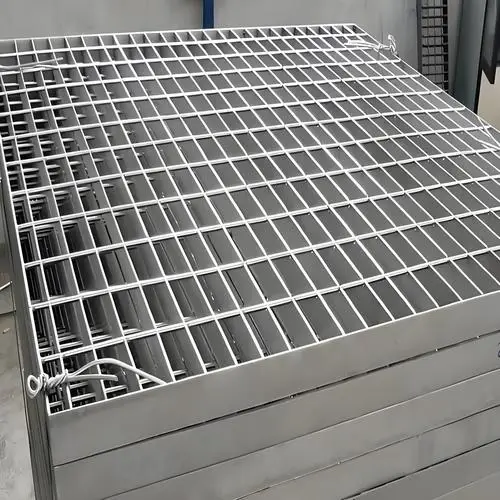
A factory supply price should not be presented as the final cost of a completed platform. Support beams, frames, stairs, handrails, and foundations may be separate packages.
304 stainless steel grating is an open-grid product made from a chromium-nickel stainless steel commonly identified as Type 304 or UNS S30400. In bar grating, parallel bearing bars carry the primary load between supports, while cross bars connect the bearing bars and maintain the panel arrangement.
Chromium enables stainless steel to form a thin passive surface film. This provides useful corrosion resistance without relying on a zinc coating. Type 304 is widely used in indoor industrial areas, freshwater environments, food-processing facilities, architectural projects, and applications requiring a clean metallic surface.
304 is not suitable for every wet or chemical environment. Chlorides, acidic deposits, elevated temperatures, and poorly drained crevices can create localized corrosion. In those conditions, 316, 316L, or a higher alloy may be more appropriate.
304L is the low-carbon version of 304. Its lower carbon content reduces susceptibility to sensitization during welding. It is commonly considered for welded assemblies in demanding corrosion service.
Some material is dual certified as 304/304L, but the purchase order should identify the required grade and certification. The availability of dual-certified material means that a low-carbon requirement does not always produce a predictable price premium.
304 stainless steel grating may be supplied as welded, press-locked, or mechanically locked bar grating. Perforated stainless steel safety grating is a different product family, typically formed from sheet into profiled planks or panels.
For a detailed explanation of bar sizes, panel dimensions, and applications, see the guide to 304 stainless steel grating specifications.
The cost of 304 stainless steel changes with alloy markets, mill pricing, product availability, energy costs, exchange rates, and regional supply conditions. Suppliers may buy finished flat bars or produce bars from suitable stock, and those routes can have different costs.
Ask how long the quotation remains valid and whether the price is fixed after order confirmation. A budget prepared several months before procurement may need updating, especially when the project includes a large quantity of stainless steel.
For comparison purposes, quotations should use the same currency, payment terms, and price date. A favorable exchange rate or payment condition can influence the commercial result even when the physical products are identical.
Welding, slotting, pressing, punching, and mechanical locking require different equipment and production steps. A standard product that runs regularly through a manufacturer’s production line may be more economical than a special design requiring separate tooling or setup.
Manufacturing method also affects the available bar dimensions, mesh patterns, panel appearance, and load data. Request alternatives against the same performance requirement rather than assuming that all construction types are interchangeable.
Bearing bars usually account for most of the metal in conventional bar grating. Increasing their depth or thickness increases material consumption. Reducing their spacing places more bars within each square meter.
These changes can improve capacity or stiffness, but the appropriate section depends on span and loading. Buying a lighter panel solely to reduce its area price can leave the project with excessive deflection or inadequate load capacity.
Closer cross bar spacing adds material and intersections. Its cost effect depends on cross-bar dimensions and the manufacturing method. It may also change the visible grid, object-retention characteristics, and panel behavior.
Cross bars should not be treated as a substitute for correctly sized bearing bars. The supplier’s load data must correspond to the actual construction, span direction, and support arrangement.
Repeated rectangular panels are normally easier to manufacture than irregular shapes. Small panels can have a high amount of edge finishing per square meter, while large panels may require special handling or transportation.
Order quantity affects setup allocation, raw-material purchasing, finishing batches, and packing efficiency. A large order of identical panels can be more economical than the same area divided into many unique drawing marks.
As-fabricated, pickled, passivated, brushed, polished, and electropolished surfaces involve different processing. The word “stainless” does not mean that every panel has received the same surface treatment.
Pickling can remove weld heat tint and scale. Passivation treatments generally remove free iron and support the development of a clean passive surface; they should not be assumed to remove heavy heat tint by themselves. Specify the required preparation and treatment sequence rather than using the terms interchangeably.
Pipe penetrations, corner notches, curved edges, welded toe plates, reinforced openings, and lifting features require drawing preparation and shop work. Even when a cutout removes metal, it can increase the finished price because cutting and edge treatment take additional labor.
Stainless grating may need separation materials to reduce scratching and prevent contact with contaminating carbon steel surfaces. Pallets, lifting provisions, export packing, and bundle identification also add cost.
Taxes and import duties depend on destination, origin, classification, and applicable trade measures. A factory quotation should not be assumed to include these charges.
| Product Type | Construction | Main Pricing Factors | Comparison Requirement |
|---|---|---|---|
| Welded bar grating | Cross bars welded to parallel bearing bars | Bar size, welding process, production quantity, fabrication, and weld cleaning | Confirm the supplied panel meets the specified span and load |
| Press-locked grating | Bars pressed into prepared slots or notches | Slot preparation, bar arrangement, mesh, pressing, and edge treatment | Identify the load-bearing direction and exact product construction |
| Swage-locked grating | Cross members mechanically secured through a swaging process | Product availability, hole preparation, profiles, assembly, and locking system | Verify that the manufacturer offers the specified 304 configuration |
| Stainless steel safety grating | Sheet punched or perforated and formed into planks or panels | Sheet thickness, profile depth, punching pattern, tooling, and usable coverage | Compare load, traction, drainage, and coverage rather than nominal thickness alone |
Welded bar grating is a common industrial choice. Standard mesh patterns and repeated panel sizes can support efficient production. Extensive welding also makes surface cleaning and control of heat tint important where corrosion resistance or appearance is a priority.
Ask whether welded intersections, perimeter banding, and other attachments are included in the base quotation. The required quality of the finished walking surface should also be defined.
Press-locked products are often considered for precise grids, visible architectural installations, and selected industrial applications. Their price depends on the bar arrangement and manufacturing process, rather than a universal premium over welded grating.
Some designs use bars of different depths in the two directions. Other arrangements are more symmetrical. Confirm which members carry the load before comparing panel weights and quotations.
Swage-locked products use mechanically formed connections between cross members and bearing bars. Availability varies by manufacturer and material. A supplier specializing in another alloy or product system may need a special production run for stainless steel.
The absence of welded intersections does not eliminate fabrication or surface-cleanliness requirements. Perimeter details, attachments, and cut edges still need to meet the specification.
Safety grating is often formed from sheet with raised or punched traction features. Its price is influenced by sheet thickness, plank depth, width, tooling, and usable coverage.
A 40 mm deep formed plank is not structurally equivalent to 40 mm deep bar grating. Compare the published capacity for the actual span and loading, along with drainage and slip performance.
Suppliers may quote per panel, kilogram, metric tonne, or square foot. Convert each offer to the same unit, but preserve the distinction between supply price and installed cost.
Panel area in m² = panel length in meters × panel width in meters
Price per m² = panel price ÷ panel area in m²
For an illustrative 1,000 × 2,000 mm panel quoted at US$240:
Area = 1.0 × 2.0 = 2.0 m²
Price per m² = US$240 ÷ 2.0 = US$120/m²
This conversion does not establish whether US$240 is a good market price. It simply puts the quotation on a consistent area basis.
Price per m² = finished-grating price per kg × matching grating weight in kg/m²
If the quoted finished-grating rate is US$4/kg and the matching unit weight is 28 kg/m²:
US$4 × 28 = US$112/m²
The kilogram rate must refer to the finished product scope. Multiplying a raw stainless steel rate by the panel weight gives only a starting material calculation; it omits fabrication, processing losses, finishing, and other charges.
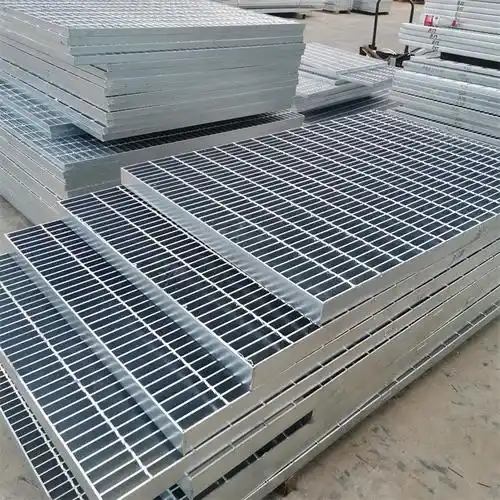
Price per m² = price per metric tonne × grating weight in kg/m² ÷ 1,000
A hypothetical finished-grating rate of US$4,000 per metric tonne and a unit weight of 28 kg/m² gives the same US$112/m².
Confirm that “ton” means a metric tonne. A US short ton is 2,000 lb and is a different unit.
Price per m² = price per ft² × 10.7639
Price per ft² = price per m² ÷ 10.7639
A price of US$10 per ft² is approximately US$107.64 per m². Conversely, US$100 per m² is approximately US$9.29 per ft².
Installed cost per m² = total installed project cost ÷ finished installation area
Purchased area may exceed installed area because of the cutting layout, spares, or unusable offcuts. If a project purchases 52 m² to install 50 m², divide the total expenditure by 50 m² when calculating the cost of finished coverage.
CSSP’s steel grating pricing guide lists approximately US$55–150/m² as a broad factory-budget reference for 304 stainless steel grating. The same guide lists approximately US$70–220/m² for 316 or 316L.
These figures are preliminary allowances from a supplier guide. They are not an independently surveyed market average, a guaranteed current selling price, or a promise that every bar size is available within the range.
| Pricing Situation | How to Use the Budget Range | What Needs a Separate Check |
|---|---|---|
| Repeated standard 304 panels | Use as an early planning reference | Exact bars, mesh, weight, surface treatment, and order quantity |
| Deep or thick bearing bars | Expect greater material consumption | Section weight and engineered load requirement |
| Close-mesh grating | Allow for more bars and potentially more processing | Required clear openings and production availability |
| Small custom order | A published area range may not cover minimum charges | Setup, finishing batches, packing, and material minimums |
| Polished architectural panels | Obtain a finish-specific quotation | Visible faces, roughness, weld blending, and appearance acceptance |
| Vehicle-rated or special assemblies | Use a drawing-based quotation | Frames, edge reinforcement, load verification, and restraints |
Heavy sections, unusual mesh, special certification, electropolishing, extensive cutouts, or urgent delivery can raise the cost beyond a general planning allowance. Conversely, a large repeated order may benefit from efficient material purchasing and production.
A useful quotation identifies the base panel cost, additional fabrication, surface treatment, accessories, documentation, packing, and delivery. Items already included in the panel rate should be marked as included so that they are not counted again in the project estimate.
The theoretical bearing-bar weight helps explain price differences. Using an approximate 304 stainless steel density of 7,930 kg/m³, the continuous-grid estimate is:
Bearing-bar-only weight in kg/m² ≈ 7.93 × bar height in mm × bar thickness in mm ÷ bar center spacing in mm
| Bearing Bar Size | Center Spacing | Approximate Bearing-Bar-Only Weight |
|---|---|---|
| 25 × 3 mm | 30 mm | 19.83 kg/m² |
| 30 × 3 mm | 30 mm | 23.79 kg/m² |
| 30 × 5 mm | 30 mm | 39.65 kg/m² |
| 40 × 5 mm | 30 mm | 52.87 kg/m² |
These figures exclude cross bars, banding, attachments, notches, and finite-panel edge effects. They are not finished product weights or load ratings. They demonstrate why two panels with the same mesh can have very different material costs.
The clear span is the unsupported distance between bearing points. Longer spans generally require greater stiffness, while concentrated loads may require stronger local details than ordinary pedestrian loading.
A design should identify uniformly distributed loads, concentrated loads, load footprints, wheel loads where applicable, and allowable deflection. The grating should be checked against the actual support condition and bearing bar direction.
Reducing bar dimensions to match a budget is only acceptable after the revised product has been verified against those requirements.
Closer spacing increases metal content and reduces the opening between bars. It may help meet object-retention or pedestrian-access requirements, but it also changes drainage and cleaning characteristics.
Center spacing and clear opening are different dimensions. With 30 mm centers and a 5 mm thick bearing bar, the nominal gap between those bars is about 25 mm before tolerances. Specify whichever opening criterion the project actually requires.
Drainage depends on the complete system, including channel capacity, inlet conditions, debris, and downstream flow. A higher open-area percentage alone does not guarantee that a drainage installation will perform adequately.
Larger panels can reduce the number of joints and fasteners, but they may require mechanical lifting. Smaller panels can simplify removal for maintenance while adding perimeter fabrication and handling.
The most economical module is therefore a balance between production, installation, support layout, and future access. Keep bearing bar direction clear on drawings so that dimensional optimization does not accidentally alter the structural span.
Serrations can improve traction in wet or contaminated areas and may add processing cost. Their effect on the bar section should be reflected in the supplier’s load data.
Plain grating can be appropriate where the environment is dry or where cleaning requirements favor smooth upper edges. Select the walking surface from the actual slip exposure rather than using price as the only criterion.
For equivalent construction and quantity, 316 usually has a higher material price than 304. Its molybdenum addition provides improved resistance to pitting and crevice corrosion in many chloride-bearing environments.
| Selection Factor | 304 Stainless Steel | 316 or 316L Stainless Steel |
|---|---|---|
| Initial material cost | Usually lower | Usually higher |
| Clean indoor conditions | Often a practical choice | Additional alloy may provide limited benefit |
| Freshwater exposure | Often suitable after checking water and cleaning chemistry | Provides additional corrosion margin |
| Coastal air and salt deposits | Greater localized corrosion risk | Generally preferred, subject to exposure severity |
| Brine or aggressive washdown | Requires careful compatibility review | Often a better starting option, but not universally suitable |
| Load capacity | Determined by material properties, geometry, and supports | Not automatically higher simply because the grade is 316 |
There is no dependable universal percentage premium for 316. Alloy markets, stock availability, bar dimensions, and order size change the difference. Ask the supplier to price both grades using the same drawing and finish.
Choosing 304 to save money is reasonable when it meets the exposure requirement. It is a false saving when chloride attack leads to early replacement. For marine, chemical, and wastewater use, review the considerations in 316 stainless steel grating applications.
Galvanized steel generally has a lower initial price than comparable 304 stainless steel grating. It can be a good economic choice for ordinary outdoor access platforms, warehouses, and many industrial environments.
304 becomes more attractive when coating maintenance, hygiene, appearance, or contamination control carries greater weight.
| Material | Price Consideration | Where It Can Offer Value | What to Include in the Comparison |
|---|---|---|---|
| Untreated carbon steel | Normally the lowest initial supply price | Controlled environments or projects with a separate protection system | Preparation, coating, inspection, and future maintenance |
| Hot-dip galvanized steel | Generally lower than stainless for equivalent geometry | General industrial and atmospheric exposure | Coating requirements, abrasion, chemical compatibility, and repairs |
| 304 stainless steel | Higher purchase cost | Clean processing, freshwater, mild corrosion, and architectural installations | Surface treatment, cleaning, chloride exposure, and replacement access |
Untreated carbon steel is not a like-for-like substitute for stainless steel in a wet environment unless the comparison includes a suitable protective system. Likewise, 304 should not be assumed suitable merely because galvanized steel would corrode in the same location.
304 is used for selected processing platforms, equipment access areas, walkways, drainage covers, and packaging zones. Suitability depends on the food product, salt content, temperature, and sanitation chemicals.
Food-related use does not automatically make ordinary bar grating hygienic by design. Weld details, crevices, surface finish, drainage, accessibility for cleaning, and proximity to exposed product should be reviewed.
Projects may favor stainless steel to avoid deteriorating organic coatings and to support controlled cleaning. The required grade, finish, and fabrication details should follow the actual process and sanitation procedure.
304 can be useful for drainage covers and access grates where the water and cleaning chemicals are compatible. Covers should be removable or otherwise accessible for cleaning below the walking surface.
Visible walkways, entrance grates, ventilation screens, and decorative panels may use 304 for its appearance. These projects can carry additional finishing and packaging costs because scratches, weld discoloration, and inconsistent surface direction are more noticeable.
Machine access platforms and service walkways may use 304 where cleanliness or mild corrosion resistance justifies the premium over galvanized steel. In a dry area with no special hygiene or appearance requirement, galvanized steel may provide better initial value.
List the liquids, vapors, cleaning products, chlorides, and operating temperatures that can reach the panel. Include occasional spills and cleaning cycles. Confirm that 304 is appropriate before optimizing the geometry and price.
Provide the unsupported span, support width, bearing direction, uniform load, concentrated load, and allowable deflection. Identify carts, maintenance equipment, or vehicle traffic explicitly.
Choose a construction that meets the structural, opening, appearance, and cleaning requirements. Standard production patterns may offer better cost and availability than unusual arrangements.
Specify plain or serrated bars, banding, cutouts, toe plates, nosing, lifting features, and any visible-face finish. Include edge details around openings rather than leaving them to field interpretation.
Confirm clips, bolts, frames, support materials, and removable-panel arrangements. A corrosion-resistant grating panel still depends on suitable supports and fasteners.
Repeated lengths and widths reduce unique drawing work, setup, and sorting. Coordinate the panel layout with structural supports and access needs early in design.
A cutting plan can reduce unusable offcuts. Avoid assuming that all scrap has the same recoverable value or that a supplier will automatically credit it. The quotation should state the charging basis.
A platform may contain both ordinary pedestrian zones and localized heavy-load areas. Engineering those zones separately can avoid buying the heaviest grating section for the entire installation.
Decorative polishing may be unnecessary for a concealed industrial platform. However, required heat-tint removal and contamination control should not be omitted simply because the surface is not visible.
Approved factory cutouts, banding, and panel marking can reduce site labor and rework. Late changes may require recutting, additional welding, and repeat surface treatment.
Combining orders for the same section and finish can improve production efficiency. Preserve necessary differences between hygienic, chloride-exposed, and heavy-load areas.
A deeper grating section may cost more per square meter but reduce secondary support requirements. Another design may use lighter grating with closer beams. Compare material, fabrication, coating, installation, and future access for the complete arrangement.
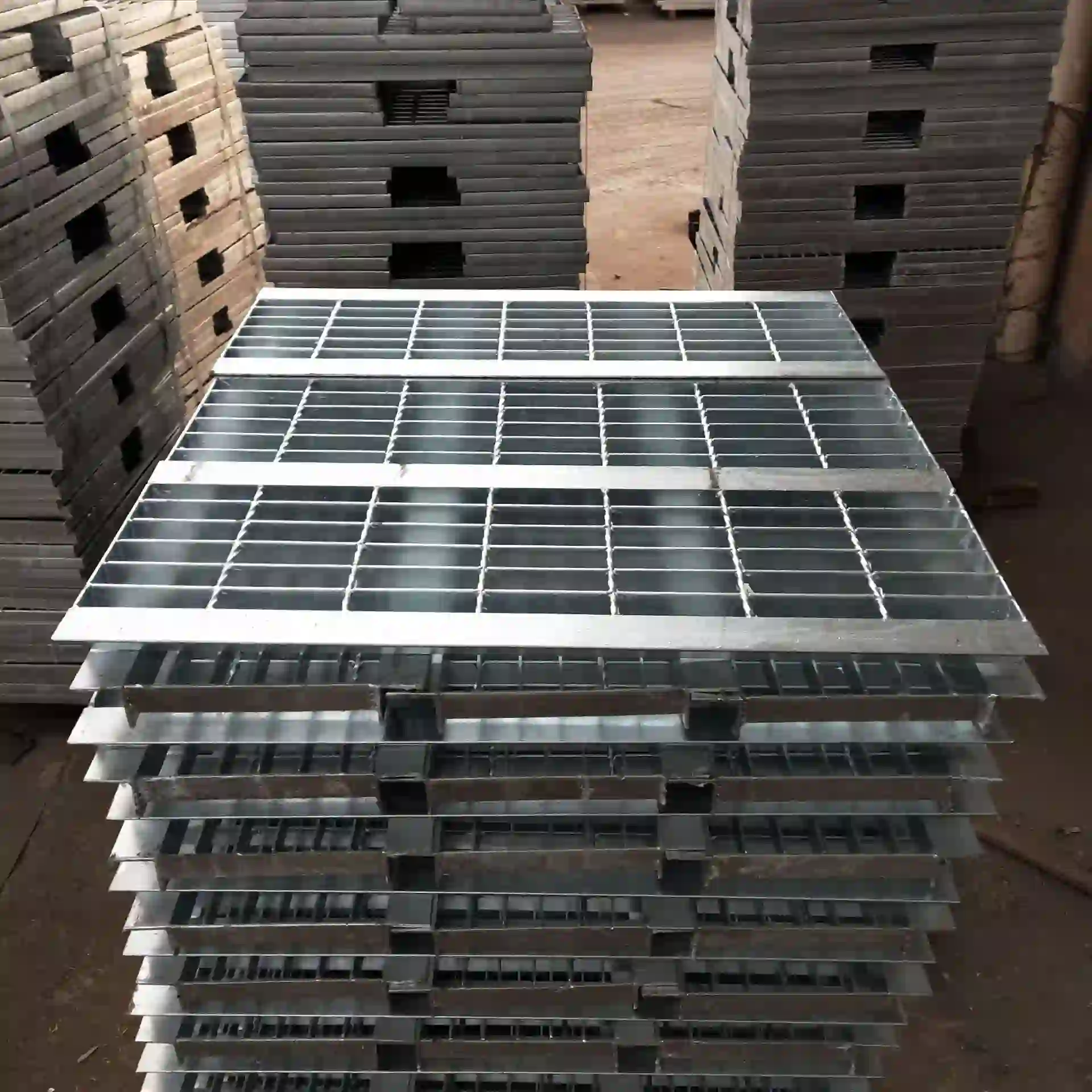
Stainless grating is broadly similar in density to carbon steel, so it should not be budgeted as a lightweight replacement. Panel dimensions and weight determine lifting requirements.
Include receiving, unloading, panel placement, fastening, access equipment, approved field work, and final inspection. Restricted operating hours, elevated installation, and shutdown conditions can increase labor costs.
Stainless panels are sometimes installed on carbon steel supports. In wet conductive conditions, dissimilar-metal contact may need isolation or another corrosion-control detail. The fastener grade and coating should be coordinated with the panel, support, and exposure.
Routine cleaning should remove deposits, chloride residues, grease, and contamination. Use cleaning agents compatible with stainless steel and rinse them as required. Avoid tools that embed carbon steel particles in the surface.
Inspect weld areas, clips, panel edges, underside deposits, and support interfaces. Check for pitting, loose fixings, excessive movement, distortion, and damaged serrations.
A useful ownership-cost comparison includes purchase, installation, cleaning, repairs, access equipment, downtime, and replacement over the same study period. Stainless steel may offer savings where coating repairs are disruptive, but this depends on choosing a suitable grade and maintaining it properly.
Do not assume a fixed service life simply from the word “stainless.” Exposure, surface condition, drainage, and maintenance all influence durability.
The following example demonstrates how a panel price becomes a project budget. Every rate and allowance is illustrative, not a supplier offer or a regional installation benchmark.
Assume the project needs 50 m² of installed grating. The cutting layout and spare allowance require 52 m² of purchased panels, a 4% overage relative to the installed area. The assumed panel price is US$110/m² and includes the agreed basic panel construction and surface treatment.
| Budget Item | Calculation or Allowance | Example Cost |
|---|---|---|
| 304 stainless steel panels | 52 m² × US$110/m² | US$5,720 |
| Additional cutouts and banding | Drawing-based allowance beyond base panel scope | US$650 |
| Clips and fasteners | Approved fixing-layout allowance | US$280 |
| Packing | Separate allowance | US$200 |
| Freight | Illustrative delivery allowance | US$750 |
| Installation labor | Illustrative site allowance | US$1,250 |
| Lifting and access equipment | Separate allowance | US$400 |
| Subtotal | Sum of listed items | US$9,250 |
| Planning contingency | 10% for this illustration | US$925 |
| Total example budget | Subtotal plus contingency | US$10,175 |
| Cost per installed square meter | US$10,175 ÷ 50 m² | US$203.50/m² |
This example excludes new support structures, foundations, handrails, duties, and taxes. Add those items where applicable. It shows why a US$110/m² panel rate should not be presented as the final installed cost.
Contingency should reflect the project’s remaining uncertainty. Known expenses belong in the estimate explicitly, and items already included in a supplier’s package should not be added twice.
A 30 × 3 mm panel and a 30 × 5 mm panel are materially different products. Their prices should not be compared as equivalent merely because both are called 304 stainless steel grating.
Raw stainless steel prices omit production losses, machining, welding, assembly, surface treatment, inspection, and packing. They cannot be multiplied by finished weight and presented as a complete purchase cost.
Some suppliers charge by the gross rectangular panel area, while others quote each finished drawing item. Large cutouts may not reduce the charge proportionally because fabrication work and unusable scrap remain.
Check the exact finish. An as-fabricated panel may retain weld discoloration or contamination that needs treatment for the intended environment.
Load capacity is meaningful only with a stated span and support condition. A lower-cost panel based on a shorter span or a more permissive deflection limit may not meet the project requirement.
Salt-bearing products, hypochlorite cleaners, warm chloride solutions, and deposits can change the material requirement. Review the actual process and cleaning conditions.
Small quantities may attract setup, finishing, or packing minimums. Dividing those fixed charges across a few square meters can create a high effective unit price.
Specify the named delivery location and commercial terms. Confirm responsibility for freight, insurance where applicable, customs charges, unloading, and local delivery.
304 can develop some magnetic response after cold working, and fabricated stainless products can show variable responses. A magnet is not a reliable substitute for material traceability and appropriate grade verification.
| Information | What to Provide | Why It Matters |
|---|---|---|
| Application | Walkway, platform, stair, trench cover, or other use | Defines the product function and required details |
| Environment | Liquids, chemicals, chlorides, temperature, and cleaning procedure | Helps confirm whether 304 is appropriate |
| Material | 304, 304L, or approved dual-certified grade and material standard | Defines alloy and certification requirements |
| Construction | Welded, press-locked, swage-locked, or safety grating | Identifies the manufacturing system |
| Bearing bars | Height, thickness, centers, and span direction | Controls weight and structural performance |
| Cross bars | Profile, dimensions, and spacing | Completes the grid specification |
| Design criteria | Clear span, support detail, loads, footprint, and allowable deflection | Allows the proposed panel to be verified |
| Panel schedule | Length, width, quantity, orientation, and drawing marks | Enables accurate quantity and fabrication pricing |
| Custom details | Banding, cutouts, nosing, toe plates, handles, and hinges | Prevents omitted shop work |
| Surface | Plain or serrated bars and required finish | Defines traction, appearance, and treatment scope |
| Accessories | Clips, bolts, frames, and restraint details | Clarifies whether a complete assembly is required |
| Quality documents | Material reports, traceability, drawings, and inspection requirements | Allows documentation costs and lead time to be included |
| Commercial details | Destination, delivery terms, schedule, currency, and price validity | Creates a comparable delivered-cost basis |
Please quote 304L stainless steel welded bar grating for an indoor equipment platform. Provide separate prices for the panels, specified surface treatment, drawing-based cutouts and banding, stainless fixing assemblies, packing, and delivery. Use the attached panel schedule and support layout to verify the required loads and deflection limit. State the finished unit weight, included documentation, manufacturing lead time, quotation validity, and all technical or commercial exclusions.
Attach the actual dimensions, loads, finish requirements, and drawings before issuing the request. The wording above establishes a quotation structure but does not replace the project specification.
The best-priced 304 stainless steel grating is the compliant product that delivers the required service at a sensible total cost. That may be a standard welded panel with a suitable industrial finish, a custom platform with factory-completed openings, or a different material where the environment makes 304 unnecessary or unsuitable.
Start with the exposure and load requirements, then compare equivalent geometry, finishing, fabrication, and delivery. Where a quotation is high, ask the supplier to identify the major cost drivers. Standardizing panel sizes, simplifying nonessential details, or adjusting the support layout may provide savings while preserving the required performance.
For a project-specific price per square meter, send the panel schedule, material and finish requirements, loading information, and delivery destination together. A complete request produces a quotation that can be checked, purchased, and installed with fewer costly changes.
How much does 304 stainless steel grating cost per m²?
CSSP’s published factory-budget guide gives a broad reference of approximately US$55–150 per m² for 304 stainless steel grating. Actual prices depend on bar size, spacing, panel weight, construction, finish, custom fabrication, and quantity. Heavy-duty or extensively finished products may exceed that range. Confirm whether packing, freight, duties, accessories, and installation are included before using the figure in a project budget.
Is 304 stainless steel grating cheaper than 316?
Usually, when the bar dimensions, mesh, quantity, fabrication, and finish are equivalent. Type 316 normally has a higher material cost and offers better resistance to many chloride environments. The price difference varies with supply conditions, so request both grades against the same specification rather than applying a fixed percentage. Choose 304 only when it is suitable for the actual exposure.
How do I calculate stainless steel grating cost per square meter?
Divide the panel price by its area in square meters. If the supplier quotes a finished-grating rate per kilogram, multiply that rate by the matching panel weight in kg/m². For a metric-tonne rate, multiply by the weight in kg/m² and divide by 1,000. Add separately excluded fabrication, finishing, delivery, and installation costs to calculate the complete project budget.