

304 stainless steel grating is a practical open-grid flooring solution for projects that require corrosion resistance, drainage, ventilation, hygiene, and long-term dimensional stability. It is widely used in food processing plants, commercial kitchens, chemical facilities, wastewater treatment plants, industrial platforms, walkways, stair treads, trench covers, drainage channels, and marine-related areas with moderate corrosion exposure. However, choosing the right 304 stainless steel grating involves much more than selecting a stainless steel grade. Bearing bar height, thickness, spacing, clear span, load type, surface profile, manufacturing method, welding quality, surface finish, fixing method, and support details all influence the final performance. This guide explains the most important 304 stainless steel grating sizes, specifications, manufacturing options, applications, installation requirements, maintenance practices, and purchasing considerations.
304 stainless steel grating is an open-grid panel manufactured from Type 304 stainless steel bearing bars and cross bars. The bearing bars are the primary load-carrying members, while the cross bars maintain the spacing and stability of the panel. Depending on the construction method, the cross bars may be welded, press-locked, swage-locked, or mechanically connected to the bearing bars.
The open structure allows water, cleaning liquid, air, light, dust, and small debris to pass through the panel. This makes stainless steel grating more suitable than solid flooring in many wet or process environments. It can help reduce standing water, improve ventilation below platforms, and make access floors easier to inspect and clean.
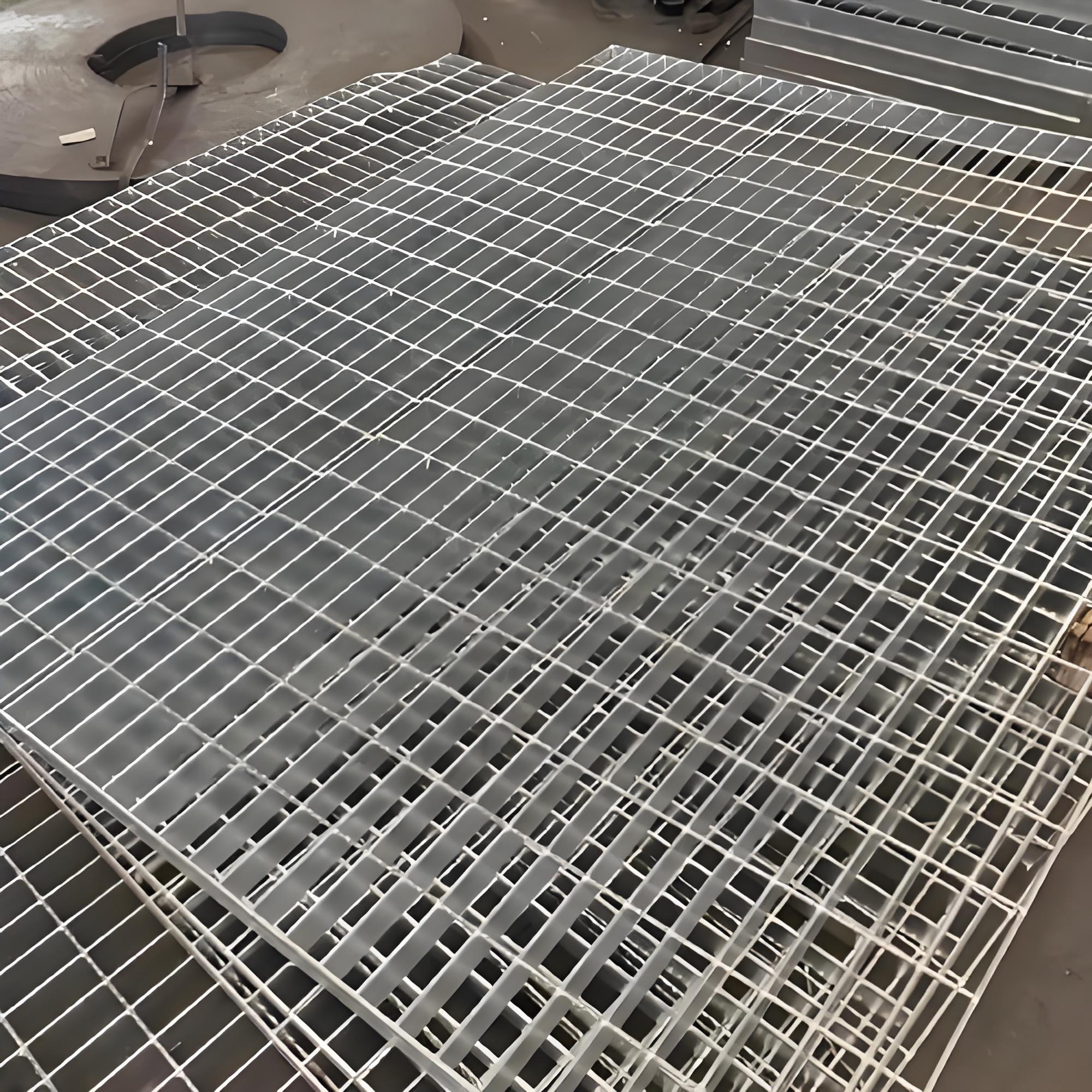
304 stainless steel is an austenitic chromium-nickel stainless steel commonly selected for general corrosion-resistant applications. It provides better resistance to rust than ordinary carbon steel, especially when the surface is correctly cleaned and maintained. It is also easier to clean than painted steel and offers a consistent appearance for visible industrial, commercial, and architectural installations.
304 stainless steel grating should not be treated as a single standard size. The grade identifies the material, but the complete product specification must also define the grating type, bearing bar dimensions, spacing, panel size, surface profile, finish, load requirement, and installation details.
304 stainless steel performs well in many indoor wet environments, humid workshops, food production areas, commercial drainage systems, clean utility rooms, and general industrial facilities. Its chromium content allows a passive oxide film to form on the surface, helping protect the steel from ordinary atmospheric corrosion.
Its corrosion resistance is strongly influenced by surface condition. Heat tint, embedded carbon-steel particles, grinding dust, iron contamination, and chemical residues can damage the appearance and reduce local corrosion performance. Proper fabrication, pickling, passivation, and routine cleaning are therefore important.
304 stainless steel can be fabricated into welded grating panels with stable intersections and accurate spacing. Welding parameters, heat input, distortion control, and post-weld cleaning should be managed carefully. A technically correct stainless steel grade can still develop localized corrosion if weld discoloration and contamination are left untreated in a demanding environment.
304 stainless steel is widely used where surfaces are washed frequently or where rust particles and coating flakes are unacceptable. The material is suitable for many food, beverage, pharmaceutical, laboratory, and commercial kitchen applications. The chosen surface profile should also support cleaning. Plain grating is often easier to wash, while serrated grating may provide better traction.
Stainless steel grating offers a clean metallic appearance without the flaking, chalking, or periodic repainting associated with many painted carbon-steel products. Brushed, pickled, passivated, or polished finishes can be selected according to the visibility and hygiene requirements of the project.
304 stainless steel is not the best material for every corrosive environment. High chloride exposure, seawater, salt spray, some chemical solutions, and certain wastewater conditions may cause pitting or crevice corrosion. In those environments, 316 or 316L stainless steel may be more appropriate. Material selection should be based on the actual chemical exposure, temperature, concentration, cleaning agents, and expected service life.
| Performance factor | 304 stainless steel grating | Carbon steel grating |
|---|---|---|
| Corrosion resistance | Good resistance in many wet, hygienic, and moderately corrosive environments | Requires paint, galvanizing, or another protective system |
| Surface maintenance | Can usually be cleaned without restoring a coating system | Coating damage may expose steel and initiate rust |
| Hygiene | Suitable for wash-down and clean industrial areas | Paint or zinc deterioration may be unacceptable in hygienic zones |
| Appearance | Consistent stainless metallic appearance | Depends on paint or galvanized coating condition |
| Long-term service | May reduce rust-related maintenance and replacement | May require periodic coating repair or replacement |
| Initial purchase price | Usually higher | Usually lower |
| Best application | Food plants, clean drainage, humid areas, commercial facilities, moderate corrosion | General industrial platforms, outdoor walkways, and cost-sensitive applications |
304 stainless steel grating can reduce lifecycle costs when corrosion-related shutdowns, cleaning requirements, product contamination, or replacement labor are expensive. It is not always the lowest-cost option at the quotation stage, but it may be more economical over the complete service period.
For projects where carbon steel remains suitable, hot-dip galvanized grating can provide an economical alternative. Buyers can compare material, finish, load, and application requirements in the steel grating price, size, and load capacity guide.
The manufacturing method affects structural behavior, appearance, customization, repairability, and price. The most common methods for 304 stainless steel grating are welded, press-locked, and swage-locked construction.
Welded grating is produced by joining cross bars to bearing bars at their intersections. It is widely used because the welded grid is stable, strong, easy to fabricate, and suitable for custom panel dimensions. Welded stainless steel grating can be supplied with plain or serrated bearing bars and can be fabricated with banding, cut-outs, frames, stair nosings, and special supports.
Welded construction is often preferred for industrial platforms, process walkways, stair treads, trench covers, drainage covers, and removable access panels. After welding, the surface may require cleaning, pickling, passivation, or mechanical finishing to remove heat tint and restore a clean stainless surface.
Press-locked grating is made by pressing cross bars into pre-slotted bearing bars. It provides a regular, clean appearance and can be manufactured with different bar arrangements and mesh patterns. Press-locked grating is often selected for architectural floors, screens, ventilation panels, public walkways, commercial facilities, and projects where visual consistency is important.
Press-locked panels can be customized, but the slot depth, cross bar fit, locking pressure, edge banding, and panel flatness must be controlled carefully. More information about this construction method is available in the CSSP Grating press-locked grating product guide.
Swage-locked grating uses mechanically formed cross bars that are locked into bearing bars through a controlled forming process. This method is common in aluminum grating and can also be used for stainless steel products when specified by the project. It can provide a neat appearance and flexible design options, but the manufacturer should confirm the mechanical locking strength and suitability for the intended load.
| Manufacturing method | Connection principle | Main strengths | Typical applications |
|---|---|---|---|
| Welded | Cross bars are welded to bearing bars | Stable structure, good load performance, economical fabrication, broad customization | Platforms, walkways, stair treads, drainage covers, trench covers |
| Press-locked | Cross bars are pressed into slots in bearing bars | Clean appearance, uniform intersections, flexible mesh arrangement | Architectural floors, screens, public areas, ventilation panels |
| Swage-locked | Mechanically formed cross bars lock into bearing bars | Neat appearance, lightweight options, flexible design | Architectural and specialized access applications |
For heavy industrial loads, welded construction is commonly selected because the welded intersections provide stable panel behavior and efficient production. For visible architectural work, press-locked or swage-locked construction may be preferred. The final decision should consider loading, span, environment, surface requirements, availability, and total cost.
304 stainless steel grating is available in standard and custom dimensions. A common specification is 19-W-4, which generally indicates bearing bars spaced at 19/16 inch centers, welded construction, and cross bars spaced at 4 inches on center. The 19-W-4 designation describes the spacing pattern and manufacturing method, but it does not define the stainless steel grade, bearing bar size, finish, panel length, panel width, or load capacity.
A complete specification may be written in a format such as:
Welded 304 stainless steel grating, 19-W-4, 1-1/4 in. x 3/16 in., serrated, pickled and passivated, custom panels.
The exact meaning of a designation should always be confirmed with the manufacturer because naming conventions may vary between suppliers and regions.
| Specification item | Common options | What the buyer should confirm |
|---|---|---|
| Grating pattern | 19-W-4, 15-W-4, metric welded patterns, custom patterns | Bearing bar pitch, cross bar pitch, and manufacturing method |
| Bearing bar size | 20 x 3 mm, 25 x 3 mm, 30 x 3 mm, 30 x 5 mm, 40 x 5 mm, and heavier sizes | Size must match clear span, design load, and allowable deflection |
| Panel width | 300 mm, 500 mm, 600 mm, 750 mm, 1,000 mm, or custom | Support layout, handling, transport, and installation access |
| Panel length | 1,000 mm to 6,000 mm or custom | Span direction, lifting weight, joint layout, and shipping limits |
| Surface | Plain, serrated, anti-slip, gritted, or special profile | Slip risk, cleaning requirements, and foot or wheel comfort |
| Edge treatment | Unbanded, trim banded, load-carrying banded, framed | Cut edges, visible perimeter, removable panel, and support condition |
Common standard panel sizes are useful for stock supply and repetitive layouts, but custom dimensions are often more efficient for complex industrial projects. The manufacturer should review the support grid before fixing the panel size.
Additional information on panel dimensions, designation formats, tolerances, and bar spacing is available in the steel bar grating dimensions guide.
Bearing bar height has a major effect on bending resistance and deflection. A deeper bar generally provides greater section modulus and moment of inertia. For longer spans or higher loads, the engineer may select a deeper bearing bar instead of simply increasing the panel width.
Bearing bar thickness affects section capacity, local durability, weld interface, weight, and cost. Thin bars can be suitable for pedestrian walkways with short spans, while thicker bars are usually required for equipment floors, long spans, wheel loads, or severe service conditions.
Closer bearing bar spacing can distribute concentrated loads across more bars and reduce the clear opening. It may improve walking comfort and help retain small objects. Wider spacing can reduce weight and cost but may create larger openings that are unsuitable for certain pedestrian or industrial applications.
Load-bearing capacity must be calculated from the complete structural arrangement. The same 304 stainless steel grating pattern can have very different capacity depending on whether it spans 500 mm, 800 mm, 1,200 mm, or a longer distance. Support width, load distribution, panel continuity, and deflection criteria also affect the result.
| Design variable | Effect on performance |
|---|---|
| Greater bearing bar depth | Usually increases bending resistance and reduces deflection |
| Greater bearing bar thickness | Increases section capacity and local durability |
| Closer bearing bar spacing | Improves load distribution and reduces clear openings |
| Shorter clear span | Strongly improves capacity and lowers deflection |
| Wider support seat | Improves bearing stability and reduces edge damage |
| Serrated surface | Improves traction but does not automatically increase structural capacity |
| Edge banding | Finishes and may reinforce the panel edge, but does not replace primary bearing bars |
Cross bars may be plain round bars, twisted square bars, flat bars, corrugated bars, or other approved forms. They maintain bearing bar alignment and contribute to panel stability, handling strength, and appearance.
Typical cross bar spacing includes 50 mm, 76 mm, 100 mm, and 4 inches, but the appropriate value depends on the grating design and standard being used. Closer spacing may be preferred where a tighter visual grid, improved stability, or better retention of small objects is required.
The cross bar should be compatible with the stainless steel grade. Using a different alloy without approval can create material traceability problems, welding issues, or galvanic corrosion at connected components.
Plain grating provides a smooth and clean walking surface. It is often selected for dry interiors, clean rooms, food preparation areas, commercial spaces, and locations where easy sweeping or washing is more important than maximum traction.
Serrated grating improves traction through notched bearing bar surfaces. It is suitable for wet walkways, oil-prone platforms, outdoor stairs, wastewater areas, marine access routes, and sloped surfaces. Serrated grating should still be designed with appropriate drainage and cleaned regularly because dirt and grease can collect in the serrations.
Some projects require serrated nosing, perforated stair nosing, gritted inserts, anti-slip coatings, or composite surface layers. These options may improve traction but can also influence cleaning, bare-foot comfort, trolley movement, appearance, and maintenance.
Surface selection should be based on the actual risk assessment rather than the label “anti-slip” alone. The buyer should ask for information about wet traction, oil exposure, cleaning chemicals, slope, footwear, and expected pedestrian traffic.
304 stainless steel grating may be manufactured under different product and engineering standards depending on the project location. Common references include Chinese YB/T requirements, ANSI/NAAMM metal bar grating practice, ASTM material specifications, British BS 4592 requirements, and project-specific structural design codes.
The standard should be identified by its full designation and edition. “304 stainless steel grating according to international standards” is not a complete technical requirement. The specification should state whether the standard controls:
Where two or more standards are listed, the project should identify the governing document for each category. For example, ASTM may control the stainless steel material, ANSI/NAAMM may control grating construction and load tables, and a local structural code may control the support beam and frame design.
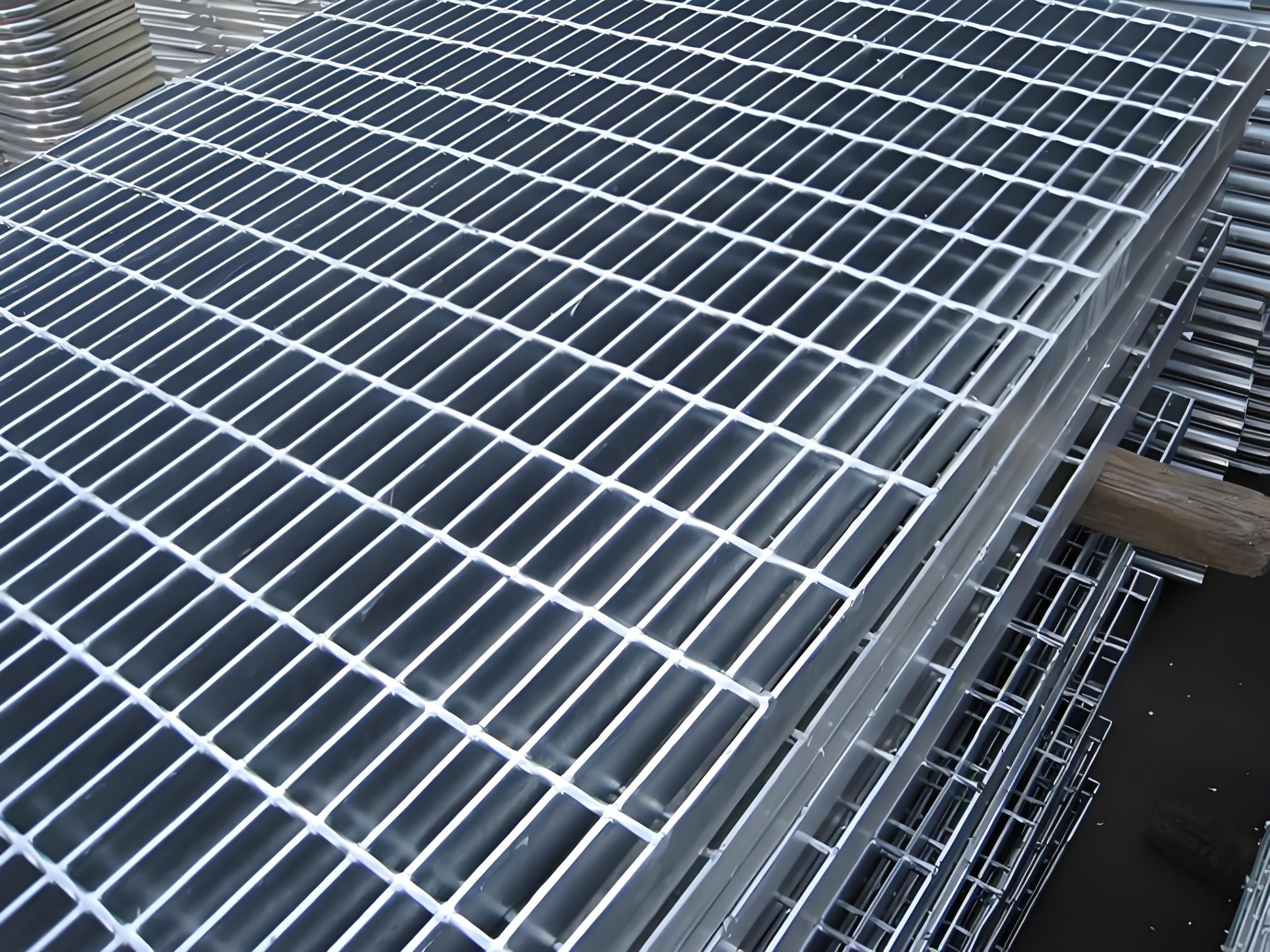
Load ratings for 304 stainless steel grating should be based on actual installation conditions. The supplier needs to know whether the panel will carry pedestrians, hand carts, pallet trucks, forklifts, vehicles, machinery, pipe supports, or temporary construction loads.
Uniform loads are distributed across the grating surface. They are commonly used for general pedestrian platforms, maintenance walkways, and operating floors. The design must still consider the clear span and allowable deflection.
Concentrated loads act over a small contact area. A person standing on one point, a machine foot, a pallet jack wheel, or a forklift wheel may load only a few bearing bars. Concentrated-load checks are often more critical than uniform-load checks.
Wheel loads should include wheel spacing, contact dimensions, axle arrangement, dynamic effects, and the direction of travel. A grating product suitable for pedestrians should not be assumed to support vehicles without a separate calculation.
Deflection limits may be set by the grating standard, structural code, owner specification, equipment requirements, or project engineer. Even if a panel meets a nominal strength requirement, excessive deflection can cause vibration, noise, clip loosening, edge movement, and poor walking comfort.
The design safety factor should come from the governing structural code or project specification. The supplier should show the design load, allowable stress or resistance, load combination, span, support condition, and calculated deflection. A load table without the assumptions behind it should not be used as the sole approval document.
For preliminary planning, buyers may use standard load tables, but final selection should be based on the project drawing. Bearing bar direction, support spacing, panel restraint, and concentrated-load location must be confirmed before manufacturing.
Standard stainless steel grating may be supplied with a cleaned mill finish suitable for general industrial use. The surface should be free from heavy contamination, loose scale, oil, and embedded carbon-steel particles.
Pickling removes heat tint, oxidation, and surface contamination produced during welding or heat exposure. It can restore a cleaner stainless surface and improve corrosion resistance around welded intersections. Pickling chemicals must be controlled carefully to avoid over-etching or unsafe residues.
Passivation supports the formation of a stable passive film after fabrication and cleaning. It is particularly useful for hygienic, chemical, marine, and high-cleanliness applications. The purchase order should state whether pickling, passivation, or both are required.
Brushed or polished surfaces may be specified for visible architectural or commercial applications. These finishes can improve appearance but may increase fabrication cost and require additional protection during packing and transport.
Stainless steel grating should be fabricated with clean tools and separated from carbon-steel contamination where possible. Carbon-steel grinding dust, cutting debris, dirty slings, and unsuitable storage practices can leave rust marks on stainless surfaces.
304 stainless steel grating is suitable for many wet floors, wash-down areas, utility rooms, pump rooms, and indoor drainage zones. Serrated bearing bars may be selected where water creates a slip risk.
Food, beverage, pharmaceutical, and laboratory facilities often require surfaces that are easy to clean and resistant to rust. The grating should be designed without unnecessary dirt traps, sharp projections, or inaccessible crevices. Welds and edges should be finished appropriately for the cleaning process.
304 stainless steel can perform well in humid or mildly corrosive areas, but it should not be selected automatically for every chemical or marine facility. High chloride, saltwater, and aggressive cleaning solutions may require 316 or 316L stainless steel.
| Industry | Typical use | Important specification factors |
|---|---|---|
| Food processing | Wash-down platforms, drainage covers, service walkways, equipment access | 304 or 316 grade, clean surface, passivation, drainage, hygiene, easy inspection |
| Beverage plants | Production floors, pipe-rack walkways, tank access platforms | Frequent cleaning, chemical compatibility, slip resistance, load capacity |
| Chemical plants | Process platforms, chemical drainage, tank access, maintenance routes | Chemical exposure, concentration, temperature, 316 or 316L review, serrated surface |
| Water treatment | Walkways, clarifier access, channel covers, pump platforms | Moisture, chemical gases, removable panels, anti-slip surface, corrosion inspection |
| Marine facilities | Dock walkways, service platforms, access stairs, drainage covers | Salt air, chloride exposure, 316 preference, anti-slip, fastener compatibility |
| Commercial kitchens | Drainage grates, service platforms, utility access | Cleanability, appearance, 304 grade, close coordination with drainage layout |
304 stainless steel grating platforms provide elevated access around pumps, tanks, conveyors, processing equipment, and utility systems. The open grid allows air and light to pass through and helps prevent water accumulation.
Walkway grating is commonly used for maintenance access, rooftop routes, bridge service areas, and plant corridors. The panel layout should include safe edge gaps, correct bearing direction, secure clips, and toe plates where objects could fall to a lower level.
Stainless steel stair treads normally include carrier plates or angles and a front nosing. Serrated nosing improves visibility and traction. Tread width, rise, run, support connection, and handrail geometry should be coordinated with the applicable stair and machinery-access requirements.
304 stainless steel drainage covers are suitable for food plants, commercial kitchens, clean facilities, and indoor wet areas. The open area should provide sufficient water flow while preventing unsafe openings.
Trench grates may be removable for inspection and maintenance. The frame, bearing seat, lifting access, anti-rattle details, and wheel-load design should be specified together with the grating panel.
Correct installation is essential because a properly manufactured grating panel can still perform poorly when installed on inadequate supports or fixed incorrectly.
The bearing bars should span between the supports in the specified direction. The support beams, angles, or trench frames must provide a level and continuous seating surface. The drawing should show the support width and panel bearing length.
Clips may be top-mounted, bottom-mounted, bolted, welded, or designed as anti-lift systems. The clip type and quantity should reflect vibration, wind, maintenance access, panel size, and the risk of displacement.
Fasteners should be compatible with 304 stainless steel and the surrounding support structure. The specification should identify bolt grade, washer type, nut type, corrosion resistance, isolation requirements, and tightening method.
Field cutting should be minimized where possible because it can remove bearing bars, damage the finished surface, and create unprotected edges. If cutting is required, the engineer should review the remaining load path. Cut edges should be banded or reinforced where necessary and cleaned to remove heat tint and contamination.
Removable panels should have a practical lifting method, clear identification, stable seating, and anti-rattle details. Heavy panels may require lifting handles or dedicated tools.
Regular cleaning removes food residue, salt, grease, dust, chemical deposits, and standing contaminants. Clean water and a suitable neutral detergent are often sufficient for general maintenance. Chloride-containing cleaners and steel-wool pads should be avoided unless specifically approved.
Tea staining is a surface discoloration that may occur in stainless steel exposed to salt air, industrial deposits, or poor cleaning conditions. It does not always indicate deep structural corrosion, but it should be assessed and cleaned before the condition worsens.
The service life of 304 stainless steel grating depends on material grade, environment, surface finish, cleaning frequency, load, impact, support condition, and connection quality. A correctly selected and maintained panel can provide a long service period, but no stainless steel grade should be considered maintenance-free.
| Comparison factor | 304 stainless steel grating | 316 stainless steel grating |
|---|---|---|
| General use | General wet, hygienic, and moderately corrosive environments | More aggressive wet, chloride, marine, and chemical environments |
| Chloride resistance | Limited compared with 316 | Better due to molybdenum content |
| Typical cost | Lower than 316 | Higher than 304 |
| Food and beverage use | Common for many indoor areas | Preferred where chlorides or aggressive cleaning chemicals are present |
| Marine suitability | May be insufficient for continuous salt exposure | Usually preferred for coastal and marine applications |
| Welded applications | Good weldability with appropriate post-weld cleaning | 316L may be selected where weld-area corrosion resistance is critical |
Choosing 316 instead of 304 should be based on exposure and lifecycle requirements, not simply on the idea that a higher grade is always necessary. For a dry indoor platform, 304 may be the economical and technically appropriate option. For a seawater walkway or chloride-rich wastewater facility, 316 or 316L may provide better long-term reliability.
CSSP Grating also supplies stainless steel grating in 316 and 316L grades. Buyers comparing grades can review the stainless steel 19-W-4 grating product page and the related stainless steel product specifications.
A clear purchasing specification should begin with the application and environment, then define the structural and fabrication requirements.
State whether the grating is indoors or outdoors, exposed to water, salt, chemicals, food residue, cleaning agents, wastewater gases, high temperature, or frequent wash-down. Identify whether 304 is acceptable or whether 316 or 316L should be evaluated.
Provide the clear span, support width, bearing bar direction, uniform load, concentrated load, wheel load, equipment load, and allowable deflection. Do not rely on the term “heavy-duty” without a numerical design requirement.
Choose welded, press-locked, or swage-locked construction according to load, appearance, custom fabrication, availability, and maintenance requirements.
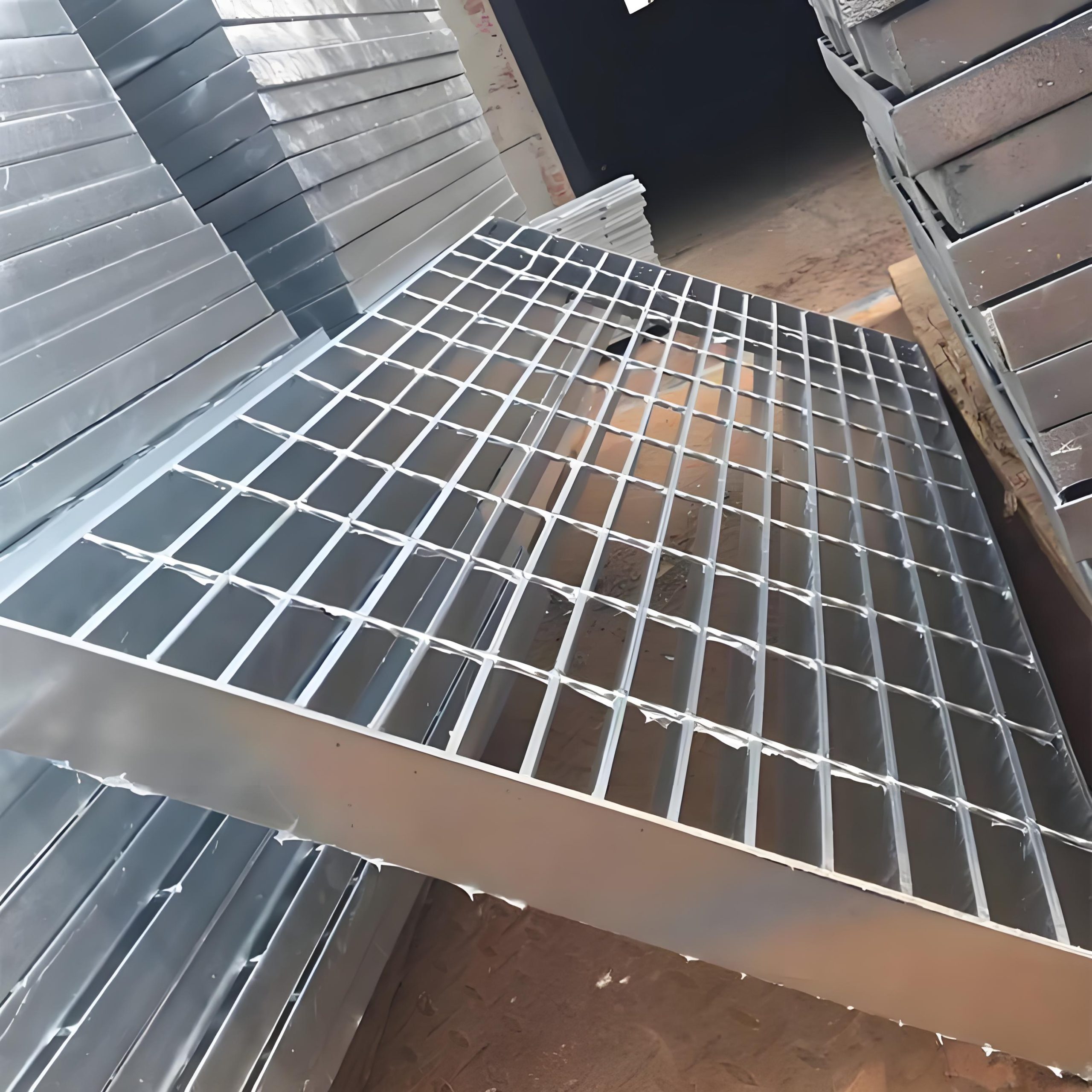
Choose plain or serrated bearing bars based on slip risk, cleaning, slope, footwear, trolley movement, and process conditions. Specify any stair nosing, anti-slip insert, or special surface treatment.
Provide panel length, width, cut-outs, notches, banding, frames, lifting points, stair carrier plates, numbering, and installation orientation. Drawings are strongly recommended for irregular layouts.
State whether the product requires pickling, passivation, brushing, polishing, weld cleaning, or another finish. Include dimensional tolerances, flatness requirements, weld inspection, material certificates, and final inspection records.
Specify support seats, grating clips, anti-lift devices, fastener materials, bolt holes, frames, and field-cutting limitations. The grating and its support system should be reviewed as one assembly.
| Procurement item | Example requirement |
|---|---|
| Material | 304 stainless steel with material certificate and heat traceability |
| Construction | Welded stainless steel bar grating |
| Pattern | 19-W-4 or approved metric equivalent |
| Bearing bars | Specify height, thickness, spacing, and span direction |
| Cross bars | Specify type, spacing, and stainless steel grade |
| Surface | Plain or serrated according to slip-risk assessment |
| Finish | Pickled and passivated after fabrication where required |
| Panel fabrication | Banding, cut-outs, frames, stair nosing, and panel numbering |
| Load | Uniform, concentrated, wheel, or equipment load with clear span |
| Documents | Drawings, calculations, certificates, inspection reports, and packing list |
What is the most common size of 304 stainless steel grating? A commonly requested pattern is 19-W-4, which generally refers to welded grating with bearing bars at 19/16 inch centers and cross bars at 4 inches on center. However, the most suitable size depends on the clear span, load, surface, and support arrangement. The bearing bar height and thickness must be specified separately because the 19-W-4 designation alone does not define load capacity.
Is 304 stainless steel grating suitable for outdoor or marine applications? 304 stainless steel grating can be suitable for some outdoor areas with moderate exposure, but it may not be the best choice for continuous saltwater, coastal, or high-chloride conditions. For marine platforms, seawater drainage, salt spray, and aggressive chemical exposure, 316 or 316L stainless steel should usually be evaluated. The correct grade depends on chloride concentration, temperature, wetting time, cleaning chemicals, and required service life.
How do I choose between plain and serrated 304 stainless steel grating? Choose plain 304 stainless steel grating when the surface is mainly dry, cleanability and smooth movement are priorities, and slip risk is controlled. Choose serrated grating for wet, oily, sloped, outdoor, wastewater, marine, or wash-down areas where improved traction is needed. The decision should also consider cleaning methods, footwear, trolley wheels, stair use, and the project’s safety requirements.