

Steel grating standards are the technical foundation for selecting, designing, manufacturing, inspecting, and installing open-grid metal flooring. A grating panel may look simple, but its actual performance depends on many connected details, including bearing bar size, cross bar arrangement, span, load type, opening size, surface treatment, welding quality, support conditions, and fixing method. YB/T 4001.1, ANSI/NAAMM MBG 531, and BS 4592 are three important reference systems used in different markets. They share common engineering principles, but they are not interchangeable documents. Each standard uses its own terminology, material references, dimensional conventions, design assumptions, inspection rules, and documentation expectations. This guide explains the practical differences between these standards and shows how engineers, contractors, distributors, and purchasing teams can select the correct specification for a project.
Steel grating is used as a walking surface, raised platform, equipment access floor, stair tread, trench cover, drainage cover, bridge walkway, and maintenance route. In each application, the grating must support people, tools, carts, machinery, or vehicles while allowing water, air, light, and process liquids to pass through the open structure.
A product that looks acceptable during a visual inspection may still be unsuitable if the bearing bars are too light for the span, the panel is installed in the wrong direction, the opening is too large, the surface becomes slippery when wet, or the fixing system does not prevent movement. Standards provide a common technical language that helps project participants define what “acceptable” means before production starts.
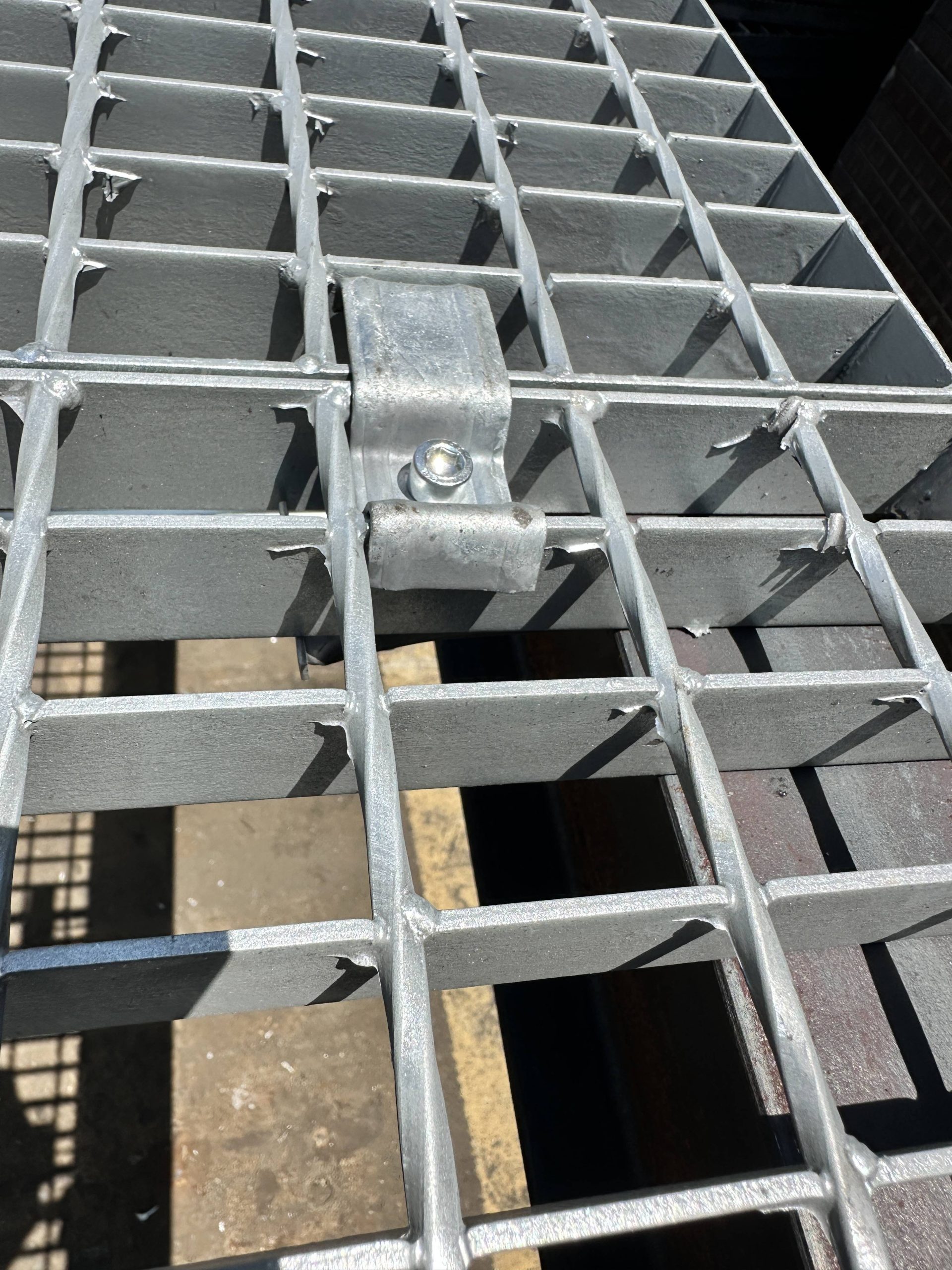
Using a recognized grating standard helps control the following project risks:
A standard should not be treated as a substitute for project engineering. The selected grating must still be checked against the actual design load, clear span, support condition, environmental exposure, local building regulations, fire requirements, access rules, and maintenance procedures. The standard defines a product framework, while the project engineer confirms whether that product is suitable for a particular structure.
YB/T 4001.1, ANSI/NAAMM MBG 531, and BS 4592 all address metal open-grid grating, but they originate from different industrial and regional systems. Their relationship can be summarized as follows:
| Standard | Main market association | Typical product scope | Main design emphasis | Common project use |
|---|---|---|---|---|
| YB/T 4001.1 | China and projects using Chinese steel-grating specifications | Steel bar grating for platforms, floors, walkways, stair treads, and trench covers | Product construction, dimensions, materials, testing, inspection, ordering, and use design | Petrochemical, metallurgy, energy, municipal, shipbuilding, manufacturing, and export projects |
| ANSI/NAAMM MBG 531 | North American and international projects using NAAMM practice | Steel, stainless steel, and aluminum bar grating and stair treads | Recommended specifications, load tables, terminology, materials, fabrication, and typical installation details | Industrial plants, commercial buildings, platforms, stairs, walkways, and architectural metalwork |
| BS 4592 | United Kingdom and projects referencing British industrial flooring practice | Metal open bar gratings, industrial flooring, stair treads, supports, and installation requirements | Common design requirements, performance, loading, dimensions, installation, and corrosion protection | Industrial facilities, maintenance access, platforms, walkways, and stair systems |
YB/T 4001.1 is the first part of the Chinese series “Steel Bar Grating and Matching Parts.” The 2019 edition covers terminology, product structure, models and markings, dimensional tolerances, technical requirements, use design, test methods, inspection rules, ordering information, weight and area calculation, packaging, marking, and quality certificates.
The standard is intended for steel grating used in working platforms, floors, walkways, stair treads, and trench covers. It is widely associated with petroleum, chemical, metallurgical, light industrial, shipbuilding, energy, and municipal projects. The YB/T 4001 series also includes separate parts for grating platform guardrails and grating stair treads, so the complete project specification may need more than Part 1.
ANSI/NAAMM MBG 531 is commonly known as the Metal Bar Grating Manual. It provides technical data, recommended specifications, load tables, terminology, material guidance, fabrication practices, and typical installation details for steel, stainless steel, and aluminum grating. The 2024 edition should be identified in current North American purchase documents when that edition is required.
NAAMM terminology is widely used by architects, structural engineers, fabricators, and distributors. It is particularly useful when a project uses imperial designations such as 19-W-4, 15-W-4, or 1-1/4 inch by 3/16 inch bearing bars. The manual also distinguishes standard-duty products from heavy-duty products and provides separate guidance for welding and fabrication.
BS 4592 is a British standard series for industrial flooring, stair treads, handrails, and metal open bar gratings. BS 4592-0 provides common design requirements and installation recommendations, while BS 4592-1 addresses the specification of metal open bar gratings for industrial flooring and stair treads.
BS 4592 should be read together with other project requirements. For example, where access to machinery is involved, the project may also need to follow machinery-access requirements such as BS EN ISO 14122. A grating that meets an industrial flooring specification is not automatically compliant with every machinery guarding or access requirement.
The geographic origin of a standard does not automatically prevent its use in another country. International projects often use a Chinese product standard, an American load table, and a project-specific structural code together. The important point is to state exactly which document controls each requirement.
For an export project, the buyer should identify the governing standard in the inquiry documents and state whether the standard applies to the product, the structural calculation, the installation, or all three. A statement such as “supply steel grating according to international standards” is too vague for a controlled procurement process.
Different standards may describe the same physical component with slightly different names. Before comparing quotations, the buyer should create a terminology schedule that defines the meaning of each item.
| Term | Practical meaning | Why it matters |
|---|---|---|
| Bearing bar | The primary load-carrying flat bar, normally installed perpendicular to the supports | Its depth, thickness, spacing, and span direction control most of the structural capacity |
| Cross bar | The bar, rod, twisted bar, or connecting member running across the bearing bars | It maintains spacing and stabilizes the panel but normally carries less primary bending load |
| Panel | A finished rectangular or irregular grating unit | Panel size affects handling, installation, transport, lifting, and support layout |
| Trim band | An edge bar used to close or finish the side of a panel | It improves appearance and protects exposed bearing bar ends |
| Load-carrying band | A banding member designed to participate in load transfer | It should not be confused with a decorative edge band |
| Plain grating | Grating with a flat top surface | Suitable for clean, dry applications where maximum slip resistance is not required |
| Serrated grating | Grating with serrations or teeth on the top of the bearing bars | Improves traction in wet, oily, dusty, inclined, or outdoor conditions |
| Welded grating | Cross bars are welded to bearing bars | Common, economical, stable, and suitable for many industrial platforms |
| Press-locked grating | Cross bars are pressed into slots in the bearing bars | Provides a regular appearance and flexible grid options |
| Swage-locked grating | Cross bars are mechanically locked into preformed bearing bars, often for aluminum products | Useful when a lighter or architectural product is required |
| Riveted grating | Bent connecting bars are riveted to the bearing bars | Used for particular heavy-duty or traditional construction requirements |
Material selection should be based on strength, corrosion exposure, fabrication method, temperature, hygiene, appearance, maintenance, and total service life. The cheapest material is not always the lowest-cost solution after coating, replacement, shutdown, and maintenance are considered.
Carbon steel is widely used for industrial grating because it offers good strength, weldability, availability, and cost control. Mild steel is commonly selected for general indoor platforms, factory walkways, stair treads, and trench covers. Where the environment is humid or exposed to weather, carbon steel is often hot-dip galvanized after fabrication.
YB/T 4001.1 refers to carbon structural steels and high-strength low-alloy structural steels that meet applicable Chinese material standards, including requirements associated with GB/T 700, GB/T 1591, and GB/T 702. The exact steel grade should be stated on the technical data sheet and material certificate.
Stainless steel grating is used in food processing, chemical production, wastewater treatment, pharmaceutical facilities, marine areas, and locations where cleaning and corrosion resistance are important. Type 304 is common for general corrosion resistance, while 316 or 316L is often preferred where chloride exposure, saltwater, or aggressive chemicals are present.
Stainless steel should be selected based on the actual chemical environment rather than a generic “stainless” description. The buyer should confirm the grade of bearing bars, cross bars, banding, fasteners, and support frames. Using stainless grating with ordinary carbon-steel clips can create a weak or corroding connection.
Aluminum grating is lighter than steel and may be useful for rooftop access, architectural applications, corrosion-prone areas, and projects where manual handling is important. However, aluminum has a lower elastic modulus than steel, so deflection and vibration may control the design even when the nominal strength appears sufficient.
A complete material submission should identify:
ANSI/NAAMM specifications commonly reference ASTM material requirements, while YB/T projects generally use Chinese GB or GB/T material systems. BS 4592 projects may reference British, European, or project-specific structural steel grades. These systems should not be mixed without written engineering approval.
The bearing bar is the main structural element of a grating panel. It normally spans between supports, and its direction must be shown clearly on the drawing. The cross bars hold the bearing bars in position and provide transverse stability, but they should not be assumed to replace the primary load-bearing function of the bearing bars.
Bearing bars are described by depth and thickness, such as 25 x 3 mm, 30 x 5 mm, or an imperial equivalent. Increasing the bearing bar depth generally improves bending resistance and reduces deflection. Increasing thickness improves section capacity and local durability, but it also increases weight and cost.
Bearing bar spacing affects load distribution, walking comfort, open area, drainage, and the risk of small objects passing through the panel. Narrower spacing can provide a more solid walking feel and better retention of tools or small components. Wider spacing usually reduces steel consumption, but it may not be acceptable for pedestrian safety or project-specific opening limits.
Cross bars may be spaced at regular metric or imperial intervals. Closer cross bar spacing can improve panel stability and appearance, while wider spacing may be more economical. The specification should define whether the cross bar is plain round, twisted square, flat, corrugated, or another approved type.
Panel dimensions should be coordinated with the support grid, access route, lifting method, and installation sequence. Large panels may reduce the number of joints but become difficult to handle. Small panels may be easier to install but can create more fixing points and alignment work.
Custom panels may require:
For a detailed explanation of common panel dimensions and specification formats, buyers can also review the steel bar grating dimensions guide before preparing an inquiry.
Load capacity cannot be determined from panel width alone. The most important variables include clear span, bearing bar orientation, bar depth, bar thickness, bearing bar spacing, support width, load distribution, panel restraint, and allowable deflection.
A grating panel that is safe for pedestrian traffic may not be suitable for a pallet truck. Similarly, a trench cover that supports a uniform load may fail under a concentrated wheel load if the wheel contacts only a small number of bearing bars.
For a simple preliminary check, a bearing bar may be idealized as a simply supported beam. A uniformly distributed load can be represented by the familiar relationship M = wL²/8, while the corresponding elastic deflection is commonly estimated using δ = 5wL⁴/(384EI). These expressions are only preliminary engineering relationships. Real grating design also requires consideration of load distribution across adjacent bars, concentrated-load placement, support width, end conditions, local bending, panel continuity, and the applicable standard.
For project approval, the supplier should provide a load table or calculation that identifies:
| Design item | Information to confirm |
|---|---|
| Clear span | Actual unsupported distance between bearing supports |
| Load type | Uniform, concentrated, wheel, equipment, impact, or temporary load |
| Bearing bar direction | Direction of the primary load-carrying bars relative to the supports |
| Panel restraint | Whether the panel is simply seated, clipped, bolted, welded, or otherwise restrained |
| Allowable deflection | Project-specific limit for safety, comfort, equipment operation, and appearance |
| Support condition | Steel angle, channel, concrete seat, frame, beam, or adjustable support |
| Safety factor | Required factor according to the governing design code or project specification |
Strength is not the only acceptance criterion. Excessive deflection can cause a springy walking surface, movement at clips, noise, standing water, coating damage, and discomfort for operators. In areas supporting rotating machinery, vibration and natural frequency may also need to be checked.
YB/T 4001.1 includes use-design provisions and calculation guidance. ANSI/NAAMM provides load tables and recommended practices. BS 4592 includes performance and loading requirements for industrial flooring and stair treads. The values used for one standard should not automatically be copied into a calculation prepared under another standard.
For a project-specific load and size review, a supplier may also reference its steel grating price, size, and load capacity guide, but the final load confirmation should always be based on the actual drawing and support span.
Plain grating has a flat bearing bar surface. It is often used in dry indoor areas, equipment platforms, mezzanines, clean industrial areas, and locations where easy cleaning is important. Plain surfaces are not automatically unsafe, but they may provide less traction than serrated products when exposed to oil, water, ice, mud, or process liquids.
Serrated grating uses notches or teeth along the top edge of the bearing bars. It is commonly selected for outdoor walkways, drainage areas, sloped access, oily process zones, wastewater facilities, and maintenance platforms where slip resistance is a major concern.
Serrations should be specified together with the environment. A serrated carbon-steel grating may improve traction but still require galvanizing or another protective finish. Serrations also affect cleaning, contact comfort, bare-foot use, trolley movement, and the ability to slide equipment across the surface.
Special-purpose grating may include gritted surfaces, perforated safety nosings, checker plate inserts, close-mesh panels, anti-skid coatings, or composite top layers. These products may be appropriate where standard plain or serrated bars cannot satisfy the combined requirements for traction, small-object retention, hygiene, noise control, or appearance.
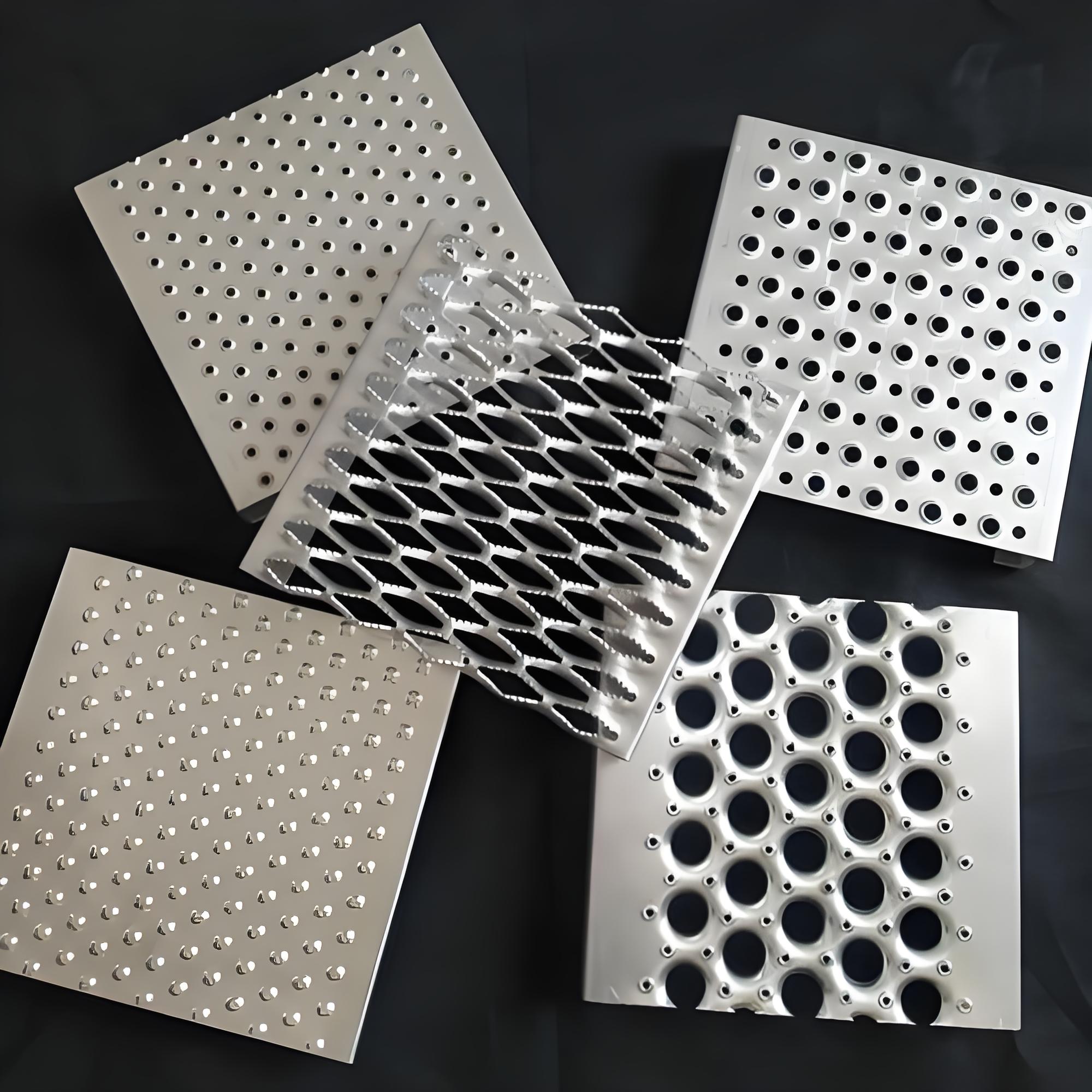
The open area of grating is one of its major advantages. Water drains away, ventilation improves, natural light passes through, and dust or debris may fall below the platform. At the same time, an opening that is too large can create a foot, tool, wheel, or object hazard.
When selecting mesh spacing, check the following:
Where small objects must be retained, a closer mesh, secondary screen, solid plate, or dedicated ball-proof solution may be required. The grating standard alone may not define every fall-protection condition, so local occupational safety rules and the project risk assessment should be reviewed.
Welded grating is made by joining cross bars to bearing bars through pressure welding or an approved welding process. It is one of the most common choices for industrial flooring because it combines structural stability, economical production, customization, and good load performance.
Welded grating is suitable for platforms, walkways, stair treads, trench covers, drainage covers, and heavy-duty industrial floors. Welding quality, bar alignment, heat distortion, edge banding, and post-fabrication galvanizing should be controlled carefully.
Press-locked grating is manufactured by inserting cross bars into slots in the bearing bars under high pressure. It can create a clean and regular appearance and allows different combinations of bearing bar and cross bar arrangements. It is often selected for architectural walkways, screens, ventilation panels, and applications where intersection appearance matters.
More information about this construction method is available in the CSSP Grating press-locked grating product guide.
Swage-locked grating uses mechanically formed cross bars that lock into bearing bars. It is commonly associated with aluminum products and lightweight architectural applications. The designer should check local buckling, deflection, thermal movement, and galvanic compatibility where aluminum is connected to steel.
Riveted grating uses bent connecting bars and rivets to create a mechanically connected panel. It may be selected for heavy-duty, vibration-prone, or specialized applications. The specification should identify rivet material, diameter, spacing, connection details, and inspection requirements.
Dimensional accuracy is essential because grating panels are usually installed into a fixed support grid. A panel that is only a few millimeters too large may not fit between beams, while a panel that is too small can create unsupported edges and dangerous gaps.
Inspection should cover:
Welded intersections should be secure and consistent. Inspection may include visual examination, dimensional checks, sampling, destructive testing, or other methods required by the purchase order. The supplier should clarify the welding process, equipment calibration, welder qualification, repair procedure, and acceptance criteria.
For larger projects, the inspection and test plan should define the inspection stage, sampling frequency, responsible party, witness points, hold points, and document format. A certificate that only states “passed inspection” is less useful than a report that records actual measurements and test results.
Hot-dip galvanizing protects carbon-steel grating with a zinc coating. It is widely used for outdoor platforms, wet industrial areas, drainage covers, bridge access, rooftops, and humid facilities. Galvanizing after fabrication helps protect welds, cut edges, and connected surfaces more effectively than coating individual bars before assembly.
The buyer should define the required galvanizing standard, coating thickness or mass, surface appearance, repair method for damaged areas, drain and vent holes, and acceptance criteria. White rust, bare spots, excessive runs, blocked openings, and uncoated cut-outs should be addressed in the quality plan.
See the related hot-dip galvanized steel grating guide for additional information about manufacturing, coating, and application considerations.
Painted grating can be suitable for indoor facilities, color-coded platforms, equipment areas, and projects where appearance is important. Surface preparation, primer type, dry-film thickness, stripe coating on welds and edges, and repair procedures are more important than color alone.
Painted carbon steel generally requires more maintenance than galvanized steel in exposed outdoor or wet environments. If the coating is damaged, corrosion can begin at edges, welds, cut-outs, and contact points.
Stainless steel may provide a better long-term solution for chemical, marine, hygienic, and wastewater environments. However, the complete system should be reviewed, including clips, bolts, support angles, frames, handrails, and adjacent structural steel. Mixed-metal connections can produce galvanic corrosion if they are not isolated or properly selected.
Stair treads normally include a grating panel, side carrier plates or angles, and a front nosing. The nosing may be serrated, perforated, checker plate, or another anti-slip profile. The order must identify tread length, width, bearing bar direction, nosing projection, carrier-hole pattern, and connection method.
A stair tread is not simply a narrow piece of floor grating. It has additional requirements for step geometry, edge visibility, slip resistance, attachment to stringers, and repeated dynamic foot loading.
Walkways and platforms should be designed around the support grid and the movement of people and equipment. The drawing should show panel breaks, bearing bar direction, removable panels, access hatches, handrail posts, toe plates, and fixing locations.
Trench covers may be removable and may carry pedestrian, cart, forklift, or vehicle loads. The frame and support seat are as important as the grating itself. A strong panel installed on a weak or corroded frame is still an unsafe system.
For vehicle-duty trench covers, concentrated wheel loads, impact, support width, frame stiffness, lifting access, anti-rattle details, and anti-slip performance should be confirmed. Drainage requirements should also be coordinated with the channel cross-section and expected water flow.
Grating clips are used to secure panels to the supporting structure. The fixing method should prevent lateral movement, uplift, vibration, rattling, and accidental displacement while allowing removal when maintenance access is required.
The support should provide adequate seating width and a level bearing surface. The bearing bars must span in the specified direction, and unsupported cut edges may require load-carrying banding or additional framing. Openings around pipes, columns, and equipment should be reinforced where the cut removes primary bearing bars.
Installation teams should verify panel numbers, orientation, support condition, clip quantity, bolt torque, edge gaps, and access for future removal. Cutting panels on site may be unavoidable, but every field cut should be reviewed for edge protection, corrosion repair, and structural adequacy.
| Comparison item | YB/T 4001.1 | ANSI/NAAMM MBG 531 | BS 4592 |
|---|---|---|---|
| Primary role | Chinese product and application standard for steel bar grating | North American manual and recommended specification for metal bar grating | British industrial flooring and stair tread specification framework |
| Typical units | Metric | Imperial, with metric equivalents often used on international projects | Metric |
| Material coverage | Carbon steel, high-strength low-alloy steel, stainless steel, and related materials | Steel, stainless steel, and aluminum | Metal open bar gratings, with material requirements defined by the standard and project specification |
| Common construction methods | Primarily steel bar grating configurations covered by the product standard | Welded, press-locked, swage-locked, riveted, and related metal grating constructions | Metal open bar gratings and associated industrial flooring products |
| Load guidance | Use-design provisions, load and deflection calculations, and test requirements | Load tables, recommended practices, and typical engineering data | Loading and performance requirements for industrial flooring and stair treads |
| Inspection emphasis | Dimensions, materials, testing, inspection rules, marking, packaging, and certificates | Specification compliance, fabrication quality, load data, and installation details | Dimensions, loading, performance, corrosion protection, supports, and installation |
| Best procurement practice | State edition, model, metric size, material, finish, and inspection requirements | State edition, product type, NAAMM designation, load table, finish, and installation details | State the applicable BS 4592 parts, project loads, support conditions, and installation requirements |
The key point is that “YB/T compliant,” “ANSI compliant,” and “BS compliant” are not interchangeable marketing phrases. The purchase order should identify the exact edition, product category, design load, material, finish, and acceptance documents.
| Project situation | Recommended starting point | Additional checks |
|---|---|---|
| Chinese industrial project | YB/T 4001.1 and related YB/T 4001 parts | Chinese structural, fire, safety, coating, and local installation codes |
| United States or Canada project | ANSI/NAAMM MBG 531 and project structural codes | ASTM materials, OSHA or local safety rules, loading code, and owner specifications |
| United Kingdom project | BS 4592-0 and BS 4592-1 where applicable | BS EN ISO 14122 for machinery access and relevant building or workplace regulations |
| International EPC project | Owner specification plus one clearly defined grating standard | Metric or imperial conversion, local steel grades, coating system, inspection plan, and authority approval |
| Marine or coastal facility | Stainless, galvanized, aluminum, or specialized corrosion-resistant system | Chloride exposure, galvanic isolation, drainage, wind uplift, and maintenance access |
| Chemical or wastewater plant | Corrosion-resistant material and serrated anti-slip surface | Chemical compatibility, cleaning method, temperature, splash exposure, and fastener grade |
| Vehicle-duty trench cover | Standard selected with a project-specific wheel-load calculation | Frame capacity, support seat, impact factor, deflection, lifting, and anti-rattle design |
The standard should follow the project’s legal and engineering environment. A Chinese factory can manufacture a product to ANSI/NAAMM or BS requirements, but the quotation must clearly identify the target standard and provide the requested documentation. Similarly, a product manufactured under YB/T should not be described as ANSI-compliant unless its dimensions, materials, load data, fabrication, and inspection have been checked against the applicable ANSI/NAAMM requirements.
Good documentation reduces misunderstandings between the designer, supplier, inspector, installer, and owner. A complete submittal package should normally include the following:
Standards are revised. A purchase order should state the exact edition or the phrase “latest edition at the date of contract,” depending on the owner’s requirements. If the supplier and buyer use different editions, their interpretation of materials, tolerances, or load tables may differ.
A product described as 19-W-4 should not be converted casually into a metric specification without confirming the actual bearing bar spacing, cross bar spacing, and bar dimensions. Rounded conversions can create a product that is close to the original but not technically identical.
“Heavy-duty grating” is not a complete engineering description. The supplier needs the clear span, support arrangement, load type, and allowable deflection. A heavy-looking panel may still be unsuitable if it spans farther than the design table allows.
Cross bars stabilize the panel, but the bearing bars normally carry the main bending load. Installing the panel with cross bars spanning between supports can produce a serious capacity problem.
Cut-outs may remove several primary bearing bars. Large openings require banding, reinforcement, framing, or a revised panel layout. The drawing should show whether the cut-out is fabricated at the factory or made in the field.
When individual bars are galvanized before welding and cutting, the weld area and cut edges may have reduced corrosion protection. For many carbon-steel grating applications, galvanizing after fabrication provides more complete coverage, subject to proper venting, draining, distortion control, and repair procedures.
A stainless steel panel with carbon-steel clips, or an aluminum panel attached directly to unsuitable steel without isolation, can create corrosion and maintenance problems. The complete connection system should be reviewed rather than specifying the grating material alone.
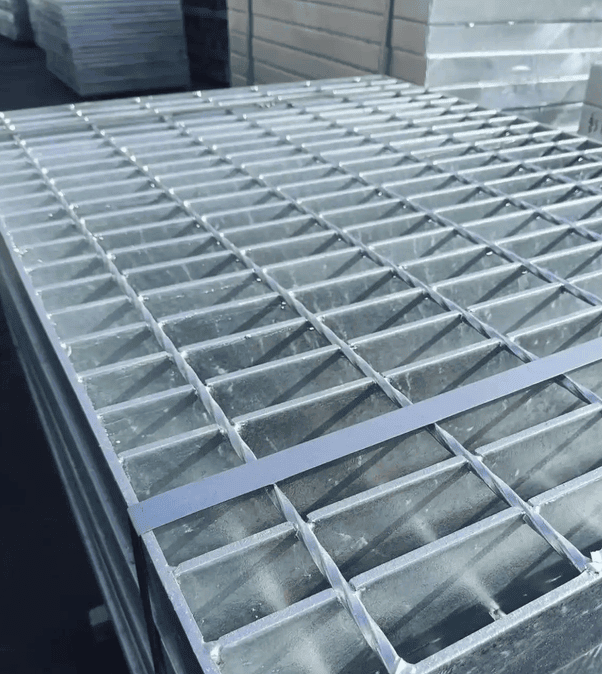
A supplier should not state “meets all international standards” without identifying the actual documents and tests. The buyer should ask for a compliance matrix showing which requirement is addressed by the product drawing, calculation, material certificate, inspection report, or installation procedure.
The following checklist can be copied into a request for quotation or technical specification:
| Procurement category | Required information |
|---|---|
| Standard | Standard name, part number, edition, and priority if multiple documents apply |
| Application | Platform, walkway, stair tread, trench cover, drainage cover, bridge, or equipment floor |
| Load | Uniform load, concentrated load, wheel load, equipment load, impact, and temporary load |
| Span | Clear span, support width, support spacing, and bearing direction |
| Geometry | Bearing bar depth, thickness, pitch, cross bar type, cross bar pitch, and opening size |
| Surface | Plain, serrated, anti-slip, gritted, perforated, or composite surface |
| Material | Carbon steel, galvanized steel, stainless steel, aluminum, or specified alloy grade |
| Finish | Hot-dip galvanizing, painted system, stainless finish, coating thickness, and repair method |
| Fabrication | Welding, press-locking, swage-locking, riveting, banding, cut-outs, frames, and nosings |
| Installation | Clips, bolts, anti-lift devices, support seats, removable panels, and torque requirements |
| Inspection | Dimensional checks, weld inspection, coating inspection, load testing, sampling, and hold points |
| Documents | Drawings, calculations, certificates, inspection reports, packing lists, and certificate of conformity |
| Delivery | Panel numbering, export packing, protection of coated surfaces, shipping marks, and replacement policy |
For standard product selection and initial technical comparison, buyers can review the CSSP Grating steel grating product range. The final quotation should still be prepared from the project drawing, load requirements, environmental conditions, and applicable standard.
Which steel grating standard should I use for an international project? The best standard is normally the one required by the owner, engineer, local authority, or project contract. YB/T 4001.1 is common for Chinese projects and Chinese-manufactured steel grating, ANSI/NAAMM MBG 531 is widely used in North American and international specifications, and BS 4592 is appropriate where British industrial flooring requirements are specified. If more than one standard is mentioned, the contract should state which document controls materials, dimensions, load calculations, inspection, and installation.
Is YB/T 4001.1 equivalent to ANSI/NAAMM MBG 531 or BS 4592? No. The standards address similar grating products but use different terminology, material references, dimensional systems, load data, tolerances, and documentation requirements. A product may be manufactured to more than one standard, but the supplier must compare the actual requirements and provide a compliance matrix. A general statement that the products are “equivalent” is not enough for engineering approval.
How do I specify steel grating correctly when requesting a quotation? State the standard and edition, application, clear span, design loads, bearing bar size and direction, bearing bar spacing, cross bar spacing, plain or serrated surface, material grade, corrosion protection, panel dimensions, cut-outs, banding, stair nosing, support details, clips, inspection requirements, and required certificates. Providing a drawing and load schedule will help the manufacturer recommend a safe and economical product instead of quoting a generic panel.