

32×3 steel grating usually refers to a grating panel made with 32 mm deep and 3 mm thick bearing bars. It is a common metric bearing-bar size for industrial walkways, platforms, catwalks, stair landings, drainage covers, and maintenance access floors. However, 32×3 is not a complete steel grating specification and does not provide a fixed price, fixed weight, or fixed load capacity on its own. The mesh pattern, bearing-bar pitch, cross-bar spacing, panel span, surface type, material, galvanizing, and fabrication details all change the finished result. For a common 32×3 welded carbon steel grating with 30×100 mesh, the grating body weight is often around 28–30 kg/m² before edge banding, galvanizing, clips, frames, and custom fabrication.
In steel grating, 32×3 normally describes the size of the flat bearing bar:
32 mm = bearing-bar depth or height
3 mm = bearing-bar thickness
The bearing bar is the primary structural member in a steel grating panel. It runs between supports and carries most of the applied load. The 32 mm depth is positioned vertically when installed, while the 3 mm dimension is the thickness of the flat bar.
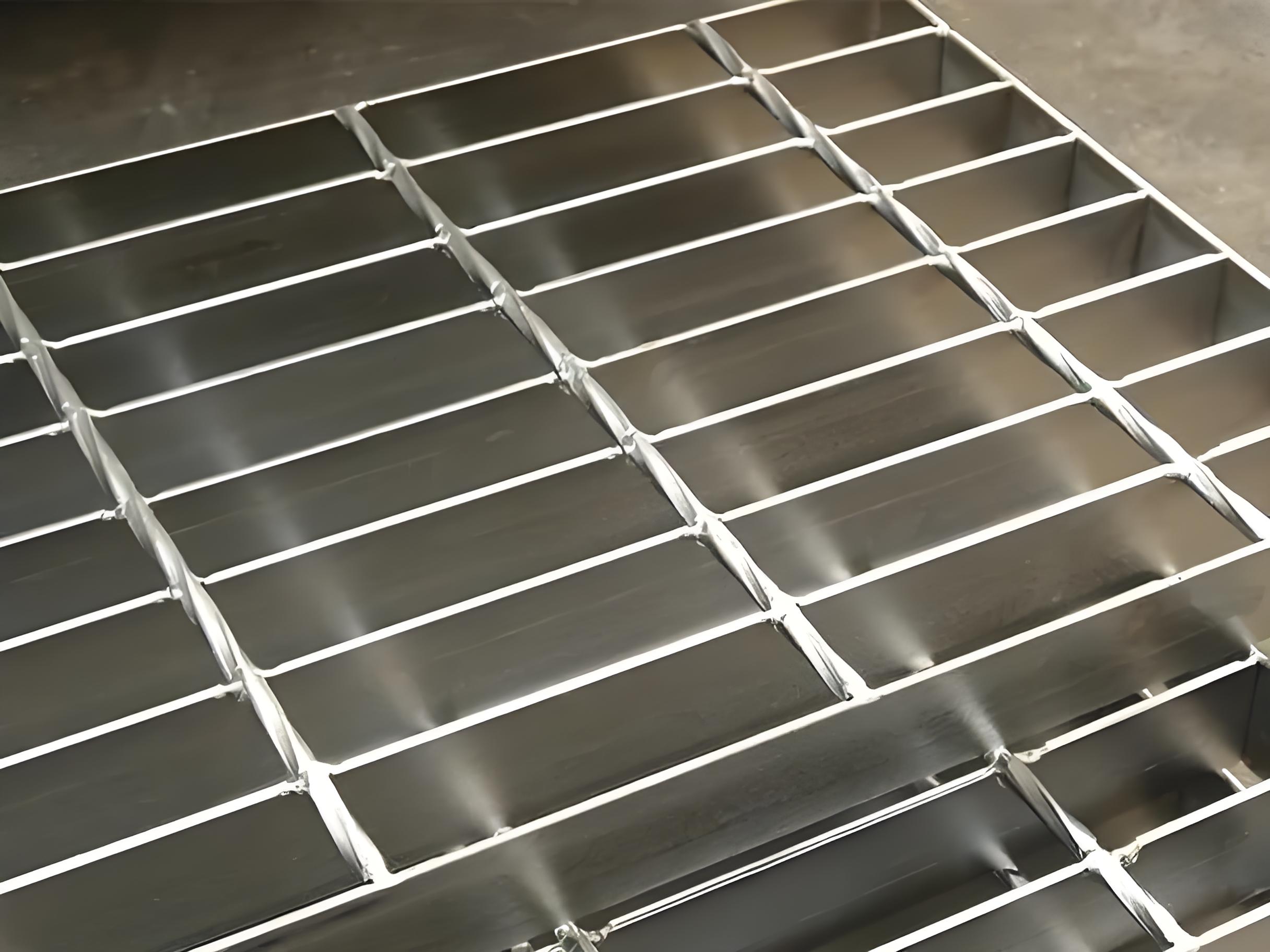
A 32×3 bearing bar has a deeper section than a 25×3 mm or 30×3 mm bar, so it can normally provide better bending resistance and lower deflection over the same span. It remains lighter and more economical than thicker 32×5 mm, 40×5 mm, or heavy-duty bearing bars.
| Bearing-Bar Size | Meaning | General Use Level |
|---|---|---|
| 25×3 mm | 25 mm deep × 3 mm thick | Light-duty and short-span access areas |
| 30×3 mm | 30 mm deep × 3 mm thick | General industrial walkways and platforms |
| 32×3 mm | 32 mm deep × 3 mm thick | Standard metric industrial flooring and walkways |
| 32×5 mm | 32 mm deep × 5 mm thick | Medium-duty platforms and higher-load access routes |
| 40×3 mm | 40 mm deep × 3 mm thick | Longer spans or more restrictive deflection requirements |
| 40×5 mm | 40 mm deep × 5 mm thick | Heavy industrial platforms and demanding service areas |
Saying “32×3 steel grating” gives the factory only one part of the required information. It does not state the bearing-bar spacing, cross-bar spacing, panel dimensions, support span, material grade, surface type, finish, or fabrication details.
For example, the following products can all use 32×3 mm bearing bars, but they are not the same product:
The same 32×3 bearing bar can be used in a light platform panel or in a more demanding installation, but the allowable span and load must be checked. A factory cannot select the correct panel only from the bar size because support spacing and service conditions control the final structural requirement.
Two common mesh patterns for 32×3 steel grating are 30×100 mm and 30×50 mm. The first figure normally refers to bearing-bar pitch, while the second figure refers to cross-bar pitch.
32×3 bearing bars with 30×100 mesh: bearing bars are spaced at 30 mm centers and cross bars are spaced at 100 mm centers.
32×3 bearing bars with 30×50 mesh: bearing bars are spaced at 30 mm centers and cross bars are spaced at 50 mm centers.
| Feature | 32×3, 30×100 Grating | 32×3, 30×50 Grating |
|---|---|---|
| Bearing-bar pitch | 30 mm | 30 mm |
| Cross-bar pitch | 100 mm | 50 mm |
| Mesh appearance | Standard open industrial pattern | Denser transverse pattern |
| Open area | Higher | Lower |
| Cross-bar quantity | Standard | Higher |
| Weight per m² | Lower | Higher |
| Typical use | Platforms, walkways, catwalks, maintenance floors | Stair treads, denser walking surfaces, special industrial access |
Both mesh patterns have the same 30 mm bearing-bar pitch, so the number of primary load-bearing bars per meter remains similar. The 30×50 pattern contains more cross bars and normally has a tighter visual appearance, higher weight, and higher factory cost. It can improve panel integrity and local surface feel, but it does not automatically make a 32×3 grating suitable for a much longer span or vehicle loading.
A complete metric grating designation should identify the bearing-bar section, mesh pattern, material, surface, finish, panel size, bearing-bar direction, and fabrication scope.
A clear specification example is:
Welded steel grating, 32×3 mm bearing bars, 30×100 mm mesh, serrated surface, carbon steel, hot-dip galvanized after fabrication, finished panel size 1000×1200 mm, bearing bars spanning 1000 mm, banded on four sides.
| Specification Item | Example | Why It Is Important |
|---|---|---|
| Grating type | Welded steel bar grating | Defines the manufacturing method and general panel structure |
| Bearing bar | 32×3 mm flat bar | Controls most of the load capacity, stiffness, and weight |
| Bearing-bar pitch | 30 mm | Affects open area, number of bars, weight, and foot support |
| Cross-bar pitch | 100 mm | Affects mesh density, panel stability, and production cost |
| Surface | Plain or serrated | Changes slip resistance and processing cost |
| Material | Carbon steel, 304 stainless steel, or 316 stainless steel | Determines corrosion resistance and base material cost |
| Finish | Hot-dip galvanized after fabrication | Protects carbon steel against many outdoor and industrial exposures |
| Panel size | 1000×1200 mm | Needed for cutting, handling, packing, and installation planning |
| Bearing-bar direction | Bars span 1000 mm between supports | Essential for structural selection and load-table review |
Without the bearing-bar direction, a factory may know the panel dimensions but still not know the true clear span. This can create a serious design error because the bearing bars must run between the actual supports.
The bearing bar carries the main bending load. Its height has a strong effect on stiffness because a deeper vertical section resists bending more effectively. Thickness also matters because it adds steel area, improves section strength, and can improve durability at welded joints.
A 32×3 mm bearing bar is deeper than a 30×3 mm bar but has the same thickness. This gives it a modest increase in stiffness and load resistance while keeping the panel lighter than a 32×5 mm section.
| Change in Bearing Bar | Effect on Grating | Effect on Price |
|---|---|---|
| Increase depth from 30 mm to 32 mm | Improves bending resistance and stiffness | Slight increase in steel weight |
| Increase depth from 32 mm to 40 mm | Provides a much stronger section for longer spans | Noticeable increase in weight and cost |
| Increase thickness from 3 mm to 5 mm | Improves strength, stiffness, and local robustness | Significant increase in steel consumption |
| Reduce bearing-bar pitch | Creates more load-bearing bars and smaller openings | Higher cost per square meter |
| Use serrated bearing bars | Improves traction in many wet or oily conditions | Adds anti-slip processing cost |
For ordinary pedestrian and maintenance access, 32×3 can be a practical standard-duty option when the span is controlled. For longer spans, heavy point loads, equipment movement, or restrictive deflection requirements, a deeper or thicker bearing bar may be more suitable.
Theoretical weight is important because it affects raw material cost, galvanizing cost, freight, lifting requirements, packing, and price per panel. For a 32×3 mm rectangular carbon steel bearing bar at 30 mm centers, the bearing-bar portion can be estimated using this formula:
Bearing-bar weight (kg/m²) ≈ 7.85 × bearing-bar depth (mm) × bearing-bar thickness (mm) ÷ bearing-bar pitch (mm)
For 32×3 mm bearing bars at 30 mm centers:
7.85 × 32 × 3 ÷ 30 = 25.12 kg/m²
This calculation includes only the bearing bars. Cross bars, weld material, banding, galvanizing, clips, toe plates, frames, and custom fabrication must be added separately.
For standard welded 32×3 steel grating with 30 mm bearing-bar pitch and 100 mm cross-bar pitch, the finished grating body is commonly estimated at approximately 28–30 kg/m² before special fabrication and coating allowances.
| Weight Component | Approximate Contribution for 32×3, 30×100 Grating | Notes |
|---|---|---|
| 32×3 mm bearing bars at 30 mm pitch | About 25.1 kg/m² | The main load-bearing steel component |
| Cross bars and welded construction | Usually several kg/m² | Depends on cross-bar size, profile, and manufacturing method |
| Estimated grating body | About 28–30 kg/m² | Before frames, banding, galvanizing, clips, and fabrication parts |
| Hot-dip galvanizing | Additional finished mass | Actual addition varies with coating thickness and surface area |
For shipping and installation planning, use the factory’s final approved weight list rather than a theoretical estimate. Actual weight can vary because of raw bar tolerances, cross-bar profile, weld pattern, serration, zinc coating, edge treatment, and fabrication details.
Cross bars do not carry the primary span load in the same way as bearing bars, but they still affect total panel weight, rigidity, appearance, and cost. Reducing cross-bar pitch from 100 mm to 50 mm increases the number of cross bars per square meter.
| 32×3 Mesh Pattern | Cross-Bar Quantity | Weight Trend | Cost Trend |
|---|---|---|---|
| 30×100 mm | Standard | About 28–30 kg/m² for a typical welded body | More economical |
| 30×50 mm | Approximately double the cross-bar frequency | Usually higher, often around 30–33 kg/m² depending on construction | Higher due to added steel and processing |
The exact difference depends on the cross-bar section. Twisted square bars, round bars, flat bars, and press-locked cross bars have different weights. A factory should calculate the finished unit mass according to the actual production method instead of applying a fixed percentage to every mesh pattern.
Cross-bar spacing also affects open area. A 30×50 mesh has a denser surface and lower open area than 30×100. This may be useful where a closer transverse pattern is needed, but it can reduce drainage and increase the chance of debris collecting on the surface.
There is no single maximum span or universal load capacity for 32×3 steel grating. The correct span must be selected from a load table or engineering calculation that matches the actual bearing-bar pitch, material grade, load type, support condition, and deflection limit.
A 32×3 bearing bar is commonly used for standard industrial flooring where the support spacing is moderate and the service load is controlled. It should not automatically be used for long-span structures, forklift routes, heavy machinery, truck traffic, or vehicle-access drainage covers.
For a proper load check, the factory or engineer needs:
A 32×3 grating panel may be structurally adequate for a pedestrian walkway at one support spacing but unsuitable at a longer span. Even a small increase in span can cause a large increase in deflection. For this reason, a 32×3 bar should be selected from an actual load table rather than from visual comparison with another panel.
Steel grating must be installed with the bearing bars running from one support to the next. This is the span direction. The cross bars run across the bearing bars and do not replace structural support beneath the panel.
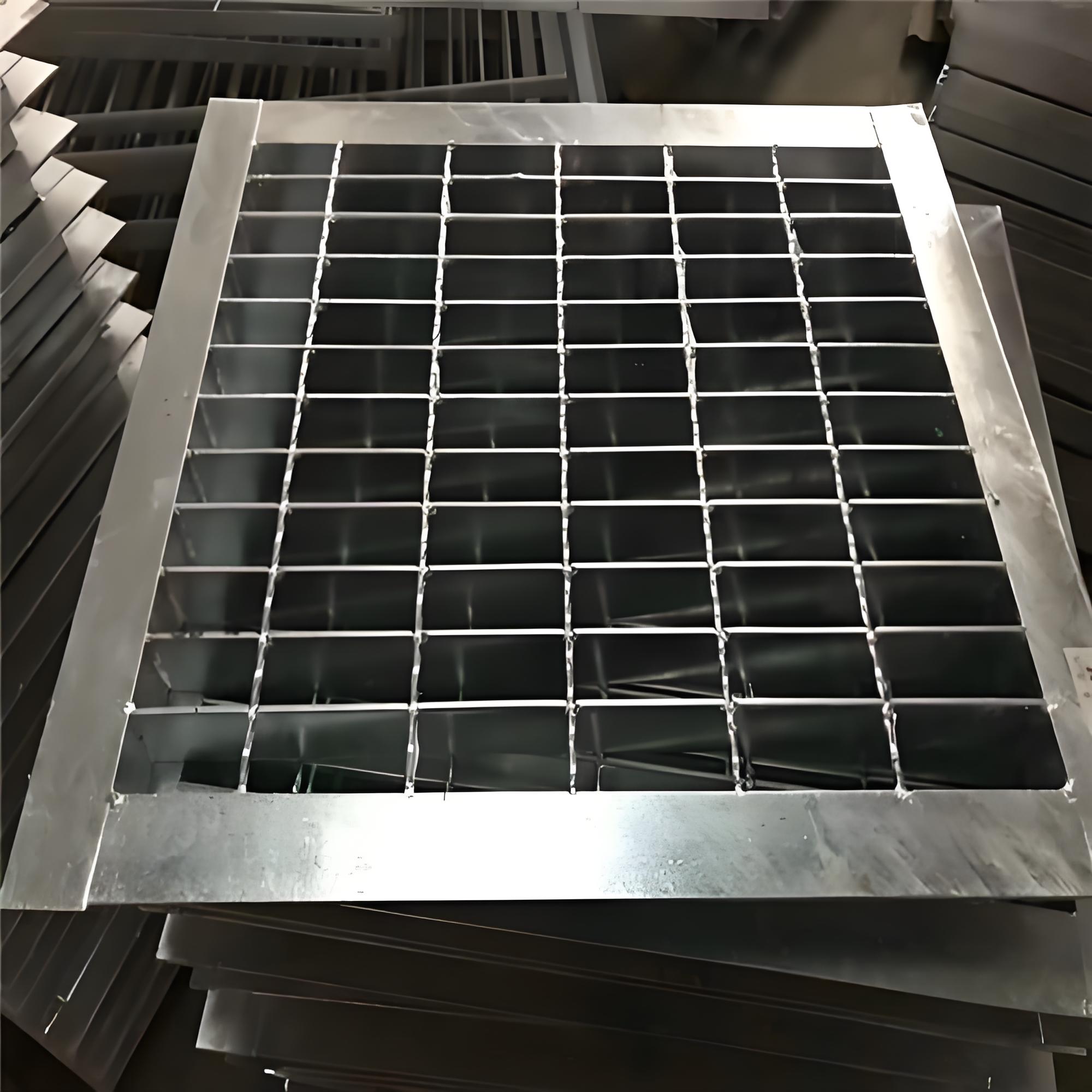
For example, a panel may measure 1000 mm wide by 6000 mm long. If the bearing bars run along the 6000 mm direction but support beams are installed every 1000 mm, the design span is 1000 mm. The panel length is 6000 mm, but the bearing bars are supported several times along that length.
| Term | Meaning | Why It Matters |
|---|---|---|
| Overall panel length | Total outside dimension of the grating piece | Affects handling, packing, and installation layout |
| Clear span | Distance between effective supports under the bearing bars | Main structural value for load and deflection selection |
| Bearing-bar direction | Direction of the flat load-carrying bars | Must align with the support span |
| Deflection limit | Maximum permitted movement under service loading | Controls walking comfort, drainage, vibration, and serviceability |
Deflection is often as important as strength. A panel may not permanently bend or fail, but excessive movement can still create uncomfortable walking, noise, loose clips, poor drainage, uneven joints, and maintenance problems. A more restrictive deflection limit may require a deeper bearing bar even when the basic strength calculation appears acceptable.
32×3 grating can be supplied with plain bearing bars or serrated bearing bars. The structural bar size stays the same, but the surface profile changes.
Plain grating has smooth top edges on the bearing bars. It is commonly used for dry indoor floors, maintenance platforms, machinery access areas, and general industrial walkways where water, oil, mud, snow, or chemical residue are limited.
Plain grating is normally the more economical option. It is also easy to sweep and wash, although real slip resistance depends on footwear, contamination, slope, cleaning, and site conditions.
Serrated grating has notches or teeth formed along the top of the bearing bars. It is commonly specified for outdoor walkways, stairs, inclined ramps, wet process areas, drainage zones, oily platforms, wastewater plants, and exposed industrial access routes.
Serrated bearing bars improve traction in many operating conditions, but they add processing cost and may retain some debris if housekeeping is poor. The decision should be based on actual slip risk rather than using serration for every project by default.
| Surface Type | Best Suited For | Cost Level |
|---|---|---|
| Plain 32×3 grating | Dry indoor platforms, equipment access, controlled industrial areas | Lower |
| Serrated 32×3 grating | Outdoor walkways, wet areas, oily platforms, stairs, ramps | Higher |
32×3 steel grating can be produced in several material and finish options. The correct choice depends on corrosion exposure, maintenance expectations, operating environment, project budget, and expected service life.
| Material or Finish | General Cost Position | Typical Application |
|---|---|---|
| Untreated carbon steel | Lowest initial cost | Indoor, dry, temporary, or later-coated installations |
| Painted carbon steel | Moderate | Indoor industrial platforms and controlled environments |
| Hot-dip galvanized carbon steel | Moderate to high | Outdoor platforms, walkways, stairs, drainage covers, humid areas |
| 304 stainless steel | Higher | Wet service, food processing, commercial and industrial environments |
| 316 or 316L stainless steel | Higher still | Coastal, marine, chemical, chloride-exposed environments |
Hot-dip galvanized carbon steel is commonly selected for general outdoor industrial use because it combines carbon steel strength with zinc corrosion protection. Galvanizing is normally applied after cutting, welding, banding, and fabrication so the coating can cover exposed edges, welds, and finished panel details.
Stainless steel should be selected where zinc-coated carbon steel is not suitable, such as certain chemical, washdown, marine, food-processing, or chloride-exposed environments. The stainless grade should be chosen according to the actual exposure rather than appearance alone.
32×3 steel grating price depends mainly on the finished steel weight and the level of processing required. A standard 32×3, 30×100 welded panel uses more steel than 30×3 grating but less than 32×5 or 40×5 grating. It usually sits in the middle range of standard industrial grating pricing.
For early factory budgeting, a standard smooth 32×3 carbon steel welded grating with 30×100 mesh may often be estimated within the following broad ranges:
| 32×3 Grating Type | Indicative Factory Budget Range | Typical Scope |
|---|---|---|
| Plain untreated carbon steel, 30×100 mesh | About US$16–26/m² | Standard full panels with limited fabrication |
| Plain hot-dip galvanized carbon steel, 30×100 mesh | About US$20–34/m² | Standard industrial panels, galvanized after fabrication |
| Serrated hot-dip galvanized 32×3 grating | About US$23–40/m² | Outdoor, wet, oily, or anti-slip applications |
| 32×3 grating with 30×50 mesh | Usually higher than 30×100 mesh | Additional cross bars, denser mesh, higher production weight |
| Cut-to-size, framed, banded, or heavily fabricated grating | Project-specific | Panels with cutouts, frames, holes, clips, labels, and special packing |
These figures are budget references rather than binding prices. Steel markets, zinc cost, material grade, quantity, order timing, factory location, packing, currency, and trade terms can change the final quotation.
Consider a standard 1000×1200 mm panel using 32×3 bearing bars with 30×100 mesh. The panel area is:
1.0 m × 1.2 m = 1.2 m²
If the grating body weight is estimated at 28–30 kg/m², the basic panel body weight is approximately:
1.2 m² × 28–30 kg/m² = about 33.6–36.0 kg
This is before allowing for edge banding, galvanized coating, clips, toe plates, cutouts, frames, or special fabrication. A finished panel price may therefore be higher than simply multiplying the raw square meter price by 1.2 m².
| Panel Size | Area | Approximate 32×3, 30×100 Grating Body Weight |
|---|---|---|
| 1000×1000 mm | 1.0 m² | About 28–30 kg |
| 1000×1200 mm | 1.2 m² | About 33.6–36.0 kg |
| 1000×3000 mm | 3.0 m² | About 84–90 kg |
| 1000×6000 mm | 6.0 m² | About 168–180 kg |
Very large panels may reduce the number of joints, but they can create lifting, transport, galvanizing, and maintenance challenges. The best panel size should consider handling equipment and future removal requirements as well as material efficiency.
A simple rectangular 32×3 panel is normally less expensive than a finished project panel with edge banding, cutouts, frames, clips, and special packing. Factory cost increases when more labor, steel, coating area, drawing review, inspection, and handling are required.
| Factory Cost Factor | How It Affects 32×3 Grating Price |
|---|---|
| Hot-dip galvanizing | Adds zinc, processing, handling, inspection, and finished weight |
| Serrated surface | Adds anti-slip processing to the bearing bars |
| Four-side edge banding | Adds flat bar, welding, finishing, and handling time |
| Pipe or column cutouts | Requires cutting, edge treatment, and sometimes reinforcement |
| Irregular shapes | Can reduce material yield and require more fabrication time |
| Frames and lifting handles | Add extra steel, welding, fitting, and inspection work |
| Clips, bolts, and locking devices | Add accessory cost and packing complexity |
| Small order quantity | Raises unit price because setup and minimum charges are spread over fewer panels |
Edge banding is especially important for custom grating. It closes exposed bearing-bar ends, improves handling safety, increases edge stiffness, and gives the panel a cleaner appearance. Each internal cutout can add further banding length and welding work.
For carbon steel grating, field cutting or welding after galvanizing can damage the zinc coating. When practical, custom cutting and fabrication should be completed before hot-dip galvanizing so the finished details receive full coating coverage.
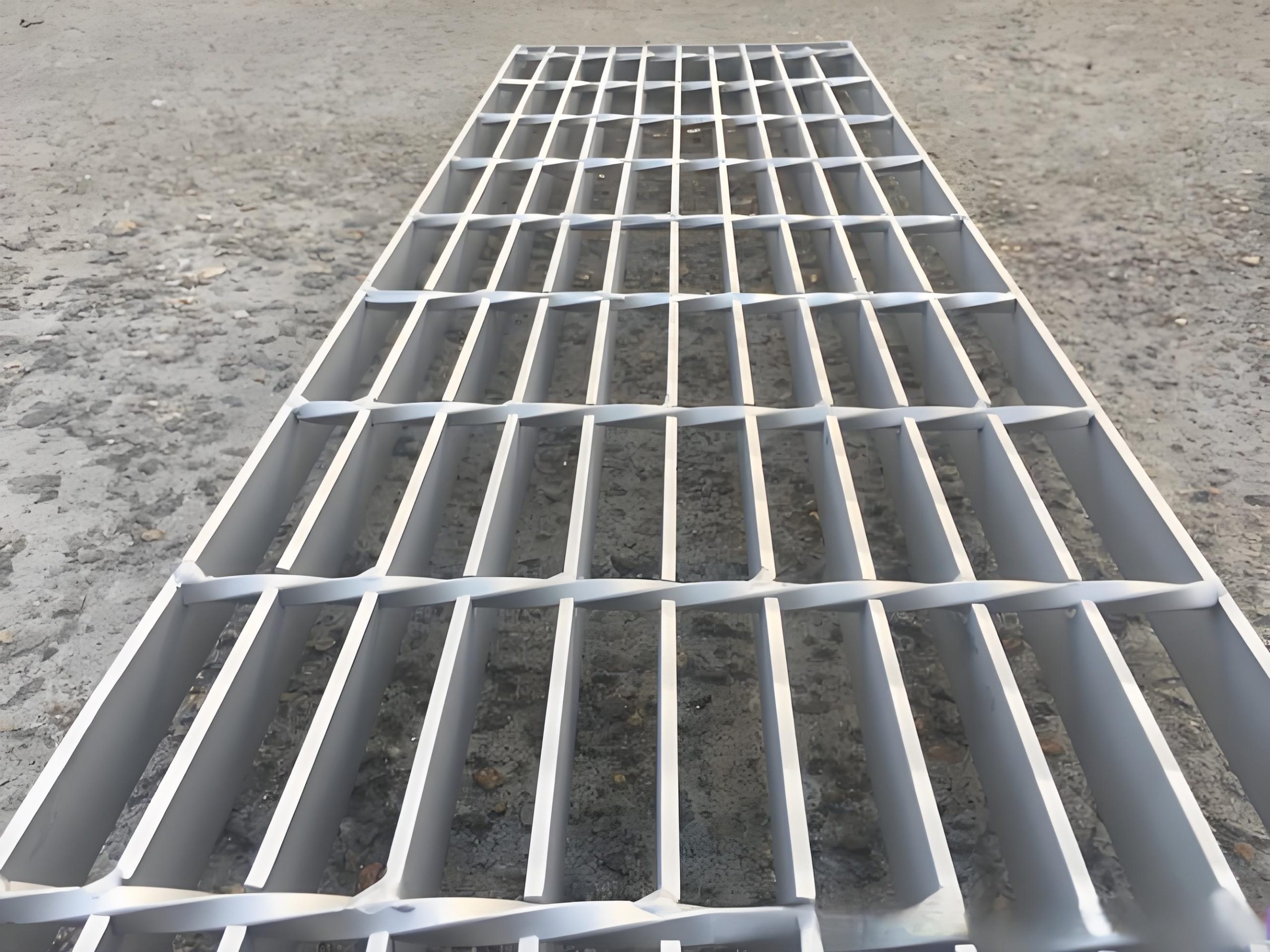
Providing only “32×3 steel grating” and total square meter quantity is enough for a rough estimate, but not for an accurate factory quotation. A complete inquiry reduces design assumptions, pricing revisions, fabrication errors, and installation problems.
| Information to Provide | Example |
|---|---|
| Product type | Welded steel bar grating |
| Bearing bar | 32×3 mm flat bearing bars |
| Mesh pattern | 30×100 mm or 30×50 mm |
| Material | Carbon steel, 304 stainless steel, or 316L stainless steel |
| Surface type | Plain or serrated |
| Finish | Hot-dip galvanized after fabrication |
| Panel dimensions | 1000×1200 mm or a detailed panel schedule |
| Bearing-bar direction | Bars span 1000 mm between supports |
| Load requirement | Uniform load, concentrated load, wheel load, and deflection limit |
| Fabrication scope | Banding, cutouts, toe plates, frames, clips, holes, lifting handles |
| Quantity | Total square meters, panel quantity, and repeated sizes |
| Commercial requirement | Packing method, destination, trade term, and requested delivery date |
A complete inquiry could read: “Please quote serrated welded steel grating with 32×3 mm bearing bars, 30×100 mm mesh, carbon steel, hot-dip galvanized after fabrication, finished panel size 1000×1200 mm, bearing bars spanning 1000 mm, banded on four sides, suitable for the stated pedestrian load and deflection limit. Please provide finished kg/m², load-table reference, packing details, lead time, and FOB price.”
How much does 32×3 steel grating weigh per square meter?
For standard welded carbon steel grating with 32×3 mm bearing bars, 30 mm bearing-bar spacing, and 100 mm cross-bar spacing, the grating body commonly weighs about 28–30 kg/m² before galvanizing, edge banding, clips, frames, and custom fabrication.
Is 32×3 steel grating strong enough for a walkway?
32×3 steel grating can be suitable for many industrial walkways when the support span and load are appropriate. The final selection must consider clear span, bearing-bar direction, uniform load, concentrated load, deflection limit, and whether carts, forklifts, or other wheel loads are present.
What is the difference between 32×3 and 32×5 steel grating?
Both use 32 mm deep bearing bars, but 32×5 grating uses 5 mm thick bars instead of 3 mm thick bars. The 32×5 option is heavier, stronger, and more expensive, and it is often selected for higher loads, longer spans, or more demanding industrial service.