

Aluminum stair treads are lightweight, corrosion-resistant access components used on industrial stairs, platforms, marine structures, processing plants, pedestrian bridges, equipment access systems, and outdoor service routes. A reliable aluminum stair treads manufacturer can supply standard bar grating treads, plank treads, expanded metal treads, serrated safety treads, and fully customized stair components with nosing, end plates, bolt holes, and anti-slip surfaces. The correct tread is selected by matching the stair width, support span, load requirement, alloy grade, surface profile, environment, and installation method.
Aluminum stair treads are prefabricated metal steps designed to provide safe access between levels while reducing the weight placed on the supporting stair structure. They are commonly made from aluminum bar grating, perforated safety plank, expanded metal, extruded profiles, or fabricated aluminum plate and grating combinations.
Compared with carbon steel stair treads, aluminum stair treads are significantly lighter. Aluminum has a density of approximately 2700 kg/m³, while carbon steel has a density of approximately 7850 kg/m³. For the same volume of material, aluminum weighs roughly one-third as much as steel. This makes aluminum particularly useful for portable access systems, marine structures, roof platforms, lightweight stair towers, modular equipment skids, and locations where manual handling is important.
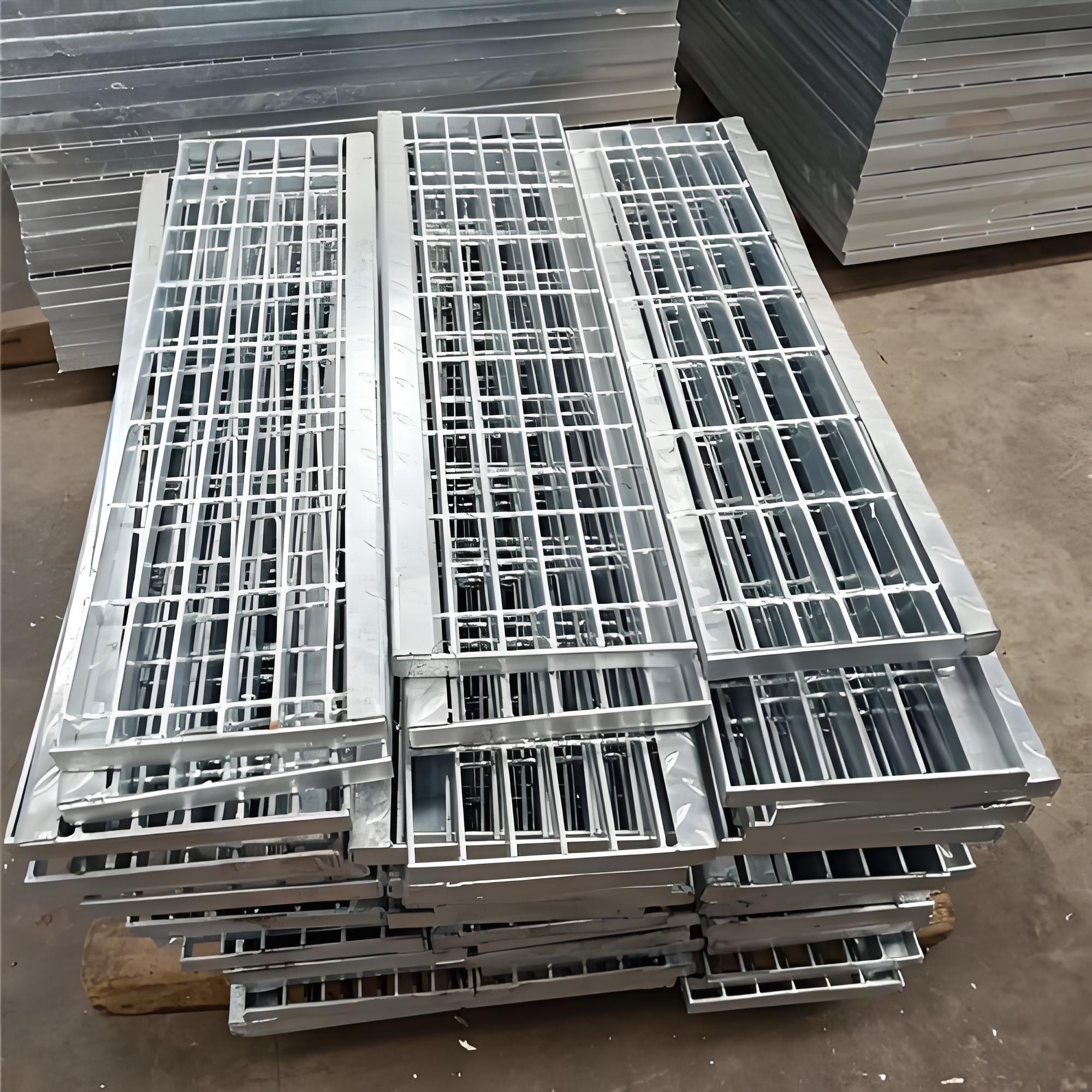
Aluminum stair treads normally include a walking surface, a front nosing, and end plates or fixing points. In bar grating treads, the bearing bars span between the stair stringers. In plank treads, the formed side channels and profile geometry provide the structural capacity. In expanded metal treads, the raised mesh creates grip while the formed or reinforced edges support the step.
| Component | Function |
|---|---|
| Bearing bars or formed channels | Carry the main load between stair stringers |
| Cross bars or mesh pattern | Maintain shape, create openings, and improve local stability |
| Nosing | Strengthens the leading edge and improves visibility and grip |
| End plates | Transfer load to the stringers and provide fixing holes |
| Anti-slip surface | Improves traction in wet, oily, outdoor, or high-traffic conditions |
| Fixing clips or bolts | Secure the tread to the stair frame |
| Finish | Protects the surface or improves appearance and cleanability |
Aluminum stair treads are selected when weight reduction, corrosion resistance, drainage, appearance, or ease of handling is important. They are especially useful in environments where uncoated carbon steel would corrode quickly or where a heavy steel stair would place unnecessary load on a structure.
The lower density of aluminum makes stair sections easier to transport, lift, install, and replace. This is valuable for rooftop access systems, offshore structures, marine vessels, portable stairs, modular plants, temporary access systems, and remote sites where lifting equipment is limited.
Aluminum naturally forms a thin oxide layer when exposed to air. This layer helps protect the metal from further corrosion in many outdoor and industrial environments. Aluminum stair treads are commonly used in wet areas, coastal locations, food processing facilities, water treatment plants, and outdoor access routes.
Corrosion resistance does not mean that every aluminum alloy is suitable for every chemical environment. Chlorides, strong alkalis, acids, dissimilar-metal contact, trapped moisture, and industrial contaminants can affect aluminum performance. The alloy, finish, fastening method, and operating environment should be evaluated together.
Bar grating, expanded metal, and perforated aluminum treads allow rainwater, wash water, snow, dust, and loose debris to pass through. This reduces standing water and helps improve traction compared with a flat solid plate surface.
Aluminum does not require the same corrosion-maintenance cycle as uncoated carbon steel. In many applications, aluminum stair treads can remain in service for years with routine inspection and cleaning. Where a decorative or highly durable finish is required, anodizing or powder coating may be specified.
Aluminum is non-magnetic, which can be useful in specialized industrial, electrical, laboratory, and marine environments. It also has good thermal conductivity, although this should be considered carefully in areas exposed to extreme temperatures or direct sunlight.
Aluminum stair treads are available in several forms. The best option depends on required load capacity, open area, slip resistance, cleaning needs, visual appearance, and fabrication requirements.
Aluminum bar grating stair treads use vertical bearing bars as the main structural members. Cross bars connect the bearing bars to create an open grid. The bearing bars run between the stair stringers and carry the applied load.
Aluminum bar grating may be swage-locked, pressure-locked, welded, or fabricated using another proprietary process. A manufacturer should identify the actual construction method because not all aluminum grating is welded in the same way as welded steel bar grating.
Bar grating treads are often selected for:
Safety plank treads are formed from perforated aluminum sheet or plate. The surface contains punched holes, raised edges, and serrated openings that create an aggressive anti-slip surface. These treads are often used where traction is more important than the open-grid appearance of bar grating.
Safety plank treads can be supplied with formed side channels, welded end plates, and a front nosing. They are commonly used for outdoor stairs, ship ladders, maintenance access routes, loading platforms, and wet industrial areas.
Expanded metal treads are made by slitting and stretching aluminum sheet to create a diamond-shaped mesh pattern. The raised mesh surface can provide good traction, especially when the openings are oriented correctly for the direction of travel.
Expanded metal treads are often economical and lightweight, but their load capacity depends on sheet thickness, strand width, mesh size, formed edge detail, and support spacing. They are generally better suited to light-duty and medium-duty access systems unless specifically engineered for heavier loads.
Perforated aluminum treads can use round, square, slot, or serrated openings. They may be supplied as formed planks or fabricated plate treads. Perforated treads can provide a balance between drainage, anti-slip performance, visual appearance, and reduced opening size.
Checker plate, also known as diamond plate or tread plate, is sometimes used for aluminum stair treads. It provides a solid surface with a raised pattern. Checker plate can be useful in dry or moderately wet areas, but it generally provides less drainage than bar grating or perforated safety plank.
For outdoor stairs exposed to rain, snow, mud, or oil, a solid checker plate tread may need an additional abrasive strip, serrated nosing, drainage holes, or another anti-slip treatment.
| Tread Type | Open Area | Slip Resistance | Typical Application |
|---|---|---|---|
| Aluminum bar grating | High | Good with serrated bearing bars | Industrial stairs, platforms, marine access |
| Safety plank | Moderate to high | High | Wet, muddy, outdoor, and high-slip-risk access |
| Expanded metal | High | Good with raised mesh | Lightweight access systems and general stair use |
| Perforated tread | Moderate | Moderate to high | Washdown areas and controlled opening requirements |
| Checker plate tread | Low | Moderate | Dry or covered access systems with solid-surface needs |
There is no single universal aluminum stair tread size. Standard sizes vary by manufacturer, local stair codes, grating type, production equipment, and customer requirements. Most aluminum stair treads are supplied as standard-width products or custom fabricated items based on approved drawings.
For industrial aluminum bar grating stair treads, common lengths often range from 600 mm to 1200 mm. The length normally corresponds to the distance between stair stringers and the span direction of the bearing bars. Common tread depths include 240 mm, 250 mm, 270 mm, 280 mm, 300 mm, and 305 mm.
| Common Tread Size | Typical Application | Selection Note |
|---|---|---|
| 600 × 240 mm | Compact maintenance stairs | Check required clear stair width |
| 700 × 240 mm | Machine and equipment access | Suitable for narrow industrial stairs |
| 800 × 240 mm | General access stairs | Common compact aluminum tread size |
| 800 × 270 mm | Industrial service stairs | Balanced width and stepping depth |
| 900 × 270 mm | Factory platforms and maintenance routes | Verify bearing bar size for full span |
| 1000 × 270 mm | Regular personnel access | Often requires deeper bearing bars than short treads |
| 1000 × 300 mm | Comfortable industrial stairways | Confirm whether nosing is included in stated depth |
| 1200 × 300 mm | Wide access stairs and large platforms | May need heavy-duty grating or additional support |
Typical aluminum bar grating bearing bar heights include 25 mm, 30 mm, 32 mm, 38 mm, 40 mm, 45 mm, and 50 mm. Larger sections are available for heavy-duty or long-span applications.
Because aluminum has a lower elastic modulus than steel, deflection can become important even when the aluminum tread has adequate material strength. A deeper aluminum bearing bar may be needed to achieve the required stiffness over a particular span.
For North American projects, aluminum stair treads are often supplied in widths such as 24, 30, 36, 42, and 48 inches. Common tread depths include approximately 9-3/4, 10-15/16, and 12-1/8 inches. Bearing bar heights may be specified in 1, 1-1/4, 1-1/2, 1-3/4, or 2 inch sizes.
The stated tread size should always identify the bearing bar direction. Different manufacturers may use “length” and “width” differently, so a shop drawing is more reliable than a written dimension alone.
Aluminum stair tread load capacity depends on tread type, bearing bar geometry, alloy grade, temper, support span, cross bar construction, nosing, end plates, fixing method, and applied load. A tread should never be selected only because it looks thick or because it has a similar size to an existing steel tread.
Aluminum is lighter than steel, but it also has a lower elastic modulus. This means aluminum stair treads can deflect more than steel treads of similar shape under the same load. Aluminum grating should therefore be selected from aluminum-specific load tables or project engineering calculations.
Load capacity must consider both:
The support span is the clear distance between the supporting stringers or beams. For bar grating stair treads, the bearing bars should span directly between the two stringers. A longer span generally requires a deeper or thicker bearing bar.
A tread can be made wider without increasing the span if intermediate supports are present, but those supports must be shown on the approved structural drawing. Never assume that a center support is carrying load unless the tread is designed to bear on it.
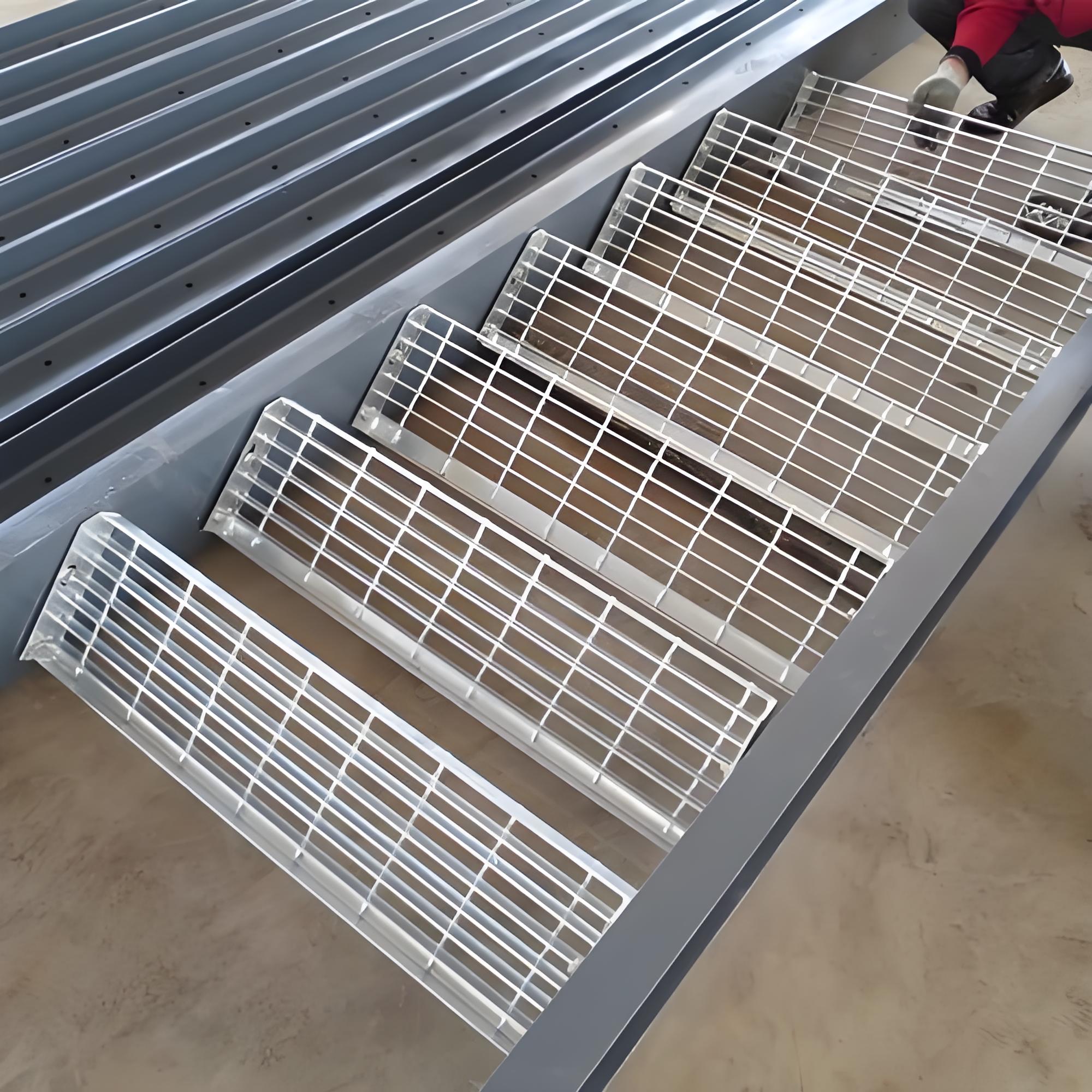
The stair tread is only one component of the complete stair system. Tread depth, riser height, angle, landing size, handrails, guardrails, clear width, and headroom all need to comply with the applicable local requirements.
For covered United States general-industry applications, OSHA 29 CFR 1910.25 includes stairway requirements such as uniform tread depth and riser height, minimum dimensions for standard stairs, and a minimum stair load requirement within its scope. The installed stair must be evaluated as a complete assembly rather than treating the aluminum tread as a stand-alone compliance product.
Anti-slip performance is often the most important safety feature of an aluminum stair tread. The correct surface depends on water, oil, mud, snow, dust, chemical residue, footwear, cleaning procedures, and the direction of travel.
Serrated aluminum bar grating has notches cut or formed into the top of the bearing bars. The serrations create more contact edges and improve grip in wet or contaminated conditions. Serrated bar grating is commonly used for outdoor industrial stairs, marine access, water treatment plants, and maintenance routes.
Perforated safety treads use punched holes with raised edges or teeth. The raised edges improve traction, while the openings allow water and dirt to pass through. This style is often selected for muddy, snowy, wet, or oily environments.
Abrasive nosing uses a mineral grit surface, often in a contrasting color. It can provide high initial traction and improve visibility at the front edge of the tread. Abrasive nosing should be selected with consideration for wear, cleaning chemicals, UV exposure, and replacement requirements.
Checker plate or diamond plate nosing is commonly used to reinforce the leading edge of an aluminum stair tread. It improves edge visibility and provides a durable front profile. In severe slip-risk environments, it may be combined with serrated grating or an abrasive insert.
| Anti-Slip Option | Suitable Condition | Main Benefit |
|---|---|---|
| Serrated bearing bars | Wet, oily, outdoor, or muddy conditions | More grip across the full tread surface |
| Perforated safety plank | Mud, rain, snow, and washdown areas | Drainage plus aggressive raised traction points |
| Abrasive strip | High slip-risk zones and visible edge requirements | High traction and visual contrast |
| Checker plate nosing | General industrial stairs | Durable reinforced leading edge |
| Expanded metal mesh | Lightweight outdoor access routes | Raised mesh texture and open drainage pattern |
No anti-slip surface removes the need for housekeeping. Dirt, oil, ice, corrosion products, and accumulated debris can reduce traction. Routine cleaning and inspection are essential, especially on outdoor or process-area stairs.
Aluminum bar grating and expanded metal are both widely used for lightweight stair systems, but they have different structural characteristics and surface patterns. The correct choice depends on load, span, drainage, appearance, opening size, and budget.
Bar grating treads are made from load-bearing bars and cross bars. They are generally easier to engineer for known spans and concentrated loads because the bearing bar direction is clear. They are commonly used for industrial platforms, heavy service stairs, and applications requiring custom end plates and nosing.
Expanded metal treads are made from sheet that is slit and stretched into a diamond mesh. They are lightweight and can provide good traction, but the load path is different from bar grating. Expanded metal treads often require formed edges, channels, or supporting frames to achieve the required capacity.
Open areaHighHigh
| Feature | Aluminum Bar Grating | Expanded Metal Aluminum Tread |
|---|---|---|
| Main load-carrying element | Vertical bearing bars | Expanded mesh and formed edge structure |
| Load-table selection | Usually based on bearing bar size and span | Usually based on mesh thickness, form, and support arrangement |
| Slip resistance | Good with serrated bars | Good with raised mesh pattern |
| Custom cut-outs | Easy to band and frame | May require formed or reinforced edges |
| Typical duty | Light to heavy industrial use | Light to medium-duty access systems |
| Visual appearance | Clean linear grid pattern | Diamond-shaped mesh pattern |
For high-load industrial stairs, long spans, or projects requiring detailed load verification, aluminum bar grating is often the more direct choice. For lightweight access systems and economical open-mesh treads, expanded metal may be suitable when its capacity is verified for the application.
The alloy grade affects strength, corrosion resistance, weldability, formability, and finish quality. Aluminum stair tread manufacturers should identify the alloy and temper used for the bearing bars, cross bars, nosing, end plates, and any extruded profiles.
6061 is one of the most widely used structural aluminum alloys. It offers a useful combination of strength, weldability, machinability, and corrosion resistance. 6061-T6 is commonly associated with structural extrusions, frames, bar grating components, marine structures, transport equipment, and industrial access systems.
6063 is widely used for architectural and decorative extrusions because it offers good extrudability and surface finish. It may be used for certain stair tread profiles, nosing sections, edge details, handrail components, and extruded safety profiles. Its strength characteristics differ from 6061, so it should not automatically be substituted for structural bearing bars.
5052 aluminum is commonly used for formed sheet products, checker plate, perforated sheet, and fabricated tread plate components. It has good corrosion resistance and formability. It may be selected for expanded metal, perforated tread products, formed safety plank, or plate-based stair tread components.
5083 aluminum is known for strong marine and corrosion-resistant performance. It may be used for marine structures, fabricated plate components, and demanding environments where alloy selection is based on project-specific corrosion requirements.
| Alloy | Common Product Form | Typical Stair Tread Use |
|---|---|---|
| 6061-T6 | Structural bars, extrusions, profiles | Bar grating components, frames, structural tread parts |
| 6063-T5 or 6063-T6 | Architectural extrusions | Nosing, edge profiles, decorative or formed tread components |
| 5052 | Sheet, plate, checker plate, formed products | Perforated, expanded metal, and plate-based treads |
| 5083 | Plate and marine fabrications | Marine and corrosion-sensitive fabricated components |
The Aluminum Association notes that 6xxx-series alloys are widely used for architectural and structural extrusion products because they provide a useful combination of formability, weldability, strength, and corrosion resistance. Material for extruded aluminum profiles may be specified under ASTM B221, depending on the project and region.
Aluminum performs well outdoors because of its natural oxide layer, but outdoor performance depends on the alloy, water exposure, drainage, atmospheric pollutants, installation details, and contact with other metals.
Aluminum stair treads are suitable for many outdoor stair systems, including rooftop access, equipment platforms, water treatment facilities, docks, pedestrian bridges, marine structures, and industrial maintenance towers. Open grating and perforated surfaces help reduce standing water and allow snow or dirt to pass through.
Salt spray and chloride exposure can be demanding for any metal product. Aluminum may perform well in marine environments when the correct alloy, surface finish, drainage design, and fastening system are selected. Type 316 stainless steel fasteners, aluminum-compatible fasteners, or isolated fixing systems may be considered depending on the design.
Galvanic corrosion can occur when aluminum is in direct electrical contact with a dissimilar metal in the presence of moisture or an electrolyte. Direct contact between aluminum and carbon steel, copper, or certain stainless steel combinations should be reviewed carefully.
Common methods used to reduce galvanic corrosion risk include:
Good drainage is one of the best ways to improve outdoor aluminum stair tread performance. Water trapped beneath solid plates, inside closed sections, or between overlapping materials can accelerate corrosion and create slip hazards. Open grating, perforated profiles, and properly sloped landings help keep the access route cleaner and safer.
Most industrial aluminum stair treads are custom fabricated because stair widths, stringer positions, support conditions, and equipment layouts vary from project to project. A manufacturer can produce treads to standard sizes, but an approved drawing is the best way to prevent installation problems.
Custom tread length is normally determined by the clear distance between stair stringers. The tread depth is determined by the stair run, code requirements, nosing shape, and the required stepping area.
When ordering custom aluminum stair treads, state whether the dimensions refer to:
Custom tread cut-outs may be needed for stair supports, handrail posts, pipes, cable trays, equipment guards, and structural columns. Any cut that interrupts bearing bars should be reinforced with edge banding, framing, or a support detail designed for the altered load path.
Common aluminum stair tread nosing designs include:
The nosing should be coordinated with the tread depth and stair geometry. A large projection may improve visibility, but it should not create a tripping hazard or be used to compensate for insufficient stair run without checking the applicable code.
Aluminum stair treads commonly use end plates for bolted installation. The end plates may include round holes, horizontal slots, vertical slots, or special fixing brackets. Slot dimensions should allow installation tolerance while retaining sufficient material around the opening.
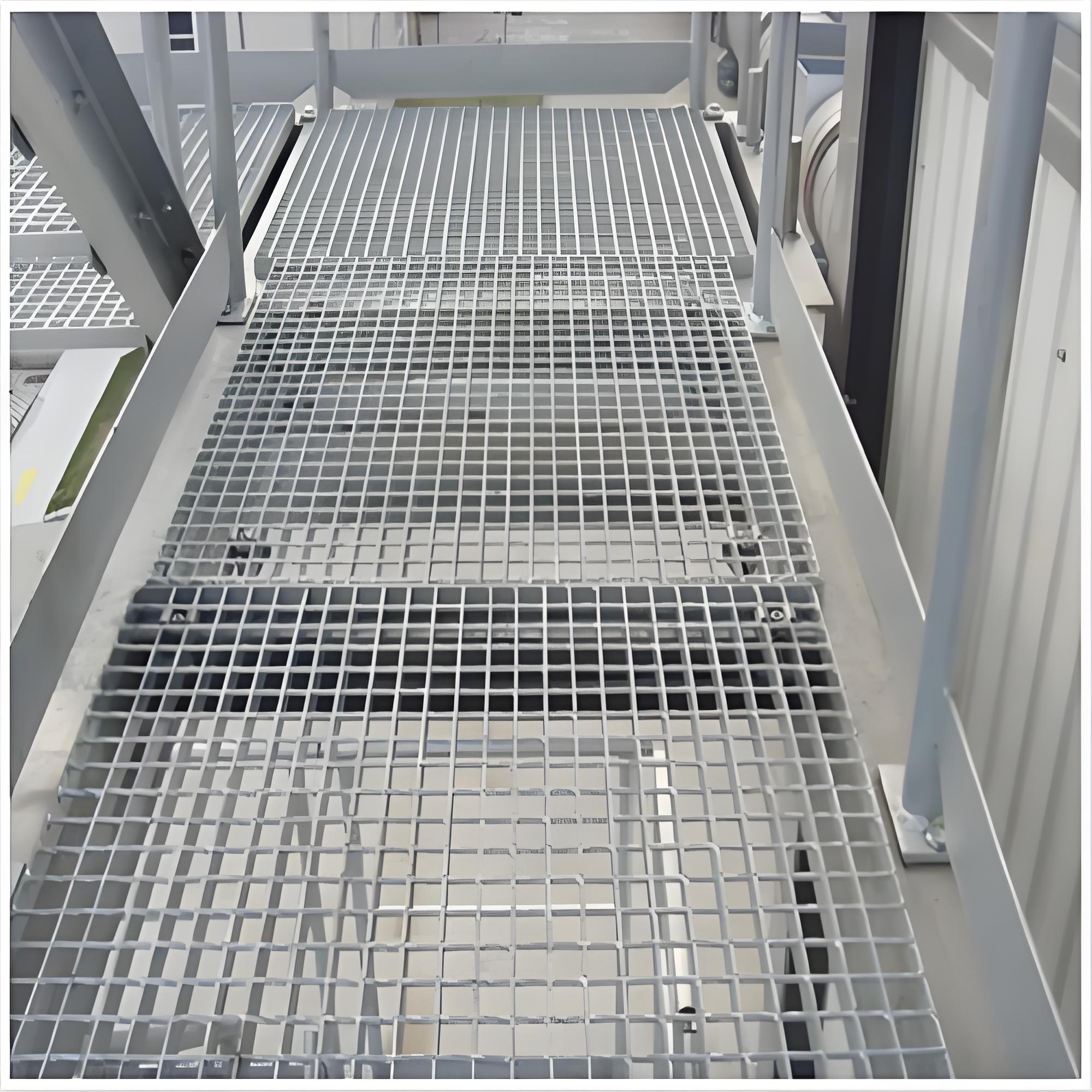
For custom fabrication, the shop drawing should show:
Aluminum stair treads are used in many industries because they offer corrosion resistance and low weight. The same tread design can be adapted for different environments by changing the alloy, surface profile, nosing, and fixing method.
MiningService stairs and portable access equipmentSlip resistance, impact resistance, and maintenance access
| Industry | Typical Aluminum Stair Tread Application | Important Requirement |
|---|---|---|
| Marine and offshore | Deck access, vessel stairs, offshore platforms | Saltwater corrosion resistance and anti-slip surface |
| Water treatment | Wet access routes, pump platforms, service stairs | Drainage, corrosion resistance, and safe traction |
| Food processing | Washdown stairs and production access | Cleanability, corrosion resistance, hygienic finish |
| Pharmaceutical | Cleanroom and maintenance access stairs | Surface finish, low maintenance, controlled fabrication |
| Rooftop access | HVAC and solar maintenance stairs | Lightweight construction and outdoor durability |
| Transportation | Vehicle, rail, trailer, and service access steps | Weight reduction and durable anti-slip surface |
| Power generation | Equipment access platforms and stair towers | Load capacity, outdoor performance, and modular installation |
| Architecture | Public exterior stairs and decorative access systems | Appearance, anti-slip design, and code compliance |
Correct installation is essential for aluminum stair tread safety and service life. The tread must be supported properly, fixed securely, and isolated from incompatible materials where required.
Bolted fixing is common because it allows future removal and replacement. Bolts pass through end plates or brackets and connect the tread to steel or aluminum stair stringers. Flat washers, lock washers, locking nuts, or anti-vibration nuts may be used depending on the application.
When aluminum treads are bolted to carbon steel stringers in a wet environment, insulating washers, pads, or protective coatings may be required to reduce galvanic corrosion risk.
Clip systems can secure bar grating treads without drilling through the main bearing bars. Clips are useful for removable treads, platform grating, and applications where access from below is limited.
The clip quantity, type, and location should be determined by the manufacturer or project engineer. Clips must resist uplift, vibration, movement, and normal service loads.
Welding can provide a permanent connection, but it should be used carefully with aluminum. Aluminum welding requires the correct process, filler material, operator qualification, and surface preparation. Field welding can affect appearance, coating systems, and corrosion resistance if not properly controlled.
For many industrial stair installations, bolted fixing is preferred because it simplifies replacement and avoids field welding on finished aluminum components.
Aluminum expands and contracts more than steel as temperature changes. On long stairways, platforms, or exterior structures, the fixing design should allow for thermal movement where necessary. Oversized holes, slots, sliding details, or expansion gaps may be required depending on panel length and operating temperature range.
Use correct fastenersEnsures adequate strength and corrosion compatibility
| Installation Check | Reason |
|---|---|
| Verify tread orientation | Bearing bars must span between stringers |
| Confirm support bearing | Prevents edge damage, rocking, and uneven load transfer |
| Isolate dissimilar metals where required | Reduces galvanic corrosion risk |
| Check bolt tightening | Prevents movement, vibration, and loose tread edges |
| Inspect nosing alignment | Maintains consistent stair geometry and visibility |
| Confirm drainage | Reduces standing water and slip hazards |
| Inspect after installation | Identifies sharp edges, loose clips, and damaged surfaces |
A professional aluminum stair treads manufacturer should have a controlled process from raw material selection to final packing. The exact process varies by tread type, but the main stages are similar.
The process begins with a review of the customer’s dimensions, drawings, span, load requirement, material specification, finish, and installation method. The manufacturer prepares a shop drawing showing tread size, bearing bar direction, nosing, end plates, bolt holes, cut-outs, and fixing details.
The factory selects aluminum bars, extrusions, sheet, checker plate, or perforated material according to the required alloy and temper. For bar grating products, bearing bar dimensions and cross bar profiles are checked against the production drawing.
Raw materials are cut to the required length and width. For plank and expanded metal treads, forming equipment may create side channels, raised anti-slip edges, nosing details, and stiffening profiles.
For aluminum bar grating, the bearing bars and cross bars are assembled using the specified construction method. Depending on the product design, this may involve swage-locking, pressure-locking, welding, riveting, or other controlled mechanical joining processes.
The manufacturer adds the front nosing, end plates, bolt holes, slots, lifting points, or special brackets. Cut edges are banded or reinforced as required by the design.
Where welding is required, the manufacturer uses an appropriate aluminum welding procedure. Welds should be inspected for visual quality, alignment, and required strength. The finished tread may then receive anodizing, powder coating, polishing, pickling, passivation, or another specified treatment.
Quality checks may include dimensions, bearing bar spacing, surface condition, hole locations, end plate alignment, weld appearance, material traceability, and packing inspection. For major projects, the customer may request material certificates, dimensional reports, inspection records, or third-party verification.
Finished aluminum stair treads should be packed to prevent bending, scratching, and damage to nosing or anti-slip surfaces. Export orders may require bundled packing, palletizing, labels, protective film, moisture control, or steel-frame packing depending on the shipment method.
Choosing a manufacturer is not only about finding the lowest unit price. Aluminum stair treads are safety-related components, and errors in material selection, bearing bar direction, end plate drilling, or load assumptions can cause expensive installation delays or unsafe access conditions.
Look for a manufacturer with experience producing aluminum bar grating, safety plank, expanded metal treads, industrial stairs, platform flooring, and custom access components. A factory that understands stair geometry and grating load direction is more likely to produce accurate shop drawings.
A capable manufacturer should be able to review the support span, required load, bearing bar size, tread depth, nosing, and fixing method. They should identify when a requested size needs deeper bars, additional support, or a different tread type.
For critical projects, ask whether the factory can provide alloy and temper documentation. Material traceability is especially important for marine, chemical, transport, food processing, and regulated industrial applications.
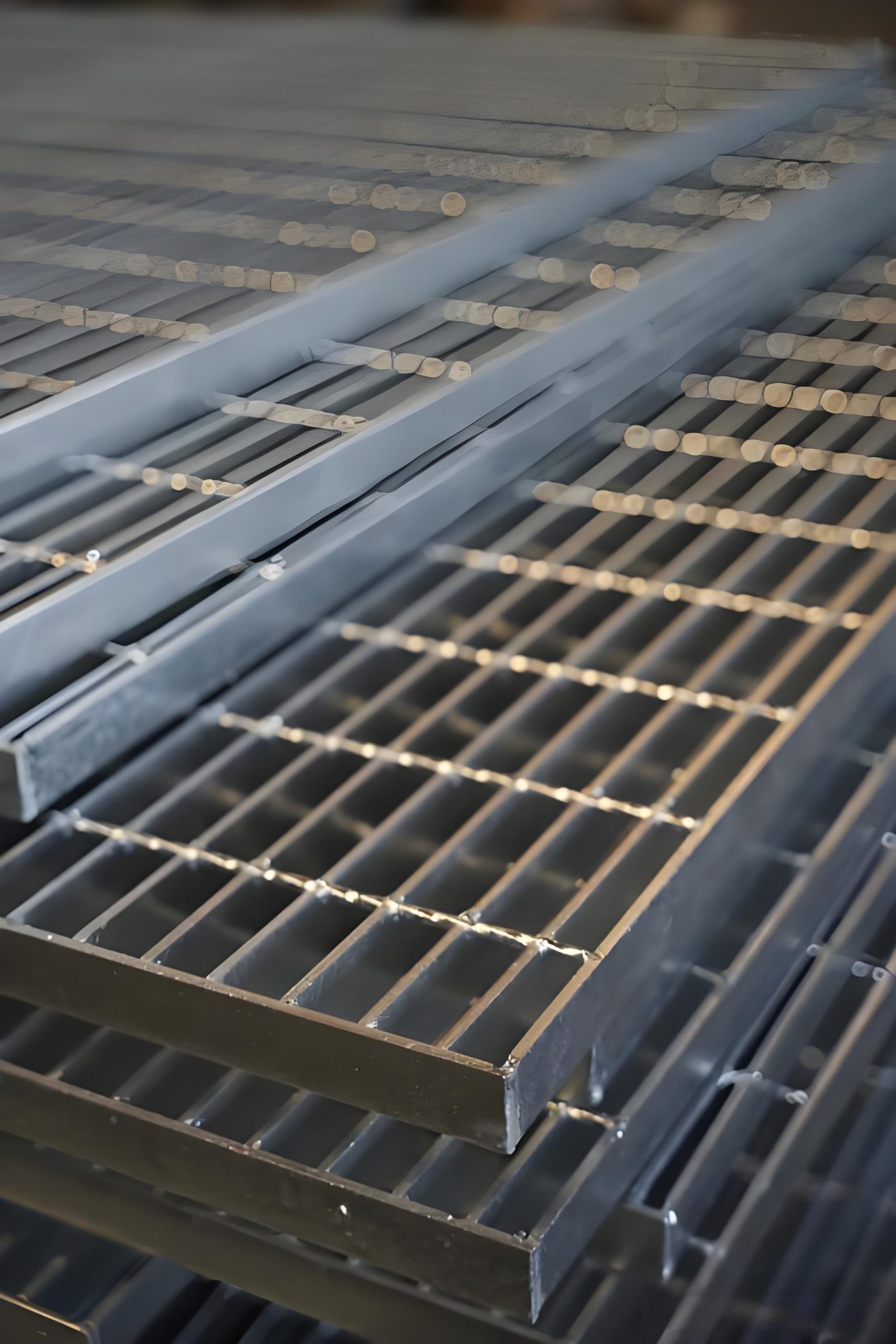
Always approve a fabrication drawing before mass production. The drawing should identify dimensions, bearing bar direction, nosing, end plates, holes, slots, surface type, finish, material, and panel orientation.
A reliable manufacturer should inspect dimensions, spacing, edge treatment, hole location, weld quality, finish, and packing. If the project requires testing or certification, these requirements should be included in the quotation stage rather than added after production begins.
The manufacturer should understand the difference between indoor aluminum applications, outdoor aluminum applications, marine conditions, chemical exposure, and contact with carbon steel structures. They should be able to recommend compatible fasteners, isolation methods, and finishing options.
When comparing aluminum stair tread quotations, confirm that every supplier is offering the same product specification:
Aluminum bar grating stair tread, 900 mm long × 270 mm deep, bearing bars spanning between stringers, serrated top surface, 6061 aluminum alloy or approved equivalent, checkered aluminum angle nosing, end plates with slotted bolt holes, suitable for the specified support span and design load, supplied according to approved fabrication drawing.
For a complete quotation, provide the quantity, tread dimensions, support span, stair angle, load requirement, deflection limit, surface type, alloy, finish, end plate drawing, bolt specification, environmental conditions, and delivery requirement.
Are aluminum stair treads strong enough for industrial use?
Yes, aluminum stair treads can be strong enough for industrial use when the correct tread type, bearing bar size, alloy, support span, and fixing method are selected. Aluminum has lower stiffness than steel, so the tread should be selected from aluminum-specific load tables or engineering calculations rather than using steel grating data.
What aluminum alloy is best for stair treads?
6061-T6 is commonly used for structural aluminum stair tread components and bar grating systems because it offers a useful balance of strength, weldability, and corrosion resistance. 6063 is often used for extruded nosing and architectural profiles, while 5052 and 5083 may be selected for sheet, plate, marine, or formed tread applications. The best alloy depends on the product type and operating environment.
Are aluminum stair treads suitable for outdoor use?
Yes, aluminum stair treads are widely used outdoors because aluminum has good natural corrosion resistance and open grating or perforated surfaces provide drainage. For coastal, marine, chemical, or wet industrial environments, the alloy grade, anti-slip surface, drainage design, fasteners, and isolation from dissimilar metals should be selected carefully.