

316 stainless steel grating is an open-grid flooring and covering product designed for projects that require load-bearing performance, drainage, ventilation, slip control, and improved resistance to chloride-containing or chemically aggressive environments. The addition of molybdenum gives 316 stainless steel better resistance to localized corrosion than 304 stainless steel, making it a common choice for coastal facilities, marine access areas, chemical processing plants, wastewater treatment systems, sewage infrastructure, wash-down floors, platforms, walkways, stair treads, trench covers, and drainage grates. However, 316 stainless steel is not immune to every acid, chemical, chloride concentration, or seawater condition. Reliable performance depends on correct material selection, bearing bar design, load calculation, surface finish, welding quality, drainage, compatible fasteners, installation, cleaning, and inspection. This guide explains how to specify and purchase 316 stainless steel grating based on actual operating conditions rather than grade name alone.
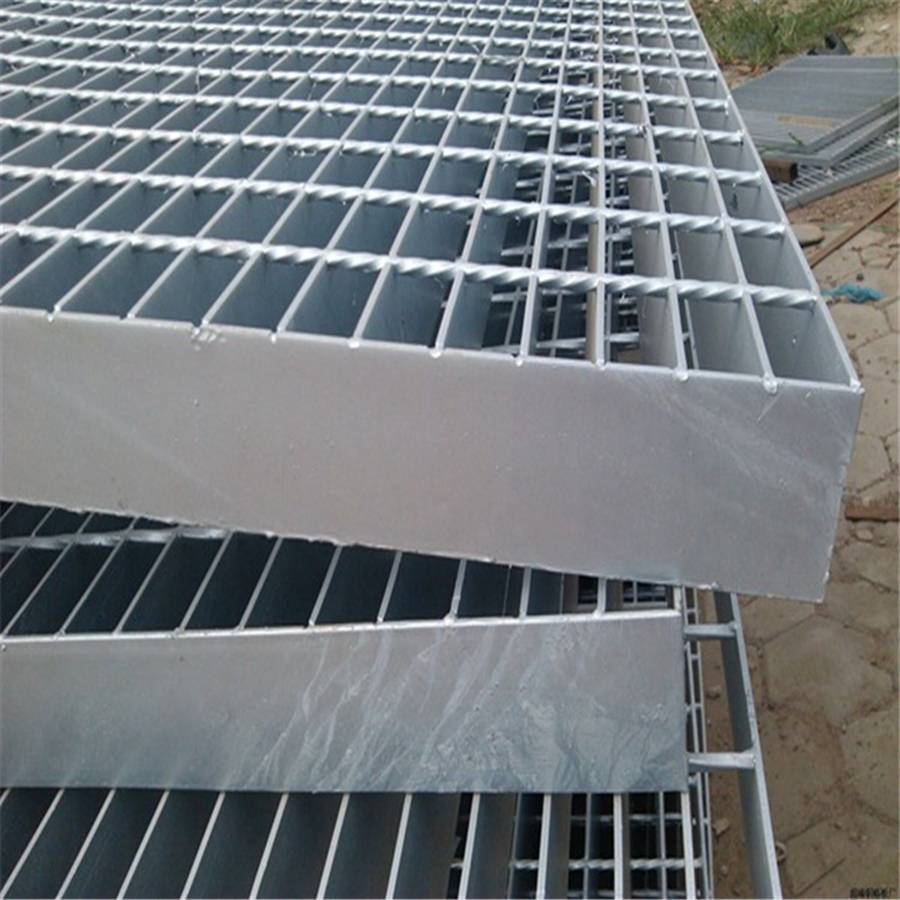
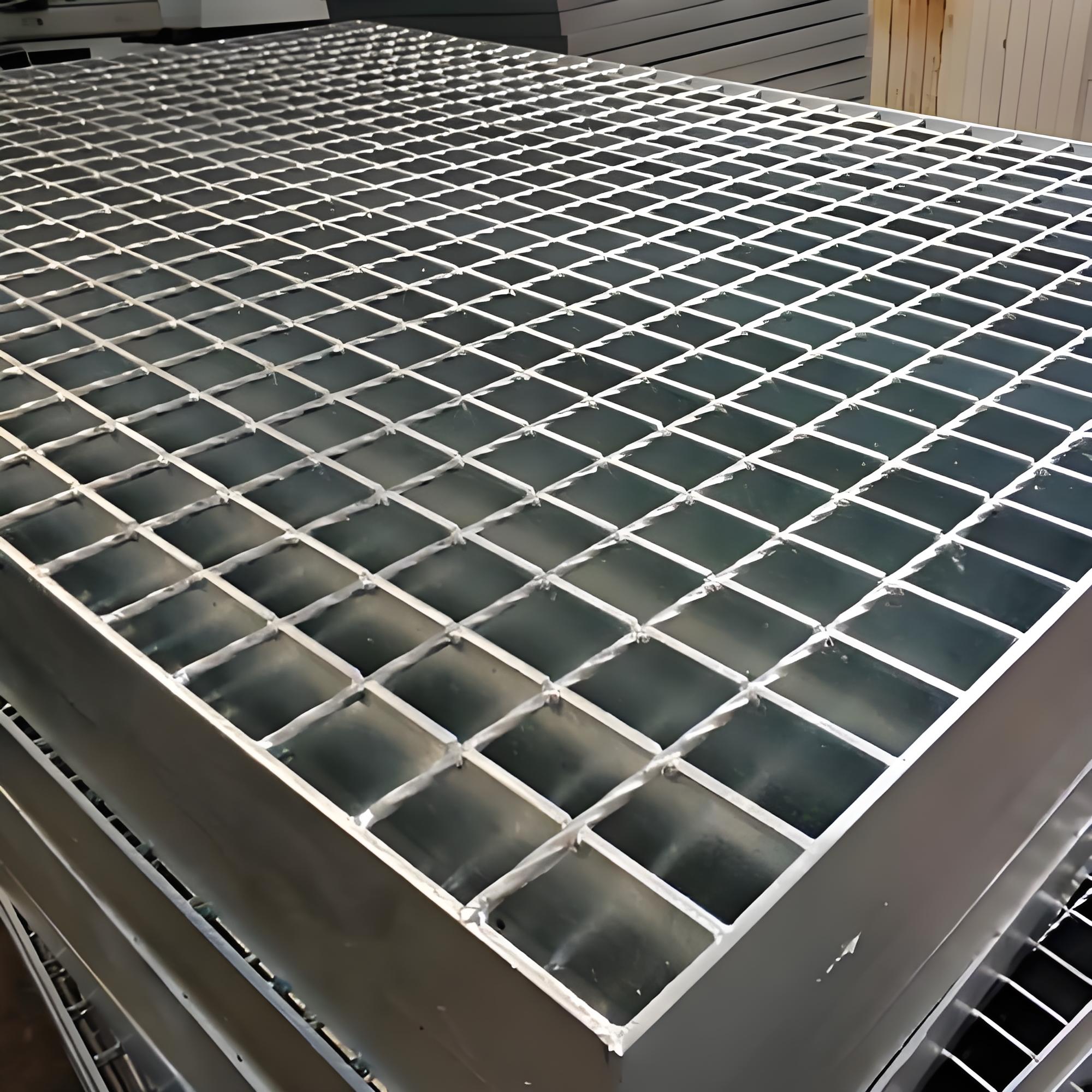
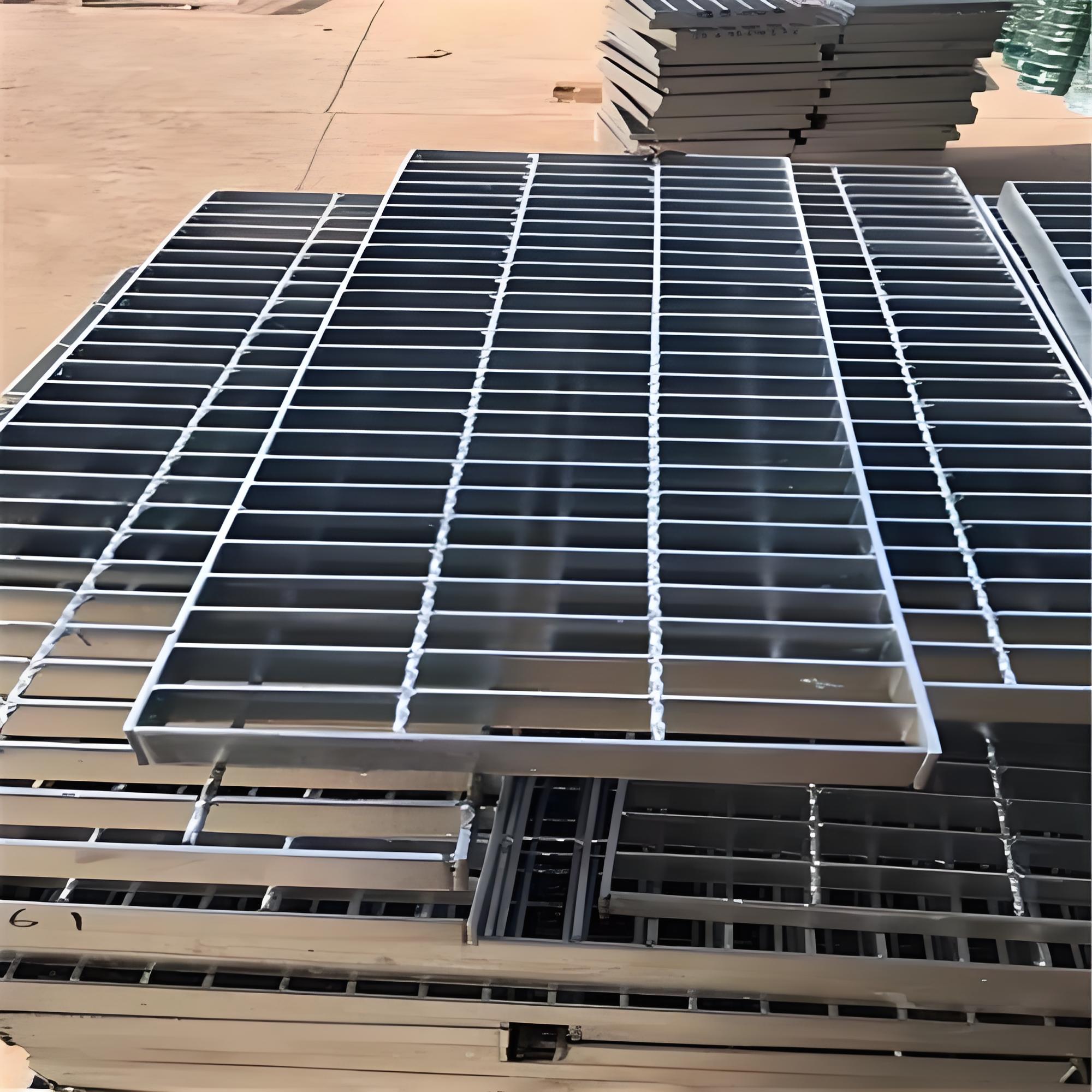
316 stainless steel grating is manufactured from parallel load-bearing bars joined by cross bars to form an open metal grid. The bearing bars carry the principal load between structural supports, while the cross bars maintain bar spacing, stabilize the panel, and support handling and installation.
The grating may be welded, press-locked, swage-locked, or custom fabricated. It can be supplied with plain or serrated bearing bars, standard or close mesh, trim banding, load-carrying banding, frames, cut-outs, stair nosings, carrier plates, toe plates, lifting handles, and special fixing systems.
Type 316 is an austenitic chromium-nickel-molybdenum stainless steel. The molybdenum addition is the main reason it generally provides better resistance to chloride-induced pitting and crevice corrosion than Type 304. This makes 316 a practical starting material for many wet, coastal, wastewater, food-processing, and chemical applications.
The stainless steel grade does not determine the load capacity by itself. A complete grating specification must also define the bearing bar height and thickness, bearing bar spacing, cross bar spacing, clear span, load type, panel dimensions, support arrangement, allowable deflection, manufacturing method, surface profile, finish, and fastening system.
Chlorides are present in seawater, coastal air, brines, salt-containing process liquids, some cleaning products, swimming-pool chemicals, and certain wastewater streams. Chloride ions can locally damage the passive film that protects stainless steel, producing pitting or crevice corrosion.
The molybdenum content of 316 stainless steel improves resistance to this type of localized attack compared with 304 stainless steel. For this reason, 316 grating is commonly considered for coastal walkways, dock access, desalination facilities, seafood-processing plants, wastewater equipment platforms, and drainage systems exposed to salt-containing liquids.
This advantage has limits. Warm seawater, stagnant chloride solutions, deposits, low-oxygen crevices, high chloride concentration, and poor cleaning can still attack 316 stainless steel. Continuous immersion or severe offshore exposure may require 316L, duplex stainless steel, a higher-alloy grade, or another engineered material.
316 stainless steel performs well in many industrial environments and provides better resistance than 304 to some reducing acids and chloride-containing solutions. It is frequently used around chemical tanks, process piping, pumps, sampling stations, reactors, drainage channels, and maintenance platforms.
It should not be specified simply as “acid-resistant grating.” Chemical performance changes with the type of chemical, concentration, temperature, oxygen level, contamination, flow velocity, exposure duration, and cleaning procedure. A grade that performs well with a dilute chemical at room temperature may not be suitable when the same chemical is hot, concentrated, stagnant, or mixed with chlorides.
Wastewater treatment plants expose metal components to constant humidity, splashing, chlorides, treatment chemicals, cleaning agents, deposits, and corrosive gases. Open grating allows liquid to drain and air to circulate, while stainless steel avoids dependence on a paint or zinc coating for basic corrosion protection.
316 stainless steel grating is commonly used around screens, tanks, clarifiers, aeration systems, pumps, chemical-dosing equipment, channels, sludge-handling areas, and access pits. Material selection should still consider hydrogen sulfide, ferric chloride, sodium hypochlorite, biological deposits, microbiologically influenced corrosion, and the chemistry of the specific wastewater stream.
The passive chromium-rich film on stainless steel provides general corrosion resistance, while molybdenum improves resistance to localized attack in many chloride-containing environments. If the surface is scratched under normal oxygenated conditions, the passive film can reform. This self-renewing behavior does not mean that deep scratches, embedded iron, weld heat tint, deposits, or crevices can be ignored.
316 stainless steel provides useful strength, ductility, toughness, and fabrication performance for industrial grating. Its structural capacity should be determined from certified mechanical properties and the actual bearing bar geometry. The corrosion resistance of 316 does not automatically make a panel stronger than an equivalent 304 or carbon-steel panel.
316 stainless steel can maintain useful properties over a broad temperature range, but temperature affects both structural design and corrosion. Elevated temperatures can accelerate chemical attack and chloride pitting. Low-temperature projects may require confirmation of material toughness, connections, and applicable design rules.
A properly finished 316 stainless steel surface can be cleaned without maintaining a separate protective coating. This is valuable in food, pharmaceutical, water-treatment, and chemical facilities where rust contamination or coating flakes are unacceptable.
When the grade matches the environment and the system is designed to avoid deposits and crevices, 316 stainless steel grating can reduce coating repairs, corrosion-related shutdowns, and replacement work. Expected service life cannot be stated accurately without knowing the exposure, fabrication quality, cleaning schedule, loading, and support condition.
The manufacturing method affects appearance, rigidity, available mesh patterns, fabrication cost, and suitability for different loads. Welded grating is common for industrial applications, while press-locked and swage-locked products are often considered where appearance or a particular mesh arrangement is important.
| Construction type | Connection method | Main advantages | Typical applications |
|---|---|---|---|
| Welded grating | Cross bars are welded to bearing bars | Stable structure, economical fabrication, broad size selection, custom processing | Industrial platforms, walkways, stairs, drainage covers, wastewater access |
| Press-locked grating | Cross bars are pressed into pre-cut slots | Uniform appearance, flexible grid design, clean intersections | Architectural walkways, screens, public spaces, ventilation covers |
| Swage-locked grating | Cross bars are mechanically locked into bearing bars | Regular construction, material flexibility, specialized layouts | Architectural and specialized industrial access |
| Custom fabricated grating | Standard panels are cut, banded, framed, or formed to drawings | Fits complex supports, equipment, pipes, channels, and stairs | Process plants, treatment facilities, marine structures, irregular platforms |
Welded 316 stainless steel grating is made by joining cross bars to parallel bearing bars at regular intervals. A controlled welding process creates a rigid open-grid panel capable of being cut, banded, framed, and fabricated into project-specific shapes.
Welded construction is widely used for industrial floors because it offers a practical balance of strength, availability, customization, and price. It can be supplied for pedestrian access, maintenance platforms, stair treads, trench covers, drainage areas, and some wheel-load applications when the bearing bars and supports are designed accordingly.
Stainless steel welding requires control of heat input, distortion, filler material, shielding, contamination, and post-weld cleaning. Dark weld heat tint indicates oxidation and should be removed where corrosion performance or hygiene is important. Pickling and passivation may be specified after fabrication to restore a clean passive surface.
Press-locked grating is produced by pressing cross bars into slots in the bearing bars under high pressure. The resulting intersections create an orderly appearance without the same visible welded construction used in conventional industrial grating.
This construction is suitable for architectural flooring, screens, ventilation panels, public walkways, and commercial projects where visual consistency matters. It can also be used in corrosive industrial areas when the selected bearing bars, connections, finish, and load rating meet the project requirements.
Slot depth, bar fit, alignment, pressing force, flatness, and banding quality are important inspection points. Buyers can review the press-locked grating product guide when comparing welded and mechanically locked construction.
Swage-locked grating is formed by mechanically locking cross bars into bearing bars. It is commonly associated with aluminum products but can also be considered for specialized stainless steel designs. The manufacturer should provide the relevant structural data and explain how the mechanical connection is tested.
Custom 316 stainless steel grating may include:
Custom fabrication should be completed before final pickling or passivation wherever practical. Field alterations can introduce contamination, remove structural bars, and leave untreated welds or cut edges.
There is no single universal panel size for all 316 stainless steel grating. Dimensions vary by manufacturer, construction method, regional standard, transport restrictions, support layout, and project drawing. Stock panels may be supplied in common widths and lengths, while cut-to-size panels are normally used for finished industrial platforms and drainage systems.
| Size category | Common options | Selection consideration |
|---|---|---|
| Panel width | 300, 500, 600, 750, 1,000 mm or custom widths | Support grid, lifting, walkway width, installation sequence |
| Panel length | 1,000 to 6,000 mm or custom lengths | Bearing direction, span, transport, handling weight |
| Bearing bar depth | 20, 25, 30, 32, 40, 50 mm and heavier options | Load, span, deflection, impact, durability |
| Bearing bar thickness | 3, 4, 5, 6 mm and project-specific sizes | Capacity, concentrated load, weight, price |
| Bearing bar pitch | Approximately 25, 30, 34, 40 or 60 mm | Load distribution, open area, walking comfort, object retention |
| Cross bar pitch | Approximately 50, 76, 100 or 101.6 mm | Panel stability, mesh appearance, cost |
These are market examples rather than guaranteed dimensions under every standard. A supplier should confirm actual manufacturing availability, clear opening, tolerances, maximum panel size, and finished panel weight.
19-W-4 is a common North American welded grating designation. The number 19 generally indicates bearing bars at 19/16 inch centers, the letter W indicates welded construction, and the number 4 indicates cross bars at 4-inch centers. The bearing bar spacing is approximately 30.2 mm and the cross bar spacing is approximately 101.6 mm.
The designation does not define bearing bar depth, bearing bar thickness, stainless steel grade, panel dimensions, load capacity, surface type, or finish. A complete description might read:
316 stainless steel welded bar grating, 19-W-4, 1-1/2 in. x 3/16 in. bearing bars, serrated surface, pickled and passivated, fabricated to approved drawings.
Bearing bar height strongly influences bending stiffness and load capacity. Increasing the depth generally improves performance more efficiently than increasing thickness alone. A deeper bar may therefore be required for long spans, heavy pedestrian traffic, equipment loads, or wheel loads.
Thickness affects the cross-sectional area, bending resistance, local durability, welding interface, and price. Thin bars can be suitable for short-span pedestrian access, while thicker bars are often needed for industrial traffic, concentrated loads, removable trench covers, and locations exposed to impact.
Closer bearing bar spacing places more load-carrying members under a given contact area. It can improve walking comfort, distribute concentrated loads, and reduce the clear opening. Wider spacing increases open area and may reduce material cost, but it can be unsuitable for small wheels, narrow footwear, public access, or areas where tools could fall through.
Bearing bars must span between the structural supports. Cross bars usually run perpendicular to the span and should not be mistaken for the main load-carrying members. Incorrect panel orientation can substantially reduce the intended performance even when the product itself was manufactured correctly.
| Design change | Typical performance effect |
|---|---|
| Increase bearing bar depth | Increases bending stiffness and usually reduces deflection |
| Increase bearing bar thickness | Increases section capacity, weight, and material cost |
| Reduce bearing bar spacing | Places more bearing bars under the load and reduces clear openings |
| Reduce clear span | Strongly increases capacity and reduces deflection |
| Increase panel width only | Does not necessarily increase capacity across the bearing bar span |
| Add serrations | Improves traction but does not automatically increase structural capacity |
Cross bars keep bearing bars aligned and contribute to transverse stability, panel rigidity, and handling strength. Depending on the construction, they may be twisted square bars, round bars, flat bars, corrugated bars, or specially formed locking bars.
Cross bar spacing affects appearance and local stability but normally has less influence on primary span capacity than the bearing bar size and spacing. It should still be specified because it affects mesh dimensions, walking feel, fabrication, and product identification.
The percentage of open area influences drainage, ventilation, light transmission, weight, and the passage of debris. A high open area is useful where rapid drainage and airflow are priorities. A close mesh may be preferred where small objects, narrow heels, walking aids, or small wheels are expected.
Open-area selection should consider:
If the platform is above an occupied area, close-mesh grating, toe plates, secondary screening, or solid protection may be required. A grating standard does not replace a site-specific falling-object assessment.
Plain grating has flat bearing bar tops. It provides a relatively smooth walking surface and is easier to wash and inspect than heavily serrated products. It is suitable for dry or controlled areas, hygienic processing zones, drainage covers, and platforms where carts or movable equipment must cross the surface.
Serrated grating has notches along the top edges of the bearing bars. It can provide better footwear engagement in wet, oily, muddy, or outdoor environments. It is commonly selected for marine walkways, chemical processing floors, wastewater platforms, exterior stairs, and wash-down areas.
Serrations do not make a walking surface completely slip-proof. Oil, ice, algae, biofilm, grease, chemical residue, and compacted dirt can still create unsafe conditions. Drainage, cleaning, suitable footwear, lighting, handrails, and routine inspection remain necessary.
Special anti-slip options may include serrated stair nosings, perforated nosing plates, abrasive inserts, gritted coatings, or custom traction profiles. Their resistance to cleaning chemicals, ultraviolet exposure, temperature, wear, and impact should be verified.
| Surface option | Main advantage | Important limitation |
|---|---|---|
| Plain | Easy cleaning and smooth movement | Lower traction in wet or oily conditions |
| Serrated | Improved grip in wet industrial areas | More difficult to clean around notches |
| Abrasive insert | High localized traction at nosings or access points | Insert wear and chemical compatibility require review |
| Close mesh | Improved walking comfort and small-object retention | Lower open area and potentially higher cost |
316 stainless steel grating may be supplied according to YB/T 4001.1, ANSI/NAAMM MBG 531, BS 4592, applicable ASTM material requirements, EN material designations, or a project-specific specification. The correct standard depends on the project location, owner requirements, engineering design basis, and local regulations.
The purchase order should identify the complete standard number and edition. A general statement such as “manufactured to international standards” does not define a measurable product.
The technical submission should identify whether the material is Type 316 or 316L, together with the applicable product-form standard. Common designations include UNS S31600 for 316 and UNS S31603 for 316L. European projects may use grade designations such as 1.4401 or 1.4404. Equivalent-designation claims should be supported by the applicable material specification and certificate.
Load capacity must be evaluated from the actual clear span and bearing bar direction. Two panels made from the same 316 stainless steel grade and mesh pattern can have substantially different capacities if their bearing bar sizes or spans differ.
A uniformly distributed load represents weight spread across the grating surface. It may be used for general platform occupancy, stored materials, or distributed process loads. The load value should state whether it is a service load, allowable load, factored load, or test load.
A concentrated load acts over a limited contact area. A person’s foot, maintenance tool, equipment leg, or small trolley wheel may load only one or several bearing bars. The contact dimensions and worst load position should be included in the calculation.
Vehicle-duty grating requires wheel load, axle load, tire or contact area, wheel spacing, direction of travel, impact allowance, traffic frequency, and support frame information. A pedestrian grating table should not be used to approve forklift or vehicle traffic.
A bearing bar can be approximated as a beam during preliminary design. For a simply supported bar under a uniform load, bending moment varies with the square of the span, while elastic deflection varies approximately with the fourth power of the span. This is why a modest increase in unsupported distance can cause a large increase in deflection.
Final design should consider load sharing between bearing bars, local wheel contact, support width, bar restraint, edge conditions, fabrication tolerances, dynamic effects, fatigue where relevant, and the governing structural code.
Allowable deflection may be controlled by the product standard, local structural code, project specification, walking comfort, equipment operation, or drainage requirements. Excessive movement can cause vibration, noise, rocking panels, loose clips, trip edges, coating damage on adjacent structures, and discomfort for users.
| Calculation input | Required project information |
|---|---|
| Clear span | Distance between the inside edges or relevant bearing points of supports |
| Bearing direction | Orientation of load-carrying bars across the supports |
| Uniform load | Required load per unit area and applicable load combination |
| Concentrated load | Load magnitude, footprint, position, and frequency |
| Wheel load | Wheel force, contact area, axle arrangement, direction, and impact |
| Deflection limit | Required numerical or code-based serviceability limit |
| Support condition | Seat width, beam or frame type, continuity, and fixing method |
| Environment | Corrosion allowance, temperature, vibration, and maintenance conditions |
An industrial mill finish may be suitable for non-visible areas where the surface is clean and free from harmful contamination. Weld spatter, scale, oil, grease, embedded iron, and sharp burrs should still be removed.
Pickling removes weld heat tint, oxide scale, and some surface contamination. It is particularly useful after welding, cutting, grinding, and banding. The process should reach intersections and crevices rather than treating only the visible top surface.
Passivation uses a controlled chemical treatment to remove free iron and support formation of the passive surface. It is commonly specified for hygienic, chemical, water-treatment, and marine applications. Passivation does not remove heavy oxide scale, so adequate cleaning or pickling may be required first.
Brushed or polished finishes may be selected for architectural, food-processing, or highly visible installations. The required finish should be described using an agreed reference standard or sample. A loosely defined word such as “polished” can produce inconsistent expectations.
Welding procedures should be suitable for the stainless steel grade and joint configuration. Quality control may include verification of welding parameters, filler material, equipment condition, welder qualifications, distortion, penetration, weld size, surface oxidation, cracking, undercut, and post-weld treatment.
If extensive welding, banding, or framing is required, 316L may be preferred because its lower carbon content reduces sensitization risk in heat-affected areas. Standard 316 remains weldable, but the material condition, thickness, heat input, exposure, and post-weld treatment should be evaluated.
Marine and coastal facilities expose grating to salt spray, high humidity, rain, wind-driven deposits, ultraviolet radiation, repeated wet-dry cycles, and sometimes direct seawater contact. These conditions make corrosion resistance, slip control, fixing security, and cleaning access important.
316 stainless steel is commonly described as a marine-grade material, but this should not be interpreted as universal resistance to seawater. Stagnant warm seawater, tight crevices, salt deposits, low oxygen, and continuous immersion can cause pitting and crevice corrosion.
Designs should provide free drainage, avoid water-trapping joints, allow fresh-water washing, and minimize horizontal ledges where salt can accumulate. Severe offshore, splash-zone, warm seawater, or continuously immersed service may require 316L, duplex stainless steel, super duplex, or another material selected by a corrosion specialist.
The open structure reduces wind resistance compared with solid plate, but panels can still be exposed to uplift, wave action, vibration, and impact. Anti-lift clips, bolted fixing, welded fixing, or captive panel systems may be required. Removable covers should not rely only on their self-weight in an exposed marine location.
Chemical facilities use grating around tanks, reactors, pumps, pipe racks, sampling stations, loading areas, drainage channels, and maintenance platforms. 316 stainless steel is selected because it resists many industrial environments better than carbon steel and provides improved performance over 304 in several chloride-containing or reducing conditions.
Compatibility should be checked individually for:
316 stainless steel should not be assumed to resist hydrochloric acid, hot concentrated chemicals, or every sulfuric acid condition. A chemical compatibility table, operating history, corrosion test, or materials engineer may be needed for aggressive service.
Open grating allows spilled liquid to pass through the walking surface, but the structure below must direct the chemical to a compatible collection system. If chemicals remain trapped on support angles, clips, frames, or concrete ledges, crevice corrosion and structural deterioration can occur out of view.
Grating around bar screens, grit removal equipment, and inlet channels is exposed to contaminated water, organic deposits, aerosols, and cleaning. Serrated surfaces may improve traction, while removable panels provide access for equipment maintenance.
Walkways around tanks and clarifiers require corrosion resistance, drainage, secure fixing, and comfortable walking performance. The design should consider continuous humidity, splashing, chemical dosing, biological growth, and vibration from nearby equipment.
Pump station grating provides access above wet wells, channels, pumps, and pipework. Panels may require lifting handles, hinged sections, safety restraints, close mesh, and odor-control interfaces. The support frame must be checked for corrosion as carefully as the grating.
Treatment chemicals such as ferric salts, hypochlorites, acids, and alkalis create different corrosion risks. Grade selection must be based on the actual chemical and concentration. Splash-zone grating may experience more aggressive exposure than equipment located farther from the dosing point.
Sewage and sludge systems may create deposits, low-oxygen crevices, hydrogen sulfide exposure, and microbiological activity. Regular cleaning and inspection are necessary even when 316 stainless steel is used. Where deposits cannot be removed, a higher-alloy metal or nonmetallic grating may be more appropriate.
| Application | Recommended design focus | Common fabrication details |
|---|---|---|
| Platforms | Uniform and concentrated loads, deflection, drainage, fall protection | Panel layout, toe plates, cut-outs, clips, banding |
| Walkways | Walking comfort, slip risk, support spacing, edge gaps | Serrated surface, close mesh, anti-lift clips, numbered panels |
| Stair treads | Step loading, nosing visibility, traction, connection to stringers | Carrier plates, bolt holes, serrated or perforated nosing |
| Trench covers | Concentrated or wheel loads, lifting, support frame, movement | Load banding, frame, handles, anti-rattle and captive details |
| Drainage grates | Hydraulic open area, safe openings, corrosion, cleaning access | Close mesh, removable panels, smooth banding, matching frame |
Platform panels should be laid out so the bearing bars span between supports and panel joints occur over supporting members. Cut-outs for equipment should be reinforced where primary bearing bars are removed. Toe plates may be required around open edges and penetrations to reduce falling-object risks.
A grating stair tread normally includes the grating surface, side carrier plates or angles, and a front nosing. The specification should state tread length, depth, bearing bar direction, surface, nosing type, carrier dimensions, hole pattern, and fastener material.
Serrated grating and contrasting or perforated nosing are commonly selected for wet industrial stairs. The complete staircase must also meet applicable requirements for rise, going, width, handrails, landings, and access safety.
Trench covers should be designed as a system that includes the grating, frame, support seat, fixings, adjacent concrete or steelwork, and lifting method. A heavy-duty panel placed on an inadequate or corroded frame is not a safe installation.
Vehicle-accessible covers require project-specific wheel-load calculations. Pedestrian-only covers should be protected from accidental vehicle entry where necessary.
Mechanical clips allow panels to be removed for inspection or maintenance. Common arrangements use a top saddle or clip connected to a lower clamp under the supporting member. The selected clip must fit the bearing bar spacing, support flange, panel thickness, and required corrosion resistance.
Bolts can provide positive restraint against uplift, vibration, and lateral movement. The drawing should state bolt diameter, grade, washer type, hole location, tightening requirement, and access for removal.
Welding can provide permanent attachment to compatible supports, but it limits removability and creates additional heat-affected zones. Welds on stainless steel should be cleaned and treated as required. Welding stainless grating to carbon-steel support requires an approved procedure and corrosion detailing.
Stainless steel support frames are often used for trench covers, drainage panels, and removable access hatches. The frame should be level, sufficiently stiff, securely anchored, and shaped to avoid liquid retention. Uneven frames can cause rocking, noise, local overload, and trip hazards.
Direct contact between 316 stainless steel and carbon steel, galvanized steel, or aluminum can create staining or galvanic corrosion when an electrolyte is present. Risk depends on the metal combination, exposed surface ratio, moisture, conductivity, and coating condition. Compatible fasteners, insulating components, sealants, or coating details may be required.
Field cutting and welding should be limited and controlled. Removing bearing bars can interrupt the structural load path. Hot cutting can produce heat tint, while carbon-steel tools can contaminate the stainless surface.
Any approved field modification should include:
Fresh-water washing can remove salt and surface deposits from coastal grating. Industrial and wastewater panels may require detergent, pressure washing, or a project-approved cleaning process. Cleaning products should be checked for chloride content and compatibility with stainless steel.
Wire brushes, grinding tools, and abrasives previously used on carbon steel should not be used on stainless steel. Embedded iron particles can rust and create misleading surface staining.
Inspection frequency should reflect the environment, traffic, consequences of failure, and maintenance history. A heavily used chemical platform requires more frequent review than a dry indoor access panel.
Typical inspection points include:
No responsible supplier can determine service life from the words “316 stainless steel” alone. Service life depends on chloride concentration, chemical exposure, temperature, wetting cycle, oxygen availability, deposits, surface finish, welding quality, crevice design, cleaning, loading, vibration, and maintenance.
For procurement purposes, the buyer should define the desired design life and provide environmental data. The supplier can then recommend 316, 316L, duplex stainless steel, galvanized steel, aluminum, FRP, or another material for engineering review.
| Material | Main advantage | Main limitation | Typical application |
|---|---|---|---|
| 304 stainless steel | Good general corrosion resistance at a lower stainless steel cost | Less resistant to chlorides than 316 | Indoor wet areas, food plants, commercial drainage, general wash-down |
| 316 stainless steel | Improved chloride and chemical resistance | Can still pit in severe or stagnant chloride conditions | Coastal, marine-adjacent, chemical, wastewater, salt-containing processing |
| 316L stainless steel | Low carbon content is helpful for extensive welded fabrication | Higher cost and not immune to severe corrosion | Welded marine, chemical, hygienic, and wastewater structures |
| Duplex stainless steel | Higher strength and improved resistance in many chloride environments | More specialized fabrication and higher material cost | Severe marine, desalination, offshore, and aggressive process service |
| Hot-dip galvanized steel | Economical strength for general outdoor use | Zinc can deteriorate in strong chemicals, salt, and continuous wet exposure | General industrial platforms, walkways, stairs, and drainage |
| Aluminum grating | Low weight and useful atmospheric corrosion resistance | Lower stiffness and possible galvanic corrosion | Rooftop, architectural, lightweight, and selected coastal access |
| FRP grating | Strong chemical resistance and electrical nonconductivity | Different fire, stiffness, impact, UV, and connection behavior | Chemical plants, water treatment, electrical areas, corrosive walkways |
304 is suitable for many general wet, hygienic, and indoor environments. 316 is usually preferred when chloride exposure, coastal air, salt-containing products, wastewater, or more aggressive process conditions are present. Their mechanical behavior can be similar for many grating applications, so the choice is often driven primarily by corrosion rather than load capacity.
A detailed comparison is available in the 304 vs. 316 stainless steel bar grating guide.
316 and 316L have similar chromium, nickel, and molybdenum alloy systems. The principal difference is that 316L has a lower maximum carbon content. This helps reduce the risk of sensitization and intergranular corrosion around heat-affected areas during welding.
Because welded grating includes numerous welded intersections and may also require welded banding, frames, stair carrier plates, and toe plates, 316L is frequently specified. Buyers requiring a low-carbon grade should state 316L explicitly rather than assuming that all 316 grating will be supplied as 316L.
Project-specific information about this option can be found on the 316L stainless steel 19-W-4 grating page.
Describe all expected exposure rather than stating only “marine” or “chemical.” Include chloride source, salt concentration, chemicals, pH, temperature, humidity, splash frequency, immersion, cleaning agents, deposits, and whether the grating is indoors or outdoors.
Use 316 as a candidate material, not an automatic final answer. Review whether 316L is required for welded fabrication and whether duplex, higher-alloy stainless steel, FRP, or another material is needed for severe exposure.
State the clear span, support width, bearing bar direction, uniform load, concentrated load, wheel load, impact, vibration, and allowable deflection. Identify whether the area is for pedestrians, maintenance carts, forklifts, vehicles, or permanent equipment.
Specify welded, press-locked, swage-locked, or another approved construction. Select a plain surface for easy cleaning or a serrated surface for improved traction in wet conditions. Define any close-mesh, nosing, abrasive insert, or falling-object requirement.
Show panel marks, bearing direction, support locations, cut-outs, banding, frames, stair treads, toe plates, lifting handles, fasteners, and removable sections. Fabrication should not begin until critical dimensions and interfaces have been approved.
State whether the grating requires a mill finish, pickling, passivation, brushing, polishing, or electropolishing. Include acceptance criteria for heat tint, embedded iron, scratches, weld spatter, burrs, and chemical residues.
The documentation package may include:
| RFQ item | Information to provide |
|---|---|
| Product | 316 or 316L stainless steel bar grating |
| Standard | Full product, material, design, and inspection standards with editions |
| Construction | Welded, press-locked, swage-locked, or custom |
| Bearing bars | Height, thickness, spacing, and span direction |
| Cross bars | Type, size, spacing, and connection method |
| Panel size | Finished length, width, tolerance, quantity, and panel marks |
| Loading | Uniform, concentrated, wheel, dynamic, and equipment loads |
| Surface | Plain, serrated, close mesh, or additional anti-slip treatment |
| Fabrication | Banding, frames, cut-outs, nosings, toe plates, and lifting points |
| Finish | Mill, pickled, passivated, brushed, polished, or electropolished |
| Installation | Clips, bolts, welds, supports, material compatibility, and removability |
| Documents | Drawings, calculations, certificates, inspection reports, and packing list |
A clear inquiry allows a manufacturer to compare the required environment, load, dimensions, finish, and fabrication instead of quoting a generic stainless steel panel. Buyers can also review the wider steel grating product range when comparing materials and construction types for a new project.
Is 316 stainless steel grating suitable for seawater? 316 stainless steel grating provides better chloride resistance than 304 and is commonly used in coastal, marine-adjacent, and salt-spray environments. It is not completely immune to corrosion in warm, stagnant, continuously immersed, or high-chloride seawater. Salt deposits, tight crevices, poor drainage, and elevated temperature increase the risk of pitting and crevice corrosion. Severe seawater or offshore service may require 316L, duplex stainless steel, or a higher-alloy material after project-specific corrosion review.
What is the difference between 316 and 316L stainless steel grating? Both grades contain chromium, nickel, and molybdenum and provide similar general corrosion resistance in many environments. 316L has a lower maximum carbon content, which reduces sensitization risk during welding. Because welded grating contains many welded intersections and may include welded banding, frames, toe plates, and stair components, 316L is often preferred for extensive fabrication or where corrosion around heat-affected zones is a concern.
How do I choose 316 stainless steel grating for a wastewater plant? Start by identifying the wastewater chemistry, chlorides, pH, treatment chemicals, temperature, gas exposure, deposits, cleaning method, and whether the grating will be splashed or immersed. Then provide the clear span, design loads, required deflection limit, panel layout, surface type, support frame, fasteners, and finish. Serrated 316 or 316L grating is commonly considered for wet access areas, but aggressive dosing chemicals, stagnant crevices, and microbiological conditions may require a higher-alloy stainless steel or another corrosion-resistant material.