

11W4 grating is a close-mesh welded bar grating pattern with bearing bars spaced at approximately 11/16 in. on center and cross bars spaced at 4 in. on center. Compared with standard 19W4 grating, 11W4 has much closer bearing bar spacing, smaller clear openings, better support for footwear and small wheels, and improved small-object retention. It is commonly used for pedestrian platforms, public access areas, walkways, trench covers, equipment floors, stairs, food-processing facilities, and locations where standard open grating creates too large an opening. Because 11W4 uses more bearing bars per square foot, it normally weighs more and costs more than standard industrial grating with wider spacing.
11W4 is a common North American style grating designation. The numbers and letter describe the spacing and construction method of the grating.
In metric terms, 11W4 grating usually has bearing bars at approximately 17.5 mm centers and cross bars at approximately 101.6 mm centers. The exact clear opening depends on the bearing bar thickness and cross-bar profile.
For example, when 11W4 grating uses 3/16 in. thick bearing bars, the nominal clear opening between bearing bars is approximately 1/2 in. The calculation is:
11/16 in. bar center spacing − 3/16 in. bearing bar thickness = 1/2 in. clear opening
The designation alone does not show the complete specification. A proper quote should also include bearing bar depth, bearing bar thickness, material, surface type, panel dimensions, finish, load requirement, and fabrication details.
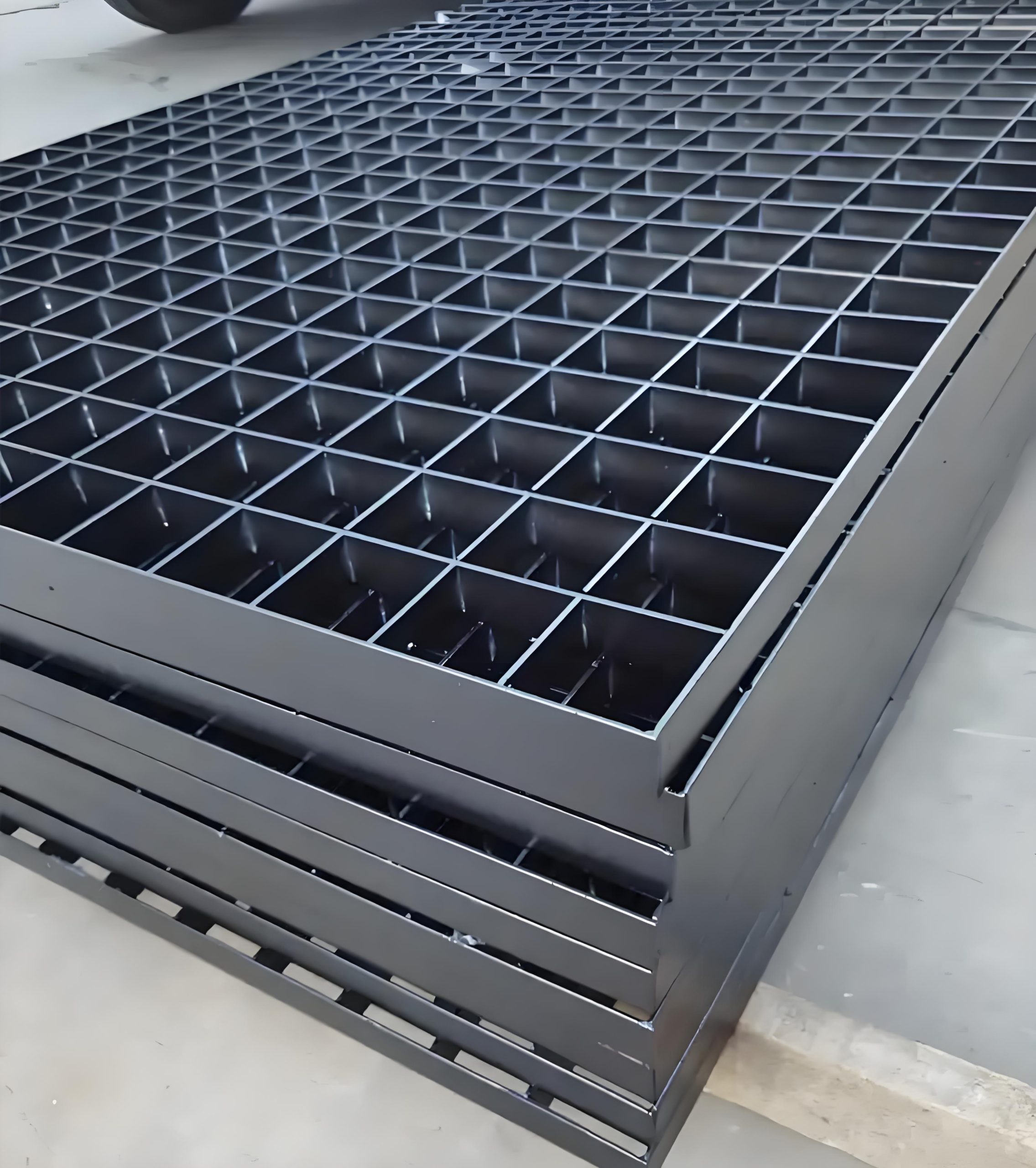
The close bearing bar spacing is the main feature of 11W4 grating. At approximately 11/16 in. on center, the bearing bars are much closer together than common 19W4 grating, which typically uses bearing bars at approximately 1-3/16 in. on center.
The 4 in. cross-bar spacing is a common industrial pattern. It provides enough cross-bar connection for panel stability while keeping the grating economical compared with a 2 in. cross-bar pattern. A 2 in. cross-bar option may be specified when a tighter mesh, different appearance, or additional lateral stability is required.
| Grating Pattern | Bearing Bar Centers | Cross Bar Centers | General Use |
|---|---|---|---|
| 19W4 | Approximately 1-3/16 in. | Approximately 4 in. | Standard industrial platforms, walkways, and drainage covers |
| 15W4 | Approximately 15/16 in. | Approximately 4 in. | Smaller openings and improved walking support |
| 11W4 | Approximately 11/16 in. | Approximately 4 in. | Close-mesh pedestrian, small-wheel, and reduced-opening applications |
| 7W4 | Approximately 7/16 in. | Approximately 4 in. | Very close mesh for heel-conscious and small-opening applications |
The tighter pattern of 11W4 creates more bearing bars in the same panel width. This improves support distribution but increases the steel quantity, welding intersections, galvanized weight, shipping weight, and factory price.
11W4 is considered close-mesh grating because the bearing bars are spaced much closer together than standard open industrial grating. The smaller openings provide more support points for shoes, wheels, tools, and equipment feet.
Close-mesh welded bar grating is useful where standard grating openings may be too wide for the expected traffic or safety requirement. It is often selected for elevated pedestrian walkways, commercial access areas, production platforms, food plants, equipment access floors, close-mesh trench covers, maintenance walkways, and industrial stairs.
The main tradeoff is weight and cost. Close-mesh grating contains substantially more bearing bar steel than standard spacing. It should be selected when the smaller opening or additional support is needed, not simply because it appears stronger.
11W4 grating has less open area than 19W4 grating because the bearing bars are closer together. The reduced open area can improve foot support and small-object retention, but it can also reduce drainage, ventilation, and light transmission compared with a more open grating pattern.
The actual open-area percentage depends on bearing bar thickness and cross-bar shape. For example, 11W4 grating with 3/16 in. thick bearing bars has approximately 1/2 in. clear space between the bearing bars. If standard cross bars are used at 4 in. spacing, the effective open area may be near the high-sixty-percent range, but the exact percentage must be calculated from the supplier’s actual bar dimensions.
11W4 grating still provides useful drainage for many walkways and platforms. However, it may not be the best choice where maximum water flow, large debris passage, or very high open area is required. In heavy outdoor drainage areas, standard 19W4, 15W4, or a larger-opening grating may provide better flow performance if the safety requirements allow it.
Close-mesh 11W4 grating can offer better support for small wheels than standard open grating. It may be useful for light carts, maintenance trolleys, small equipment wheels, and pedestrian areas where wider openings are undesirable.
Small-wheel performance should not be assumed from the mesh designation alone. Wheel diameter, wheel material, wheel width, wheel load, direction of travel, panel support, and grating deflection all affect performance. Hard narrow wheels can create high concentrated loads and may require a stronger bearing bar or a solid transition plate.
11W4 grating is often discussed in connection with ADA-related opening requirements because a typical 11W4 panel made with 3/16 in. thick bearing bars has an approximate 1/2 in. clear opening between bearing bars.
However, the designation “11W4” does not automatically make a grating installation ADA compliant. Compliance depends on the completed installation, including actual clear opening, bearing bar thickness, opening orientation, walking direction, panel joints, surface stability, fasteners, slope, transitions, and the applicable local code or authority requirement.
For public access routes, entrances, plazas, and heavily used pedestrian areas, the final grating arrangement should be reviewed by the responsible project designer. A close-mesh grating may help meet opening-size objectives, but the complete walking surface must satisfy the applicable requirements.
11W4 grating can be supplied with a range of bearing bar depths and thicknesses. The correct size depends on the clear span, required load, material, deflection limit, and support arrangement.
Because 11W4 uses close bearing-bar spacing, it has more bearing bars per foot of panel width than 19W4 grating. This can improve load distribution, but the bearing bar depth and thickness are still critical for the span direction.
| Bearing Bar Size | Typical Use | Relative Weight and Price |
|---|---|---|
| 1 in. × 1/8 in. | Short-span pedestrian or light-duty close-mesh applications | Lower for 11W4, but still heavier than open-mesh grating |
| 1 in. × 3/16 in. | General close-mesh pedestrian and industrial access areas | Moderate |
| 1-1/4 in. × 3/16 in. | Platforms and walkways requiring greater stiffness | Moderate to high |
| 1-1/2 in. × 3/16 in. | Longer spans and higher industrial loads | High |
| 1-1/2 in. × 1/4 in. | High concentrated loads or demanding support conditions | High |
| 2 in. × 3/16 in. or 2 in. × 1/4 in. | Heavy-duty and longer-span applications | Very high |
A deeper bearing bar generally provides greater bending stiffness. A thicker bearing bar increases material weight and local strength. The most economical option is the lightest specification that meets the required span, load, and allowable deflection.
Panel dimensions do not determine load capacity by themselves. The most important structural direction is the bearing bar span direction. Bearing bars must run from one support to the other because they are the main load-carrying members.
For example, a panel measuring 3 ft × 12 ft can be installed in more than one direction. If the bearing bars span 3 ft between supports, the panel may have a much higher capacity than if the bearing bars span 12 ft. The panel length shown on a drawing must therefore be linked to the support layout.
A uniform load is spread across the panel, such as several people standing on a walkway. A concentrated load is applied over a limited area, such as a cart wheel, tool box, equipment foot, ladder foot, or narrow maintenance wheel.
11W4 grating distributes pedestrian loads across many closely spaced bearing bars, but concentrated loads still need to be checked. A close mesh does not automatically make a thin or shallow bearing bar suitable for a long span or a heavy wheel load.
Deflection is the amount the grating bends under load. Even when a panel does not fail structurally, excessive deflection can create poor walking comfort, panel movement, noise, water ponding, or damage to adjacent finishes.
The project should specify the allowable deflection limit. Common limits may be expressed as a fraction of the clear span, but the correct limit depends on the application, the load type, and the project specification.
11W4 grating can be supplied with smooth bearing bar tops or serrated bearing bar tops. The surface type affects traction, cleaning, price, and suitability for wet or oily service.
Smooth 11W4 grating has plain bearing bar tops. It is easier to clean and is commonly used for dry indoor platforms, equipment rooms, architectural floors, food-processing areas with controlled conditions, and pedestrian access where aggressive traction is not required.
Serrated 11W4 grating has notches along the top edges of the bearing bars. The serrations create more gripping points under footwear and can improve traction where water, oil, mud, snow, dust, or process residue may be present.
Serrated grating is commonly selected for outdoor walkways, ramps, stair treads, wastewater platforms, marine access areas, industrial maintenance routes, and wet production environments.
| Surface Type | Main Benefit | Typical Use | Price Position |
|---|---|---|---|
| Smooth 11W4 | Clean appearance and easier cleaning | Dry indoor and controlled industrial environments | Base price |
| Serrated 11W4 | Improved traction in wet or slippery conditions | Outdoor, wet, oily, marine, and industrial access areas | Moderately higher |
Serrated grating should be checked using the supplier’s corresponding serrated load data. The serration removes material from the top edge of the bearing bar, so plain-bar load values should not automatically be used without verification.
Carbon steel 11W4 grating is usually the most economical close-mesh material option. It is strong, weldable, widely available, and suitable for dry indoor industrial spaces, controlled environments, equipment floors, factory platforms, and projects that will receive a separate coating system.
Bare carbon steel has the lowest initial material cost, but it will rust in outdoor, humid, wet, or chemically exposed environments. For long-term outdoor access systems, hot-dip galvanized carbon steel is usually more practical.
Because 11W4 is a close-mesh pattern, the price should be compared against close-mesh grating rather than standard 19W4 grating. It contains more bearing bars and generally has a higher unit weight.
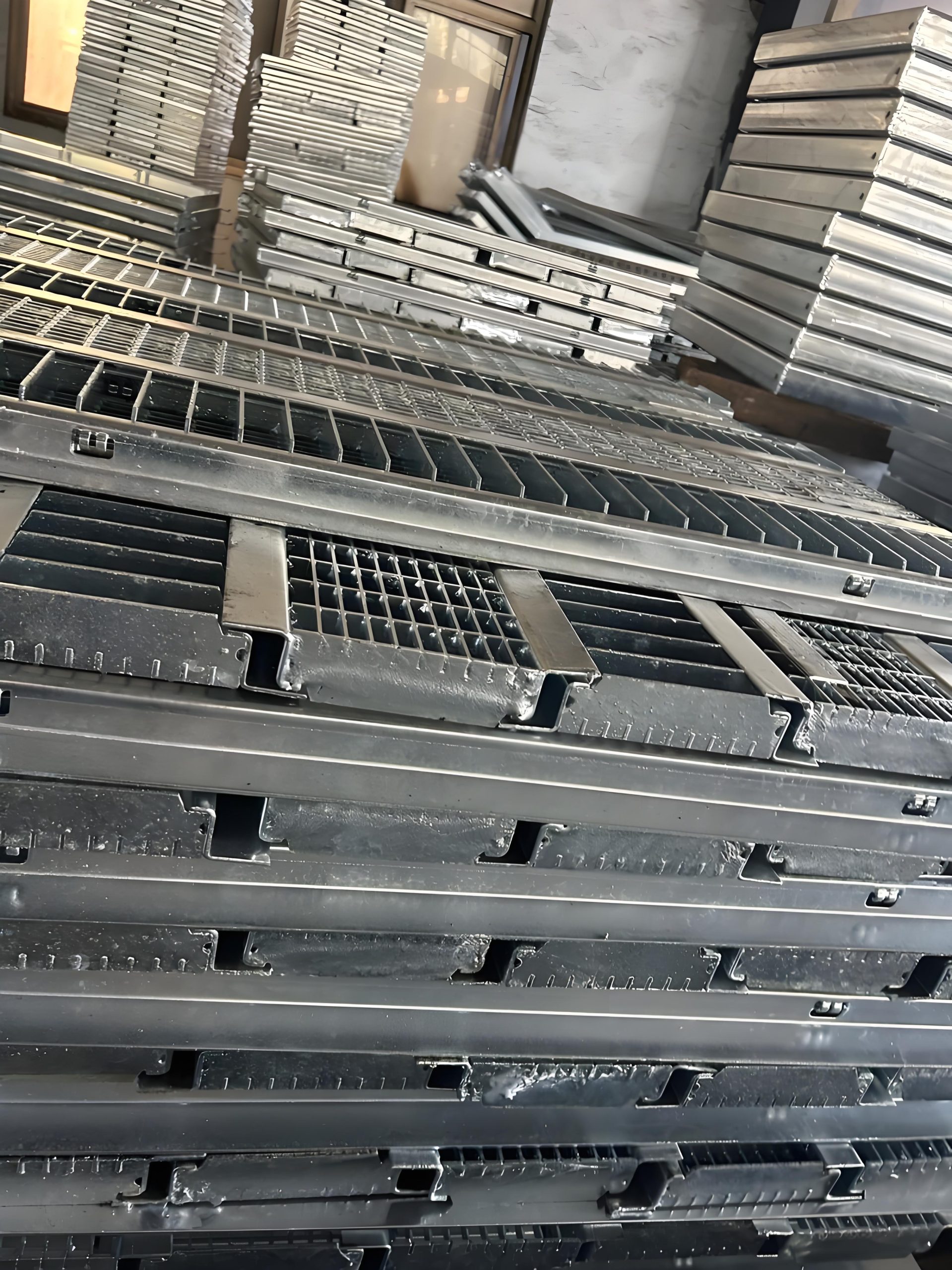
Stainless steel 11W4 grating is selected when corrosion resistance, hygiene, cleanability, appearance, or long service life is more important than the lowest initial cost. The close mesh provides a smaller opening pattern, while the stainless steel material provides corrosion resistance without relying on galvanized zinc coating.
304 stainless steel is commonly used for food processing, commercial kitchens, indoor washdown areas, pharmaceutical production, wet industrial spaces, architectural platforms, and general corrosion-resistant applications.
304 is usually less expensive than 316 or 316L stainless steel. It is often the practical stainless option when chloride exposure is limited and the environment is not marine or strongly chemical.
316 and 316L stainless steel contain molybdenum, which improves resistance to chloride pitting and marine exposure. They are commonly selected for coastal plants, docks, marine access areas, wastewater treatment facilities, chemical plants, salt-containing production areas, and aggressive washdown zones.
316L is often preferred for welded stainless grating in corrosion-sensitive environments because of its lower carbon content. It normally costs more than 304 because of alloy content, material market conditions, and post-fabrication finishing requirements.
| Material | Relative Initial Cost | Typical Environment |
|---|---|---|
| Carbon Steel 11W4 | Lowest | Dry indoor, temporary, or separately coated applications |
| Hot-Dip Galvanized Carbon Steel 11W4 | Low to moderate | Outdoor industrial, humid, and general wet service |
| 304 Stainless Steel 11W4 | Moderate to high | Food, general wet, hygienic, and indoor corrosion-resistant areas |
| 316 or 316L Stainless Steel 11W4 | High | Marine, coastal, chemical, wastewater, and chloride-rich service |
For more guidance on choosing between stainless grades, see our 304 vs 316 stainless steel bar grating comparison.
Hot-dip galvanized carbon steel normally has a lower purchase price than stainless steel. It is often the most economical solution for outdoor platforms, walkways, stairs, trench covers, and industrial access systems where zinc is compatible with the environment.
Stainless steel has a higher initial cost, but it may offer better long-term value where coating damage, repeated washdown, chlorides, chemicals, hygiene requirements, or difficult maintenance access make galvanized grating less suitable.
For many outdoor industrial projects, galvanized carbon steel provides the best balance of price and service life. For coastal, chemical, food-processing, wastewater, and high-hygiene projects, 304 or 316 stainless steel may provide lower lifecycle cost even though the initial quotation is higher.
11W4 grating weighs more than standard 19W4 because it uses more bearing bars across the same panel width. Finished weight depends on bearing bar depth, bearing bar thickness, cross-bar profile, cross-bar spacing, banding, surface type, material, galvanizing, and fabrication.
A close-mesh galvanized steel grating price may broadly fall around US$50 to US$170 per m² for factory planning, depending on bar size, weight, finish, quantity, and fabrication. This equals approximately US$4.65 to US$15.80 per ft² before allowing for custom cuts, frames, clips, packing, and freight.
Price per ft² = Price per m² ÷ 10.764
Price per m² = Price per ft² × 10.764
| Typical 11W4 Bearing Bar | Relative Weight | Typical Application |
|---|---|---|
| 1 in. × 1/8 in. | Lower close-mesh weight | Short-span pedestrian and light-duty access areas |
| 1 in. × 3/16 in. | Moderate close-mesh weight | General pedestrian and industrial platforms |
| 1-1/4 in. × 3/16 in. | Moderate to high close-mesh weight | Platforms requiring improved stiffness and reduced deflection |
| 1-1/2 in. × 3/16 in. | High close-mesh weight | Longer spans and more demanding industrial access |
| 2 in. × 1/4 in. | Very high close-mesh weight | Heavy-duty or engineered concentrated-load applications |
For price comparison, always request the finished weight in kg/m² or lb/ft². A low price may indicate a shallower bar, thinner bar, wider spacing, lighter cross bars, excluded galvanizing, or incomplete fabrication scope.
A 3 ft × 20 ft 11W4 panel has an area of 60 ft², or approximately 5.57 m². If the selected close-mesh galvanized grating is budgeted at US$80 per m², the basic grating value is approximately US$446 before adding banding, cutouts, clips, custom fabrication, export packing, and delivery.
For current general grating price ranges and the impact of material weight, see our industrial metal grating factory price guide.
11W4 grating is often supplied as a custom fabricated panel because close mesh is commonly used in areas with specific safety, access, drainage, or equipment requirements. Factory fabrication can reduce site cutting and improve fit-up accuracy.
Custom work increases the finished price because it adds drawing review, cutting, welding, grinding, inspection, marking, and packing work. A small irregular 11W4 panel may cost more per square foot than a large standard panel even if it has less total steel weight.
For large platform layouts, provide the complete support and panel layout drawing. This allows the factory to optimize panel sizes, place cutouts correctly, confirm bearing bar direction, and reduce unnecessary scrap.
A clear inquiry helps the factory quote the correct 11W4 grating without repeated revisions. Do not request only “11W4 grating price” if the panel will carry a specific load or require custom fabrication.
A practical quote request can read:
Please quote welded 11W4 serrated steel grating, 1-1/4 in. × 3/16 in. bearing bars, 11/16 in. bearing-bar centers, 4 in. cross-bar centers, hot-dip galvanized after fabrication, panel size 36 in. × 240 in., bearing bars spanning 36 in., banded on all sides, suitable for the required pedestrian load and approved deflection limit, including export packing and FOB price.
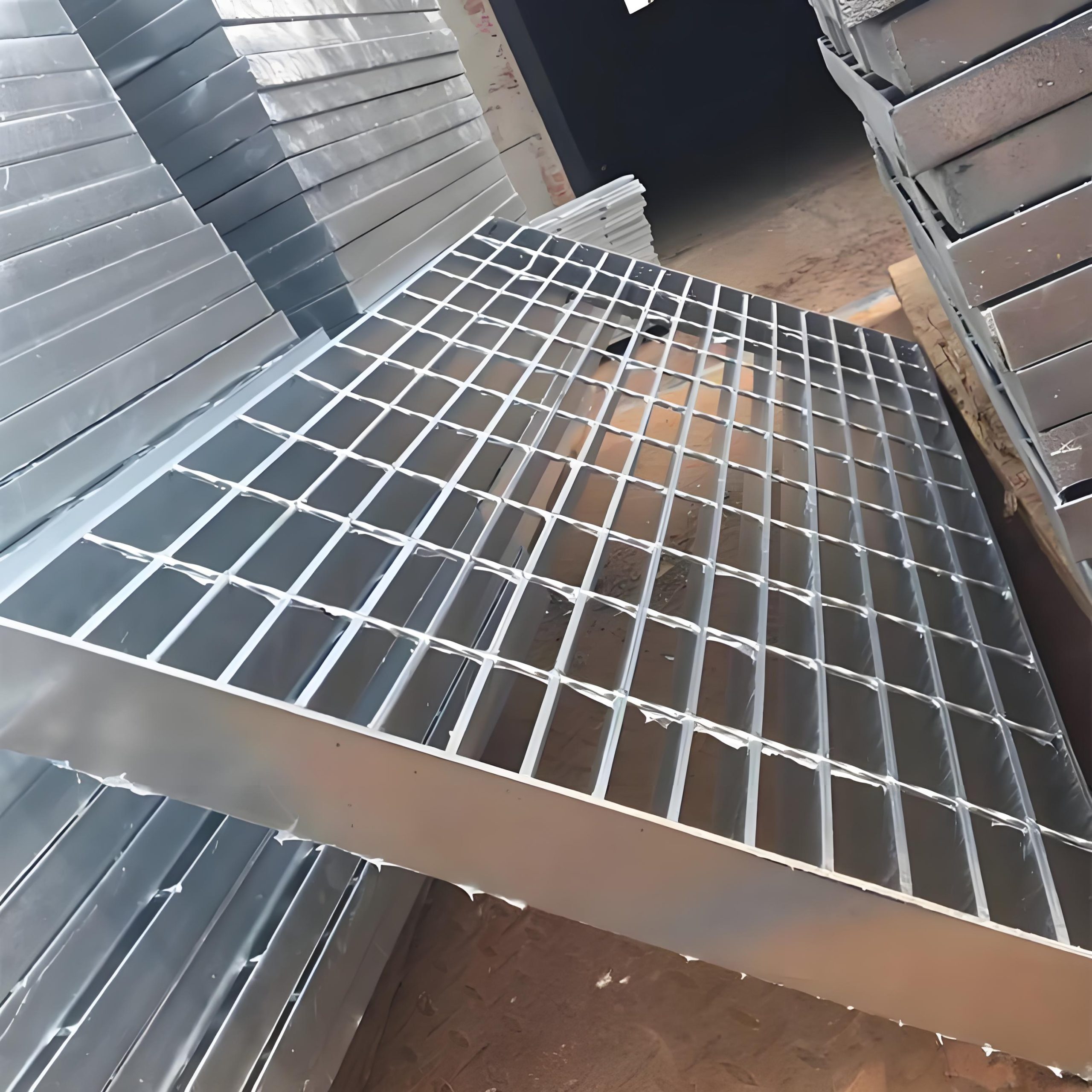
What is 11W4 grating used for?
11W4 grating is used where a close-mesh welded bar grating pattern is needed. Common applications include pedestrian walkways, small-wheel access areas, commercial platforms, food-processing floors, equipment access areas, close-mesh trench covers, stairs, and locations where standard 19W4 openings are too large.
Is 11W4 grating ADA compliant?
11W4 grating with 3/16 in. thick bearing bars typically has an approximate 1/2 in. clear opening between bearing bars, which can help meet common opening-size expectations. However, 11W4 alone does not guarantee ADA compliance. The final installation must be checked for actual clear openings, opening orientation, panel joints, slope, stability, and applicable local requirements.
How much does 11W4 grating cost?
11W4 grating usually costs more than standard 19W4 grating because it contains more bearing bars and has a higher finished weight. For factory planning, close-mesh galvanized steel grating may broadly range from about US$50 to US$170 per m², or approximately US$4.65 to US$15.80 per ft², before custom fabrication, frames, clips, packing, and freight are added. Carbon steel is generally the lowest-cost material, while 304 and 316 stainless steel cost more because of alloy content and corrosion resistance.