
Trench cover manufacturers and suppliers provide custom trench covering solutions for drainage channels, cable trenches, utility trenches, factory floors, road projects, municipal infrastructure, industrial platforms, warehouses, power plants, and heavy-duty traffic areas. For buyers, choosing a trench cover supplier is not only about finding a low price. A suitable manufacturer should understand trench width, load capacity, material selection, drainage demand, corrosion environment, installation method, surface safety, and project delivery requirements. Whether the project needs steel grating trench covers, chequered plate trench covers, solid steel covers, stainless steel covers, or composite trench covers, the final product must fit the actual site condition and perform safely over long-term use.
Trench covers are used to close or protect open channels while allowing people, vehicles, equipment, or maintenance workers to pass safely. In industrial and municipal projects, trench covers may be installed over rainwater drainage channels, wastewater trenches, cable trenches, pipeline trenches, inspection channels, machine foundation trenches, and utility corridors. Because these applications are different, trench cover manufacturers and suppliers must be able to provide more than standard sizes. They need to support project drawings, custom fabrication, load capacity selection, anti-corrosion treatment, and suitable installation accessories.
For a municipal road drainage project, the cover may need to carry vehicle loads, resist outdoor corrosion, and remain stable under repeated traffic. For a factory drainage channel, the cover may need to support workers, forklifts, trolleys, and cleaning equipment. For a cable trench, the cover may need to be removable, easy to lift, well ventilated, and accurately marked for maintenance. For a chemical plant or coastal project, corrosion resistance may be more important than the lowest initial price. This is why a professional trench cover manufacturer normally checks the project conditions before recommending a structure.
From a buyer’s point of view, the best trench cover supplier is not always the one offering the cheapest quotation. A reliable supplier should ask about clear trench opening, panel size, support condition, expected load, material grade, surface treatment, frame requirement, removal frequency, and destination delivery. If a supplier gives a price without confirming these details, the quotation may not reflect the real working condition.
| Buyer Concern | Why It Matters | Manufacturer Response |
| Trench size | Determines cover dimensions and span | Provide custom cutting, drawing review, and panel layout |
| Load capacity | Affects safety and long-term performance | Select proper bearing bar, plate thickness, frame, and reinforcement |
| Material | Controls strength, corrosion resistance, and cost | Offer steel, stainless steel, galvanized steel, composite, or other options |
| Surface safety | Reduces slip risk in wet or oily areas | Provide serrated grating, chequered plate, or anti-slip surface |
| Installation | Affects maintenance, stability, and site work | Design fixed, removable, hinged, frame-mounted, or clip-fixed covers |
| Export supply | Protects goods during transport | Arrange packing, labeling, loading, and shipping support |
Trench cover manufacturers usually supply several product types because different projects have different requirements for drainage, load capacity, surface closure, corrosion resistance, and maintenance access. The most common types include steel grating trench covers, chequered plate trench covers, solid steel trench covers, stainless steel trench covers, composite trench covers, and framed trench cover systems.
Steel grating trench covers are widely used for drainage channels, road drains, factory floors, utility trenches, and outdoor industrial areas. Their open structure allows water and air to pass through while the bearing bars support loads. Steel grating covers are often selected for drainage projects because they provide high open area, good strength-to-weight ratio, easy cleaning, and practical maintenance access.
Manufacturers can produce steel grating trench covers with different bearing bar sizes, bearing bar spacing, cross bar spacing, edge banding, serrated surface, and frame options. For outdoor applications, hot-dip galvanized steel grating is commonly used to improve corrosion resistance. For corrosive or hygienic environments, stainless steel grating may be selected.
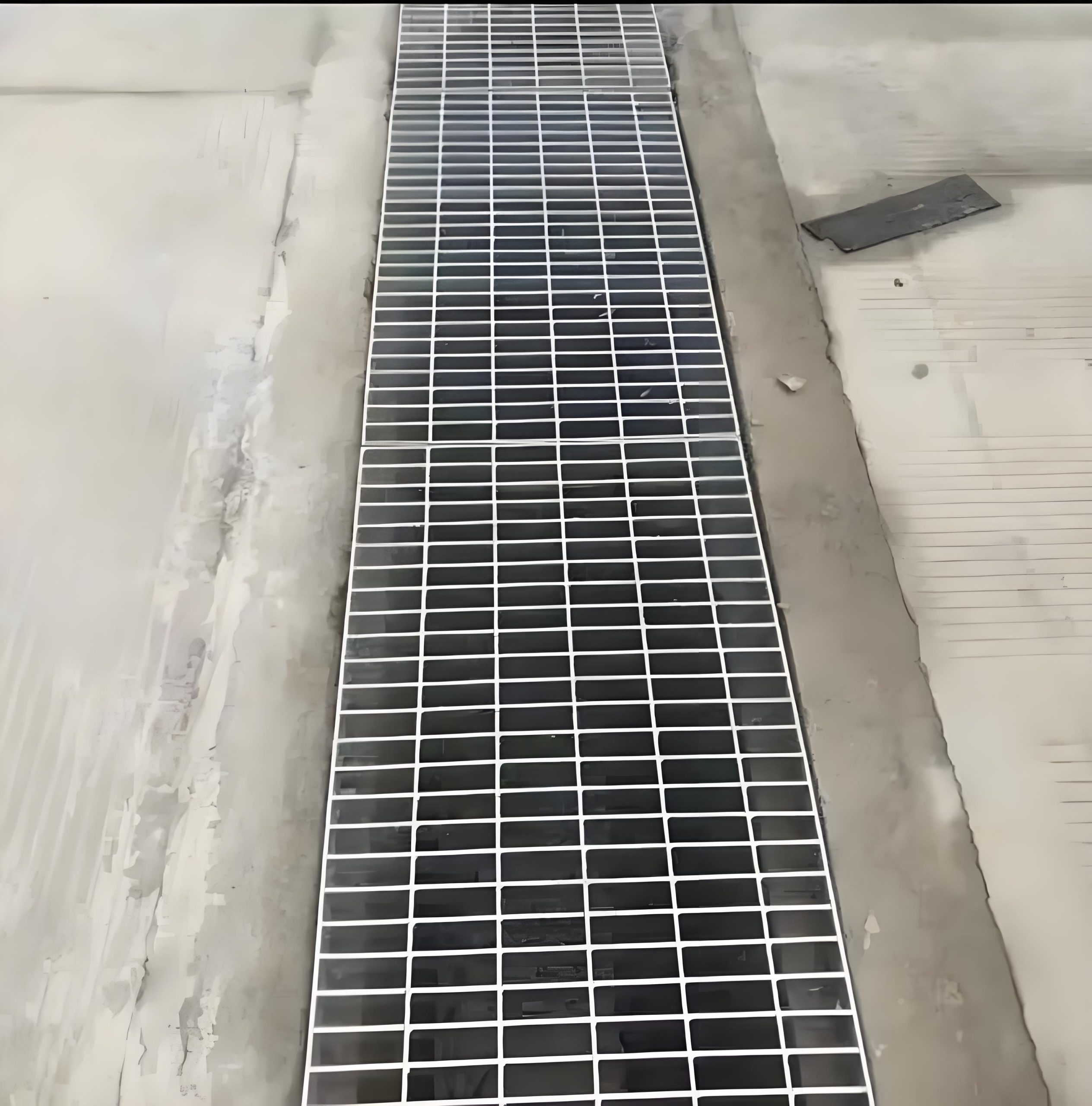
Chequered plate trench covers are made from steel or stainless steel plates with raised anti-slip patterns. They provide a more closed surface than grating covers, making them suitable for pedestrian areas, cable trenches, industrial floor access points, and locations where small objects should not fall into the trench. The raised pattern improves surface grip, especially in areas exposed to moisture or light oil.
The price and strength of chequered plate trench covers depend on plate thickness, reinforcement ribs, frame design, material grade, and surface treatment. For wider spans or vehicle loads, manufacturers may add stiffeners under the plate to improve load-bearing performance without using an excessively thick top plate.
Solid steel trench covers provide full surface coverage and strong protection for trenches. They are used when the trench contents should be protected from falling debris, when a continuous surface is needed, or when drainage through the cover is not required. Solid steel covers may be flat, reinforced, galvanized, painted, or fitted with lifting holes and frames.
Solid covers are heavier than grating covers in many cases. If the cover needs regular removal, lifting handle design and panel weight should be considered carefully. For large solid covers, manufacturers may recommend dividing the cover into smaller sections to improve handling safety.
Stainless steel trench covers are used where corrosion resistance, hygiene, clean appearance, or long service life is important. Common stainless steel options include 304 and 316. Stainless steel 304 is suitable for many humid, indoor, commercial, and food-related drainage areas. Stainless steel 316 is better for coastal, marine, chemical, wastewater, and chloride-containing environments.
Stainless steel trench covers can be manufactured as grating covers, chequered plate covers, perforated covers, solid covers, or custom framed covers. Surface finishing may include pickling, passivation, brushing, polishing, or bead blasting depending on the project requirement.
Composite trench covers are lightweight, corrosion-resistant, and useful in cable trenches, chemical plants, wastewater facilities, utility access points, and pedestrian areas. They are often made from fiberglass reinforced plastic or similar composite materials. Their main advantages are rust-free performance, lower weight, electrical insulation in some applications, and easy handling.
Composite covers should be selected according to verified load rating, resin type, thickness, fire performance, UV resistance, and deflection behavior. They are not always interchangeable with steel covers in heavy-duty traffic areas, so buyers should confirm actual load conditions before selection.
| Trench Cover Type | Main Advantage | Common Application |
| Steel grating trench cover | Good drainage, ventilation, and strength | Road drains, factory channels, outdoor drainage, utility trenches |
| Chequered plate trench cover | Closed surface with anti-slip pattern | Cable trenches, pedestrian access, factory floors |
| Solid steel trench cover | Full surface protection and strong coverage | Utility access, equipment areas, protected trenches |
| Stainless steel trench cover | Corrosion resistance and clean appearance | Food plants, chemical plants, coastal sites, clean drainage systems |
| Composite trench cover | Lightweight and rust-free | Cable trenches, chemical areas, wastewater plants, pedestrian zones |
| Framed trench cover system | Better support and installation stability | Roads, municipal projects, high-traffic industrial sites |
A professional trench cover manufacturer should not recommend one material or one structure for every project. Each option has advantages and limitations. Steel grating is excellent for drainage and ventilation. Chequered plate provides a closed anti-slip surface. Solid steel covers offer full protection. Stainless steel improves corrosion resistance. Composite covers reduce weight and resist rust. The correct choice depends on project use, traffic load, drainage demand, corrosion condition, maintenance frequency, and budget.
Steel grating trench covers are a strong option when water drainage, ventilation, and visibility are required. They are commonly used over drainage channels because rainwater and process water can flow directly into the trench. Workers can also see debris or sediment inside the channel more easily. For industrial plants and municipal projects, this makes cleaning and inspection more convenient.
Steel grating is also efficient in terms of weight. Compared with a solid steel plate covering the same area, a grating panel may be lighter while still providing strong load support when properly designed. This makes steel grating useful for removable covers and large drainage areas.
Chequered plate trench covers are suitable where the buyer wants a mostly closed top surface but still needs slip resistance. They are common for cable trenches, indoor access trenches, pedestrian walkways, maintenance covers, and industrial floor openings. If drainage is required, manufacturers can add slots, holes, gaps, or side drainage details.
For forklift or vehicle areas, chequered plate covers may require reinforcement ribs or thicker plate. A thin plate may look strong but can bend over a wide trench span. Therefore, the supplier should calculate or evaluate the span and load before confirming the thickness.
Solid steel trench covers are used when full coverage and protection are more important than drainage through the top surface. They can protect cables, pipelines, valves, or service channels from falling objects, dust, or direct exposure. Solid covers are also used in temporary construction access or areas where a continuous floor surface is needed.
The main consideration is weight. Thick solid covers can become difficult to lift manually. If maintenance access is frequent, manufacturers may add lifting holes, recessed handles, hinges, or divide the cover into several smaller panels.
Stainless steel trench covers should be considered when corrosion resistance is critical. In food processing plants, stainless steel also supports hygiene and clean appearance. In chemical plants and coastal areas, stainless steel helps reduce rust risk and maintenance frequency. Stainless steel 316 is usually preferred over 304 where chloride or stronger corrosion is present.
Composite trench covers are suitable for lightweight access, corrosion resistance, and non-metallic applications. They are often easier to remove manually and do not require galvanizing. However, composite material must be selected according to actual load and environmental requirements. For heavy-duty vehicle traffic, buyers should request load data before replacing steel with composite covers.
| Selection Requirement | Recommended Option | Reason |
| Fast drainage | Steel grating trench cover | Open structure allows water to pass quickly |
| Closed walking surface | Chequered plate trench cover | Raised pattern improves grip while covering the trench |
| Full protection | Solid steel trench cover | Prevents debris from falling into the trench |
| Corrosive environment | Stainless steel or composite cover | Better corrosion resistance than untreated carbon steel |
| Frequent manual removal | Light grating, composite, or divided panels | Reduces handling difficulty |
| Heavy vehicle load | Heavy-duty steel grating or reinforced steel cover | Higher structural strength and impact resistance |
Many trench cover projects require custom fabrication because trench dimensions are not always standard. Existing trenches may have different widths, uneven concrete edges, special frames, curved sections, pipe penetrations, manhole connections, or multiple access points. New construction projects may require trench covers to match engineering drawings, load grades, and installation sequences. This is why custom size support is an important capability for trench cover manufacturers and suppliers.
Custom trench cover size usually includes panel width, panel length, thickness, bearing bar size, frame size, support edge, lifting handle position, fixing hole position, and special cut-outs. For large projects, manufacturers may produce multiple panel types according to a size schedule. Each panel can be numbered or marked to match the installation location.
Buyers should not only provide the outside trench size. The supplier needs to know the clear opening, support width, seating depth, frame condition, and required installation clearance. If the panel is too large, it may not fit. If it is too small, it may move, create noise, or leave unsafe gaps.
Drawings help manufacturers check whether the selected trench cover structure is practical. A drawing can show trench width, support method, cover direction, frame detail, load area, fixing method, and special requirements. When drawings are not available, site photos and a clear size table can still help the supplier prepare a more accurate quotation.
For project-based supply, the manufacturer may need to coordinate different trench cover types in one order. For example, a factory project may need galvanized steel grating covers for outdoor drainage, chequered plate covers for indoor cable trenches, stainless steel covers for wet production areas, and heavy-duty framed covers for forklift crossings. Project fabrication support means the supplier can organize different specifications, drawings, labels, packaging, and delivery schedules.
| Custom Information | Why It Is Needed | Example |
| Clear trench opening | Determines span and structural strength | 300 mm, 500 mm, 800 mm, or custom width |
| Support width | Controls seating and stability | Angle frame, concrete ledge, steel support seat |
| Panel size | Affects installation and handling | 600 x 1000 mm, 500 x 1200 mm, or drawing size |
| Load condition | Determines material thickness and reinforcement | Pedestrian, forklift, car, truck, heavy equipment |
| Surface treatment | Controls corrosion resistance and appearance | Hot-dip galvanized, painted, stainless passivated |
| Installation method | Affects frame, fixing, and accessories | Removable, fixed, hinged, bolted, clip-fixed |
| Special accessories | Supports maintenance and security | Handles, locks, hinges, clips, anchor holes |
Load capacity is one of the most important factors in trench cover selection. A trench cover that is suitable for pedestrian walking may not be suitable for forklifts or vehicles. A cover that supports a static load may still fail under repeated wheel impact if the design is too light. Manufacturers should consider the actual load type, wheel contact area, traffic frequency, trench span, support condition, and safety factor before recommending a trench cover.
Pedestrian trench covers are used in sidewalks, public walkways, commercial areas, parks, building entrances, and light-duty factory areas. The focus is walking safety, anti-slip surface, flatness, safe opening size, and appearance. For public access, the cover should not create a tripping hazard or large openings that are uncomfortable for pedestrians.
Forklift areas require more careful design because forklift wheels create concentrated loads. A loaded forklift crossing a trench cover can produce significant bending stress and impact. The supplier should know the forklift capacity, maximum load, wheel type, wheel spacing, traffic direction, and trench span. For forklift applications, heavy-duty steel grating or reinforced plate covers are often required.
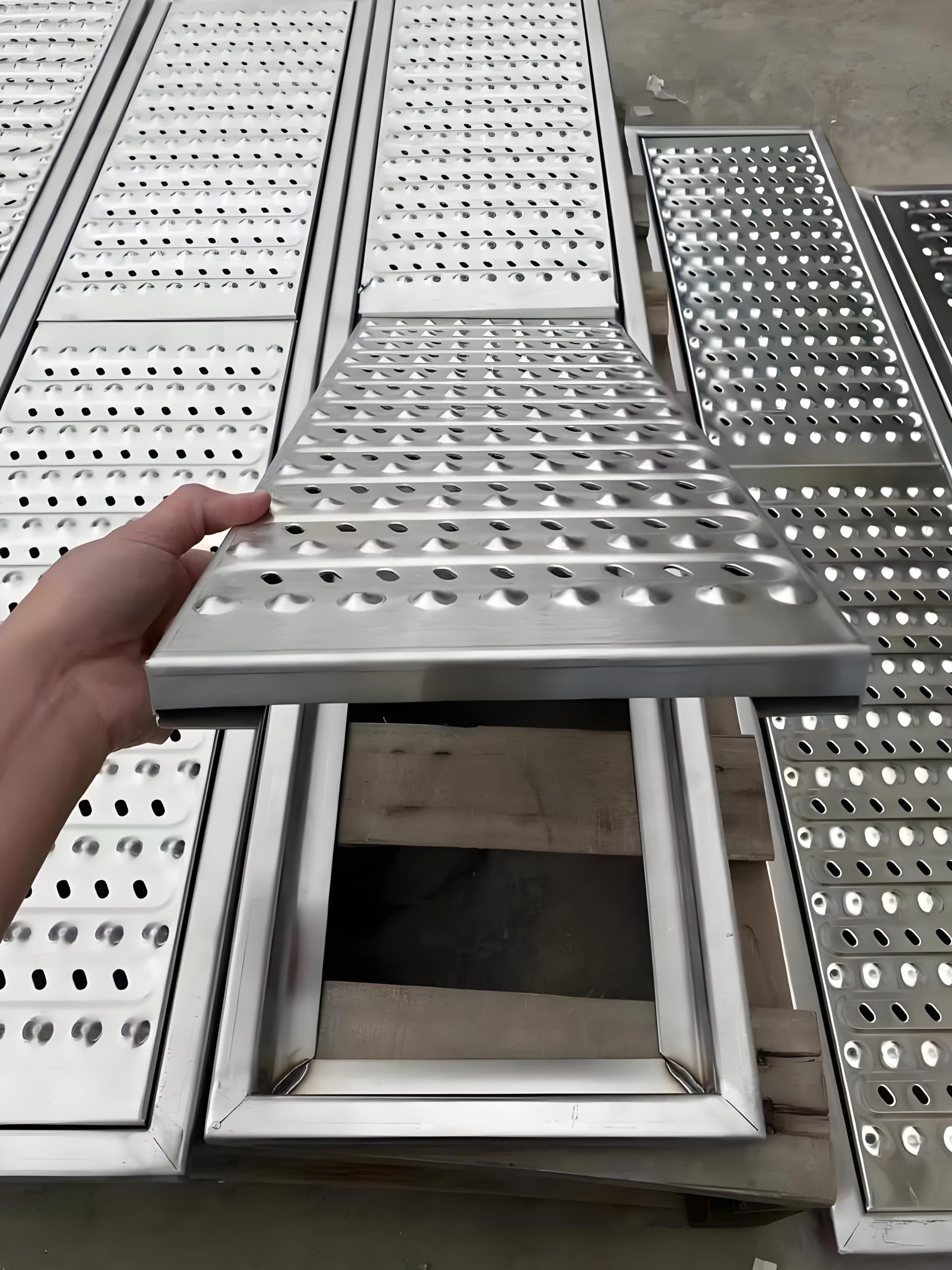
Vehicle trench covers are used in parking lots, factory roads, access roads, service lanes, municipal streets, and drainage channels crossing traffic areas. These covers must handle repeated wheel loads, vibration, and possible braking or turning forces. The frame and fixing method are very important because loose covers can create noise, movement, and safety risks.
Heavy-duty trench covers are used in ports, logistics yards, mining sites, power plants, manufacturing plants, and areas with trucks, cranes, loaders, or heavy machinery. These applications normally require larger bearing bars, thicker plates, reinforced frames, stronger welding, and clear engineering confirmation. For heavy-duty covers, the supplier should not rely only on general catalog sizes.
| Load Area | Common Traffic | Design Focus | Possible Cover Type |
| Pedestrian area | Workers, pedestrians, light carts | Anti-slip surface, flatness, safe openings | Light steel grating, chequered plate, composite cover |
| Factory floor | Workers, trolleys, cleaning equipment | Drainage, corrosion resistance, easy cleaning | Galvanized grating, stainless grating, chequered plate |
| Forklift crossing | Forklifts and pallet trucks | Concentrated wheel load and span strength | Heavy-duty grating or reinforced plate cover |
| Vehicle road | Cars, vans, light trucks | Frame support, fixing, repeated traffic | Heavy-duty galvanized steel trench cover |
| Heavy-duty industrial area | Trucks, machinery, loaders | Engineering design and high load capacity | Heavy-duty steel grating or reinforced framed cover |
Material selection affects strength, corrosion resistance, service life, maintenance cost, weight, and price. A professional trench cover manufacturer should recommend material based on the application environment, not only buyer budget. Carbon steel, galvanized steel, stainless steel, and composite materials each have different advantages.
Carbon steel is strong and cost-effective. It is suitable for many industrial and municipal trench covers, especially when combined with hot-dip galvanizing. Carbon steel can be fabricated into grating covers, chequered plate covers, solid covers, and frames. Untreated carbon steel should usually be avoided in outdoor wet conditions because it can rust quickly.
Hot-dip galvanized steel is one of the most common choices for outdoor trench covers. It offers good strength and corrosion protection at a practical cost. It is suitable for road drainage, factory yards, municipal sidewalks, utility trenches, and general industrial environments. The zinc coating helps protect welded surfaces, edges, and open grating structures.
Stainless steel 304 is suitable for humid indoor areas, commercial drainage, food processing, clean industrial areas, and applications requiring better appearance. It resists rust better than carbon steel and does not require galvanizing. However, in chloride-rich or aggressive chemical environments, 316 may be a better choice.
Stainless steel 316 provides better corrosion resistance in coastal, marine, chemical, wastewater, and chloride-containing environments. It has a higher material cost than 304, but it can reduce maintenance and replacement in harsh conditions. For long-term projects where corrosion failure is unacceptable, 316 stainless steel trench covers may be more economical over the full service life.
Composite trench covers are suitable for rust-free, lightweight, and corrosion-resistant applications. They are often used in chemical plants, cable trenches, wastewater plants, and pedestrian access areas. Buyers should confirm load capacity, fire performance, UV resistance, and deflection before using composite covers in demanding traffic areas.
| Material | Strength | Corrosion Resistance | Typical Application |
| Carbon steel | High | Low without coating | Indoor dry areas, temporary covers, painted applications |
| Hot-dip galvanized steel | High | Good for many outdoor environments | Road drainage, factory channels, municipal projects |
| Stainless steel 304 | Good | Good in general humid environments | Food plants, commercial buildings, clean drainage |
| Stainless steel 316 | Good | Better for chloride and chemical exposure | Coastal, chemical, marine, wastewater areas |
| Composite | Depends on product design | Excellent rust resistance | Cable trenches, chemical areas, lightweight access |
Surface treatment is not only an appearance issue. For trench covers, surface protection affects safety, corrosion resistance, maintenance frequency, and service life. Because trench covers are often used in wet, outdoor, or industrial environments, anti-corrosion treatment should be selected carefully.
Hot-dip galvanizing is widely used for carbon steel trench covers. The steel product is dipped into molten zinc after fabrication, creating a protective zinc coating on the surface. This is practical for steel grating, welded frames, and many fabricated trench cover products. Hot-dip galvanizing is especially suitable for outdoor drainage, road trenches, municipal projects, and factory yards.
For good galvanizing quality, the manufacturer should consider venting, drainage, welding quality, and surface preparation. Poor design may cause zinc buildup, uncoated areas, rough surfaces, or deformation. After galvanizing, the supplier should inspect coating coverage, sharp points, flatness, and general finish.
Painting and powder coating are used when specific color, appearance, or moderate protection is required. These coatings may be suitable for indoor or low-corrosion environments. However, in heavy traffic or constantly wet drainage areas, coatings can be scratched or worn. If the project needs long-term outdoor durability, hot-dip galvanizing is often more practical than ordinary painting.
Stainless steel trench covers may be pickled, passivated, brushed, polished, or bead blasted. Pickling and passivation can improve corrosion resistance after welding by cleaning the surface and removing contaminants. Brushed or polished finishes may be used for commercial, architectural, food processing, or clean drainage applications.
Composite covers usually do not rust, but they still require proper surface design. Anti-slip texture, UV resistance, resin quality, and edge finishing affect long-term performance. For outdoor use, UV stability should be confirmed. For chemical environments, resin compatibility should be checked.
| Surface Option | Suitable Product | Main Benefit | Typical Use |
| Hot-dip galvanizing | Carbon steel grating and fabricated covers | Strong outdoor corrosion protection | Road drainage, factory yards, municipal trenches |
| Painting | Carbon steel covers | Low-cost color and basic protection | Indoor or low-corrosion areas |
| Powder coating | Steel or aluminum covers | Decorative surface and moderate protection | Commercial or controlled environments |
| Pickling and passivation | Stainless steel covers | Improves clean surface and corrosion performance | Food, chemical, wastewater, stainless drainage |
| Brushed or polished finish | Stainless steel covers | Improves appearance and cleanability | Architectural, commercial, hygienic areas |
| Textured composite surface | Composite covers | Improves slip resistance | Cable trench, chemical plant, pedestrian access |
Anti-slip performance is important because trench covers are often installed in wet, outdoor, oily, or dusty environments. A trench cover may be strong enough structurally but still unsafe if the walking surface becomes slippery. Manufacturers can improve surface safety through serrated grating, chequered plate patterns, raised textures, perforations, or composite anti-slip surfaces.
Serrated steel grating has notched bearing bars that improve traction. It is suitable for outdoor drainage areas, factory floors, wet platforms, washing areas, and oily industrial environments. Serrated grating may cost slightly more than plain grating, but it can improve worker safety in demanding conditions.
Chequered plate covers use raised patterns to improve grip. They are suitable for pedestrian covers, cable trench covers, floor access panels, and areas where a more closed surface is needed. The raised pattern also gives the cover a familiar industrial walking surface.
Composite covers often include molded texture or grit surfaces. These can provide good slip resistance and corrosion resistance at the same time. The buyer should check whether the surface is suitable for the expected traffic, cleaning method, and outdoor exposure.
More surface texture can improve traction, but it may also trap dirt, oil, or debris. In food plants, chemical plants, and clean production areas, the surface should be both slip-resistant and easy to wash. A supplier should understand the cleaning process before recommending a surface design.
| Anti-Slip Design | Suitable Environment | Main Consideration |
| Plain grating | Dry or low-risk areas | Lower cost but less grip in wet conditions |
| Serrated grating | Wet, oily, outdoor, or industrial walking areas | Better slip resistance with slightly higher cost |
| Chequered plate | Pedestrian access and closed surface requirements | Good walking surface but drainage openings may be needed |
| Textured composite | Chemical and corrosion-resistant areas | Confirm wear resistance and load rating |
| Perforated anti-slip plate | Drainage with partial surface closure | Balance drainage holes, strength, and walking comfort |
Trench cover manufacturers and suppliers should consider not only load capacity but also how the trench will work after installation. Drainage, ventilation, inspection, and maintenance often determine whether grating, solid plate, chequered plate, or composite cover is the better choice.
For rainwater drainage channels and industrial floor drainage, open grating covers provide better water intake than solid covers. The open area allows water to enter the channel quickly, reducing surface pooling. However, the opening size should be selected according to pedestrian safety, wheel size, debris control, and load capacity.
Utility trenches, cable trenches, and service channels may need ventilation to reduce moisture and heat buildup. Grating covers allow air circulation, while solid covers may trap humidity. In power plants, cable corridors, and underground service trenches, ventilation can be an important reason to choose open grating or ventilated covers.
Open covers allow workers to see sediment, debris, water accumulation, or other problems inside the trench. This makes inspection easier. For trenches that require frequent access, removable panels with handles or hinged covers can reduce maintenance time.
Drainage trenches can collect mud, leaves, production waste, oil residue, or other debris. Removable trench covers are easier to clean than fixed covers. In municipal drainage projects, cleaning access should be considered at the design stage, not after blockage occurs. For industrial plants, cleaning frequency may be high, so panel weight and lifting method are important.
| Requirement | Best Cover Feature | Typical Product Choice |
| Fast drainage | High open area | Steel grating trench cover |
| Ventilation | Open or slotted surface | Grating cover or perforated cover |
| Frequent inspection | Removable panels and handles | Removable grating or chequered plate cover |
| Debris protection | Closed or semi-closed surface | Solid cover, chequered plate, or perforated plate |
| Easy cleaning | Manageable panel size and clear access | Segmented removable trench cover |
Installation method affects trench cover stability, access convenience, safety, and cost. Manufacturers should recommend installation methods according to traffic conditions, maintenance frequency, trench structure, and security requirements. Common installation methods include fixed, removable, hinged, clip-fixed, bolted, and frame-mounted systems.
Fixed trench covers are secured by welding, bolting, anchors, or permanent attachment. They are used where movement must be prevented and maintenance access is not frequent. Fixed covers are suitable for public areas, vehicle traffic zones, and security-sensitive locations. The disadvantage is that cleaning or inspection may take longer.
Removable trench covers are placed into frames or support seats and can be lifted out when needed. They are common in drainage channels, cable trenches, pump rooms, utility corridors, and factory floors. Removable covers should be designed with manageable weight, proper handles, and stable seating to prevent movement during use.
Hinged trench covers are useful where frequent access is required but full removal is inconvenient. A hinged cover can be opened for inspection or cleaning while remaining connected to the frame. Hinged covers are often used for inspection points, equipment trenches, pump rooms, and maintenance access areas. They cost more than simple removable covers because hinges, frames, and locking details are needed.
Frame-mounted trench covers provide better support and installation accuracy. A frame protects concrete trench edges, creates a level seating surface, and improves stability. For road trenches, factory forklift areas, and municipal drainage channels, a frame can reduce noise, rocking, and edge damage. The frame may be embedded in concrete or fixed to a steel structure.
| Installation Method | Main Benefit | Limitation | Suitable Application |
| Fixed | Stable and secure | Difficult to remove | Public areas, traffic zones, anti-theft locations |
| Removable | Easy maintenance access | Needs proper seating to prevent movement | Drainage trenches, cable trenches, factory channels |
| Hinged | Convenient frequent access | Higher fabrication cost | Inspection points, pump rooms, utility access |
| Clip-fixed | Secure but removable | Requires clips or tools | Platforms, industrial floors, pedestrian areas |
| Frame-mounted | Better support and fit | Adds material and installation cost | Road drainage, municipal projects, heavy-duty areas |
The manufacturing process determines whether trench covers fit correctly, carry loads safely, and maintain a clean appearance after installation. A professional trench cover manufacturer should control each step from material preparation to final packing.
The process starts with selecting suitable steel bars, plates, stainless steel sheets, frames, or composite panels. Material dimensions must match the design requirement. For steel grating covers, bearing bar size and spacing are important. For chequered plate and solid covers, plate thickness and reinforcement design are key. For stainless steel covers, grade identification should be controlled carefully.
Accurate cutting ensures that covers match the required dimensions. Cutting may include straight cutting, notching, hole cutting, irregular shape cutting, and frame preparation. For custom projects, each panel should follow the drawing or size schedule. Poor cutting accuracy can cause installation gaps, tight fitting, or misalignment with frames.
Welding is used to assemble steel grating panels, edge banding, reinforcement ribs, frames, handles, hinges, and fixing parts. Good welding must provide sufficient strength without excessive distortion. Welding quality is especially important for removable covers, vehicle-loaded covers, and heavy-duty covers because repeated movement and impact can stress welded joints.
Edge banding improves strength, appearance, and handling safety. It closes open bar ends, reduces sharp edges, and helps the panel sit better in the frame. For heavy-duty trench cover grates, banding also improves edge impact resistance. For custom covers, banding may include special notches, lifting holes, or marking plates.
Reinforcement is used when the cover must carry higher loads or span wider trenches. Chequered plate covers may use underside ribs or stiffeners. Solid steel covers may use welded channels, angles, or flat bars. Heavy-duty grating covers may use larger bearing bars, closer spacing, or reinforced frames. Reinforcement should be designed carefully because unnecessary reinforcement increases weight and cost, while insufficient reinforcement creates safety risk.
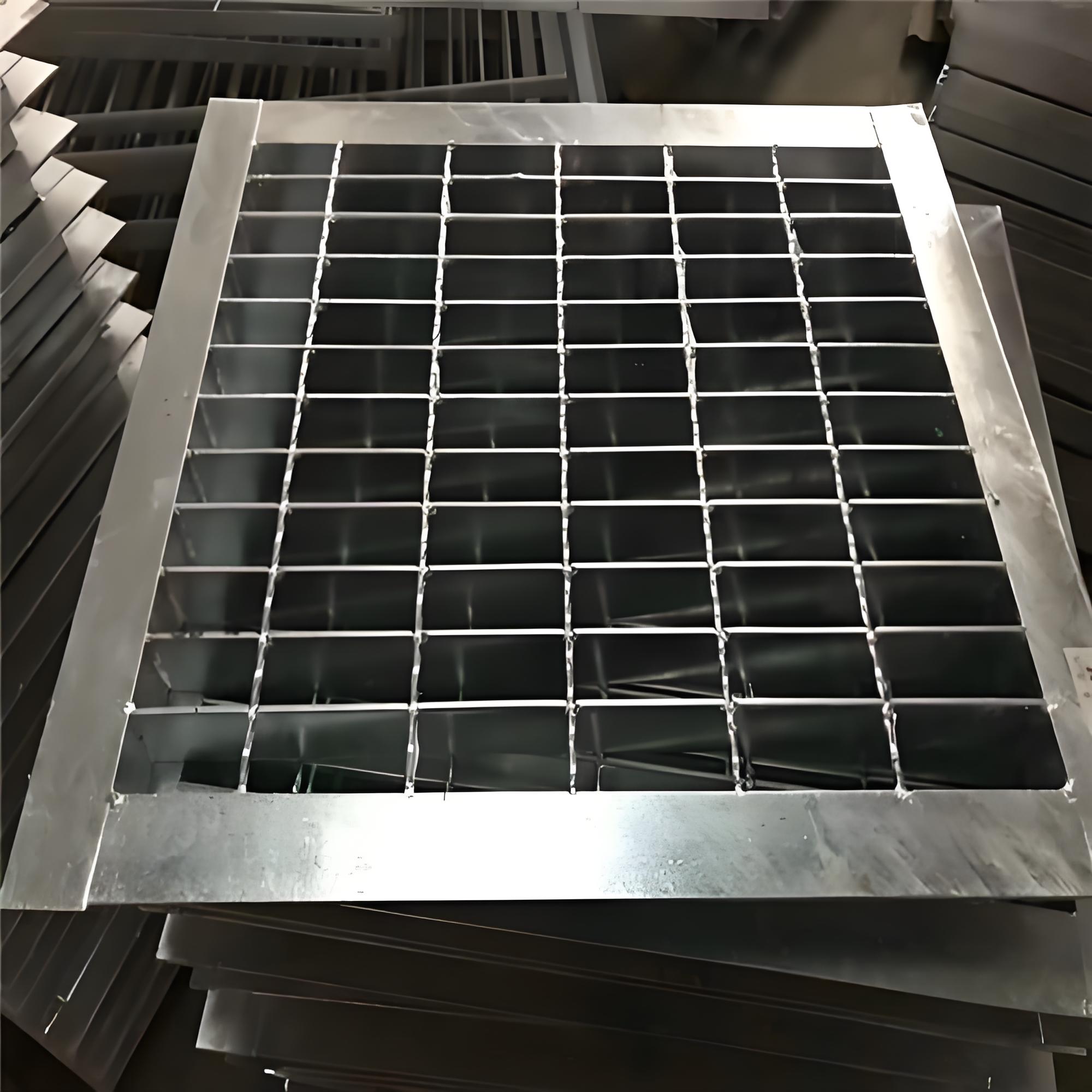
Finishing may include hot-dip galvanizing, painting, powder coating, pickling, passivation, brushing, polishing, deburring, or cleaning. The finish should match the environment and material. For galvanized covers, the manufacturer should inspect zinc coating and remove dangerous sharp points. For stainless steel covers, surface contamination and welding marks should be controlled.
| Manufacturing Step | Main Purpose | Quality Risk if Poorly Controlled |
| Material preparation | Ensure correct grade and dimensions | Wrong strength, wrong corrosion resistance, unstable quality |
| Cutting | Produce correct size and shape | Poor fit, uneven gaps, installation failure |
| Welding | Connect bars, frames, ribs, and accessories | Weak joints, distortion, early failure |
| Banding | Strengthen edges and improve safety | Sharp edges, weak perimeter, poor appearance |
| Reinforcement | Improve load capacity | Excessive deflection or unnecessary weight |
| Finishing | Improve corrosion resistance and surface quality | Rust, coating defects, rough surface, handling risk |
Quality control is one of the clearest differences between reliable trench cover manufacturers and low-cost general workshops. Trench covers are safety-related products. If they bend, slip, crack, rock, or corrode early, they can create project delays and safety hazards. Quality inspection should cover material, dimensions, welding, flatness, surface treatment, load performance, and packaging.
Strength starts with correct design. The manufacturer should select bearing bar size, plate thickness, reinforcement, and frame support according to the trench span and expected load. For heavy-duty applications, load performance should be reviewed before production. If necessary, the buyer may request calculation support, testing information, or sample approval.
Flatness affects installation safety. A trench cover that is warped or twisted may rock when people or vehicles pass over it. This can create noise, impact, and tripping hazards. Welding and galvanizing can both affect flatness, so manufacturers should control fabrication sequence and inspect panels after finishing.
Welds should be strong, consistent, and suitable for the expected load. Poor welding may cause loose cross bars, cracked banding, weak frames, or broken handles. For removable covers, handle welding is particularly important because workers may lift the cover many times during service.
Surface finish inspection depends on the product. Galvanized covers should have proper zinc coverage without excessive sharp lumps. Painted covers should have consistent coating. Stainless steel covers should be free from serious contamination, burrs, and poor weld cleaning. Composite covers should have consistent texture and clean edges.
Custom trench covers must fit the site. The manufacturer should check length, width, diagonal tolerance, frame size, hole position, handle position, and panel marking. For a large project, even a small dimension error repeated across many covers can cause serious installation problems.
| Quality Control Item | Inspection Focus | Reason |
| Material | Grade, thickness, bar size, plate size | Confirms strength and corrosion performance |
| Dimensions | Width, length, diagonal, frame fit | Ensures correct installation |
| Welding | Joint strength, weld position, handle connection | Prevents failure during use |
| Flatness | Panel levelness and distortion | Reduces rocking, noise, and trip risk |
| Surface finish | Galvanizing, coating, passivation, burr removal | Improves corrosion resistance and handling safety |
| Load suitability | Design review and structural selection | Prevents deflection and unsafe performance |
| Packaging | Stacking, labels, protection, loading stability | Reduces shipping damage and site confusion |
For international buyers, trench cover supply does not end after production. Packaging, loading, and delivery are also important because trench covers are heavy products that can be damaged during transport if not properly handled. A professional supplier should consider surface protection, panel marking, pallet strength, container loading, and export documentation.
Steel grating and galvanized trench covers are usually packed in bundles, pallets, or steel frames. The packaging should prevent excessive rubbing, bending, and zinc coating damage. Heavy panels should be stacked evenly to avoid deformation. If the order includes different sizes, labels and packing lists should be clear.
Stainless steel covers need protection against scratches and contamination. They should not be packed carelessly with carbon steel parts that may leave rust contamination on the surface. Protective film, paper, plastic wrapping, wooden pallets, or separated packing may be used depending on the finish requirement.
Composite covers are lighter but still need edge and corner protection. Anti-slip surfaces should be protected from severe abrasion. If the covers are shipped long distance, packaging should prevent bending, impact, and surface damage.
Trench covers are heavy and can take up significant container weight. A good supplier should plan loading according to product size, total weight, unloading convenience, and destination handling. Poor loading may damage the covers or create unloading risk. For large projects, packing by installation area or size group can make site work easier.
Export supply may include FOB, CFR, CIF, or other delivery terms. Buyers should confirm whether the quoted price includes inland transportation, export packing, port delivery, sea freight, insurance, or destination costs. A supplier with export experience can help reduce communication problems and delivery delays.
| Export Supply Item | Supplier Responsibility | Buyer Benefit |
| Export packing | Use suitable pallets, bundles, protection, and labels | Reduces transport damage |
| Product marking | Mark size, drawing number, or installation location | Improves site installation efficiency |
| Container loading | Arrange safe stacking and weight distribution | Improves shipping safety and unloading convenience |
| Delivery coordination | Support shipment schedule and documentation | Reduces project delay risk |
| Mixed specification management | Pack different trench cover types clearly | Prevents confusion at the construction site |
When comparing trench cover manufacturers and suppliers, buyers should look beyond the unit price. A very low price may be based on thinner material, weaker bearing bars, no frame, poor galvanizing, incomplete accessories, or insufficient packaging. The better approach is to compare specifications, design basis, quality control, customization capability, delivery experience, and communication accuracy.
Buyers should confirm whether all suppliers are quoting the same material, thickness, bearing bar size, spacing, surface treatment, frame, load capacity, accessories, and packaging. If one supplier quotes galvanized heavy-duty grating with frame and another quotes light-duty black steel grating without frame, the prices cannot be compared directly.
A trench cover manufacturer should have cutting, welding, banding, assembly, finishing, and inspection capability. If the project requires custom sizes, the supplier should be able to read drawings and provide fabrication support. For large orders, production capacity and lead time should also be checked.
Experience matters because trench cover applications vary widely. A supplier familiar with road drainage, factory drainage, cable trenches, utility trenches, and heavy-duty covers is more likely to ask the right questions before production. This reduces mistakes in load selection, installation fit, and surface treatment.
Buyers should ask how the supplier controls material, dimensions, welding, flatness, surface treatment, and packing. Product photos, inspection records, sample drawings, and previous project examples can help evaluate reliability.
A professional supplier should respond with practical questions and suggestions. If the supplier only asks for quantity and gives a low price, the risk of mismatch is higher. Good communication before ordering can prevent expensive problems after delivery.
| Comparison Point | What to Check | Why It Matters |
| Product specification | Material, size, thickness, bearing bar, spacing | Prevents unfair price comparison |
| Load design | Pedestrian, forklift, vehicle, or heavy-duty rating | Ensures safe performance |
| Custom ability | Drawing support, cutting, banding, frame fabrication | Ensures project fit |
| Surface treatment | Galvanizing, stainless finish, coating, passivation | Controls corrosion resistance |
| Quality inspection | Welding, flatness, dimensions, finish, packing | Reduces installation and safety problems |
| Export experience | Packing, loading, delivery terms, documentation | Supports international procurement |
| Communication | Technical questions and response accuracy | Shows whether the supplier understands the project |
To receive an accurate quotation from trench cover manufacturers and suppliers, buyers should prepare detailed information before inquiry. A short message such as “Please quote trench cover” is usually not enough. Without load, size, material, surface treatment, and quantity, the supplier can only provide a rough estimate.
The buyer should provide trench clear opening, panel width, panel length, total quantity, material requirement, surface treatment, load condition, installation method, and destination. If the project has drawings, the drawings should be sent together with the inquiry. If drawings are not available, photos and sketches can help.
The supplier should know whether the cover will be used for pedestrian areas, forklift crossings, vehicle roads, or heavy-duty industrial traffic. The buyer should also describe whether the environment is indoor, outdoor, coastal, chemical, food processing, wastewater, or general industrial use. These details affect material and surface treatment recommendations.
Accessories such as frames, handles, hinges, locks, fixing clips, anchor holes, and anti-theft devices should be specified before quotation. These details affect both cost and production time. If they are added later, the price and delivery schedule may change.
| Quotation Item | Information to Provide |
| Product type | Steel grating, chequered plate, solid steel, stainless steel, composite, or framed cover |
| Size | Clear opening, cover width, cover length, thickness, frame size if needed |
| Load | Pedestrian, trolley, forklift, vehicle, truck, or heavy machinery |
| Material | Carbon steel, galvanized steel, stainless steel 304, stainless steel 316, composite |
| Surface treatment | Hot-dip galvanized, painted, powder coated, pickled, passivated, polished |
| Installation | Fixed, removable, hinged, frame-mounted, clip-fixed, bolted |
| Accessories | Handles, frames, hinges, locks, clips, anchor holes, labels |
| Quantity | Pieces, square meters, sets, or full project schedule |
| Delivery | Destination port, delivery term, packing requirement, project deadline |
For a trench cover manufacturer, the main work is to convert site requirements into a safe and practical product. Anping County Chuansen Silk Screen Products Co., Ltd. supplies trench cover products for drainage channels, cable trenches, road trenches, industrial access openings, factory floor channels, and municipal utility projects. The production focus is on structural matching, dimensional accuracy, surface protection, and stable project delivery.
For steel grating trench covers, the factory should confirm bearing bar direction, bearing bar size, spacing, cross bar arrangement, banding, frame, and galvanizing. For chequered plate and solid covers, plate thickness, reinforcement ribs, handle position, and frame support must be checked. For stainless steel covers, material grade and surface finishing should be controlled. For export projects, packaging and loading should be planned according to product weight and size.
A practical supplier does not push one product for all applications. Instead, the supplier should help the buyer decide whether the project needs open drainage grating, closed chequered plate, heavy-duty reinforced steel cover, stainless steel corrosion-resistant cover, or lightweight composite cover. This approach reduces waste and improves long-term performance.
How do I choose a trench cover manufacturer?
Choose a trench cover manufacturer by checking whether the supplier can support custom sizes, drawings, load capacity selection, material recommendation, surface treatment, welding quality control, frame fabrication, packaging, and export delivery. A reliable manufacturer should ask about trench clear opening, support condition, traffic load, material environment, installation method, and quantity before giving a final quotation. Buyers should avoid comparing only the lowest unit price without checking specification details.
What information is needed for trench cover quotation?
To get an accurate trench cover quotation, provide the product type, trench clear opening, cover size, quantity, load condition, material grade, surface treatment, installation method, frame requirement, handle or fixing requirement, and destination. If possible, send drawings, site photos, or a size schedule. Clear information helps the supplier calculate material weight, fabrication cost, surface treatment cost, packaging, and delivery more accurately.
Are steel grating trench covers better than solid covers?
Steel grating trench covers are better when drainage, ventilation, easy cleaning, and visual inspection are important. They are commonly used for rainwater channels, factory drainage, utility trenches, and outdoor access areas. Solid covers are better when the trench needs full surface closure, debris protection, or a continuous walking and wheel surface. The better choice depends on the project environment, load requirement, drainage need, and maintenance method.
