
Welded and riveted grating are two established solutions for heavy-duty platforms, bridge decks, ramps, vehicle areas, loading zones, industrial floors, trench covers, and access structures. Both can be engineered for substantial uniform, concentrated, and rolling loads, but their construction methods create different structural behavior, surface characteristics, fabrication requirements, and maintenance considerations. Welded grating is widely selected for industrial platforms because it is efficient to manufacture, easy to customize, and available in many bearing bar sizes. Riveted grating is often considered for repeated rolling loads, bridge-type applications, ramps, roadway areas, and specialized heavy-duty floors because its formed connecting bars and riveted construction provide a distinctive load-distribution system. The correct choice depends on clear span, bearing bar dimensions, wheel loads, impact, vibration, fatigue, surface safety, corrosion exposure, support frames, inspection requirements, and lifecycle cost. This guide explains how to compare welded and riveted grating for heavy loads and how to prepare a complete technical specification.
| Comparison factor | Welded heavy-duty grating | Riveted heavy-duty grating |
|---|---|---|
| Primary connection | Cross bars are welded to bearing bars | Formed or reticuline connecting bars are mechanically joined with rivets |
| Typical structural role | Industrial platforms, floors, ramps, trenches, walkways, and access covers | Bridge decks, ramps, vehicle routes, rolling-load floors, and specialty heavy-duty structures |
| Load behavior | Primary load is carried by bearing bars, with welded cross bars providing stability and distribution | Bearing bars and formed connecting members create a mechanically connected panel suited to repeated rolling loads |
| Surface appearance | Visible welded intersections and conventional open-grid appearance | Distinctive riveted construction and often a comparatively smooth rolling surface |
| Custom fabrication | Highly flexible for banding, cut-outs, frames, stair parts, and reinforcements | Possible, but changes must preserve rivet spacing, connecting bar geometry, and structural behavior |
| Heavy-duty availability | Broad range of standard industrial configurations | Commonly specified for selected heavy-duty and vehicular applications |
| Manufacturing cost | Usually economical for repeated standard panels | Often higher because of formed bars, rivets, and specialized production |
| Maintenance focus | Welds, coating, bearing bars, clips, and distortion | Rivets, connecting bars, bearing bars, corrosion at joints, and fatigue-related damage |
Riveted grating is not automatically stronger than welded grating, and welded grating is not automatically better for every heavy-load project. The actual panel design, bar size, span, support condition, load distribution, impact allowance, and applicable load tables determine performance. The two systems should be compared using equivalent engineering assumptions rather than by appearance or material weight alone.
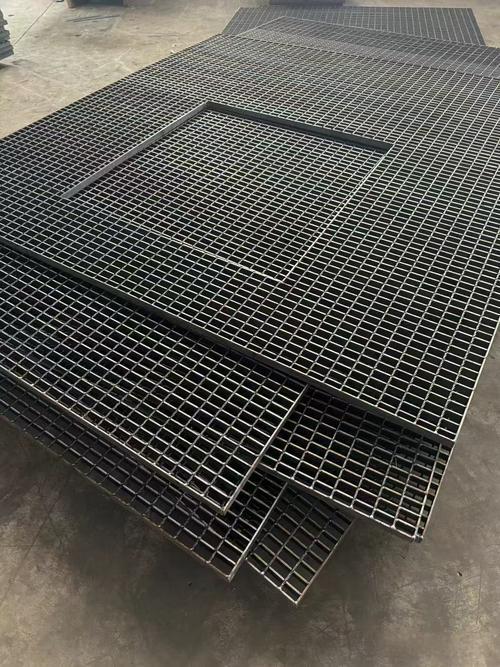
Welded steel grating is an open-grid panel made by joining parallel bearing bars with perpendicular cross bars through pressure welding, forge welding, resistance welding, or another approved factory process. The bearing bars normally run across the support span and carry the principal bending load.
Welded heavy-duty grating may use deeper and thicker bearing bars than standard platform grating. The cross bars maintain the spacing of the bearing bars, improve transverse stability, and help distribute local loads to adjacent bearing bars.
Welded grating is widely used for industrial platforms, factory floors, power plant access, loading areas, ramps, drainage covers, trench covers, stair treads, and maintenance walkways. It can be supplied in carbon steel, hot-dip galvanized steel, stainless steel, or aluminum, depending on the exposure and structural requirement.
For heavy-duty product selection and cost factors, buyers can review the CSSP Grating heavy-duty steel grating specification guide.
Riveted steel grating is a heavy-duty open-grid panel in which bearing bars are connected by formed, corrugated, or reticuline cross members using mechanical rivets. Instead of welding a conventional cross bar at each intersection, the connecting members are shaped to engage the bearing bars and are secured with rivets at regular intervals.
Riveted grating has a long history in bridge decks, ramps, highway structures, industrial vehicle floors, loading areas, and heavy-duty access systems. Its construction can provide a stable panel with good lateral restraint and a surface that is suitable for repeated rolling loads when the configuration is designed for that purpose.
Riveted grating is often selected when rolling loads, repeated vehicle traffic, impact, fatigue, or a specialty bridge-type construction is more important than the lowest initial manufacturing price. It should be selected from riveted-grating load data rather than from welded-grating tables.
More information about riveted construction, rivet spacing, and heavy-duty applications is available in the carbon steel riveted bar grating guide.
In welded grating, the cross bars are secured to the bearing bars through welded intersections. In riveted grating, the formed connecting members and rivets maintain the bearing bar position and contribute to panel stability. The bearing bars remain the primary elements resisting bending across the main span, but the cross-member system becomes particularly important for load distribution, rolling loads, and lateral restraint.
A heavy-duty riveted panel should not be modified casually in the field. Cutting or removing connecting members can change the load path and reduce the panel’s ability to distribute wheel or impact loads.
Heavy-load grating design begins with the actual load condition. A platform carrying people and hand tools requires a different design from a ramp carrying forklifts, trucks, or repeated wheel traffic.
The clear span is the unsupported distance between the bearing supports. It has a major effect on bending moment and deflection. A small increase in span can significantly reduce the allowable load, especially when the panel is designed for concentrated or wheel loading.
Bearing bars should span across the supports. This rule applies to welded and riveted grating. Drawings should include arrows or clear symbols showing the bearing direction. Installing a panel with the primary bars parallel to the opening can create a serious structural risk.
Uniform load represents weight distributed over the platform area. It may include workers, tools, stored materials, process equipment, or temporary construction loads. Uniform-load tables are useful, but they do not automatically confirm wheel-load performance.
A concentrated load acts over a small area, such as an equipment foot, jack, pallet, trolley wheel, or forklift tire. The load may be supported by only a few bearing bars, so the contact footprint and load position should be included in the calculation.
Vehicle-duty grating requires information about wheel load, axle load, tire contact area, axle spacing, impact, braking, traffic direction, and support frame stiffness. Riveted grating is often considered for repeated rolling loads, but the final choice must be based on the approved load table and project calculation.
Deflection affects walking comfort, wheel movement, vibration, noise, drainage, and connection durability. Excessive movement can loosen clips, fatigue welds or rivets, damage the frame, and create a trip hazard even when the panel does not reach its ultimate strength.
Current North American project specifications may reference ANSI/NAAMM MBG 532 for heavy-duty welded and riveted grating load and deflection data. The 2024 edition should be identified when required by the contract. The load tables are design references, not a substitute for confirming the actual support, load, and installation conditions.
| Design input | Why it matters |
|---|---|
| Clear span | Controls bending and deflection of the bearing bars |
| Bearing bar size | Determines much of the section capacity and stiffness |
| Bearing bar spacing | Affects load distribution, opening size, and surface support |
| Cross-member design | Influences lateral stability and concentrated-load distribution |
| Wheel contact area | Determines how many bearing bars participate in a vehicle load |
| Impact factor | Accounts for dynamic effects from rolling or moving loads |
| Allowable deflection | Controls serviceability, comfort, noise, and equipment movement |
| Support frame | Transfers load into beams, concrete, or adjacent structure |
Bearing bar height has a strong effect on bending resistance and stiffness. Heavy-duty grating uses deeper bars than standard walkway grating where the span, wheel load, or impact is significant.
Thickness affects section capacity, local impact resistance, weight, weldability, rivet engagement, and cost. Thicker bars may be required for vehicle areas, concentrated loads, repeated rolling, or severe abrasion.
Closer bearing bar spacing increases the number of primary load bars under a given footprint and reduces the clear opening. Wider spacing may reduce material weight but can be unsuitable for small wheels, narrow footwear, or falling-object control.
Welded grating may use twisted square bars, round bars, flat bars, or formed bars. Cross bar spacing is selected for stability, appearance, drainage, and fabrication efficiency. In heavy-duty grating, the weld size and continuity should be suitable for repeated service conditions.
Riveted grating uses formed or reticuline bars that connect the bearing bars and are fixed with rivets. These members can provide additional lateral stability and help distribute rolling loads across the panel. Rivet diameter, pitch, head shape, and bar geometry should be specified and inspected.
| Specification item | Common design choices | Heavy-load consideration |
|---|---|---|
| Bearing bar depth | 32, 40, 50, 60, 75 mm and heavier | Primary effect on span capacity and deflection |
| Bearing bar thickness | 5, 6, 8, 10 mm or project-specific | Local strength, impact resistance, weight, and cost |
| Bearing bar pitch | Approximately 30, 40, 50, 60, 75 mm or heavy-duty patterns | Load distribution, opening size, and wheel contact |
| Cross bar or reticuline spacing | Regular or close spacing according to the design | Stability, rolling-load behavior, and panel rigidity |
| Rivet pitch | Standard or close rivet spacing | Connection strength and fatigue performance |
Riveted grating may use standard rivet spacing around 7 inches on center or closer spacing around 3.5 inches for selected high-impact or heavy-duty applications, but the actual value should come from the approved design and manufacturer’s data rather than a generic assumption.
Industrial platforms may support operators, equipment, pipe supports, pallets, maintenance tools, and temporary loads. Welded heavy-duty grating is commonly selected because it is easy to fabricate with cut-outs, banding, and frames. Riveted grating can be considered where vibration, rolling carts, or repeated impact is significant.
Forklift traffic creates concentrated wheel loads and dynamic impact. The design should include tire dimensions, axle spacing, load distribution, traffic direction, braking, turning, and the condition of the support frame.
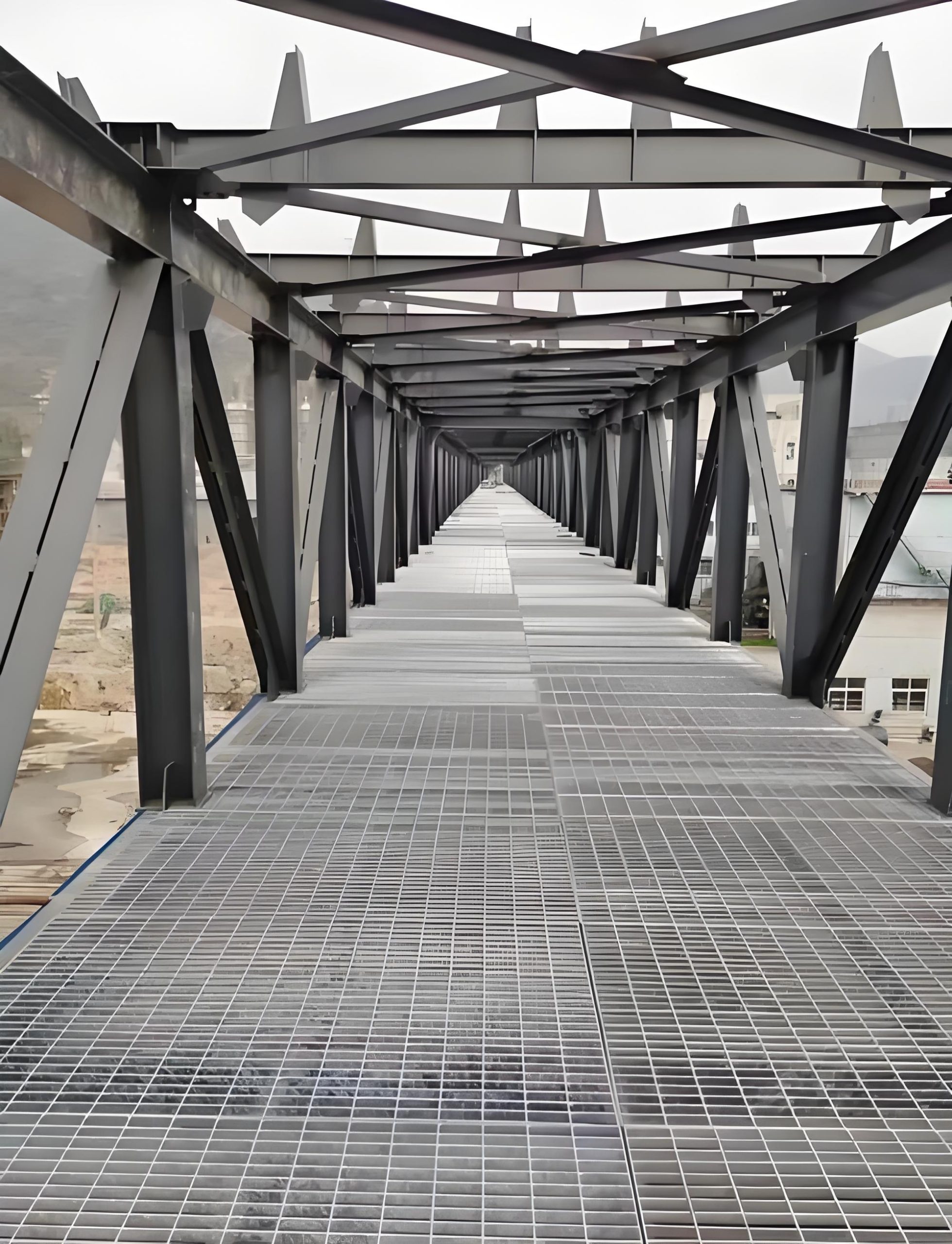
Roadway covers require a traffic load model, impact factor, frame design, and pavement or concrete support review. Heavy-duty riveted grating has traditionally been used in some bridge and vehicle-floor applications, but welded or ductile iron systems may also be suitable depending on the project.
Ramps experience rolling loads, braking, vibration, and slip risk. Serrated bearing bars or an approved anti-slip surface may be needed, but the surface must remain usable for wheels and cleaning equipment.
Vehicle load tables may reference AASHTO or similar load models. The applicable model should be stated in the purchase specification because passenger vehicles, forklifts, trucks, and emergency vehicles impose different loads.
Heavy-duty grating can be struck by dropped equipment, pallet edges, vehicle tires, lifting tools, and maintenance components. Deeper and thicker bearing bars improve local resistance, but impact can still damage welds, rivets, banding, or support frames.
Platforms near rotating equipment, compressors, conveyors, crushers, pumps, and vehicle routes may experience repeated vibration. The panel, clips, supports, and surrounding structure should be reviewed as a complete system.
Repeated stress cycles can affect welded intersections, especially where stress concentrations, weld defects, corrosion, or impact damage are present. Heavy-duty welded grating should use appropriate welding quality controls and avoid unapproved field modifications.
Riveted grating is often considered for repeated rolling loads because the connecting-bar system provides lateral restraint and a mechanically connected structure. However, rivets can loosen, wear, corrode, or develop fatigue damage under severe service. Rivet heads and bearing-bar holes should be included in inspection plans.
A grating panel cannot compensate for a flexible or cracked support frame. Repeated wheel loads can damage concrete rebates, angle frames, welds, anchors, and adjacent beams. Heavy-load calculations should include the entire load path.
Plain grating is easier to clean and may provide smoother movement for carts and vehicles. It can be suitable for dry platforms and controlled industrial areas.
Serrated bearing bars improve traction in wet, oily, dusty, sloped, or outdoor locations. They are often used on ramps, industrial platforms, stairs, drainage areas, and vehicle-adjacent walkways.
For vehicle routes, the serration profile should not create excessive vibration, tire damage, or difficulty for wheels. The project should balance slip resistance with rolling comfort and cleaning.
Opening size should be checked for foot placement, small wheels, tools, fasteners, and dropped objects. Close mesh, secondary screens, toe plates, kick plates, or solid inserts may be required above occupied spaces.
Heavy-load grating must not slide, lift, rock, or rattle. Clips, bolts, welded stops, locating lugs, anti-lift devices, and frame seats should be selected according to traffic, vibration, wind, and maintenance access.
Platforms above lower levels may require guardrails, handrails, toe plates, gates, and protected openings. Guardrail posts should connect to the main structure or a properly designed reinforced support, not only to a light trim band.
Carbon steel is widely used for heavy-duty grating because it offers high strength, easy fabrication, and economical material cost. It is suitable for dry indoor platforms or projects with a separate paint or coating system.
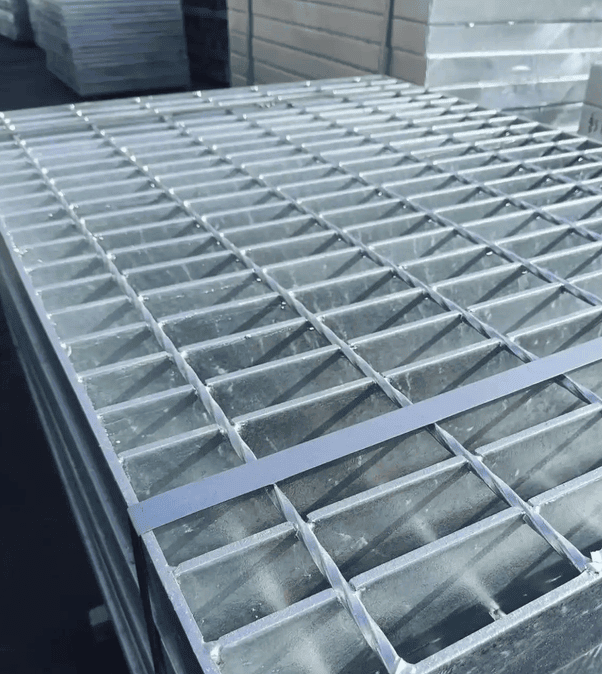
Galvanized steel is a common outdoor choice. It combines the structural characteristics of carbon steel with zinc protection after fabrication. It is suitable for many factories, warehouses, power plants, loading areas, and general industrial environments.
Galvanizing may be less suitable where acidic condensate, strong chemicals, saltwater, abrasive traffic, or continuous immersion rapidly consumes the coating.
304 stainless steel is suitable for many indoor wet, hygienic, and moderately corrosive areas. It may be selected for food, clean manufacturing, and architectural platforms.
316 and 316L provide improved resistance to chloride and many chemical environments compared with 304. They are commonly considered for marine, wastewater, coastal, chemical, and salt-containing applications.
| Material | Main advantage | Typical heavy-load application | Important limitation |
|---|---|---|---|
| Carbon steel | High strength and low material cost | Dry industrial floors, indoor platforms, temporary structures | Requires coating in wet or outdoor environments |
| Galvanized carbon steel | Good outdoor corrosion protection and strength | Factories, warehouses, power plants, exterior platforms | Zinc coating can deteriorate in aggressive exposure |
| 304 stainless steel | General corrosion resistance and clean appearance | Food plants, clean floors, moderate wet exposure | Less resistant to chloride than 316 |
| 316 or 316L stainless steel | Better chloride and chemical resistance | Marine, wastewater, chemical, and coastal platforms | Higher cost and not immune to severe corrosion |
Hot-dip galvanized welded or riveted grating can perform well in many outdoor industrial environments. Service life depends on humidity, salt, pollution, coating thickness, abrasion, drainage, and maintenance.
Salt spray and chloride deposits can consume zinc coatings and cause corrosion at damaged areas. 316 or 316L stainless steel may be preferred for marine platforms, but warm seawater, crevices, stagnant deposits, and continuous immersion can still attack stainless alloys.
Material selection should consider the exact chemical, concentration, temperature, splash, vapor, immersion, and cleaning conditions. Zinc coatings may be attacked by acids and strong alkalis. Stainless steel performance varies with alloy and process chemistry.
Wastewater facilities may expose grating to hydrogen sulfide, chlorides, treatment chemicals, moisture, deposits, and repeated wash-down. Galvanized steel may be suitable in selected zones, while 316 or 316L may be preferred in more aggressive areas.
Welds, rivets, bolt holes, clips, frames, and overlapping surfaces can corrode faster than exposed bars because they may retain moisture and contamination. The coating and inspection plan should include these details.
Welded panels should be checked for length, width, diagonals, squareness, flatness, bow, twist, bearing bar spacing, cross bar spacing, banding, cut-outs, and weld distortion. Large panels may require straightening after welding.
Riveted panels should be checked for bearing bar pitch, connecting-bar alignment, rivet pitch, rivet head condition, panel flatness, edge dimensions, and local looseness. Rivet construction depends on consistent mechanical engagement, so inaccurate assembly can affect load distribution.
Large panels reduce joints but increase lifting weight and handling risk. Smaller panels are easier to remove and replace but require more frame joints, clips, and alignment control.
Cut-outs for columns, pipes, conveyors, pumps, and equipment should be included in approved shop drawings. Cutting bearing bars in the field can change the intended structural behavior and should be reviewed by the responsible engineer.
| Inspection item | Welded grating | Riveted grating |
|---|---|---|
| Primary connection | Weld size, continuity, cracks, undercut, and fusion | Rivet diameter, head formation, pitch, looseness, and corrosion |
| Cross members | Alignment, spacing, and weld attachment | Formed geometry, engagement, lateral restraint, and deformation |
| Panel flatness | Welding distortion and straightening | Assembly distortion and rivet-forming effects |
| Edges | Banding welds, cut ends, and reinforcement | Banding, rivet termination, and formed-bar ends |
| Surface finish | Paint, galvanizing, stainless finish, or bare condition | Paint, galvanizing, stainless finish, or bare condition |
Power plant grating is used around boilers, turbines, condensers, pumps, pipe racks, ash systems, and maintenance platforms. The design may need to address heat, vibration, fire, chemicals, and heavy equipment loads. Welded heavy-duty grating is common, while riveted grating may be considered in repeated rolling or specialty access areas.
Factories use heavy grating for machine platforms, production lines, mezzanines, conveyors, maintenance routes, and loading zones. Welded grating is often easier to customize for irregular machine openings and service access.
Warehouses may require grating for mezzanines, loading platforms, elevated walkways, pallet access, and stairs. The designer should distinguish pedestrian loads from pallet trucks, forklifts, and stored material loads.
Chemical, food, paper, steel, and manufacturing plants may require corrosion-resistant finishes, serrated surfaces, drainage, hygiene, or special access covers. Stainless steel or galvanized steel can be selected according to the exposure.
Riveted grating is commonly associated with bridge decks, ramps, roadways, and repeated rolling-load applications. Welded heavy-duty grating can also be suitable where the load table, surface design, and support details are engineered for traffic.
| Application | Primary design concern | Typical construction choice |
|---|---|---|
| Heavy-duty platform | Uniform and concentrated loads, support span, deflection | Welded or riveted according to load and project standard |
| Forklift route | Wheel load, impact, braking, and frame stiffness | Heavy-duty welded or riveted design with verified load data |
| Bridge deck | Repeated rolling loads, fatigue, drainage, and traffic surface | Riveted or specialty heavy-duty grating |
| Ramp | Rolling loads, slip resistance, vibration, and slope | Heavy-duty welded or riveted grating with anti-slip surface |
| Trench cover | Wheel contact, clear opening, support frame, and removal | Heavy-duty welded or riveted cover with banding and frame |
| Equipment access cover | Concentrated equipment load and maintenance access | Custom welded panel or specialty riveted cover |
For vehicle or trench applications, the frame is as important as the panel. The support angle, concrete rebate, anchors, edge protection, and surrounding pavement must be capable of transferring the design load without crushing, cracking, or excessive movement.
Clips secure removable panels to support beams while allowing maintenance access. They should resist movement, vibration, uplift, and impact. The number and type of clips should be based on panel size and service conditions.
Bolted fixing provides positive restraint and is useful in vehicle areas, vibrating platforms, public spaces, and security-sensitive locations. The specification should define bolt grade, hole size, washer, nut, spacing, and tightening.
Welding provides a permanent connection but makes removal difficult. If galvanized grating is welded after coating, the damaged zinc area must be repaired. Stainless steel welds may require cleaning, pickling, and passivation.
The support structure may include beams, channels, angle frames, concrete rebates, embedded steel, or fabricated trench frames. It should provide adequate seating width, level contact, stiffness, and corrosion protection.
Riveted panels should be supported and restrained according to the manufacturer’s design. Drilling, welding, or cutting through connecting bars or rivet zones can affect the mechanical load path and should not be done without approval.
Field modifications should be minimized. Any required cut-out, notch, reinforcement, or new attachment should be reviewed for:
Heavy-duty grating should be cleaned so that dirt, oil, chemicals, grit, and debris do not block drainage or hide structural damage. Vehicle routes may require more frequent cleaning because compacted material can fill the openings and reduce slip resistance.
Small coating damage may be repairable, but a cracked weld, loose rivet, bent bearing bar, or damaged support frame may require replacement or engineering assessment. Riveted panels should not be repaired by welding over a loose rivet without understanding the original load path.
Service life depends on material, surface treatment, traffic, impact, vibration, corrosion, support conditions, drainage, maintenance, and quality of installation. Properly designed welded and riveted grating can both provide long service, but the most suitable system depends on the dominant risk in the application.
| Cost category | Welded grating | Riveted grating |
|---|---|---|
| Standard manufacturing | Usually economical and widely available | Often higher due to formed connecting bars and rivet operations |
| Heavy-duty capability | Many standard industrial sizes and load tables | Specialized configurations may carry high rolling loads |
| Custom fabrication | Flexible for cut-outs, banding, frames, and reinforcements | Possible but requires careful preservation of riveted geometry |
| Installation | Efficient for standard panels and repeated layouts | May require more detailed alignment and handling planning |
| Maintenance | Weld, coating, clip, and bearing-bar inspection | Rivet, connecting-bar, bearing-bar, and fatigue inspection |
| Replacement | Common patterns are generally easier to reproduce | Replacement should match the original rivet system and load design |
| Lifecycle value | Strong for general industrial heavy-duty flooring | Strong where repeated rolling loads and specialty durability justify the cost |
Welded grating is often the more economical choice for factories, warehouses, platforms, stairs, drainage covers, and general industrial floors. It offers efficient production and flexible custom fabrication.
Riveted grating may justify a higher initial cost when the project includes repeated rolling loads, bridge-type service, ramps, vehicle traffic, high impact, fatigue concerns, or a preference for a mechanically connected heavy-duty construction.
Identify whether the area will carry pedestrians, hand carts, pallet trucks, forklifts, passenger vehicles, trucks, cranes, equipment, or repeated rolling loads. Include wheel load, contact area, axle arrangement, impact, and braking where relevant.
Provide the exact unsupported span, support width, frame section, and bearing direction. Do not select a panel from its overall size alone.
Choose welded grating for broad industrial availability, efficient custom fabrication, and many standard heavy-duty configurations. Consider riveted grating for bridge, ramp, roadway, and specialty repeated-load applications where its specific design data provides an advantage.
Specify carbon steel, galvanized steel, 304, 316, 316L, or another approved material. Define galvanizing, paint, stainless finishing, corrosion allowance, and repair requirements.
Choose plain or serrated bars according to slip risk, wheel traffic, cleaning, slope, and environmental exposure. For vehicle areas, confirm that the serration profile is compatible with tire movement.
Specify support beams, concrete rebates, angle frames, clips, bolts, welds, locating stops, anti-lift devices, and access requirements. The support system should be designed with the same load model as the grating.
Provide layout drawings, panel schedules, bearing directions, load calculations, deflection checks, material certificates, weld or rivet inspection, finish reports, and installation instructions.
| RFQ category | Information to provide |
|---|---|
| Product | Heavy-duty welded or riveted grating |
| Application | Platform, ramp, bridge deck, trench cover, vehicle area, factory, warehouse, or power plant |
| Load | Uniform, concentrated, wheel, vehicle, impact, fatigue, and temporary construction load |
| Span | Clear span, support width, frame type, and bearing direction |
| Bearing bars | Height, thickness, spacing, profile, and material |
| Cross system | Welded cross bars or riveted connecting bars, size, and spacing |
| Surface | Plain, serrated, anti-slip, or special rolling surface |
| Corrosion protection | Untreated, painted, hot-dip galvanized, stainless, or specialty finish |
| Fabrication | Banding, cut-outs, frames, toe plates, lifting points, and panel marks |
| Installation | Clips, bolts, welds, anchors, stops, and removable requirements |
| Inspection | Material, weld, rivet, dimension, flatness, coating, and load-test records |
| Delivery | Packing, lifting instructions, panel schedule, and replacement identification |
Heavy-duty grating should be specified with the applicable standard and edition. General bar-grating projects may reference ANSI/NAAMM MBG 531, while heavy-duty welded and riveted applications may reference ANSI/NAAMM MBG 532 or a project-specific structural standard. Other projects may use YB/T, BS, EN, ASTM, AASHTO, or local traffic and building requirements.
Load tables should identify the grating construction, bearing bar size, span, material, uniform load, concentrated load, wheel load, and deflection. A riveted-grating load table should not be replaced by a welded-grating table because the connecting systems and load distribution assumptions differ.
Vehicle areas may use AASHTO H-15, H-20, H-25, HS-20, forklift, passenger-vehicle, or project-specific load models. The correct model depends on the expected traffic. Impact factors, wheel distribution, axle arrangement, and support conditions should be stated.
Material certificates should identify steel grade, heat number, mechanical properties, chemical composition where required, and traceability. Rivets should be certified to the specified material and diameter.
Welded grating documentation may include welding procedures, welder qualifications, equipment records, visual inspection, dimensional inspection, and repair records. Acceptance criteria should be stated before production.
Riveted grating documentation should include rivet material, diameter, pitch, head formation, connection inspection, bar alignment, and any load or fatigue testing required by the project.
Custom covers, vehicle decks, unusual spans, and replacement panels may require a load test or engineering verification. The test should reproduce the design contact area, support condition, load magnitude, and allowable deflection as closely as possible.
For product comparisons and heavy-duty specification guidance, buyers can review the CSSP Grating steel grating product range and the related steel grating load and size guide.
Is riveted grating stronger than welded grating for heavy loads? Riveted grating is not automatically stronger than welded grating. Riveted designs are often selected for repeated rolling loads, bridge decks, ramps, and vehicle areas because their formed connecting bars and riveted construction can provide useful lateral stability and load distribution. Welded grating can also carry very heavy loads when the bearing bar size, span, welds, support frame, and load calculation are correctly designed. The two systems should be compared using the correct load tables and project conditions.
Which grating is better for forklift and vehicle traffic? Both welded and riveted grating can be designed for forklift or vehicle traffic, but the correct choice requires wheel-load calculations. Riveted grating may be preferred for repeated rolling or bridge-type service, while heavy-duty welded grating may be more economical and easier to customize for industrial platforms and trench covers. The design must include wheel contact area, axle load, impact, frame stiffness, support span, surface traction, and allowable deflection.
What information is needed to order heavy-duty welded or riveted grating? Provide the clear span, support width, bearing bar direction, uniform and concentrated loads, wheel or vehicle load, impact factor, traffic frequency, bearing bar dimensions, cross-member or rivet design, material, surface, corrosion protection, panel size, frames, fixing method, cut-outs, and required inspection documents. Engineering drawings and a panel schedule are strongly recommended for heavy-duty platforms, vehicle areas, ramps, and trench covers.
