

Stainless steel grating for sale is available as stock panels, cut-to-size flooring, custom drain covers, stair treads, platforms, walkways, and complete project packages. The most common grades are 304 and 316 stainless steel. Grade 304 is widely used for general wet service, food processing, indoor washdown, and clean industrial areas. Grade 316 or 316L is normally considered when chloride exposure, saltwater, coastal air, brine, aggressive washdown, or localized corrosion risk is more serious. Factory pricing commonly falls around US$80–180/m² for many 304 stainless steel grating configurations and about US$110–260/m² for 316, although heavier bars, close mesh, electropolishing, custom fabrication, certificates, and small quantities can increase the price significantly.
Stainless steel grating can be purchased as standard stock panels or manufactured to a project drawing. Stock products are useful when the buyer needs common bar sizes, regular mesh, and standard panel dimensions. Custom factory supply is more suitable when the grating must fit around pipes, columns, equipment, drains, frames, stair stringers, or cleanroom floor layouts.
| Supply Option | Main Features | Best Use |
|---|---|---|
| Stock stainless grating panel | Regular panel dimensions, common mesh, standard bar sizes | Replacement panels, simple walkways, standard platforms |
| Cut-to-size panel | Stock or raw panel cut to the required finished width and length | Rectangular floor layouts and basic drain covers |
| Custom fabricated grating | Cutouts, banding, frames, clips, toe plates, lifting handles, special edges | Food plants, chemical facilities, machinery areas, complex platforms |
| Stainless stair tread | End plates, nosing, bolt holes, serrated or plain surface | Industrial, marine, architectural, and washdown stairs |
| Project package | Drawing-based fabrication, panel marks, item schedule, inspection documents | Large plants, cleanrooms, mezzanines, process platforms |
Stock grating can shorten delivery time when the required specification is already produced by the factory. Common stock products may include 304 or 316 welded panels, press-locked panels, swaged grating, and standard stair treads.
Stock availability should be confirmed for the exact grade, bearing bar size, mesh, surface, and panel dimensions. A stainless steel panel that is available immediately may have a different opening pattern or load capacity from the product required for the project.
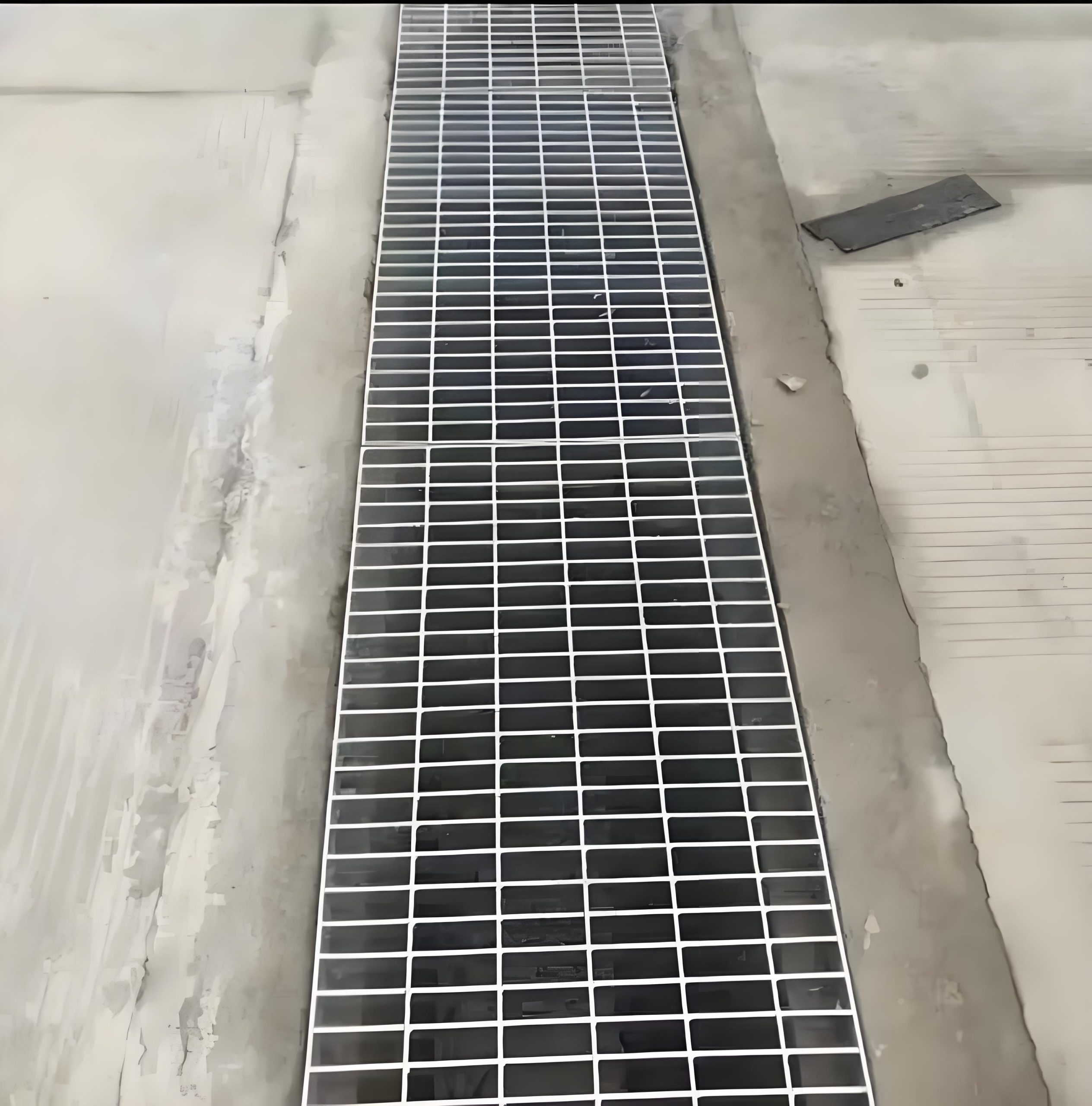
Custom stainless grating is produced to suit the support structure and operating conditions. It can include pipe openings, drain outlets, equipment penetrations, removable access panels, custom frames, banded edges, stair nosing, and special surface finishes.
Custom fabrication is particularly valuable in food, pharmaceutical, chemical, and cleanroom areas because field cutting can create burrs, contamination, rough edges, and unpassivated surfaces. Factory fabrication allows the edges and welds to be finished and treated before shipment.
304 and 316 are both austenitic stainless steel grades, but 316 contains molybdenum, which generally improves resistance to localized corrosion in chloride-bearing environments. The correct grade depends on exposure, cleaning chemicals, temperature, deposits, moisture, and the required service life.
| Condition | 304 Stainless Steel | 316 Stainless Steel |
|---|---|---|
| Dry indoor industrial area | Usually more than adequate | Often unnecessary unless specified for consistency |
| General wet or washdown area | Common choice when chlorides are limited | Preferred when cleaning chemicals or salt contamination are present |
| Food processing | Widely used for many general food applications | Selected for more aggressive washdown or chloride exposure |
| Coastal or marine environment | May be vulnerable to localized chloride corrosion | Usually preferred for improved chloride resistance |
| Saltwater or brine | Often not the first choice | Better option, subject to detailed compatibility review |
| Strong acid or chemical service | Must be checked for the actual chemical | May perform better for some conditions, but is not universally acid resistant |
304 stainless steel grating is commonly selected for indoor wet areas, general food-processing floors, commercial washdown areas, beverage plants, clean industrial rooms, architectural flooring, and locations where chloride exposure is low or controlled.
It often provides a good balance of corrosion resistance and cost. When the environment is mainly moisture without salt, brine, or aggressive chloride cleaners, 304 may provide sufficient performance without the additional cost of 316.
316 or 316L stainless steel is commonly considered for marine platforms, coastal facilities, saltwater service, brine systems, chloride-rich washdown, chemical plants, and outdoor areas where salt spray or deposits may remain on the grating.
316 is not corrosion proof. Stagnant water, crevices, deposits, high temperatures, poor drainage, and incompatible chemicals can still cause corrosion. The material should be reviewed against the actual chemical concentration, temperature, exposure time, and cleaning process.
For a more detailed grade comparison, see our 304 and 316 stainless steel bar grating guide.
Low-carbon versions such as 304L and 316L may be selected when welding procedures, post-weld corrosion resistance, or project material standards require them. The “L” designation can be important for welded assemblies, but the final grade should be specified according to the project’s material and fabrication requirements.
Stainless steel grating is manufactured in several construction types. Each method has a different appearance, load behavior, fabrication process, and typical application.
| Construction Type | How It Is Made | Typical Application |
|---|---|---|
| Welded stainless grating | Cross bars are welded to bearing bars at each intersection | Industrial platforms, floors, walkways, drains, stair treads |
| Press-locked stainless grating | Cross bars are pressed into notched bearing bars | Architectural floors, entrances, ventilation, public areas |
| Swaged stainless grating | Tubular or formed cross bars are mechanically locked into punched bearing bars | Close mesh, architectural, marine, and corrosion-resistant floors |
| Riveted stainless grating | Mechanical rivets connect bearing bars and formed cross members | Specialty heavy-duty, bridge, ramp, and repeated-load projects |
Welded stainless steel grating is the most common choice for industrial flooring. It provides a rigid panel and can be fabricated with plain or serrated bearing bars, different mesh patterns, banded edges, frames, and custom openings.
Welded stainless grating is often selected for food plants, pharmaceutical facilities, wastewater areas, chemical processing, marine platforms, and indoor or outdoor service where the grade and surface finish are properly specified.
Press-locked grating has a clean, aligned grid appearance because the cross bars are mechanically pressed into slotted bearing bars. It is commonly selected for architectural flooring, public walkways, entrance panels, ventilation screens, and areas where the visual quality of the intersections matters.
Press-locked grating should be checked using the correct press-locked load table. It should not automatically be assigned the same capacity as a welded panel with similar nominal bar dimensions.
Swaged grating uses mechanically locked cross bars and is available in rectangular-bar or I-bar configurations. It can provide a clean appearance and is useful for close-mesh applications, lightweight designs, and projects where welding is limited or a mechanically locked structure is preferred.
Riveted stainless grating is less common than welded or press-locked products, but it may be available for specialty high-load, bridge, ramp, and repeated rolling-load applications. The load capacity depends on the rivet system, bearing bar profile, cross-member design, and support condition.
Bearing bars are the primary load-carrying members in stainless steel grating. Their depth, thickness, spacing, and direction determine most of the panel’s load capacity, stiffness, weight, and price.
| Common Bearing Bar Size | Typical Use | General Duty Level |
|---|---|---|
| 25×3 mm | Short-span walkways, light platforms, small drain covers | Light duty |
| 25×5 mm | Medium walkways, washdown areas, access panels | Light to medium duty |
| 30×3 mm | General industrial floors and platforms | Medium duty |
| 30×5 mm | Heavier platforms, stair treads, longer spans | Medium to heavy duty |
| 32×5 mm | Heavy industrial flooring and equipment areas | Heavy duty |
| 40×5 mm and above | Longer spans, heavy covers, traffic-related service | Heavy-duty service |
Typical stainless steel grating patterns include 30×100 mm, 30×50 mm, 40×100 mm, and inch-based patterns such as 19W4, 15W4, and 11W4. The first metric number normally identifies bearing bar spacing, while the second identifies cross-bar spacing.
| Mesh Pattern | Open Area Tendency | Typical Selection |
|---|---|---|
| 30×100 mm | High open area | Industrial floors, walkways, platforms, process areas |
| 30×50 mm | Moderately high open area | Denser floor patterns and selected equipment areas |
| 40×100 mm | More open and lighter | Drainage and ventilation where larger openings are acceptable |
| Close mesh | Lower open area | Small wheels, high heels, public areas, object-retention needs |
| 11W4 or similar close mesh | Smaller bearing bar opening | Accessibility-focused routes and small-wheel applications |
Closer bearing bar spacing uses more stainless steel per square meter and normally increases the price. It can improve support for small wheels, reduce opening size, and improve pedestrian comfort, but it may reduce drainage and retain more debris than a more open mesh.
For general terminology on bar size, mesh, open area, and panel dimensions, see our steel grating dimensions guide.
Stainless steel grating can be supplied with plain or serrated bearing bars. The correct surface depends on slip risk, hygiene, cleaning method, slope, and the presence of water, oil, grease, or process residue.
| Surface | Advantages | Typical Application | Considerations |
|---|---|---|---|
| Plain bearing bars | Smooth surface, easier cleaning, lower fabrication cost | Cleanrooms, dry floors, equipment platforms, controlled interiors | Less traction when wet or contaminated |
| Serrated bearing bars | Improved traction in wet, oily, icy, or sloped areas | Outdoor platforms, stairs, ramps, wastewater and marine areas | Teeth may retain residue and require careful cleaning |
Plain stainless grating is often preferred where the surface must be easy to wash, inspect, and keep free of product residue. It is commonly considered for cleanrooms, food-processing floors, pharmaceutical areas, equipment platforms, and controlled interior service.
Plain grating is not automatically hygienic. Weld finish, surface roughness, drainage, crevices, panel joints, support details, and cleaning chemicals all affect the final hygienic design.
Serrated stainless grating provides better traction where water, oil, brine, mud, snow, or process liquid may be present. It is commonly used on marine platforms, outdoor stairs, ramps, washdown floors, chemical access routes, and wastewater structures.
Serrations can make cleaning more difficult if thick product residue or sticky deposits collect in the teeth. The surface should be selected according to both slip risk and the cleaning tools and procedures used at the facility.
For an anti-slip stainless option, see our serrated stainless steel grating product page.
304 stainless steel grating is widely used in food and beverage facilities where regular washdown and general moisture are present. 316 stainless steel may be considered where chloride cleaners, salt, brine, or aggressive wet processing create a higher localized-corrosion risk.
Food-area grating should have suitable weld finishing, smooth transitions, adequate drainage, minimal crevices, and a surface that can be cleaned effectively. Material grade alone does not make a floor compliant with a hygiene standard.
Chemical service requires careful review of the actual chemical, concentration, temperature, exposure period, ventilation, deposits, and cleaning solution. 316 may outperform 304 in some chloride-bearing environments, but neither grade is universally resistant to every acid or chemical.
For severe chemical exposure, the project may need a chemical compatibility review, alternative stainless grade, nickel alloy, coated steel, or FRP grating. The grating supplier should receive the chemical information before recommending a material.
Marine and coastal environments contain salt spray, chlorides, moisture, and deposits that can cause localized corrosion. 316 or 316L is commonly considered for exposed marine platforms, docks, offshore access, seawater facilities, and coastal walkways.
Good drainage, regular freshwater washing, avoidance of crevices, correct fastener material, and suitable support details remain important even when 316 is used.
Stainless steel grating can be used in cleanrooms, pharmaceutical facilities, laboratories, and controlled production areas where corrosion resistance and cleanability are important. Plain bars and smooth, passivated surfaces are often preferred over aggressive serrations where contamination control is the main concern.
Cleanroom suitability depends on the complete floor system, including surface finish, weld quality, panel joints, support frames, drainage, cleaning process, particle control, and applicable facility standards. A stainless material certificate alone does not establish cleanroom compliance.
Stainless steel forms a passive chromium-rich surface film that helps protect the underlying metal. This passive layer can be damaged or locally penetrated by chlorides, deposits, crevices, strong chemicals, high temperatures, or poor surface treatment.
| Exposure | Potential Risk | Selection Consideration |
|---|---|---|
| Freshwater and ordinary moisture | Usually manageable with suitable stainless grade and drainage | 304 is often considered for moderate indoor service |
| Salt spray and chlorides | Pitting and crevice corrosion risk | 316 is often preferred, with drainage and cleaning controls |
| Brine or seawater | High localized-corrosion risk | 316 may be considered, but detailed compatibility review is needed |
| Acidic chemicals | Attack depends on acid type, concentration, temperature, and time | Never select only by the statement “stainless is acid resistant” |
| High humidity with deposits | Crevice corrosion beneath residue or at joints | Use suitable finish, open drainage, regular cleaning, and appropriate grade |
Chlorides can cause pitting and crevice corrosion, especially when salt deposits remain wet and oxygen access is limited. 316 generally offers better resistance than 304 because of its molybdenum content, but drainage, cleaning, and joint design remain important.
Acid resistance depends on the specific acid, concentration, temperature, exposure time, aeration, impurities, and surface condition. Some acids may be tolerated at low concentrations but become highly aggressive at higher temperatures or concentrations.
A chemical compatibility review should be completed before the final grade is selected. The supplier should be told the chemical name, concentration, operating temperature, cleaning agent, and expected exposure pattern.
In high-moisture areas, stainless grating should be detailed to avoid standing water, narrow crevices, trapped debris, and poor ventilation under the panels. A suitable grade can still corrode prematurely if the installation allows deposits to remain against the steel.
Surface treatment changes the appearance, cleanability, corrosion performance, and price of stainless steel grating. The desired finish should be stated before production because some treatments are more effective when applied after welding and fabrication.
| Surface Finish | Main Purpose | Typical Use |
|---|---|---|
| Mill or as-fabricated finish | Basic stainless surface with normal manufacturing marks | General industrial floors and non-decorative service |
| Pickled finish | Removes heat tint, scale, and fabrication contamination | Welded assemblies requiring improved corrosion performance |
| Passivated finish | Supports restoration of the passive stainless surface | Food, pharmaceutical, chemical, and controlled wet service |
| Mechanically polished finish | Improves appearance and surface smoothness | Architectural, visible, and selected hygiene-sensitive areas |
| Electropolished finish | Creates a smoother, brighter, easier-to-clean surface | Food, pharmaceutical, laboratory, medical, and high-cleanability areas |
Mill finish is the most economical stainless surface option. It is suitable for ordinary industrial service where appearance is not the primary concern. Weld discoloration, cutting marks, and handling marks may remain visible.
Pickling removes heat tint, oxide scale, and some fabrication contamination from stainless steel surfaces. It can improve the corrosion performance of welded areas when correctly performed and rinsed.
Passivation helps restore the protective passive surface after fabrication and cleaning. It is commonly requested for food, pharmaceutical, chemical, and controlled wet environments. Passivation does not remove heavy scale or replace proper weld cleaning; the surface must be prepared correctly before treatment.
Mechanical polishing can improve appearance and reduce surface roughness. The required finish should be specified by roughness, visual grade, or project standard where necessary. A polished surface may show scratches more easily and may require additional handling protection.
Electropolishing removes a controlled amount of metal from the surface and can produce a smoother, brighter finish with improved cleanability. It is often considered for pharmaceutical, medical, laboratory, food, and high-hygiene applications.
Electropolishing can increase the price considerably, especially for large welded panels with many bars, edges, and internal surfaces. The quote should state whether the treatment includes the complete panel, cut edges, weld zones, frames, and accessories.
Stainless steel grating stock sizes vary by manufacturer, construction method, bar pitch, material grade, and production equipment. Common raw panel widths are close to 1,000 mm, while lengths may be 3,000 mm, 6,000 mm, or another factory standard.
| Typical Panel Format | Common Use | Important Detail |
|---|---|---|
| 600×1,000 mm | Small access panels, drains, narrow walkways | Suitable for manual handling when panel weight is controlled |
| 800×1,000 mm | Modular platforms and maintenance routes | Confirm support grid and clear span |
| 1,000×1,000 mm | General modular industrial flooring | Easy to coordinate with regular support structures |
| 1,000×2,000 mm | Removable floor panels and larger access covers | Check lifting weight and frame clearance |
| Approximately 1,000×6,000 mm | Raw stock panel for factory cutting | Actual width can vary with mesh pitch and edge arrangement |
Some factories supply panels close to 995 mm, 1,000 mm, or 1,005 mm wide depending on bearing bar spacing and the number of bars used. The finished dimensions should be confirmed on the approved drawing rather than assumed from a nominal stock size.
Custom stainless steel fabrication is common because the grating must often fit around equipment, drains, pipes, columns, walls, or stair structures.
Custom openings can be made for pipes, columns, valves, cable trays, floor drains, equipment feet, handrail posts, and inspection access. The factory needs the opening size, location, clearance, reference dimensions, and whether the panel must be removed without disturbing the penetrating equipment.
Cutouts that interrupt multiple bearing bars may require banding or reinforcement. In food and cleanroom areas, the cutout edge should also be free of burrs, sharp points, trapped scale, and unpassivated contamination.
Banding closes the open ends of bearing bars and creates a finished edge around panels and openings. It is especially useful for removable covers, drain grates, stair treads, and panels exposed to frequent handling.
Stainless banding should normally be made from compatible stainless material. The banding size, weld method, surface finish, and post-weld treatment should match the project’s corrosion and hygiene requirements.
Stainless steel frames are used for trench drains, removable access panels, equipment openings, and cleanroom floor sections. The frame must provide sufficient bearing width and stiffness for the required load.
Drain covers should be designed with adequate open area, correct bar direction, removable access, cleaning space, and a surface suitable for the surrounding hygiene and slip requirements.
Stainless stair treads can be supplied with plain or serrated bars, end plates, nosing, bolt holes, custom width, and custom depth. 304 is often used for indoor wet or food-related stairs, while 316 may be selected for marine or chloride-exposed access systems.
The tread drawing should show stringer spacing, bearing direction, nosing projection, end plate dimensions, bolt-hole centers, and required surface finish.
Stainless steel grating must be selected by clear span, bearing bar size, load type, support condition, and allowable deflection. Stainless steel grade affects corrosion performance, but it does not automatically determine the panel’s load capacity.
Bearing bars must run from one support to the next. In a panel supported by two parallel beams, the bearing bars should cross between the beams. Turning the panel so that the bars run parallel to the support beams can significantly reduce capacity.
Clear span is the unsupported distance between supports under the bearing bars. It is not necessarily the overall panel length. A long panel with several support beams may have a short clear span, while a small panel over a wide opening may have a demanding span.
| Load Type | Example | Design Information |
|---|---|---|
| Uniform load | Personnel, general maintenance, stored materials | Required kN/m², psf, clear span, deflection limit |
| Concentrated load | Equipment foot, jack, ladder, cart, pump skid | Load value, contact size, position, duration |
| Wheel load | Forklift, pallet truck, trolley, service vehicle | Wheel load, tire size, axle layout, impact, frame design |
Stainless grating requires stable bearing on the support ledge or frame. Narrow supports can cause rocking, edge deformation, poor load transfer, and installation problems. For removable drain covers and access panels, the frame should be checked for stiffness as well as the grating itself.
The grating panel, support angle, channel body, concrete surround, clips, bolts, and adjacent structure should be designed as one system where heavy or traffic loads are involved.
Open-grid stainless grating allows water, air, light, and debris to pass through the floor. This is useful for washdown areas, process platforms, drainage channels, cooling areas, and industrial access routes.
Open area depends mainly on bearing bar pitch, bearing bar thickness, cross-bar profile, and cross-bar spacing. Closer mesh reduces the opening and increases steel weight, while wider mesh provides more drainage and lower material consumption.
| Mesh Type | Drainage | Small-Object Retention | Typical Hygiene Consideration |
|---|---|---|---|
| Open industrial mesh | Very good | Lower | Easier to flush but may allow small items to fall through |
| Medium mesh | Good | Moderate | Balanced option for many process floors |
| Close mesh | Lower than open mesh | Higher | Smaller openings but potentially more residue retention |
| Serrated mesh | Depends on opening pattern | Depends on opening pattern | Improves traction but teeth may require more detailed cleaning |
Stainless steel does not automatically create a hygienic floor. Hygienic performance depends on surface roughness, weld finish, panel joints, support details, drainage, cleaning chemicals, cleaning frequency, and the absence of difficult-to-clean crevices.
Plain, pickled, passivated, or electropolished surfaces may be preferred for food, pharmaceutical, laboratory, and cleanroom applications. Serrated surfaces can be useful for traction, but they may retain product residue more easily than smooth bars.
Good drainage prevents standing water and helps reduce slip and corrosion risks. The support frame should not block the grating openings, and the surrounding floor should direct liquid toward the drain. Removable panels should allow the channel and underside to be cleaned.
Quality control is important because stainless steel grating is often used in corrosive, hygienic, or high-value environments. The supplier should be able to confirm the material grade, fabrication quality, dimensions, finish, and inspection scope.
Material certificates can confirm the stainless grade, heat number, chemical composition, and mechanical properties of the raw material. Traceability is particularly important for pharmaceutical, food, chemical, marine, and critical infrastructure projects.
The purchase specification should state whether certificates are required for bearing bars, cross bars, banding, frames, fasteners, or all stainless components.
Welded stainless grating should have secure intersections, consistent weld appearance, and properly finished edge banding, frames, toe plates, and stair tread attachments. Weld discoloration and heat tint should be treated according to the required surface finish.
Inspection may include visual checks for burrs, sharp edges, weld spatter, heat tint, contamination, scratches, discoloration, and passivation quality. Electropolished or polished products may require additional appearance and roughness criteria.
Panel length, width, bearing-bar direction, mesh spacing, cutout positions, bolt-hole locations, frame dimensions, stair tread size, and flatness should be checked against the approved drawing.
Dimensional accuracy is especially important for removable drain covers, cleanroom floors, framed panels, stair systems, and large areas where small errors can accumulate across several panels.
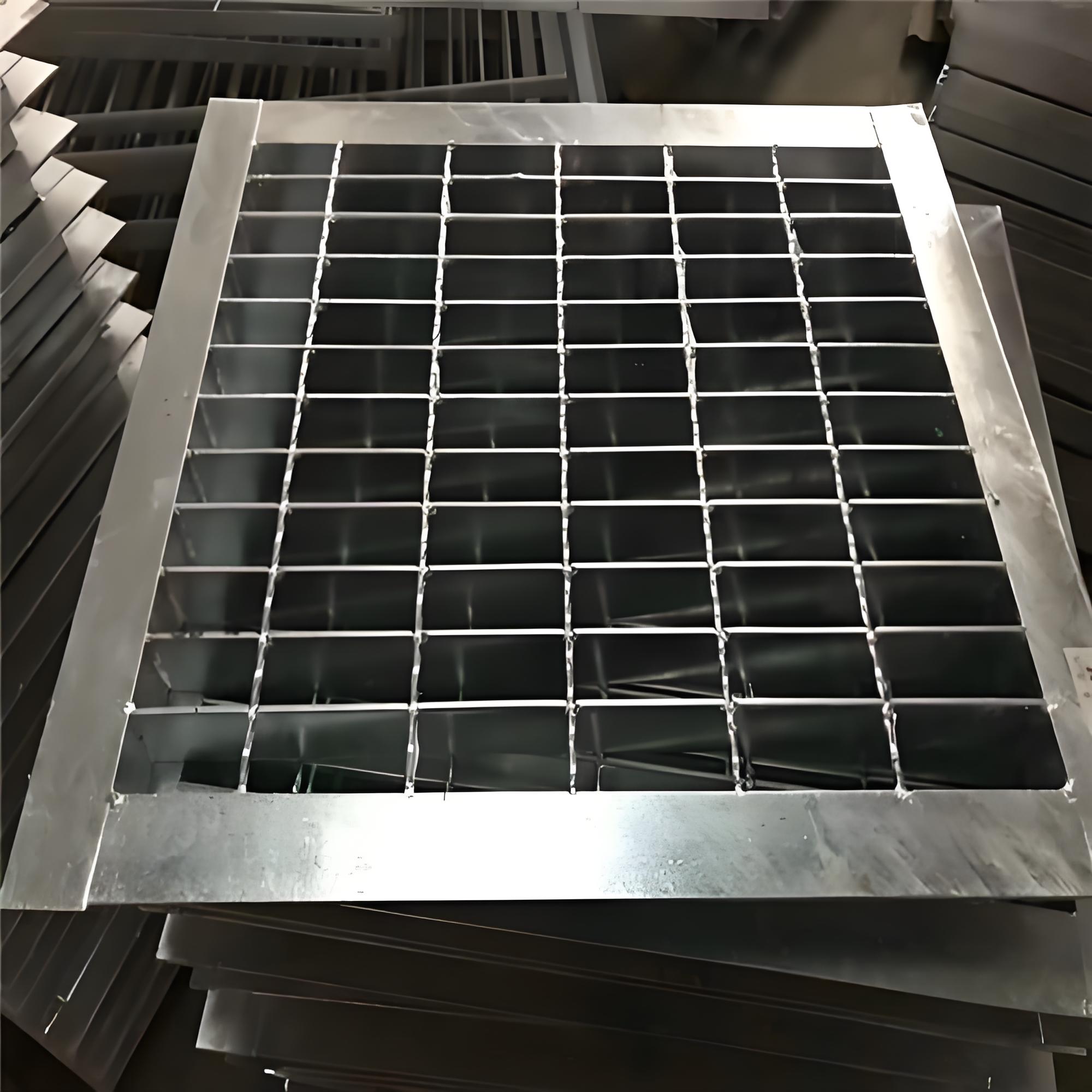
Stock stainless grating can often be supplied faster than custom panels, but the exact grade, mesh, surface, and panel dimensions must be available. Custom products require time for drawing review, material preparation, cutting, welding, finishing, inspection, and packing.
| Order Type | Lead-Time Tendency | Main Influencing Factors |
|---|---|---|
| Stock panel | Shortest when available | Actual inventory, grade, mesh, finish, and quantity |
| Cut-to-size panel | Short to medium | Cutting, banding, inspection, and packing requirements |
| Custom welded panel | Medium | Drawing approval, material sourcing, fabrication, surface treatment |
| Electropolished project package | Longer | Custom fabrication, finishing, inspection, cleaning, and documentation |
| Large multi-panel order | Project dependent | Material availability, production capacity, certification, shipping plan |
A complete drawing and process description help the factory select the correct grade, surface finish, mesh, bar size, fabrication method, and inspection scope. This is especially important when stainless grating will be used in chemical, marine, food, pharmaceutical, cleanroom, or high-moisture environments.
Should I choose 304 or 316 stainless steel grating?
304 is commonly selected for general indoor wet service, food processing, washdown areas, and environments with limited chloride exposure. 316 is usually considered for coastal, marine, saltwater, brine, chloride-rich, or more aggressive chemical conditions. The final grade should be checked against the actual chemical concentration, temperature, deposits, cleaning agents, and drainage conditions.
Can stainless steel grating be custom fabricated?
Yes. Stainless steel grating can be cut and fabricated with custom panel sizes, pipe and column cutouts, edge banding, frames, toe plates, stair treads, drain covers, bolt holes, clips, lifting handles, and special surface finishes. Factory fabrication is usually preferable for hygienic and corrosion-sensitive areas because edges and welds can be finished and treated before shipment.
How much does 304 and 316 stainless steel grating cost?
Many factory quotations for 304 stainless steel grating fall around US$80–180 per square meter, while 316 grating often falls around US$110–260 per square meter. Heavier bearing bars, close mesh, serrated surfaces, electropolishing, custom cutouts, frames, certificates, small quantities, and export packing can increase the final price.