

When purchasing galvanized steel grating, many buyers immediately ask for the price per square foot. However, those familiar with the industry know that the unit price is only the surface. The real determining factors include bearing bar size, mesh spacing, hot-dip galvanizing vs. electro-galvanizing, zinc coating thickness, raw material market trends, cutting and banding, and transportation distance—all of which can significantly affect the final landed cost. Below is a breakdown based on the most common cost components used in factory quotations, helping you with budgeting, price comparison, and evaluating whether a supplier’s quote is reasonable.
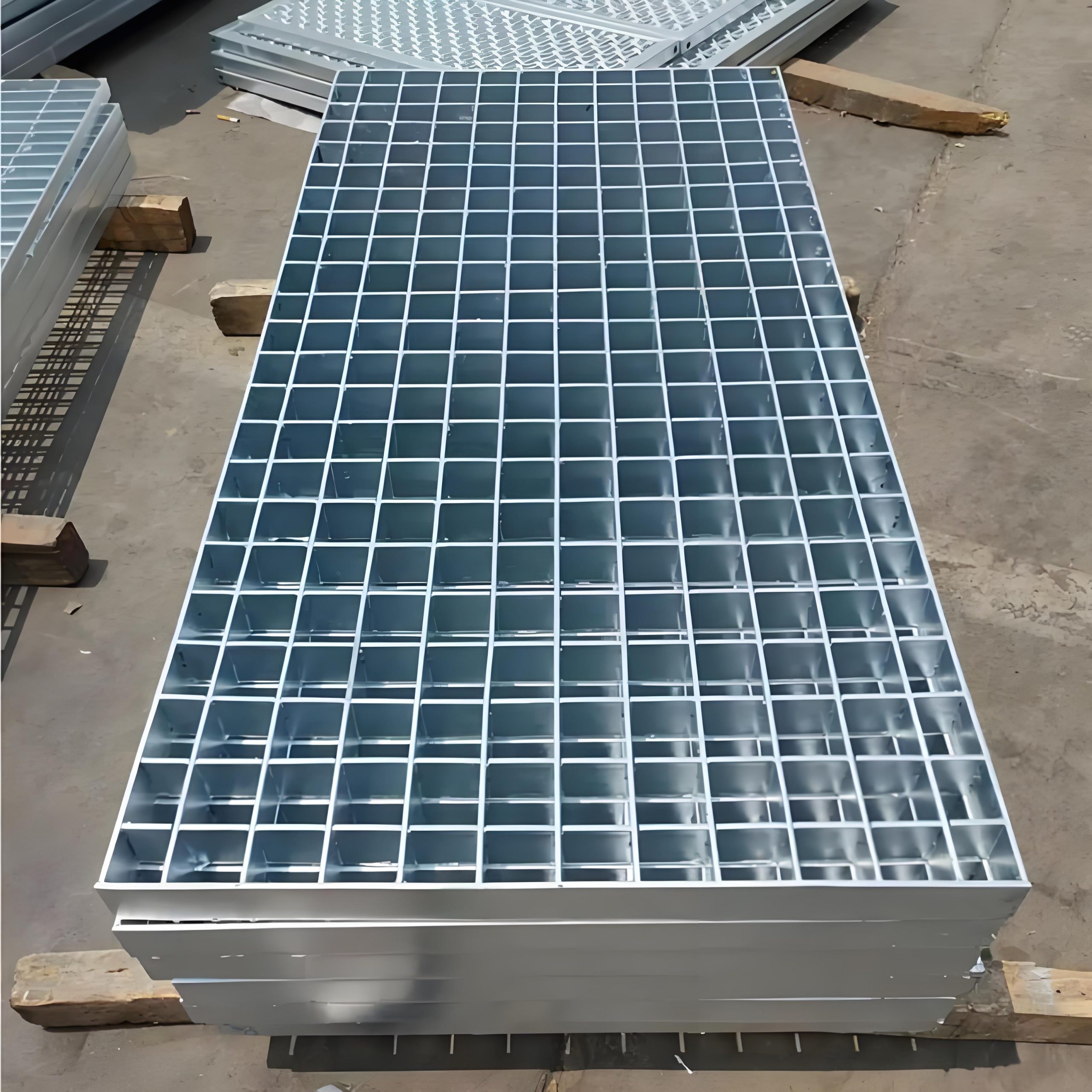
Based on typical market transactions, the reference price for standard carbon steel galvanized grating generally ranges from $3.5 to $12 per square foot. This wide range exists because “steel grating” is not a single standardized product—it is a customized item defined by bearing bar height, thickness, cross bar spacing, load requirements, and surface treatment.
For light-duty applications such as equipment platforms, walkways, drainage trench covers, and maintenance paths, common specifications like 25mm height and 3mm thickness with larger mesh openings usually fall between $3.5 and $5.5 per square foot.
For medium-duty applications such as factory walkways, stair treads, and general industrial flooring, pricing typically ranges from $5.5 to $8 per square foot.
For heavy-duty applications such as ports, heavy vehicle traffic areas, mining platforms, and main operation platforms in chemical plants, thicker and taller bearing bars are required. Prices in these cases commonly range from $8 to $12 per square foot, and may go even higher for extra-heavy or dense configurations.
Order quantity also has a direct impact on pricing. Small orders—ranging from tens to a few hundred square feet—often carry higher unit costs due to setup, material waste, sampling, packaging, and minimum production costs. In practice, small-batch orders are often 10% to 25% more expensive than bulk orders.
In contrast, bulk purchases such as full container loads or large project orders benefit from economies of scale. Standardized specifications and repeated sizes improve material utilization, stabilize welding processes, and allow for more efficient galvanizing, reducing unit costs by $0.5 to $1.5 per square foot compared to small orders.
The galvanizing process is one of the most direct price drivers. The two most common methods are hot-dip galvanizing and electro-galvanizing, which differ significantly in corrosion resistance, coating thickness, service life, and cost.
Hot-dip galvanizing is generally more expensive because it involves immersing the grating in molten zinc, forming a thicker protective layer. The process includes degreasing, pickling, fluxing, drying, galvanizing, and cooling. Typically, hot-dip galvanizing adds $0.8 to $2 per square foot compared to electro-galvanizing, depending on weight, coating requirements, and order size.
Electro-galvanizing is more suitable for indoor environments where appearance uniformity is important but corrosion resistance requirements are lower. However, for construction, platforms, trench covers, coastal projects, and chemical environments, hot-dip galvanizing is the preferred choice due to its superior long-term performance.
Zinc coating thickness standards also affect pricing. Higher coating requirements mean increased zinc consumption and stricter process control, typically adding $0.3 to $1 per square foot. Heavier grating products may see even higher increases.
A common mistake in procurement is asking only “Is it hot-dip galvanized?” without specifying coating standards. In reality, different coating thickness levels can result in significant differences in both price and durability.
The fundamental driver of steel grating cost is material consumption. Higher and thicker bearing bars increase both raw material usage and welding load, resulting in higher prices.
Mesh size is another key factor. Smaller openings require more bearing bars and cross bars per unit area, increasing material costs and production complexity. Common spacing such as 30/100, 40/100, and 30/50 can lead to significant cost differences in large projects.
From a manufacturing perspective, welded grating and press-locked grating also differ in cost. Welded grating is the most widely used due to its high production efficiency and lower cost, making it suitable for most industrial applications.
Press-locked grating, on the other hand, offers better aesthetics and structural uniformity, often used in architectural or decorative applications. Due to higher precision and processing requirements, it typically costs 15% to 35% more than welded grating.
When requesting quotations, it is essential to clearly define four key parameters: bearing bar height, thickness, cross bar specification, and mesh spacing. Without these, price comparisons are meaningless.
Steel grating is a raw material-driven product. Even if processing costs remain stable, fluctuations in carbon steel, flat bar, round bar, and zinc ingot prices directly affect final pricing.
Carbon steel market trends are the most critical factor. When steel prices rise, the cost of flat bars and other inputs follows, leading to higher quotations.
This price transmission may have a short delay but is inevitable. Suppliers often limit quotation validity to 3–7 days to hedge against material price volatility.
Zinc price fluctuations also significantly impact galvanizing costs. Rising zinc prices can increase total product cost by $0.2 to $0.8 per square foot, especially for heavier grating.
For budgeting, it is advisable to confirm pricing basis, fluctuation clauses, and validity periods with suppliers.
While base pricing is important, additional processing often determines the final cost. Standard panels are the most economical, while customized products with complex fabrication significantly increase costs.
Cutting is the most common additional cost. Straight cuts are relatively inexpensive, but angled, curved, or irregular cuts increase labor and material waste.
Banding (edge framing) typically adds 5% to 12% to the cost, as it involves alignment, welding, and structural reinforcement.
Openings for pipes, cables, and equipment also add cost, especially when reinforcement is required. Toe plate welding is another common cost factor in platform applications.
Depending on complexity, additional fabrication costs can increase total pricing by 10% to 30%.
Optional surface treatments such as passivation or oil coating can reduce white rust during transportation and storage. These typically add $0.05 to $0.3 per square foot.
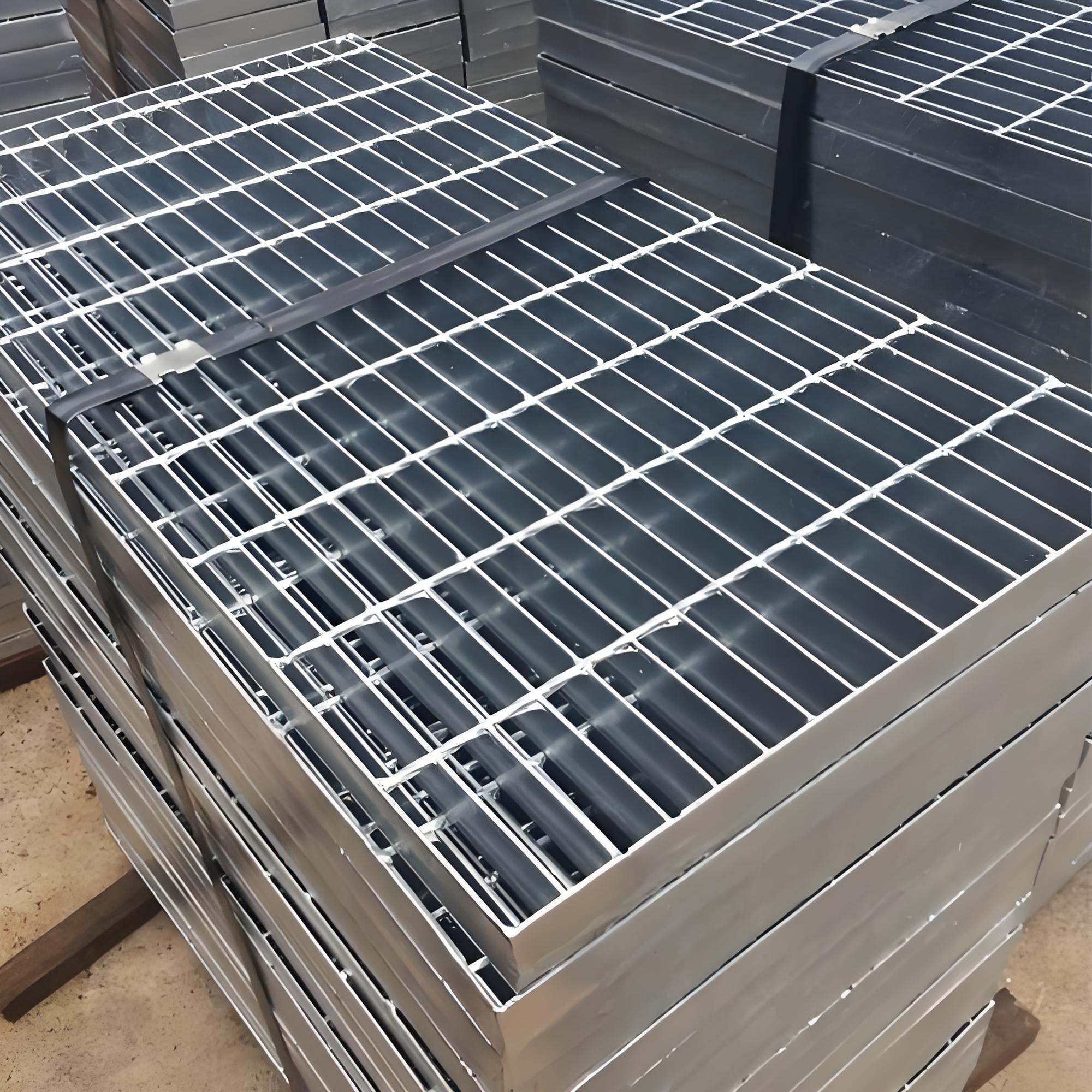
Steel grating is bulky and heavy, so logistics costs are significant. Freight is typically calculated based on weight, volume, and transportation distance.
Heavier grating increases freight cost per square foot. For large or heavy-duty projects, logistics can account for 8% to 20% of total cost.
Loading efficiency also matters. Standardized sizes allow for better packing and lower transportation costs, while irregular orders increase logistics expenses.
Regional supply differences also affect pricing. Local stock availability can reduce costs and lead times, while remote or cross-border sourcing increases both logistics costs and potential markups.
Compared to stainless steel grating, galvanized steel grating has a significantly lower initial cost—typically 35% to 65% lower for similar load requirements.
This difference is due to variations in stainless steel grades, thickness, and processing methods.
However, lifecycle cost should also include maintenance. Galvanized grating may require periodic inspection, repair, and recoating, especially in corrosive environments.
For general outdoor applications, maintenance costs are relatively low. However, in coastal or chemical environments, it is advisable to allocate 5% to 15% of initial cost for long-term maintenance.
A practical approach is to compare total lifecycle costs, including initial purchase, transportation, installation, repair, and maintenance.
What is a reasonable price per square foot for galvanized steel grating?
Typically, $3.5 to $12 per square foot is considered normal. Lower prices apply to light-duty, standardized, high-volume orders, while higher prices apply to heavy-duty, dense configurations with additional processing.
Are standard sizes available in stock?
Some standard sizes are available, but most projects requiring custom dimensions, load requirements, or special features are made to order.
What is the typical lead time?
Stock items can ship within a few days. Custom orders typically require 7–20 days, while large or complex orders may take 20–35 days, depending on production and galvanizing schedules.