
A light duty steel grating manufacturer supplies steel grating panels designed for low to medium load applications where buyers need safe walking surfaces, drainage, ventilation, corrosion protection, and reasonable cost control. Light duty steel grating is commonly used for pedestrian walkways, maintenance platforms, small trench covers, equipment access areas, stair treads, commercial flooring, rooftop access, and drainage zones where heavy vehicle or forklift loads are not required. For project buyers, choosing the right manufacturer means checking bearing bar size, cross bar spacing, load capacity, surface treatment, custom fabrication ability, welding quality, packing method, and whether the factory can help match the grating specification to the real working environment.
A light duty steel grating manufacturer focuses on producing grating panels for areas where the main requirement is pedestrian access, maintenance movement, drainage, ventilation, and safe working surfaces. These projects do not normally require the same heavy bearing bars used for forklift areas, road trench covers, or heavy-duty industrial floors.
For buyers, light duty does not mean weak or temporary. It means the grating is designed for the correct load level without unnecessary steel weight. A suitable light duty steel grating manufacturer should help buyers avoid both under-design and over-design. If the grating is too light, it may deflect or feel unsafe. If it is too heavy, the buyer pays more for steel, galvanizing, freight, and installation than the project actually needs.
Light duty steel grating is often used in projects where workers need access for inspection, operation, cleaning, or light maintenance. It may also be used for pedestrian drainage covers, small platforms, rooftop walkways, mezzanine access, commercial service areas, and utility zones. The manufacturer should confirm whether the grating will carry only people, people with tools, small carts, or occasional maintenance loads.
| Project Type | Common Load Condition | Manufacturer Selection Focus |
|---|---|---|
| Pedestrian walkway | Workers or pedestrians walking across the surface | Walking comfort, anti-slip surface, suitable opening size |
| Maintenance platform | Workers with light tools and equipment access | Bearing bar size, clear span, panel stability |
| Small drainage cover | Pedestrian load and water flow | Drainage opening, removable panel weight, edge banding |
| Rooftop access | Occasional foot traffic and weather exposure | Lightweight panel design and corrosion protection |
| Commercial service area | Low to medium foot traffic | Appearance, safety, surface finish, dimensional control |
Production capacity is an important factor when choosing a light duty steel grating manufacturer. Even though the product is lighter than heavy-duty grating, the factory still needs stable control over raw material size, bearing bar spacing, welding quality, panel flatness, edge banding, surface treatment, and packing.
The factory should prepare flat bearing bars, cross bars, banding bars, and accessories according to the required specification. Common light duty bearing bars may include 20 x 3 mm, 25 x 3 mm, 25 x 5 mm, 30 x 3 mm, or similar sizes depending on the clear span and load requirement.
Most light duty steel grating panels are welded. Cross bars are welded to bearing bars to form a stable open-grid panel. For light duty applications, welding still matters because poor welding can cause loose cross bars, uneven spacing, rattling, or unstable panels during installation.
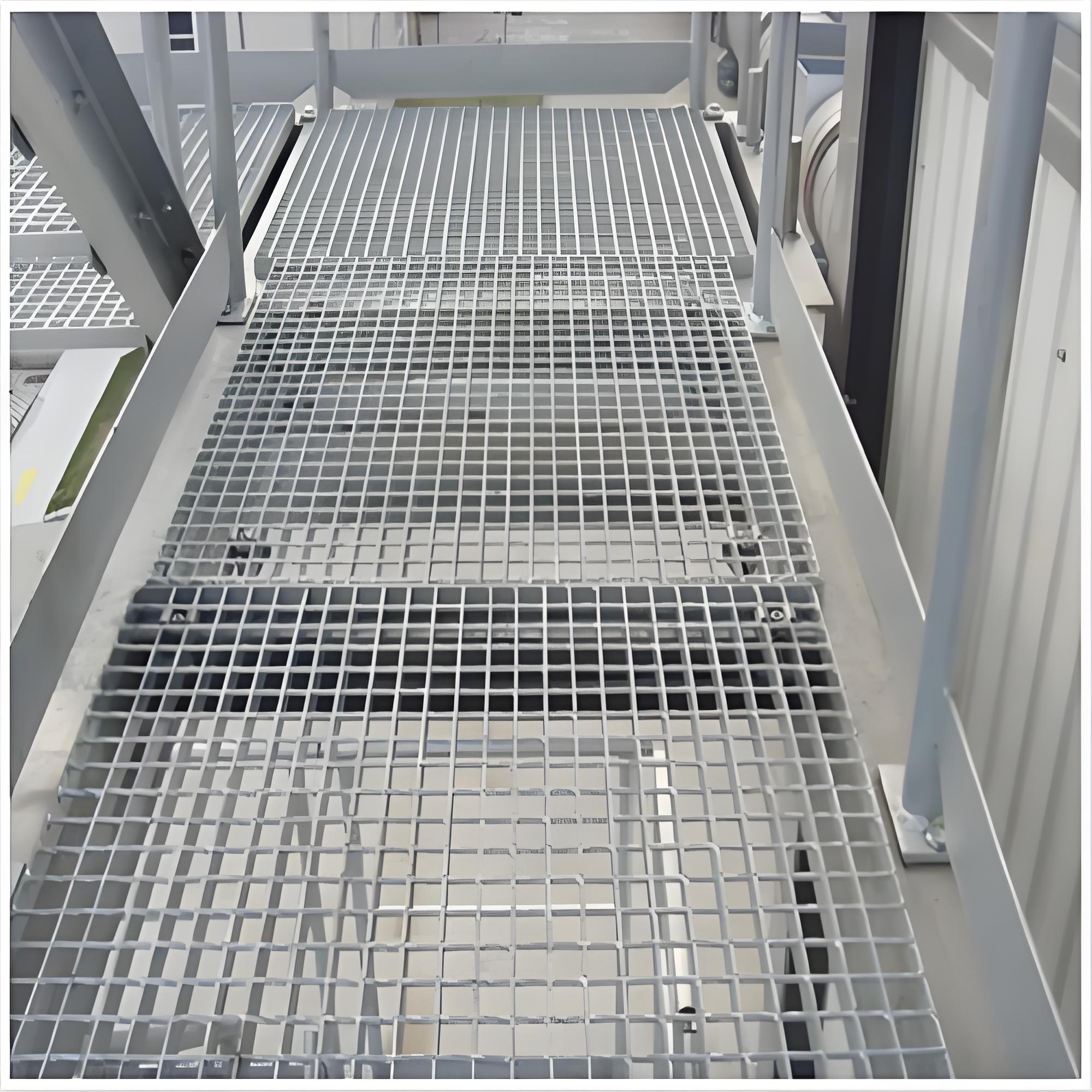
After welding, panels may be cut to standard or custom sizes. Edge banding can be added around the panel perimeter or around cut-outs. Banding improves handling safety and gives the panel a finished edge, especially for exposed walkways, drainage covers, and custom platform panels.
For outdoor or humid projects, light duty steel grating is often hot-dip galvanized after fabrication. A capable manufacturer should coordinate galvanizing properly and inspect the finished coating before packing.
| Production Item | Factory Control Point | Why It Matters |
|---|---|---|
| Bearing bar preparation | Correct height, thickness, straightness, and grade | Controls load capacity and panel appearance |
| Cross bar welding | Stable welding and consistent spacing | Improves grid strength and reduces looseness |
| Panel cutting | Accurate length, width, and squareness | Improves installation fit |
| Edge banding | Clean welded edges and safe handling | Useful for custom panels and exposed edges |
| Surface treatment | Hot-dip galvanizing, painting, or other finish | Improves corrosion resistance and service life |
Light duty steel grating is used in many low to medium load areas where drainage, air flow, visibility, and safe walking are required. It is not intended for heavy vehicle traffic unless the specification and support structure are specially designed.
Light duty steel grating is commonly used for pedestrian walkways in factories, warehouses, service areas, rooftop routes, water treatment plants, and outdoor access paths. The open grid allows rainwater, dust, and small debris to pass through, reducing surface accumulation.
Maintenance platforms around machines, tanks, pipes, valves, and service equipment often use light duty grating when the load is limited to workers and light tools. The panel should still be selected according to support span and expected maintenance activity.
For pedestrian drainage channels, light duty galvanized steel grating can be used as a removable or fixed cover. It allows water flow while supporting foot traffic. Panel weight should be controlled so maintenance workers can remove covers safely when cleaning is needed.
Light duty grating may also be used in commercial service zones, utility rooms, equipment access corridors, ventilation floors, and building maintenance areas. In visible areas, neat spacing, surface finish, and edge treatment may be more important.
| Application | Why Light Duty Steel Grating Is Used | Common Requirement |
|---|---|---|
| Walkways | Provides safe access with drainage and ventilation | Plain or serrated surface, suitable bar spacing |
| Maintenance platforms | Supports workers and light tools | Correct clear span and bearing bar direction |
| Drainage covers | Allows water flow and pedestrian load support | Removable design, edge banding, corrosion protection |
| Rooftop access | Creates light access paths above roofing or equipment | Moderate weight and weather-resistant finish |
| Commercial service areas | Combines walking safety and open-grid function | Clean appearance and dimensional accuracy |
A light duty steel grating manufacturer may supply different grating types according to application, surface requirement, installation method, and corrosion environment. The most common options include welded steel grating, galvanized steel grating, serrated grating, plain grating, stair tread grating, and drainage cover grating.
Welded light duty steel grating is a practical and economical option for many low to medium load projects. It is made by welding cross bars to bearing bars. It is widely used for walkways, platforms, trench covers, and service floors.
Hot-dip galvanized light duty grating is suitable for outdoor, humid, and drainage-related environments. The zinc coating protects the carbon steel from corrosion and helps extend service life.
Serrated grating has toothed bearing bars for better slip resistance. It is suitable for wet walkways, outdoor platforms, stairs, drainage areas, and locations where water, oil, mud, or dust may reduce traction.
Plain grating has smooth bearing bar tops. It is suitable for dry indoor platforms, service walkways, utility areas, and projects where easy cleaning and economical cost are priorities.
Light duty grating can be fabricated into stair treads with side plates and nosing, or into small drainage covers with banding and lifting holes. The manufacturer should confirm tread width, bolt hole location, trench opening, and support ledge before production.
| Grating Type | Main Feature | Typical Use |
|---|---|---|
| Welded light duty grating | Strong welded grid with economical cost | Walkways, platforms, small covers |
| Galvanized light duty grating | Zinc-coated for corrosion protection | Outdoor walkways, drainage covers, humid areas |
| Serrated light duty grating | Toothed anti-slip surface | Wet walkways, stairs, outdoor service areas |
| Plain light duty grating | Smooth bearing bar surface | Dry indoor access and general platforms |
| Light duty stair tread | Side plates, bolt holes, and nosing options | Industrial stairs and access steps |
Light duty steel grating should still be selected according to load and clear span. A lighter grating panel can perform well when the span is short and the load is limited, but it may not be suitable for longer spans or concentrated loads. A manufacturer should confirm the working condition before recommending a specification.
Bearing bars carry the main load. Common light duty bearing bar sizes include 20 x 3 mm, 25 x 3 mm, 25 x 5 mm, and 30 x 3 mm. Larger bars increase load capacity but also increase weight and price.
Bearing bar spacing affects opening size, load distribution, walking comfort, weight, and cost. Closer spacing provides better walking comfort and smaller openings. Wider spacing reduces weight and improves drainage, but it may not be suitable for every pedestrian or maintenance area.
Cross bars hold the bearing bars in position and stabilize the panel. Common cross bar spacing includes 50 mm, 76 mm, and 100 mm. For light duty grating, 100 mm spacing is common in many industrial applications, while closer spacing may be used for stair treads or tighter grid requirements.
The clear span between supports is critical. A 25 x 3 mm grating may work well on a short span but may deflect too much on a longer span. Buyers should provide support spacing, expected load, and use environment before final selection.
| Specification Item | Common Light Duty Options | Selection Advice |
|---|---|---|
| Bearing bar size | 20 x 3 mm, 25 x 3 mm, 25 x 5 mm, 30 x 3 mm | Select according to span and load |
| Bearing bar spacing | 25 mm, 30 mm, 34 mm, 40 mm | Closer spacing improves walking comfort |
| Cross bar spacing | 50 mm, 76 mm, 100 mm | Choose based on stability and cost |
| Surface type | Plain or serrated | Use serrated surface for wet or outdoor areas |
| Load level | Pedestrian, maintenance, light cart | Confirm clear span and support condition |
The value of light duty steel grating is that it can meet low to medium load needs without using unnecessary heavy steel. A good manufacturer should balance strength, weight, and cost instead of simply recommending the cheapest or heaviest specification.
Strength comes mainly from the bearing bar size, spacing, steel grade, and support span. If the grating must support workers, tools, and light equipment, the specification should be strong enough to limit deflection and provide a stable walking surface.
Lighter grating is easier to transport, lift, install, and remove. This is useful for rooftop access, small drainage covers, and maintenance panels. However, reducing weight too much may affect safety if the load or span is not reviewed properly.
Cost is affected by steel weight, spacing, surface treatment, cutting, banding, accessories, and packing. Light duty grating helps control cost by using suitable material rather than oversized heavy-duty bars. The manufacturer should help buyers compare options based on complete specification, not only unit price.
For example, a dry indoor walkway may use plain light duty grating with moderate spacing. An outdoor wet walkway may need serrated and hot-dip galvanized grating even if the load is light. A small drainage cover may need stronger banding and practical panel size so workers can remove it easily.
| Design Goal | How the Manufacturer Controls It | Buyer Benefit |
|---|---|---|
| Enough strength | Select proper bearing bar size and spacing | Safe walking and service performance |
| Reasonable weight | Avoid unnecessary heavy-duty specifications | Lower freight cost and easier installation |
| Controlled cost | Match grating design to actual load | Better procurement efficiency |
| Corrosion protection | Use galvanizing or suitable surface treatment | Longer service life in outdoor areas |
| Installation fit | Produce custom sizes and accurate cut-outs | Less site cutting and faster installation |
Light duty steel grating can be supplied in standard panel sizes or custom sizes. Standard sizes are useful for stock, resale, and simple areas. Custom sizes are better for project drawings, platforms, drains, stair treads, equipment access, and irregular openings.
Common panel widths may include 500 mm, 600 mm, 750 mm, 900 mm, 1000 mm, and 1200 mm. Common panel lengths may range from 1000 mm to 6000 mm depending on factory capacity, galvanizing tank size, transportation, and installation requirements.
Custom panels can be made according to drawings. The manufacturer can cut panels to required length and width, add banding, prepare holes, and process notches around pipes, columns, drains, equipment, or handrails.
Large panels reduce the number of joints but can be harder to handle. Smaller panels are easier to lift and remove, especially for drainage covers or maintenance access. For light duty grating, panel size should match site handling conditions as well as structural layout.
| Panel Size Option | Typical Use | Selection Note |
|---|---|---|
| 500 mm wide panels | Narrow walkways and small drainage covers | Easy to handle and install |
| 600 mm wide panels | Common service access and drainage areas | Good balance of coverage and handling |
| 900 mm wide panels | Walkways and platform sections | Suitable for wider access routes |
| 1000 mm to 1200 mm wide panels | Large platform areas and stock panels | Check lifting and transport requirements |
| Custom panels | Project drawings, openings, stairs, trench covers | Best for accurate installation fit |
Light duty steel grating can be supplied in plain, serrated, galvanized, painted, or untreated forms depending on the working environment. Surface choice affects safety, corrosion resistance, appearance, and cost.
Plain light duty grating has smooth bearing bar tops. It is suitable for dry indoor platforms, maintenance walkways, utility access, and areas where slip risk is low. It is usually more economical and easier to clean than serrated grating.
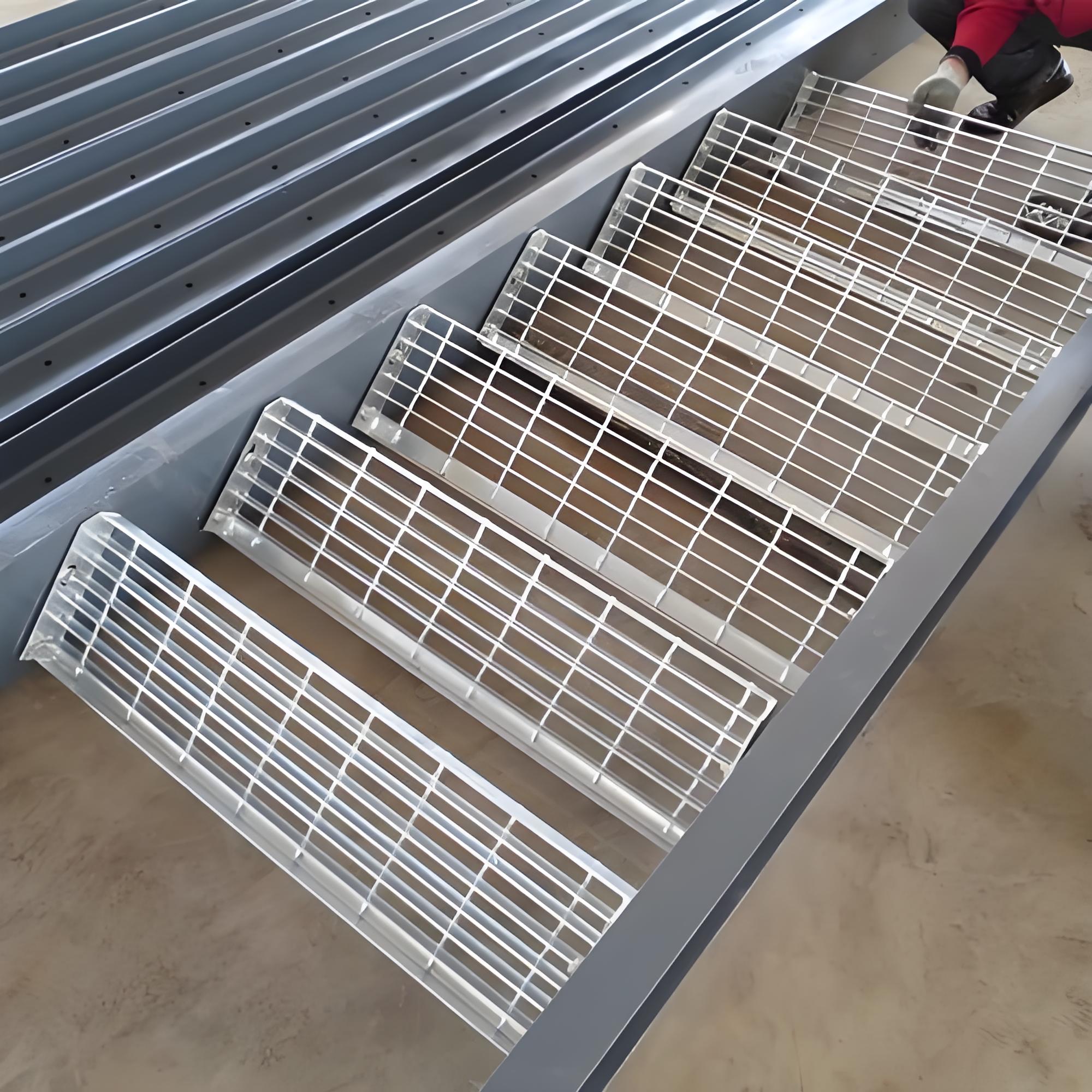
Serrated light duty grating has toothed bearing bars. It provides better traction in wet, oily, dusty, or outdoor environments. It is commonly selected for outdoor walkways, stairs, drainage covers, water treatment facilities, and areas exposed to rain or washdown.
Galvanized light duty steel grating is protected by zinc coating. Hot-dip galvanizing is commonly used for outdoor or humid applications because it improves corrosion resistance. For indoor dry areas, black steel or painted steel may be considered if corrosion risk is low.
| Option | Main Feature | Recommended Use |
|---|---|---|
| Plain light duty grating | Smooth bearing bar surface | Dry indoor walkways and general platforms |
| Serrated light duty grating | Toothed anti-slip surface | Wet, oily, outdoor, and stair applications |
| Hot-dip galvanized light duty grating | Zinc coating for corrosion resistance | Outdoor platforms, drainage covers, humid environments |
| Painted light duty grating | Color finish and basic protection | Indoor commercial or low-corrosion areas |
Outdoor light duty steel grating usually needs corrosion protection. Hot-dip galvanizing is one of the most common surface treatments because it protects carbon steel with a zinc coating. This makes the grating suitable for rain, moisture, drainage areas, and general outdoor exposure.
Steel grating has many edges, welded points, and openings. If left untreated outdoors, carbon steel can rust quickly. Hot-dip galvanizing covers the steel surface and helps reduce corrosion. It is especially useful for walkways, drainage covers, stair treads, and maintenance platforms exposed to humidity or rain.
For better protection, grating panels are usually fabricated first and galvanized afterward. This allows zinc coating to cover welded joints, cut edges, banding bars, and custom openings. If panels are cut after galvanizing, the exposed steel edges should be repaired.
Painting and powder coating may be used for indoor areas or projects requiring color. Stainless steel or aluminum may be selected for special corrosion environments, but for many outdoor light duty projects, hot-dip galvanized carbon steel grating is a practical and cost-effective choice.
| Surface Treatment | Main Advantage | Suitable Environment |
|---|---|---|
| Black untreated steel | Lower initial cost | Temporary or dry indoor use |
| Painted finish | Basic protection and color options | Indoor or low-corrosion areas |
| Hot-dip galvanized finish | Good corrosion resistance | Outdoor walkways, drainage covers, humid areas |
| Powder coating | Uniform appearance and color control | Commercial or architectural areas |
| Stainless steel | Higher corrosion resistance | Marine, food, chemical, or high-corrosion environments |
A light duty steel grating manufacturer should provide more than simple standard panels. Many projects require cutting, banding, hole processing, stair tread fabrication, and drawing-based customization. Good fabrication support can reduce site work and improve final installation quality.
Welding is used to join cross bars and bearing bars, and sometimes to add edge banding, stair tread side plates, toe plates, or frames. Welding should be consistent enough to keep the panel stable during transportation and use.
Panels may need to be cut to exact size. Factory cutting is usually better than site cutting because the manufacturer can control dimensions and finish the edges properly. If the grating is galvanized, cutting before galvanizing helps protect the cut edges.
Banding is useful for exposed panel edges, drainage covers, stair treads, and custom openings. It improves appearance and handling safety. For removable covers, banding also makes the panel easier to move and reduces sharp edges.
For project orders, the manufacturer should be able to process panels according to drawings. This includes panel numbering, bearing bar direction, cut-out location, hole position, edge treatment, and accessories.
| Fabrication Service | What It Includes | Project Benefit |
|---|---|---|
| Welding | Grid welding, banding, side plates, frames | Creates stable and usable panels |
| Cutting | Custom length, width, and irregular shapes | Improves installation fit |
| Banding | Finished perimeter and cut-out edges | Improves safety and appearance |
| Hole processing | Bolt holes, lifting holes, pipe openings | Reduces site drilling and cutting |
| Panel numbering | Marks panels according to project layout | Improves installation efficiency |
Light duty steel grating can be installed with clips, bolts, welding, or frames depending on the project. The installation method should match whether the panel needs to be removable, how much load it carries, and whether future maintenance access is needed.
Clips are commonly used when panels need to be removable. They are suitable for walkways, platforms, drainage covers, and maintenance areas. Clip installation also avoids damaging the galvanized coating by welding on site.
Welding provides permanent fixing. It may be used when panels do not need to be removed. If galvanized grating is welded on site, the zinc coating around the weld point will be damaged and should be repaired with zinc-rich paint or another approved repair method.
Bolted installation is common for stair treads, framed panels, or removable covers. Bolt holes can be prepared by the manufacturer according to drawings.
For drainage covers and small trench covers, grating panels may sit in a steel frame or support ledge. The support ledge must be wide enough and strong enough to carry the load safely.
| Installation Method | Main Advantage | Suitable Use |
|---|---|---|
| Clips | Removable and less coating damage | Walkways, platforms, maintenance areas |
| Welding | Strong permanent fixing | Fixed platforms and non-removable panels |
| Bolting | Secure and removable | Stair treads, framed grating, access covers |
| Frame support | Good positioning and support | Drainage covers and trench covers |
Quality control is important even for light duty grating because the product is still used as a walking or covering surface. A reliable manufacturer should inspect raw materials, welding, panel dimensions, surface treatment, flatness, packing, and accessories before delivery.
The factory should check the steel grade, bar size, thickness, straightness, and surface condition. Correct raw material is the basis for stable production and accurate weight.
Welded connections should be firm and consistent. Loose cross bars, weak edge banding, missing welds, or panel distortion should be corrected before surface treatment.
Panel length, width, diagonal difference, spacing, cut-out size, and hole position should be checked. This is especially important for custom panels and stair treads.
For galvanized grating, coating coverage, zinc buildup, sharp points, bare spots, and blocked openings should be inspected. For painted or powder-coated grating, coating appearance and coverage should be checked.
Panels should be counted, labeled, and packed according to the order. Accessories such as clips and bolts should be packed clearly to avoid installation delays.
| Inspection Item | What to Check | Purpose |
|---|---|---|
| Raw material | Grade, size, thickness, straightness | Ensures correct specification |
| Welding | Cross bar joints, banding welds, panel rigidity | Improves structural reliability |
| Dimensions | Length, width, spacing, diagonal, holes | Reduces installation problems |
| Surface treatment | Galvanizing, painting, coating defects | Improves corrosion resistance and appearance |
| Packing | Quantity, labels, bundles, accessories | Prevents delivery mistakes |
Packaging and delivery affect the final condition of light duty steel grating when it arrives at the jobsite. Even lighter panels can be bent, scratched, or mixed up if they are not packed properly. For export orders, packing strength and labeling are especially important.
Light duty steel grating panels are usually packed in bundles with steel straps. The bundle size should allow forklift handling and safe unloading. If the panels are galvanized, rough movement should be reduced to protect the zinc coating.
For custom orders, panel labels should match the drawing and packing list. Clear labels help installers identify each panel quickly, especially when the order includes many different sizes.
Fixing clips, bolts, washers, handles, and small parts should be packed separately and clearly marked. Missing accessories can delay installation even if all grating panels are delivered correctly.
For export shipments, the manufacturer should consider container weight, bundle stability, loading order, and unloading convenience. Loading photos and packing lists can help buyers check the shipment before arrival.
| Delivery Item | Recommended Practice | Buyer Benefit |
|---|---|---|
| Bundle packing | Use stable straps and suitable supports | Reduces bending and handling damage |
| Surface protection | Reduce rough rubbing during loading | Protects galvanized or painted finish |
| Panel labels | Mark panel numbers and sizes clearly | Improves installation efficiency |
| Accessory packing | Pack clips and bolts separately with labels | Prevents missing installation parts |
| Loading record | Provide packing list and loading photos when needed | Supports export order checking |
To receive an accurate quotation from a light duty steel grating manufacturer, buyers should provide complete technical information. If the inquiry only says “light duty steel grating,” the manufacturer can only estimate. Complete details help the factory recommend a practical specification and avoid later price changes.
Buyers should provide material, bearing bar size, bearing bar spacing, cross bar spacing, panel size, quantity, and surface treatment. If the buyer is not sure about the specification, the manufacturer should ask about load and span before recommending options.
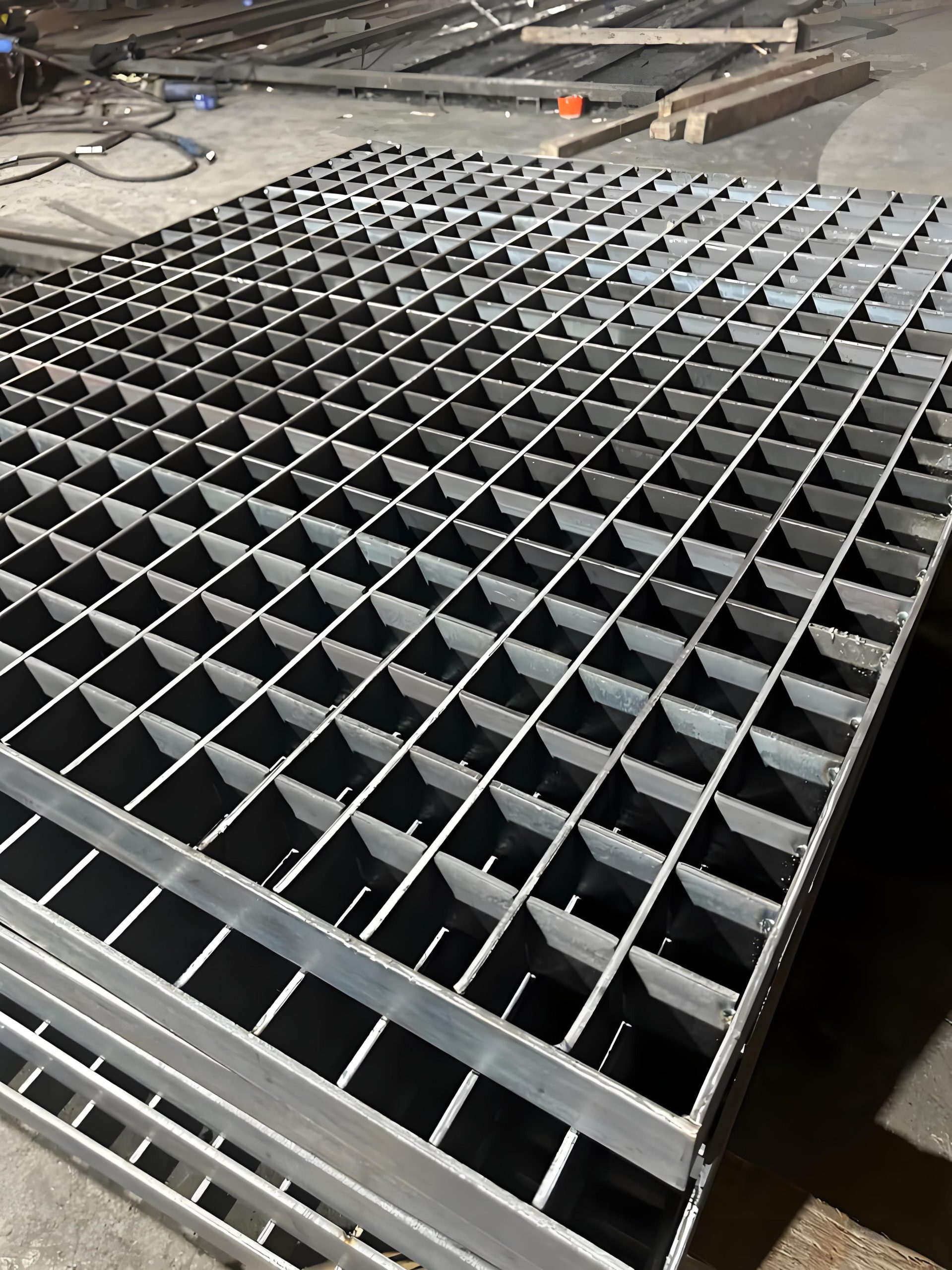
Even light duty grating needs load confirmation. Buyers should state whether the grating is for pedestrians, maintenance workers, light carts, drainage covers, or stair treads. The clear span between supports should also be provided.
If the project needs custom panels, drawings should show panel size, bearing bar direction, cut-outs, holes, edge banding, stair tread details, trench width, and panel numbers. Drawings help the manufacturer calculate material, weight, and fabrication cost accurately.
Buyers should confirm whether the grating needs hot-dip galvanizing, painting, powder coating, plain surface, serrated surface, clips, bolts, welding installation, or frame support. These details affect both price and production method.
| Quotation Information | Details Buyers Should Provide |
|---|---|
| Product type | Plain, serrated, galvanized, stair tread, drainage cover, custom panel |
| Material | Carbon steel, mild steel, stainless steel, or specified grade |
| Bar specification | Bearing bar size, bearing bar spacing, cross bar spacing |
| Panel size | Length, width, quantity, tolerance, panel number |
| Load condition | Pedestrian, maintenance load, light cart, drainage cover load |
| Clear span | Unsupported distance between beams or support ledges |
| Surface treatment | Hot-dip galvanizing, painting, powder coating, untreated finish |
| Drawing | CAD, PDF, sketch, cut-outs, holes, stair tread details |
What is light duty steel grating used for?
Light duty steel grating is used for pedestrian walkways, maintenance platforms, small drainage covers, rooftop access, utility areas, stair treads, commercial service zones, and low to medium load flooring projects. It is suitable where heavy vehicle or forklift traffic is not required, but safe access, drainage, ventilation, and corrosion protection are still important.
How do I choose a light duty steel grating manufacturer?
Choose a light duty steel grating manufacturer by checking production capacity, bearing bar options, custom size support, welding quality, hot-dip galvanizing control, surface treatment choices, drawing processing ability, quality inspection, packing method, and delivery experience. A reliable manufacturer should help confirm load, clear span, bearing bar direction, surface type, and installation method before production.
Can light duty steel grating be hot-dip galvanized?
Yes, light duty steel grating can be hot-dip galvanized for outdoor, humid, or drainage-related applications. Hot-dip galvanizing protects the carbon steel surface with zinc coating and helps improve corrosion resistance. For best protection, cutting, welding, banding, and custom fabrication should usually be completed before galvanizing.
