

Traction Tread safety grating is a formed metal plank with a perforated-button walking surface designed to improve footing in pedestrian, industrial, commercial, and access applications. The raised buttons provide multi-directional slip resistance while the small perforations allow limited drainage and help retain small objects better than open diamond safety grating. It is commonly supplied as walkway planks, stair treads, ladder rungs, resurfacing sheets, ramps, and custom fabricated parts. When selecting a Traction Tread safety grating supplier, buyers should compare more than material price: plank width, channel depth, steel gauge, span, load, corrosion protection, ADA-related requirements, fabrication, clips, and freight can all change the final cost.
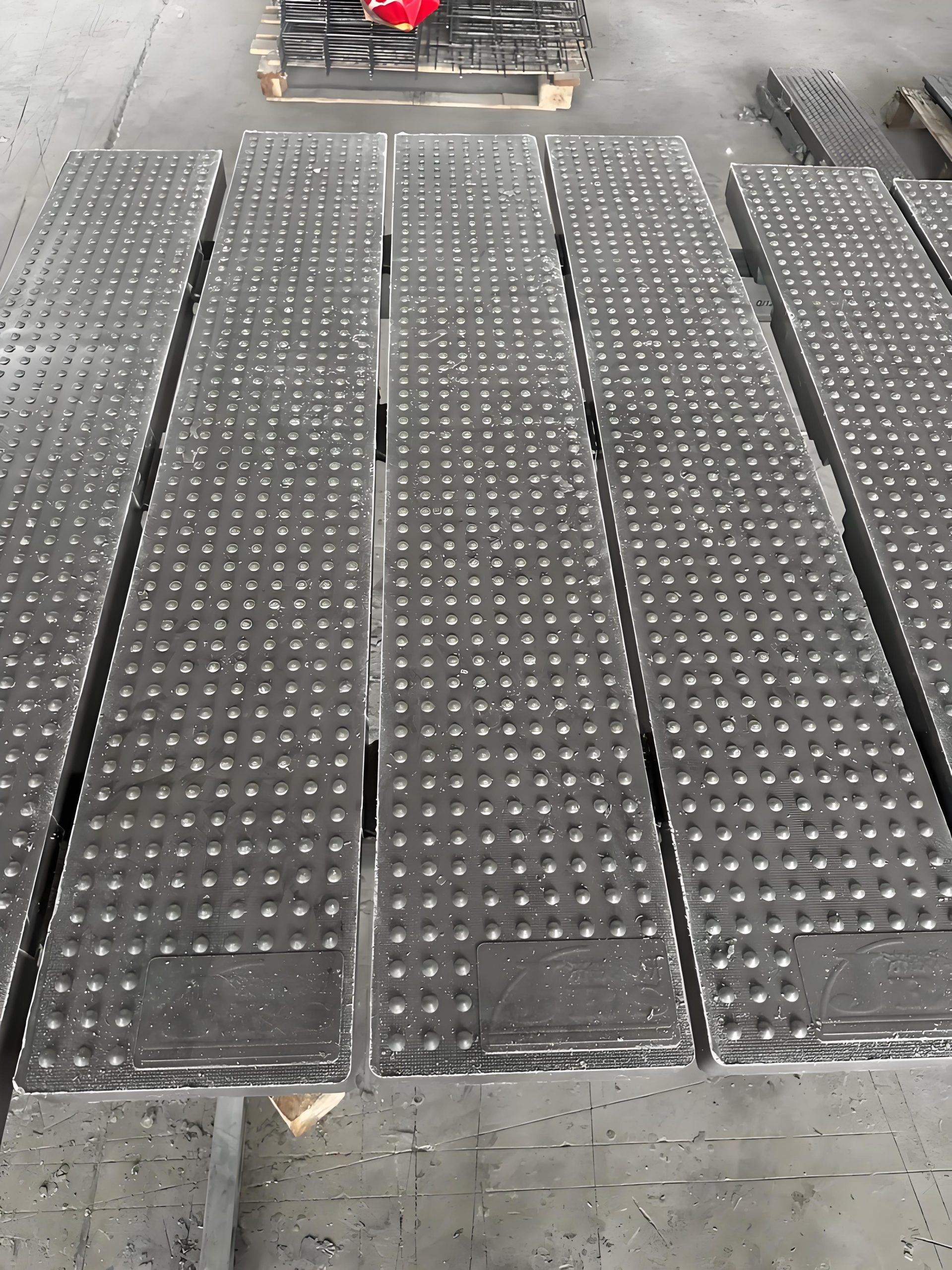
Traction Tread safety grating is a one-piece metal safety plank manufactured by punching and forming sheet metal into a channel shape. The walking surface contains a dense pattern of raised perforated buttons. These buttons create many small contact points under footwear, improving grip in different walking directions without relying on large serrated openings.
The formed side channels add stiffness to the plank, allowing the product to span between structural supports. Unlike conventional welded bar grating, Traction Tread is not assembled from bearing bars and cross bars. Unlike solid checker plate, it has a textured, perforated surface that improves traction and can allow water and small debris to pass through selected openings.
“Traction Tread” can refer to a specific branded product or to a similar perforated-button safety grating style. When requesting an equivalent product from a factory, the buyer should provide the required surface pattern, opening size, width, channel depth, material, gauge, load requirement, and applicable project standard rather than relying only on a trade name.
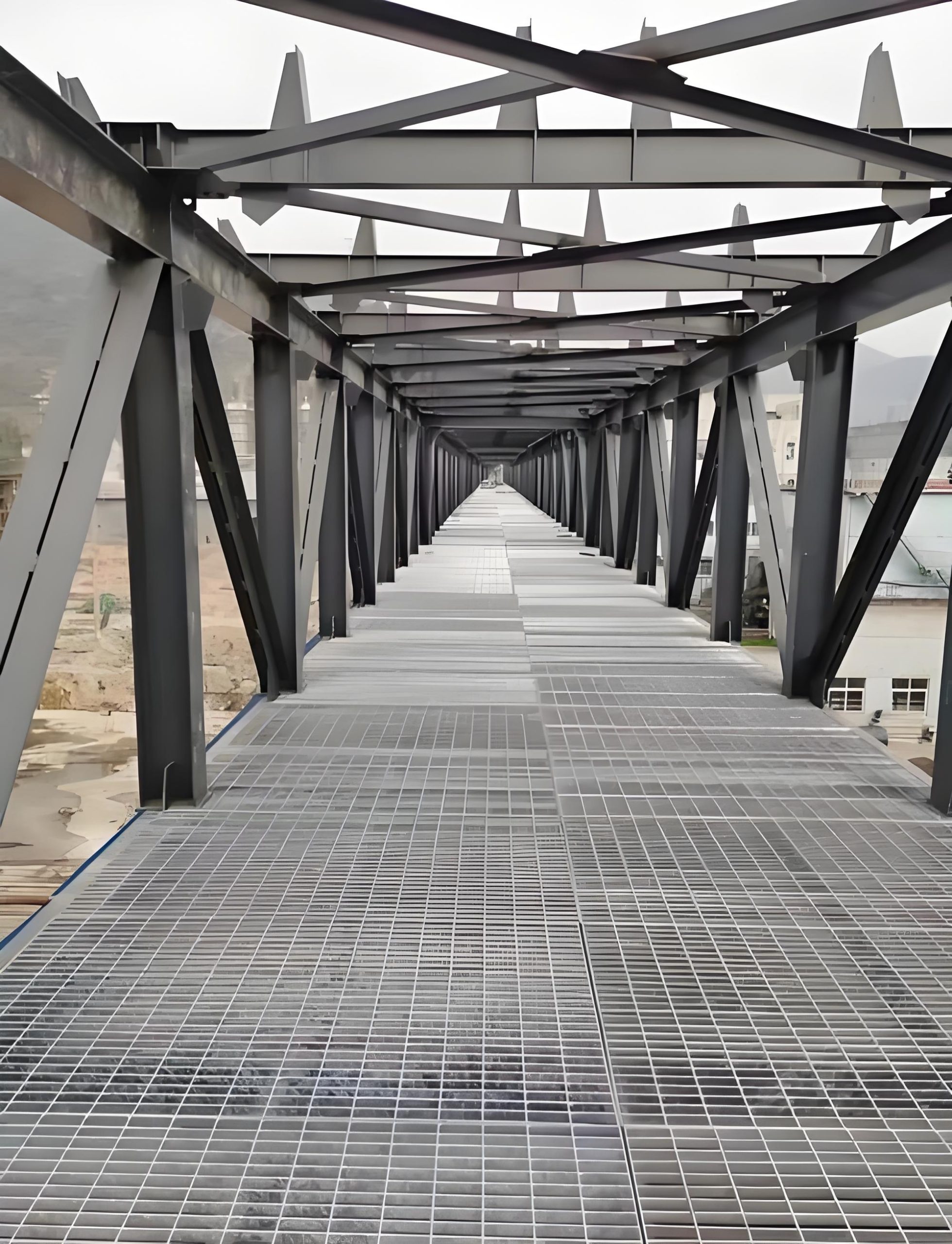
Each punched opening is formed into a raised button or dimple. The raised edge helps increase friction between the sole of a shoe and the grating surface. Because the buttons are distributed closely across the plank, the walking surface provides traction in multiple directions rather than only along one bar or one serrated edge.
The button pattern also creates a comparatively comfortable surface for regular pedestrian use. This is one reason perforated-button safety grating is often selected for access ramps, commercial walkways, inspection areas, public-facing entries, mezzanines, and locations where people may stand for extended periods.
Published Traction Tread product data describes the material as a single formed metal plank with side channels and hundreds of perforated buttons intended to provide multi-directional slip resistance. See a Traction Tread product overview and standard profile information.
Traction Tread and diamond safety grating are both anti-slip metal plank products, but they are designed for different priorities. Diamond safety grating normally uses aggressive serrated diamond openings. Traction Tread uses closely spaced raised buttons and smaller perforations. The best choice depends on the exposure, footwear, drainage needs, pedestrian comfort, opening requirements, and likely contaminants.
| Feature | Traction Tread Safety Grating | Diamond Safety Grating |
|---|---|---|
| Surface Pattern | Dense raised perforated buttons or dimples | Serrated edges around diamond-shaped openings |
| Slip Resistance | Multi-directional grip for pedestrian and ramp traffic | Very aggressive traction in oily, muddy, icy, or heavily contaminated areas |
| Opening Size | Small perforations and relatively low open area | Larger diamond openings and generally more open surface |
| Small-Object Retention | Better at limiting the fall-through of small tools, keys, fasteners, and personal items | Small objects can pass through larger openings more easily |
| Drainage | Useful for light moisture and cleaning water, but not intended for maximum open drainage | Excellent drainage and self-cleaning performance |
| Pedestrian Comfort | Often preferred for routine pedestrian traffic, ramps, and public-facing access | More aggressive surface may be preferred for harsh industrial conditions |
| Typical Applications | Ramps, stairs, walkways, platforms, ladder rungs, resurfacing sheets | Oil platforms, outdoor catwalks, wet industrial stairs, process areas, heavy-duty access |
For a clean commercial ramp or pedestrian approach, Traction Tread may be a practical option because the raised button pattern provides grip without large openings. For a refinery walkway exposed to oil, thick mud, snow, or heavy debris, diamond-pattern grating may offer more aggressive self-cleaning traction. A supplier should help compare the actual operating environment rather than recommend one pattern for every project.
Traction Tread safety grating is frequently used on ramps and pedestrian routes because it offers slip resistance in different directions. Pedestrians do not always walk straight ahead. On a ramp, users may turn, stop, push carts, use mobility devices, or walk diagonally. A closely distributed button pattern can provide more consistent surface contact across the direction of travel.
For inclined surfaces, drainage and traction must work together. A smooth steel plate may become slippery when wet, while a very open grating pattern may not be appropriate where small-wheel traffic, high heels, or small dropped items are common. Perforated-button grating can be a useful middle ground when the project needs a metal surface with traction, limited drainage, and smaller openings.
Some Traction Tread product ranges are marketed for ADA-related pedestrian applications, particularly ramps. However, product selection alone does not make an entire ramp ADA compliant. Compliance depends on the completed installation, including slope, cross slope, landings, handrails, clear width, edge protection, transitions, openings, fasteners, and local code interpretation. The final accessibility review should be carried out by the responsible design professional or authority having jurisdiction.
A published galvanized 10 in. Traction Tread plank specification describes a button-top pattern with approximately 4% open area and notes that ADA suitability depends on the installation arrangement. See an example Traction Tread plank specification.
Traction Tread safety grating can be supplied in several product forms. Using one surface pattern across a facility can simplify maintenance, improve appearance consistency, and give workers similar footing on walkways, stairs, ramps, and ladder systems.
Channel planks are used to build walkways, platforms, ramps, catwalks, and elevated access routes. Multiple planks can be installed side by side to create the required clear width. The channel sides provide structural depth, while the perforated button surface provides traction underfoot.
Walkway planks can be supplied in stock lengths, cut-to-length sections, or pre-fabricated groups. For large access platforms, the manufacturer may provide individual planks for field installation or assemble several planks into removable platform modules with support members and fixing details.
Stair treads are fabricated from channel planks cut to the required stair width. They are commonly supplied with welded end plates, bolt holes, or other fixing details to connect to stair stringers. The tread depth is selected according to the stair design, while the width is based on the clear stair width and installation arrangement.
For outdoor stairs, the perforated button surface can help reduce slipping caused by rain or light snow. For oily industrial stairs, the buyer should compare Traction Tread against more aggressively serrated products and select the pattern most suitable for the actual contamination risk.
Traction Tread ladder rungs provide an anti-slip stepping surface for fixed ladders, access ladders, mobile equipment, and maintenance structures. Rung sizes are generally narrower than walkway planks and can be supplied in cut lengths to suit the ladder width.
Ladder rungs require careful detailing because the user’s boot contact area is limited. Rung spacing, fixing method, side-rail attachment, material thickness, corrosion resistance, and applicable ladder standards should be confirmed before production.
Flat Traction Tread sheets can be used to resurface existing steps, platforms, ramps, or equipment access areas where a formed channel is not needed. The sheet can be cut, bent, welded, bolted, or bonded according to the base structure and project requirement.
Resurfacing sheets are useful when an existing concrete, steel, wood, or composite walking surface needs improved traction without replacing the full structure. The substrate should be checked for soundness first. Applying an anti-slip sheet over a damaged, corroded, or uneven base does not solve the underlying structural problem.
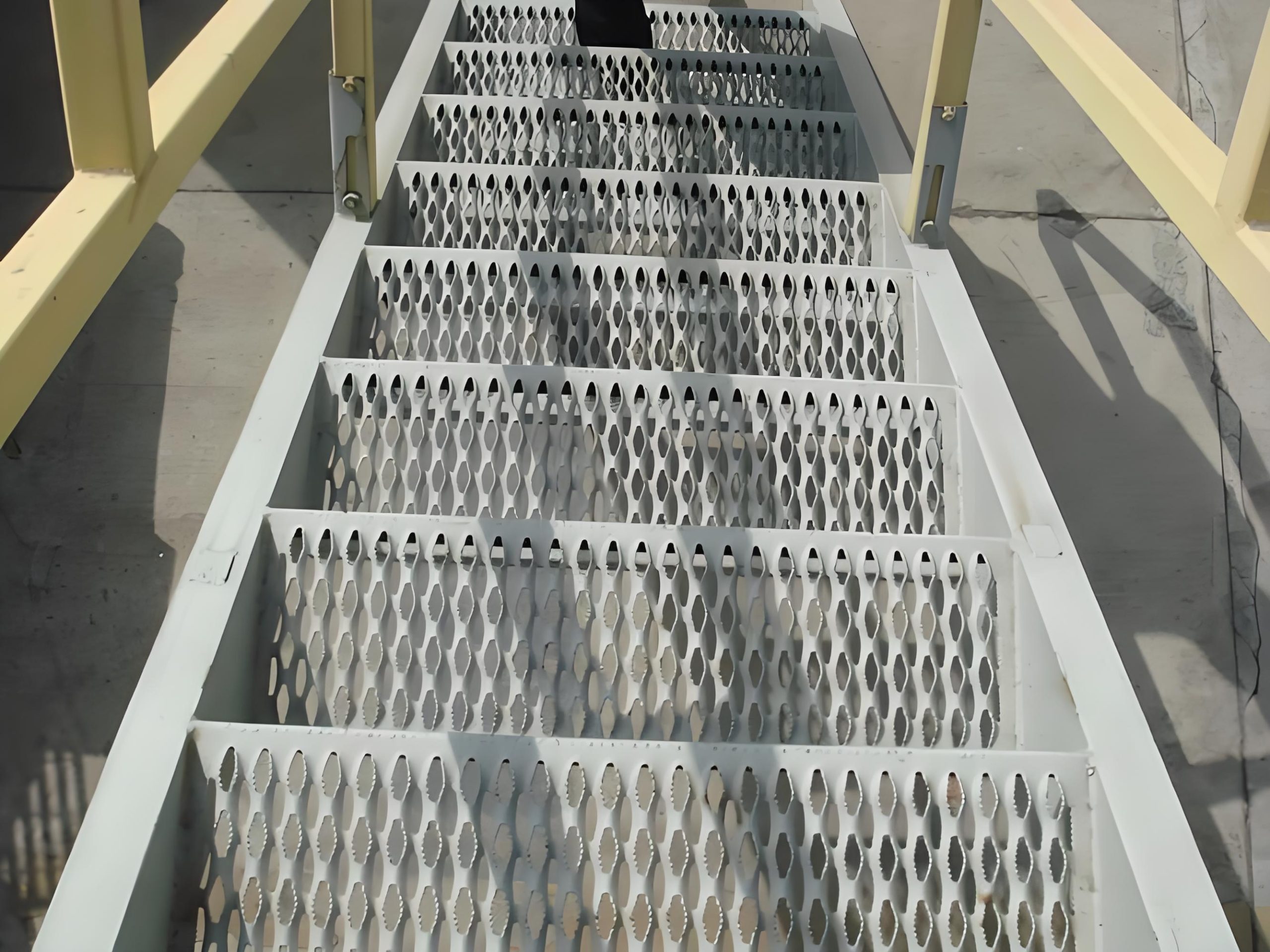
Standard Traction Tread safety grating dimensions vary slightly between manufacturers, but common channel plank widths are 7 in., 10 in., and 12 in. Common channel depths are 1-1/2 in., 2 in., and 3 in. Standard stock lengths are often 10 ft and 12 ft, although custom cut lengths are widely available.
| Nominal Plank Width | Approximate Metric Width | Typical Application |
|---|---|---|
| 7 in. | 178 mm | Narrow walkways, stair treads, compact access routes |
| 10 in. | 254 mm | General walkways, ramps, platforms, and stair tread blanks |
| 12 in. | 305 mm | Wider pedestrian planks, platform sections, ramp surfaces |
| Nominal Channel Depth | Approximate Metric Depth | General Effect |
|---|---|---|
| 1-1/2 in. | 38 mm | Lower profile for shorter spans and lighter-duty applications |
| 2 in. | 51 mm | Common general-purpose channel depth |
| 3 in. | 76 mm | Greater stiffness potential for engineered spans and higher loading needs |
Standard lengths are helpful for economical purchasing because they reduce setup time and scrap. If a project requires 9 ft 7 in. planks, for example, a supplier may cut 10 ft stock lengths to size, but the quotation should show whether cut-off material, packing, and fabrication are included.
Published product data lists 7 in., 10 in., and 12 in. plank widths, 1-1/2 in., 2 in., and 3 in. channel depths, and 10 ft or 12 ft stock lengths for common Traction Tread configurations. See published Traction Tread dimensions and material options.
Traction Tread safety grating is generally specified by material type, gauge or thickness, width, channel depth, and length. These details determine the product’s weight, stiffness, load capacity, fabrication suitability, and price.
| Material | Common Thickness | Typical Use |
|---|---|---|
| Pre-Galvanized Steel | 11 gauge or 13 gauge | General walkways, ramps, stairs, and indoor or moderate outdoor applications |
| HRPO Carbon Steel | 11 gauge or 13 gauge | Projects requiring fabrication, painting, or later hot-dip galvanizing |
| Stainless Steel | Often 16 gauge; heavier options by project requirement | Food processing, chemical, marine, washdown, and corrosive environments |
| Aluminum 5052-H32 | Commonly 0.125 in. / 3.18 mm | Lightweight, corrosion-resistant walkways and removable access panels |
As a general reference, 13 gauge steel is approximately 2.3 mm thick and 11 gauge steel is approximately 3.0 mm thick. Aluminum is often specified in decimal thickness, such as 0.125 in., rather than by the same gauge system used for steel. Thickness should never be selected only by appearance; the support span and required load must be checked against the applicable load table.
Safety plank grating is frequently quoted by linear foot because the product has a fixed width and channel profile. Weight per linear foot affects freight cost, container loading, lifting method, support design, and handling during installation.
The actual weight depends on the exact plank width, channel depth, gauge, material, hole pattern, and manufacturer’s formed profile. A 10 in. wide, 1-1/2 in. deep, 13 gauge steel Traction Tread channel is listed in one published load table at approximately 4.28 lb per linear foot, or about 6.37 kg per meter. Wider, deeper, and heavier-gauge planks weigh more. Aluminum planks are significantly lighter than comparable steel planks but require their own load-capacity review. See an example Traction Tread weight and loading table.
For an accurate project takeoff, use this calculation:
Total Grating Weight = Weight per Linear Foot × Cut Length × Number of Planks
Add the weight of end plates, clips, bolts, toe boards, support steel, pallets, export stillages, and protective packaging when calculating shipment weight.
The material selected for Traction Tread safety grating has a direct effect on cost, corrosion resistance, fabrication method, service life, and maintenance requirements.
Pre-galvanized steel is a common choice for standard safety planks because it combines steel strength with a factory-applied zinc coating. It is suitable for many indoor, commercial, industrial, and moderate outdoor applications. It is often economical for standard lengths and repeated plank sizes.
Where planks are cut, welded, or heavily modified, the treatment of exposed edges and fabrication areas should be specified. Pre-galvanized material may not provide the same after-fabrication coating continuity as hot-dip galvanizing completed after welding and fabrication.
Hot-rolled pickled and oiled steel, often called HRPO or HRP&O steel, is an uncoated carbon steel option used where the customer plans to paint, galvanize, or otherwise coat the finished fabricated item. It can be practical for custom stair treads, welded assemblies, special brackets, and projects requiring a specific paint system.
Aluminum Traction Tread grating is useful where low weight, corrosion resistance, non-magnetic properties, or easy handling are important. It is frequently considered for marine environments, mobile equipment, rooftop access, coastal installations, and removable panels.
Aluminum should not be treated as a direct one-for-one substitute for steel. Its stiffness and strength characteristics differ, so span, depth, support spacing, fastener selection, and galvanic isolation from steel supports should be reviewed carefully.
Stainless steel Traction Tread grating is suitable for wet, corrosive, hygienic, food-processing, pharmaceutical, chemical, marine, and washdown applications. Type 304 stainless steel is often suitable for general corrosion-resistant service. Type 316 or 316L stainless steel is commonly selected where chloride exposure, salt spray, seawater, or stronger chemical conditions are expected.
For stainless steel, specify the grade, sheet finish, welding method, post-fabrication cleaning, and passivation requirement when needed. Poorly cleaned weld zones or contamination from carbon steel fabrication tools can reduce corrosion performance.
Load capacity is one of the most important selection factors for Traction Tread safety grating. The same plank can perform well over a short span but bend excessively over a longer span. A safe design must consider the exact plank width, channel depth, material thickness, support configuration, uniform load, concentrated load, and permitted deflection.
In normal channel-plank installation, the long direction of the plank spans between structural supports. The formed side channels provide the main stiffness. Installing a plank in the wrong span direction can greatly reduce its capacity and may cause excessive deflection.
| Example Configuration | 2 ft Span | 3 ft Span | 4 ft Span | 6 ft Span | 8 ft Span |
|---|---|---|---|---|---|
| 10 in. wide, 1-1/2 in. deep, 13 gauge steel channel | Approx. 621 lb/ft² uniform load | Approx. 368 lb/ft² uniform load | Approx. 194 lb/ft² uniform load | Approx. 96 lb/ft² uniform load | Approx. 52 lb/ft² uniform load |
The table above is only an example from a published product-specific safe-load table. It should not be used as a universal design value for all Traction Tread products. Different channel depths, widths, gauges, materials, support conditions, and deflection limits produce different results. The project engineer or supplier should verify the final configuration using the correct manufacturer data.
Deflection is as important as ultimate strength. A plank may not fail structurally but may still feel unstable, collect water, affect adjacent finishes, or fall outside a project’s permitted deflection limit. When requesting a quote, provide both loading requirements and the allowable deflection criterion.
Traction Tread safety grating is designed to improve grip underfoot through its raised button pattern. The close distribution of buttons can provide useful traction for walking, standing, and ramp travel in many commercial and industrial settings.
The smaller perforation pattern is also useful where dropped objects are a concern. Compared with wide-open bar grating or large diamond grating, perforated-button safety grating is less likely to allow small tools, bolts, keys, parts, or personal items to fall through the surface. This can be valuable on maintenance platforms above machinery, production lines, conveyors, electrical equipment, or public areas below.
For pedestrian ramps and public access areas, the finished flooring system should be reviewed for accessibility requirements. Important issues may include opening size, opening orientation, surface stability, slip resistance, ramp slope, cross slope, transition details, fastening arrangement, and the relationship between adjacent planks.
Do not use “ADA compliant” as a generic product description without confirming the planned installation. A plank may be suitable as part of an accessible walking surface only when it is installed in the approved orientation and combined with the required supports, joints, clearances, and ramp geometry.
Traction Tread is not automatically the best anti-slip option for every wet or oily environment. If the surface will be exposed to thick grease, mud, snow, ice, sticky process residue, or large debris, a more open serrated diamond grating may provide better self-cleaning performance. If maximum drainage is the main requirement, welded bar grating, press-locked grating, or a more open safety plank design may be more suitable.
Traction Tread safety grating can be fabricated into custom parts to reduce on-site cutting and speed up installation. A capable supplier can cut standard planks to length and prepare finished pieces based on approved drawings.
Factory fabrication usually improves repeatability and can reduce site labor. It also reduces the risk of workers making uncontrolled field cuts that create sharp edges, damage coatings, or result in inaccurate hole positions.
Complex fabrication increases price because it adds drawing review, programming, setup, cutting, welding, grinding, inspection, and packing work. For a project with many different pieces, the supplier should issue a detailed cutting list and panel schedule before production begins.
Traction Tread safety planks should be fixed securely to their support structure. The correct fastening method depends on the support material, loading, vibration, removability requirement, corrosion environment, and whether the installation is a walkway, ramp, stair tread, ladder rung, or resurfacing panel.
End plates are steel, stainless steel, or aluminum plates welded or fastened to the ends of a stair tread. They connect the tread to steel stringers, angles, channels, or other stair supports. End plates may include round holes, slotted holes, square holes for carriage bolts, or project-specific fixing patterns.
When ordering stair treads, provide the stair stringer drawing, clear tread width, required tread depth, rise, nosing position, bolt-hole arrangement, and material finish. This allows the supplier to fabricate the tread correctly rather than supplying a generic plank that requires modification on site.
Clips can secure planks to structural supports without drilling through the walking surface. Bolts, carriage bolts, saddle clips, carrier plates, hold-down clips, and custom brackets may be used depending on the plank profile and support arrangement.
For removable panels, use accessible but secure fixing details. For outdoor or corrosive installations, fastener material should be compatible with the plank material and support steel. Stainless steel fasteners may be useful in wet environments, but dissimilar-metal contact should be reviewed where aluminum panels connect to carbon-steel supports.
Flat Traction Tread resurfacing sheets may be attached by mechanical fasteners, welding, adhesive systems, or a combination of methods. The correct fixing method depends on the substrate. Mechanical fasteners are often preferred where future replacement is likely, while welding may be used on suitable steel substrates. Adhesives should be selected only after confirming environmental exposure, substrate condition, load, temperature, and maintenance requirements.
Traction Tread safety grating price is usually quoted by linear foot, piece, square meter, stair tread, ladder rung, or completed fabricated assembly. Standard stock planks are normally more economical than short custom pieces because they require less fabrication and produce less scrap.
| Price Factor | How It Affects Cost |
|---|---|
| Material Type | HRPO carbon steel is generally the most economical base material; galvanized steel, aluminum, and stainless steel increase cost. |
| Steel Gauge or Thickness | Heavier gauge steel and thicker aluminum increase raw material weight and forming cost. |
| Plank Width | Wider planks use more material per linear foot and may have higher handling and freight cost. |
| Channel Depth | Deeper channels can improve stiffness but require more formed material and may cost more. |
| Order Quantity | Long production runs and repeated standard sizes usually reduce unit cost. |
| Custom Cutting | Short pieces, angled cuts, notches, and irregular shapes increase fabrication labor and scrap. |
| Stair End Plates and Accessories | Welded end plates, clips, bolts, toe boards, and carrier plates add material and labor cost. |
| Surface Treatment | Hot-dip galvanizing, powder coating, painting, passivation, or special corrosion protection changes the price. |
| Testing and Documentation | Material certificates, inspection reports, third-party testing, and project submittals may add cost. |
| Packaging and Freight | Long planks, fabricated stair treads, and export orders require suitable bundling and protective packing. |
A low price per piece does not always mean a lower completed project cost. One quote may include cut-to-length planks, clips, bolts, end plates, material certificates, and export packing, while another quote may cover only unfinished stock material. Compare quotations on the same technical basis before making a purchasing decision.
Material markets, coating costs, freight rates, and exchange rates can change, so a supplier quotation should show its validity period. For regular purchasing, it is often useful to establish standard plank sizes and materials so future orders can be priced more consistently.
A complete inquiry helps the supplier recommend the correct Traction Tread safety grating and provide an accurate price without repeated clarification. A drawing is ideal, but a detailed list of requirements can also be sufficient for standard planks.
For stair treads, include the stair stringer detail and bolt-hole spacing. For ramps, include slope, support arrangement, traffic type, and the required transition details. For walkways, include the clear width, span, number of planks, support steel arrangement, and whether the panels must be removable.
A reliable Traction Tread safety grating supplier should be able to provide a clear quotation, material description, shop drawing support, fabrication details, packing plan, and loading information for the selected product.
Is Traction Tread grating good for ramps?
Traction Tread grating is often a good option for ramps because its raised perforated buttons provide slip resistance in multiple directions and the smaller openings are more suitable for many pedestrian applications than large-open grating. The finished ramp still needs to meet the required slope, support, transition, opening, and accessibility requirements for the project.
What sizes does Traction Tread safety grating come in?
Common Traction Tread plank widths are 7 in., 10 in., and 12 in. Common channel depths are 1-1/2 in., 2 in., and 3 in. Standard stock lengths are often 10 ft and 12 ft, while custom cut lengths, stair treads, ladder rungs, and fabricated parts can be made to order.
How much does Traction Tread safety grating cost?
Traction Tread safety grating cost depends on material, gauge, plank width, channel depth, order quantity, cut length, fabrication, finish, accessories, documentation, and freight. Standard pre-galvanized steel planks are generally the most economical option, while aluminum and stainless steel cost more. The most accurate price comes from a quote based on the required dimensions, load span, material, finish, and delivery location.