
Stainless steel grating manufacturers supply corrosion-resistant grating panels for projects where ordinary carbon steel or galvanized steel may not provide enough long-term durability. Stainless steel grating is commonly used in chemical plants, food processing facilities, wastewater treatment plants, marine platforms, coastal walkways, drainage covers, architectural floors, industrial platforms, stair treads, and hygienic access areas. For buyers, choosing the right stainless steel grating manufacturer means checking material options such as 304, 316, and 316L, fabrication capability, load design, surface finish, custom drawing support, welding quality, corrosion resistance experience, packing method, and export delivery support.
Stainless steel grating manufacturers serve buyers who need grating panels for demanding environments. Unlike standard galvanized steel grating, stainless steel grating is selected mainly for corrosion resistance, hygiene, clean appearance, chemical resistance, and long service life. It is not always the cheapest option, but it can be the better choice when the working environment is wet, corrosive, coastal, food-related, or exposed to chemicals.
Industrial projects usually focus on load capacity, corrosion resistance, drainage, anti-slip performance, and maintenance safety. Commercial and architectural projects may also care about appearance, surface finish, bar alignment, opening size, and edge quality. A capable manufacturer should understand these different requirements and recommend the correct stainless steel grade, grating type, bearing bar size, spacing, and surface treatment.
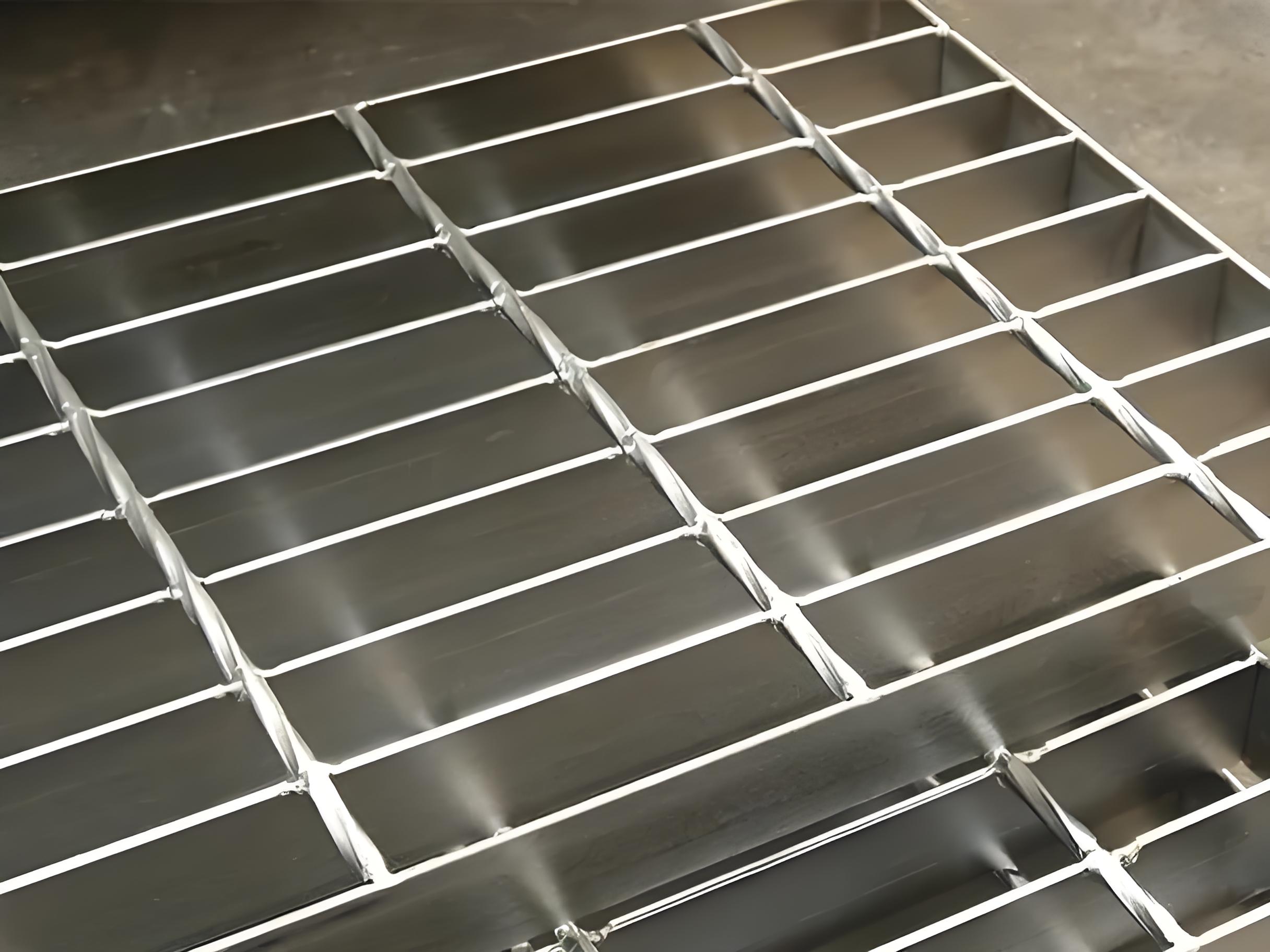
A stainless steel grating manufacturer should not only sell standard panels. For project-based orders, the manufacturer should help buyers confirm material grade, panel layout, load requirement, bearing bar direction, surface finish, welding method, edge banding, cut-outs, and installation accessories. This is especially important for projects where the grating must fit around pipes, drains, tanks, machines, walkways, or structural supports.
| Project Type | Common Stainless Steel Grating Requirement | Manufacturer Support Needed |
|---|---|---|
| Chemical plant | Corrosion resistance and chemical exposure review | Material grade selection and surface treatment advice |
| Food processing facility | Clean surface, washdown resistance, hygienic design | 304 or 316L material options and smooth finishing |
| Marine or coastal walkway | Resistance to salt air and moisture | 316 or 316L stainless steel recommendation |
| Wastewater treatment plant | Wet service, drainage, and corrosion control | Custom panels, anti-slip surface, corrosion-resistant design |
| Architectural platform | Clean appearance and consistent spacing | Press-locked or swage-locked options with good finish control |
Manufacturing capacity is one of the most important points when comparing stainless steel grating manufacturers. Stainless steel is more expensive than carbon steel, and fabrication mistakes can increase cost quickly. A good manufacturer should control cutting, welding, locking, banding, polishing, passivation, dimensional tolerance, and packing carefully.
The factory should prepare stainless steel bearing bars, cross bars, banding bars, and accessories according to the required grade and size. The raw material should be checked for grade, thickness, width, straightness, surface condition, and certificate requirements. For projects requiring 316 or 316L, material grade confirmation is especially important.
Stainless steel grating panels are cut and arranged according to panel drawings or standard sizes. The bearing bar direction must be confirmed before production because it determines the main load-carrying direction. If panels include cut-outs for pipes, columns, drains, or machines, these details should be confirmed before fabrication.
Stainless steel grating can be welded, press-locked, or swage-locked depending on the product type and application. Welded stainless steel grating is strong and practical for industrial use. Press-locked stainless steel grating is often chosen for cleaner appearance. Swage-locked grating may be used where mechanical locking and neat structure are required.
Custom stainless steel grating may require edge banding, notches, holes, irregular shapes, stair tread side plates, lifting holes, handles, frames, or toe plates. Good fabrication control reduces site cutting and improves final installation quality.
| Manufacturing Step | Main Control Point | Why It Matters |
|---|---|---|
| Material inspection | Grade, thickness, width, surface condition | Prevents wrong material and poor corrosion performance |
| Cutting | Panel size and bearing bar direction | Controls fit and load performance |
| Welding or locking | Connection strength and bar spacing | Affects structural stability and appearance |
| Banding | Edge closure and cut-out reinforcement | Improves safety, handling, and panel finish |
| Surface finishing | Pickling, passivation, polishing, or brushing | Improves corrosion resistance and appearance |
| Final inspection | Dimension, flatness, welds, surface, quantity | Reduces installation problems and quality disputes |
Stainless steel grating manufacturers usually supply several grating types. The correct type depends on project use, load requirement, corrosion environment, appearance expectation, installation method, and budget.
Welded stainless steel grating is made by welding cross bars to bearing bars. It is suitable for industrial platforms, drainage covers, walkways, wastewater facilities, food plants, and chemical processing areas. It provides strong structure and practical load capacity.
Press-locked stainless steel grating is made by pressing cross bars into bearing bars. It usually has a cleaner and more uniform appearance than welded grating. It is often used in architectural floors, commercial walkways, public platforms, and projects where visual quality matters.
Swage-locked stainless steel grating uses mechanical locking to connect bearing bars and cross bars. It can provide stable structure and clean appearance. Buyers should confirm whether the manufacturer supports this type for the required grade, size, and load capacity.
Serrated stainless steel grating has toothed bearing bars to improve slip resistance. It is suitable for wet, oily, outdoor, marine, wastewater, or washdown areas where walking safety is important.
Stainless steel grating can be fabricated into stair treads with side plates and nosing, or trench covers with banded edges and lifting holes. These products are commonly used in food plants, wastewater systems, chemical areas, public drainage zones, and marine access structures.
| Grating Type | Main Feature | Common Application |
|---|---|---|
| Welded stainless steel grating | Strong welded structure | Industrial platforms, drainage covers, chemical plants |
| Press-locked stainless steel grating | Clean and uniform appearance | Architectural floors, commercial walkways, public areas |
| Swage-locked stainless steel grating | Mechanical locked structure | Special platforms, walkways, corrosion-resistant access |
| Serrated stainless steel grating | Anti-slip toothed bearing bars | Wet areas, stair treads, outdoor walkways, wastewater plants |
| Stainless steel trench cover | Drainage opening and corrosion resistance | Drainage channels, food plants, coastal areas, public utility zones |
Material grade selection is one of the most important decisions when buying stainless steel grating. The most common grades are 304, 316, and 316L. Each grade has different corrosion resistance, price level, and application suitability.
304 stainless steel grating is widely used for general corrosion-resistant applications. It is suitable for indoor industrial platforms, food processing areas, commercial walkways, equipment access areas, and environments with mild corrosion exposure. It is usually more economical than 316 and 316L.
316 stainless steel grating contains molybdenum, which improves resistance to chloride-related corrosion compared with 304. It is often selected for coastal areas, marine environments, chemical plants, wastewater facilities, and outdoor projects with higher corrosion risk.
316L stainless steel grating has lower carbon content than 316, which can improve resistance to sensitization after welding. It is often preferred for welded stainless steel grating used in corrosive or hygienic environments. In food processing, chemical, marine, and wastewater applications, 316L is often considered when corrosion performance and weld quality are important.
| Material Grade | Main Advantage | Typical Application | Buyer Note |
|---|---|---|---|
| 304 stainless steel | Good general corrosion resistance and economical cost | Indoor platforms, food areas, commercial walkways | Suitable for mild corrosion environments |
| 316 stainless steel | Better chloride and marine corrosion resistance | Coastal platforms, wastewater plants, chemical areas | Recommended where 304 may not be enough |
| 316L stainless steel | Lower carbon content and better welded corrosion performance | Welded grating in chemical, food, marine, and hygienic areas | Often preferred for demanding welded applications |
Stainless steel grating is chosen mainly for corrosion resistance, but material grade alone is not the only factor. A stainless steel grating manufacturer must also consider fabrication method, weld quality, surface condition, drainage design, cleaning access, and contact with other materials.
304 may be suitable for general indoor and mild outdoor environments. 316 or 316L is usually better for coastal, marine, chloride, wastewater, or chemical exposure. The manufacturer should ask about the environment before recommending a grade.
Corrosion can become worse in crevices where water, salt, chemicals, or dirt remain trapped. Good grating design should allow drainage and cleaning. Smooth edge banding, proper openings, and suitable panel layout can reduce areas where corrosive residues collect.
Welded stainless steel grating needs proper welding control. Poor welding, excessive heat, and untreated weld discoloration may reduce corrosion performance. Pickling or passivation may be required after fabrication to improve the surface condition.
When stainless steel grating contacts carbon steel supports, galvanic corrosion or staining may occur in some environments. The installation design should consider isolation, drainage, and maintenance. This is especially important in marine and chemical projects.
| Corrosion Design Factor | Manufacturer Control Method | Project Value |
|---|---|---|
| Material grade | Select 304, 316, or 316L according to exposure | Improves long-term corrosion performance |
| Weld quality | Control heat input and weld consistency | Reduces weak corrosion points |
| Surface finishing | Use pickling, passivation, brushing, or polishing when required | Improves surface cleanliness and durability |
| Drainage design | Avoid trapped water and residue | Reduces localized corrosion risk |
| Installation contact | Consider isolation from carbon steel where needed | Reduces staining and contact corrosion concerns |
Load capacity is a key technical factor in stainless steel grating projects. The bearing bar size, bearing bar spacing, cross bar spacing, material grade, support span, and installation direction all affect performance. A manufacturer should select the grating specification based on actual use, not only panel size.
Bearing bar size is usually described by height and thickness, such as 25 x 3 mm, 30 x 3 mm, 30 x 5 mm, 40 x 5 mm, or larger. Higher bearing bars help carry longer spans. Thicker bars improve strength and durability but increase weight and cost.
Bearing bar spacing affects load distribution, open area, walking comfort, and price. Closer spacing provides smaller openings and stronger load distribution. Wider spacing reduces material use and improves open area, but it may not be suitable for all walking or load conditions.
Cross bar spacing affects panel stability and appearance. Common spacing options may include 50 mm, 76 mm, and 100 mm. For stainless steel grating used in architectural or commercial areas, spacing consistency and visual alignment may be especially important.
The bearing bars must span between supports. Clear span is the unsupported distance between beams or frames. If the span is long, the grating may need deeper bearing bars. If the grating may carry carts, equipment, or heavy loads, load calculation should be confirmed before production.
| Specification Item | Common Options | Selection Advice |
|---|---|---|
| Bearing bar size | 25 x 3 mm, 30 x 3 mm, 30 x 5 mm, 40 x 5 mm or customized | Select according to load and clear span |
| Bearing bar spacing | 25 mm, 30 mm, 34 mm, 40 mm or customized | Closer spacing improves walking comfort and load distribution |
| Cross bar spacing | 50 mm, 76 mm, 100 mm or customized | Choose based on stability, appearance, and use |
| Surface type | Plain or serrated | Use serrated surface for wet or slippery areas |
| Load condition | Pedestrian, cart, equipment, or heavy load | Confirm before final specification selection |
Different manufacturing methods create different stainless steel grating structures. Welded, press-locked, and swage-locked grating all have their own advantages. Buyers should select the type according to load, appearance, corrosion environment, cleaning needs, and budget.
Welded stainless steel grating is practical and strong. It is often used for industrial floors, platforms, trench covers, drainage covers, and areas where structural strength is more important than decorative appearance. After welding, surface treatment such as pickling or passivation may be required.
Press-locked stainless steel grating has a clean and uniform appearance. It is often selected for architectural walkways, commercial platforms, mezzanine floors, public access areas, and projects where visual quality matters. It can also be easier to integrate into modern architectural designs.
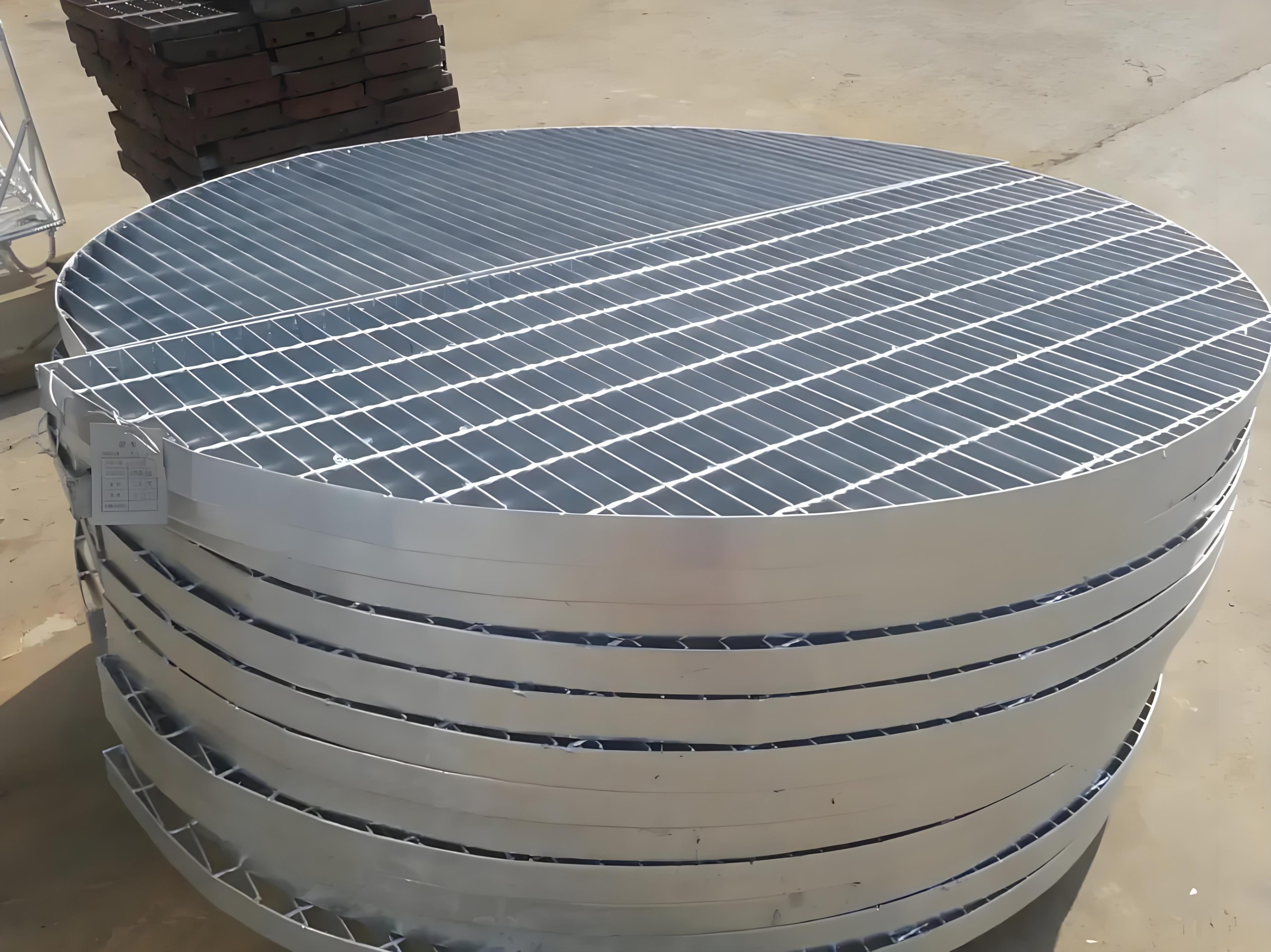
Swage-locked stainless steel grating uses mechanical locking at bar intersections. It can provide a clean structure without conventional weld marks at every intersection. Buyers should confirm load table, material availability, and manufacturing capability before choosing this type.
| Grating Type | Main Advantage | Typical Use |
|---|---|---|
| Welded stainless steel grating | Strong and practical for industrial use | Platforms, drainage covers, chemical and wastewater areas |
| Press-locked stainless steel grating | Clean appearance and accurate grid pattern | Commercial walkways, architectural floors, mezzanines |
| Swage-locked stainless steel grating | Mechanical locked structure and neat finish | Special access floors, visible platforms, corrosion-resistant walkways |
Custom stainless steel grating requires strong drawing support. Many projects do not use simple rectangular panels only. Stainless steel grating may need to fit around tanks, pipes, drains, columns, walls, machines, handrails, and stair frames. Accurate factory fabrication can reduce site cutting and improve corrosion performance.
Manufacturers can produce stainless steel grating panels in custom lengths and widths. The panel size should match the support structure and installation plan. Oversized panels may be difficult to transport or install, while panels that are too small may require more joints and fixing accessories.
Cutouts may be required for pipes, drainage outlets, columns, equipment bases, valves, or handrail posts. Factory-made cutouts are usually cleaner than site cutting. For stainless steel, clean cutting and edge finishing are important because rough edges can collect dirt or create safety issues.
Edge banding closes the panel perimeter and cutout edges. It improves appearance, handling safety, and local strength. In food, chemical, or public areas, smooth edge finishing can also make cleaning easier.
Before production, the manufacturer should confirm panel numbers, bearing bar direction, dimensions, cutout positions, surface finish, installation method, and accessories. For complex projects, a panel layout drawing can reduce installation mistakes.
| Custom Feature | What It Includes | Why It Matters |
|---|---|---|
| Cut-to-size panels | Custom length and width | Improves installation fit |
| Cutouts | Openings for pipes, columns, drains, and machines | Reduces site modification |
| Edge banding | Finished edges around panels and openings | Improves safety, appearance, and cleanliness |
| Stair tread fabrication | Side plates, bolt holes, nosing, serrated surface | Supports direct stair installation |
| Panel numbering | Marks panels according to layout plan | Improves installation efficiency |
Stainless steel grating surface treatment affects corrosion resistance, appearance, cleaning performance, and long-term durability. Unlike carbon steel grating, stainless steel grating is not usually hot-dip galvanized. Instead, manufacturers may use natural finish, pickling, passivation, brushing, polishing, or blasting depending on the project requirement.
A natural stainless steel finish may be suitable for basic industrial use. It keeps the product simple and economical. However, after welding or cutting, discoloration, scale, or heat tint may need treatment if corrosion resistance or appearance is important.
Pickling removes welding scale, heat tint, and surface contaminants. It is often used after welding stainless steel grating to improve surface condition and corrosion resistance.
Passivation helps improve the chromium oxide protective layer on stainless steel. It is commonly requested for food, chemical, pharmaceutical, and high-cleanliness applications.
Brushed or polished stainless steel grating may be used for architectural, commercial, or visible areas. These finishes improve appearance, but they may increase cost and require better protection during packing and installation.
Serrated stainless steel grating improves anti-slip performance. It is useful for wet floors, washdown areas, marine walkways, outdoor stairs, and drainage covers. Buyers should balance slip resistance with cleaning requirements because serrations may hold more dirt in some environments.
| Surface Option | Main Benefit | Common Application |
|---|---|---|
| Natural stainless finish | Simple and economical | General industrial platforms and access areas |
| Pickled finish | Removes heat tint and scale | Welded stainless steel grating after fabrication |
| Passivated finish | Improves corrosion resistance and cleanliness | Food, chemical, pharmaceutical, and hygienic areas |
| Brushed finish | Better appearance | Commercial and architectural projects |
| Serrated surface | Improves slip resistance | Wet areas, stairs, marine walkways, drainage covers |
Quality control is very important for stainless steel grating because the product is often used in corrosive, hygienic, or visible environments. Poor material control, weak welding, rough finishing, or inaccurate dimensions can affect both performance and appearance.
The manufacturer should confirm whether the order requires 304, 316, 316L, or another stainless steel grade. For project orders, material certificates may be required. Wrong material grade can create serious corrosion problems, especially in chloride or chemical environments.
Panel length, width, diagonal difference, bearing bar spacing, cross bar spacing, cutout location, and hole position should be checked. Accurate dimensions are essential for custom panels, stair treads, trench covers, and architectural layouts.
Welded stainless steel grating should be inspected for weld strength, weld appearance, bar alignment, heat distortion, and surface discoloration. Poor welds can reduce strength and create corrosion-sensitive areas.
Surface inspection should check scratches, welding scale, heat tint, burrs, sharp edges, contamination, and finish consistency. For passivated or polished products, the inspection should be more detailed.
Panels should be checked for flatness and rocking. If a grating panel is warped, it may be difficult to install and unsafe under foot. Flatness control is especially important for architectural and commercial applications.
| Quality Control Item | Inspection Focus | Purpose |
|---|---|---|
| Material grade | 304, 316, 316L, certificate requirements | Ensures correct corrosion resistance |
| Bar dimensions | Height, thickness, spacing, straightness | Maintains load capacity and appearance |
| Welding quality | Strength, alignment, heat tint, distortion | Improves structural reliability |
| Panel dimensions | Length, width, diagonal, cutouts, holes | Reduces installation problems |
| Surface finish | Burrs, scratches, contamination, finish consistency | Improves appearance and corrosion performance |
| Packing inspection | Protection, labels, quantity, accessories | Reduces delivery damage and site confusion |
Stainless steel grating manufacturers have advantages in projects where corrosion resistance, hygiene, appearance, and long-term durability are more important than the lowest initial cost. Stainless steel grating is often selected when galvanized carbon steel may rust too quickly or when coating repair is not desirable.
Food processing plants often require washable and corrosion-resistant flooring, covers, stairs, and drainage panels. 304 or 316L stainless steel grating may be selected depending on cleaning chemicals, washdown frequency, and hygiene requirements.
Chemical plants may expose grating to corrosive liquids, fumes, or cleaning agents. 316 or 316L stainless steel grating may be better than galvanized steel in many chemical environments, but the exact chemical exposure should be reviewed before material selection.
Marine and coastal environments contain salt and moisture. 316 stainless steel grating is often preferred because it offers better resistance to chloride-related corrosion than 304. It can be used for docks, coastal walkways, marine platforms, and waterfront drainage areas.
Wastewater facilities often have wet, corrosive, and maintenance-heavy conditions. Stainless steel grating can be used around channels, tanks, pumps, filtration areas, and access platforms.
Press-locked or finished stainless steel grating can be used in commercial walkways, public access floors, mezzanines, building facades, decorative screens, and drainage systems where appearance and durability both matter.
| Application | Why Stainless Steel Grating Is Used | Common Material Choice |
|---|---|---|
| Food processing | Washdown resistance and hygienic surface | 304, 316, or 316L |
| Chemical plant | Resistance to corrosive exposure | 316 or 316L depending on chemical conditions |
| Marine walkway | Salt and moisture resistance | 316 or 316L |
| Wastewater treatment | Wet service and long-term durability | 304, 316, or 316L depending on exposure |
| Architectural floor | Clean appearance and corrosion resistance | 304 or 316 |
Packaging and delivery are important for stainless steel grating orders because stainless steel surfaces can be scratched, stained, or contaminated during handling. Compared with ordinary galvanized grating, stainless steel grating may need more careful surface protection, especially for brushed, polished, or architectural finishes.
Panels should be packed to reduce rubbing and surface damage. If the grating has a polished or brushed finish, protective material may be needed between panels. Rough carbon steel contact should be avoided because it may cause contamination or staining.
Stainless steel grating panels are often packed in bundles or on pallets. The packing should be strong enough for forklift handling and long-distance transportation. Heavy panels should be supported properly to prevent bending.
For custom projects, panel labels should match the drawing or packing list. This helps installers identify panels quickly and reduces site confusion. Labels should be durable enough to remain readable after shipping.
Export orders may require packing lists, commercial invoices, material certificates, inspection records, loading photos, and shipping marks. A manufacturer with export experience can reduce communication problems and delivery delays.
Clips, bolts, stair tread fasteners, handles, lifting parts, and small accessories should be packed separately and clearly marked. Missing accessories can delay installation even if the grating panels arrive correctly.
| Delivery Support Item | Recommended Practice | Benefit |
|---|---|---|
| Surface protection | Use suitable separation and avoid rough contact | Reduces scratches and contamination |
| Bundle packing | Use strong straps, pallets, and stable supports | Improves handling safety |
| Panel labels | Mark panel numbers according to layout drawings | Improves installation efficiency |
| Accessory packing | Pack clips, bolts, and small parts clearly | Prevents missing installation parts |
| Export documents | Prepare packing list, certificates, and shipping marks | Supports smoother customs and delivery process |
To get an accurate quotation from stainless steel grating manufacturers, buyers should provide complete project information. Stainless steel grating price can vary significantly depending on material grade, bar size, spacing, surface finish, fabrication complexity, and order quantity.
Buyers should specify whether the grating requires 304, 316, 316L, or another stainless steel grade. If the environment is corrosive but the grade is not confirmed, the manufacturer should ask about exposure conditions before quoting.
The inquiry should state whether the grating is welded, press-locked, swage-locked, serrated, plain, stair tread, trench cover, or custom panel. Different types require different fabrication processes and prices.
Buyers should provide bearing bar size, bearing bar spacing, cross bar spacing, panel size, quantity, surface type, and load requirement. If the project has a clear span, this should also be provided for load selection.
For custom panels, drawings are very important. They should show panel layout, bearing bar direction, cutouts, holes, edge banding, stair tread details, trench dimensions, and panel numbers.
Surface finish affects price and production time. Buyers should confirm whether natural finish, pickling, passivation, brushing, polishing, or serrated surface is required. Packing requirements should also be stated, especially for export or architectural orders.
| Quotation Information | Details Buyers Should Provide |
|---|---|
| Material | 304, 316, 316L, or specified stainless steel grade |
| Grating type | Welded, press-locked, swage-locked, serrated, stair tread, trench cover |
| Bar specification | Bearing bar size, bearing bar spacing, cross bar spacing |
| Panel size | Length, width, quantity, tolerance, panel numbers |
| Load condition | Pedestrian, cart, equipment, heavy load, clear span |
| Drawing | CAD, PDF, layout plan, cutouts, holes, stair details |
| Surface finish | Natural, pickled, passivated, brushed, polished, serrated |
| Delivery requirement | Packing, destination, shipping terms, certificate requirements |
When comparing stainless steel grating manufacturers and suppliers, buyers should look beyond price. Stainless steel material cost is high, and wrong grade selection or poor fabrication can cause serious long-term problems. A low quotation may not include the same material grade, surface finish, bar size, spacing, edge treatment, or packing quality.
Make sure every supplier quotes the same grade. 304, 316, and 316L have different prices and corrosion resistance. If one quotation is much lower, buyers should confirm whether the grade, certificate, and surface finish are the same.
Some suppliers can only provide standard panels. Others can support custom drawings, cutouts, banding, stair treads, trench covers, and special finishing. For project orders, custom fabrication ability is often more important than stock availability.
Natural finish, pickling, passivation, brushing, and polishing have different costs. A quotation without surface treatment may look cheaper, but it may not meet the corrosion or appearance requirement of the project.
A reliable manufacturer should control material verification, welding, dimensions, surface finish, flatness, and packing. Buyers should ask whether inspection records, material certificates, and production photos can be provided when needed.
For international buyers, export experience is important. The supplier should understand packing, labeling, shipping documents, loading photos, and communication about production progress. Poor packing can damage stainless steel surfaces even when the product itself is correct.
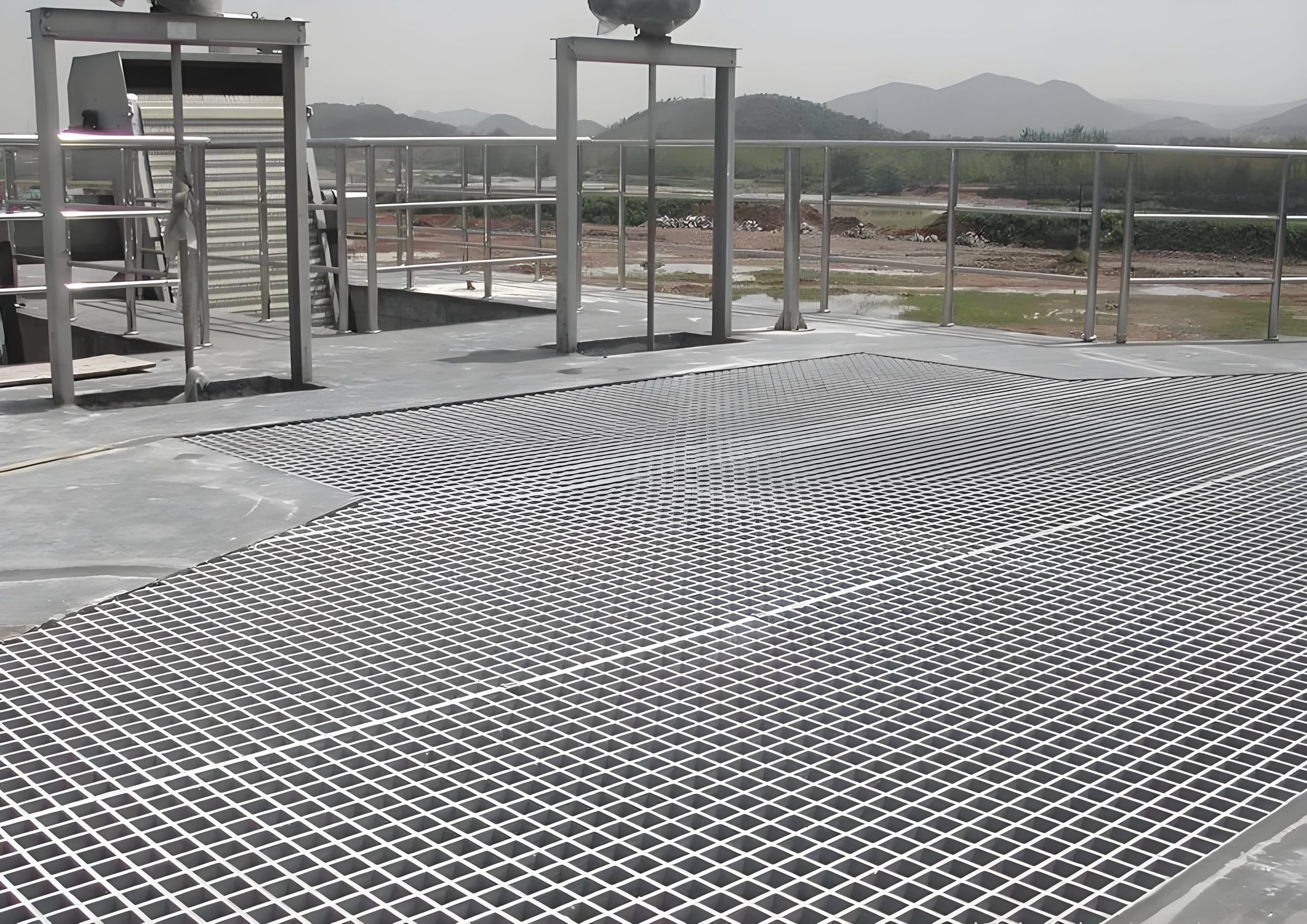
For buyers looking for factory-based grating supply, Anping County Chuansen Silk Screen Products Co., Ltd. can be considered when evaluating stainless steel grating, galvanized steel grating, welded grating, trench covers, stair treads, and custom grating panels. Buyers should still confirm stainless steel grade, surface finish, drawings, load requirements, fabrication details, packing method, and delivery terms before ordering.
| Comparison Point | What to Check | Why It Matters |
|---|---|---|
| Material grade | 304, 316, 316L, certificates | Controls corrosion resistance and price |
| Fabrication ability | Welding, locking, cutouts, banding, stair treads | Determines whether the supplier can handle custom projects |
| Surface finish | Natural, pickled, passivated, brushed, polished | Affects appearance and corrosion performance |
| Quality control | Material, welds, dimensions, flatness, surface inspection | Reduces installation problems and disputes |
| Packing | Protection from scratching, staining, and bending | Important for stainless steel surface quality |
| Export support | Documents, labels, loading photos, communication | Improves international order reliability |
How do I choose a stainless steel grating manufacturer?
Choose a stainless steel grating manufacturer by checking material grade options, custom fabrication ability, drawing support, welding or locking process, surface finishing capability, quality inspection, corrosion resistance experience, packing method, and export delivery support. For project orders, the manufacturer should confirm load requirement, clear span, bearing bar direction, cutouts, edge banding, and installation method before production.
Which stainless steel grade is best for grating?
The best stainless steel grade depends on the environment. 304 stainless steel grating is suitable for general indoor and mild corrosion areas. 316 stainless steel grating is better for coastal, marine, wastewater, and chloride exposure. 316L stainless steel grating is often preferred for welded grating in corrosive, hygienic, food, chemical, or marine applications because of its lower carbon content and better welded corrosion performance.
Can stainless steel grating manufacturers make custom panels?
Yes, stainless steel grating manufacturers can make custom panels according to drawings. Custom options include cut-to-size panels, pipe openings, column notches, edge banding, stair tread side plates, bolt holes, lifting holes, trench covers, serrated surfaces, passivated finishes, and panel numbering. Custom fabrication helps reduce site cutting and improves installation accuracy.
