

Galvanized steel stair treads with nosing are designed for industrial stairs where safe footing, corrosion resistance, drainage, and long service life are required. In factories, platforms, warehouses, outdoor walkways, equipment access areas, and steel structure projects, stair treads must do more than support foot traffic. They need to reduce slipping risk, clearly define the stair edge, allow water or debris to pass through, and remain stable after repeated use. As a steel grating and stair tread manufacturer, Anping County Chuansen Silk Screen Products Co., Ltd. supplies hot-dip galvanized steel stair treads with checker plate nosing, serrated nosing, perforated nosing, side plates, bolt holes, and custom fabricated designs for industrial safety applications.
Galvanized steel stair treads with nosing are stair step components made from steel grating panels and fitted with a front edge nosing plate. The grating body provides load-bearing capacity, open-area drainage, ventilation, and debris passage, while the nosing improves edge strength, anti-slip performance, and visibility at the front of each step. The complete stair tread is commonly hot-dip galvanized after fabrication to protect the steel from rust in outdoor, humid, and industrial environments.
In industrial projects, stair treads are not selected only by appearance. Buyers usually need to confirm bearing bar size, cross bar spacing, stair tread width, stair tread length, side plate design, bolt hole position, nosing type, surface treatment, load requirement, and installation method. A well-designed galvanized stair tread should fit the stair stringers accurately, remain stable during foot traffic, and provide a safe walking surface even when the stairs are exposed to rain, oil mist, dust, or workshop dirt.
The main advantage of galvanized steel stair treads is practical durability. Carbon steel gives high strength and cost efficiency, while hot-dip galvanizing adds a protective zinc coating. The nosing plate further improves safety at the stair edge, which is the area most likely to be contacted by the foot when workers go up or down stairs.
| Product Item | Galvanized Steel Stair Treads with Nosing |
|---|---|
| Main Material | Carbon steel grating, usually hot-dip galvanized after fabrication |
| Main Structure | Steel grating tread body, front nosing plate, side plates, bolt holes |
| Common Surface | Plain grating, serrated grating, checker plate nosing, serrated nosing, perforated nosing |
| Installation | Bolted to stair stringers or welded according to project design |
| Typical Use | Industrial stairs, platforms, warehouses, outdoor walkways, equipment access stairs |
Steel stair treads with nosing are fabricated stair steps that include a reinforced front edge. The main tread area is usually made from welded steel grating, press-locked grating, or another open-grid steel panel. The nosing is added to the leading edge of the stair tread to improve safety, strength, and step recognition.
The nosing can be made from checker plate, serrated plate, perforated plate, or a specially formed anti-slip profile. In many industrial projects, checker plate nosing is one of the most common options because it is strong, easy to identify, and provides better grip at the front edge than a plain flat edge. Serrated nosing and perforated nosing are often used where stronger anti-slip performance is required.
A complete steel stair tread with nosing usually includes two side plates. These side plates are drilled with bolt holes so the stair tread can be fixed to the stair stringers. This bolted design makes installation easier and allows replacement in the future. Welded installation is also possible for certain steel structures, but bolted stair treads are more convenient for many industrial projects.
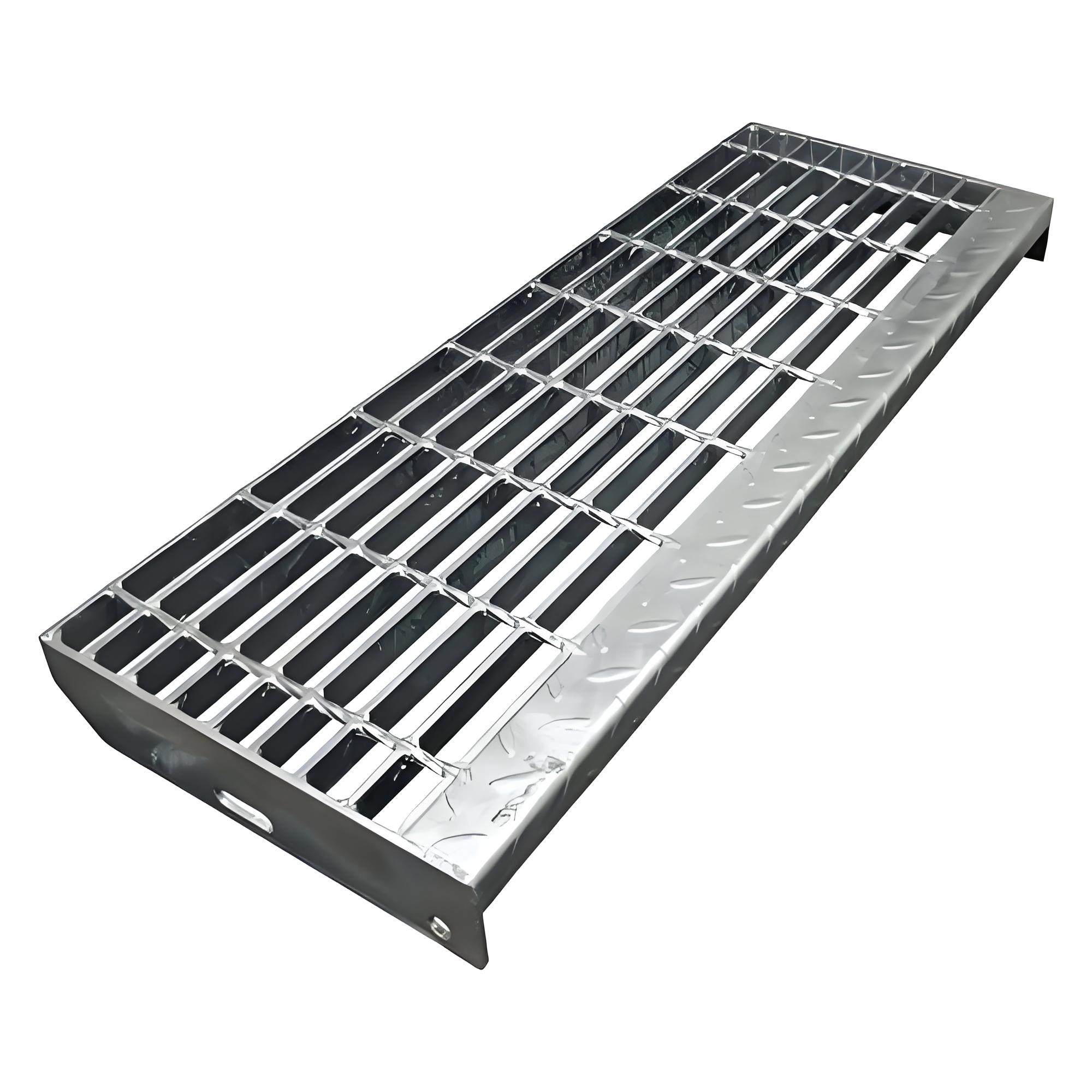
The stair tread body carries the load and forms the walking surface. The nosing protects and strengthens the front edge. The side plates allow connection to stair stringers. The bolt holes determine the installation position. Each part must be fabricated accurately because a stair tread is a safety-related component, not just a metal panel.
| Component | Function | Design Requirement |
|---|---|---|
| Grating tread body | Provides walking surface and load support | Bearing bar size and spacing must match load and span |
| Nosing plate | Improves edge safety and anti-slip performance | Should be strong, visible, and securely welded or fixed |
| Side plates | Connect the tread to stair stringers | Thickness, height, and hole position must match stair design |
| Bolt holes | Allow bolted installation | Diameter, spacing, and edge distance must be accurate |
| Galvanized coating | Protects steel from corrosion | Coating should be continuous and suitable for project environment |
Nosing is one of the most important safety details on an industrial stair tread. Workers often step on or near the front edge of a stair, especially when going down. If the edge is smooth, hard to see, weak, or slippery, the risk of slipping or missing a step increases. A properly designed nosing makes the stair edge more noticeable and gives the foot a better contact area.
In industrial areas, stairs may be exposed to water, oil, dust, paint, sand, mud, metal particles, or outdoor weather. Even when the grating surface itself has good drainage, the stair edge still needs extra attention. The nosing can be designed with raised patterns, serrations, perforations, or a textured surface to increase grip at the point where the foot first contacts the step.
The front edge of a stair tread should be easy to identify. In workshops, warehouses, and outdoor platforms, lighting conditions may not always be perfect. A nosing plate gives the stair edge a stronger visual line, helping workers judge the step position more clearly. For safety-sensitive areas, nosing can also be combined with painted markings or color contrast after galvanizing, depending on project requirements.
Nosing improves slip resistance by adding texture to the front edge. Checker plate nosing provides raised patterns. Serrated nosing provides sharp gripping edges. Perforated nosing provides openings and raised edges that increase friction. The best nosing type depends on whether the stair is used indoors, outdoors, in wet areas, or in oily industrial environments.
The front edge of a stair tread receives repeated impact from foot traffic. A nosing plate strengthens this area and protects the grating edge from wear and deformation. This is especially useful in high-traffic industrial stairs, loading platforms, equipment service stairs, and outdoor access structures.
Most galvanized steel stair treads are made from carbon steel grating and then hot-dip galvanized after fabrication. Hot-dip galvanizing means the finished steel stair tread is immersed in molten zinc, forming a zinc coating on the steel surface. This coating helps protect the steel from rust and improves service life in outdoor and humid environments.
For industrial stairs, hot-dip galvanizing is often preferred because stair treads have many edges, welded areas, side plates, and open-grid surfaces. If the stair tread is galvanized after cutting, welding, drilling, and fabrication, the coating can cover most exposed steel surfaces more completely. This is better than cutting or welding after galvanizing, because post-processing can damage the zinc layer.
Industrial stair treads are often installed in places where repainting is difficult. Outdoor platforms, pipe racks, plant stairs, wastewater areas, mining facilities, and warehouse access structures need corrosion protection that can withstand long-term exposure. Hot-dip galvanized stair treads provide a practical balance between strength, cost, and durability.
The zinc coating protects the base steel by acting as a barrier and by providing sacrificial protection. In normal outdoor industrial environments, this helps reduce rust development. However, galvanizing performance still depends on the environment. Areas with strong chemicals, acid fumes, high salt exposure, or continuous immersion may require special material selection, additional coating, stainless steel, or project-specific corrosion analysis.
| Surface Protection | Main Feature | Suitable Use |
|---|---|---|
| Hot-dip galvanized | Durable zinc coating after fabrication | Outdoor stairs, industrial platforms, warehouses, walkways |
| Painted steel | Color control and basic protection | Indoor areas or projects needing specific color |
| Galvanized plus paint | Additional protection and color finish | More demanding outdoor or visual applications |
| Stainless steel | Higher corrosion resistance in selected environments | Food plants, chemical areas, marine or hygienic environments |
Serrated grating stair treads are commonly used where slip resistance is a major requirement. The bearing bars have a serrated top surface, which increases friction under foot traffic. When serrated grating is combined with anti-slip nosing, the stair tread provides improved grip across both the main walking surface and the front edge.
This design is suitable for outdoor industrial stairs, power plants, petrochemical platforms, mining walkways, wastewater treatment plants, marine access areas, and factory stairs exposed to rain, oil mist, dust, or mud. Serrated stair treads do not eliminate all slipping risks, but they provide a safer walking surface than plain smooth bars in many working conditions.
Serrated galvanized stair treads are recommended when the stair may become wet, dirty, oily, or dusty. They are also useful for steep access stairs, outdoor maintenance stairs, and areas where workers carry tools while walking. If the project is located outdoors or in a heavy-duty industrial environment, serrated grating with serrated or checker plate nosing is usually a safer choice than plain grating.
The serrated surface improves grip, but it may hold more dirt than plain grating. In areas with mud, grease, or heavy dust, periodic cleaning is still necessary. Safety performance depends not only on the grating design, but also on maintenance, drainage, lighting, and correct installation.
Plain grating stair treads have smooth bearing bars without serrations. They are widely used in dry indoor areas, general industrial platforms, warehouses, equipment rooms, and commercial service stairs. Plain grating is easier to clean than serrated grating and is often sufficient when the environment is dry and slipping risk is lower.
When plain grating is fitted with checker plate nosing, the stair tread gains extra safety at the front edge. This is a common and cost-effective design. The main tread surface remains simple and easy to clean, while the checker plate nosing provides better grip and edge visibility.
Checker plate nosing has a raised pattern that helps improve foot contact. It also makes the front edge of the stair tread more visible and stronger. For general industrial stairs, checker plate nosing is one of the most widely accepted nosing options because it is practical, durable, and easy to fabricate.
Plain grating stair treads are suitable for dry and relatively clean environments. Serrated grating stair treads are better for wet, oily, or outdoor conditions. If the buyer is not sure which design to choose, the service environment should be reviewed first. Safety should be given priority over small cost differences when workers use the stair frequently.
| Stair Tread Type | Main Feature | Recommended Environment |
|---|---|---|
| Plain grating with checker plate nosing | Easy cleaning with improved edge safety | Dry workshops, warehouses, indoor platforms |
| Serrated grating with checker plate nosing | Better grip on main surface and edge | Outdoor stairs, wet areas, general industrial stairs |
| Serrated grating with serrated nosing | Higher anti-slip performance | Heavy-duty industrial access, oily or dusty areas |
| Plain grating with perforated nosing | Edge grip and drainage openings | Commercial service stairs, light industrial stairs |
Galvanized steel stair treads can be produced in standard sizes or custom dimensions. The key size information includes tread length, tread width, bearing bar height, bearing bar thickness, side plate thickness, nosing size, and bolt hole position. These details directly affect installation accuracy, walking comfort, load capacity, and final cost.
The stair tread length usually refers to the distance between the two side plates or the overall length that fits between stair stringers. Longer stair treads require stronger bearing bars or closer spacing to control deflection. If the stair tread span is large, the buyer should provide the load requirement instead of only giving length and width.
The width of the tread affects walking comfort and stair safety. Narrow treads may be used for maintenance access stairs, while wider treads are preferred for frequent industrial traffic. The tread width should match the stair angle, available space, safety requirement, and project drawing.
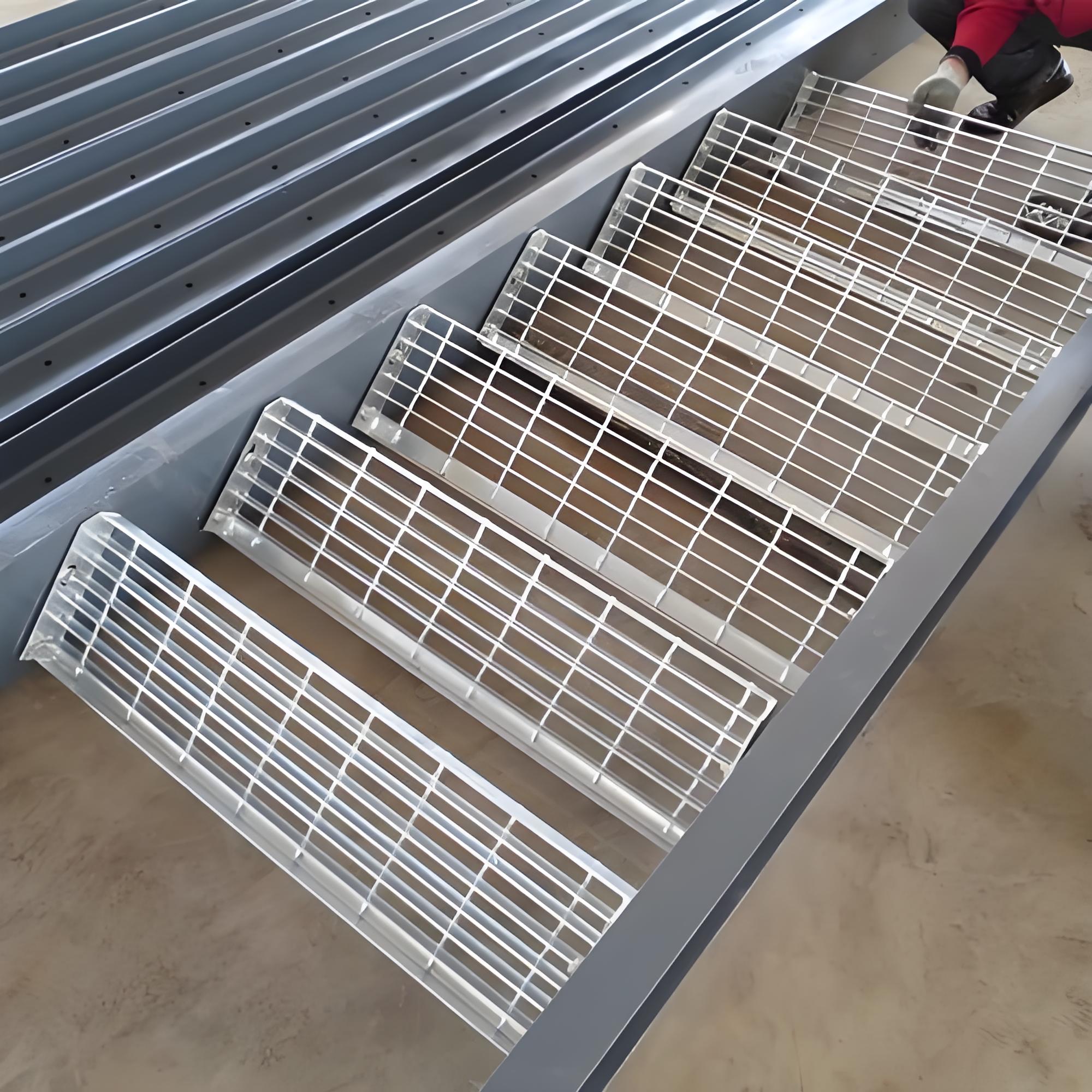
The overall height of the stair tread depends on the bearing bar size and nosing design. A higher bearing bar improves strength but increases weight. The side plate height and nosing height should match the grating body so the finished tread is stable and easy to install.
| Size Item | Common Requirement | Why It Matters |
|---|---|---|
| Tread length | Matched to stair stringer spacing | Affects span, load capacity, and installation fit |
| Tread width | Selected according to stair design and walking comfort | Affects safety and foot support |
| Bearing bar height | Selected according to load and span | Controls strength and deflection |
| Bearing bar thickness | Selected according to duty level | Affects durability and load capacity |
| Side plate thickness | Designed for bolted installation | Affects connection strength and stability |
| Nosing size | Matched to tread width and safety requirement | Improves edge visibility and grip |
The load capacity of a galvanized steel stair tread is mainly determined by bearing bar size, bearing bar spacing, span direction, steel grade, cross bar design, side plate connection, and support condition. The bearing bars carry the main load. The cross bars keep the bearing bars aligned and help form the open-grid structure. The side plates transfer the load to the stair stringers.
For industrial safety, the stair tread should not only avoid failure under load. It should also limit excessive deflection. If a tread feels too flexible, workers may feel unsafe, and repeated movement may affect the connection over time. A properly designed stair tread should feel stable under normal use.
Common bearing bar sizes may include different combinations of height and thickness. Higher and thicker bearing bars provide better load capacity but also increase material weight and price. For heavy-duty industrial stairs, stronger bearing bar sizes are usually required. For light maintenance stairs, smaller sizes may be enough.
Mesh spacing affects open area, drainage, walking comfort, and material cost. Wider spacing allows better drainage and reduces weight, but may not be suitable for all walking conditions. Closer spacing gives better foot support and may be preferred where small tools, high-heel traffic, or public access is a concern.
The buyer should clarify whether the stair tread is used by workers only, workers carrying tools, public pedestrians, maintenance teams, or heavy-duty industrial personnel. If carts or equipment may contact the tread, this should also be stated. Different load requirements need different bearing bar designs.
| Design Factor | Effect on Stair Tread Performance | Effect on Cost |
|---|---|---|
| Bearing bar height | Improves stiffness and span capacity | Higher bars increase steel weight |
| Bearing bar thickness | Improves load strength and durability | Thicker bars increase material cost |
| Bearing bar spacing | Affects foot support and drainage | Closer spacing uses more steel |
| Cross bar spacing | Affects grid stability and surface feel | Closer spacing may increase processing cost |
| Side plate design | Affects connection to stair stringers | Thicker or custom plates increase fabrication cost |
Different nosing types are available for galvanized steel stair treads. The right choice depends on the safety requirement, environment, cleaning condition, appearance requirement, and budget. In industrial supply, checker plate nosing and serrated nosing are the most common choices, while perforated and special safety nosing may be used for project-specific requirements.
Checker plate nosing is made from patterned steel plate. The raised pattern improves grip and makes the stair edge more visible. It is strong, practical, and widely used for factories, warehouses, platforms, and general industrial stairs. It is often combined with plain or serrated grating treads.
Serrated nosing provides a more aggressive gripping edge. It is suitable for outdoor stairs, wet areas, heavy-duty access stairs, and industrial sites where slipping risk is higher. Serrated nosing can be used together with serrated grating for stronger anti-slip performance.
Perforated nosing has holes or raised perforations that increase friction and allow some drainage. It is suitable for selected commercial, industrial, and outdoor applications. The perforation pattern should be selected carefully so it does not weaken the edge or create cleaning problems.
Special safety nosing may include abrasive strips, high-visibility inserts, colored edge marking, or custom anti-slip profiles. These are used when the project has higher safety requirements, poor lighting, frequent wet conditions, or public access concerns.
| Nosing Type | Main Advantage | Common Use |
|---|---|---|
| Checker plate nosing | Durable raised pattern and clear edge | Factories, warehouses, platforms, general industrial stairs |
| Serrated nosing | Strong anti-slip edge grip | Outdoor stairs, wet areas, heavy-duty industrial access |
| Perforated nosing | Grip with drainage openings | Commercial service stairs, outdoor access, special projects |
| Safety nosing | Enhanced visibility or special anti-slip function | High-traffic stairs, public access, safety-critical areas |
Side plates and bolt holes determine whether the stair tread can be installed smoothly. Even if the grating surface and nosing are well made, incorrect side plate spacing or hole position can delay installation. For custom galvanized stair treads, buyers should provide stair stringer drawings or existing tread samples whenever possible.
Side plates are usually welded to both ends of the stair tread. They provide the connection surface for bolts and transfer load from the grating body to the stair stringers. The side plate thickness, height, width, and hole location should be selected according to the stair design and load requirement.
Bolt holes must match the stair stringer holes. Round holes provide accurate positioning, while slotted holes allow more adjustment during installation. For replacement projects, it is important to measure the existing bolt hole spacing carefully before production.
Welding must be strong enough to connect the grating body, side plates, and nosing. Poor welding can affect both safety and appearance. For galvanized stair treads, welding is normally completed before hot-dip galvanizing, so the zinc coating can cover welded areas after fabrication.
Bolted installation is common for industrial stair treads because it is easy to install and replace. If a tread is damaged or needs maintenance, it can be removed without cutting the stair structure. Bolted treads are also useful for export projects because installation can be completed with standard tools on site.
| Installation Detail | Function | Information Needed from Buyer |
|---|---|---|
| Side plate | Connects tread to stair stringer | Plate thickness, height, width, and drawing |
| Round hole | Fixed bolt position | Hole diameter and center distance |
| Slotted hole | Allows installation adjustment | Slot size, direction, and bolt size |
| Welded nosing | Strengthens front edge | Nosing type, size, and welding requirement |
| Bolted installation | Allows easy replacement | Stringer spacing and hole layout |
Galvanized steel stair treads with nosing are widely used in industrial safety systems because they solve several common stair problems. They improve slip resistance, make the stair edge easier to see, allow water and debris to pass through, and provide a strong walking surface for workers. These benefits are especially important in environments where workers move quickly, carry tools, or use stairs many times during a shift.
The combination of grating surface and nosing improves friction under foot traffic. Serrated grating and serrated nosing provide stronger anti-slip performance. Checker plate nosing provides practical grip for general industrial stairs. The correct choice depends on whether the stair is dry, wet, oily, dusty, or exposed to outdoor weather.
A clear stair edge helps workers place their feet correctly. Nosing creates a stronger front line and can be made more visible through surface pattern or color marking. In low-light areas, edge visibility becomes even more important.
Steel grating stair treads allow water, rain, dust, and small debris to pass through the open mesh. This helps reduce standing water on the stair surface. In outdoor and washdown areas, drainage is a major advantage compared with solid plate stair treads.
A properly designed stair tread provides stable support under repeated walking. The bearing bars, side plates, welding, and bolted fixing work together to keep the tread steady. Stability is a key part of safety because movement, rattling, or uneven installation can create hazards.
| Safety Benefit | How the Stair Tread Helps | Recommended Design |
|---|---|---|
| Slip resistance | Textured grating and nosing increase foot grip | Serrated grating or anti-slip nosing for wet areas |
| Edge visibility | Nosing defines the front edge of each step | Checker plate or safety nosing with clear edge profile |
| Drainage | Open mesh allows water and debris to pass through | Proper bar spacing and open-area design |
| Structural stability | Bearing bars and side plates support repeated traffic | Correct load design and accurate bolted installation |
| Corrosion protection | Hot-dip galvanized coating protects steel | Galvanizing after fabrication |
Galvanized steel stair treads with nosing are used in many industrial and commercial structures. They are especially suitable for places where strength, drainage, anti-slip performance, and corrosion resistance are all required. Because the treads can be custom fabricated, they can be used for new steel structures, stair replacement projects, platform access systems, and maintenance walkways.
Factories often need stair treads for machine platforms, mezzanines, maintenance stairs, production line access, and service walkways. Galvanized steel stair treads provide a strong and practical walking surface. Serrated designs are useful where dust, oil mist, or wet cleaning may be present.
Platforms in power plants, chemical plants, mining facilities, steel structures, and equipment areas often use galvanized grating stair treads. The open mesh structure matches platform grating panels and allows drainage and ventilation.
Warehouses may use galvanized stair treads for mezzanine access, storage platforms, loading areas, and maintenance stairs. Checker plate nosing is a common option because it gives a clear and durable stair edge for workers moving between levels.
Outdoor stairs need corrosion protection and drainage. Hot-dip galvanized stair treads allow rainwater to pass through and reduce water accumulation. Serrated grating with anti-slip nosing is often recommended for outdoor locations.
Service walkways, rooftop access paths, pipe racks, and maintenance bridges often use stair treads together with galvanized grating platforms. The tread design should match the surrounding grating system for consistent safety and appearance.
| Application Area | Common Requirement | Recommended Stair Tread Design |
|---|---|---|
| Factory stairs | Durable walking surface and easy cleaning | Plain or serrated grating with checker plate nosing |
| Outdoor platforms | Drainage and corrosion protection | Hot-dip galvanized serrated stair treads |
| Warehouses | Safe worker access and strong edge | Galvanized grating tread with checker plate nosing |
| Industrial walkways | Slip resistance and stable support | Serrated grating with bolted side plates |
| Maintenance stairs | Easy installation and replacement | Bolted galvanized stair treads with side plates |
Standard galvanized stair treads are suitable when the project can use common lengths, widths, bearing bar sizes, nosing types, and bolt hole layouts. They are easier to quote and usually have shorter production planning time. For many general industrial stairs, standard sizes are enough.
Custom fabricated galvanized stair treads are required when the stair stringers, hole positions, load requirements, or project drawings are not standard. Custom fabrication allows the tread to match existing structures or special engineering designs. It is especially useful for replacement projects, offshore platforms, industrial plant expansions, and steel structure projects with detailed drawings.
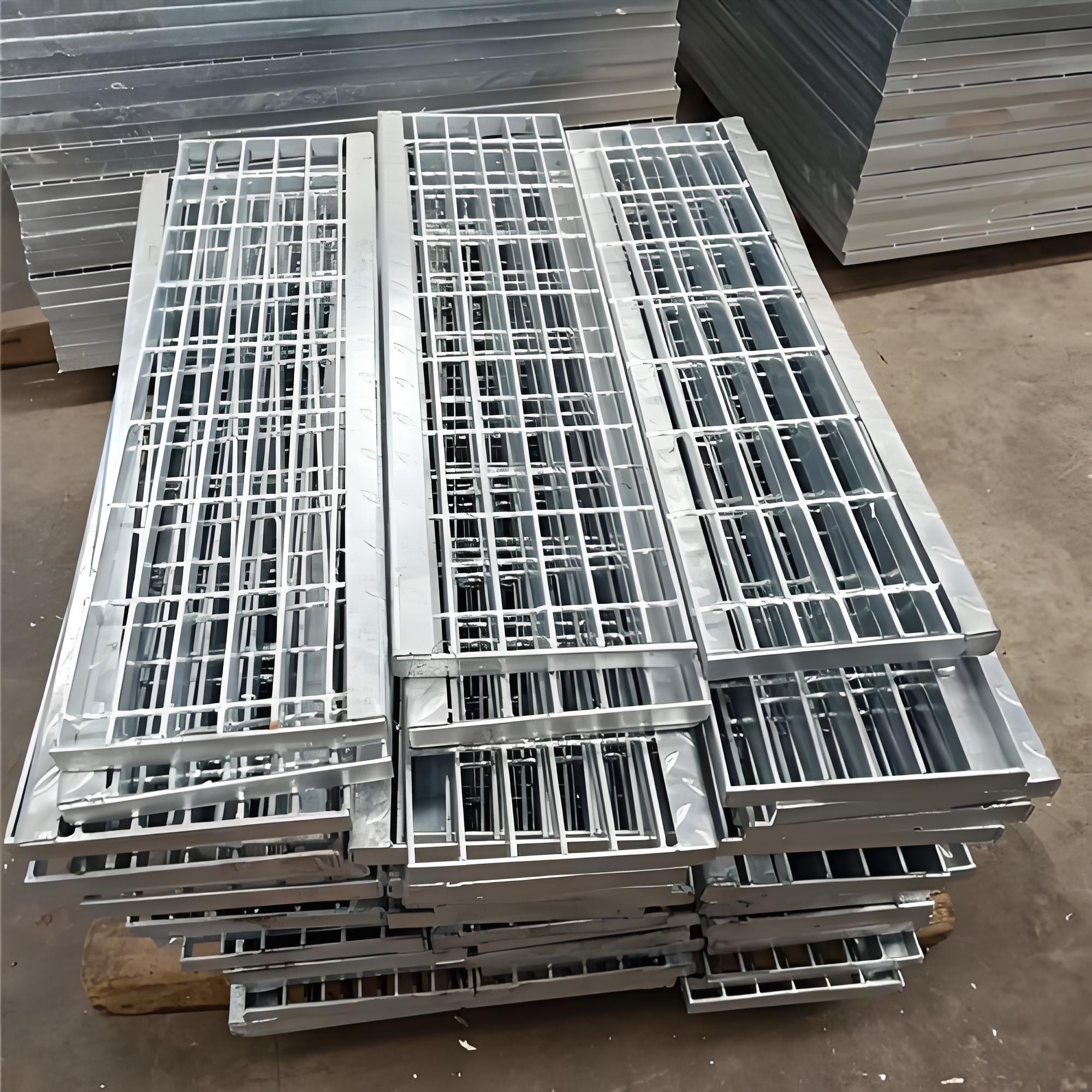
Standard stair treads are suitable for regular steel stairs, common platform access, general warehouses, and projects where the buyer can design the stair around available sizes. Standardization can reduce cost and simplify procurement.
Custom stair treads are better when the project has fixed stair stringer spacing, special bolt holes, non-standard tread width, higher load requirements, special nosing, or specific galvanizing and packing requirements. Custom fabrication reduces installation adjustment and helps the project fit actual site conditions.
| Item | Standard Galvanized Stair Treads | Custom Fabricated Stair Treads |
|---|---|---|
| Size | Common factory dimensions | Made according to drawings or site measurement |
| Nosing | Common checker plate or serrated nosing | Checker, serrated, perforated, safety nosing, special profiles |
| Bolt holes | Regular hole layout | Custom diameter, spacing, and slotted holes |
| Lead time | Usually easier to arrange | Depends on drawing, quantity, and fabrication complexity |
| Best use | General industrial stairs | Project stairs, replacement treads, special structures |
Quality control is important for galvanized steel stair treads because they are used as walking and safety components. Inspection should not only focus on finished appearance. The factory should check material, dimensions, bearing bar spacing, side plate welding, nosing attachment, bolt hole position, flatness, galvanizing quality, and packing condition.
The finished length, width, height, side plate position, bolt hole diameter, bolt hole spacing, and nosing size should be checked according to the drawing or order specification. Accurate dimensions help installers fix the tread to the stair stringers without cutting or re-drilling on site.
Welding between the grating body, nosing, and side plates should be firm and neat. Sharp edges, excessive burrs, serious deformation, and poor alignment should be avoided. Since stair treads are handled and stepped on repeatedly, fabrication strength is an important part of product safety.
Hot-dip galvanized coating should be continuous and suitable for industrial use. The zinc layer should cover the tread body, nosing, side plates, and welded areas. Buyers may request galvanizing thickness inspection according to project requirements. The surface should be free from serious uncoated areas, excessive zinc lumps that affect installation, and sharp zinc points that may create handling risk.
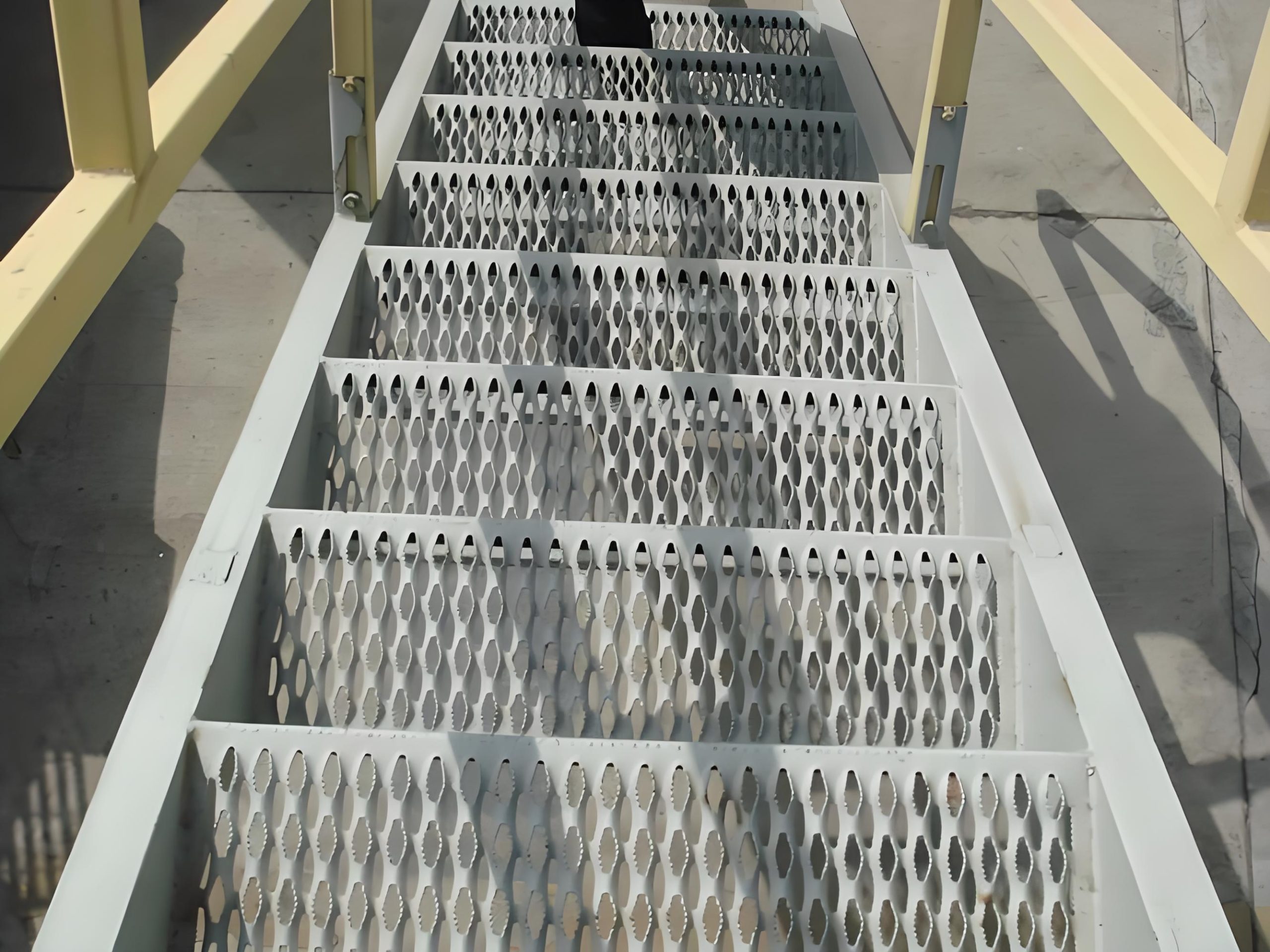
Galvanized stair treads are usually packed on steel or wooden pallets, bundled by size, wrapped for protection, and marked according to project requirements. For export orders, strong packing helps protect the stair treads during container loading, sea freight, unloading, and site handling. If the order includes many different sizes, labels or packing lists should clearly identify each type.
To receive an accurate quotation, buyers should provide the stair tread length, width, bearing bar size, mesh spacing, nosing type, side plate thickness, bolt hole drawing, quantity, galvanizing requirement, packing requirement, and destination. If drawings are available, they should be sent together with the inquiry.
| Quotation Detail | Example Information | Why It Is Needed |
|---|---|---|
| Stair tread size | Length × width × height | Calculates material weight and confirms installation fit |
| Bearing bar specification | Height, thickness, spacing | Determines load capacity and price |
| Cross bar spacing | Common or project-specified mesh spacing | Affects open area and grating stability |
| Nosing type | Checker plate, serrated, perforated, safety nosing | Affects anti-slip performance and fabrication cost |
| Side plate and holes | Plate thickness, hole diameter, hole spacing | Ensures correct bolted installation |
| Surface treatment | Hot-dip galvanized after fabrication | Provides corrosion protection |
| Quantity and packing | Total pieces, size list, pallet or export packing | Affects unit cost and delivery arrangement |
| Delivery term | EXW, FOB, CFR, CIF, DAP or project requirement | Helps calculate freight and export cost |
Selecting the right galvanized stair tread starts with the working environment. A dry indoor warehouse may only need plain grating with checker plate nosing. An outdoor platform may need serrated grating with anti-slip nosing. A wet industrial plant may need closer attention to drainage, slip resistance, and galvanizing quality. A replacement project may need accurate bolt hole matching more than anything else.
Buyers should also consider long-term maintenance. A cheaper stair tread with weak edge design, poor galvanizing, or incorrect hole position can create higher cost later through rework, rust repair, unstable installation, or safety concerns. For industrial stairs, safe use and accurate installation are usually more important than choosing the lowest unit price.
For general indoor industrial stairs, plain galvanized grating with checker plate nosing is often practical. For outdoor stairs, serrated galvanized grating with checker plate or serrated nosing is safer. For high-traffic industrial platforms, stronger bearing bars and accurate bolted side plates should be selected. For corrosive environments, the galvanizing specification and possible additional coating should be reviewed before order confirmation.
| Project Condition | Recommended Option | Reason |
|---|---|---|
| Dry indoor factory stair | Plain grating with checker plate nosing | Good balance of cost, strength, and edge safety |
| Outdoor platform stair | Serrated grating with galvanized finish | Better slip resistance and corrosion protection |
| Wet or oily industrial area | Serrated grating with serrated or safety nosing | Improves grip in higher-risk conditions |
| Replacement stair tread | Custom side plates and bolt holes | Matches existing stair stringers |
| Heavy worker traffic | Stronger bearing bars and reinforced side plates | Improves load capacity and long-term stability |
What is nosing on steel stair treads?
Nosing is the front edge part of a steel stair tread. It is usually made from checker plate, serrated plate, perforated plate, or another anti-slip profile. The nosing improves stair edge visibility, strengthens the front edge, and helps reduce slipping risk when workers step on the stair.
Are galvanized stair treads good for outdoor stairs?
Yes, hot-dip galvanized steel stair treads are suitable for many outdoor stairs because the zinc coating protects the steel from rust and the open grating surface allows rainwater to drain through. For outdoor industrial stairs, serrated grating with anti-slip nosing is often recommended for better safety.
Can galvanized steel stair treads be custom made?
Yes, galvanized steel stair treads can be custom fabricated according to drawings or site measurements. Custom options include tread length, width, bearing bar size, mesh spacing, nosing type, side plate thickness, bolt hole position, galvanizing requirement, and export packing. Custom production is especially useful for replacement stair treads and project-specific steel structures.