

Galvanized steel grating suppliers play a critical role in providing reliable, corrosion-resistant solutions for industrial flooring, walkways, platforms, and drainage systems. For buyers, selecting the right supplier involves more than comparing prices. It requires understanding customization capabilities, technical specifications, and manufacturing quality to ensure the product meets project requirements. With the increasing demand for durable and cost-effective materials, galvanized steel grating remains a preferred choice across multiple industries.
Galvanized steel grating is produced from carbon steel and protected with a zinc coating through hot-dip galvanizing. This process creates a durable barrier against corrosion, making the grating suitable for outdoor and high-moisture environments.
The structure consists of load-bearing bars and cross bars arranged in a grid pattern. This design provides strength while allowing light, air, and liquids to pass through, making it ideal for both structural and drainage applications.
Working with a professional galvanized steel grating supplier ensures consistent product quality, accurate specifications, and reliable delivery. Experienced suppliers understand international standards and can provide technical support throughout the procurement process.
For large-scale or customized projects, supplier capability directly affects production efficiency and final product performance. Choosing a supplier with strong engineering support helps avoid design errors and ensures compliance with load requirements.
One of the key advantages of working with established suppliers is the ability to produce custom sizes. While standard panels are cost-effective, many projects require tailored dimensions to fit specific layouts.
Customization may include cutting panels to exact sizes, creating irregular shapes, adding cut-outs for pipes or equipment, and applying edge banding for reinforcement. These features ensure proper installation and reduce on-site modifications.
Suppliers can also adjust bar spacing and panel thickness to meet safety and performance requirements. Although customization increases cost, it improves overall efficiency and project accuracy.
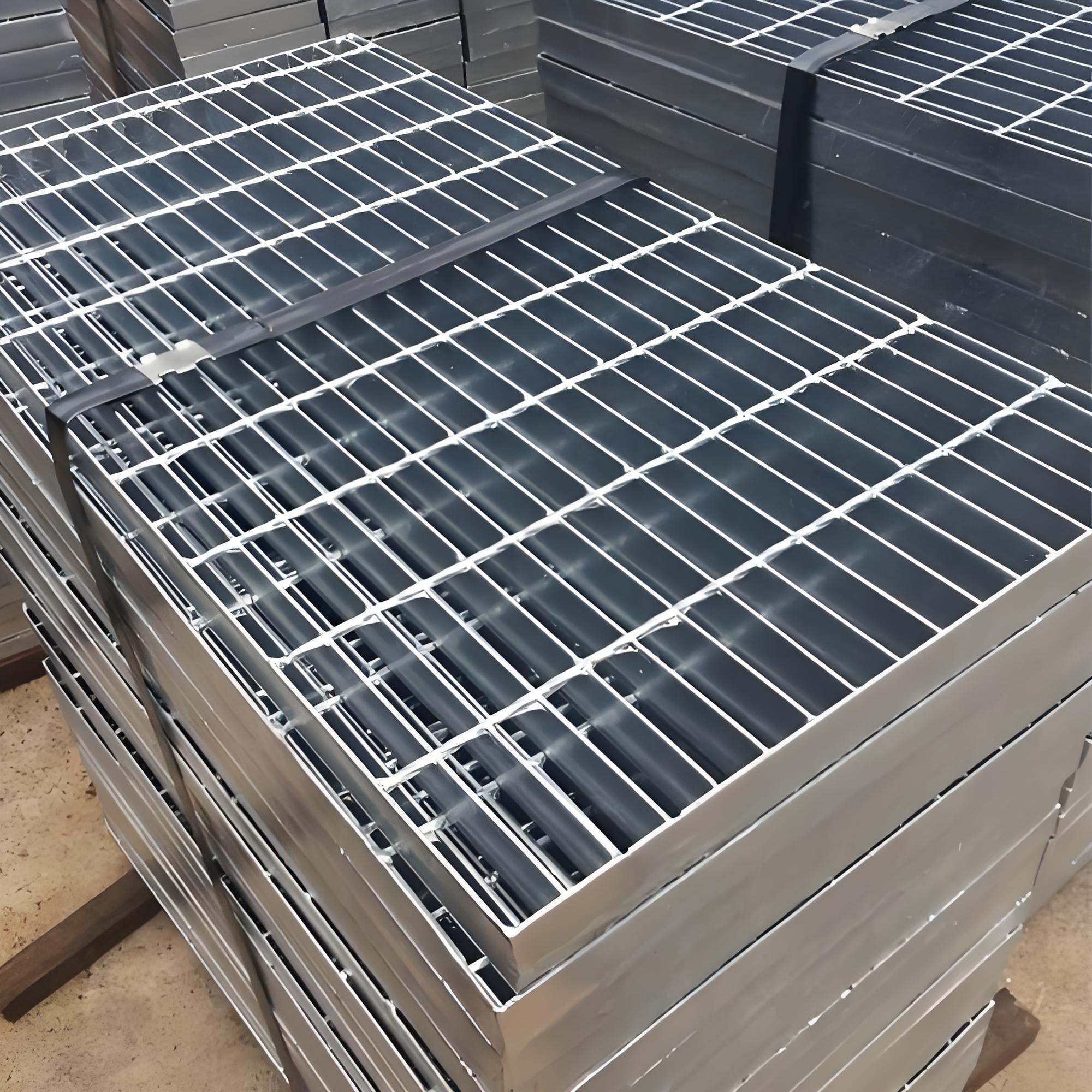
When sourcing galvanized steel grating, buyers should focus on critical technical specifications. Bearing bar size and spacing determine load capacity, while cross bar configuration affects structural stability.
The thickness of the galvanizing layer is another important factor. A thicker zinc coating provides better corrosion resistance and longer service life, especially in outdoor or industrial environments.
Surface type is also a key consideration. Plain grating is suitable for dry environments, while serrated grating enhances slip resistance in wet or hazardous conditions.
Panel dimensions, tolerances, and fabrication details should be clearly defined to ensure compatibility with the installation site.
Galvanized steel grating is typically made from carbon steel, offering a balance between strength and cost. The galvanizing process enhances durability by protecting the steel from rust and environmental damage.
In more demanding environments, such as chemical plants or coastal areas, higher galvanizing thickness or alternative materials may be required. These adjustments affect both performance and cost per square foot.
Understanding the operating environment helps buyers select the appropriate specifications without overdesigning or underestimating requirements.
Supplier pricing is influenced by several factors, including raw material costs, manufacturing complexity, and order volume. Steel price fluctuations directly impact production costs.
Grating specifications such as bar size, spacing, and panel thickness determine material usage and fabrication time. Heavier-duty grating increases cost due to higher material consumption.
Customization requirements, including special shapes or additional processing, add to labor and production expenses. Surface treatments such as galvanizing also contribute to the final price.
Bulk orders typically benefit from lower unit costs, while smaller or highly customized orders may carry a premium. Logistics and shipping costs are also important, especially for international buyers.
Galvanized steel grating is widely used in industrial platforms, walkways, stair treads, and drainage systems. Its strength and corrosion resistance make it suitable for manufacturing plants, power stations, water treatment facilities, and infrastructure projects.
In commercial and public spaces, it is used for pedestrian walkways and trench covers, providing both safety and functionality. Its versatility allows it to be adapted to a wide range of applications.
Established suppliers offer comprehensive services, including design consultation, custom fabrication, and quality assurance. This ensures that the final product meets both technical and operational requirements.
Quality control is a key advantage, as reliable manufacturers follow strict production standards and provide inspection reports. This reduces the risk of defects and ensures consistent performance.
Manufacturers such as Anping County Chuansen Silk Screen Products Co., Ltd. have extensive experience in producing galvanized steel grating for international markets. Their expertise in customization and logistics helps streamline procurement for global buyers.
Before placing an order, buyers should clearly define specifications, including load requirements, environmental conditions, and installation constraints. Providing detailed drawings helps suppliers deliver accurate products.
Requesting samples or reviewing previous projects can provide insight into product quality. Certifications and compliance with standards are also important indicators of supplier reliability.
Comparing multiple supplier quotes based on both price and technical capability ensures the best value for the project. Clear communication throughout the process helps avoid misunderstandings and delays.
While custom sizes and specifications improve performance, they also increase cost. Buyers should focus on essential customization and use standard sizes where possible to control expenses.
Optimizing design parameters such as bar spacing and panel dimensions can reduce material usage without compromising performance. Early collaboration with suppliers helps identify cost-effective solutions.
What specifications should be considered when buying galvanized steel grating?
Key specifications include bearing bar size, spacing, panel dimensions, galvanizing thickness, and surface type. These factors determine load capacity, durability, and safety.
Can galvanized steel grating be customized?
Yes, suppliers can provide custom sizes, shapes, and fabrication features such as cut-outs and edge banding to meet specific project requirements.
How to choose a reliable galvanized steel grating supplier?
Buyers should evaluate suppliers based on manufacturing capability, quality control, experience, and ability to provide technical support and timely delivery.