
Steel grating price per square meter is not a fixed number because steel grating cost depends on bearing bar size, bearing bar thickness, bar spacing, cross bar spacing, material grade, steel weight, surface treatment, panel size, cutting, banding, welding, custom fabrication, order quantity, packing, and shipping. For general reference, light duty steel grating may have a lower square meter price, while heavy duty galvanized steel grating, serrated grating, custom trench covers, stair treads, and special drawing-based panels cost more. Buyers should not compare steel grating only by area price, because two panels with the same square meter size can have very different weight, load capacity, corrosion resistance, and installation performance.
Steel grating price per square meter means the cost of one square meter of grating panel based on a specific material, bearing bar size, spacing, surface treatment, and fabrication requirement. It is a useful way for buyers to compare project budgets, but it is not enough to judge whether the grating is suitable for the project.
For example, a light duty walkway grating with small bearing bars and wider spacing may be much cheaper per square meter than a heavy duty trench cover grating with large bearing bars, close spacing, full edge banding, hot-dip galvanizing, and lifting holes. Both are steel grating, but their load capacity, weight, production cost, and application are very different.
In factory quotations, steel grating is often calculated by specification and weight first, then converted into price per square meter for buyer comparison. A simple reference range may look like this, but actual prices must be confirmed according to drawings and current raw material cost.
| Steel Grating Type | General Price Level Per Square Meter | Typical Application | Main Cost Reason |
|---|---|---|---|
| Light duty steel grating | Lower | Pedestrian walkways, small covers, maintenance access | Smaller bearing bars and lower steel weight |
| Medium duty steel grating | Medium | Industrial platforms, general walkways, drainage covers | Balanced bar size, spacing, and load capacity |
| Heavy duty steel grating | Higher | Forklift areas, vehicle access, road drains, heavy platforms | Deeper and thicker bearing bars |
| Hot-dip galvanized steel grating | Higher than black steel | Outdoor platforms, trench covers, drainage systems | Zinc coating and galvanizing process cost |
| Custom fabricated steel grating | Project-specific | Cutouts, stair treads, trench covers, irregular panels | Cutting, banding, welding, holes, and drawing work |
For accurate pricing, buyers should provide material, bearing bar size, spacing, panel dimensions, load requirement, surface treatment, drawings, quantity, and delivery terms. Without these details, a square meter price is only a rough estimate.
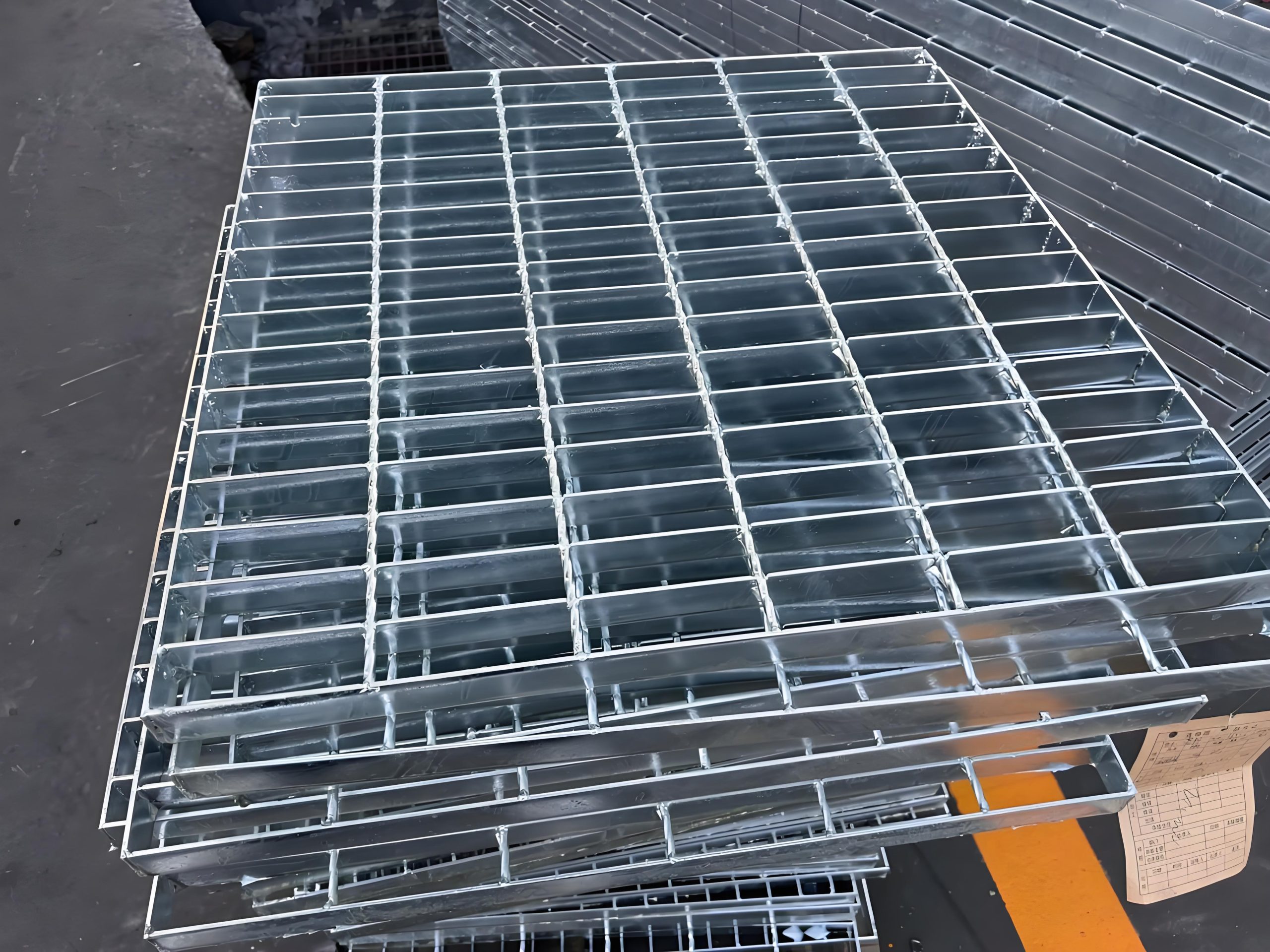
Steel grating price is usually calculated by specification and weight because steel consumption is the biggest cost factor. Unlike solid steel plate, steel grating is an open-grid product made from bearing bars and cross bars. The number, height, thickness, and spacing of these bars decide how much steel is used in each square meter.
Two grating panels may both be one square meter, but their weight can be very different. A 25 x 3 mm bearing bar grating with wider spacing uses much less steel than a 50 x 5 mm heavy duty grating with closer spacing. The heavier panel costs more because it uses more steel, requires more welding, adds more galvanizing cost, and increases shipping weight.
Steel weight affects raw material cost, fabrication handling, hot-dip galvanizing cost, packing strength, loading method, and freight. This is why professional manufacturers often calculate the theoretical weight or finished weight before giving a final price per square meter.
Steel grating cannot be selected only by price. A lower price may mean smaller bearing bars, wider spacing, lower weight, and lower load capacity. If the grating is used for a platform, walkway, drainage cover, or vehicle area, the correct specification must match the load and support span.
| Calculation Basis | Why It Affects Price | Buyer Note |
|---|---|---|
| Bearing bar size | Larger bars use more steel | Main factor in square meter price |
| Bearing bar spacing | Closer spacing means more bars per square meter | Improves strength but increases cost |
| Cross bar spacing | Closer spacing adds more cross bars and welding | Affects stability and material use |
| Surface treatment | Galvanizing, painting, or stainless finish adds processing cost | Choose according to environment |
| Custom fabrication | Cutting, banding, holes, and notches require labor | Important for project drawings |
The main factors affecting steel grating price per square meter include steel material, bearing bar size, bearing bar spacing, cross bar spacing, grating type, surface finish, fabrication details, panel size, quantity, packing, and delivery distance. A complete quotation should include these details clearly.
Carbon steel grating is usually more economical than stainless steel grating. Hot-dip galvanized carbon steel grating costs more than black steel grating but offers better corrosion resistance. Stainless steel grating costs more but may be necessary for food, chemical, marine, and high-corrosion environments.
Bar size and spacing decide steel weight. Larger bearing bars and closer spacing increase load capacity and cost. Wider spacing reduces cost and weight, but it may not meet walking comfort or load requirements.
Hot-dip galvanizing, painting, powder coating, pickling, passivation, or stainless steel finishing all affect price. Outdoor projects usually require hot-dip galvanizing or stainless steel. Indoor dry areas may use black steel or painted finish depending on service requirements.
Standard rectangular panels are usually cheaper. Custom panels with cutouts, notches, edge banding, stair tread side plates, lifting holes, toe plates, frames, and panel numbering cost more because they require extra labor and drawing review.
| Price Factor | Lower Cost Condition | Higher Cost Condition |
|---|---|---|
| Material | Carbon steel | Stainless steel or special grade steel |
| Bearing bar | Smaller and thinner bars | Deeper and thicker bars |
| Bar spacing | Wider spacing | Closer spacing |
| Surface | Black untreated finish | Hot-dip galvanized, stainless, or special coating |
| Panel form | Standard rectangular panels | Cutouts, banding, holes, frames, special shapes |
| Quantity | Small custom batch | Large batch may reduce unit processing cost but increases total budget |
Bearing bar size and thickness have the largest impact on steel grating price per square meter. Bearing bars carry the main load, so their height and thickness determine strength, deflection, steel weight, and price.
Bearing bar height affects bending strength. Higher bars can support longer spans and heavier loads. For example, a 40 mm high bearing bar usually provides more load capacity than a 25 mm high bar when thickness and spacing are similar. However, higher bars also increase steel weight and cost.
Bearing bar thickness directly increases material consumption. A 30 x 5 mm bearing bar grating is much heavier and more expensive than a 30 x 3 mm grating with the same spacing. For platforms and trench covers, thickness should be selected according to load, not only price.
| Bearing Bar Size | Relative Price Level | Typical Use | Buyer Note |
|---|---|---|---|
| 20 x 3 mm | Low | Light pedestrian access, small covers | Suitable only for short spans and light loads |
| 25 x 3 mm | Low to medium | Walkways, light platforms, service areas | Common light duty choice |
| 30 x 3 mm | Medium | Industrial walkways and standard platforms | Balanced cost and load performance |
| 30 x 5 mm | Medium to high | Stronger platforms and trench covers | Higher weight and better load capacity |
| 40 x 5 mm | High | Heavy platforms and longer spans | Used where ordinary walkway grating is not enough |
| 50 x 5 mm or larger | Very high | Heavy trench covers, vehicle areas, forklift zones | Requires load and support review |
Buyers should not choose the smallest bar only to reduce price. If the grating is under-designed, it may bend, vibrate, feel unsafe, or fail to meet project requirements. The best square meter price is the price for the correct specification, not the lowest possible steel weight.
Cross bar spacing and mesh size also affect steel grating price per square meter. The mesh size is formed by the bearing bar spacing and cross bar spacing. Smaller mesh openings use more steel and more welding or locking work, while larger openings reduce material use and cost.
Bearing bar spacing is usually more important than cross bar spacing because bearing bars carry the main load. Common bearing bar spacing includes 25 mm, 30 mm, 34 mm, and 40 mm. Closer spacing means more bearing bars per square meter, higher weight, better walking comfort, and higher price.
Cross bar spacing affects panel stability, appearance, and welding quantity. Common cross bar spacing includes 50 mm, 76 mm, and 100 mm. Closer spacing increases cross bar quantity and production cost, but it may improve stability and create a tighter grid.
For public walkways, closer mesh may be preferred for walking comfort and safety. For drainage covers, larger openings may improve water flow. For heavy-duty areas, spacing should be selected according to load and wheel contact conditions.
| Spacing Option | Price Effect | Performance Effect | Common Use |
|---|---|---|---|
| 25 mm bearing bar spacing | Higher | Smaller openings and better walking comfort | Public access, walkways, special platforms |
| 30 mm bearing bar spacing | Medium to high | Strong load distribution | Industrial platforms and trench covers |
| 34 mm bearing bar spacing | Medium | Balanced weight and open area | General steel grating panels |
| 40 mm bearing bar spacing | Lower | Larger openings and lower material use | Drainage areas and economical panels |
| 50 mm cross bar spacing | Higher | Tighter grid and more stability feel | Stair treads and special panels |
| 100 mm cross bar spacing | Lower | Common economical layout | Standard industrial grating |
Material grade and steel weight calculation are important for understanding steel grating price per square meter. Most carbon steel grating prices are built from raw material cost, fabrication cost, surface treatment cost, packing cost, and delivery cost.
Carbon steel is the most common and economical material for steel grating. It offers good strength and weldability. For outdoor use, carbon steel grating is usually hot-dip galvanized after fabrication.
Stainless steel grating costs more per square meter because stainless steel material is more expensive than carbon steel. It is used for food processing, chemical plants, marine areas, wastewater facilities, and environments where corrosion resistance is more important than initial price.
The total steel grating weight includes bearing bars, cross bars, banding bars, frames, toe plates, and other accessories. For a quick comparison, buyers can ask the manufacturer for approximate kg/m². Heavier kg/m² usually means a higher square meter price, but also usually means higher load capacity.
A simplified steel grating price calculation can be understood as:
Steel grating cost = material weight cost + fabrication cost + surface treatment cost + packing cost + delivery cost
This is why a proper quotation should include the grating specification and not only the square meter price.
| Material Option | Price Level | Main Advantage | Typical Use |
|---|---|---|---|
| Carbon steel | Lower | Strong and economical | Platforms, walkways, trench covers |
| Hot-dip galvanized carbon steel | Medium | Better outdoor corrosion resistance | Outdoor walkways, drains, industrial flooring |
| Stainless steel 304 | High | Good general corrosion resistance | Food, commercial, indoor wet areas |
| Stainless steel 316 or 316L | Higher | Better corrosion resistance in marine or chemical environments | Coastal, wastewater, chemical, marine projects |
Hot-dip galvanized steel grating price per square meter is usually higher than black steel grating because galvanizing adds zinc coating, processing, handling, inspection, and sometimes additional cleaning cost. However, for outdoor and humid environments, hot-dip galvanizing is often necessary.
The hot-dip galvanizing process includes surface preparation, acid cleaning, fluxing, zinc dipping, cooling, and inspection. The zinc coating itself adds material cost. Steel grating has many surfaces and edges, so galvanizing cost can be noticeable, especially for heavy grating with large surface area.
Hot-dip galvanizing protects carbon steel from corrosion. For outdoor platforms, drainage covers, trench covers, bridge walkways, power plants, water treatment plants, and industrial yards, the added cost can reduce long-term rust damage and maintenance needs.
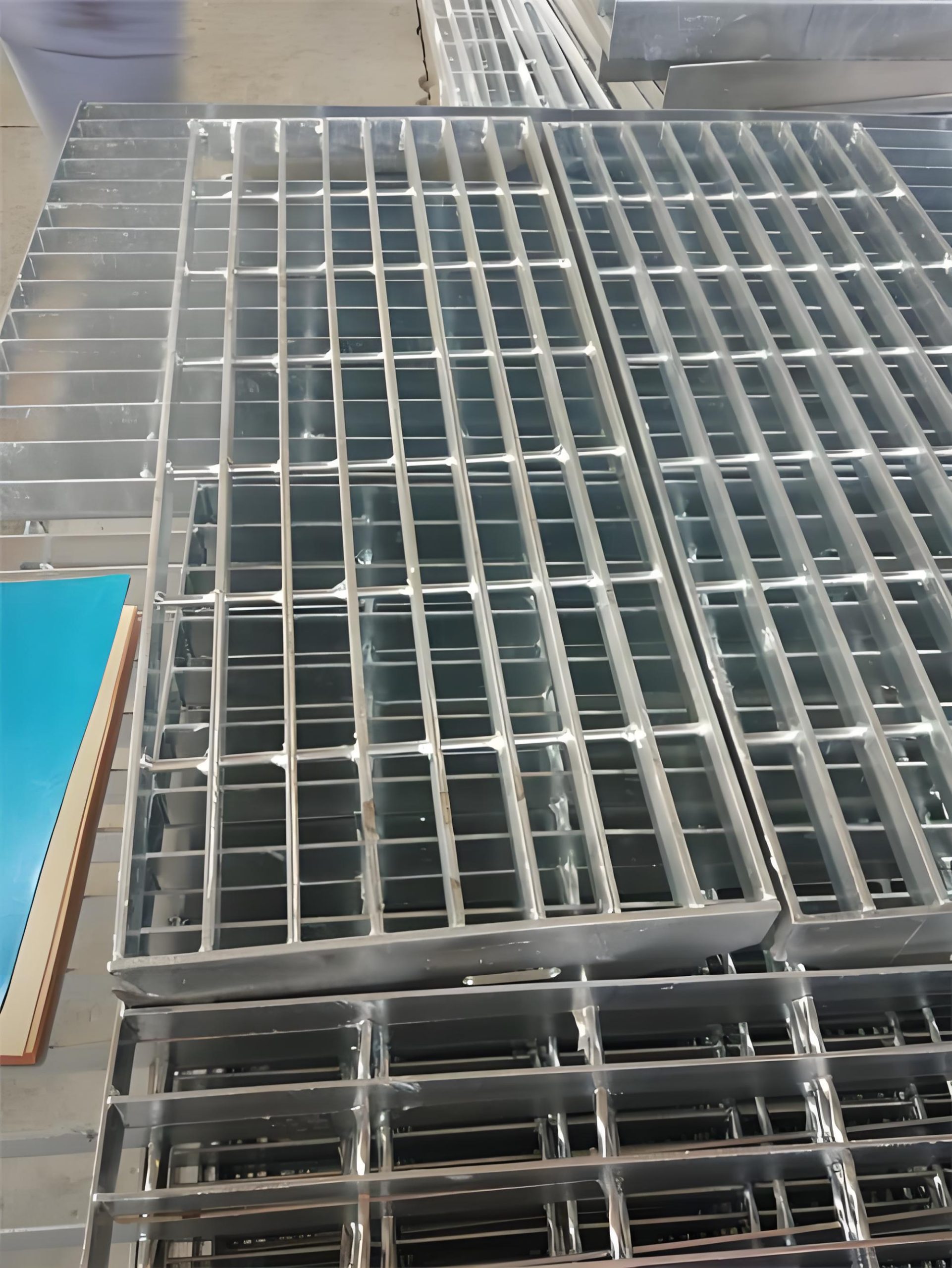
For better protection, steel grating is usually cut, welded, banded, drilled, and shaped before hot-dip galvanizing. This allows the zinc coating to cover welded joints, cut edges, banding bars, and custom openings.
| Surface Finish | Square Meter Price Level | Corrosion Protection | Suitable Application |
|---|---|---|---|
| Black steel grating | Lower | Low | Temporary or dry indoor use |
| Painted steel grating | Medium | Basic | Indoor or low-corrosion areas |
| Hot-dip galvanized steel grating | Medium to high | Good | Outdoor platforms, walkways, trench covers, drainage areas |
| Stainless steel grating | High | Very good depending on grade | Food, chemical, marine, coastal, wastewater projects |
Plain and serrated steel grating can have different prices per square meter even when the bearing bar size and spacing are similar. Serrated grating usually costs more because the bearing bars require additional tooth forming or serration processing.
Plain steel grating has smooth bearing bar tops. It is suitable for dry indoor platforms, maintenance areas, equipment access floors, and locations where slip risk is low. It is usually more economical and easier to clean.
Serrated steel grating has toothed bearing bars to improve traction. It is recommended for wet, oily, dusty, outdoor, sloped, or stair applications. Although the square meter price is usually higher, serrated grating can be a better safety choice in difficult walking conditions.
If the grating is used in a dry indoor location, plain grating may be enough. If the grating is used outdoors, near water, in drainage areas, on stairs, or in oily industrial environments, serrated steel grating is often more suitable.
| Comparison Item | Plain Steel Grating | Serrated Steel Grating |
|---|---|---|
| Surface | Smooth bearing bar top | Toothed bearing bar top |
| Price per square meter | Usually lower | Usually higher due to serration processing |
| Anti-slip performance | Suitable for dry areas | Better for wet, oily, outdoor, and stair areas |
| Cleaning | Easier to clean | Serrations may hold more dirt |
| Common use | Indoor walkways and general platforms | Outdoor platforms, stairs, drainage covers, wet areas |
Light duty and heavy duty steel grating have very different prices per square meter because they are designed for different load conditions. Light duty grating uses smaller bearing bars and lower steel weight. Heavy duty grating uses larger bearing bars, stronger structure, and more steel per square meter.
Light duty steel grating is used for pedestrian walkways, light platforms, maintenance access, rooftop paths, and small drainage covers. It is easier to handle and usually more economical.
Medium duty grating is common for industrial platforms, factory walkways, general trench covers, and service floors. It balances cost, weight, and load capacity.
Heavy duty steel grating is used for forklift zones, vehicle access, heavy trench covers, road drains, loading platforms, ports, mines, and industrial areas with higher loads. It costs more because it uses deeper and thicker bearing bars.
| Grating Duty Level | Common Bearing Bar Reference | Price Level Per Square Meter | Typical Use |
|---|---|---|---|
| Light duty | 20 x 3 mm, 25 x 3 mm | Lower | Pedestrian walkways, light covers, short spans |
| Medium duty | 30 x 3 mm, 30 x 5 mm | Medium | Industrial platforms, walkways, drainage covers |
| Heavy duty | 40 x 5 mm, 50 x 5 mm | High | Heavy platforms, stronger trench covers, longer spans |
| Special heavy duty | 60 x 5 mm, 65 x 5 mm, 75 x 6 mm or customized | Very high | Forklift areas, vehicle loads, road drains, ports |
Using light duty grating in a heavy-load area may reduce initial cost but increase safety risk and replacement cost. Using heavy duty grating in a light-load area may be safe but unnecessarily expensive. The right price depends on the correct duty level.
Steel grating can be supplied in standard sizes or custom sizes. Standard size grating may have a lower square meter cost if it matches common production dimensions. Custom size grating costs more because it requires drawing review, cutting, banding, holes, notches, panel numbering, and sometimes special packing.
Standard panels are useful for stock, resale, simple walkways, regular platform areas, and projects where site cutting is acceptable. They are easier to produce and may have faster delivery.
Custom panels are made according to project drawings. They may include different lengths, widths, irregular shapes, cutouts, pipe openings, column notches, stair tread side plates, lifting holes, toe plates, and edge banding. Although custom grating may cost more per square meter, it often reduces site cutting and installation time.
For simple rectangular platforms, standard panels may be economical. For industrial projects with many pipes, columns, drains, and machines, custom fabrication can provide better total value because panels arrive ready to install.
| Comparison Item | Standard Size Steel Grating | Custom Size Steel Grating |
|---|---|---|
| Square meter price | Usually lower | Usually higher |
| Production work | Regular cutting and standard layout | Drawing review, cutting, banding, special processing |
| Installation fit | May require site cutting | Made to match project layout |
| Coating protection | Site cutting after galvanizing may require repair | Fabricated before galvanizing for better edge protection |
| Best use | Simple areas and stock panels | Platforms, trench covers, stairs, equipment areas |
Fabrication charges can significantly affect steel grating price per square meter, especially for custom project orders. Cutting, banding, welding, drilling, notching, stair tread fabrication, frames, toe plates, and lifting holes all add labor and material cost.
Cutting is required when panels need custom length, width, irregular shape, pipe openings, or column notches. Straight cuts are usually less expensive than complex irregular cutouts.
Banding adds flat bars around panel edges or openings. It improves safety, appearance, and local strength. Trench covers, stair treads, exposed edges, and custom panels often require banding.
Welding charges depend on panel type, bearing bar thickness, cross bar spacing, edge banding, toe plates, frames, and accessories. Heavy duty grating requires stronger welding and more handling effort.
Special fabrication may include bolt holes, lifting holes, handles, hinges, anti-theft devices, side plates, nosing, toe plates, support frames, and panel numbering. These charges should be listed clearly in the quotation.
| Fabrication Item | Cost Impact | Why It May Be Needed |
|---|---|---|
| Cut-to-size processing | Low to medium | Matches panel length and width to project layout |
| Irregular cutouts | Medium to high | Fits around pipes, columns, machines, and drains |
| Edge banding | Medium | Improves handling safety and appearance |
| Stair tread side plates | Additional cost | Required for bolted stair installation |
| Toe plates | Additional cost | Used on elevated platforms for safety |
| Frames and lifting parts | Project-specific | Common for trench covers and removable panels |
The final steel grating price per square meter is affected not only by manufacturing cost but also by quantity, packaging, loading, and shipping. For export orders or long-distance delivery, freight may become a major part of the final landed cost.
Larger orders may reduce unit processing cost because material purchasing, production setup, galvanizing, packing, and loading can be arranged more efficiently. Small custom orders may have higher unit cost because setup and labor are spread over fewer panels.
Steel grating panels are usually packed in bundles with steel straps. Heavy-duty panels, galvanized panels, stainless steel panels, or custom marked panels may require stronger packing and better surface protection. Packing cost should be included in the quotation.
Steel grating is heavy, and shipping cost is closely related to total weight. Heavy duty grating, closer spacing, and thicker bearing bars all increase freight cost. Buyers should ask for estimated total weight before confirming shipping arrangements.
Large panels may reduce installation joints but can be harder to load, unload, and move on site. Smaller panels are easier to handle but may increase cutting, banding, and fixing work. Panel size should be selected with both production and installation in mind.
| Final Cost Item | How It Affects Price | Buyer Advice |
|---|---|---|
| Order quantity | Large orders may reduce unit processing cost | Provide total quantity and panel list |
| Packing method | Stronger packing adds cost but protects panels | Use proper packing for export or heavy panels |
| Total weight | Higher weight increases freight cost | Ask for estimated kg/m² and total weight |
| Shipping distance | Longer distance increases delivered cost | Confirm delivery terms clearly |
| Accessories | Clips, bolts, frames, handles, and lifting parts add cost | Include accessories in the first inquiry |
To estimate steel grating cost for platforms, walkways, and drains, buyers should first define the application, then confirm load, span, specification, surface treatment, fabrication details, quantity, and delivery requirement. Different applications need different cost logic.
Platform grating cost depends on load capacity, clear span, bearing bar size, spacing, surface type, toe plates, cutouts, and installation layout. Platforms around equipment often require custom panels, pipe openings, and panel numbering, which can increase fabrication cost.
Walkway grating cost depends on walking safety, bearing bar spacing, surface type, corrosion protection, and panel size. Outdoor walkways may require hot-dip galvanizing and serrated surface, which raises the price compared with plain black steel grating.
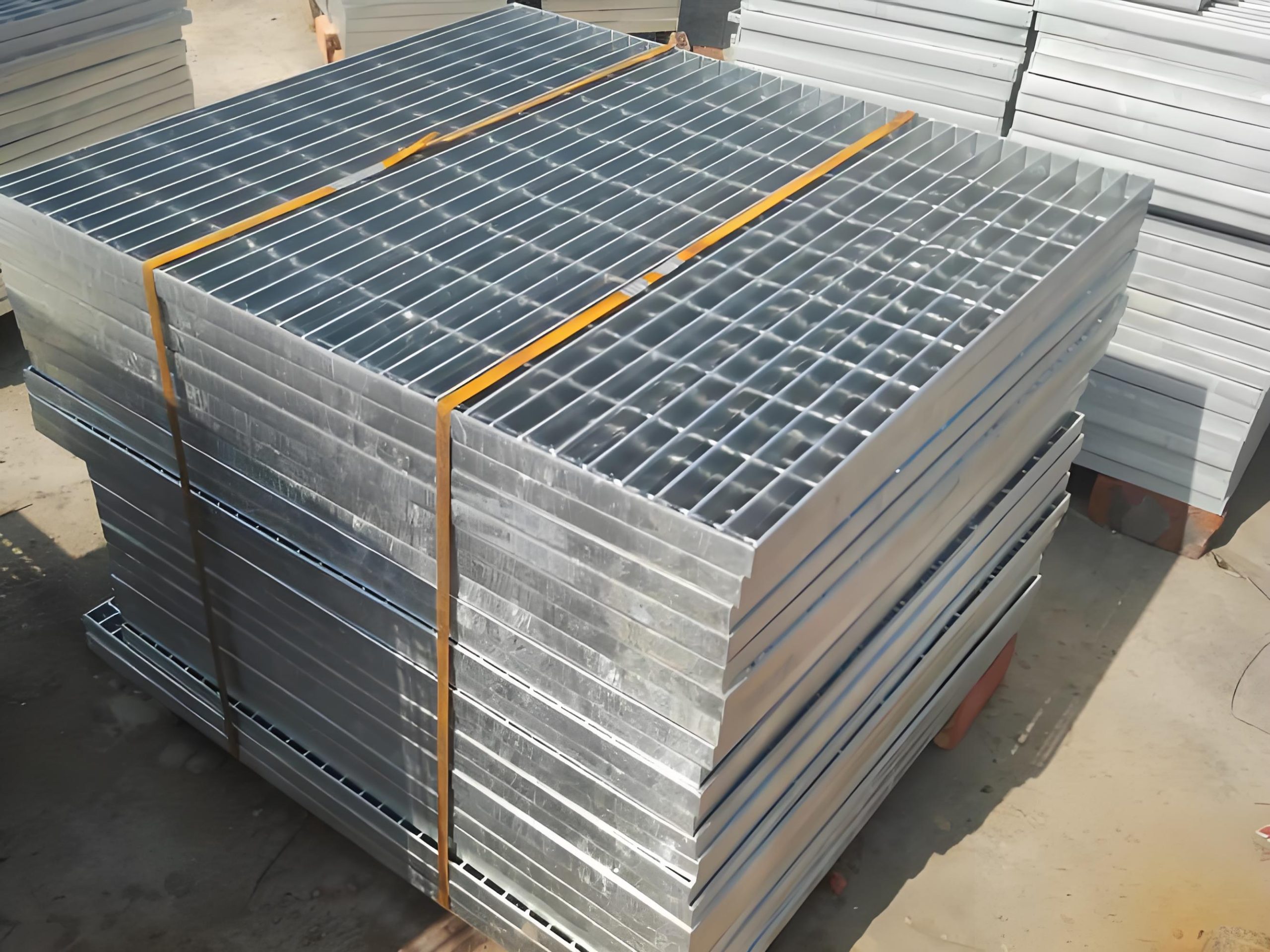
Drainage grating and trench covers must balance water flow, load capacity, removable design, support ledge, and panel weight. Pedestrian drainage covers may use light or medium grating. Forklift or vehicle drainage covers require heavy duty grating and stronger banding.
| Application | Main Price Drivers | Common Cost Risk |
|---|---|---|
| Industrial platform | Load, span, bearing bar size, cutouts, galvanizing | Underestimating clear span or custom fabrication |
| Walkway | Surface type, spacing, galvanizing, panel size | Choosing plain surface for wet areas |
| Drainage cover | Load, water flow, support ledge, banding, removability | Ignoring wheel load or maintenance lifting weight |
| Stair tread | Side plates, nosing, bolt holes, serrated surface | Missing hole location or stair width details |
| Heavy-duty road drain | Vehicle load, heavy bars, frames, lifting holes | Using walkway grating for traffic load |
Buyers can estimate steel grating cost by following a basic process. First, calculate the total area in square meters. Second, select the specification according to load and span. Third, confirm whether the surface is black, painted, galvanized, or stainless. Fourth, add fabrication items such as cutting, banding, holes, and toe plates. Fifth, include packing and shipping cost.
| Step | What to Confirm | Why It Matters |
|---|---|---|
| 1 | Total square meters | Gives basic project quantity |
| 2 | Load and clear span | Controls bearing bar size and duty level |
| 3 | Material and surface finish | Controls corrosion resistance and price |
| 4 | Custom fabrication | Adds cutting, banding, holes, and drawing work |
| 5 | Packing and shipping | Determines final delivered cost |
To receive an accurate steel grating price per square meter, buyers should provide complete technical and commercial information. If the inquiry only asks for “steel grating price,” the supplier can only provide a rough estimate. A detailed inquiry helps avoid wrong specifications and price changes later.
Buyers should state whether the grating should be carbon steel, galvanized steel, stainless steel, or another material. Surface treatment should also be confirmed, such as black finish, painted finish, hot-dip galvanized finish, powder coating, or stainless steel finish.
The quotation should include bearing bar size, bearing bar spacing, cross bar spacing, surface type, and panel size. If the buyer does not know the correct specification, load and span information should be provided so the manufacturer can recommend options.
The supplier needs to know whether the grating will be used for pedestrian walkways, platforms, trench covers, stair treads, forklifts, vehicles, or equipment access. Load requirement and clear span are essential for selecting the correct product.
Custom grating requires drawings. Drawings should show panel length, width, bearing bar direction, cutouts, holes, notches, edge banding, stair tread details, toe plates, frames, and panel numbers.
Buyers should provide total quantity, destination, delivery terms, packing requirements, and whether accessories such as clips, bolts, handles, or frames are needed. These details affect final price and shipping cost.
| Quotation Information | Details Buyers Should Provide |
|---|---|
| Material | Carbon steel, galvanized steel, stainless steel, aluminum, or specified grade |
| Bearing bar | Height, thickness, and spacing |
| Cross bar | Type and spacing |
| Panel size | Length, width, quantity, tolerance, panel numbers |
| Surface type | Plain or serrated |
| Surface treatment | Black, painted, hot-dip galvanized, powder coated, stainless finish |
| Load condition | Pedestrian, cart, forklift, vehicle, equipment load |
| Clear span | Unsupported distance between beams or support frames |
| Custom details | Cutouts, banding, holes, stair tread parts, toe plates, frames |
| Delivery | Packing method, destination, shipping terms, export documents |
How much is steel grating per square meter?
Steel grating price per square meter depends on material, bearing bar size, bar thickness, bearing bar spacing, cross bar spacing, surface treatment, load requirement, panel size, quantity, fabrication details, and shipping cost. Light duty steel grating is usually cheaper, while heavy duty galvanized grating, serrated grating, stainless steel grating, and custom fabricated panels cost more. For an accurate price, buyers should provide specifications and drawings.
Why do steel grating prices vary so much?
Steel grating prices vary because different specifications use different amounts of steel. A panel with 25 x 3 mm bearing bars is much lighter and cheaper than a panel with 50 x 5 mm bearing bars. Closer spacing, hot-dip galvanizing, serrated surface, edge banding, cutouts, stair tread side plates, frames, and shipping weight also change the final price per square meter.
What is the cheapest steel grating option?
The cheapest steel grating option is usually a light duty carbon steel grating with smaller bearing bars, wider spacing, plain surface, standard rectangular size, and no special fabrication. However, the cheapest option may not be suitable for outdoor, wet, corrosive, heavy-load, or vehicle areas. Buyers should choose the lowest suitable specification that still meets load, span, safety, and corrosion requirements.
