

Steel grating for wastewater treatment plants provides safe, drainable, and load-bearing access across screening channels, aeration tanks, clarifiers, pump stations, sludge-handling areas, chemical-dosing rooms, trenches, and process platforms. These facilities combine constant moisture, contaminated water, cleaning chemicals, chlorides, hydrogen sulfide, biological deposits, and frequent pedestrian traffic, making grating selection more demanding than it is for a typical dry industrial building. Hot-dip galvanized steel, 304 stainless steel, and 316 or 316L stainless steel can all be suitable, but they serve different exposure conditions and budgets. The correct choice depends on water chemistry, chemical concentration, ventilation, clear span, load type, surface profile, support condition, fabrication quality, fastener compatibility, and maintenance access. This guide explains how to specify wastewater treatment plant grating as a complete access system rather than purchasing panels by material or price alone.
Wastewater treatment plant steel grating is an open-grid metal flooring or covering product manufactured from parallel bearing bars connected by cross bars. The bearing bars carry loads between structural supports, while the cross bars maintain spacing and stabilize the panel. Openings between the bars allow water, cleaning liquid, air, light, and some debris to pass through the surface.
The grating can be manufactured from carbon steel, hot-dip galvanized steel, 304 stainless steel, 316 stainless steel, or 316L stainless steel. It may be welded, press-locked, or specially fabricated into panels, walkways, platforms, stair treads, trench covers, drain grates, removable access covers, and equipment surrounds.
A complete wastewater grating system includes more than the panel. It can also include support beams, frames, clips, bolts, toe plates, handrails, stair nosings, lifting handles, hinges, safety chains, cut-out reinforcement, and removable access sections. Every component must be suitable for the environment and the required load.
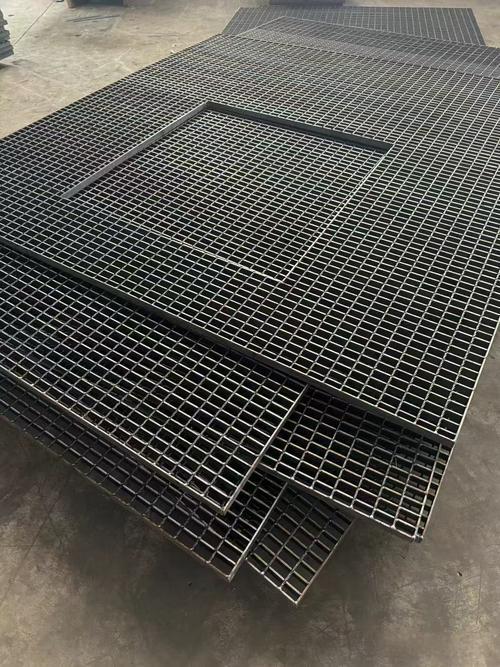
Wastewater facilities require regular inspection, sampling, cleaning, adjustment, and maintenance. Operators need access to screens, pumps, tanks, valves, mixers, blowers, chemical-dosing equipment, clarifier drives, and sludge-processing systems. Solid floors are not practical in every location because they may collect water, restrict ventilation, add weight, or obstruct access to equipment below.
Grating creates defined walking routes around tanks, channels, machinery, and open water. Properly designed panels support workers, tools, maintenance carts, and specified equipment while maintaining access to process areas.
The open structure allows rain, process water, and wash-down liquid to leave the walking surface. This reduces standing water, although it does not eliminate slip risk. The drainage system beneath the grating must also have enough capacity to carry the liquid away.
Open grating allows air to circulate around wet channels and equipment. It also allows light and visual inspection through the walking surface. Ventilation can be especially important where humid or corrosive gases may collect, but grating alone cannot replace a designed mechanical ventilation system.
Steel grating can provide a high strength-to-weight ratio compared with solid plate or concrete decking. Lower dead load may simplify supporting steelwork, lifting, installation, and future panel removal.
Removable panels allow access to pumps, valves, screens, channels, and pipework. Properly marked panels can be removed and reinstalled during scheduled maintenance without dismantling an entire platform.
Material selection should begin with the actual exposure zone. A single wastewater treatment plant may require different materials in different areas. Galvanized steel may be suitable for an outdoor walkway above clean water, while 316L stainless steel or FRP may be more appropriate beside a chemical-dosing tank.
| Material | Main advantages | Main limitations | Typical wastewater use |
|---|---|---|---|
| Hot-dip galvanized carbon steel | High structural capacity, broad availability, economical initial price | Zinc coating can deteriorate in acidic, chloride-rich, or continuously wet conditions | General outdoor platforms, access walkways, dry mechanical areas |
| 304 stainless steel | Good general corrosion resistance, clean appearance, easy maintenance | More vulnerable than 316 to chloride pitting and aggressive chemicals | Indoor wet areas, clean-water zones, laboratories, mild wash-down areas |
| 316 stainless steel | Improved chloride and chemical resistance compared with 304 | Higher price and not immune to stagnant chloride or severe chemical exposure | Clarifiers, wet platforms, coastal plants, chemical and wastewater access |
| 316L stainless steel | Improved suitability for extensive welded fabrication due to lower carbon content | Higher cost and still requires correct cleaning and crevice control | Welded platforms, chemical-dosing areas, drainage systems, highly wet zones |
| Painted or coated carbon steel | Custom colors and project-specific coating systems | Damage, edges, welds, and inaccessible areas require maintenance | Indoor mechanical rooms and controlled exposure zones |
Hot-dip galvanized grating is manufactured from carbon steel and immersed in molten zinc after fabrication. Galvanizing after welding, cutting, and banding helps protect intersections and fabricated edges. It is a common choice for wastewater plant platforms where structural strength and purchase price are major considerations.
Galvanized steel can perform well in ventilated outdoor areas with moderate corrosion exposure. It is less suitable where the coating is continuously exposed to acidic condensate, strong treatment chemicals, stagnant wastewater, or aggressive chloride conditions. Once the coating is damaged or consumed, the underlying steel can corrode.
304 stainless steel offers better general corrosion resistance than galvanized carbon steel and does not depend on a zinc coating. It is suitable for many indoor wet areas, fresh-water zones, laboratories, control-related access areas, and locations with mild cleaning chemicals.
304 should be reviewed carefully where chlorides, hypochlorites, brines, coastal air, or aggressive dosing chemicals are present. Deposits and tight crevices can create local conditions that are more corrosive than the surrounding atmosphere.
The molybdenum in 316 stainless steel improves resistance to chloride-induced pitting and crevice corrosion compared with 304. It is frequently selected for wet process areas, clarifiers, pump platforms, sewage channels, coastal wastewater facilities, and chemical-dosing zones.
316L has a lower maximum carbon content than conventional 316 and is often preferred for welded grating, especially where panels require extensive intersection welding, banding, framing, toe plates, or stair tread fabrication. Buyers can review the 316L stainless steel 19-W-4 grating specification when considering a welded corrosion-resistant product.
| Selection factor | Galvanized steel | 304 stainless steel | 316 or 316L stainless steel |
|---|---|---|---|
| Initial cost | Generally lowest | Higher | Usually highest of the three |
| General wet exposure | Suitable when coating conditions are controlled | Good | Very good for many applications |
| Chloride resistance | Limited by zinc coating environment | Moderate | Better than 304, but not unlimited |
| Welded fabrication | Normally galvanized after fabrication | Requires post-weld cleaning | 316L is often preferred for extensive welding |
| Maintenance | Coating inspection and repair may be required | Cleaning and contamination control | Cleaning, deposit removal, and crevice inspection |
| Typical location | General structural walkways | Mild wet and hygienic areas | Chemical, chloride, coastal, and demanding wet areas |
Welded grating is produced by joining cross bars to bearing bars at regular intervals. It offers stable construction, broad size availability, efficient production, and practical custom fabrication. It is commonly used for wastewater platforms, walkways, stair treads, trenches, and drainage covers.
Welding quality should be controlled because missing, cracked, or inconsistent welds can affect panel rigidity and durability. Stainless steel welds may require pickling and passivation, while carbon-steel panels should normally be fully fabricated before galvanizing.
Press-locked grating is manufactured by pressing cross bars into slots in the bearing bars. It creates a regular grid with clean intersections and can be useful for architectural walkways, screens, ventilation covers, public-facing treatment facilities, and applications requiring a specific mesh appearance.
Press-locked grating can be manufactured from carbon steel, galvanized steel, stainless steel, or aluminum. Slot accuracy, bar engagement, flatness, and edge banding should be included in the inspection plan.
Heavy-duty grating uses deeper, thicker, or more closely spaced bearing bars to carry large concentrated loads, wheel loads, vehicles, or equipment. It may be required for truck-accessible drainage channels, maintenance vehicle routes, loading areas, and heavy removable covers.
The phrase “heavy-duty” does not define a load rating. The purchase specification must state the clear span, wheel load, contact area, axle arrangement, impact allowance, traffic direction, allowable deflection, frame details, and applicable design standard.
Wastewater treatment plant grating can be supplied as stock panels or fabricated panels. Stock panels may reduce manufacturing time, but custom panels usually provide better coordination with tanks, channels, supports, pumps, valves, and process equipment.
| Specification item | Common examples | Project consideration |
|---|---|---|
| Bearing bar height | 20, 25, 30, 32, 40, 50 mm or heavier | Load, clear span, deflection, and impact |
| Bearing bar thickness | 3, 4, 5, 6 mm or project-specific sizes | Capacity, corrosion exposure, weight, and price |
| Bearing bar pitch | Approximately 25, 30, 34, 40, or 60 mm | Walking comfort, load distribution, opening size, and drainage |
| Cross bar pitch | Approximately 50, 76, 100, or 101.6 mm | Panel stability, appearance, and debris passage |
| Panel width | 300, 500, 600, 750, 1,000 mm or custom | Walkway width, support layout, handling, and panel joints |
| Panel length | 1,000 to 6,000 mm or custom | Bearing direction, transport, lifting weight, and clear span |
These dimensions are common market examples rather than universal standard sizes. The supplier should confirm actual production availability and dimensional tolerances.
Bearing bars are the primary load-carrying members and must span between supports. They are usually much deeper than the cross bars. Drawings should include a clear bearing-direction arrow so installers do not rotate panels incorrectly.
Overall panel length should not be confused with unsupported span. A long panel can cross several beams and have a short clear span between each support. Conversely, a relatively small panel may still be overloaded if it bridges a large unsupported opening.
For more information about common dimensions and designation formats, see the steel bar grating dimensions guide.
Wastewater grating may carry operators, maintenance tools, portable pumps, cleaning equipment, carts, lifting devices, or vehicles. Every expected load should be identified before the bearing bar size is selected.
A uniform load is distributed over an area and may represent groups of workers, temporary materials, or general platform loading. The specification should distinguish between service load, allowable load, factored load, and test load.
A concentrated load acts over a smaller footprint. Equipment feet, trolley wheels, jacks, hoist bases, or a heavy component placed during maintenance can load only a few bearing bars. Contact dimensions and the worst loading position should be provided.
Grating installed over plant roads or accessible drainage trenches requires a vehicle-specific analysis. Wheel force, tire contact area, axle arrangement, impact, braking, traffic frequency, and direction of travel all affect the design.
Deflection may govern the design before material strength is reached. Excessive movement can create a springy walking surface, panel rocking, loose clips, noise, trip edges, and discomfort. It may also interfere with equipment or drainage alignment.
Some projects use a span-based deflection limit, while others establish a fixed maximum movement. The required criterion should be stated rather than left to the supplier’s assumption.
The appropriate safety factor and load combination should come from the governing structural code, owner specification, or project engineer. A supplier’s standard load table is useful for preliminary selection, but it should not replace a project calculation when loads, spans, or support conditions differ from the table assumptions.
| Required input | Why it matters |
|---|---|
| Clear support span | Capacity and deflection are highly sensitive to unsupported distance |
| Bearing bar direction | Determines the structural load path |
| Uniform design load | Defines general floor or platform loading |
| Concentrated load | Controls local loading on a limited number of bars |
| Wheel load and footprint | Required for carts, forklifts, and vehicles |
| Allowable deflection | Controls serviceability and walking comfort |
| Support seat width | Affects bearing stability and edge performance |
| Fixing condition | Affects movement, uplift, vibration, and panel restraint |
Wastewater treatment plants contain multiple corrosion zones. Exposure beside an open aeration tank is different from exposure inside a poorly ventilated pump station or directly below a chemical-dosing line. Material selection should be completed by zone rather than applying one grade to the entire facility without review.
Frequent wetting keeps surfaces conductive, while drying can concentrate salts and process chemicals. Repeated wet-dry cycles may therefore be more aggressive than clean water alone. Horizontal supports, clips, frames, and crevices require particular attention because deposits can remain after the visible grating surface has dried.
Hydrogen sulfide may form under anaerobic wastewater conditions and can be released in wet wells, sewers, sludge systems, digesters, enclosed channels, and pump stations. In the presence of moisture and biological activity, sulfur-containing compounds can contribute to corrosive conditions and damage concrete, carbon steel, coatings, and equipment.
Hydrogen sulfide risk cannot be managed through grating material alone. Ventilation, gas monitoring, process control, coating selection, deposit removal, and safe confined-space procedures may also be required.
304 and 316 stainless steels can perform well in many moist hydrogen sulfide environments near ambient temperature, but attack may occur where hydrogen sulfide, chlorides, elevated temperature, deposits, and stagnant moisture combine. Severe zones should be reviewed by a corrosion specialist.
Ferric chloride, sodium hypochlorite, acids, alkalis, polymers, cleaning chemicals, and disinfectants have different effects on steel, zinc coatings, and stainless alloys. A general statement that a material is “chemical resistant” is not sufficient.
The project team should identify:
Overlapping bars, clips, washers, frames, deposits, and poorly drained support seats can form crevices. Stainless steel in a tight wet crevice may behave differently from an exposed, regularly washed surface.
Dissimilar-metal contact can also cause galvanic corrosion when moisture creates an electrical path. Stainless grating installed on carbon-steel, galvanized-steel, or aluminum supports may require compatible fasteners, coatings, isolation pads, washers, or sealants.
Plain grating has flat bearing bar tops. It is easier to sweep, wash, and inspect and may be appropriate in controlled indoor areas where contamination and slip risk are limited. It can also provide smoother travel for carts and movable equipment.
Serrated grating has notches along the top edge of the bearing bars. These notches improve footwear engagement and are commonly selected for wet platforms, outdoor walkways, screening areas, clarifier access, sludge zones, drainage channels, and stairs.
Serrated grating does not remain safe without maintenance. Grease, biofilm, algae, ice, sludge, polymer residue, and compacted dirt can cover the serrations. Regular cleaning and inspection are still necessary.
Additional options include abrasive nosings, perforated stair nosings, gritted inserts, close-mesh panels, and project-specific traction coatings. The chosen system should be resistant to water, ultraviolet exposure, treatment chemicals, cleaning equipment, and expected wear.
Slip resistance should be evaluated together with drainage, slope, footwear, handrails, lighting, housekeeping, and emergency access. No surface profile can compensate for standing sludge or an uncontrolled chemical leak.
A larger open area permits more water and air to pass through the panel, but it also creates larger openings. Drainage capacity should account for the bar arrangement, debris accumulation, channel capacity, and peak wash-down or stormwater flow.
Influent and screening areas can contain rags, plastics, wipes, grit, and other solids. Grating should not be expected to replace process screening equipment. Opening size should instead be selected to prevent unsafe passage of tools or objects while allowing routine drainage and cleaning.
Open grating can support air movement, but enclosed wet wells, pump stations, and chemical rooms may require mechanical ventilation. Grating openings should not be counted as the sole control for hydrogen sulfide or other hazardous gases.
Where grating is located above workers, equipment, open tanks, or process channels, the project should assess whether small objects can pass through. Possible controls include closer bearing bar spacing, secondary mesh, toe plates, kick plates, solid curbs, tool restraints, or protected exclusion zones below.
Wastewater grating may be specified under YB/T 4001.1, ANSI/NAAMM MBG 531, BS 4592, applicable ASTM material and galvanizing standards, EN material standards, local building codes, occupational safety requirements, and owner-specific water authority standards.
The purchase documents should identify which standard controls each part of the work. One standard may define the grating product, another may define structural loads, and another may control workplace access and fall protection.
A useful overview of regional product requirements is available in the steel grating standards guide.
Screening areas are exposed to raw sewage, debris, wash water, aerosols, and frequent maintenance. Grating provides access to screens, conveyors, channels, and lifting equipment while allowing wash-down water to drain.
Important requirements include slip resistance, close coordination with equipment openings, removable access panels, toe plates, corrosion-resistant fasteners, and sufficient space for screen cleaning and debris handling.
Walkways around aeration tanks face continuous moisture, aerosols, biological deposits, and possible chemical exposure. Panels should be securely fixed against vibration and wind. Handrails, toe plates, gates, and safe access to valves and instruments should be coordinated with the grating layout.
Clarifier bridges and perimeter walkways require low-deflection walking surfaces, corrosion resistance, drainage, and reliable fixing. Grating near rotating equipment should be arranged so removable panels do not interfere with drives, skimmers, or maintenance lifting.
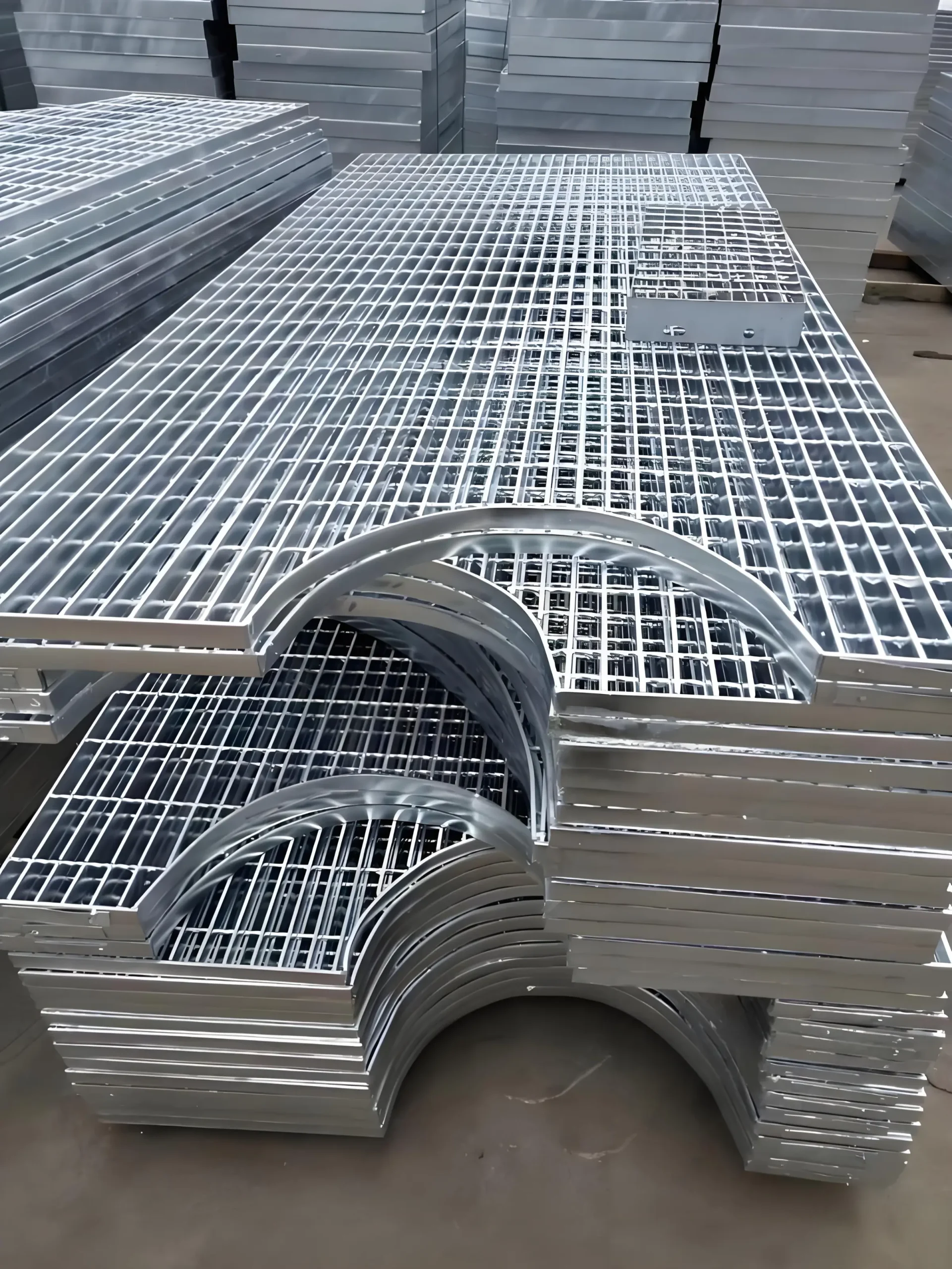
Pump stations may have high humidity, hydrogen sulfide, restricted ventilation, and concentrated maintenance loads. Covers may need hinges, locks, fall protection, lifting handles, or safety grilles beneath the primary panel.
Grating above wet wells should not be removed without an appropriate access and fall-protection procedure. Panel weight and lifting ergonomics should be considered during design.
Sludge can block openings and create a persistent slip hazard. The surface should be easy to wash, while the support arrangement should minimize hidden deposits. Chemical compatibility may differ from cleaner sections of the plant.
| Product application | Primary design requirement | Typical fabrication details |
|---|---|---|
| Walkways | Safe walking surface, controlled deflection, drainage, corrosion resistance | Serrated bars, panel clips, close mesh, toe plates |
| Platforms | Personnel and maintenance loads, equipment cut-outs, fall protection | Banding, reinforced openings, panel numbering, removable sections |
| Stair treads | Traction, visible nosing, secure stringer connections | Carrier plates, bolt holes, serrated or abrasive nosing |
| Trench covers | Concentrated load, support frame, lifting, movement control | Load banding, handles, captive fixings, anti-rattle details |
| Drain covers | Hydraulic capacity, safe openings, cleaning access | Close mesh, frames, removable panels, smooth banded edges |
Panel joints should occur over supports, and the bearing bars should span in the correct direction. The layout should show handrail posts, toe plates, equipment penetrations, removable access, and escape routes.
A grating stair tread normally includes a grating panel, side carrier plates or angles, and a front nosing. Wet wastewater environments commonly require serrated bearing bars or an additional slip-resistant nosing. Tread dimensions and connections must also comply with the applicable stair and access regulations.
Trench covers should be designed together with their frames and support seats. A strong panel installed on an inadequate frame can rock, deform, or fall into the opening. Covers accessible to carts or vehicles require specific wheel-load calculations.
CSSP Grating provides additional fabrication and selection information on its steel grating trench cover page.
Mechanical clips make panels removable and avoid field welding. The clip must fit the grating pattern and support flange. Clip spacing should account for panel size, pedestrian traffic, vibration, wind uplift, and the consequences of displacement.
Bolts provide positive restraint and can be used for anti-lift or captive panel systems. The specification should identify bolt material, diameter, washers, nuts, hole positions, tightening requirements, and access for future removal.
Welding may be suitable for permanent grating but makes removal more difficult. Galvanized panels require coating repair at welded areas, while stainless steel welds may require cleaning and passivation. Dissimilar-metal welds need an approved procedure.
Frames should provide adequate bearing width, stiffness, anchorage, and level seating. Water-trapping ledges and unventilated crevices should be minimized. Removable panels should sit securely without rocking.
Grating is one element of a wastewater access system. Worker safety also depends on guardrails, handrails, toe plates, gates, ladders, stairs, lighting, ventilation, warning signs, rescue access, and operating procedures.
Elevated walkways, open tanks, channels, pits, and platform edges may require guardrails and handrails. The posts and base plates should be coordinated with the grating and supporting steel so loads are transferred into the main structure rather than into an inadequately reinforced panel.
Toe plates reduce the risk of tools and materials falling from elevated platforms. They may be required at open edges, around equipment penetrations, and beside occupied lower levels. The toe plate material and attachment should match the corrosion environment.
Removing a panel creates an immediate fall hazard. Removable grating should be controlled through barriers, covers, warning systems, and maintenance procedures. Hinged covers, safety grilles, or captive fasteners may reduce risk at frequently accessed openings.
Areas intended only for pedestrians should be protected from forklifts, lifting equipment, and vehicles. Maintenance teams should know the permitted load and any restrictions on temporary storage. Load markings may be useful in critical access zones.
Openings are commonly required around pipes, columns, valves, instrument supports, and equipment. Cutting through bearing bars reduces capacity and may require reinforcement or additional framing. Cut-outs should be shown on approved drawings rather than created from approximate field measurements.
Trim banding closes exposed bearing bar ends, improves handling, and creates a cleaner perimeter. It is commonly used on cut panels, stair treads, removable covers, and visible edges.
Load-carrying banding is designed to transfer or distribute load at a panel edge. It should not be confused with light trim banding. The drawing should identify where structural edge reinforcement is required.
Trench covers, sumps, wet wells, and drainage openings may require fabricated support frames. Frame dimensions must be coordinated with the finished panel, anchors, concrete tolerances, drainage direction, and lifting method.
Every custom panel should have a durable identification mark matching the installation drawing. Clear numbering reduces site cutting, incorrect orientation, installation delays, and misplaced removable sections.
Grating should be cleaned frequently enough to prevent sludge, grease, algae, grit, polymers, salts, and chemical residues from covering the walking surface or blocking drainage. Cleaning frequency should reflect the process area rather than using one schedule for the entire plant.
Inspect for zinc loss, red rust, coating damage, chemical attack, worn traffic areas, and corrosion at clips or supports. Approved zinc-rich repair systems may be used for limited damage, subject to the project coating specification.
Stainless steel should be washed to remove deposits and checked for pitting, crevice corrosion, tea staining, and embedded iron. Carbon-steel brushes or abrasives should not be used. Cleaning chemicals should be compatible with the stainless grade.
Inspection should cover:
Good corrosion control begins before manufacturing. Avoid water-trapping details, provide ventilation, minimize crevices, select compatible fasteners, allow cleaning access, complete fabrication before final surface treatment, and separate dissimilar metals where required.
FRP grating is a nonmetallic alternative commonly used in chemically aggressive wastewater zones. Neither material is automatically superior for every location. Steel generally provides greater stiffness and may be more suitable for long spans or heavy concentrated loads, while correctly selected FRP can provide strong chemical resistance and electrical nonconductivity.
| Comparison factor | Steel or stainless steel grating | FRP grating |
|---|---|---|
| Structural stiffness | Generally higher, supporting efficient long-span or heavy-load design | Lower modulus means deflection may control the design |
| Corrosion behavior | Depends on alloy or protective coating | Depends on resin system, glass content, and chemical exposure |
| Weight | Heavier | Lighter and easier to handle manually |
| Electrical conductivity | Conductive | Generally nonconductive when correctly specified |
| Fire performance | Noncombustible metal, although strength changes at high temperature | Resin-dependent flame, smoke, and heat performance must be verified |
| Impact and cutting | Ductile behavior and established welding or fabrication methods | Edges require sealing and fibers require controlled cutting procedures |
| Slip resistance | Plain, serrated, or applied anti-slip surfaces | Concave or grit-top surfaces are commonly available |
| Typical wastewater role | Structural platforms, long spans, heavy loads, stainless hygienic areas | Chemical-dosing zones, corrosive trenches, electrical and lightweight access |
Steel grating may be preferred for long spans, high concentrated loads, vehicle loads, high-temperature exposure, impact-prone areas, or projects requiring established steel fabrication and support details.
FRP may be preferred in highly corrosive chemical zones, areas requiring electrical nonconductivity, or locations where low weight simplifies installation. The resin system must be compatible with the exact chemicals, temperature, fire requirements, ultraviolet exposure, and load.
Many wastewater projects benefit from a zoned approach. Galvanized steel can serve general structural areas, stainless steel can serve wet or hygienic zones, and FRP can serve selected chemical or electrical areas. Interfaces, support dimensions, fire requirements, and fasteners should be coordinated across the materials.
Separate screening, aeration, clarification, sludge, chemical dosing, pump station, laboratory, clean-water, outdoor, enclosed, splash, and immersion areas. Record the chemicals, gases, deposits, and cleaning conditions in each zone.
Choose galvanized steel, 304 stainless, 316 or 316L stainless, coated steel, FRP, or another material according to the exposure and required design life. Do not use initial price as the only selection criterion.
Provide clear spans, support widths, pedestrian loads, concentrated maintenance loads, carts, vehicles, equipment loads, impact, vibration, and allowable deflection.
Define bearing bar spacing, cross bar spacing, open area, maximum opening, plain or serrated surface, stair nosing, and dropped-object controls.
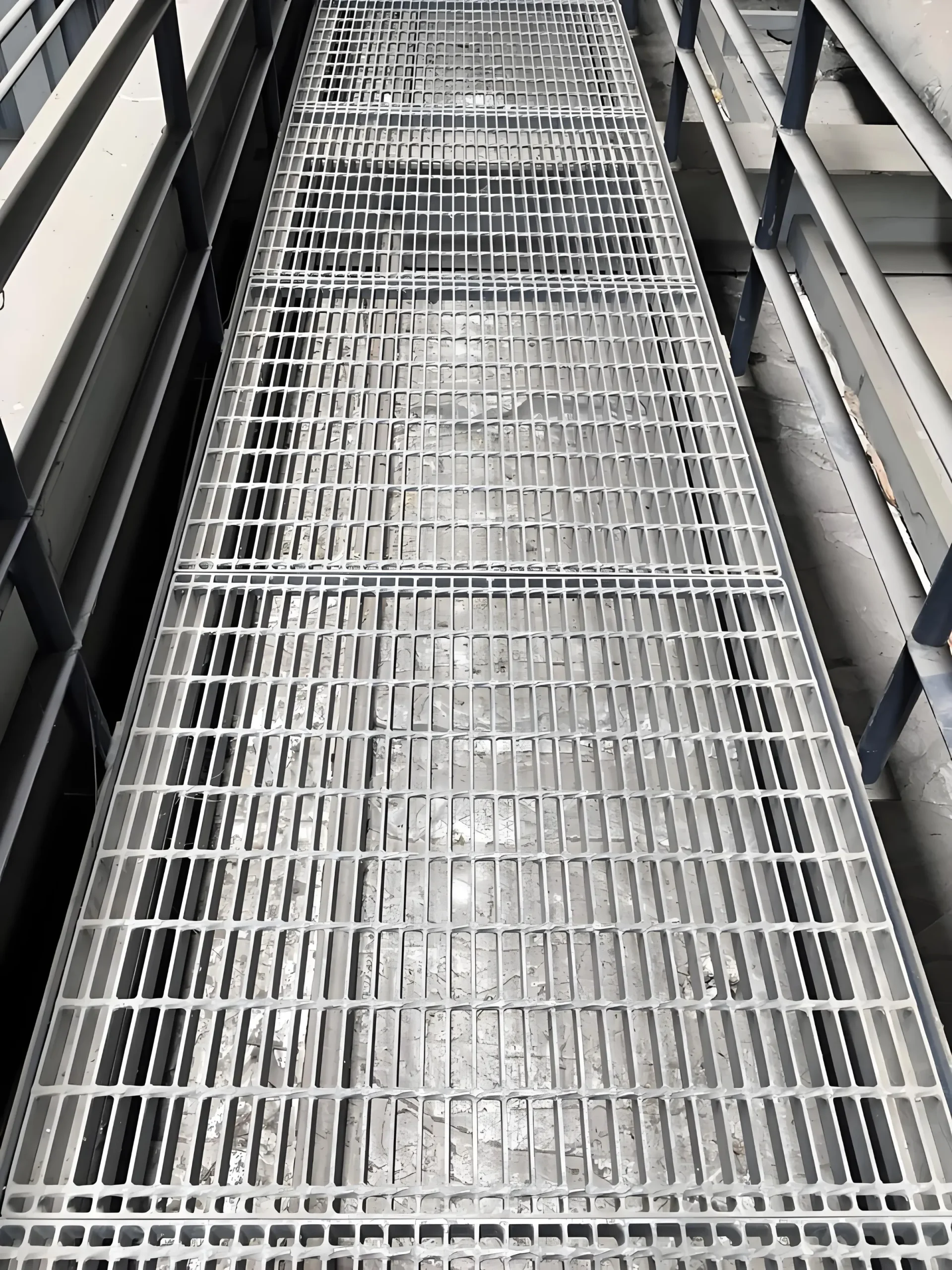
Show every panel, bearing direction, support, cut-out, banded edge, toe plate, stair tread, frame, clip, removable section, and lifting point. Identify panels individually.
State the galvanizing, paint, pickling, passivation, stainless finish, coating repair, contamination control, and dissimilar-metal isolation requirements.
Request material certificates, approved drawings, load calculations, dimensional reports, weld inspections, coating reports, fastener specifications, panel lists, and a certificate of conformity.
| Procurement category | Information required in the inquiry |
|---|---|
| Application | Walkway, platform, stair, trench, drain, screen access, clarifier, or pump station |
| Environment | Moisture, chemicals, chlorides, hydrogen sulfide, temperature, ventilation, and deposits |
| Material | Galvanized steel, 304, 316, 316L, coated steel, or approved alternative |
| Construction | Welded, press-locked, heavy-duty, or custom fabricated |
| Dimensions | Bearing bars, cross bars, panel size, spacing, tolerances, and bearing direction |
| Loading | Uniform, concentrated, wheel, impact, equipment, and allowable deflection |
| Surface | Plain, serrated, close mesh, abrasive nosing, or another slip-resistant option |
| Fabrication | Banding, cut-outs, frames, toe plates, stair parts, handles, and panel marks |
| Installation | Support seats, clips, bolts, welds, isolation, removable panels, and lifting |
| Documents | Drawings, calculations, certificates, inspection reports, and packing schedule |
Providing this information allows the manufacturer to recommend a grating system based on the actual wastewater process, structural duty, and maintenance plan. Buyers can review the complete steel grating product range when comparing available materials and construction methods.
What is the best steel grating material for a wastewater treatment plant? There is no single best material for every area. Hot-dip galvanized steel is economical and structurally efficient for many ventilated, moderately corrosive platforms. Type 304 stainless steel suits some mild wet or clean-water areas, while 316 or 316L is generally better for chlorides, chemical exposure, sewage, and demanding wet environments. Highly aggressive chemical zones may require duplex stainless steel, FRP, or another material. Selection should be based on wastewater chemistry, gases, temperature, deposits, ventilation, load, and required service life.
Is serrated steel grating required in wastewater treatment plants? Serrated grating is commonly recommended for screening areas, outdoor walkways, stairs, clarifiers, sludge zones, wash-down floors, and other wet working areas because it provides better footwear engagement than a plain surface. It is not automatically required in every location, and it does not make a contaminated surface completely slip-proof. The final decision should follow the project risk assessment and consider drainage, slope, footwear, cleaning, handrails, lighting, and local safety requirements.
How do I calculate the correct grating size and load capacity for a wastewater walkway? Begin with the clear span between supports, bearing bar direction, walkway width, uniform design load, concentrated maintenance load, cart or wheel load, support seat, and allowable deflection. Then select the bearing bar depth, thickness, and spacing using the governing standard, verified load tables, or an engineering calculation. Overall panel dimensions alone do not determine capacity, and a standard pedestrian panel should not be assumed to support maintenance vehicles or stored equipment.