

30×100 steel grating is one of the most widely used metric bar grating patterns for industrial platforms, walkways, catwalks, access floors, stair landings, drainage covers, and maintenance areas. The designation describes a 30 mm bearing-bar pitch and a 100 mm cross-bar pitch, but it does not identify the full load capacity or final price by itself. A 30×100 panel made with 25×3 mm bearing bars is very different from one made with 40×5 mm bearing bars, even when both panels have the same mesh pattern and outside dimensions. Factory price is mainly driven by steel weight, bearing-bar section, surface type, galvanizing, fabrication, quantity, packing, and delivery terms.
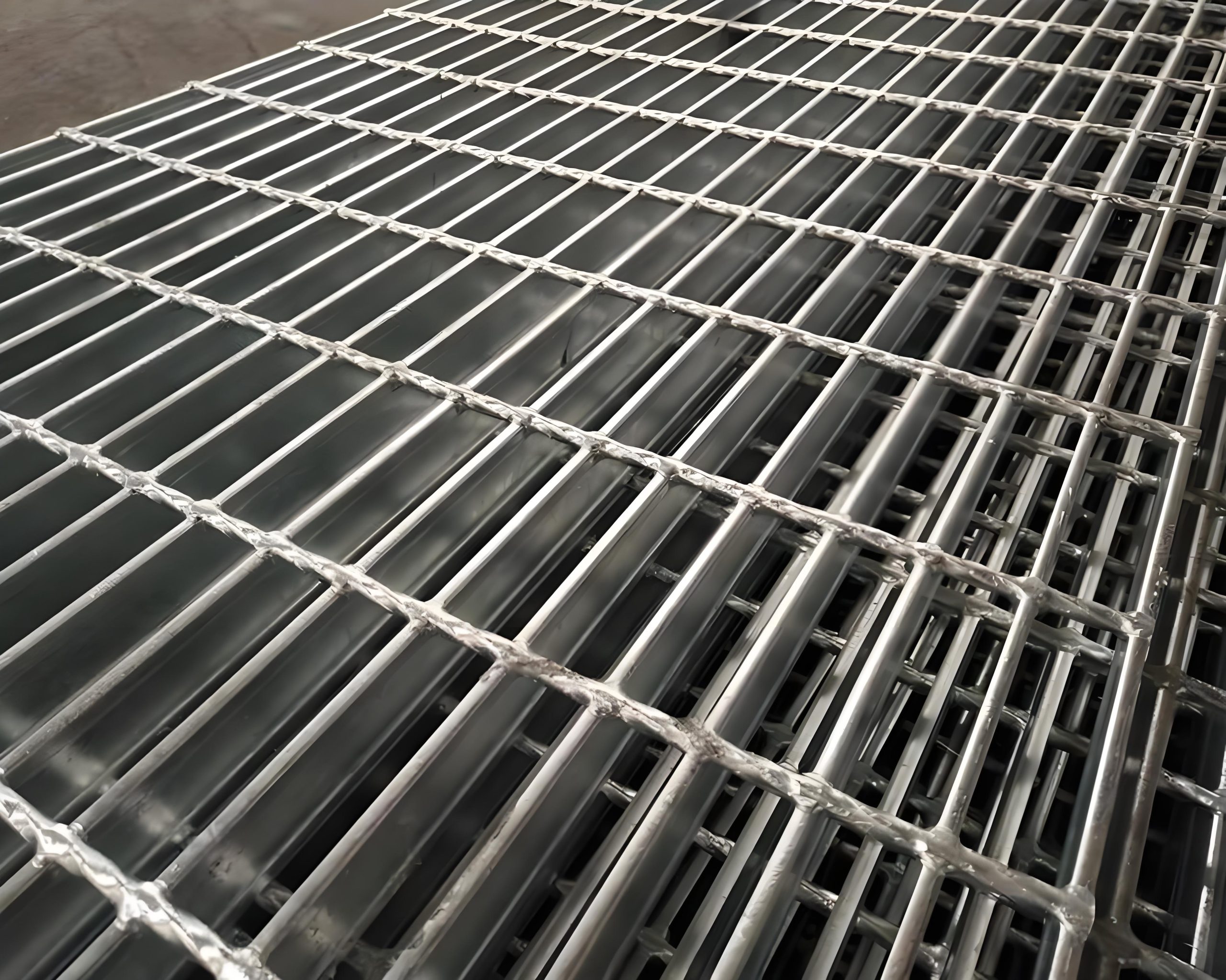
In a 30×100 steel grating specification, the first number normally refers to the center-to-center spacing between bearing bars, while the second number refers to the center-to-center spacing between cross bars.
30×100 steel grating = 30 mm bearing-bar pitch × 100 mm cross-bar pitch.
The bearing bars are the main load-carrying members. They run in the span direction between supports and resist bending under foot traffic, equipment loads, and other service loads. Cross bars connect the bearing bars into a rigid panel and help maintain the grating pattern, panel stability, and spacing accuracy.
30×100 mm mesh is often selected because it offers a practical balance of walking comfort, open area, drainage, strength, production efficiency, and cost. It is common for factory platforms and industrial walkways where a standard open-grid floor is required without using an unnecessarily dense mesh.
More information about common mesh patterns is available in this bar grating sizes and load guide.
Pitch means center-to-center distance. It is not the same as the clear opening between bars.
For example, if a 30×100 grating uses 5 mm thick bearing bars, the approximate clear opening between bearing bars is:
30 mm pitch − 5 mm bearing-bar thickness = 25 mm net opening
The cross-bar opening also depends on the actual cross-bar shape and projected width. Twisted square cross bars, round cross bars, flat cross bars, and press-locked cross bars do not all create the same visible opening. Therefore, the actual open-area percentage should be confirmed from the final grating structure rather than assumed from the 30×100 designation alone.
| Specification Item | 30×100 Steel Grating Meaning | Why It Matters |
|---|---|---|
| Bearing-bar pitch | 30 mm center to center | Affects steel weight, walking support, net opening, and load distribution |
| Cross-bar pitch | 100 mm center to center | Affects panel rigidity, mesh appearance, weld quantity, and open area |
| Bearing-bar size | For example, 25×3 mm, 30×3 mm, 32×5 mm, or 40×5 mm | Main factor in span capacity, deflection, and price |
| Surface type | Plain or serrated | Affects slip resistance, processing cost, and suitability for wet areas |
| Material and finish | Carbon steel, galvanized steel, 304 stainless steel, or 316 stainless steel | Determines corrosion resistance and long-term cost |
The 30×100 mesh pattern does not determine the bearing-bar depth or thickness. Factories can produce the same 30×100 grid with light-duty, standard-duty, or heavy-duty bearing bars according to the required span and load condition.
| Bearing-Bar Size | Approximate Grating Body Weight at 30×100 Mesh | Typical Application | Price Level |
|---|---|---|---|
| 25×3 mm | About 22–24 kg/m² | Light walkways, short-span access floors, small covers | Lower |
| 30×3 mm | About 26–28 kg/m² | General industrial walkways and platforms | Moderate |
| 25×5 mm | About 35–39 kg/m² | Short to medium spans with increased robustness | Moderate |
| 32×5 mm | About 45–48 kg/m² | Industrial platforms, stronger covers, heavier pedestrian use | Moderate to high |
| 40×5 mm | About 55–60 kg/m² | Longer spans, heavy service platforms, demanding industrial access | High |
| 50×5 mm, 50×6 mm, or larger | Project-specific | Heavy-duty floors, vehicle-related loading, long-span designs | High |
The weight figures above are preliminary grating-body references. Final panel weight can be higher after edge banding, serration, galvanized coating, toe plates, frames, clips, cutout reinforcement, or other fabrication is added.
A useful preliminary formula for calculating the bearing-bar portion of grating weight is:
Bearing-bar mass (kg/m²) ≈ 7.85 × bearing-bar depth (mm) × bearing-bar thickness (mm) ÷ bearing-bar pitch (mm)
For example, 30×3 mm bearing bars at 30 mm centers have an estimated bearing-bar mass of:
7.85 × 30 × 3 ÷ 30 = 23.55 kg/m²
After allowing for cross bars and welded construction, a common 30×3 mm, 30×100 steel grating body may weigh approximately 26–28 kg/m² before special fabrication and coating allowances. For more detail, see this steel floor grating weight and price guide.
30×100 steel grating has a relatively open structure compared with solid plate flooring. This allows water, dust, process residue, rain, snow, and small debris to pass through the surface. The openings also allow air circulation and natural light to reach areas below the platform.
The actual open area depends on several variables:
A 30 mm bearing-bar pitch generally provides a denser walking surface than a 40 mm or 50 mm pitch. This can improve foot support and reduce the size of the opening between bearing bars. At the same time, the 100 mm cross-bar pitch keeps the panel relatively open and economical for many industrial applications.
30×100 grating is commonly used in outdoor walkways, wet process areas, wastewater plants, pump stations, steel platforms, marine access systems, and drainage-related structures because the open mesh helps prevent standing water on the walking surface.
However, grating alone does not guarantee good drainage. The support frame, channel below the grating, drain outlet size, maintenance access, and housekeeping practices also affect real drainage performance. Dirt, leaves, welding debris, plastic film, process residue, and compacted mud can reduce the effectiveness of an open grating floor.
Open steel grating can reduce the need for solid floor openings in multi-level structures. It allows light and airflow through platforms and can help improve visibility below elevated maintenance floors. This is useful in process plants, offshore structures, mezzanines, ventilation areas, utility platforms, and tower access systems.
Where dropped tools, bolts, or small parts create a risk to workers below, the project may need toe plates, secondary mesh, tool-control procedures, protective screens, or other safeguards. Open area should always be balanced with safety requirements.
30×100 and 30×50 steel grating use the same 30 mm bearing-bar pitch. The main difference is the cross-bar spacing: 30×50 uses cross bars every 50 mm, while 30×100 uses cross bars every 100 mm.
| Comparison Item | 30×100 Steel Grating | 30×50 Steel Grating |
|---|---|---|
| Cross-bar pitch | 100 mm | 50 mm |
| Mesh appearance | More open and standard industrial pattern | Denser transverse pattern |
| Weight | Usually lower | Usually higher due to additional cross bars |
| Production cost | More economical for standard panels | Higher because of additional material and processing |
| Open area | Higher | Lower |
| Typical use | General platforms, walkways, catwalks, industrial access | Stair treads, close-pattern floors, special access areas |
For most standard industrial walkways, 30×100 grating provides a practical balance between cost, drainage, open area, and panel stability. A 30×50 pattern may be chosen where a tighter cross-bar layout, denser surface appearance, increased local rigidity, or a more closely controlled opening pattern is needed.
The 30×50 mesh does not automatically double the primary span capacity, because bearing bars still carry the main bending load between supports. The main span, bearing-bar section, bearing-bar spacing, support condition, and load type remain the most important structural factors.
A common mistake is to assume that 30×100 grating has one fixed load capacity. In reality, mesh size is only one part of the specification. Two 30×100 panels can have very different allowable loads because their bearing-bar sections and support spans are different.
Load capacity depends on:
A 25×3 mm, 30×100 panel may be suitable for a short-span pedestrian access route. A 40×5 mm, 30×100 panel may be selected for a heavier platform or longer span. The mesh is the same, but the amount of steel and bending resistance are very different.
For projects involving forklifts, pallet jacks, carts, vehicles, machinery, heavy point loads, or repeated impact, the factory needs the actual wheel load, contact area, support layout, and deflection requirement. A pedestrian grating panel should never be assumed suitable for vehicle traffic simply because it looks heavy.
The bearing bars must run in the direction between supports. This is the main span direction. A drawing should clearly show which dimension is the bearing-bar length and where the support beams are located.
For example, a grating panel may be 1000 mm wide and 6000 mm long, with bearing bars running along the 6000 mm length. If support beams are installed every 1000 mm beneath those bars, the design span is 1000 mm, not 6000 mm. The panel can safely extend across multiple support points when the bearing bars are adequately supported.
Overall panel dimensions affect handling, cutting, freight, and installation. Clear span affects structural behavior. A very long panel can perform well when it has frequent support beams. A short panel can fail or deflect excessively if it is supported only at two distant edges.
| Design Item | Why It Must Be Provided to the Factory |
|---|---|
| Clear span | Determines bearing-bar bending and deflection |
| Support spacing | Shows how often the panel is supported under the bearing bars |
| Uniform load | Used for pedestrian, maintenance, and distributed equipment loading |
| Concentrated load | Important for workers, tools, equipment feet, and local loading points |
| Wheel load | Needed for carts, forklifts, pallet jacks, and vehicle traffic |
| Deflection limit | Controls walking comfort, drainage performance, and structural serviceability |
A grating panel can remain below steel yield strength while still deflecting too much for comfortable walking or safe equipment access. Excessive movement can cause noise, poor drainage, vibration, loose clips, uneven joints, and long-term maintenance issues.
Deflection limits should be identified before production. The applicable requirement may come from the project specification, local standard, owner requirement, load table, or structural engineer. The factory should use the required limit when selecting bearing-bar size.
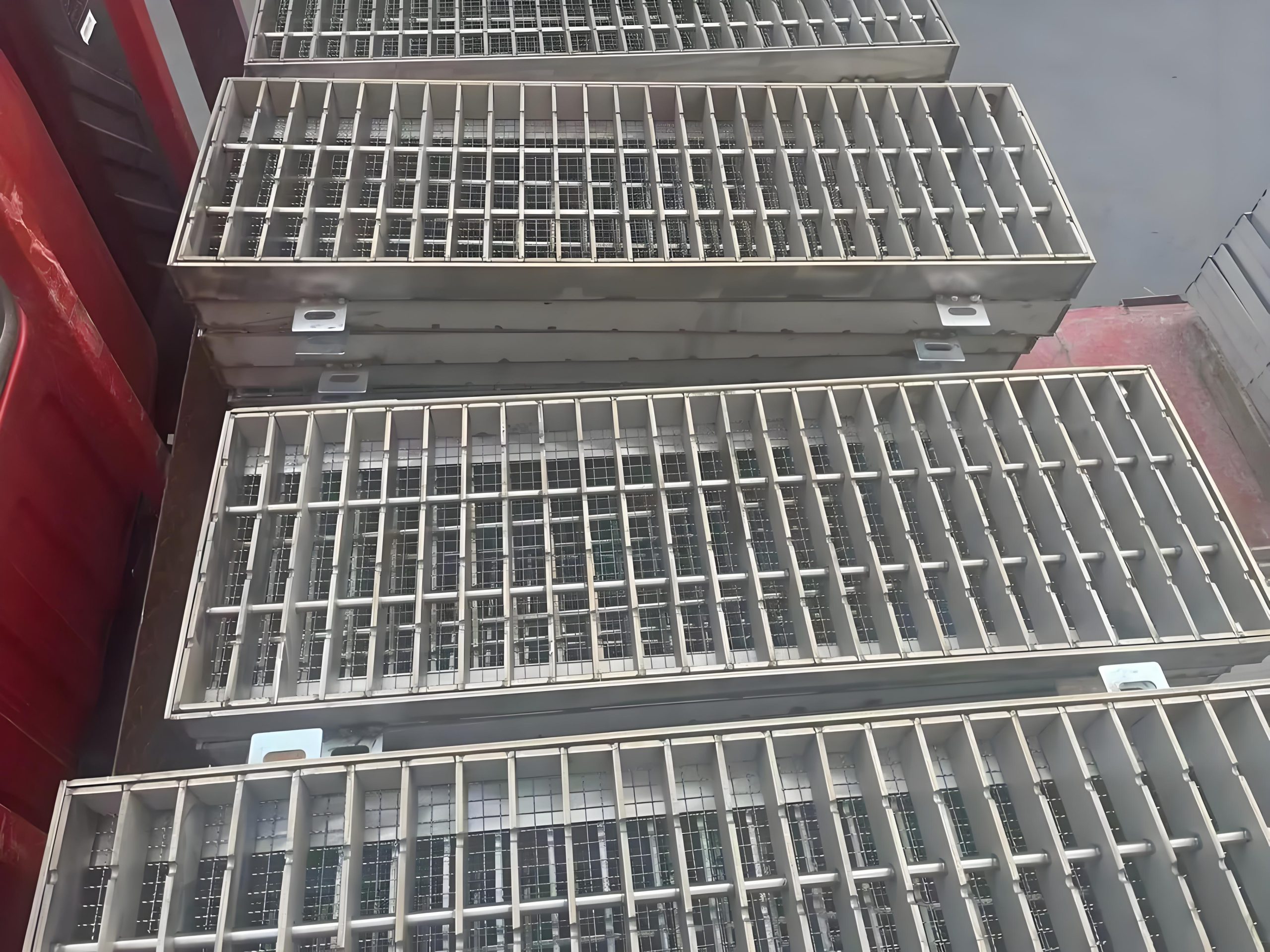
Increasing bearing-bar height generally creates a major increase in bending resistance. Increasing thickness adds steel area, improves stiffness, and increases local durability. Both changes raise grating weight and factory price.
For the same 30×100 mesh and support span, a 40×5 mm bearing bar can normally resist substantially more load than a 25×3 mm bar. The 40×5 panel also costs more because it contains far more steel per square meter.
| Change to the Specification | Effect on Performance | Effect on Price |
|---|---|---|
| Increase bearing-bar depth | Higher bending resistance and lower deflection | Higher steel weight and cost |
| Increase bearing-bar thickness | Higher section strength and improved robustness | Higher material and galvanizing cost |
| Reduce bearing-bar pitch | More load distribution and smaller openings | More bearing bars per square meter |
| Reduce cross-bar pitch from 100 mm to 50 mm | Denser panel pattern and improved lateral integrity | More cross-bar material and processing |
| Add serration | Improved traction in many wet or oily conditions | Additional processing cost |
Load tables are useful selection tools, but they must match the actual grating type, material, bar size, mesh, support condition, and applied load. A load table for one manufacturer’s 30×100 welded grating should not automatically be used for a different press-locked, stainless steel, or fabricated panel without verification.
30×100 steel grating is normally produced as large stock panels and then cut into finished platform panels, covers, stair treads, or project-specific shapes. Standard production dimensions vary by factory, equipment, galvanizing capacity, and export market.
| Common Panel Width | Common Length Range | Typical Use |
|---|---|---|
| 600 mm | 1000–6000 mm | Narrow walkways, access routes, trench covers |
| 800 mm | 1000–6000 mm | Catwalks, maintenance platforms, service aisles |
| 1000 mm | 1000–6000 mm | General industrial flooring and platform panels |
| 1200 mm | 1000–6000 mm | Large access platforms and equipment areas |
| 1500 mm or wider | Custom length | Large fabricated floors and special industrial layouts |
A 1000×6000 mm panel is a common factory production reference, but it should not be treated as a universal maximum size. The actual maximum depends on welding-line width, raw material length, lifting equipment, galvanizing tank dimensions, panel weight, transport limits, and whether the finished panel can be handled safely on site.
Large panels reduce the number of joints, but they are heavier to lift and more difficult to remove for maintenance. Small panels are easier to replace but require more support lines, more clips, and more installation time. The most suitable panel size should balance structural layout, access requirements, handling method, and future maintenance needs.
Both welded and press-locked grating can be supplied with a 30×100 mesh pattern. The main difference is the way the cross bars connect to the bearing bars.
| Comparison Item | Welded 30×100 Grating | Press-Locked 30×100 Grating |
|---|---|---|
| Manufacturing method | Cross bars resistance welded to bearing bars | Cross bars pressed into accurately slotted bearing bars |
| Appearance | Traditional industrial look with visible welded intersections | Clean, regular, architectural grid appearance |
| Typical cost | Usually more economical for standard panels | Often higher due to slotting and alignment requirements |
| Common applications | Industrial platforms, walkways, stairs, trench covers | Architectural flooring, public areas, facades, screens, visible walkways |
| Key quality focus | Weld strength, spacing consistency, flatness | Bar tightness, alignment, squareness, surface finish |
Welded grating is often the first choice for economical industrial flooring. Press-locked grating is often selected when visual appearance, accurate alignment, and a refined mesh pattern are important. Both types must be selected using the correct bearing-bar size and span condition.
See the press-locked steel grating page for more detail about the mechanical locking method and its applications.
30×100 steel grating can be supplied with plain bearing bars or serrated bearing bars. The mesh pattern remains the same, but the walking surface changes.
Plain grating has smooth bearing-bar tops. It is widely used for dry indoor platforms, machinery access areas, warehouse floors, and general industrial locations where contamination is limited. It is usually the lower-cost surface option and is easier to clean.
Serrated grating has teeth or notches along the top of the bearing bars to improve traction. It is commonly selected for outdoor platforms, stairs, ramps, wet process zones, drainage areas, oily floors, and locations exposed to rain, snow, mud, or chemical residue.
Serration can improve grip, but no grating surface can remove all slip risk. Footwear, surface contamination, slope, lighting, drainage, cleaning, corrosion, and maintenance all affect real walking safety. Serrated grating should be selected where the operating environment justifies the additional cost and more aggressive surface profile.
For anti-slip material and surface options, see this serrated carbon steel bar grating guide.
The 30×100 mesh pattern can be produced in different materials and finishes. The right choice depends on the environment, required corrosion resistance, maintenance plan, expected service life, and budget.
| Material or Finish | Cost Level | Typical Use |
|---|---|---|
| Untreated carbon steel | Lowest initial cost | Indoor, dry, temporary, or later-coated applications |
| Painted carbon steel | Moderate | Indoor industrial floors and selected controlled environments |
| Hot-dip galvanized carbon steel | Moderate to high | Outdoor walkways, platforms, stairs, drainage covers, humid service |
| 304 stainless steel | Higher | Wet service, food-related facilities, general corrosion resistance |
| 316 or 316L stainless steel | Higher still | Coastal, marine, chemical, chloride-exposed environments |
For ordinary industrial applications, carbon steel with hot-dip galvanizing after fabrication is often the most practical option. The zinc coating helps protect welded joints, cut edges, serrated surfaces, and edge banding. For stainless steel grating, the alloy grade and finish should be selected according to the actual environment rather than appearance alone.
More information about zinc coating and fabrication sequence is available in this hot-dip galvanized steel grating guide.
30×100 steel grating price per square meter changes mainly with bearing-bar size and finished weight. A 25×3 mm panel at 30×100 mesh uses much less steel than a 32×5 mm or 40×5 mm panel. The outside dimensions may be identical, but the material cost and load capacity are not.
| 30×100 Steel Grating Specification | Black Steel Factory Reference | Hot-Dip Galvanized Factory Reference | Typical Use |
|---|---|---|---|
| 25×3 mm bearing bars, smooth surface | About US$12–18/m² | About US$15–22/m² | Light platforms and short-span walkways |
| 30×3 mm bearing bars, smooth surface | About US$15–22/m² | About US$18–27/m² | General industrial walkways and platform floors |
| 32×5 mm bearing bars, smooth surface | About US$22–30/m² | About US$26–35/m² | Heavier industrial platform service |
| Serrated, close-mesh, cut-to-size, or fabricated panels | Project-specific | Project-specific | Wet areas, stairs, special covers, custom platform layouts |
These ranges are broad factory planning references for standard specifications and may change with steel markets, zinc cost, quantity, fabrication details, packing requirements, and trade terms. A small order, mixed panel schedule, unusual shape, or high level of custom work can increase the unit rate considerably.
For a complete cost comparison, buyers should compare the finished kg/m², mesh pattern, bearing-bar section, fabrication scope, coating, and delivery term rather than comparing only the lowest area price.
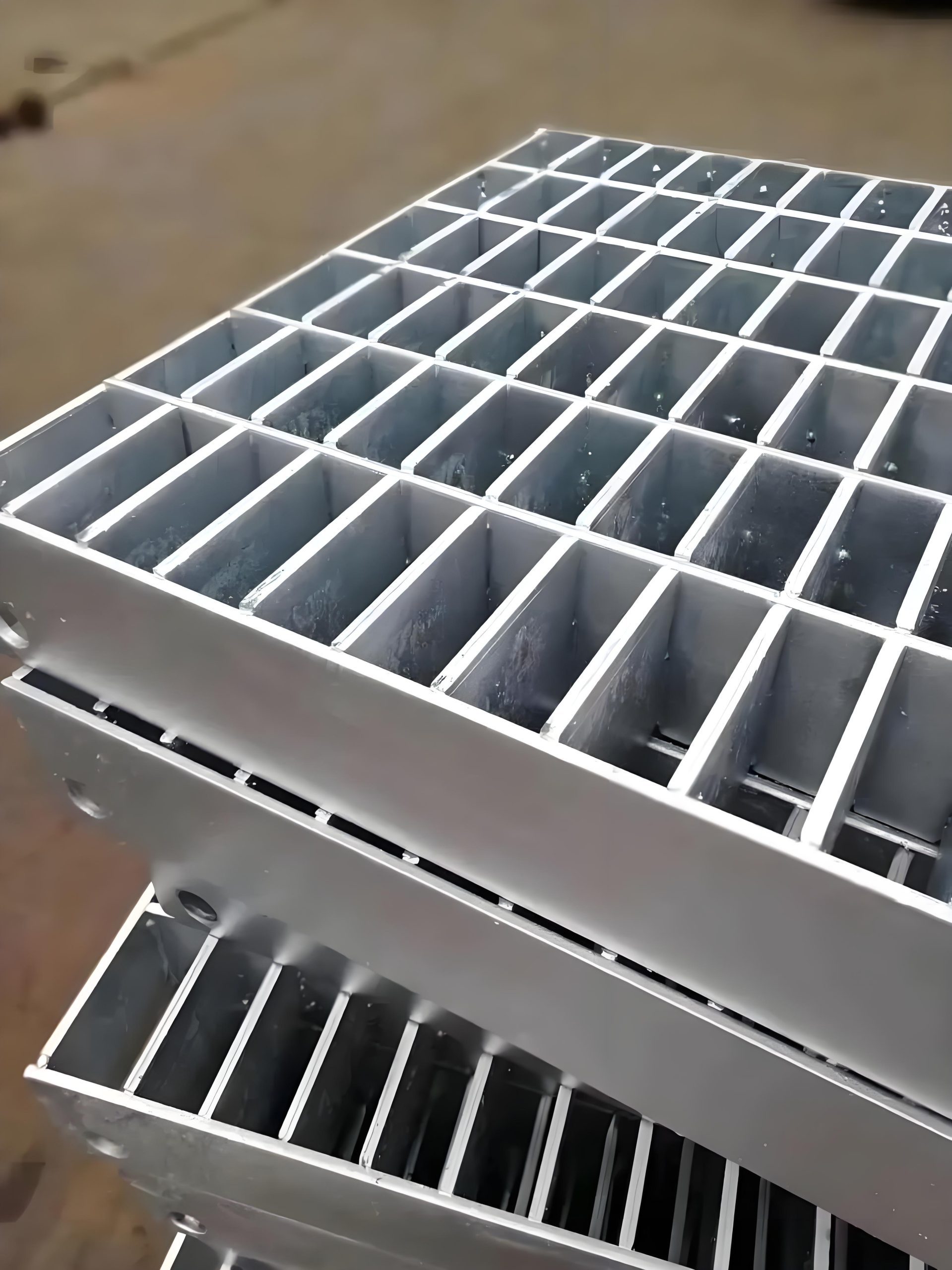
30×100 grating can be supplied as standard full-size panels or fabricated into installation-ready pieces. Custom fabrication is common for industrial projects because platforms often include columns, pipes, equipment foundations, drainage openings, handrail posts, valves, stairs, and irregular structural outlines.
Edge banding is particularly important around cut panels and openings. It closes exposed bearing-bar ends, improves handling safety, helps maintain panel shape, and creates a cleaner finished edge. A highly fabricated panel may contain much more banding than a simple rectangle of the same area.
| Required Information | Example |
|---|---|
| Grating type | Welded steel bar grating or press-locked grating |
| Material | Q235 carbon steel, 304 stainless steel, or 316L stainless steel |
| Bearing-bar size | 30×3 mm, 32×5 mm, or 40×5 mm |
| Mesh pattern | 30×100 mm |
| Surface | Plain or serrated |
| Panel dimensions | 1000×1200 mm, 1000×6000 mm, or a full panel schedule |
| Bearing-bar direction | Bars span between supports at 1000 mm centers |
| Load requirement | Pedestrian uniform load, concentrated load, wheel load, and deflection limit |
| Fabrication details | Four-side banding, cutouts, toe plates, clips, bolt holes, labels |
| Surface treatment | Hot-dip galvanized after fabrication |
| Commercial information | Quantity, packing requirement, destination port, and requested trade term |
A clear inquiry could read: “Please quote welded 30×100 steel grating with 30×3 mm serrated bearing bars, hot-dip galvanized after fabrication, finished panel size 1000×1200 mm, bearing bars spanning 1000 mm, banded on four sides, suitable for the stated pedestrian load and deflection requirement. Please provide kg/m², load-table reference, lead time, packing details, and FOB price.”
Providing this information at the beginning allows the factory to prepare a more accurate price and avoid later changes in bar size, coating, fabrication, or support direction.
What is 30×100 steel grating used for?
30×100 steel grating is commonly used for industrial platforms, walkways, catwalks, maintenance access floors, stair landings, drainage covers, utility structures, and outdoor access areas. The final bearing-bar size should be selected according to the actual span and load requirement.
How much does 30×100 galvanized steel grating cost?
Standard 30×100 hot-dip galvanized grating may range from about US$15–22/m² for lighter 25×3 mm specifications to about US$26–35/m² for heavier 32×5 mm specifications. Serrated, close-mesh, cut-to-size, framed, or heavily fabricated panels cost more.
Is 30×100 grating suitable for forklift traffic?
30×100 mesh alone does not confirm suitability for forklifts. Forklift traffic requires a project-specific check of wheel load, tire contact area, axle arrangement, clear span, bearing-bar size, support frame, and allowable deflection. Heavy-duty grating should be selected from a verified load table or engineering calculation.