

Choosing between 304 and 316 stainless steel grating is mainly an environmental and life-cycle cost decision rather than a simple comparison of strength. For indoor platforms, freshwater drainage, food-processing areas, commercial buildings, and other mildly corrosive locations, 304 stainless steel grating is usually the practical and economical choice. For coastal facilities, marine platforms, chemical plants, wastewater treatment systems, salt-exposed walkways, and locations where chlorides are present, 316 or 316L stainless steel grating is generally the safer specification. However, the grade alone does not determine performance. Bearing bar size, spacing, support span, surface profile, fabrication quality, welding procedure, drainage, cleaning access, and exposure severity must all be considered before placing an order.
304 and 316 are austenitic stainless steel grades widely used to manufacture industrial grating, walkways, platforms, stair treads, drainage covers, trench grates, machine access floors, and architectural screens. Both grades combine useful mechanical strength with an attractive surface and better corrosion resistance than uncoated carbon steel.
The most important difference is that 316 stainless steel contains molybdenum. This alloying element gives 316 better resistance to localized corrosion, especially pitting and crevice corrosion caused by chlorides. Because seawater, coastal spray, road salt, cleaning chemicals, brines, and many industrial process solutions contain chlorides, this compositional difference can have a major effect on service life.
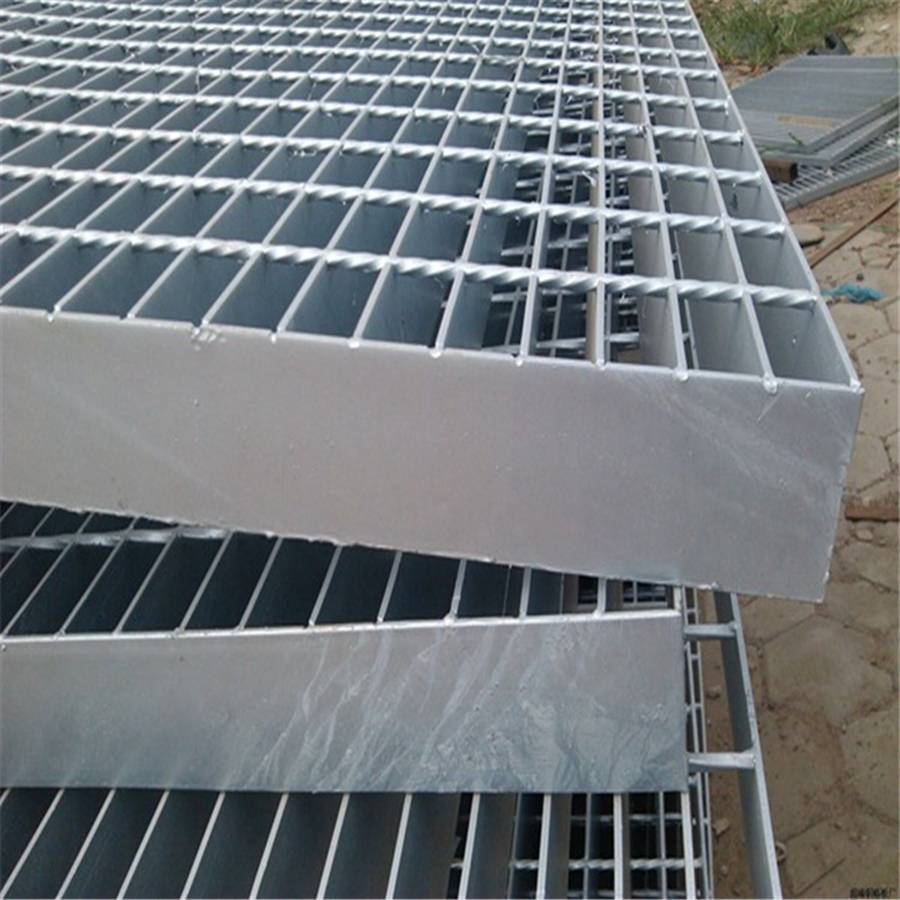
A simple selection rule is:
Buyers who need grade-specific product information can also review the detailed guides to 304 stainless steel grating sizes, specifications, and applications and 316 stainless steel grating for marine, chemical, and wastewater applications.
Both 304 and 316 stainless steels are chromium-nickel alloys. Chromium helps form the thin, self-repairing passive layer that protects stainless steel from ordinary atmospheric corrosion. Nickel stabilizes the austenitic structure and contributes to toughness, ductility, formability, and weldability.
Type 316 contains a deliberate molybdenum addition and normally has a somewhat higher nickel range. The exact composition must be confirmed against the material standard, grade designation, product form, and mill certificate specified for the order.
| Comparison Item | 304 Stainless Steel | 316 Stainless Steel |
|---|---|---|
| Common grade designations | 304, S30400, 1.4301 | 316, S31600, 1.4401 |
| Typical chromium range | Approximately 18–20% | Approximately 16–18% |
| Typical nickel range | Approximately 8–10.5% | Approximately 10–14% |
| Molybdenum | Not normally added as a principal alloying element | Approximately 2–3% |
| Maximum carbon in standard grade | Commonly 0.08% | Commonly 0.08% |
| Low-carbon version | 304L, commonly maximum 0.03% carbon | 316L, commonly maximum 0.03% carbon |
| Main practical advantage | Good general corrosion resistance at a lower material cost | Better resistance to chlorides, pitting, and many chemical environments |
These values are useful for comparison, but purchase specifications should not rely on a general table alone. The supplier should provide a material test report identifying the heat number, chemical analysis, mechanical properties, grade, and applicable material specification.
The letter “L” identifies a low-carbon version of the grade. Lower carbon content reduces the risk of sensitization in heat-affected areas during welding. Sensitization can reduce corrosion resistance near a weld when chromium carbides form at grain boundaries under certain thermal conditions.
Because welded bar grating contains many welded intersections, 304L and 316L may be preferred for heavily welded constructions, chemically aggressive environments, or projects that require improved resistance to intergranular corrosion after fabrication. Dual-certified material, such as 304/304L or 316/316L, is also commonly supplied, but the certification and mechanical requirements should be verified rather than assumed.
Molybdenum is the main reason 316 stainless steel generally outperforms 304 in chloride-bearing environments. It improves the stability of the passive film and helps the steel resist localized attacks that can penetrate the surface even when most of the grating still appears undamaged.
This is particularly important because stainless steel does not always corrode uniformly. A panel may look clean across most of its surface while deep pits develop under deposits, around fasteners, inside narrow gaps, or near poorly drained supports. Localized corrosion can be more difficult to detect and may create a greater structural concern than uniform surface staining.
Pitting begins at isolated points where the passive film breaks down. Chlorides increase the risk, especially as concentration, temperature, or exposure time rises. The molybdenum in 316 delays pitting initiation and improves resistance compared with 304, although it does not make the steel immune.
Crevice corrosion can develop beneath clips, between grating panels and support angles, under deposits, around bolted connections, or inside areas where water remains trapped. Oxygen inside the crevice becomes depleted, making it difficult for the passive layer to remain stable. Grade 316 generally provides a wider safety margin, but good detailing, drainage, cleaning, and appropriate fastener selection remain essential.
Actual corrosion behavior is influenced by more than molybdenum content. Temperature, chloride concentration, pH, oxidizing conditions, deposits, biological activity, surface roughness, weld quality, contamination, and wet-dry cycles all affect performance. A technically sound material choice therefore begins with the real exposure conditions rather than a general statement that one grade is “corrosion proof.”
In clean air, freshwater, and many indoor environments, both grades provide excellent general corrosion resistance. Under these conditions, the visible difference between 304 and 316 may be small, making 304 the more economical option.
The performance gap becomes more important when salts, chloride cleaners, industrial chemicals, acidic condensate, stagnant moisture, or coastal deposits are present. Grade 316 is normally more resistant, particularly against pitting and crevice corrosion.
| Exposure Condition | 304 Stainless Steel Grating | 316 Stainless Steel Grating | General Selection Direction |
|---|---|---|---|
| Dry indoor industrial area | Usually performs well | Performs well but may be unnecessary | 304 is normally sufficient |
| Freshwater drainage or washdown | Often suitable with proper cleaning | Provides additional margin | 304 may be selected after reviewing chemicals |
| Food-processing area | Commonly used | Preferred where salty products or aggressive cleaners are present | Base the decision on product and cleaning chemistry |
| Urban outdoor atmosphere | Often suitable | Better for polluted or persistently wet areas | Review drainage, contamination, and cleaning frequency |
| Coastal atmosphere | May develop staining or localized corrosion | Normally preferred | 316 or 316L |
| Direct salt spray | Generally not the preferred grade | Better, but detailing and maintenance remain important | 316L as a starting point; verify exposure severity |
| Wastewater facility | Possible in selected mild zones | Usually offers better resistance | 316L is commonly considered for wet and chemical zones |
| Chloride-bearing chemical process | Higher localized corrosion risk | Improved resistance | 316L or a higher alloy after chemical review |
| Continuous warm seawater immersion | Normally unsuitable | May also be inadequate | Obtain specialist material guidance |
Corrosion tables should be used as screening tools rather than unconditional guarantees. The exact temperature and concentration of a chemical solution can turn an acceptable application into an unsuitable one.
Marine and coastal projects expose grating to airborne salt, seawater splash, humidity, wet-dry cycling, and deposits that may remain in sheltered areas. Chlorides become concentrated as water evaporates, so a panel located above the waterline can sometimes experience severe localized exposure even without permanent immersion.
For coastal walkways, docks, desalination facilities, ship access platforms, offshore equipment areas, and saltwater drainage systems, 316 or 316L is generally preferred over 304. Grade 316L is particularly relevant when the panels are extensively welded or fabricated with numerous cutouts, bands, and welded attachments.
“Coastal” is not a single corrosion category. Exposure changes with distance from the sea, prevailing wind, elevation, shelter, rainfall, temperature, and cleaning. A structure directly exposed to salt spray is different from an indoor platform several kilometers from the coast.
Grade 316 is often called marine-grade stainless steel, but that expression can be misunderstood. It generally performs better than 304 in marine atmospheres, yet continuous immersion in stagnant or warm seawater can exceed the practical corrosion resistance of ordinary 316. Crevices, deposits, biological growth, and low-flow conditions increase the risk.
Neither 304 nor 316 has universal resistance to every chemical. Both can perform well in many process environments, but compatibility depends on chemical identity, concentration, temperature, aeration, contaminants, flow conditions, and exposure duration.
Chlorides are one of the most important reasons to choose 316 instead of 304. Potential sources include seawater, brine, salt-containing food, road deicing salts, sodium hypochlorite, chlorine-based sanitation products, process water, and concentrated deposits left after evaporation.
Grade 316 provides better pitting and crevice corrosion resistance, but high chloride concentration, elevated temperature, low pH, or prolonged stagnation may require a higher-alloy material. Sodium hypochlorite and similar oxidizing chloride solutions deserve particular attention because they can be considerably more aggressive than ordinary freshwater washdown.
Performance cannot be predicted simply by labeling a liquid as an acid or alkali. The specific chemical and operating conditions must be examined. Grade 316 often provides an advantage in certain acid-containing environments, but there are also chemicals in which neither 304 nor 316 is appropriate.
A chemical plant specification should identify:
Increasing bearing bar thickness may extend the time before general section loss becomes critical, but it does not reliably solve localized corrosion. A deep pit, corroded weld, or attacked support connection can compromise a panel before widespread thickness loss is obvious. The preferred approach is to select a suitable alloy and eliminate corrosion-promoting details.
For most grating applications, the load-bearing difference between 304 and 316 is less important than the geometry of the grating. Both grades can provide strong, durable walking surfaces when properly designed. Grade 316 should not be selected merely because it is assumed to carry substantially more load.
Load capacity is mainly controlled by:
Bearing bars must span from one structural support to another. Cross bars connect and stabilize the bearing bars but should not be treated as the primary spanning members. Incorrect panel orientation is a common installation error that can significantly reduce effective load capacity.
Deflection and bending stress increase rapidly as the unsupported span increases. A panel that performs well over a short trench may be unsuitable over a wider opening even when the alloy and nominal grating size remain unchanged.
Standard pedestrian grating should not be used for forklifts, trucks, maintenance vehicles, or heavy rolling equipment unless the grating and supporting frame have been specifically designed for the relevant wheel load, impact, load position, and traffic direction. Vehicular areas may require heavy-duty grating with thicker bearing bars, closer spacing, reinforced banding, and stronger supports.
When requesting quotations, buyers should submit the clear span, support layout, design load, concentrated load footprint, maximum allowable deflection, and applicable safety factor. A nominal panel size alone is not enough for structural selection.
Both 304 and 316 stainless steels tolerate higher temperatures better than many polymers and protective coatings. They are noncombustible materials, but this does not mean a stainless steel grating platform maintains its full room-temperature capacity during a fire or sustained high-temperature operation.
As temperature rises, stainless steel loses stiffness and strength. Thermal expansion can also affect panel clearances, fasteners, frames, and connected structures. High-temperature grating therefore requires design data appropriate to the operating temperature and relevant structural or fire code.
No. The primary selection advantage of 316 is its improved corrosion resistance in chloride-containing and certain chemical environments, not a universal increase in heat resistance. For dry elevated-temperature service, the correct grade may depend on oxidation, carburization, sulfur compounds, thermal cycling, scaling, and structural design requirements.
Temperature can accelerate corrosion and increase the likelihood of chloride pitting, crevice corrosion, and stress corrosion cracking. A chloride solution that is manageable at room temperature may become significantly more aggressive when heated. Process temperature must therefore be included in a 304 versus 316 evaluation.
Both 304 and 316 stainless steel grating can be supplied with plain or serrated bearing bars. Alloy selection and surface selection solve different problems: the alloy addresses environmental durability, while the surface profile contributes to walking traction.
Plain grating has smooth upper bearing bar edges. It is suitable for many dry indoor platforms, architectural areas, equipment access zones, and locations where cleaning convenience is more important than maximum surface aggressiveness. The open structure allows light, air, liquids, and small debris to pass through.
Serrated grating has notches or teeth formed along the upper edges of the bearing bars. It is commonly specified for wet walkways, oily platforms, outdoor stairs, processing plants, marine facilities, and wastewater areas.
Serrations can improve traction, but they do not make a surface slip-proof. Oil, grease, algae, ice, product residue, or chemical deposits can still create a hazardous walking surface. Panel orientation, drainage, footwear, housekeeping, lighting, handrails, and maintenance procedures remain part of the safety system.
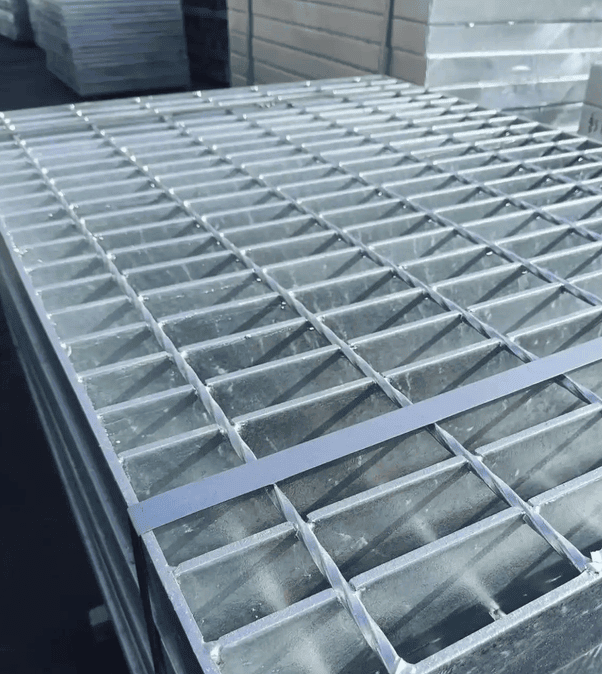
Some projects require more aggressive traction than conventional serrated bearing bars provide. Options may include cross-serrated construction, textured nosing on stair treads, abrasive inserts, or other anti-slip treatments. The buyer should verify whether the selected profile is suitable for the contaminant, pedestrian traffic, cleaning method, and required slip-testing procedure.
There is no universal service-life figure for either grade. Two identical 316 stainless steel grating panels can have very different service lives if one is regularly rinsed and freely drained while the other traps warm chloride solution beneath deposits.
Expected durability depends on:
In a mild indoor application, 304 may deliver a long service life with little maintenance. In a coastal or chloride-processing facility, the additional cost of 316 may avoid premature staining, pitting, panel replacement, production interruption, and access restrictions.
Rust-colored staining may sometimes come from embedded carbon steel particles, nearby grinding debris, contaminated tools, or runoff from another steel component. The cause should be investigated before concluding that the stainless steel itself has failed. Fabrication areas should keep stainless and carbon steel tooling, brushes, storage racks, and grinding operations properly separated.
Stainless steel is low maintenance, not maintenance free. Regular cleaning removes chloride deposits, chemical residues, iron contamination, grease, and debris that can interfere with the passive surface.
Freshwater rinsing may be adequate for ordinary atmospheric dirt and salt deposits. Mild detergent and a soft nonmetallic brush can be used for grease or general contamination. Cleaning products should be compatible with stainless steel, and residue should be thoroughly rinsed away.
Avoid using carbon steel wire brushes, steel wool, or tools that can embed iron particles in the surface. Chloride-rich cleaners should also be avoided unless a qualified cleaning procedure confirms compatibility and provides complete rinsing.
Under mild conditions, maintenance requirements may be similar. In chloride-bearing environments, 304 may need more frequent cleaning and inspection to control staining and localized attack. Grade 316 generally provides a greater corrosion margin, but it still benefits from freshwater rinsing, deposit removal, and scheduled inspection.
Both 304 and 316 stainless steels can be cut, formed, welded, drilled, and fabricated into custom grating panels. They are commonly used for welded, press-locked, and swage-locked products, although availability depends on bearing bar size, spacing, panel quantity, and manufacturer capability.
Welded grating uses resistance welding or another controlled welding process to connect cross bars to bearing bars. It provides a rigid panel suitable for industrial platforms, stair treads, access areas, drainage covers, and custom shapes.
Welding introduces heat tint and changes the surface condition near the weld. If these oxides are not appropriately removed, corrosion resistance around the welded area may be lower than that of the original material. Pickling and passivation are often specified for grating used in chemical, hygienic, marine, or wastewater environments.
Press-locked grating is produced by mechanically pressing cross bars into notched bearing bars. It can provide accurate spacing, a clean appearance, and a range of rectangular or square opening patterns. It is frequently used in architectural applications as well as industrial platforms.
304L and 316L are commonly considered when substantial welding is required. The filler metal, heat input, shielding, joint design, and post-weld cleaning should match the project environment and applicable welding procedure. A 316 panel should not be welded with an unsuitable filler or contaminated using carbon steel fabrication equipment.
Field modifications should be minimized. Cutting a panel can remove banding, alter load distribution, leave sharp edges, introduce contamination, and create a weak area around an opening. When field cutting cannot be avoided, the modification should be approved, properly re-banded where required, cleaned, and passivated according to the project procedure.
304 and 316 stainless steel grating have a similar general appearance, so the grade cannot be reliably identified by visual inspection. Material markings, purchase records, certificates, and positive material identification should be used when grade verification is critical.
A mill or fabrication finish is economical and suitable for many industrial applications where appearance is secondary. Weld discoloration, fabrication marks, and surface variation may remain unless additional finishing is specified.
Pickling removes heat tint, scale, and certain contaminants. Passivation helps establish a clean surface condition that can naturally form a protective chromium-rich passive film. The required process, acceptance appearance, and testing should be stated in the order.
Brushed and polished surfaces may be selected for architectural, food-processing, pharmaceutical, or public-facing installations. Smoother finishes can make cleaning easier and reduce areas where contamination adheres, but the finish direction and surface roughness should be coordinated across panels.
Electropolishing can improve surface smoothness and cleanability by removing a thin layer of material electrochemically. It may be considered for hygienic or specialized chemical applications. Cost, panel size, appearance, and dimensional effects should be discussed with the fabricator.
| Finish | Typical Reason for Selection | Points to Confirm |
|---|---|---|
| Mill or as-fabricated | General industrial use and lower cost | Allowed discoloration, weld appearance, and contamination control |
| Pickled and passivated | Restore a clean corrosion-resistant surface after welding | Process scope, final appearance, rinsing, and inspection |
| Brushed | Consistent decorative appearance | Grit, direction, weld blending, and repair method |
| Polished | Appearance and improved cleanability | Surface roughness and contamination limits |
| Electropolished | High cleanability or specialized service | Facility capability, panel dimensions, cost, and acceptance criteria |
Grade 316 stainless steel grating generally costs more than an equivalent 304 panel because it contains molybdenum and typically more nickel. The actual price difference changes with alloy markets, product availability, order volume, bearing bar size, grating type, fabrication complexity, surface treatment, and required documentation.
A responsible quotation comparison should use the same:
If one supplier quotes a mill-finish 304 panel while another quotes a pickled and passivated 316L custom panel with certificates and stainless clips, the prices cannot be compared on alloy grade alone.
304 normally offers better value when the corrosion environment is mild and the extra resistance of 316 will not materially extend service life. Paying for 316 in a dry indoor equipment platform may provide little operating benefit.
316 may provide better overall value when failure would cause expensive replacement, production shutdown, safety restrictions, contamination, difficult access, or repeated maintenance. In these cases, the higher purchase price can be small compared with the cost of premature corrosion.
Initial material price is only one part of the ownership cost. The life-cycle comparison should include fabrication, freight, installation, inspections, cleaning, repair, replacement, access equipment, production downtime, and disposal.
| Life-Cycle Factor | Potential Effect of Choosing 304 | Potential Effect of Choosing 316 |
|---|---|---|
| Initial purchase cost | Normally lower | Normally higher |
| Mild indoor service | Often the best economic choice | Additional alloy cost may provide limited benefit |
| Coastal or chloride service | May require more cleaning, inspection, or earlier replacement | Usually provides a longer corrosion margin |
| Shutdown-sensitive facility | Premature replacement can make the lower initial cost unattractive | Higher initial price may reduce interruption risk |
| Inaccessible installation | Future maintenance may be expensive | Added durability may justify the upgrade |
| Severe chloride conditions | Frequently unsuitable | Better than 304 but may still require a higher alloy |
For a replaceable indoor drain cover, the initial price may carry greater weight. For an elevated offshore walkway above operating equipment, access, shutdown, and safety costs may dominate the decision. Material selection should reflect the economic consequences of failure.
304 stainless steel grating is commonly selected where good general corrosion resistance, hygiene, clean appearance, and ease of maintenance are required without severe chloride exposure.
Applications include dry processing platforms, packing areas, freshwater washdown zones, floor drains, inspection walkways, and equipment access. The buyer should evaluate salt-containing products and chlorine-based cleaners, as these may justify 316 even when the facility is located inland.
304 can be used for entrance grates, ventilation screens, sunshades, decorative panels, pedestrian walkways, and internal stair treads. Surface finish and visual consistency may be more important than extreme corrosion resistance in these applications.
Machine platforms, maintenance walkways, mezzanine access, floor openings, and drainage trenches in clean indoor plants are common uses. If process chemicals, acidic vapor, or chloride washdown are introduced later, the original grade selection should be reviewed.
304 can perform well in freshwater drainage where water does not contain significant chlorides or aggressive chemicals. Good drainage and regular removal of trapped debris remain important.
Where hygienic design and cleanability are required but the process chemistry is mild, 304L grating with an appropriate smooth, pickled, passivated, or polished finish may be suitable.
316 stainless steel grating is generally selected when chloride exposure, coastal air, aggressive cleaning, wastewater, or chemical processing creates a greater corrosion risk.
Typical applications include marina walkways, coastal platforms, ship access areas, seawater intake facilities, offshore structures, dock drainage, and salt-spray-exposed stair treads. Exposure severity must still be reviewed because ordinary 316 may not be sufficient for all immersion conditions.
316 or 316L grating may be used around process equipment, chemical storage, dosing systems, transfer stations, drains, maintenance platforms, and vapor-exposed access areas. Compatibility with the specific process chemicals must be confirmed.
Applications include screening areas, clarifiers, aeration tanks, pump stations, sludge treatment zones, chemical dosing rooms, trenches, access covers, platforms, and stairs. Wastewater environments vary considerably, and hydrogen sulfide, chlorides, treatment chemicals, deposits, and microbiological activity should be considered.
Meat, seafood, dairy, pickling, sauce, and other food-processing facilities may expose grating to salt, acids, and strong cleaning chemicals. Grade 316L is often preferred in the most frequently washed or chemically exposed zones.
Chlorinated water and chemical dosing can create challenging conditions, particularly in warm, poorly ventilated, or splash-prone areas. Grade 316 generally offers better performance than 304, but the exact chloride exposure, cleaning chemicals, and stress conditions must be evaluated.
The most reliable material decision comes from an environmental questionnaire rather than a broad industry label. Two areas within the same factory can require different grades.
Identify whether chlorides come from seawater, brine, food ingredients, disinfectants, cooling water, road salt, process chemicals, or atmospheric deposits. Consider concentration after evaporation rather than only the concentration of the original liquid.
Higher temperatures can increase chemical reaction rates and localized corrosion risk. Record both normal and maximum temperatures, including cleaning cycles and process upsets.
Frequently rinsed, freely drained grating may perform differently from a sheltered panel that remains damp. Supports, clips, banding, and undersides deserve the same attention as the exposed walking surface.
A hygienic facility may be visually clean but chemically aggressive. Record detergent, sanitizer, acid, alkali, hypochlorite, and rinse-water composition together with concentration, temperature, and contact time.
Industrial emissions, sulfur compounds, chemical vapor, dust, and salt particles can collect on grating. Sheltered outdoor areas may retain deposits because natural rainfall cannot rinse them away.
Stainless panels may be installed on carbon steel frames or connected using different fastener materials. Moisture and electrical contact between dissimilar metals can create galvanic corrosion conditions. Isolation details and compatible fastening systems should be considered.
Food, pharmaceutical, and high-purity facilities may require smoother finishes, complete weld treatment, documented cleaning procedures, and avoidance of corrosion products. In such projects, material selection is connected to product quality as well as structural service life.
A removable drain panel in an accessible room is easier to replace than a custom platform surrounding operating process equipment. The harder and more expensive the future replacement, the stronger the argument for additional corrosion resistance.
Choose 304 stainless steel grating when the project is indoors or in a mild outdoor atmosphere, chloride levels are low, exposure is mainly freshwater, chemicals are compatible, cleaning is routine, and replacement would be straightforward. In these conditions, 304 usually delivers the best balance of corrosion resistance, appearance, strength, and price.
Choose 316 or 316L stainless steel grating when the project is coastal, marine, wastewater-related, exposed to brine, subject to salt-containing products, cleaned with aggressive chemicals, or located where pitting and crevice corrosion would create unacceptable risk. The low-carbon 316L version is commonly preferred for heavily welded panels and demanding corrosive service.
For continuous warm seawater, concentrated chloride solutions, severe acid exposure, or safety-critical structures with inaccessible crevices, do not stop the comparison at 304 versus 316. Request a formal corrosion review and consider duplex stainless steel, higher-nickel alloys, or other engineered grating materials.
| Selection Question | If the Answer Is Yes | Likely Direction |
|---|---|---|
| Is the grating used in a dry or clean indoor area? | There is little chloride or chemical exposure | 304 is normally suitable |
| Will it receive freshwater washdown only? | Cleaning chemicals are mild and fully rinsed | 304 may be sufficient |
| Is the facility close to the sea? | Salt-laden air or spray can reach the grating | Prefer 316 or 316L |
| Are brine, chlorides, or salty products present? | Deposits may concentrate as surfaces dry | Prefer 316 or 316L |
| Is the grating installed in wastewater processing? | It faces moisture, chemicals, deposits, or corrosive gases | Evaluate 316L by process zone |
| Is extensive welding required? | Welded areas will face corrosive service | Consider 304L or 316L with post-weld treatment |
| Is the service continuously immersed in warm seawater? | Pitting and crevice conditions may be severe | Investigate higher-alloy materials |
| Is load capacity the main concern? | The corrosion environment is already understood | Select bearing bar size, spacing, and span from engineered load data |
Provide the supplier with the installation location, indoor or outdoor condition, distance from the coast, chemical exposure, chloride source, normal temperature, maximum temperature, cleaning method, and exposure frequency.
State whether the grating carries pedestrians, maintenance personnel, equipment, stored materials, carts, forklifts, or road vehicles. Include uniform loads, concentrated loads, wheel contact areas, impact, dynamic effects, and allowable deflection.
Show the clear span, bearing bar direction, support width, intermediate supports, openings, panel joints, removable areas, and frame details. Never select a grating size without identifying the unsupported span.
Specify welded, press-locked, or swage-locked construction; plain or serrated bearing bars; bearing bar size and spacing; cross-bar spacing; panel dimensions; open-area needs; and any requirement for small-object or fall-through control.
Provide drawings for cutouts, penetrations, toe plates, kick plates, nosing, banding, lifting handles, hinges, locks, and removable sections. Indicate which dimensions are critical for installation.
State whether the grating is required as fabricated, pickled, passivated, brushed, polished, or electropolished. If a particular surface roughness, appearance, or cleaning standard is required, place it directly on the purchase specification.
The procurement package may require material test reports, heat-number traceability, dimensional inspection, welding records, load tables, load calculations, product drawings, surface-treatment certificates, and positive material identification. The exact documents should be agreed before production.
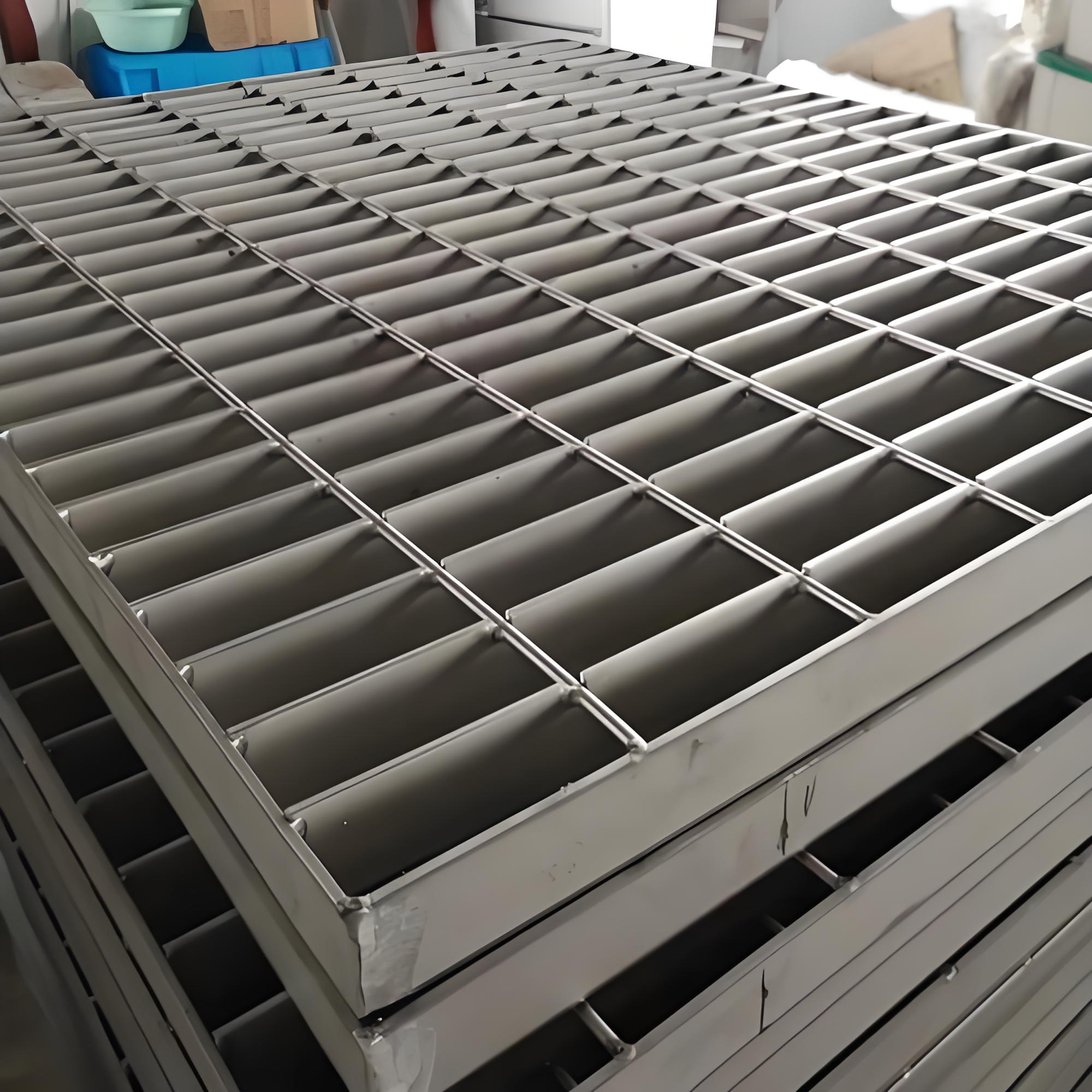
For conventional industrial configurations, buyers can review stainless steel 19-W-4 grating and the corresponding 316L stainless steel 19-W-4 grating. The final panel selection should still be checked against the project load, span, environment, and applicable standard.
Is 316 stainless steel grating stronger than 304? Not necessarily in a way that determines the grating selection. Their structural performance is often similar, while bearing bar depth, thickness, spacing, clear span, support condition, and load type have a much greater influence on grating capacity. The main practical advantage of 316 is improved resistance to chlorides and localized corrosion, not a universal increase in load capacity.
Can 304 stainless steel grating be used near the sea? It may be used in a sheltered, low-salt location after a site-specific review, but it has a higher risk of tea staining, pitting, and crevice corrosion than 316. For direct coastal exposure, salt spray, marina walkways, offshore facilities, or locations where salt deposits accumulate, 316 or 316L is normally the more reliable starting choice.
Is 316 stainless steel grating completely resistant to seawater? No. Grade 316 performs better than 304 in marine atmospheres and many chloride environments, but it is not immune to pitting or crevice corrosion. Warm stagnant seawater, high chloride concentration, deposits, narrow crevices, and continuous immersion can exceed its capability. Severe marine service may require duplex stainless steel or another higher-alloy material selected through a corrosion assessment.