

316 stainless steel grating price per square meter depends on bearing bar dimensions, spacing, panel weight, construction, surface treatment, fabrication, and order quantity. For early factory-supply budgeting, CSSP’s published pricing guide lists approximately US$70–220 per m² for 316 or 316L stainless steel grating. This is a broad planning reference, not a fixed quotation or a delivered-and-installed price. Heavy-duty panels, close-mesh designs, extensive cutouts, specialized finishes, and small production runs may cost more. A meaningful quotation must connect the area price to a complete specification, including the load, span, material grade, finished dimensions, and delivery scope.
Pricing per square meter helps purchasers estimate marine walkways, chemical plant platforms, wastewater access floors, drainage covers, and other installations where corrosion resistance matters. Once the required area is known, an area rate provides a starting point for comparing supply options.
However, one square meter of grating does not represent a fixed amount of stainless steel. A panel with 40 × 5 mm bearing bars contains much more material than one with 25 × 3 mm bars at the same spacing. Closer mesh, reinforced edges, toe plates, and other attachments increase material and fabrication requirements further.
The operating environment also affects what must be included in the price. A welded platform in a chloride-bearing atmosphere may require careful removal of weld heat tint, appropriate surface treatment, material traceability, and compatible fasteners. A quotation that omits those requirements may appear cheaper while leaving necessary work outside the purchase order.
| Price Basis | Typical Scope | Items to Check Separately |
|---|---|---|
| Grating supply price | Panels with the agreed material, construction, fabrication, and finish | Accessories, special testing, packing, and freight |
| Delivered grating price | Supply plus agreed transport to a named location | Import charges, taxes, unloading, storage, and installation, depending on the terms |
| Installed grating price | Delivered panels plus fastening, labor, lifting, and agreed site work | New support structures, foundations, stairs, handrails, and shutdown costs unless included |
Keep these price levels separate when preparing a budget. A factory panel rate cannot be used as the total cost of a completed offshore platform or treatment-plant walkway.
316 stainless steel grating is an open-grid flooring or covering product manufactured from a chromium-nickel-molybdenum stainless steel. In conventional bar grating, parallel bearing bars carry the primary load between supports, while cross bars connect the bearing bars and stabilize the panel.
Molybdenum improves resistance to localized corrosion, particularly chloride-induced pitting and crevice corrosion, compared with ordinary 304 stainless steel. This makes 316 a common choice for coastal facilities, salt-exposed processing areas, wastewater installations, and selected chemical environments.
The material still needs to match the exposure. Warm stagnant seawater, concentrated chlorides, aggressive acids, deposits, and poorly drained crevices can exceed the capability of standard 316. A higher-alloy stainless steel or another material may be required in severe service.
Common designations include Type 316, UNS S31600, and the low-carbon Type 316L, UNS S31603. The purchase specification should identify the required material standard and grade rather than relying only on a commercial description such as “marine grade.”
316L has lower carbon content, which reduces susceptibility to sensitization during welding. It is frequently specified for welded grating in corrosive environments. Low carbon does not remove the need for good welding practice, heat-tint removal, or appropriate cleaning.
Some material is dual certified as 316/316L. Availability varies, so the price difference between 316 and 316L should be confirmed rather than assumed. A 316L designation is not a guarantee of substantially better chloride resistance than correctly processed 316; its main benefit concerns the effects of welding and thermal history.
316 stainless steel is available in welded, press-locked, and selected mechanically locked grating systems. It can also be formed into perforated safety grating. Plain and serrated bar surfaces are available, along with different panel sizes, openings, and edge details.
For more information about suitable environments and product selection, see the guide to 316 stainless steel grating for marine, chemical, and wastewater applications.
The price of 316 stainless steel changes with alloy markets, mill supply, energy costs, product availability, exchange rates, and regional purchasing conditions. Nickel and molybdenum contribute to its material cost, but alloy prices alone do not determine the price of finished grating.
Suppliers may purchase ready-made flat bars or prepare bars from suitable stock. The chosen production route affects material yield, processing time, dimensional control, and availability.
For a project with a long procurement schedule, ask how long the quotation remains valid and when the material price becomes fixed. Compare quotations issued within a similar period and using the same currency and payment basis.
Welding, slotting, punching, pressing, and mechanical locking require different equipment and production steps. Standard products made regularly on a supplier’s equipment often offer better pricing than unusual configurations requiring special preparation.
The method also affects the available mesh, panel appearance, bar arrangement, and published load data. Alternative constructions should be priced against the same functional requirements.
Bearing bars normally account for most of the metal in conventional bar grating. Increasing their height or thickness increases weight per square meter. Reducing their center spacing places more bars in the same area.
These dimensional changes can improve stiffness or load performance, but the economical section must be selected from the actual span, loading, and deflection criteria. A lower price achieved by reducing bar thickness is useful only if the revised product still meets the design.
Cross bars add material and manufacturing work. Closer spacing generally increases their quantity and the number of intersections, although the overall price effect depends on the product system.
Cross bar details also affect panel stability, openings, and the way loads are distributed. Their contribution must be assessed using the load data for the actual construction; closer cross bars should not automatically be treated as a substitute for deeper bearing bars.
Repeated rectangular panels are easier to plan and manufacture than many unique shapes. Small panels have more perimeter per square meter, which can increase banding, finishing, marking, and handling costs.
Large panels may reduce the number of joints but can require special transport, lifting, or treatment facilities. The lowest fabrication cost does not always produce the lowest installed cost.
Order quantity affects material purchasing, production setup, finishing batches, and packing. A small replacement order can carry a much higher area price than a large order of repeated panels.
As-fabricated, pickled, passivated, brushed, polished, and electropolished surfaces require different work. The finish must be stated explicitly in the quotation.
Pickling can remove weld heat tint and scale. Passivation treatments generally remove free iron contamination and help establish a clean surface that can develop its protective passive film. Passivation alone should not be assumed to remove heavy welding oxides.
For corrosive service, the treatment sequence and final surface condition can be more important than decorative brightness. Request a finish appropriate to the exposure rather than paying for appearance alone.
Pipe openings, corner notches, reinforced edges, toe plates, stair nosing, lifting handles, and hinges add drawing preparation and shop work. A cutout can increase the price even though it removes material, because the opening may need trimming, welding, reinforcement, and repeat surface treatment.
Provide the final fabrication drawings before requesting a firm price. Late changes are particularly costly when panels have already been welded, treated, marked, and packed.
Stainless grating may need protective separators, clean storage surfaces, and handling practices that reduce scratching and carbon steel contamination. Export bundles may also require treated timber, lifting access, identification, and special restraints.
Freight depends on both weight and package dimensions. Duties and taxes depend on the shipment destination, origin, classification, customs value, and applicable trade measures. Confirm these with the appropriate logistics or customs provider for the actual order.
| Grating Type | Construction | Main Cost Drivers | What to Confirm |
|---|---|---|---|
| Welded bar grating | Cross bars welded to parallel bearing bars | Bar weight, welding, fabrication, and post-weld treatment | Load data, weld quality, surface condition, and included banding |
| Press-locked grating | Bars mechanically pressed into prepared slots or notches | Slot preparation, mesh, pressing, and edge details | Bar arrangement, bearing direction, and dimensional requirements |
| Swage-locked grating | Cross members mechanically secured by swaging | Profile availability, hole preparation, locking process, and quantity | Availability in 316 or 316L and product-specific load performance |
| Stainless steel safety grating | Perforated or punched sheet formed into structural planks or panels | Sheet thickness, profile depth, punching pattern, and tooling | Usable coverage, span rating, drainage, and traction characteristics |
Welded grating is a common option for industrial access platforms, stairs, walkways, and trench covers. Repeated panel sizes and standard mesh patterns can support efficient production.
Welded intersections and attachments also create areas that need suitable cleaning for the intended exposure. Confirm whether the quotation includes removal of heat tint from both visible and less accessible surfaces, together with the specified final treatment.
Press-locked grating is used where the project requires a particular mesh, a consistent appearance, or a mechanically assembled grid. Its cost depends on the actual arrangement and production method rather than a fixed premium over welded construction.
Some designs use bearing bars and cross bars of different depths. Do not assume that a visually symmetrical grid carries loads equally in both directions.
Swage-locked systems use mechanically formed connections. Cross-member shapes and locking details vary by product. Availability in stainless steel should be confirmed early because some manufacturers specialize in other materials or limited section ranges.
A mechanically locked construction may reduce welded intersections, but edge attachments, cutouts, and surface cleanliness still require attention.
Safety grating is a separate product family formed from sheet with raised, punched, or perforated traction features. It may be quoted per plank, linear meter, or square meter.
Compare usable coverage and structural performance carefully. A formed plank and a bar-grating panel with the same overall depth are not automatically equivalent in strength, stiffness, drainage, or support requirements.
Convert supplier offers to a common unit before comparing them. The unit rate and quantity must refer to the same finished product and included scope.
Panel area in m² = panel length in meters × panel width in meters
Price per m² = panel price ÷ panel area in m²
For an illustrative 1,000 × 2,000 mm panel quoted at US$340:
Panel area = 1.0 × 2.0 = 2.0 m²
Area price = US$340 ÷ 2.0 = US$170/m²
This example demonstrates the conversion only. It does not establish a market price for that panel without a complete specification.
Price per m² = finished-grating price per kg × matching unit weight in kg/m²
If a hypothetical finished-grating quotation is US$5.50/kg and the panel weight is 30 kg/m²:
US$5.50 × 30 = US$165/m²
Check whether the stated weight includes cross bars, banding, and attachments. Gross packed weight should not be used in place of chargeable grating weight unless that is explicitly the agreed commercial basis.
Price per m² = price per metric tonne × weight in kg/m² ÷ 1,000
A finished-grating rate of US$5,500 per metric tonne with a matching unit weight of 30 kg/m² gives US$165/m².
A metric tonne is 1,000 kg. A US short ton is 2,000 lb. Confirm the unit when a quotation says only “ton.”
Price per m² = price per ft² × 10.7639
Price per ft² = price per m² ÷ 10.7639
For example, US$15 per ft² is approximately US$161.46 per m². A rate of US$150 per m² is approximately US$13.94 per ft².
Effective installed cost per m² = total installed project expenditure ÷ finished installation area
If a cutting plan requires purchasing 84 m² to install 80 m², material expenditure should be divided by 80 m² when evaluating the cost of finished coverage. Keep spare panels and unused material visible in the quantity schedule.
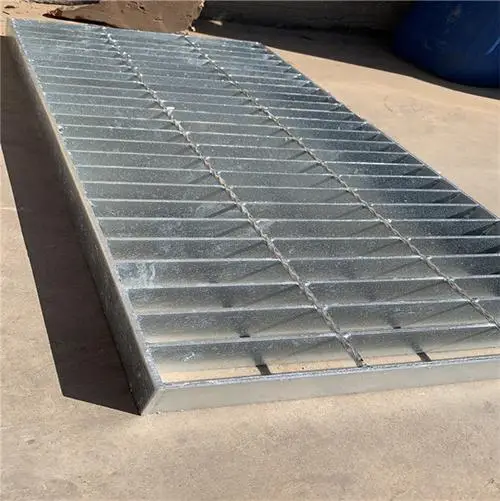
CSSP’s steel grating pricing guide gives approximately US$70–220/m² as a broad factory-budget reference for 316 or 316L stainless steel grating. The corresponding reference for 304 is approximately US$55–150/m².
These supplier-published ranges help with early planning. They are not independently surveyed market averages, live offers, or guarantees that every section and finish falls within the stated limits.
| Purchase Situation | Expected Pricing Effect | Quotation Detail Needed |
|---|---|---|
| Repeated standard rectangular panels | Often supports efficient manufacturing | Exact bar size, mesh, quantity, finish, and panel schedule |
| Deep or thick bearing bars | Higher material weight per square meter | Unit weight and required span capacity |
| Close-mesh panels | More bars and potentially more processing | Clear opening requirement and product construction |
| Small custom order | Fixed setup and treatment charges spread over less area | Minimum order, minimum processing charge, and availability |
| Polished or electropolished panels | Additional surface-processing cost | Faces to be treated, roughness or appearance criteria, and panel limits |
| Irregular or heavily fabricated panels | More drawing, cutting, welding, and finishing work | Approved fabrication drawings and included accessories |
| Special inspection or qualification | Additional testing, administration, and possible lead time | Test methods, acceptance criteria, witness points, and documentation |
A heavy-duty cover with reinforced edges, a small batch of special mesh, or an extensively polished architectural assembly can exceed a general area allowance. This does not automatically mean the price is excessive; it means the broad reference does not describe the full scope.
Provide the material grade, load criteria, support layout, panel schedule, finish, custom details, accessories, and delivery destination. Ask the supplier to identify assumptions and deviations rather than silently substituting a different section or treatment.
A simple weight calculation helps explain why different specifications carry different prices. Using an approximate stainless steel density of 8,000 kg/m³, a continuous field of rectangular bearing bars has the following approximate weight:
Bearing-bar-only weight in kg/m² ≈ 8.0 × bar height in mm × thickness in mm ÷ center spacing in mm
| Bearing Bar Size | Center Spacing | Approximate Bearing-Bar-Only Weight |
|---|---|---|
| 25 × 3 mm | 30 mm | 20.0 kg/m² |
| 30 × 3 mm | 30 mm | 24.0 kg/m² |
| 30 × 5 mm | 30 mm | 40.0 kg/m² |
| 40 × 5 mm | 30 mm | 53.3 kg/m² |
These values exclude cross bars, banding, attachments, notches, serrations, and finite-panel edge effects. They explain material consumption but are not finished shipping weights or certified load ratings.
Reducing center spacing from 40 mm to 30 mm increases the theoretical quantity of equal-sized bearing bars per unit width by about one-third. The finished panel price will not necessarily increase by the same percentage because fabrication, finishing, and other components also contribute.
Specify whether a dimension is center spacing or clear opening. The distinction affects both material quantity and compliance with pedestrian or object-retention requirements.
Load capacity depends on bearing bar geometry, material properties, clear span, support conditions, and loading. Grade 316 should not be selected on the assumption that it automatically carries substantially more load than 304.
For each panel, identify the actual unsupported span and whether the load is uniform, concentrated, a wheel load, or a combination. Include the contact footprint and impact effects where relevant.
A panel can satisfy a strength check while deflecting more than the project permits. Walking comfort, vibration, adjacent floor levels, and clearance above equipment may govern the final section.
Compare suppliers using the same deflection criteria. A lighter panel supported by a more permissive limit is not necessarily an equivalent alternative.
Open area influences drainage, ventilation, visibility through the platform, and the passage of small objects. A more open mesh generally uses less material, but it may not meet the required opening size or support small wheels safely.
Drainage performance also depends on channel dimensions, flow conditions, debris, and cleaning access. Selecting grating solely by open-area percentage can overlook the rest of the drainage system.
Larger panels can reduce joints and fixings but increase lifting weight. Smaller removable panels improve maintenance access while adding edge fabrication and fasteners per square meter.
Coordinate panel size with available lifting equipment, access openings, support locations, and safe handling requirements. A lower panel price can be offset by difficult installation.
Serrated bars may improve traction in wet or contaminated areas and can add processing cost. The serration profile removes material from the upper edge, so use the relevant serrated-grating load data.
Plain surfaces may be appropriate where conditions are dry or cleaning requirements favor smoother edges. Neither surface eliminates the need for housekeeping and drainage.
For equivalent panel dimensions, mesh, finish, fabrication, and quantity, 316 generally has a higher purchase price than 304. The main reason to pay the premium is improved corrosion resistance in the intended environment.
| Comparison | 304 Stainless Steel | 316 or 316L Stainless Steel |
|---|---|---|
| Initial price | Normally lower | Normally higher |
| Clean indoor atmosphere | Often sufficient | Additional alloy may offer limited practical benefit |
| Freshwater and mild washdown | Often suitable after reviewing cleaning chemistry | Provides additional corrosion margin |
| Salt deposits and coastal air | Greater risk of localized attack | Generally the stronger starting choice |
| Chloride-bearing process conditions | Requires careful compatibility assessment | Often better, but severity may require a higher alloy |
| Mechanical performance | Depends on grade condition, section, and design | Does not automatically justify a smaller bar section |
Do not apply a fixed percentage premium to convert a 304 quote into a 316 quote. The difference changes with alloy prices, stock availability, product form, quantity, and fabrication.
For a mixed facility, different zones may justify different materials. A dry packaging platform and a brine-exposed drain cover do not necessarily need the same alloy. Keep the boundaries clear in drawings, markings, and material records.
Galvanized and untreated carbon steel usually offer lower initial prices than comparable 316 stainless steel products. Their economic advantage depends on whether they can provide the required service in the actual exposure.
Untreated steel may be appropriate for temporary work, controlled environments, or projects with a separate coating contract. In a wet corrosive installation, the comparison must include suitable surface preparation, coating, inspection, and maintenance.
Galvanized steel is widely used for ordinary outdoor industrial access. Its zinc coating provides protection, but acidic or strongly alkaline liquids, chlorides, abrasion, and persistent wet deposits can accelerate coating consumption.
A galvanized panel can remain the economical choice where the environment is moderate and maintenance access is straightforward. It should not be rejected simply because stainless steel is available.
316 avoids reliance on a zinc coating and can reduce coating-repair work in suitable corrosive conditions. Its higher purchase cost may be justified where replacement requires a shutdown, scaffolding, marine access, or removal of equipment.
Compare the cost of compliant alternatives over the intended service period. A cheaper material that cannot tolerate the exposure is not a useful substitute.
Coastal walkways, seawater equipment access, marina installations, and salt-spray-exposed stairs often justify 316 or 316L. Salt deposition, humidity, shelter from rain, and cleaning frequency all affect corrosion severity.
Marine atmosphere and continuous seawater immersion are different exposures. Warm stagnant seawater, biological deposits, and crevices can cause localized attack even on 316. Confirm suitability before purchasing immersion-service panels.
316 grating may be used around selected process equipment, chemical transfer areas, dosing stations, and drainage systems. Compatibility depends on chemical identity, concentration, temperature, impurities, and exposure duration.
The description “acid-resistant” is too broad for purchasing. Some acids and chloride-containing solutions can attack 316 severely. Provide the actual chemistry when requesting a material recommendation.
Screening areas, pump stations, treatment channels, chemical dosing zones, and maintenance platforms can contain chlorides, corrosive condensate, deposits, and treatment chemicals.
Exposure varies throughout a plant. Select material by zone, considering the liquid and gas environment, ventilation, cleaning access, and expected accumulation beneath panels.
316 or 316L may be selected where salty products, acidic ingredients, cleaning chemistry, or product-quality requirements make 304 less suitable. Extensive welding and controlled cleaning can also influence the grade and finish specification.
Stainless steel alone does not establish hygienic design. Weld condition, crevices, drainage, surface roughness where required, and access for cleaning need to be addressed.
Offshore equipment platforms can combine salt exposure with vibration, uplift, fire requirements, dropped objects, and difficult replacement access. The grating, fixings, frames, and support details must be evaluated as a system.
The price premium for 316 may represent a small share of the total offshore installation cost. However, this does not remove the need to verify the alloy against the actual corrosion conditions.
Document chlorides, process liquids, cleaning chemicals, normal and maximum temperatures, wetting frequency, deposits, and whether the panel is immersed, splashed, or exposed to vapor. Confirm that 316 is sufficient before finalizing the geometry.
Provide the support drawing, clear span, bearing length, load magnitude, load footprint, and deflection limit. Identify maintenance carts, forklifts, equipment feet, or other concentrated loads explicitly.
Choose a welded, press-locked, mechanically locked, or safety-grating system that satisfies the structural, opening, traction, cleaning, and appearance requirements.
State 316, 316L, or an approved dual-certified material. Identify the material specification, required records, treatment sequence, and acceptance criteria for the final surface.
Specify clips, bolts, hinges, frames, support materials, and removable-panel arrangements. A suitable grating panel can still perform poorly if its fixings loosen or the supporting frame deteriorates.
Check technical deviations before comparing totals. Require a clear statement of what is included, what is excluded, and what assumptions remain unresolved.
Repeated panel sizes simplify production, finishing, packing, and installation. Coordinate standard modules with support locations and maintenance openings early in design.
Efficient nesting reduces unusable offcuts. Confirm whether the supplier charges by gross panel area, net area, weight, or individual drawing item. Do not assume that every cutout produces a proportional material credit.
If only part of the platform carries equipment or wheel loads, engineering that area separately may avoid using the heaviest section throughout. The different panel ratings should be identified clearly.
A decorative polish may be unnecessary on a service platform. However, required heat-tint removal and contamination control should remain part of the corrosion specification even where appearance is unimportant.
Approved factory cutouts, banding, handles, and panel marking can reduce field labor and repeat treatment. Confirm dimensions before fabrication to avoid expensive changes after finishing.
Combining orders with the same grade, section, and treatment can improve purchasing and production efficiency. Keep special requirements for critical areas visible rather than averaging them into one general specification.
A deeper section may cost more per square meter but reduce secondary support work. A lighter panel with closer beams may be better elsewhere. Compare fabrication, installation, maintenance, and access for the whole arrangement.
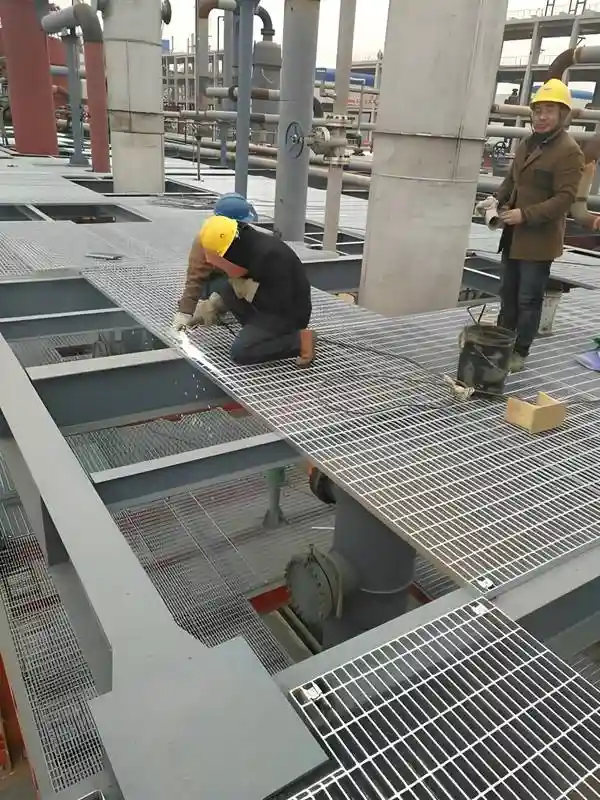
316 stainless steel has a density broadly similar to other steels. It is not a lightweight substitute for galvanized grating. Panel weight and dimensions determine whether manual handling or lifting equipment is appropriate.
Include unloading, sorting, placement, alignment, fastening, approved field modifications, and inspection. Restricted work hours, elevated locations, and operating equipment can reduce installation productivity.
Field modifications can introduce sharp edges, contamination, heat tint, and changes to structural performance. Cutting may also remove banding or interrupt bearing bars.
Obtain approval for structural changes and specify the required cleaning or treatment afterward. Dedicated stainless tools and suitable handling practices help avoid iron contamination.
Stainless grating is sometimes installed on carbon steel supports. In wet conductive conditions, galvanic effects, coating condition, and contact geometry need consideration. Isolation details or other protection may be required.
Fastener selection should match the exposure and restraint requirement. Do not assume that any stainless fastener is suitable simply because the panel is 316.
Remove salts, grease, chemical residues, and deposits using compatible cleaning procedures. Inspect weld areas, clips, cutouts, undersides, and support interfaces for localized corrosion and contamination.
Also check mechanical condition: loose panels, damaged serrations, excessive movement, distortion, and missing restraints can create problems independently of corrosion.
Evaluate cleaning, repairs, access equipment, shutdowns, replacement, and residual value over a consistent study period. Use documented exposure and maintenance assumptions rather than assigning a universal service life to stainless steel.
316 can reduce maintenance costs in suitable service, but its value depends on appropriate design and fabrication. A poorly drained crevice or untreated weld area can undermine the benefit of the alloy.
The following example shows how a panel price becomes an installed project allowance. All rates are illustrative and are not a quotation or a regional labor benchmark.
Assume 80 m² of finished platform coverage. The cutting layout and spare requirement call for purchasing 84 m², a 5% overage relative to installed area. The assumed panel rate is US$160/m², including the agreed standard construction and base surface treatment.
| Budget Item | Calculation or Allowance | Illustrative Cost |
|---|---|---|
| 316L grating panels | 84 m² × US$160/m² | US$13,440 |
| Additional cutouts and reinforced banding | Work beyond the base panel scope | US$1,200 |
| Clips and fastening assemblies | Approved layout allowance | US$480 |
| Packing | Separate allowance | US$350 |
| Freight | Illustrative delivery allowance | US$1,100 |
| Installation labor | Illustrative site allowance | US$2,000 |
| Lifting and access equipment | Separate allowance | US$800 |
| Subtotal | Sum of listed items | US$19,370 |
| Planning contingency | 10% for this illustration | US$1,937 |
| Total example budget | Subtotal plus contingency | US$21,307 |
| Cost per installed square meter | US$21,307 ÷ 80 m² | Approximately US$266.34/m² |
This example excludes new structural supports, foundations, stairs, handrails, duties, taxes, and major shutdown expenses. Add those items where applicable. The purpose is to show why a US$160/m² supply rate is different from the final cost of installed coverage.
Choose contingency according to design maturity and unresolved risks. Known costs should be estimated directly. Remove duplicate allowances where the supplier or installer already includes packing, equipment, fabrication, or another listed item.
A 30 × 3 mm panel and a 40 × 5 mm panel do not contain the same amount of metal or provide the same performance. Compare bar dimensions, mesh, and supported span before comparing unit prices.
“316 marine grade” is not a complete engineering specification. The environment, material records, surface condition, and construction still need review.
Dual-certified stock and local availability can narrow or eliminate a difference. Request the required certification and obtain actual prices instead of applying an assumed surcharge.
Raw material rates exclude processing losses, manufacture, fabrication, treatment, inspection, and packing. They can support a cost analysis but cannot substitute for a finished-product quotation.
Theoretical weight, actual product weight, gross packed weight, gross panel area, and net installed area are different quantities. Confirm the billing basis before converting between them.
Passivation alone may not remove heavy heat tint or scale. Specify adequate preparation and oxide removal for the intended service.
A load statement is incomplete without the unsupported span, load footprint, support condition, and deflection criterion. A panel rated over a short span may be unsuitable over a wider opening.
304 and 316 can look alike. Magnetic response is also not a dependable way to distinguish them. Use material traceability and appropriate verification.
Where positive material identification is specified, choose a method suited to the required check. Handheld X-ray fluorescence can help identify alloy elements such as molybdenum, but it does not reliably establish the low carbon content needed to distinguish an L grade. That requires suitable documentation or a carbon-capable test method.
Small-order setup, treatment batches, export packing, destination handling, unloading, and local transport can raise the effective unit price. Ask for the full commercial scope before placing the order.
| Requirement | Information to Provide |
|---|---|
| Application | Walkway, platform, stair tread, trench cover, drainage grate, or other use |
| Exposure | Chlorides, process chemicals, temperature, wetting conditions, deposits, and cleaning procedure |
| Material | 316, 316L, or approved dual certification, with the applicable material standard |
| Construction | Welded, press-locked, swage-locked, or formed safety grating |
| Bearing bars | Height, thickness, center spacing, and span direction |
| Cross bars | Profile, dimensions, spacing, and connection requirements |
| Structural criteria | Clear span, bearing detail, loads, footprints, impact conditions, and deflection limit |
| Panel schedule | Length, width, quantity, panel marks, and installation layout |
| Custom fabrication | Cutouts, banding, reinforcement, toe plates, nosing, hinges, and handles |
| Walking surface | Plain, serrated, or another specified traction profile |
| Surface treatment | Heat-tint removal, pickling, passivation, polishing, or electropolishing as required |
| Accessories | Clips, bolts, frames, support materials, and restraint details |
| Quality requirements | Material records, traceability, inspection, testing, and acceptance criteria |
| Commercial details | Destination, delivery terms, currency, required schedule, payment basis, and quotation validity |
Please quote 316L stainless steel grating for the attached platform layout and panel schedule. Verify the proposed construction against the stated loads, clear spans, support details, and deflection limits. Itemize the panels, additional cutouts and banding, specified surface treatment, fixing assemblies, documentation, packing, and delivery. State the finished unit weight, manufacturing lead time, quotation validity, and all technical or commercial deviations.
Attach the actual exposure information, dimensions, load criteria, finish specification, and drawings before issuing the request. The wording establishes a quotation structure; it does not replace those project details.
The right purchase is a grating system that meets the required load and exposure at a sensible total cost. A standard 316L panel with appropriate surface treatment may provide better value than an extensively polished product where appearance is unimportant. In a more aggressive environment, even a competitively priced 316 panel may be unsuitable if the service requires a higher alloy.
When a quotation exceeds the budget, ask the supplier to identify the main cost drivers. Repeated panel modules, improved cutting layouts, coordinated supports, and completed fabrication drawings can reduce cost without weakening the specification.
For an accurate price per square meter, provide the panel schedule, material and finish requirements, load and span information, custom details, and delivery destination together. This gives the supplier a clear basis for pricing and helps the project team compare complete, technically equivalent offers.
How much does 316 stainless steel grating cost per m²?
CSSP’s published factory-budget guide lists approximately US$70–220 per m² as a broad reference for 316 or 316L stainless steel grating. Actual pricing depends on bar size, mesh, panel weight, construction, finish, fabrication, and quantity. Heavy-duty or highly customized products can exceed the range. Confirm whether accessories, packing, freight, duties, and installation are included before using a quote in the project budget.
Is 316 stainless steel grating worth the extra cost over 304?
It often is when chlorides, coastal deposits, brine, or process chemistry make 304 more vulnerable to localized corrosion. In clean indoor or mild freshwater conditions, 304 may provide better value. Compare both grades using the same geometry, finish, and delivery scope, then select the material for the actual exposure. Severe seawater or chemical service may require a higher alloy than 316.
How do I calculate 316 stainless steel grating price per square meter?
Divide the panel price by its area in square meters. For a finished-grating price per kilogram, multiply the rate by the matching unit weight in kg/m². For a metric-tonne price, multiply by the weight in kg/m² and divide by 1,000. Add separately excluded fabrication, treatment, accessories, freight, and installation to calculate the complete project cost.