

Stainless steel and FRP grating are both used in chemical plants for platforms, walkways, stair treads, trenches, drainage covers, tank access, pump areas, and maintenance floors. They solve different engineering problems. Stainless steel provides high stiffness, strong structural performance, durability, cleanability, and predictable metallic fabrication. FRP, or fiberglass reinforced plastic, offers low weight, electrical insulation, and excellent corrosion resistance when the resin system is correctly selected for the chemical exposure. The right choice depends on the actual acid, alkali, solvent, salt, temperature, fire, smoke, static, load, span, and maintenance requirements. This guide compares stainless steel and FRP grating for chemical processing facilities and explains how to select a safe, durable, and economical system.
Stainless steel grating is a metal open-grid product made from stainless steel bearing bars and cross bars. FRP grating is a composite product made from glass fibers embedded in a resin matrix. Both can be manufactured as panels with plain, serrated, or anti-slip surfaces, but their mechanical and environmental behavior is different.
| Comparison factor | Stainless steel grating | FRP grating |
|---|---|---|
| Primary material | 304, 316, 316L, duplex, or specialty stainless steel | Fiberglass reinforcement combined with polyester, vinyl ester, epoxy, or phenolic resin |
| Structural stiffness | High modulus and strong resistance to deflection | Lower modulus; deflection often controls the span design |
| Chemical resistance | Depends on alloy, concentration, temperature, and exposure | Depends strongly on the resin system, veil, glass content, and temperature |
| Electrical behavior | Conductive | Normally electrically insulating unless conductive FRP is specified |
| Fire behavior | Metal is noncombustible, but strength changes at high temperature | Depends on resin, fire-retardant additives, flame spread, smoke, and toxicity rating |
| Weight | Heavier than FRP | Lightweight and easier to handle manually |
| Slip resistance | Plain, serrated, or applied anti-slip surfaces | Gritted, concave, molded, or covered anti-slip surfaces |
| Fabrication | Welded, press-locked, cut, banded, and framed | Molded or pultruded, then cut and assembled with mechanical fasteners |
| Repair | Can often be welded or replaced with metal components | Damaged panels are normally replaced or repaired according to the manufacturer’s procedure |
| Typical advantage | High strength, stiffness, impact resistance, and long-term metallic durability | Corrosion resistance, low weight, insulation, and easy handling |
Neither material should be selected from a generic “chemical-resistant” label. Stainless steel can be attacked by specific acids, chlorides, high temperatures, and stagnant deposits. FRP can be damaged by incompatible solvents, excessive temperature, ultraviolet exposure, fire, impact, or resin degradation. The chemical compatibility schedule and structural design should be reviewed together.
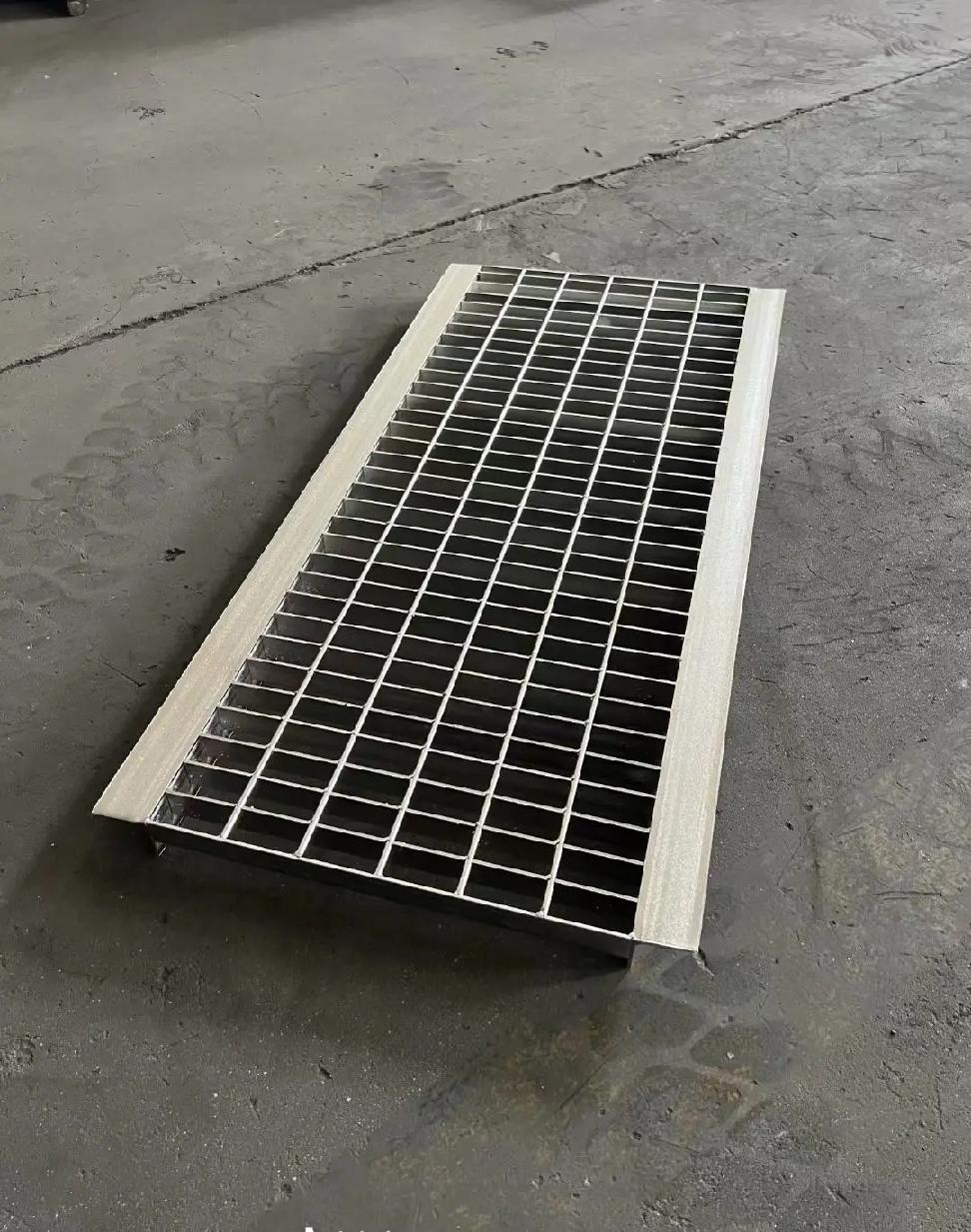
Stainless steel grating for chemical plants is an open-grid metal flooring product manufactured from stainless steel bearing bars and cross bars. The bearing bars span between supports and carry the main load, while the cross bars hold the panel together and maintain the mesh pattern.
The grating may be supplied in 304, 316, 316L, duplex, or specialty stainless steel grades. Construction options include welded grating, press-locked grating, swage-locked grating, and custom-fabricated panels with frames, banding, cut-outs, nosings, toe plates, or removable sections.
Stainless steel grating is commonly used around reactors, storage tanks, pumps, pipe racks, loading points, sampling areas, chemical dosing systems, maintenance platforms, stairs, and drainage channels. The open grid permits drainage and ventilation while maintaining a load-bearing walking surface.
For chemical areas, 316 or 316L is often considered instead of 304 when chlorides, salt-containing solutions, aggressive cleaning chemicals, or wet process exposure are present. The final grade must be confirmed against the actual chemical and temperature.
FRP grating is a structural composite panel made from continuous glass fibers and a thermosetting resin. The fibers provide reinforcement and load-carrying capacity, while the resin binds the fibers together, gives the panel its shape, and provides much of its chemical, thermal, fire, and weather resistance.
Molded FRP grating is produced by placing continuous glass fibers in multiple directions inside a mold and saturating them with resin. The result is an integral panel with bidirectional strength. Because the bearing bars and cross bars are formed as one composite structure, molded grating can distribute loads across adjacent bars and provide good impact tolerance.
Pultruded grating is manufactured by pulling continuous glass fibers through a resin bath and heated forming die. The process creates highly oriented bearing bars with efficient longitudinal strength. Pultruded grating can provide high strength-to-weight performance, but the load direction and transverse behavior must be checked carefully.
Common resin options include:
The same FRP mesh size can perform very differently when made with different resins. The purchaser should request a chemical resistance table that identifies the resin, concentration, temperature, exposure time, and rating for each process chemical.
Chemical resistance must be assessed using the actual chemical exposure rather than a broad industry description. “Acid service,” “solvent area,” or “caustic room” is not enough to select a material safely.
Stainless steel resistance to acids depends on the acid type, concentration, temperature, aeration, chloride contamination, and flow conditions. 316 stainless steel may perform better than 304 in some environments, but neither grade is universally resistant to strong or hot acids.
FRP vinyl ester systems can perform well in many acid environments, but the exact resin, corrosion barrier, temperature rating, and chemical concentration must be checked. Phenolic FRP may have strong fire performance but may not provide the same chemical resistance as a high-quality vinyl ester system.
Stainless steel can perform well in selected alkaline environments, but concentrated or hot caustic solutions may cause stress-related or localized corrosion depending on conditions. FRP resistance also varies by resin and temperature. A chemical compatibility chart should be reviewed for sodium hydroxide, potassium hydroxide, ammonia, and mixed cleaning solutions.
Solvents can soften, swell, extract, or otherwise attack polymer resins. FRP selection must identify the exact solvent and concentration. Stainless steel may be more predictable for some solvent services, but seals, coatings, fasteners, and support materials still require review.
Chlorides can cause pitting and crevice corrosion in stainless steel. 316 and 316L normally provide better resistance than 304, but warm, concentrated, or stagnant chloride solutions may require a higher-alloy material or FRP. FRP does not corrode electrochemically like metal, but its resin may still be affected by chemicals, temperature, ultraviolet exposure, or mechanical damage.
| Exposure | Stainless steel selection issue | FRP selection issue |
|---|---|---|
| Dilute acid splash | 304 or 316 may be possible depending on acid and temperature | Isophthalic or vinyl ester may be suitable depending on the chemical table |
| Hot concentrated acid | May require specialty alloy or nonmetallic material | Resin, veil, temperature limit, and chemical compatibility must be verified |
| Caustic solution | Concentration and temperature can control corrosion | Vinyl ester or another specified resin may be required |
| Organic solvent | Often predictable, but alloy and temperature still matter | Resin compatibility can be the controlling issue |
| Chloride or brine | 316 or 316L is generally preferable to 304 | Many vinyl ester systems perform well, subject to temperature and concentration |
| Mixed chemical exposure | Review the most aggressive combination, not only individual chemicals | Request testing or manufacturer confirmation for the actual mixture |
Wet areas expose the grating to liquid films, splash, deposits, and repeated wet-dry cycles. Stainless steel can provide long service when the alloy is suitable and surfaces are cleaned. FRP can avoid metallic corrosion, but water absorption, resin selection, and connection details still affect performance.
Chemical vapors can condense on cool surfaces and create highly concentrated liquid films. Stainless steel may experience localized attack around welds, crevices, clips, and deposits. FRP may resist the vapor better than carbon steel, but the resin and surface veil must be selected for the chemical.
Continuous immersion is more demanding than occasional splash. For stainless steel, stagnant liquid, deposits, oxygen depletion, and chloride concentration can cause pitting and crevice corrosion. For FRP, long-term immersion can affect resin absorption, glass-resin bonding, and mechanical properties.
Frames, clips, overlapping plates, bolted joints, and support seats can trap chemical liquid. The choice of stainless steel or FRP does not remove the need for good drainage. Chemical plants should minimize horizontal ledges, seal or isolate incompatible joints where appropriate, and provide access for cleaning and inspection.
Stainless steel connected to carbon steel, galvanized steel, aluminum, or other metals may create galvanic corrosion in a conductive chemical environment. FRP avoids electrochemical galvanic corrosion, but the fasteners and support frame may still be metallic and require protection.
Stainless steel and FRP grating can both be engineered for industrial loads, but their structural behavior is different. Stainless steel has a high elastic modulus and generally provides greater stiffness for a given depth. FRP has a lower modulus, so deflection and vibration often control the design before ultimate strength is reached.
Stainless steel bearing bars act as primary structural members spanning between supports. The bearing bar height, thickness, spacing, clear span, support width, and load position determine capacity and deflection.
FRP grating transfers load through both glass fibers and resin. Molded grating usually has bidirectional load distribution, while pultruded grating may have stronger directional behavior. The manufacturer’s load tables must identify span, panel depth, resin system, glass content, support condition, load type, and deflection limit.
Equipment feet, wheels, ladders, jacks, pipe supports, and maintenance components can create concentrated loads. A grating system designed for uniform pedestrian loading should not be assumed to support a small wheel or machine foot without a separate check.
Deflection limits may be more critical for FRP because the material is less stiff than steel. Excessive deflection can cause discomfort, vibration, cracking around connections, fastener movement, and premature surface wear.
| Design variable | Stainless steel effect | FRP effect |
|---|---|---|
| Increase bearing bar depth | Strongly improves stiffness and capacity | Increases section stiffness and may reduce deflection |
| Increase span | Increases bending and deflection | Often has a stronger effect on serviceability because of lower modulus |
| Reduce bar spacing | Improves load sharing and reduces openings | May improve local load distribution and walking comfort |
| Use concentrated load | Requires local bearing bar and load-distribution check | Requires contact-area and transverse-load review |
| Use long support spans | May be economical with deeper bars | May require deeper sections, additional supports, or pultruded construction |
| Use vehicle loads | Possible with heavy-duty steel design | Requires specific FRP vehicle-load system and manufacturer approval |
Chemical plants may have water, oil, acids, alkalis, powders, biological residue, and chemical deposits on walking surfaces. Slip resistance should be selected according to the actual process, footwear, slope, cleaning frequency, and emergency response requirements.
Stainless steel grating may be plain, serrated, or fitted with an anti-slip nosing or abrasive insert. Serrated bearing bars improve footwear engagement and are common on wet platforms and stairs.
FRP grating is often supplied with a grit-top surface embedded into the resin. Concave or molded surfaces can also improve drainage and traction. Grit selection should consider chemical compatibility, wear, cleaning, and bare-foot or wheeled traffic.
Slip resistance does not replace spill control. The plant should have drainage, containment, cleaning, emergency wash, signage, and isolation procedures. A gritted surface may retain residue more than a smooth surface, so cleaning access should be included in the design.
Platforms above tanks, pits, trenches, and process areas may require handrails, guardrails, toe plates, gates, and secondary containment. Grating opening size should be checked for foot, tool, and dropped-object hazards.
Stainless steel is a noncombustible metal, but its strength and stiffness decrease as temperature rises. A stainless steel platform located near a furnace, hot process, fire zone, or emergency egress route should be checked for elevated-temperature structural performance and heat transfer.
FRP is a resin-based composite, so its fire behavior depends on the resin, glass content, fire-retardant additives, surface, and test standard. Products may be available with flame-spread, smoke-developed, low-smoke, or phenolic fire performance, but the exact classification must be confirmed from a current test report.
Phenolic resin is often selected where low smoke and low flame spread are critical, such as enclosed spaces, offshore facilities, tunnels, and emergency access routes. It may have different chemical resistance, mechanical properties, color, and cost than vinyl ester or polyester FRP.
Every FRP product has a maximum service temperature. The limit depends on the resin system, load, chemical exposure, duration, and whether the grating is continuously exposed or subject to short-term heat. Stainless steel is generally more tolerant of elevated temperatures, although the structural design still requires review.
| Performance item | Stainless steel grating | FRP grating |
|---|---|---|
| Combustibility | Metallic and noncombustible in normal classification | Resin-dependent and may burn or decompose under sufficient heat |
| Smoke | Does not generate polymer smoke | Depends on resin and fire-retardant system |
| High-temperature strength | Strength and stiffness decrease with heat but remain metallic | Resin softening and property loss may occur near the service limit |
| Fire-critical application | Often a natural starting option | Phenolic or certified fire-retardant FRP may be required |
| Required documentation | Material and structural data | Flame spread, smoke, toxicity, temperature, and resin certificates |
Stainless steel grating conducts electricity and may need to be bonded to the plant grounding system. In areas with energized equipment, electrical bonding and equipotential grounding should be designed by the electrical engineer.
FRP grating is generally electrically nonconductive, making it attractive around electrical equipment, substations, cable areas, laboratories, and locations where accidental contact with an energized structure is a concern.
Insulation can also create static-control concerns. In solvent handling, dust, powder, pharmaceutical, and explosive-atmosphere areas, static charge may accumulate on a nonconductive surface. Conductive or static-dissipative FRP may be required, together with a defined grounding path.
The choice between conductive stainless steel and insulating FRP should account for process equipment, hazardous area classification, instrumentation, cable trays, grounding, static discharge, and maintenance procedures. A nonconductive grating should not be selected solely because it does not conduct electricity; the complete electrical safety design must be reviewed.
304 is suitable for many indoor wet areas, mild chemical exposure, food processing, general wash-down, and architectural applications. It is usually more economical than 316 but less resistant to chloride-induced localized corrosion.
316 includes molybdenum and generally provides better resistance to chlorides and some chemical environments. It is commonly selected for chemical plants, coastal facilities, wastewater, brine, marine access, and wet outdoor platforms.
316L is the low-carbon version of 316. It is often selected for extensive welded fabrication because the lower carbon content reduces the risk of sensitization around heat-affected zones.
Duplex, super duplex, nickel alloys, and other specialty materials may be required for severe chloride, high-strength, or high-temperature service. These materials cost more and may require specialized welding, forming, inspection, and supply-chain control.
| Stainless grade | Typical chemical plant use | Important limitation |
|---|---|---|
| 304 | General indoor process areas and mild wet exposure | Less suitable for high chloride or severe chemical exposure |
| 316 | Chloride, coastal, wastewater, and more aggressive chemical areas | Still vulnerable to severe or stagnant exposure |
| 316L | Welded grating, chemical platforms, and corrosion-sensitive fabrication | Higher cost and still requires proper surface treatment |
| Duplex | High-strength chloride and severe marine service | More specialized fabrication and higher procurement cost |
For a product example, the stainless steel 19-W-4 grating page explains common 304, 316, and 316L configurations, surface choices, and chemical-area applications.
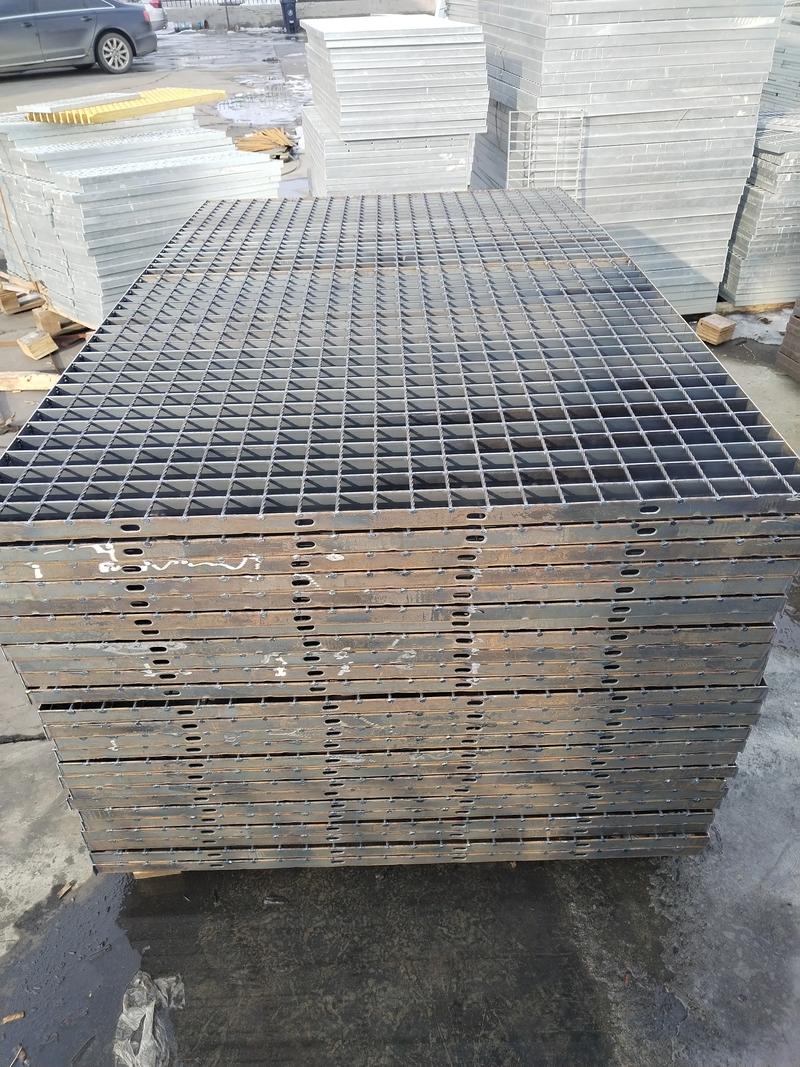
Orthophthalic polyester is generally the lower-cost FRP resin option. It may be suitable for mild industrial environments where chemical exposure is limited and the operating temperature is controlled.
Isophthalic polyester provides improved corrosion performance compared with basic orthophthalic polyester and is used for general industrial and water-related applications. The chemical compatibility table should still be reviewed for the plant’s specific liquids.
Vinyl ester is commonly selected for more aggressive acid, alkali, salt, and solvent exposure. It may include a resin-rich corrosion barrier or surface veil to reduce chemical ingress. Vinyl ester is often more expensive than polyester but may provide better lifecycle value in demanding chemical zones.
Phenolic resin is selected primarily where low smoke and fire performance are critical. Its chemical resistance, temperature range, color, mechanical properties, and cost should be compared with vinyl ester before approval.
| Surface type | Stainless steel option | FRP option | Typical use |
|---|---|---|---|
| Plain | Flat bearing bars | Plain molded or pultruded top | Dry or controlled areas, easy cleaning, smooth cart movement |
| Serrated | Notched bearing bars | Less common as a direct equivalent | Wet or oily industrial walkways and stairs |
| Gritted | Applied abrasive treatment or nosing | Embedded quartz or mineral grit | Chemical platforms, wash-down areas, ramps, stairs |
| Concave | Special formed or fabricated surface | Molded concave top | Drainage, wet access, and improved foot contact |
| Covered | Plate or insert over the grating | Solid or covered FRP surface | Small-object retention, hygienic or equipment areas |
Stainless serrated surfaces improve traction but can make cleaning more difficult around the teeth. FRP grit-top surfaces provide strong traction but can wear under repeated cart traffic or become difficult to clean if process solids accumulate. The surface should be selected with the cleaning method and worker footwear in mind.
Both stainless steel and FRP grating are available in standard panels and custom-fabricated sizes. Standard panel sizes can simplify procurement, but chemical plant layouts usually include pipe penetrations, tanks, valves, equipment supports, trenches, and irregular openings that require drawing-based fabrication.
| Specification item | Stainless steel examples | FRP examples |
|---|---|---|
| Panel depth | 25, 30, 32, 40, 50 mm or heavier | 25, 30, 38, 40, 50 mm or deeper molded/pultruded sections |
| Mesh pattern | 19-W-4, 15-W-4, metric welded and press-locked patterns | 38 x 38 mm, 30 x 30 mm, 40 x 40 mm, mini-mesh and custom patterns |
| Panel size | Stock or cut-to-size panels up to transport and handling limits | Standard molded panels or pultruded sections assembled into larger areas |
| Surface | Plain, serrated, nosing, abrasive insert | Plain, grit, concave, covered, or custom top |
| Edge treatment | Trim banding, load banding, frames, welded edges | Cut edge sealing, trim angles, molded edges, and mechanical frames |
Stainless steel can be cut, welded, banded, drilled, framed, and formed into irregular panels. All fabrication should be completed before pickling and passivation where practical.
FRP can be cut to shape using appropriate tools, but cut edges may require sealing to protect the glass fibers and resin. Field cutting should follow the manufacturer’s instructions. Dust control and worker protection are important during cutting and drilling.
Every custom panel should have a durable mark that matches the installation drawing. Bearing direction, support location, removable access, and cut-out orientation should be clear to the installation team.
Stainless steel is often selected where the platform carries heavy equipment, is exposed to hot process conditions, or must integrate with stainless tanks and pipework. FRP can be a useful option where the chemical exposure is severe and the load and temperature are within the FRP design range.
Both materials provide open drainage and ventilation. Stainless steel may be preferred for impact resistance and high stiffness, while FRP may reduce manual handling effort and provide electrical insulation.
Stainless stair treads can be fabricated with serrated bearing bars, side plates, and welded nosings. FRP stair treads can use molded grit surfaces and mechanical support angles. The stair stringers, fasteners, nosings, and handrails must be compatible with the chosen material.
Chemical drainage trenches require careful material compatibility review because liquid may remain in contact with the panel and frame. Stainless steel frames may be appropriate for heavy wheel loads, while FRP may be preferred for highly corrosive but pedestrian-only drainage channels.
FRP is often considered for splash zones and secondary containment areas where acids, caustics, or salts can attack metal. Stainless steel may be selected where impact, temperature, heavy loads, or cleanability is more important.
Stainless grating can be attached with stainless clips, bolts, welded connections, frames, or support angles. The fasteners should match the environment and avoid galvanic contact with incompatible support metals.
FRP grating is normally installed using stainless steel or FRP-compatible clips, saddle clamps, hold-downs, and support angles. The fasteners should distribute loads without crushing the composite bars. Over-tightening can damage the resin and glass structure.
Both materials require adequate bearing width and stable support. FRP panels may need closer supports than steel because of deflection. The support spacing should be based on the manufacturer’s load tables rather than copied from a steel design.
Stainless steel field cutting can create heat tint, sharp edges, and corrosion-sensitive areas. FRP cutting can expose glass fibers and create dust. Both materials should be cut only after engineering review and with appropriate finishing and worker protection.
Stainless steel connected to carbon steel, galvanized steel, or aluminum may require electrical isolation or protective detailing. FRP avoids direct metal galvanic interaction at the panel, but its clips, bolts, and frames remain part of the corrosion system.
Stainless steel grating should be washed to remove chemical deposits, salts, oils, powders, and biological residue. Welds, crevices, fasteners, and support frames should be inspected for staining, pitting, and localized attack.
FRP grating should be inspected for resin erosion, fiber exposure, cracking, delamination, discoloration, grit wear, impact damage, and loose fasteners. Chemical deposits can hide surface damage, so panels should be cleaned before detailed inspection.
Cleaning agents should be compatible with the material. Chloride-bearing cleaners can damage stainless steel, while strong solvents or hot chemicals can soften or attack some FRP resins.
Service life depends on chemical concentration, temperature, exposure time, loading, impact, ultraviolet radiation, support condition, cleaning, fire exposure, and installation quality. A vinyl ester FRP panel may outperform stainless steel in one acid service, while stainless steel may last longer near hot equipment or heavy impact.
| Inspection item | Stainless steel | FRP |
|---|---|---|
| Surface condition | Check pitting, tea staining, embedded iron, and deposits | Check resin erosion, discoloration, cracking, and exposed fibers |
| Connections | Check welds, bolts, clips, and galvanic corrosion | Check clips, bolt holes, crushing, loosening, and support damage |
| Slip surface | Check serrations, grit, nosing, and contamination | Check grit wear, resin loss, and chemical smoothing |
| Structure | Check bent bars, cracks, corrosion, and deflection | Check deflection, delamination, broken bars, and fiber damage |
| Drainage | Check blocked openings and trapped chemical liquids | Check blocked openings, deposits, and support crevices |
FRP often has a higher purchase price than basic galvanized steel, while stainless steel can have an even higher initial material cost. However, the complete lifecycle cost can change the ranking.
| Cost category | Stainless steel grating | FRP grating |
|---|---|---|
| Material cost | High, especially for 316, 316L, and specialty alloys | Medium to high depending on resin, depth, surface, and fire rating |
| Handling and installation | Heavier; may require lifting equipment | Lightweight; often easier to handle manually |
| Structural supports | High stiffness may allow wider support spacing | May require closer supports to control deflection |
| Fasteners | Stainless or compatible coated fasteners may be required | Stainless or specialized composite-compatible fasteners |
| Chemical maintenance | Low when alloy and finish are correct | Low when resin and chemical exposure are correctly matched |
| Repair | Can often be welded or replaced with standard metal parts | Damaged sections may need replacement or approved composite repair |
| Replacement risk | Increases with wrong alloy, crevices, heat, or impact | Increases with resin incompatibility, fire, UV, or excessive deflection |
| Lifecycle value | Strong for heavy load, high temperature, impact, and long-span duty | Strong for severe corrosion, insulation, low weight, and easy handling |
Stainless steel may be more economical when the plant has heavy loads, high temperatures, frequent impact, long spans, or strict cleaning requirements. It can also reduce replacement risk where FRP would require closer supports or where mechanical damage is likely.
FRP may be more economical in chemical splash areas, enclosed corrosive rooms, electrical zones, and locations where corrosion would quickly consume metal. Its lower weight can reduce installation labor, lifting requirements, and supporting steelwork.
Stainless steel is highly recyclable and can be recovered as a valuable metal at the end of service. Its long life and resistance to coating failure can reduce replacement frequency.
FRP is lightweight, which reduces transport and installation energy. However, thermoset resin systems are more difficult to recycle than metals. The plant should consider the expected service life, replacement rate, resin selection, and end-of-life handling.
Sustainability should include:
A lightweight FRP panel is not automatically the most sustainable choice if it must be replaced frequently. A stainless steel panel is not automatically the most sustainable choice if its alloy is excessive for a mild exposure. Material should be selected based on verified service conditions.
List every liquid, vapor, gas, powder, cleaning agent, and spill condition. Include concentration, temperature, exposure time, splash or immersion, and possible chemical mixtures.
State flame spread, smoke, toxicity, fire rating, temperature, electrical conductivity, static dissipation, and grounding requirements. These factors can eliminate an otherwise chemically suitable material.
Provide uniform loads, concentrated loads, wheel loads, equipment loads, impact, span, support width, and allowable deflection. FRP and stainless steel should not share the same load table without engineering approval.
Choose plain, serrated, gritted, concave, or covered surfaces according to slip risk, cleaning, footwear, wheeled traffic, and drainage.
For stainless steel, state 304, 316, 316L, duplex, or another approved grade. For FRP, state molded or pultruded construction, resin type, glass content, surface veil, fire rating, and temperature rating.
Show panel dimensions, cut-outs, banding, frames, support locations, nosings, toe plates, lifting points, and panel numbers on the fabrication drawings.
Define clips, bolts, supports, isolation, field-cutting limitations, inspection, cleaning, and replacement procedures. Chemical plant grating should be treated as part of the access system, not as a stand-alone panel.
| RFQ category | Information to include |
|---|---|
| Application | Platform, walkway, stair, trench, drain, tank access, pump area, or chemical-dosing zone |
| Chemicals | Name, concentration, temperature, splash, vapor, immersion, and cleaning exposure |
| Material | Stainless grade or FRP resin system and manufacturing method |
| Fire | Flame spread, smoke, toxicity, temperature, and test documentation |
| Electrical | Conductive, insulating, static-dissipative, or grounding requirements |
| Load | Uniform, concentrated, wheel, equipment, impact, and deflection criteria |
| Geometry | Panel dimensions, bar size, mesh, bearing direction, and support spacing |
| Surface | Plain, serrated, grit, concave, covered, or special anti-slip finish |
| Fabrication | Cut-outs, banding, frames, nosings, toe plates, handles, and panel numbers |
| Fasteners | Clips, bolts, washers, supports, isolation, and chemical compatibility |
| Quality documents | Material certificates, resin data, chemical tables, load tables, fire reports, and inspection records |
For stainless steel chemical-plant applications, buyers can review the CSSP Grating stainless steel 19-W-4 grating page for common grades, surfaces, fabrication options, and chemical-area uses. The final selection should still be based on the plant’s process data and engineering drawings.
Is FRP grating better than stainless steel grating for chemical plants? FRP can be better in highly corrosive chemical splash areas, electrical zones, and locations where low weight and insulation are important. Stainless steel can be better for heavy loads, long spans, high temperatures, impact, cleanability, and rigid industrial platforms. The correct choice depends on the exact chemicals, resin or alloy, temperature, fire requirements, electrical conditions, load, and maintenance plan.
Which is more chemical-resistant, 316 stainless steel or vinyl ester FRP? Neither material is universally more resistant. 316 stainless steel often performs well in chloride, marine, wastewater, and many industrial environments, while vinyl ester FRP can provide excellent resistance to many acids, alkalis, salts, and chemical solutions. The result depends on concentration, temperature, exposure time, deposits, and the specific resin or alloy. A manufacturer’s chemical compatibility table should be checked before approval.
Is FRP grating safe in a chemical plant fire zone? FRP safety in a fire zone depends on the resin system, fire-retardant additives, flame-spread rating, smoke generation, toxicity, temperature, and the applicable code. Phenolic FRP may be selected where low smoke and fire performance are important, but it must still meet the project’s fire test requirements. Stainless steel is noncombustible, although its strength decreases at elevated temperature. A fire engineer should confirm the final material choice.