

Road drain grating is a load-bearing drainage cover installed over gullies, catch basins, channel drains, roadside inlets, kerb channels, stormwater trenches, and drainage pits. It must allow surface water to enter the drainage system while safely supporting pedestrian traffic, cars, trucks, forklifts, or heavy vehicles where required. The right product is selected by matching the material, frame, opening design, hydraulic capacity, load class, anti-slip surface, corrosion protection, and installation environment. Price should be compared only after these technical requirements are aligned.
A road drain grating is not simply a metal cover with holes. It is part of a complete drainage system that normally includes a grate, frame, channel or gully body, support structure, bedding material, drainage pipe connection, and surrounding pavement. If one component is undersized or installed poorly, the complete system can fail even when the grate itself is strong.
Road drainage gratings are designed to collect rainwater and runoff from roads, parking areas, driveways, industrial yards, airport aprons, loading docks, bridge decks, pavements, and pedestrian zones. They help prevent standing water, reduce surface flooding, protect road foundations, improve vehicle control, and create a safer walking surface.
The most common materials are ductile iron, gray cast iron, galvanized steel, stainless steel, and composite materials. Ductile iron is widely used for high-traffic road applications because it combines good strength, impact resistance, casting flexibility, and cost efficiency. Galvanized steel and stainless steel are often used for linear channel drainage, custom trench covers, architectural drainage, and corrosive environments. Composite grates can be useful where lower weight, corrosion resistance, low theft value, or nonconductive performance is important.
Effective surface drainage protects both people and infrastructure. Water that remains on a roadway can contribute to slipping, skidding, hydroplaning, pavement deterioration, erosion, frost damage, and flooding. In industrial yards and logistics facilities, poor drainage can also interrupt operations, damage stored goods, and create unsafe working conditions.
Road surfaces are designed to direct runoff toward kerbs, gullies, channels, and drainage inlets. When water cannot enter the drainage system quickly enough, it can collect near wheel paths, seep into pavement layers, weaken the base, and accelerate cracking or rutting. A correctly specified drain grate helps move water away from the traffic surface and into the intended drainage route.
Road drain gratings must provide a stable, slip-resistant surface while allowing water to pass through. The opening pattern should avoid creating hazards for pedestrians, cyclists, wheelchairs, high heels, narrow trolley wheels, or motorcycle tires. The grate must also remain securely seated in its frame without rocking, lifting, or moving under repeated traffic loads.
A drain grate with a very small open area may become blocked by leaves, sand, packaging waste, sediment, or ice. A grate with excessively large openings may allow debris into the drainage system or create safety concerns. The opening pattern should balance water intake, debris management, structural strength, and the expected traffic type.
Road drain gratings are available in several forms. The right type depends on whether the drain collects water from a road edge, a point inlet, a long trench, a parking area, an industrial yard, or a pedestrian surface.
| Drain Grating Type | Typical Shape | Main Function | Common Location |
|---|---|---|---|
| Road gully grate | Rectangular or square grate with frame. | Collects water at road edges or low points. | Road kerbs, carriageways, parking areas, streets. |
| Kerb inlet grate | Horizontal, vertical, or combination inlet. | Captures runoff flowing along the kerb line. | Urban roads, bridge approaches, highways. |
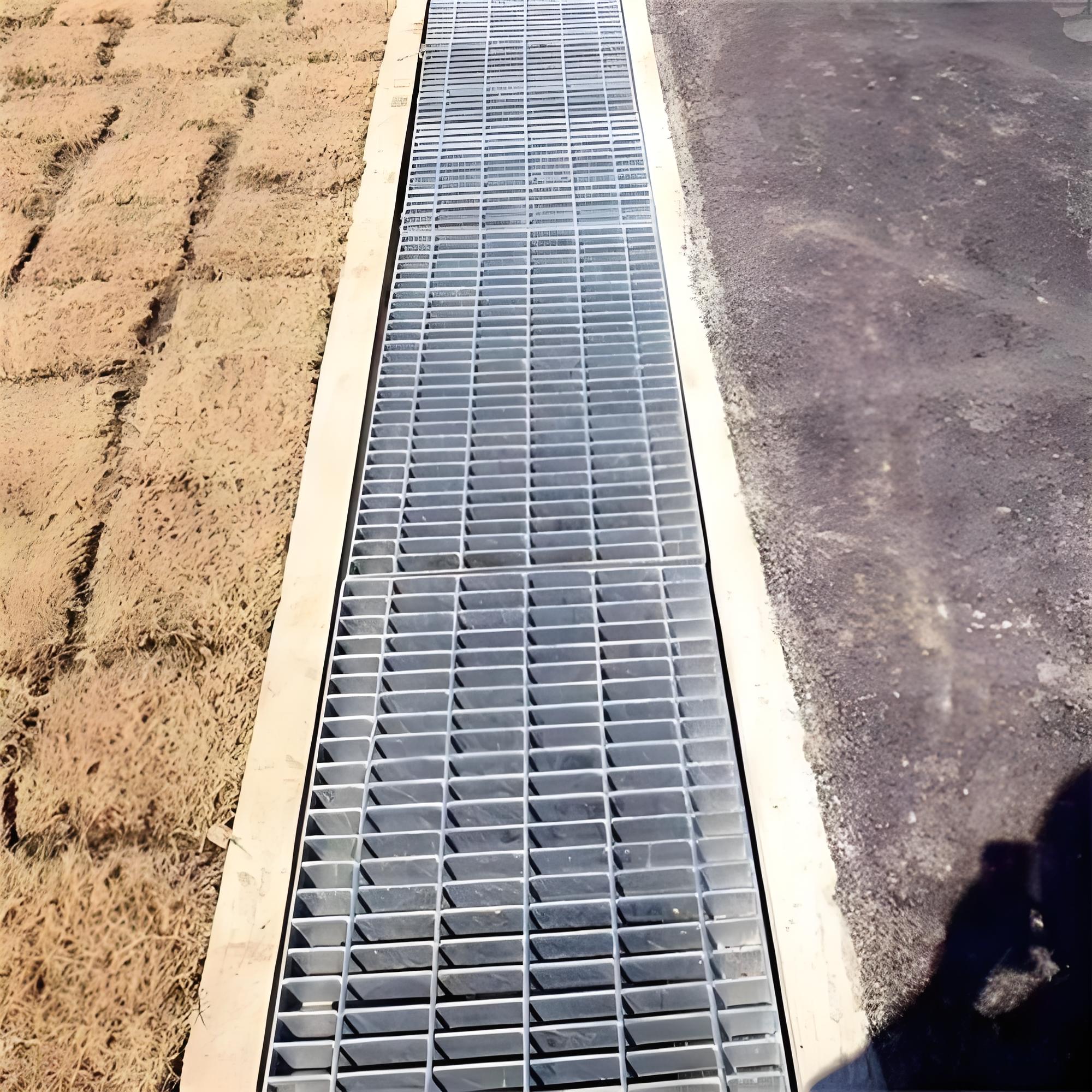
| Trench drain grate | Long narrow linear panel. | Drains water along a continuous channel. | Driveways, loading docks, garages, pedestrian zones. |
| Catch basin grate | Square, rectangular, or circular cover. | Covers a drainage pit or catch basin while allowing intake. | Car parks, roads, industrial yards, landscape drainage. |
| Heel-safe drainage grate | Fine-slot or close-mesh pattern. | Improves pedestrian comfort and reduces trip risk. | Plazas, sidewalks, commercial entrances, public areas. |
| Heavy-duty traffic grate | Deep ribbed casting or reinforced fabricated grate. | Supports high wheel loads and frequent traffic. | Roadways, freight yards, ports, industrial facilities. |
| Bridge drain grate | Custom frame and grate assembly. | Collects deck runoff and directs it to drainage outlets. | Bridges, flyovers, elevated roads, ramps. |
The material selection affects traffic performance, corrosion resistance, maintenance, appearance, theft risk, manufacturing method, and price. The material should be selected together with the required load class and drainage environment.
Ductile iron is one of the most common materials for road gully grates, manhole frames, catch basin covers, and heavy-duty traffic drainage products. It is produced by casting molten iron into a mold, allowing ribs, slots, locking features, anti-rock seating surfaces, logos, and special inlet shapes to be formed as part of the product.
Ductile iron generally offers better toughness and impact resistance than traditional gray cast iron. It is widely used for B125, C250, D400, E600, and F900 drainage applications when the correct frame, installation, and testing requirements are met.
Gray cast iron has traditionally been used for drainage covers and grates. It can provide a cost-effective solution for selected pedestrian, light-traffic, and municipal applications. However, the required load class, project specification, local standard, and impact conditions must be reviewed carefully before choosing gray iron for a road application.
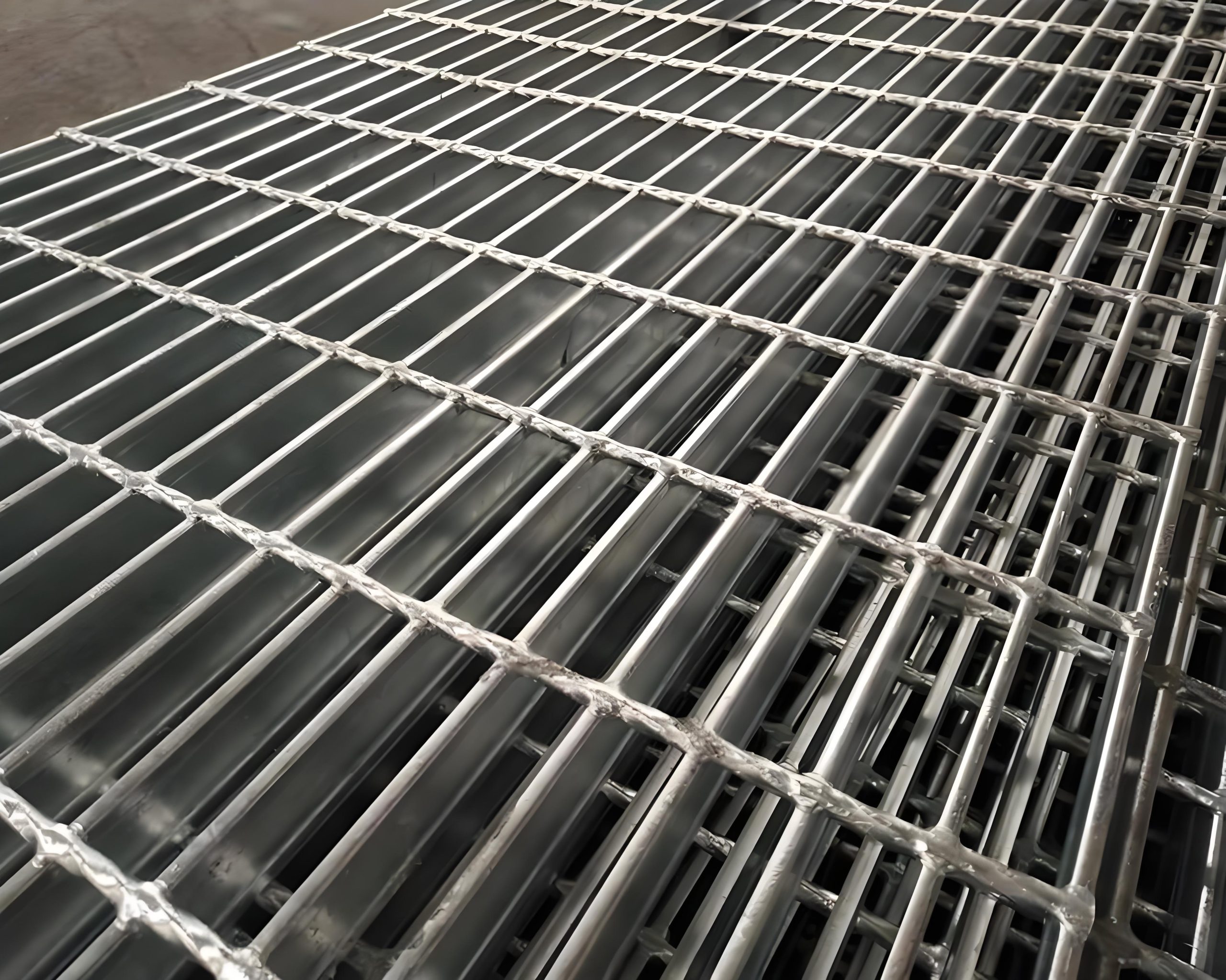
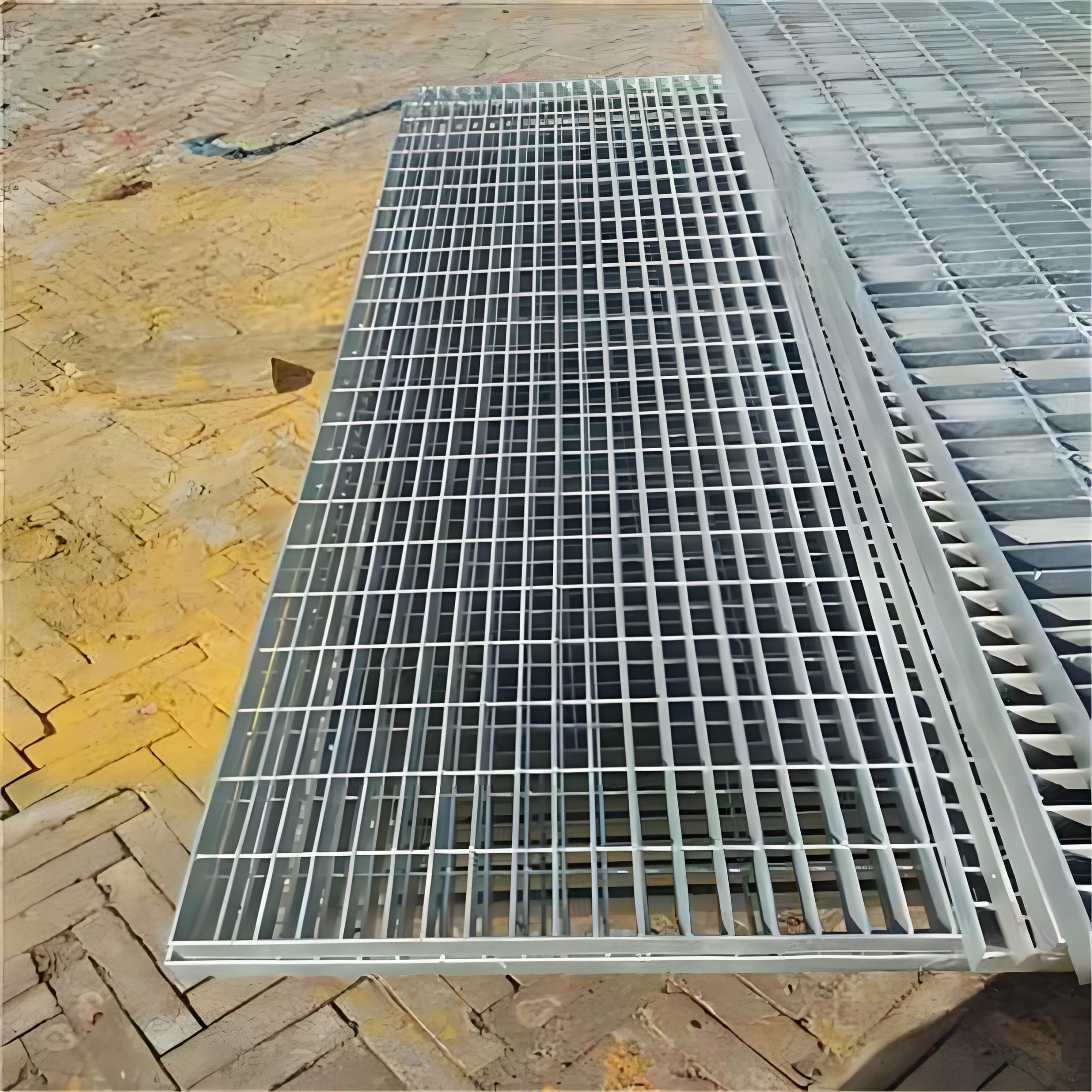
Galvanized steel drainage grates are often fabricated from welded bar grating, press-locked grating, perforated steel, or steel plate with slots. They are useful for linear trench drains, industrial floor drainage, plant walkways, parking areas, loading zones, and custom frame-and-grate systems.
Hot-dip galvanized steel provides zinc protection for many outdoor and industrial environments. It is economical for custom sizes and can be fabricated quickly, but it is usually not the preferred material for the most demanding saltwater, chemical, or high-chloride conditions.
Stainless steel drain grating is selected where hygiene, corrosion resistance, washdown durability, or appearance is important. It is common in food-processing plants, commercial kitchens, swimming facilities, pharmaceutical plants, hospitals, breweries, chemical facilities, coastal public projects, and architectural drainage.
Grade 304 stainless steel is widely used in many wet indoor applications. Grade 316 or 316L is often preferred where chloride exposure, salt spray, seawater proximity, or more demanding chemical conditions are expected. The exact grade should be selected according to the actual environment rather than by price alone.
Composite drainage gratings can be made from reinforced polymer systems, resin composites, or other engineered materials. They are often lighter than cast iron and can offer good corrosion resistance, low theft value, electrical insulation, and reduced manual-handling risk.
Composite grates are not automatically suitable for all road loads. Buyers should verify the complete tested system, including grate, frame, channel, lock, support condition, and installation method. A lightweight composite grate may suit pedestrian or parking areas, while heavy traffic requires a certified product designed for that duty.
| Material | Strength and Traffic Use | Corrosion Resistance | Relative Price | Common Application |
|---|---|---|---|---|
| Ductile iron | Excellent for medium to heavy traffic when properly designed. | Good with suitable coating and maintenance. | Medium | Road gullies, D400 road grates, industrial yards, ports. |
| Gray cast iron | Suitable for selected traffic and municipal applications. | Moderate with protective coating. | Low to medium | Pedestrian, light-duty, and selected drainage covers. |
| Galvanized steel | Good for fabricated trench and industrial drain grates. | Good in many outdoor environments. | Low to medium | Linear drainage, factory floors, custom trench covers. |
| Stainless steel | Strong for pedestrian and industrial systems; design-dependent for traffic loads. | High in suitable grades. | High | Food plants, commercial drainage, washdown, marine projects. |
| Composite | Varies greatly by tested product class and support system. | High in many wet and chemical environments. | Low to high | Pedestrian, parking, utility, corrosion-sensitive sites. |
Road drain gratings are made in standard sizes, but the nominal dimensions must be understood correctly. The product may be identified by the clear opening of the frame, the outside frame size, the grate size, or the channel width. Buyers should always request a dimensioned drawing before ordering.
| Nominal Opening | Typical Product Type | Common Application | Notes |
|---|---|---|---|
| 300 mm × 300 mm | Small square drain grate. | Sidewalks, landscape drainage, small catch basins. | Usually for pedestrian or light-duty use, depending on the system. |
| 400 mm × 400 mm | Medium square gully or pit grate. | Car parks, driveways, commercial drainage. | Verify frame and load class. |
| 500 mm × 500 mm | Road gully grate or catch basin cover. | Urban roads, industrial sites, parking areas. | Common size for traffic-rated cast products. |
| 600 mm × 600 mm | Large road drainage grate and frame. | Roadways, service yards, public infrastructure. | Often selected where high intake capacity is required. |
| 450 mm × 750 mm | Rectangular gully grate. | Kerb-side and roadway drainage. | Common for elongated roadside inlet designs. |
| 500 mm × 1000 mm | Large rectangular trench or channel grate. | Loading bays, commercial drainage, industrial channels. | Can be supplied as modular sections. |
For channel drainage systems, common nominal channel widths include 100 mm, 150 mm, 200 mm, 250 mm, and 300 mm. Grates are often manufactured in 500 mm or 1000 mm lengths so they can be connected into long drainage runs. The actual clear opening, outside width, frame depth, and channel body dimensions must be checked together.
Do not order road drain grates based only on the phrase “300 mm drain grate” or “600 mm road grate.” Confirm whether the stated dimension is the clear opening, the grating body, the outer frame, or the channel width.
Load rating is one of the most important road drain grating specifications. The grate and frame must be suitable for the traffic area where they will be installed. A pedestrian grate is not safe for a driveway, and a light-duty parking grate is not automatically suitable for heavy trucks or forklifts.
EN 124 load classes are widely used for gully tops and manhole tops installed in pedestrian and vehicular areas. The numeric designation refers to the test load in kilonewtons. The relevant part of the EN 124 series depends on the material and product type. For example, ductile iron and cast iron road drainage units are commonly specified under EN 124-2 requirements.
| Load Class | Test Load | Typical Area | Typical Grating Material |
|---|---|---|---|
| A15 | 15 kN | Pedestrian areas, gardens, cycle paths, private non-traffic zones. | Composite, galvanized steel, light cast products, stainless steel. |
| B125 | 125 kN | Footways, pedestrian zones, private driveways, car parks. | Ductile iron, cast iron, galvanized steel, tested composite systems. |
| C250 | 250 kN | Kerbside drainage, road shoulders, light commercial traffic areas. | Ductile iron, reinforced steel, selected high-duty channel systems. |
| D400 | 400 kN | Carriageways, public roads, heavy-traffic areas, industrial roads. | Ductile iron and engineered heavy-duty drainage systems. |
| E600 | 600 kN | Industrial yards, docks, freight terminals, heavy forklift areas. | Heavy-duty ductile iron and specialized drainage systems. |
| F900 | 900 kN | Airport aprons, ports, military areas, extreme wheel-load locations. | Special heavy-duty ductile iron and engineered systems. |
Class selection should be based on the actual traffic route, wheel loads, vehicle frequency, braking forces, turning forces, speed, impact, and pavement construction. A grate installed near a roadway may experience much greater loading than a grate installed in a central pedestrian zone.
For U.S. civil engineering projects, AASHTO M 306 applies to frames, grates, rings, and covers for drainage, sewer, utility, and related structures where traffic service and load-bearing performance are considerations. The applicable project specification, local authority requirement, and installation detail should always take priority.
A road drainage system should be tested and specified as a complete assembly. The grate, frame, channel body, concrete bedding, pavement support, locking feature, and seat design all affect performance. Installing a D400 grate in a light-duty frame or weak channel does not create a D400 system.
Anti-rock seating, stable frame support, correct mortar or concrete bedding, proper level adjustment, and secure installation are critical. Road grates often fail because of poor support conditions rather than because the casting itself is too weak.
Drainage capacity is the ability of a grate and inlet system to accept runoff without creating dangerous ponding. It depends on the total opening area, slot direction, road gradient, inlet location, debris accumulation, channel capacity, downstream pipe capacity, and local rainfall intensity.
A larger open area generally allows more water to enter the drain, but the grate must still retain sufficient structural strength. Wide slots can improve water intake but may be unsuitable where pedestrian footwear, bicycle tires, wheelchair wheels, or narrow trolley wheels are present.
For roadway drainage, grate bars and openings are often arranged to capture flow running along a kerb or channel. In high-flow zones, a larger gully, multiple inlets, a combination kerb-and-grate inlet, or a continuous channel drain may be required. Increasing the grate opening alone may not solve a drainage problem if the channel or pipe below is undersized.
| Opening Pattern | Advantages | Points to Review | Typical Use |
|---|---|---|---|
| Parallel slots | Simple production and strong directional drainage. | Slot direction should consider bicycles, wheels, and pedestrian traffic. | Channel drains, linear road inlets. |
| Diagonal slots | Can improve wheel safety and visual appearance. | May collect debris depending on flow direction. | Road gullies, public walkways, decorative drainage. |
| Grid pattern | Good strength distribution and multidirectional intake. | Open area may be lower than long-slot patterns. | Catch basins, square drain pits, pedestrian drainage. |
| Heel-safe narrow slots | Improves pedestrian comfort and safety. | Can need more frequent cleaning in leaf-heavy locations. | Commercial entrances, plazas, sidewalks. |
| Wide heavy-duty openings | High water intake and easier debris passage. | Must be evaluated for wheel, tyre, and safety risks. | Industrial yards, high-flow stormwater areas. |
Drainage grates should be selected with maintenance in mind. Leaf guards, sediment baskets, silt traps, removable grates, lifting keys, and hinged access features can reduce cleaning time. In areas with high debris loads, a grate with excellent hydraulic performance may still require frequent inspection and cleaning.
Maintenance teams should be able to remove the grate safely without damaging the frame or pavement. Heavy cast grates may need lifting keys or mechanical assistance, while lightweight composite or stainless steel grates may be easier to handle manually.
Road drain grates must remain safe for pedestrians and vehicles under wet conditions. Surface texture, slot geometry, frame stability, and installation level all influence safety.
Cast iron and ductile iron grates often include raised patterns, ribs, textured surfaces, or slip-resistant profiles. Steel grates may use serrated bearing bars, expanded metal, perforated anti-slip plate, or textured covers. Stainless steel drainage grates can use embossed or brushed anti-slip surfaces depending on the application.
A road grate should sit securely in its frame and should not rock, rattle, or move under traffic. Non-rock seating points, machined contact surfaces, resilient inserts, locking mechanisms, or bolted designs may be used depending on the product and load class.
Movement between the grate and frame can cause noise, wear, cracked pavement edges, reduced service life, and user complaints. It can also allow the grate to become loose or shift under vehicle traffic.
In pedestrian or cycle areas, opening size and orientation are particularly important. Slots should be designed to reduce the risk of trapping heels, canes, bicycle tyres, wheelchair wheels, or trolley casters. Public-area drainage should also consider accessibility requirements, local code, surface level differences, and maintenance needs.
Road drainage products are exposed to rainwater, road salt, de-icing chemicals, fuel, oil, urban pollution, soil moisture, cleaning chemicals, wastewater, and sometimes coastal salt spray. Corrosion protection should match the location and maintenance plan.
Cast iron and ductile iron road grates are commonly supplied with bitumen coating, paint, epoxy, or other protective finishes. The coating helps protect the casting during storage and early service, but wear from traffic and installation can affect the surface over time. The material thickness, product design, and maintenance environment remain important.
Hot-dip galvanizing is a widely used corrosion-protection option for fabricated steel trench grates and industrial drainage covers. The steel is normally fabricated first and then dipped in molten zinc, allowing the coating to cover the welded joints and cut edges produced during manufacturing.
ISO 1461:2022 specifies general properties and test methods for hot-dip galvanized coatings applied to fabricated iron and steel articles. If galvanizing is required, the purchase order should state the relevant standard, inspection requirement, and treatment expected for any field modifications.
Stainless steel is often a better choice than galvanized steel where regular washdown, saltwater exposure, food-processing hygiene, or chemical contact is expected. However, stainless steel grade selection still matters. Grade 304 is not automatically suitable for every coastal or chloride-rich environment, and grade 316L should be selected only when the service condition justifies it.
Composite grates can offer strong resistance to water, salt, and many chemicals while reducing theft risk. They may be useful in coastal areas, utility sites, wastewater plants, and locations where electrical insulation is beneficial. The product must still have a tested load classification suitable for the traffic area.
Custom road drain gratings are often needed for road upgrades, bridge drainage, airport projects, industrial yards, heritage streetscapes, drainage rehabilitation, and unusual channel layouts. A reliable manufacturer can produce custom frames, opening patterns, logos, hinges, locks, and installation details from approved drawings.
Custom tooling may be needed for cast ductile iron products. Tooling cost is more economical when spread over a larger quantity, while a small one-off cast design can be expensive. Fabricated steel and stainless steel grates are often more flexible for low-volume custom projects because they can be cut and welded from standard material sections.
The manufacturing process depends on the material and product design. Cast ductile iron grates, fabricated steel grates, stainless steel channel grates, and composite covers use different production methods.
Cast road drain gratings are usually produced through a foundry process. A pattern is prepared for the grate and frame design, sand molds are made, molten iron is poured, the casting is cooled, and the part is cleaned and finished. The product may then receive machining, grinding, coating, marking, dimensional inspection, and load testing.
Foundry production allows complex rib structures, secure seating surfaces, logos, hinge details, locking points, and drainage slots to be integrated into the casting. Consistent mold quality and material control are important because road grates are repeatedly exposed to traffic impact and vibration.
Fabricated steel road and trench grates may be made from welded bar grating, press-locked grating, flat bars, expanded metal, perforated plate, or anti-slip steel plate. Bars are cut to length, assembled, welded or locked, banded, and then galvanized, painted, or coated if required.
Fabricated production is useful for custom trench widths, long linear channels, industrial drains, and non-standard panel layouts. The manufacturer should verify bearing-bar direction, frame support, vehicle load, slot spacing, and edge banding before fabrication.
Stainless steel grates are often laser cut, punched, bent, welded, polished, or passivated depending on the design. They are common in commercial kitchens, food plants, swimming pools, hospitals, public architecture, and washdown areas where appearance and corrosion resistance matter.
Composite road drainage products are made using reinforced resin systems, compression molding, or other engineered processes. Their performance depends on fiber reinforcement, resin selection, molding quality, frame design, lock system, and the tested product assembly.
Road drain grating quality should be verified through documentation, material control, dimensional inspection, load testing, fit testing, and finish inspection. The appropriate standard depends on the destination country, product material, drainage system type, and traffic duty.
For EN 124-style products, the load class should be marked or documented, and the grate and frame should be evaluated as a system. A manufacturer should be able to provide test information, product drawings, material details, and quality records relevant to the project requirement.
Load-class labels such as A15, B125, C250, D400, E600, and F900 should not be treated as general marketing terms. They need to correspond to the actual tested product, frame, seating arrangement, and installation instructions.
Critical checks include clear opening, frame dimensions, grate seating depth, bearing surface contact, frame flatness, slot dimensions, hinge movement, lock operation, and compatibility with the channel or drainage pit. Poor fit can create rocking, rattling, edge damage, and premature failure.
Depending on the material, quality records may include chemical composition, tensile properties, casting inspection, coating thickness, galvanizing reports, stainless steel material certificates, visual surface checks, and packing inspection. For export projects, buyers may also request third-party inspection before shipment.
| Quality Check | Purpose | Typical Product Type |
|---|---|---|
| Load test | Verifies resistance under the required load class. | Traffic grates, frames, covers, channel drainage systems. |
| Dimensional inspection | Ensures proper fit with the frame or drainage channel. | All road drain grating products. |
| Anti-rock fit check | Confirms stable seating without movement or rattle. | Road gullies, cast frames, heavy-duty covers. |
| Coating inspection | Checks corrosion-protection finish and surface quality. | Galvanized steel, coated cast iron, painted steel. |
| Material certificate | Confirms specified alloy or material grade. | Stainless steel, ductile iron, special steel products. |
| Visual inspection | Checks cracks, sharp edges, damaged coating, and casting defects. | All products before packing and shipment. |
Road drain grating prices are influenced by material, load class, size, weight, manufacturing method, coating, custom features, quality documentation, order quantity, and delivery destination. Comparing price without matching these items can lead to an unsuitable purchase.
| Price Factor | How It Affects Cost |
|---|---|
| Material | Stainless steel and high-performance composite systems generally cost more than galvanized steel or standard cast products. |
| Load class | D400, E600, and F900 products require more material, stronger ribs, heavier frames, and more demanding testing. |
| Product size | Larger clear openings and deeper frames usually increase weight and manufacturing cost. |
| Opening pattern | Fine slots, bicycle-safe patterns, decorative designs, and high-open-area layouts can add tooling or fabrication cost. |
| Frame and locking system | Hinges, bolts, locks, anti-rattle inserts, and anti-rock seating features increase the price but improve service performance. |
| Surface treatment | Galvanizing, epoxy coating, bitumen coating, paint, passivation, and special finishes add processing cost. |
| Custom tooling | New casting molds and patterns can be significant for low-volume ductile iron products. |
| Inspection and certificates | Third-party testing, material certificates, load reports, and export documentation add cost. |
| Packaging and freight | Heavy road drainage products have substantial pallet, container, port, and inland-delivery costs. |
Road drain grating prices should be quoted by product type and load class rather than by square meter alone. For preliminary factory budgeting, a light galvanized steel trench grate may start around US$20–80 per linear meter or equivalent panel area, while heavy fabricated galvanized steel channel covers can cost more depending on bar size and frame design.
Standard ductile iron road grates and frames for light or moderate traffic may often be quoted from approximately US$25–100 per set, depending on opening size and weight. D400 ductile iron road drainage grates and frames commonly require a higher budget, often around US$80–250 or more per set. E600 and F900 heavy-duty products, custom frames, large road gullies, lockable covers, and project-specific casting designs can cost substantially more.
Stainless steel drainage grating is normally priced according to grade, thickness, slot pattern, fabrication, and finish. Custom stainless channel grates may range from approximately US$80–350 or more per linear meter depending on width, load requirement, and complexity. Composite grates can vary from economical pedestrian products to premium tested traffic systems, so the required load class and frame system must be compared carefully.
These figures are indicative factory-budget references only. They exclude or may not include freight, customs duty, local taxes, installation, concrete work, drainage channels, inspection, and destination delivery. A reliable supplier should quote against a drawing and state the trade term clearly, such as EXW, FOB, CFR, CIF, or DAP.
A reliable road drain grating manufacturer should be able to provide technical guidance, clear drawings, material information, load-class documentation, quality inspection, suitable packing, and responsive communication. The supplier should understand that road drainage products are structural and hydraulic components, not only metal castings or fabricated panels.
The best supplier is not necessarily the one offering the lowest unit price. A road drain grating that does not fit the frame, lacks the required traffic rating, rocks under traffic, has insufficient drainage capacity, or corrodes too quickly can create much higher replacement and repair costs than the original saving.
What load class is needed for a road drain grate?
D400 is commonly used for public roads and heavy-traffic carriageways, while C250 is often used near kerbs and light-traffic road areas. B125 is generally used for footways, car parks, and private driveways. The correct class depends on actual wheel loads, traffic frequency, vehicle speed, braking forces, pavement support, and local project requirements.
Which material is best for road drainage grates?
Ductile iron is often the preferred material for traffic-rated road drainage grates because it is strong, durable, and suitable for complex cast frames and anti-rock designs. Galvanized steel is useful for custom trench drains, stainless steel is suitable for corrosive and hygiene-sensitive areas, and composite grates can be useful where low weight, corrosion resistance, or low theft value is important.
How much does a D400 road drain grate cost?
A standard D400 ductile iron road drain grate and frame may typically cost about US$80–250 or more at factory level, depending on the opening size, frame depth, weight, coating, locking feature, standard requirement, quantity, and export packaging. Large custom products, special anti-rattle designs, third-party testing, and shipping costs can increase the final delivered price.