

Commercial trench drain grates are used to cover drainage channels in parking areas, loading docks, commercial kitchens, warehouses, shopping centers, pedestrian plazas, service bays, public entrances, factories, airports, and outdoor facilities. The grate is the visible and load-bearing part of the drainage system, but it must work together with the channel body, frame, concrete surround, outlet, and locking system. A suitable commercial trench drain grate needs to provide enough water intake, match the channel dimensions, resist the expected pedestrian or vehicle load, remain secure in service, and withstand corrosion from water, chemicals, oil, salt, cleaning agents, and weather exposure.
A trench drain grate covers a long, narrow channel that collects surface water and directs it toward an outlet, catch basin, oil separator, grease interceptor, stormwater system, or treatment system. In commercial projects, the grate must be selected according to how the area is used, not only according to the visible channel width.
For example, a decorative stainless steel slot grate at a hotel entrance may need heel-safe openings and a clean architectural appearance. A galvanized steel grate in a commercial kitchen may need frequent cleaning and resistance to washdown chemicals. A ductile iron grate at a loading dock may need to withstand forklift wheels, delivery vehicles, and repeated impact loads.
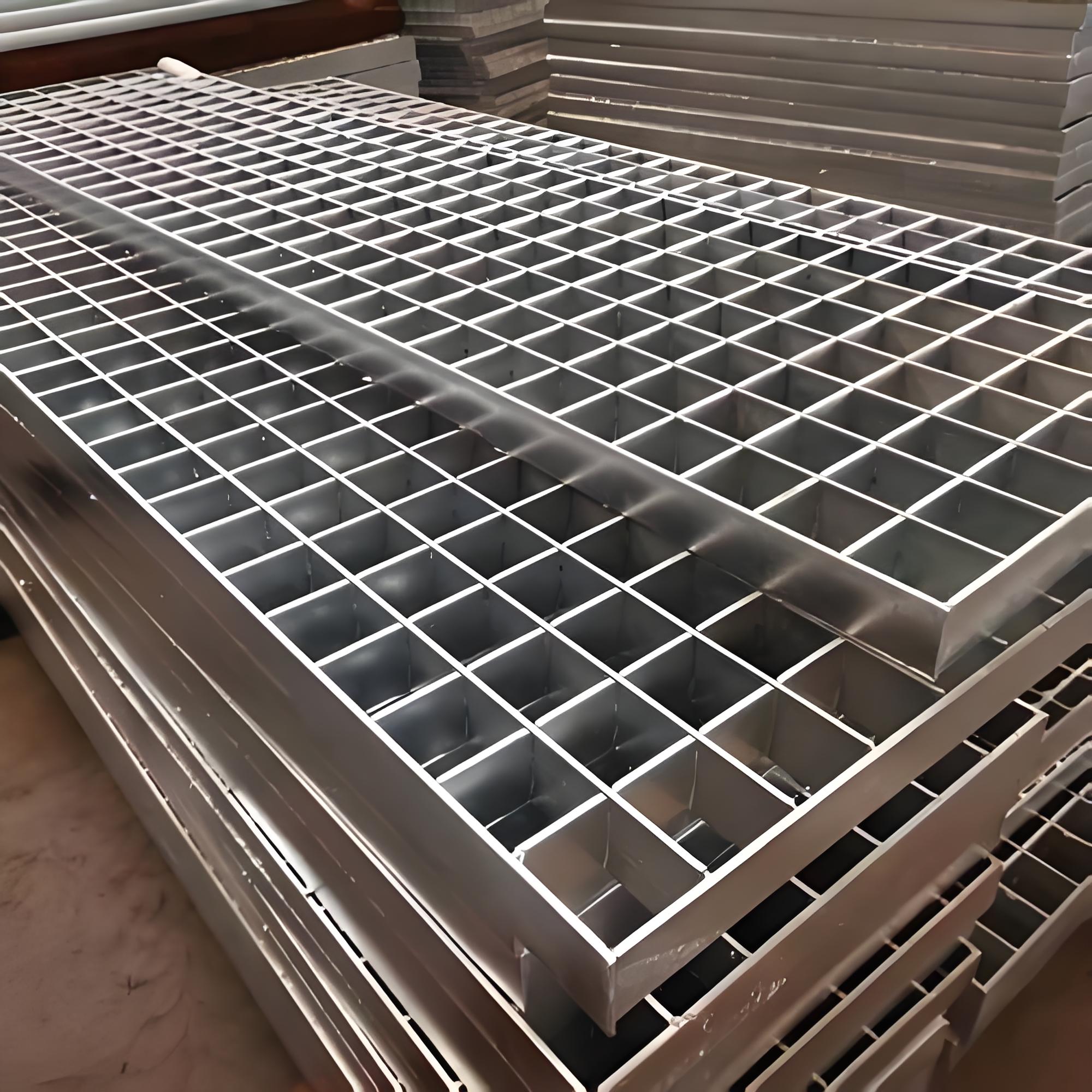
The right grate should provide a balance between water intake, structural strength, slip resistance, opening safety, cleaning access, corrosion resistance, and visual appearance. A grate with very large openings may improve drainage but may not be suitable for pedestrian traffic. A close-slot architectural grate may look attractive but may not provide enough flow area for heavy stormwater runoff unless the channel system is sized correctly.
Commercial trench drain grates are available in many materials and patterns. The most common types include bar grates, slotted grates, mesh grates, perforated grates, decorative grates, heel-safe grates, wedge-wire grates, and solid covers with drain slots.
Bar grates use parallel bearing bars or cross bars to create open drainage slots. They are commonly made from galvanized steel, stainless steel, cast iron, ductile iron, aluminum, or composite materials. Bar grates can provide high water intake and are suitable for industrial areas, loading zones, service yards, and large drainage channels.
Bar spacing must be selected carefully. Wider bar openings improve water flow but can create heel-safety, bicycle-safety, or small-object-retention concerns. Closer bar spacing may improve pedestrian comfort but can reduce open area and increase manufacturing cost.
Slotted grates use narrow longitudinal or transverse slots. They are popular for commercial entrances, sidewalks, pool decks, plazas, stations, and architectural drainage systems because they can provide a cleaner appearance than open bar grating.
Slot width, orientation, and spacing should match the traffic pattern. In pedestrian areas, narrow slots are often preferred to reduce the risk of high heels, canes, stroller wheels, and small cart wheels becoming trapped.
Mesh grates and perforated grates use smaller repeated openings. They are commonly used in commercial kitchens, pedestrian areas, light-duty service zones, and applications where smaller debris should be retained above the drain. A finer pattern can improve safety and appearance, but it requires more frequent cleaning in areas exposed to leaves, food waste, sediment, or process debris.
Decorative grates are designed for visible commercial spaces where appearance is important. They may use laser-cut patterns, geometric openings, linear slots, logos, wave patterns, perforated designs, or custom architectural motifs. Decorative grates are frequently specified for hotels, shopping centers, plazas, public buildings, landscape projects, and high-end entrances.
Decorative design should never compromise drainage capacity or required load rating. The supplier should confirm the free area, structural thickness, support arrangement, and testing requirement before producing a custom pattern.
| Grate Type | Typical Benefits | Common Commercial Uses |
|---|---|---|
| Bar Grate | High open area, good drainage, strong industrial appearance | Warehouses, loading docks, service bays, industrial yards |
| Longitudinal Slotted Grate | Clean linear appearance, useful for pedestrian routes | Entrances, plazas, sidewalks, parking areas |
| Perforated Grate | Smaller openings, heel-conscious design, debris retention | Kitchens, walkways, commercial entrances, public spaces |
| Mesh Grate | High drainage with a denser opening pattern | Commercial floors, washdown areas, plant access routes |
| Decorative Grate | Custom appearance and architectural integration | Hotels, shopping centers, landscape projects, public plazas |
| Solid Cover with Slots | High strength with controlled water entry | Roadways, heavy commercial traffic, industrial areas |
Material choice strongly affects commercial trench drain grate price, load capacity, corrosion resistance, appearance, and expected service life. The correct material depends on the operating environment, traffic type, cleaning method, chemical exposure, and project budget.
Cast iron grates are widely used for commercial drainage because they are strong, durable, and suitable for heavy-duty applications. They are commonly used in parking areas, roadways, service yards, loading zones, and industrial sites. Cast iron can provide good compressive strength and resistance to repeated traffic when it is designed with the correct thickness, support frame, and load class.
Cast iron may develop surface rust in wet outdoor environments, which is normal for many drainage applications. Coatings, galvanizing, paint, or polymer finishes may be specified where appearance or additional protection is needed.
Ductile iron is often preferred over conventional gray cast iron for demanding commercial and traffic applications because it offers improved toughness and impact resistance. It is commonly used for parking lots, loading docks, roads, forklift zones, transport facilities, and heavy industrial drainage systems.
Ductile iron grates are available in slotted, bar, heel-safe, wave, mesh, and decorative styles. They can be supplied with bolt-down systems, spring locks, or anti-theft locking mechanisms for high-traffic public and commercial areas.
Galvanized steel grates are a practical option for pedestrian zones, commercial washdown areas, warehouses, light industrial floors, and outdoor facilities with moderate corrosion exposure. Hot-dip galvanizing provides zinc protection to help delay corrosion on carbon steel.
Galvanized steel is often more economical than stainless steel, especially for standard bar or perforated grates. However, it may not be the best choice for highly acidic, chloride-rich, or continuously wet environments where stainless steel or a specially selected composite product may provide longer service life.
Stainless steel grates are commonly selected for commercial kitchens, food processing plants, breweries, hospitals, laboratories, swimming pools, pharmaceutical facilities, coastal buildings, and high-visibility architectural applications. Type 304 stainless steel is suitable for many general wet and hygienic environments, while Type 316 stainless steel is often preferred where chlorides, seawater, salt spray, or stronger chemicals are present.
Stainless steel grates usually cost more than galvanized steel or ductile iron grates, but they can reduce corrosion-related maintenance and provide a cleaner appearance. For food and sanitary applications, weld cleaning, passivation, finish, and drainage slope should be included in the specification.
Composite grates can be made from reinforced plastic, fiberglass, polymer concrete, recycled composite materials, or other engineered materials. They are lightweight, corrosion resistant, and can be useful in pedestrian, landscaping, chemical, and non-metallic drainage applications.
Composite grates should be selected carefully for load class, fire exposure, ultraviolet resistance, impact resistance, chemical compatibility, and long-term deflection. A composite grate suitable for a walkway may not be suitable for forklifts, delivery vehicles, or heavy industrial traffic.
| Material | Main Advantages | Typical Applications |
|---|---|---|
| Cast Iron | Strong, durable, widely used for drainage and traffic areas | Parking lots, roadways, industrial yards, commercial service areas |
| Ductile Iron | High strength, improved toughness, suitable for repeated wheel loads | Loading docks, forklift routes, roads, heavy commercial drainage |
| Galvanized Steel | Economical, strong, useful for pedestrian and light commercial areas | Walkways, warehouses, kitchens, washdown zones, service areas |
| Stainless Steel 304 | Clean appearance and good corrosion resistance | Commercial kitchens, hospitals, food plants, interior wet areas |
| Stainless Steel 316 | Improved resistance to chlorides and marine exposure | Coastal facilities, pools, chemical areas, marine projects |
| Composite / FRP | Lightweight, corrosion resistant, non-metallic | Pedestrian areas, chemical environments, landscaping, selected industrial sites |
A trench drain grate must fit the channel correctly. The nominal channel width is only one part of the selection. The supplier needs to know the clear channel opening, outside frame dimensions, grate bearing ledge width, grate thickness, support depth, channel section length, and the direction of any locking system.
A 100 mm nominal trench drain channel does not automatically accept every 100 mm wide grate. Different systems may have different frame widths, retaining edges, lock positions, and grate-support details. For replacement grates, the buyer should measure the existing channel carefully instead of ordering based only on a rough width description.
Channel depth also affects drainage performance. A shallow channel may be suitable for entrances, plazas, terraces, and retrofit work with limited slab depth. A deeper channel can carry a larger flow volume, but it requires more excavation, a deeper outlet arrangement, and often a stronger channel support system.
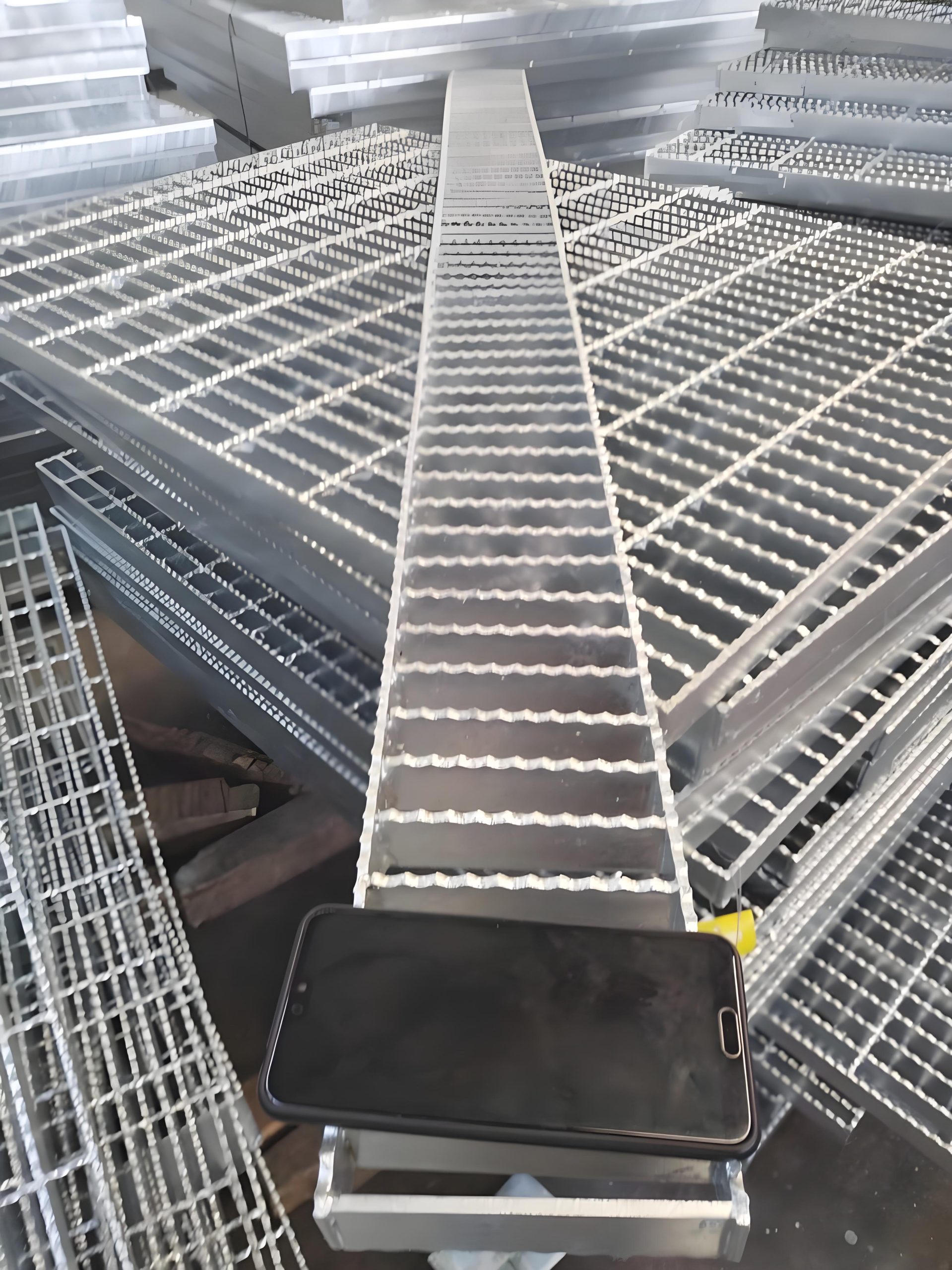
A grate that is too narrow can move, rattle, or drop into the channel. A grate that is too wide may not seat correctly on the bearing ledges. Incorrect thickness can create a trip edge or leave the grate below the finished surface. Poor fit can also concentrate wheel loads on limited contact points and reduce the performance of an otherwise strong grate.
Commercial trench drain grates should be selected for the heaviest load they will realistically experience, not only for the expected normal use. A pedestrian walkway may occasionally be crossed by cleaning equipment, delivery carts, emergency vehicles, maintenance vehicles, pallet jacks, or forklifts.
In many commercial projects, the grating, channel body, frame, concrete surround, and installation method must work together to meet the required load rating. A heavy-duty grate installed in a weak channel or poorly supported concrete surround may not achieve the intended system performance.
| Load Class | Approximate Test Load | Typical Application |
|---|---|---|
| A15 | 15 kN / about 3,372 lb | Pedestrian paths, cycle paths, light pedestrian areas |
| B125 | 125 kN / about 28,100 lb | Walkways, light vehicle parking, small private parking areas |
| C250 | 250 kN / about 56,200 lb | Commercial parking areas, curb zones, car and light-truck traffic |
| D400 | 400 kN / about 89,900 lb | Roadways, loading areas, forklift traffic, commercial vehicle zones |
| E600 | 600 kN / about 134,900 lb | Industrial yards, heavy wheel loads, docks, warehouses with demanding traffic |
| F900 | 900 kN / about 202,300 lb | Airports, ports, freight terminals, extreme heavy-duty service |
EN 1433 is a drainage-channel standard that classifies complete trench drain systems by load. The manufacturer should confirm whether the stated class applies to the grate only or to the full installed channel-and-grate assembly. For commercial projects, this distinction is important.
Published load-rating guidance identifies A15 for pedestrian paths, B125 for walkways and light-vehicle parking, C250 for commercial parking and curb areas, D400 for forklift and roadway traffic, E600 for industrial loads, and F900 for airport or port applications.
Forklift wheels can create high concentrated loads, especially when solid tires, narrow wheels, loaded pallets, turning movements, or uneven surfaces are involved. A grate selected only for passenger cars may not be suitable for forklifts. The grate manufacturer should receive the forklift model, loaded axle weight, wheel load, tire type, wheel contact area, travel direction, speed, and turning location.
Pallet jacks and small hard-wheel carts can also damage weak grates because their wheels apply force over a small contact area. Where carts cross the drain repeatedly, a more robust grate pattern, stronger frame, and smooth transition between grate and floor may be required.
Opening design affects water intake, safety, cleaning frequency, load strength, and appearance. Large openings usually provide more free area for water to enter the channel, but they may create a hazard for heels, canes, bicycle wheels, stroller wheels, or small objects.
Heel-safe or heel-proof grates use narrow slots or small openings designed to reduce the risk of footwear becoming trapped. In pedestrian areas, the opening direction should also be considered. Long slots are generally safer when oriented perpendicular to the main direction of pedestrian or wheeled traffic, subject to the project’s accessibility requirements.
A grate with a high open area can admit water quickly, but a fine mesh or small-slot design may be more suitable where public safety and debris retention are priorities. The drainage engineer should size the channel and outlet based on the expected flow, while the grate supplier should verify that the selected opening pattern provides the required intake area.
Some commercial heel-safe grates use slot openings at or below approximately 6 mm to reduce heel entrapment risk. The exact opening requirement should always be confirmed against the local accessibility code, project specification, and authority requirements.
The grate pattern should match both the drainage demand and the visual character of the site. Commercial projects often combine functional drainage requirements with architectural expectations, especially at entrances, plazas, retail areas, hospitality projects, and landscaped spaces.
Longitudinal slot grates create a continuous linear appearance and are frequently used at door thresholds, building perimeters, plazas, pool decks, and pedestrian approaches. They can be manufactured from stainless steel, galvanized steel, ductile iron, aluminum, or composite materials.
Long slots should be checked for opening width, bicycle safety, walking direction, and debris entry. In busy pedestrian locations, narrow slots and secure locking systems are often preferred.
Transverse bar grates can provide high water intake and a traditional industrial appearance. They are common in loading bays, workshops, vehicle service areas, car parks, and warehouse drainage channels. Bar depth and support configuration can be increased to meet higher load ratings.
Mesh and perforated trench drain grates are useful where smaller objects, food waste, leaves, or debris should be retained above the channel. They are often selected for commercial kitchens, food-service areas, pedestrian plazas, and light-duty washdown zones.
Fine openings can reduce cleaning problems below the grate, but they require regular surface cleaning to prevent blockage. In commercial kitchens, food production facilities, and washdown areas, the grate should be removable without special tools where frequent cleaning is required.
Custom decorative trench drain grates can include logos, geometric patterns, wave patterns, perforated motifs, laser-cut designs, and architectural linear slots. These are often made from stainless steel, aluminum, bronze, powder-coated steel, or ductile iron depending on the load and appearance requirement.
When ordering a decorative grate, the supplier should receive a CAD drawing or pattern file, required open area, material grade, finish, load rating, panel length, support frame details, and quantity. Custom patterns may require sample approval before full production.
Commercial trench drain grates are often exposed to water, cleaning chemicals, food residue, oil, de-icing salts, vehicle fluids, chlorine, fertilizer, and outdoor weather. The material should be selected according to the actual environment rather than only the initial product price.
Commercial kitchens, breweries, food plants, and washdown areas commonly use stainless steel trench drain grates because they are easier to clean and provide better corrosion resistance than uncoated carbon steel. Type 304 stainless steel is suitable for many kitchen applications, while Type 316 stainless steel may be needed where chlorides, aggressive cleaners, or salt exposure are present.
For food applications, the grate should have smooth welds, cleanable surfaces, removable sections, and suitable slot or perforation sizes to prevent excessive food waste from entering the drainage system.
Parking areas, loading bays, and service roads commonly use ductile iron, cast iron, galvanized steel, or heavy-duty composite systems. The grate should resist tire loads, impact, de-icing salts, oil, fuel, and repeated wheel traffic. Bolted or locked grates may be required where vehicle movement could dislodge loose covers.
Outdoor plazas, sidewalks, pool decks, landscaped areas, and entrances require drainage grates that can handle rainwater, leaves, dirt, and temperature changes. Galvanized steel is often suitable for general outdoor commercial use, while stainless steel may be preferred for highly visible, coastal, poolside, or corrosive environments.
Drainage should be designed to avoid standing water around the frame. Even corrosion-resistant materials can deteriorate faster when water, dirt, salt, and debris remain trapped in joints or beneath loosely fitted grates.
Commercial trench drain grates should be secured to prevent movement, rattling, theft, vandalism, and accidental removal. The correct locking system depends on the application, load class, access requirements, and level of public exposure.
Bolted grates are common in loading zones, vehicle areas, public spaces, and locations where theft or vandalism is a concern. Quick-lock systems can reduce installation time and make routine cleaning easier. Anti-theft systems may use special bolts, internal locking devices, locking bars, or concealed fasteners.
A commercial locking device can secure a grate to the channel using an anti-theft bolt and internal locking element, helping reduce the risk of vandalism or unauthorized removal. See an example trench drain grate anti-theft locking system.
For commercial kitchens and frequently cleaned areas, make sure the locking method allows authorized staff to remove the grate without damaging the frame or requiring complex tools. For public spaces, use a system that provides security while keeping the top surface flush and trip-resistant.
Many commercial drainage projects require more than straight standard grate sections. A manufacturer can fabricate custom grates and frames to fit unusual channel layouts, building entrances, column lines, equipment pads, corners, and irregular drainage routes.
Custom fabrication usually increases price because it requires drawing review, cutting, welding, finishing, inspection, and more careful packing. However, factory-made custom pieces often reduce site labor, improve fit-up, and avoid uncontrolled field cutting that can create sharp edges, poor drainage, or coating damage.
For a complete commercial trench drain system, the manufacturer may need drawings showing channel alignment, finished floor levels, outlet positions, cross falls, concrete surround details, grate sections, and required locking locations.
Commercial trench drain grates may need to meet local, national, or project-specific standards. The required standard depends on location, load application, building type, drainage system, and authority requirements.
EN 1433 is particularly relevant because it addresses drainage channels used in pedestrian and vehicular areas. The final load rating should apply to the complete installed drainage system, including grate, frame, channel body, support conditions, and concrete surround where applicable.
Commercial trench drain product guidance commonly identifies EN 1433 as the primary trench-drain load standard and also references ASME and AASHTO requirements for certain applications. See common commercial trench drain load classes and locking options.
For projects with load-class, public-safety, or inspection requirements, request documentation such as load test reports, material certificates, galvanizing certificates, stainless steel grade certificates, dimensional inspection records, coating reports, and approved shop drawings.
For heavy-duty applications, a supplier should confirm whether testing applies to an individual grate, a representative channel-and-grate assembly, or the complete installed system. The support condition used during testing should match the intended project installation as closely as possible.
Commercial trench drain grate quality depends on consistent dimensions, adequate support contact, correct locking details, and durable fabrication. A grate can have strong material but still perform poorly if it rocks in the frame, has uneven bearing edges, or does not seat fully on the channel ledge.
Flatness is particularly important for long grate sections. A warped grate can create rocking, noise, trip hazards, uneven loading, and poor locking engagement. For removable commercial grates, the manufacturer should verify that each section can be lifted and reinstalled without binding against adjacent panels.
For galvanized steel grates, inspect coating coverage at welded areas, cut edges, and fabricated connections. For stainless steel grates, inspect weld appearance, surface cleaning, passivation where required, and contamination control during fabrication.
Commercial trench drain grate price can be quoted per linear meter, per foot, per piece, per kilogram, or per complete channel-and-grate system. The most useful quote format depends on whether the buyer needs only replacement grates, standard straight sections, or a complete custom drainage assembly.
For preliminary factory budgeting, standard galvanized steel trench grates for pedestrian or light commercial drainage may commonly fall around US$20 to US$80 per linear meter, depending on channel width, grate thickness, opening pattern, bar size, galvanizing, and quantity. Heavy-duty ductile iron, stainless steel, custom decorative, framed, or vehicle-rated grates require separate pricing because their material and fabrication requirements differ substantially. See a current drainage channel grating price reference.
| Grate Specification | Typical Price Position | Main Cost Drivers |
|---|---|---|
| Galvanized Steel Pedestrian Grate | Lower to medium | Steel thickness, bar spacing, galvanizing, section length, quantity |
| Ductile Iron Commercial Traffic Grate | Medium to high | Load class, casting weight, pattern, frame, locking system |
| Stainless Steel Kitchen or Architectural Grate | Medium to high | Grade 304 or 316, surface finish, perforation pattern, welding, polishing |
| Composite Pedestrian Grate | Low to medium | Load class, resin type, UV resistance, mold design, quantity |
| Custom Decorative Grate | High | Pattern design, laser cutting, special finish, engineering, short production runs |
| Heavy-Duty Vehicle-Rated System | High to very high | Load class, frame, channel, reinforcement, locking, testing, installation detail |
Factory price normally covers the product at the factory or export point. It may not include local delivery, taxes, duties, customs clearance, installation, concrete work, channel body, frames, locking tools, or accessories.
Local distributor price may be higher because it includes inventory, cutting, domestic freight, stocking cost, technical support, payment terms, warranty administration, and short-order handling. When comparing prices, confirm whether the quotation is for grate only, grate plus frame, complete channel-and-grate system, or a fully installed drainage solution.
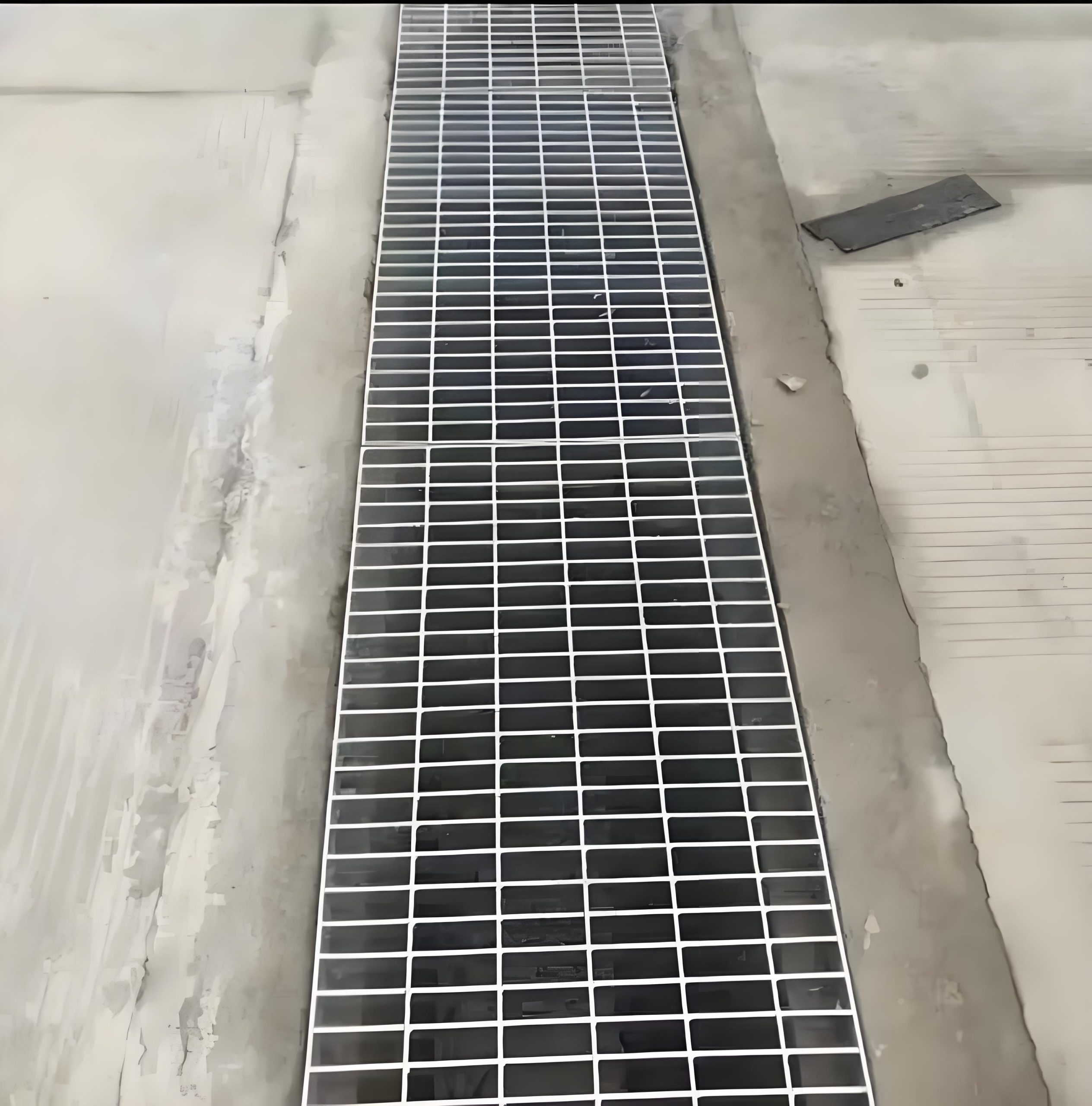
A complete inquiry helps the manufacturer recommend the correct commercial trench drain grate and avoids price revisions caused by missing technical information.
For heavy commercial or vehicle areas, include the slab and channel installation detail with the inquiry. The manufacturer needs to understand how the frame is supported and how wheel loads transfer into the drainage system. This is essential for selecting a grate that performs correctly after installation.
What load class is needed for a commercial trench drain grate?
The required load class depends on the heaviest traffic the drain will see. A15 is generally used for pedestrian areas, B125 for walkways and light vehicle areas, C250 for commercial parking and curb zones, D400 for roadways and forklift traffic, E600 for heavy industrial loads, and F900 for airports, ports, and extreme-duty applications. The complete drain system, not only the grate, should meet the required class.
Which trench drain grate is best for a commercial kitchen?
Stainless steel trench drain grates are usually the best choice for commercial kitchens because they are corrosion resistant, hygienic, and easy to clean. Type 304 stainless steel is suitable for many kitchens, while Type 316 stainless steel may be needed where chloride exposure, aggressive cleaning chemicals, or saltwater conditions are present. A perforated or close-slot pattern can help retain food debris above the drain.
How much do commercial trench drain grates cost?
Standard galvanized steel trench drain grates for pedestrian or light commercial use may be budgeted broadly around US$20 to US$80 per linear meter at factory level. Ductile iron, stainless steel, decorative, framed, locked, or vehicle-rated grates cost more because they require heavier material, higher load capacity, special fabrication, or corrosion-resistant finishes. A final price should be based on channel width, length, material, opening pattern, load class, locking system, quantity, and delivery location.