
Aluminum walkway grating is commonly used for industrial access routes, platforms, catwalks, stair landings, rooftop service paths, marine facilities, wastewater plants, chemical plants, and elevated maintenance areas. Its price depends on much more than panel area. Aluminum alloy, bearing bar size, grating type, bar spacing, surface finish, load requirement, fabrication, clips, packaging, and shipping all affect the final quote. A light-duty standard panel may be priced very differently from a serrated, close-mesh, cut-to-size aluminum walkway panel with banding, toe plates, and custom support clips.
The main cost of aluminum walkway grating comes from the aluminum material used in the bearing bars and cross bars. However, finished price is also affected by the grating construction method, the amount of material per square meter, the complexity of fabrication, and the quantity ordered.
Two walkway panels may have the same outside dimensions but very different prices. A 1 in. deep, 1/8 in. thick standard swaged panel with wide openings uses much less aluminum than a 2 in. deep, 3/16 in. thick serrated close-mesh panel designed for a longer span. The second panel may also need more cutting, end banding, clips, and stronger support framing.
| Price Factor | Why It Changes the Cost |
|---|---|
| Aluminum Alloy and Market Price | Aluminum raw material cost changes with market conditions, alloy, temper, and regional supply. |
| Bearing Bar Height and Thickness | Deeper and thicker bearing bars use more material and support higher loads or longer spans. |
| Grating Type | Swaged, press-locked, dovetail, I-bar, and flush-top grating have different production costs. |
| Bar Spacing | Closer bearing-bar spacing reduces open area and increases aluminum content per square meter. |
| Surface Type | Serrated or special anti-slip surfaces can cost more than plain-top grating. |
| Panel Fabrication | Cutouts, banding, toe plates, stair ends, holes, and custom shapes add labor and material. |
| Finish | Mill finish is normally the lowest-cost option; anodizing and powder coating add processing cost. |
| Order Quantity | Repeated standard panels and larger orders usually reduce the cost per square meter. |
| Freight and Packing | Long panels, export crates, oversize freight, and delivery distance can add significant cost. |
The most accurate way to compare aluminum walkway grating prices is to compare quotations with the same engineering specification. Before selecting the lowest price, check the alloy, bearing bar size, spacing, surface, panel dimensions, load span, finish, fabrication scope, accessories, packing, and delivery terms.
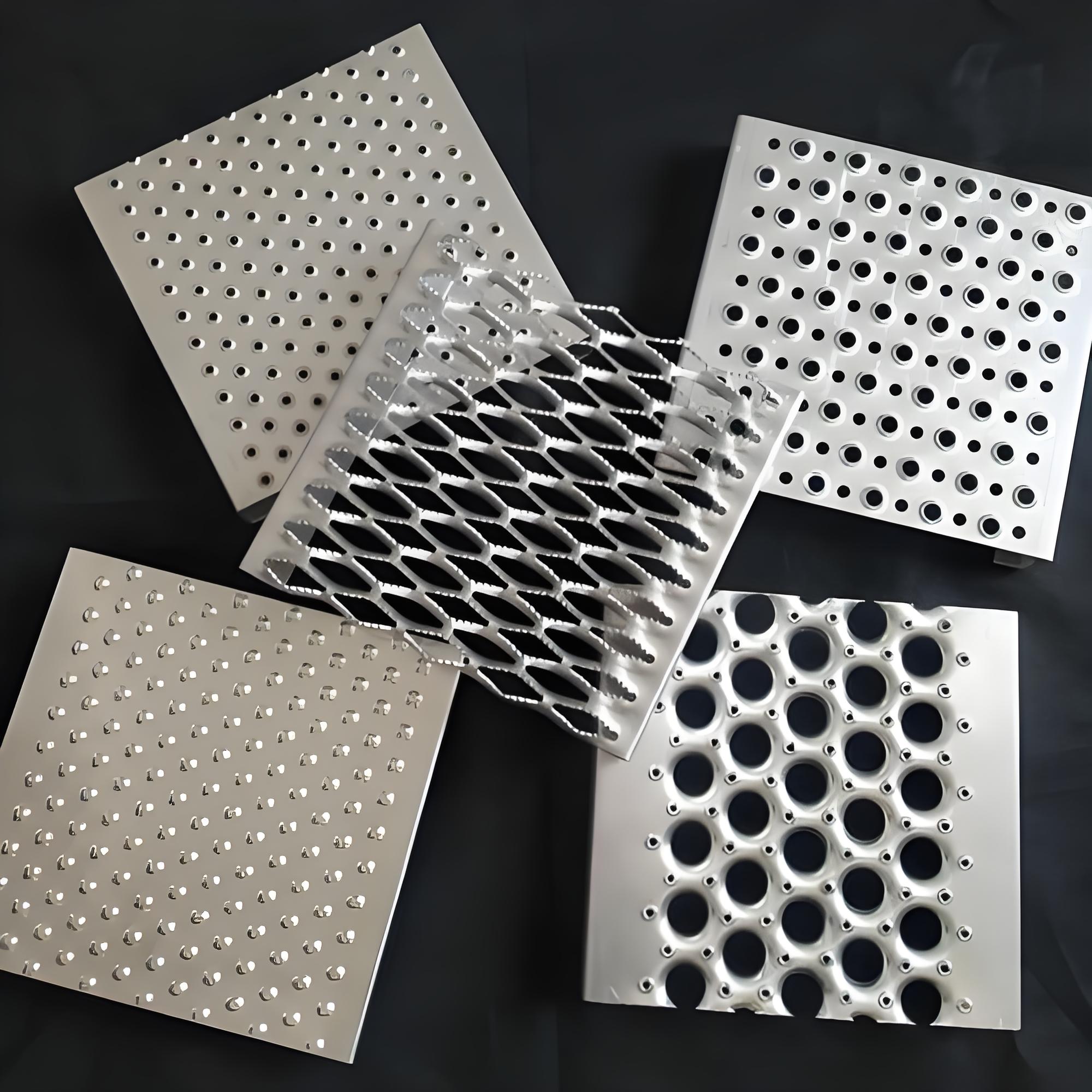
Aluminum walkway grating can be quoted per square foot, per square meter, per panel, per linear foot, or by total fabricated project weight. Factory quotations for export projects are often based on square meters or total weight, while local distributors may quote by square foot, linear foot, or individual panel.
As a broad factory-level budgeting reference, standard aluminum bar grating may be estimated at approximately US$50 to US$170 per square meter. Custom aluminum grating, including press-locked panels, I-bar grating, framed panels, special cutouts, or fabricated walkway sections, may be estimated at approximately US$90 to US$260 per square meter. These are planning ranges only, not fixed selling prices. Actual quotations depend on the exact specification, order size, finish, and delivery term. See a current industrial metal grating price reference.
| Aluminum Walkway Grating Type | Broad Factory Budget Range | Approximate Equivalent per Square Foot | Typical Scope |
|---|---|---|---|
| Standard Aluminum Bar Grating | US$50–170 per m² | About US$4.65–15.80 per ft² | Standard swaged or basic industrial panels in mill finish |
| Custom Aluminum Walkway Grating | US$90–260 per m² | About US$8.35–24.15 per ft² | Cut-to-size, press-locked, I-bar, framed, or fabricated panels |
| Architectural or Close-Mesh Aluminum Grating | Quoted individually | Quoted individually | Smaller openings, special finishes, public-access details, custom appearance |
| Aluminum Stair Treads or Trench Covers | Usually quoted per piece | Usually quoted per piece | Includes end plates, frames, lift handles, clips, or special fabrication |
To convert a price per square meter to a price per square foot, divide by 10.764. To convert a price per square foot to a price per square meter, multiply by 10.764.
Price per ft² = Price per m² ÷ 10.764
Price per m² = Price per ft² × 10.764
For example, if a standard aluminum walkway grating price is US$100 per m², the equivalent area price is approximately US$9.29 per ft² before adding fabrication, clips, packaging, freight, taxes, or installation costs.
Online retail prices for small quantities can be much higher than factory-level budget prices because they may include distributor margin, stock carrying cost, cutting service, domestic freight, packaging, payment processing, and short-order handling. A stocked 24 in. or 36 in. wide panel may also be sold by the linear foot rather than by square meter.
For example, standard 19-series aluminum grating is commonly sold through distributors in 24 in. and 36 in. wide panels by linear foot, with custom cut sizes and end banding available separately. See an example of standard aluminum grating sales formats.
Swaged and press-locked aluminum grating use different manufacturing processes, and the price difference depends on panel design, bar spacing, quantity, and fabrication requirements.
Swaged aluminum grating is commonly used for industrial walkways, platforms, stairs, and catwalks. Cross bars are mechanically locked through pre-punched bearing bars by a high-pressure swaging process. This construction is widely available and often economical for standard industrial panels.
Standard swaged rectangular bar grating is usually a practical choice when the project needs a common 19-series or 15-series layout, standard panel widths, straightforward cutting, and predictable load-table selection. Swaged I-bar grating can reduce weight and may lower total material use for suitable spans, but it should be compared using the correct load table rather than only price per square meter.
Press-locked aluminum grating is assembled by pressing notched cross bars into notched bearing bars. It can provide a clean appearance and can be produced with square or rectangular openings. It is often selected for architectural-industrial areas, platforms with close-mesh requirements, public-facing walkways, stair treads, and projects with custom opening patterns.
Press-locked grating can cost more than a standard swaged panel when the design requires close spacing, custom patterns, small quantities, special finishing, or extensive fabrication. However, it may offer better value when the application requires its appearance, opening pattern, or specific product geometry.
| Comparison Point | Swaged Aluminum Grating | Press-Locked Aluminum Grating |
|---|---|---|
| Typical Price Position | Often economical for standard industrial panels | May cost more for close mesh, custom patterns, or architectural requirements |
| Construction | Cross bars mechanically swaged through bearing bars | Notched bars pressed together mechanically |
| Common Uses | Industrial walkways, platforms, catwalks, maintenance access | Architectural walkways, close-mesh floors, stairs, public-facing areas |
| Standard Availability | Often stocked in common spacing and panel sizes | More dependent on supplier production range and project quantity |
| Best Quote Method | Compare bearing bar size, spacing, panel size, and load | Compare opening pattern, bar size, finish, and custom fabrication scope |
A supplier should be asked to quote both options when the project does not require a specific construction type. This can help the buyer compare price, weight, appearance, lead time, and load performance before making a final decision.
Aluminum alloy, bearing bar profile, and mesh spacing directly affect walkway grating cost. More aluminum per square meter usually means a higher price, but it can also provide a higher load capacity, lower deflection, or better pedestrian safety performance.
Many standard aluminum walkway grating products use 6063-T6 aluminum, particularly swaged rectangular bar grating. Other aluminum alloys may be used for structural frames, custom components, or specialized product designs. The required alloy should be stated clearly when the project has material certification, corrosion, welding, or marine-service requirements.
For a standard industrial walkway, mill-finish 6063-T6 grating may be suitable. For marine, chemical, highly visible, or aggressive outdoor environments, the project may require a specific alloy, finish, or corrosion-control detail. These requirements can increase the finished price.
Rectangular bearing bars are the most common profile for aluminum walkway grating. The bearing bar height and thickness determine how much material is used and how the panel performs over a span. Common examples include 1 in. × 1/8 in., 1 in. × 3/16 in., 1-1/4 in. × 3/16 in., 1-1/2 in. × 3/16 in., and deeper profiles for larger spans.
I-bar grating uses an I-shaped bearing bar that reduces weight while maintaining useful structural performance for the correct application. I-bar grating may lower shipping and handling costs, but it should be selected from manufacturer load tables because it does not perform identically to rectangular bar grating.
Standard industrial aluminum grating often uses bearing bars spaced approximately 1-3/16 in. on center with cross bars at 4 in. on center. This is often called a 19-series pattern. Closer bearing-bar spacing, such as 15/16 in., 11/16 in., or 7/16 in. on center, increases the number of bearing bars per panel width and can increase cost.
| Spacing Option | Price Effect | Performance Effect |
|---|---|---|
| Standard 19-Series Spacing | Usually the most economical standard industrial option | High open area and practical drainage for standard walkways |
| 15-Series Spacing | Higher material cost than wider spacing | Smaller openings and closer bearing-bar support |
| 11-Series Close Mesh | Higher price due to added bearing bars | Improved small-object retention and pedestrian comfort |
| 7-Series Close Mesh | Often among the higher-cost bar spacing options | Very small openings for heel-conscious and public-access applications |
| 2 in. Cross Bar Spacing | Can cost more than 4 in. cross-bar spacing | Closer pattern and additional lateral stability |
A common 19-series swaged aluminum grating specification uses 1-3/16 in. bearing-bar centers, 4 in. cross-bar spacing, 6063-T6 alloy, and approximately 80% open area. See an example 19-series aluminum grating specification.
Load capacity and span length are major pricing factors because they determine the required bearing bar depth, thickness, and spacing. A walkway panel that spans only 2 ft between supports may use a lighter bearing bar than a panel spanning 5 ft or 6 ft under the same load.
When span increases, the grating generally needs deeper or thicker bearing bars, closer spacing, intermediate support steel, or a combination of these measures. Each option affects price differently. Sometimes adding one intermediate support beam is less expensive than upgrading every grating panel to a much deeper bearing bar.
The bearing bars must span between supports. In a typical panel, the bearing bars run in the longer span direction. If the grating is installed with the cross bars spanning between supports, its load capacity can be greatly reduced.
| Design Change | Likely Cost Effect | Reason |
|---|---|---|
| Increase bearing bar depth | Higher grating cost | Uses more aluminum and increases formed or extruded bar size |
| Increase bar thickness | Higher grating cost | More material per bearing bar |
| Use closer bearing-bar spacing | Higher grating cost | More bearing bars per panel width |
| Add intermediate support beams | Higher support-frame cost but may reduce grating cost | Shortens the clear grating span |
| Use I-bar instead of rectangular bar | May reduce weight and freight cost | Efficient profile uses less material for suitable applications |
It is not safe to select the lowest-cost aluminum grating by area without checking its load chart. A low-cost light panel may not meet the required span or deflection limit. For industrial projects, use the supplier’s load table or request a project-specific calculation before placing the order.
Standard aluminum walkway grating panels are usually the most economical option because the manufacturer can produce them in regular widths and lengths with minimal setup. Common panel widths may include 24 in. and 36 in., while standard lengths can range from a few feet to 12 ft, 20 ft, or 24 ft depending on the supplier and grating type.
Cut-to-size panels cost more because they require additional measuring, cutting, edge finishing, scrap handling, inspection, and packing. The cost increase may be small for repeated straight cuts but can be significant for many irregular pieces, short lengths, angled cuts, or panels with multiple penetrations.
For a standard 3 ft × 12 ft aluminum walkway panel, the area is 36 ft², or approximately 3.34 m². If the factory-level material budget is US$100 per m², the basic grating area value is approximately US$334 before cuts, banding, clips, packing, and freight. This example shows why a finished fabricated panel should not be compared directly with an unfinished stock-panel area price.
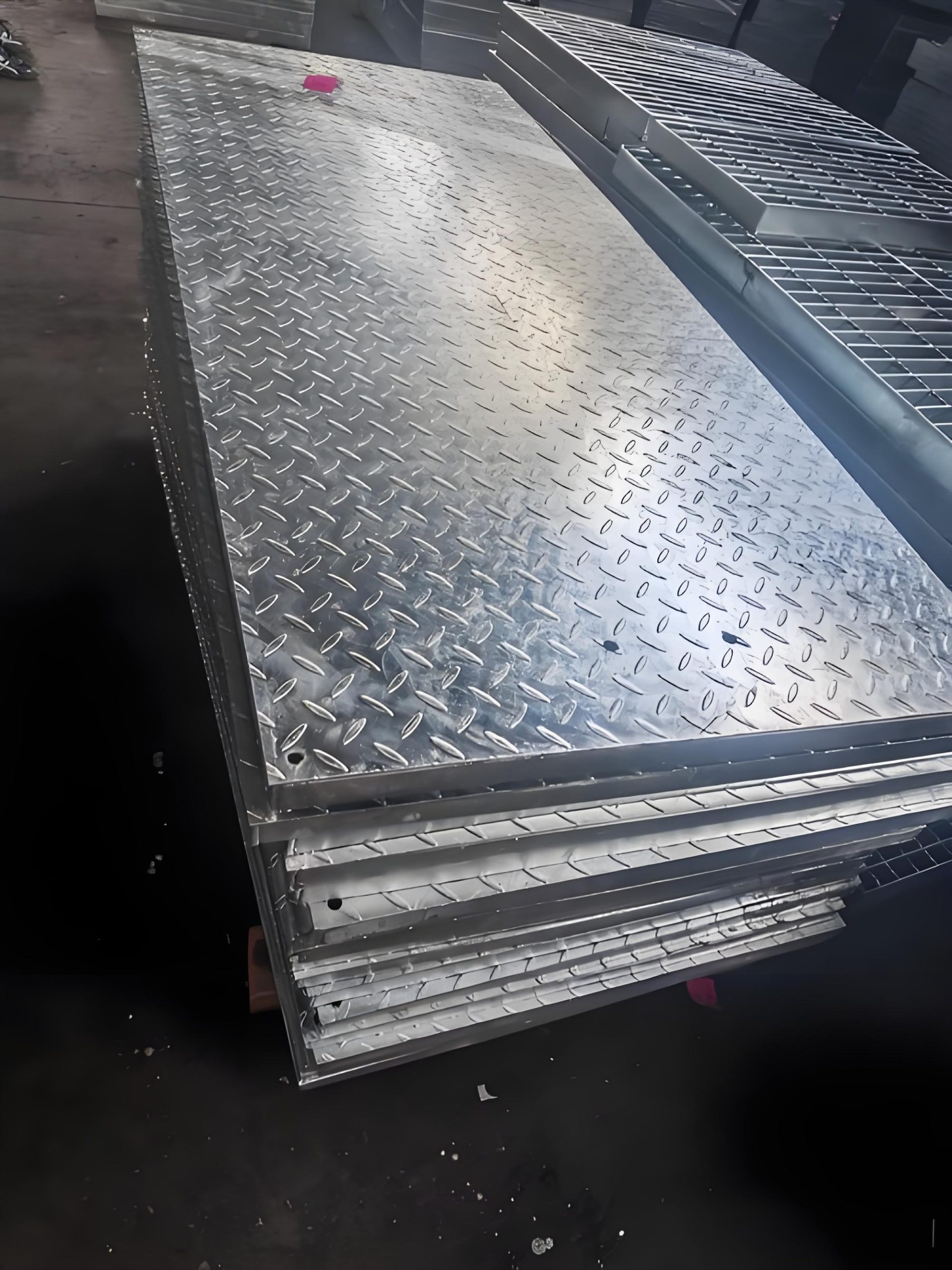
Plain-top aluminum grating has smooth bearing-bar tops. Serrated aluminum grating has notched or toothed bearing-bar tops that improve traction in wet, oily, snowy, muddy, or outdoor environments.
Plain grating is often selected for dry indoor platforms, architectural installations, equipment rooms, and areas where a cleaner appearance or easier cleaning is preferred. Serrated grating is usually selected for outdoor walkways, stairs, marine platforms, roof access paths, wastewater facilities, and industrial areas exposed to slipping hazards.
| Surface Type | Typical Price Position | Best Use |
|---|---|---|
| Plain-Top Aluminum Grating | Usually the base-price option | Dry indoor areas, equipment platforms, general access floors |
| Serrated Aluminum Grating | Usually a moderate upgrade from plain-top grating | Wet, oily, outdoor, marine, and slip-prone areas |
| Special Anti-Slip Surface | Quoted individually | High-risk or project-specific safety applications |
The serration process may add cost, but the additional slip resistance can reduce safety risk and may be justified for exposed industrial walkways. When using serrated grating, check the manufacturer’s load-table instructions because serrations can affect the effective bearing-bar height used for load selection.
Open area affects aluminum walkway grating price because it changes the amount of aluminum in each panel. Wider openings generally use less material and provide more drainage and light transmission. Closer openings use more bearing bars and cost more, but they can improve small-object retention, pedestrian comfort, and heel safety.
A standard 19-series aluminum rectangular-bar panel may have approximately 80% open area. A close-mesh panel with smaller clear openings will have a lower open-area percentage because it contains more bearing bars. More bars generally mean more weight and a higher price per square meter.
In some applications, higher open area is important for drainage, ventilation, process heat release, or daylight transmission. In other applications, a smaller opening is more important because tools, fasteners, high heels, wheels, or small objects must not pass through the grating.
Weight is a useful way to compare aluminum grating quotations. A panel with heavier bearing bars may cost more, but it may also provide the required load capacity and lower deflection. An example 1-1/4 in. deep × 3/16 in. thick, 19-series swaged rectangular aluminum grating panel is listed at approximately 3.18 lb per square foot. See an example aluminum grating panel weight and open-area specification.
For freight planning, calculate:
Total Grating Weight = Panel Area × Weight per Square Foot × Number of Panels
Then add the weight of banding, clips, bolts, support frames, toe boards, pallets, crates, and protective packing. For export shipments, packing design can affect both freight cost and container utilization.
Aluminum walkway grating can be supplied in several finish options. The finish affects appearance, corrosion resistance, cleaning requirements, and price.
Mill finish is the normal untreated industrial aluminum surface. It is usually the lowest-cost option and is suitable for many industrial platforms, walkways, stairs, and access areas. Mill-finish aluminum naturally forms an oxide layer, but its appearance can vary between batches and fabrication operations.
Anodizing creates a controlled oxide layer on the aluminum surface. It can improve appearance, provide a more consistent finish, and increase surface protection in suitable environments. Clear anodizing, bronze anodizing, and other colors may be available depending on the supplier.
Anodizing adds processing cost and may increase lead time. It is often selected for architectural walkways, visible platforms, commercial facilities, public areas, marine projects, and installations where surface appearance matters.
Powder coating provides a colored protective finish that can improve appearance and match facility color standards. It may be used for architectural walkways, equipment enclosures, handrail systems, and visible industrial platforms.
Powder coating cost depends on panel size, surface preparation, color, coating thickness, masking requirements, and order quantity. The coating should be selected with the operating environment in mind. In highly abrasive or corrosive service, a damaged powder coating may require repair and maintenance.
| Finish | Relative Cost | Typical Use |
|---|---|---|
| Mill Finish | Lowest | General industrial walkways and platforms |
| Chemical Cleaning | Low to moderate increase | Improved surface appearance before installation or finishing |
| Clear Anodizing | Moderate increase | Architectural, visible, outdoor, and selected marine applications |
| Color Anodizing | Moderate to high increase | Decorative or branded installations |
| Powder Coating | Moderate to high increase | Color-coded industrial and architectural applications |
Custom fabrication can make aluminum walkway grating easier to install and safer to use, but it adds cost. The factory must spend additional time reviewing drawings, programming cuts, handling panels, welding or attaching banding, inspecting dimensions, and packing finished pieces.
Banding is especially important around cut edges and penetrations because it creates a finished edge, improves appearance, helps protect exposed bearing bars, and can improve edge stability. A panel with multiple large cutouts may require more banding and support work than a simple rectangular panel of the same area.
For a complex walkway project, ask the supplier to provide an itemized quotation showing raw grating, fabrication, accessories, finishing, packing, and freight separately. This makes it easier to identify where cost savings are possible without reducing load capacity or safety.
Aluminum walkway grating is not complete until it is securely connected to the supporting structure. Fasteners, clips, and support frames are often overlooked during early cost estimates, but they can be significant on long walkways, removable panels, offshore platforms, or installations with many small pieces.
The fastener system should be selected according to load, vibration, removability, corrosion environment, and support type. A simple clipped platform may have a lower accessory cost than a removable trench cover with lift handles, locks, hinges, frames, and water-control details.
When aluminum grating is installed on carbon steel or galvanized steel supports, galvanic corrosion should be considered. Isolation pads, non-conductive washers, compatible fasteners, protective coatings, and drainage details may add a small cost at the beginning but can help reduce corrosion problems later.
For outdoor, coastal, marine, chemical, or wastewater installations, include the corrosion-control connection details in the quotation request. It is much easier to include isolation materials during fabrication than to repair corroded support contacts after the walkway has been installed.
Quantity has a major effect on aluminum walkway grating price. Larger orders can reduce the cost per square meter because production setup, material handling, packing, and freight are spread across more panels. Repeated panel sizes and standard bar spacing also make production more efficient.
Stock aluminum grating can reduce lead time for standard panels, but stock availability may be limited to common widths, bar sizes, alloys, and finishes. Custom press-locked panels, close-mesh grating, special finishes, irregular cutouts, and project-specific fabrication usually require more lead time.
When comparing suppliers, ask whether the quoted material is in stock, scheduled for production, or dependent on raw-material availability. A lower quote with a long lead time may create higher project costs if the walkway installation is on the critical construction path.
Shipping can be a large part of the final aluminum walkway grating cost, especially for long panels, small orders, export shipments, remote project sites, and oversized fabricated sections. Aluminum is lighter than steel, but grating panels can still require careful packing because bearing bars and banded edges can be bent or damaged during transport.
Long panels may be less expensive per square meter because they reduce cutting and joints, but they can cost more to ship and may be harder to unload or lift safely. Smaller modular panels can be easier to handle and replace but may require more banding, clips, support beams, and joints.
| Quote Check | What to Confirm |
|---|---|
| Material | Alloy, temper, material certificate, and finish |
| Grating Construction | Swaged, press-locked, I-bar, dovetail, or other specified type |
| Bearing Bars | Height, thickness, spacing, and span direction |
| Surface | Plain, serrated, grooved, or special anti-slip treatment |
| Panel Dimensions | Gross dimensions, cut dimensions, banded edges, and tolerances |
| Fabrication | Cutouts, notches, toe plates, end plates, holes, and lift handles |
| Accessories | Clips, bolts, isolation pads, frames, and support angles |
| Load Performance | Uniform load, concentrated load, span, and allowable deflection |
| Packaging | Bundling, pallets, export crates, marking, and protection |
| Delivery Terms | EXW, FOB, CIF, DDP, local delivery, or another agreed term |
The lowest price per square foot is not always the lowest delivered project cost. A complete quote should clearly state what is included and excluded so the buyer can compare finished walkway panels on the same basis.
How much does aluminum walkway grating cost per square foot?
For broad factory-level planning, standard aluminum bar grating may be budgeted at about US$4.65 to US$15.80 per square foot, while custom fabricated aluminum grating may be about US$8.35 to US$24.15 per square foot. Actual prices depend on alloy, bar size, span, surface type, fabrication, quantity, finish, shipping, and local market conditions.
Is aluminum grating more expensive than galvanized steel grating?
Aluminum grating usually has a higher material price than galvanized steel grating, but it is much lighter and naturally corrosion resistant. For marine, wet, rooftop, chemical, and elevated walkway projects, aluminum can offer lower handling cost, reduced structural dead load, and lower maintenance over the service life of the installation.
What is the cheapest aluminum walkway grating option?
The most economical option is usually a standard mill-finish swaged aluminum rectangular-bar panel with common 19-series spacing, standard width, minimal cutting, and no special fabrication. Price increases when deeper bearing bars, serrated surfaces, close mesh, custom cuts, banding, coatings, clips, frames, or short production quantities are required.
