

Drainage channel grating is the removable or fixed cover installed over a linear drainage channel to collect surface water while providing a safe walking or driving surface. It is used in driveways, parking areas, roads, loading docks, factories, warehouses, commercial entrances, public plazas, food plants, swimming pools, ports, and airport pavements. The correct grating must match the channel width, load class, opening design, corrosion environment, anti-slip requirement, frame system, and expected drainage flow. Price comparisons are only meaningful when the complete drainage system specification is the same.
A drainage channel grating is part of a linear surface-water drainage system. The complete system normally includes a grate, channel body, edge rail or frame, outlet, end cap, sump, pipe connection, concrete bedding, and surrounding pavement. The grating allows water to enter the channel while preventing people, wheels, and vehicles from falling into the opening.
Drainage channel gratings are available in galvanized steel, stainless steel, ductile iron, gray cast iron, aluminum, and composite materials. Each material has a different balance of strength, corrosion resistance, weight, appearance, maintenance requirement, and price.
For pedestrian areas, the main concerns are drainage, slip resistance, heel-safe openings, appearance, and accessibility. For vehicle areas, the grating must also withstand wheel loads, impact, turning forces, braking forces, vibration, and the support conditions created by the channel frame and surrounding concrete.
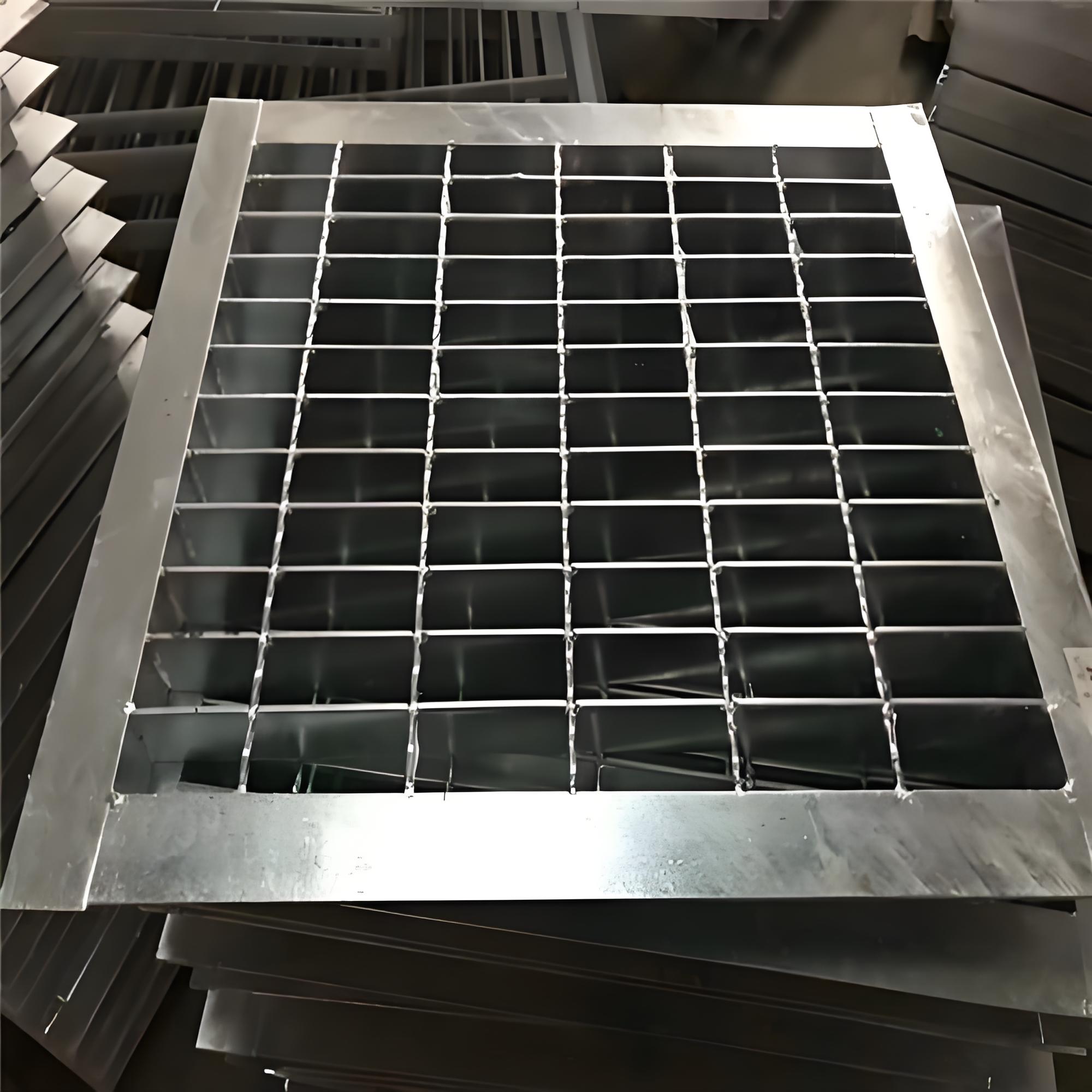
Drainage channel gratings are produced in different materials and opening patterns to suit different applications. The right type depends on whether the installation is pedestrian-only, residential vehicle traffic, commercial traffic, industrial traffic, or extreme-duty pavement.
| Grating Type | Typical Material | Main Benefit | Common Application |
|---|---|---|---|
| Galvanized mesh grating | Hot-dip galvanized steel | Economical drainage and strong open area. | Driveways, warehouses, commercial walkways, light industrial channels. |
| Galvanized slotted grating | Hot-dip galvanized steel | Simple linear water intake and clean appearance. | Pedestrian areas, entrances, loading bays, light vehicle traffic. |
| Stainless steel slot grating | 304 or 316 stainless steel | Corrosion resistance and hygienic finish. | Food plants, pools, kitchens, hospitals, commercial drainage. |
| Ductile iron slotted grate | Ductile iron | High traffic capacity and strong impact resistance. | Car parks, roads, industrial yards, loading docks. |
| Cast iron mesh grate | Cast iron or ductile iron | Robust structure with high water intake. | Road gullies, outdoor channels, municipal drainage. |
| Heel-safe grating | Stainless steel, ductile iron, galvanized steel, composite | Smaller openings for pedestrian comfort and safety. | Plazas, sidewalks, retail entrances, public facilities. |
| Perforated channel cover | Stainless steel or galvanized steel | Fine drainage openings and cleaner surface appearance. | Commercial interiors, kitchens, pool decks, light-duty areas. |
| Composite channel grate | Reinforced polymer composite | Light weight, corrosion resistance, low theft value. | Pedestrian zones, utility sites, landscaped areas, selected parking areas. |
| Single-slot drain cover | Stainless steel, galvanized steel, polymer concrete system | Minimal visible opening and architectural finish. | Public spaces, facades, pool surrounds, commercial landscapes. |
Drainage channel grating size is normally related to the nominal internal width of the channel. A “100 mm channel” usually refers to the approximate hydraulic width or clear channel width, not necessarily the visible grate width or overall outside width of the drainage system.
Different manufacturers use different naming methods. Some identify a channel by nominal internal width, while others use external width or product-series codes. Always request a dimensioned drawing showing the clear opening, grate width, frame width, channel depth, section length, and fixing arrangement before placing an order.
| Nominal Internal Channel Width | Typical Grate Length | Common Application | Selection Note |
|---|---|---|---|
| 100 mm | 500 mm or 1000 mm | Walkways, small driveways, entrances, light commercial drainage. | One of the most common channel sizes for general surface drainage. |
| 150 mm | 500 mm or 1000 mm | Car parks, commercial yards, moderate runoff areas. | Offers more hydraulic capacity than a 100 mm channel. |
| 200 mm | 500 mm or 1000 mm | Industrial access routes, loading areas, public spaces. | Often selected for greater flow and larger paved catchments. |
| 250 mm | 500 mm or 1000 mm | Industrial sites and high-runoff commercial areas. | May require heavier handling and more substantial support. |
| 300 mm | 500 mm or 1000 mm | Road drainage, freight areas, large yards, heavy-duty systems. | Suitable where substantial hydraulic capacity is required. |
| 400 mm and wider | 500 mm, 1000 mm, or custom length | Ports, airports, major industrial sites, high-flow drainage. | Usually requires engineered channel and pavement design. |
Commercial drainage systems commonly offer nominal internal widths of 100 mm, 150 mm, 200 mm, 300 mm, and 400 mm, with wider systems available for major civil works. Product catalogs from channel manufacturers also show that channel height can vary significantly even when the nominal width is the same. A shallow 100 mm channel may suit a pedestrian entrance, while a deep 100 mm channel can carry more flow in the same surface width.
Channel width, section length, and grate depth all influence drainage performance, structural strength, installation cost, and final price. These dimensions should be selected as a coordinated system.
The internal channel width controls the available flow area. Wider channels can accept more water, but they also take more space, require more excavation, use more concrete, and normally cost more. A wider channel does not automatically solve a drainage problem if the outlet pipe, slope, or downstream drainage system is undersized.
Most channel grates are supplied in modular lengths such as 500 mm or 1000 mm. Longer drainage runs are assembled by connecting multiple channel units. Modular sections make transport and installation easier, while custom lengths can reduce joints in special projects.
Grate depth is especially important for ductile iron and fabricated steel channel covers. A deeper ribbed grate can carry higher loads, but it uses more material and requires a compatible frame or edge rail. For fabricated steel grating, bearing-bar depth and thickness determine the structural capacity over the channel opening.
| Dimension | Why It Matters | Typical Effect on Price |
|---|---|---|
| Internal channel width | Determines hydraulic flow area and drainage capacity. | Wider channels and grates generally cost more. |
| Overall channel depth | Affects flow capacity, outlet connection, excavation, and concrete support. | Deeper channels often increase system cost. |
| Grate width | Must match the channel frame and clear opening. | Wider grates use more material and may need more reinforcement. |
| Grate section length | Affects handling, number of joints, and installation speed. | Custom lengths may increase fabrication cost. |
| Grate depth or rib height | Controls traffic strength and stiffness. | Deeper heavy-duty profiles increase material and casting cost. |
| Frame depth and edge rail | Transfers traffic load from the grate to the channel body and concrete. | Heavy-duty frames and rails add cost but are essential for traffic systems. |
The grating opening design affects water intake, debris control, traffic safety, appearance, and structural strength. More open area can improve drainage, but large openings may create heel, bicycle, trolley, or wheel hazards. Smaller openings can be safer for pedestrians but may clog more easily in leaf-heavy or sediment-heavy locations.
Open area is the percentage of the grate surface that allows water into the channel. It should be large enough for the expected runoff, but it must be balanced against the required load class. Heavy-duty traffic grates normally need strong ribs and support bars, which can reduce open area compared with light pedestrian grates.
| Opening Design | Drainage Benefit | Safety Consideration | Typical Application |
|---|---|---|---|
| Wide mesh | High intake area and good debris passage. | May not suit heels, narrow wheels, or public pedestrian routes. | Industrial yards, utility zones, high-debris drainage. |
| Fine mesh | Good foot support and dropped-object control. | Can retain leaves, debris, and sediment. | Commercial walkways, light industrial floors. |
| Longitudinal slots | Efficient linear water collection. | Slot orientation should be checked for bicycles and wheelchairs. | Channel drains, road edges, architectural drainage. |
| Diagonal slots | Good surface-water intake and visual appearance. | Usually safer for tyres than long parallel slots in some layouts. | Driveways, public areas, road drainage. |
| Perforated plate | Fine, distributed intake with a clean appearance. | Small holes may need more frequent cleaning. | Commercial kitchens, pools, washdown areas. |
| Heel-safe narrow slots | Suitable for pedestrian-friendly drainage. | May reduce maximum intake area compared with wider openings. | Plazas, sidewalks, retail entrances, public buildings. |
Drainage capacity depends on the complete system: grate opening area, channel width, channel depth, channel slope, outlet size, sump capacity, pipe capacity, surface slope, rainfall intensity, and debris load. A large grate over a shallow channel with a small outlet may still flood during heavy rain.
For long channels, the drainage system may use a built-in slope, stepped channel sections, neutral sections, multiple outlets, or a central sump. The installer should follow the channel manufacturer’s layout and support details, especially for traffic-rated drainage systems.
Drainage channel gratings must be selected according to the actual traffic type and load. A pedestrian grate should not be installed in a driveway, and a light vehicle grate should not be used in a forklift lane or heavy truck route.
EN 1433 is commonly used for linear drainage channels and their covers in pedestrian and vehicle circulation areas. The familiar load classes are A15, B125, C250, D400, E600, and F900. The complete drainage channel assembly—not only the removable grate—must be suitable for the required class.
| Load Class | Test Load | Typical Location | Common Grating Materials |
|---|---|---|---|
| A15 | 15 kN | Pedestrian areas, gardens, cycle paths, courtyards. | Galvanized steel, stainless steel, composite, light cast products. |
| B125 | 125 kN | Footways, private driveways, car parks, low-speed vehicle areas. | Ductile iron, galvanized steel, stainless steel, tested composite systems. |
| C250 | 250 kN | Commercial parking, kerbside drainage, light truck traffic. | Ductile iron, reinforced steel, heavy-duty channel systems. |
| D400 | 400 kN | Public roads, carriageways, loading bays, heavy vehicle routes. | Ductile iron and engineered road-drainage systems. |
| E600 | 600 kN | Industrial yards, freight terminals, docks, heavy forklift areas. | Heavy-duty ductile iron and specialized drainage systems. |
| F900 | 900 kN | Airport aprons, ports, military areas, extreme-load pavements. | Special engineered ductile iron systems. |
Channel manufacturers offer systems from A15 to F900, with nominal widths such as 100 mm, 150 mm, 200 mm, 300 mm, and 400 mm. The channel body, edge rail, grate lock, concrete surround, and pavement support all affect the final load performance. A D400 grate installed in a weak channel body does not create a D400 drainage system.
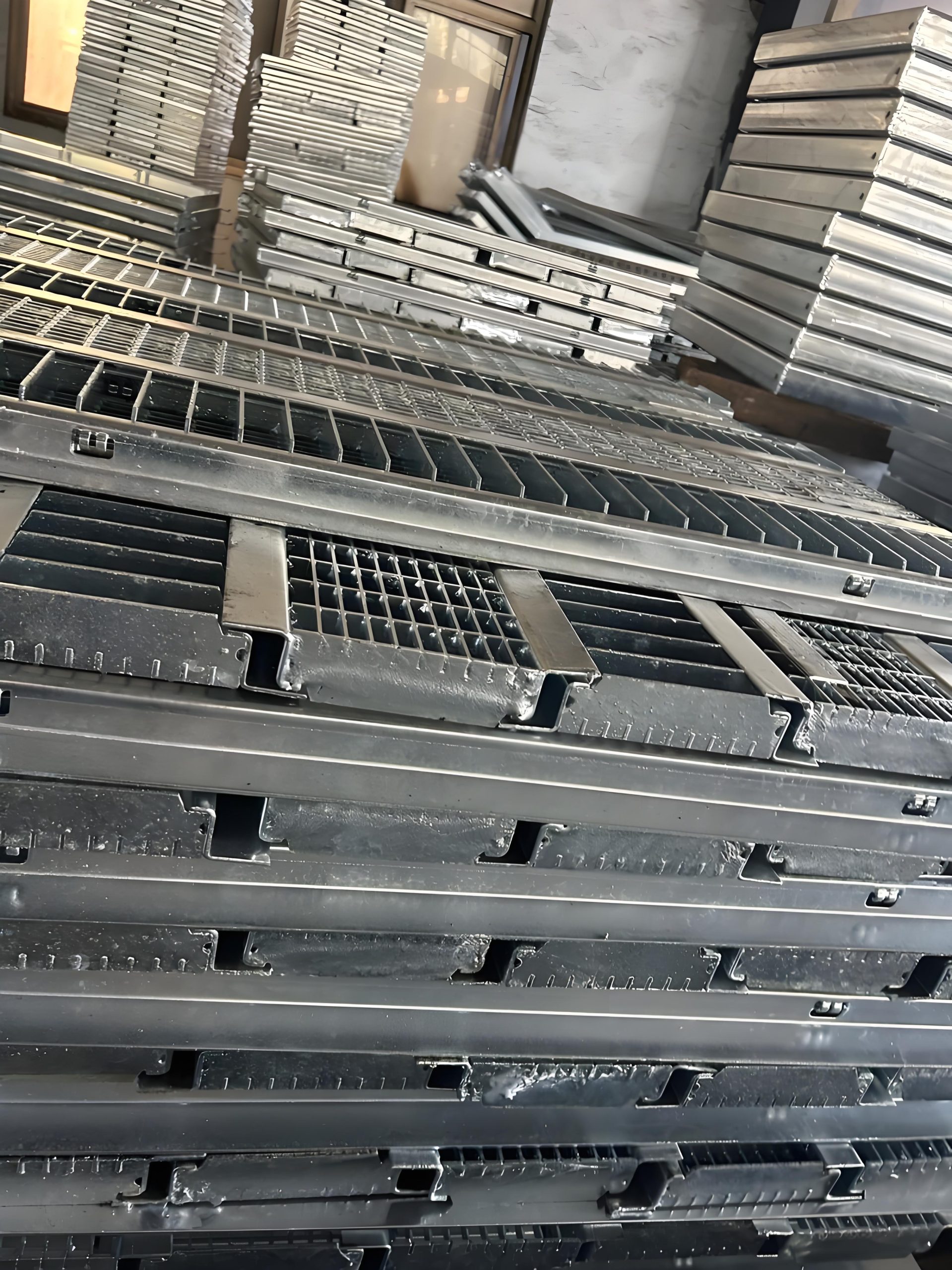
The choice of material has a direct effect on price, durability, corrosion resistance, load capacity, maintenance, and appearance. The most economical material is not always the best long-term choice.
Galvanized steel grating is a practical option for many outdoor pedestrian, driveway, commercial, and industrial drainage channels. It is usually fabricated from steel bars, mesh, slotted plate, or perforated plate and then hot-dip galvanized after fabrication.
It offers good structural strength and corrosion protection at a lower cost than stainless steel. It is commonly used where regular exposure is atmospheric or moderately wet rather than strongly chemical or marine.
Ductile iron is widely used for traffic-rated drainage channels because it can be cast with deep reinforcing ribs, high-strength frames, anti-rock seating, locking systems, and road-safe slot patterns. It is often the preferred option for C250, D400, E600, and F900 drainage systems.
Gray cast iron may be used in selected pedestrian, municipal, or light-duty applications. For demanding vehicle environments, the project specification may require ductile iron due to its toughness and impact resistance.
Stainless steel channel gratings are used where corrosion resistance, hygiene, or appearance is important. Grade 304 is common for commercial interiors, food areas, and washdown zones. Grade 316 or 316L is often chosen for pool drainage, coastal locations, marine exposure, chlorine, and more demanding wet environments.
Composite grates offer low weight, corrosion resistance, low theft value, and electrical insulation. They can be useful for pedestrian routes, utility installations, landscaped areas, wastewater facilities, and selected car parks. The system should be checked for the required load class, UV stability, surface texture, locking method, and frame compatibility.
| Material | Main Strength | Main Limitation | Best Use |
|---|---|---|---|
| Galvanized steel | Cost-effective strength and broad outdoor use. | Less suitable for severe salt, chemical, or continuous wet exposure. | Commercial, industrial, driveway, and custom trench drainage. |
| Ductile iron | High load capacity and impact resistance. | Heavy weight and higher handling demand. | Roadways, car parks, industrial yards, ports, loading docks. |
| Stainless steel | High corrosion resistance and clean appearance. | Higher material and fabrication cost. | Food plants, pools, commercial interiors, marine settings. |
| Composite | Lightweight and corrosion resistant. | Load capacity depends on the tested system design. | Pedestrian, utility, coastal, and selected light-traffic areas. |
Galvanized steel drainage channel grating is one of the most cost-effective metal options for custom linear drainage. It is often priced by linear meter, panel size, finished weight, or complete channel-and-grate assembly.
For preliminary factory budgeting, standard galvanized steel channel grates for pedestrian or light commercial applications may often fall around US$20–80 per linear meter, depending on width, thickness, mesh pattern, bar size, galvanizing, and quantity. Wider, deeper, serrated, framed, lockable, or traffic-rated fabricated steel grates can cost more.
Hot-dip galvanizing is normally applied after steel fabrication so the zinc coating covers the welded joints, exposed edges, and finished grate structure. ISO 1461:2022 specifies general properties and test methods for hot-dip galvanized coatings on fabricated iron and steel articles.
Stainless steel and ductile iron grates normally cost more than standard galvanized steel grates, but they can provide better suitability for corrosive, hygienic, or heavy-traffic applications.
Standard stainless steel channel grating may be budgeted broadly at around US$80–350 or more per linear meter, depending on grade, channel width, material thickness, slot pattern, surface finish, fabrication complexity, and quantity. Grade 316L normally costs more than grade 304 because of its alloy content and stronger performance in many chloride-rich environments.
Stainless steel price rises when the design includes close mesh, laser-cut slots, polished surfaces, welded frames, removable baskets, custom drains, long fabricated sections, or special hygiene requirements.
Ductile iron drainage grating is commonly priced by the size and weight of the grate, the frame system, load class, coating, lock design, and quantity. Standard light-duty grates can be relatively economical, while D400, E600, and F900 systems require heavier castings, stronger frames, more robust channel support, and often more stringent testing.
For planning purposes, a small light-duty cast grate may cost from approximately US$20–60 per piece, while heavy traffic-rated ductile iron channel grates and frames can range from approximately US$80–250 or more per section. Large, lockable, custom-cast, or extreme-duty products can be substantially higher.
| Grating Material | Typical Factory Budget Level | Main Price Drivers |
|---|---|---|
| Galvanized steel | Approximately US$20–80 per linear meter for standard products. | Weight, grate width, steel thickness, mesh, galvanizing, and fabrication. |
| Stainless steel 304 | Approximately US$80–250+ per linear meter for custom channel grates. | Thickness, slot pattern, surface finish, welding, and quantity. |
| Stainless steel 316L | Approximately US$120–350+ per linear meter for custom channel grates. | Higher alloy cost, corrosion environment, finishing, and custom work. |
| Ductile iron | Approximately US$20–250+ per grate or frame-and-grate section. | Load class, casting weight, frame, locks, coating, and tooling. |
| Composite | Varies from low-cost pedestrian products to premium traffic-rated systems. | Reinforcement, resin system, tested load class, frame, and lock design. |
These are preliminary factory-budget ranges only. They do not automatically include the drainage channel body, concrete surround, installation, freight, customs duty, tax, third-party inspection, or destination delivery. A final quote should show the exact product drawing, material, load class, quantity, packing, and Incoterm.
A drainage channel grate should remain safe under wet conditions. Slip resistance, opening geometry, stable seating, and secure fixing are all important for pedestrian and vehicle safety.
Galvanized steel grates may use serrated bars, textured plate, mesh, or perforated anti-slip sheet. Ductile iron grates often include raised ribs or cast patterns. Stainless steel grates may use embossed surfaces, narrow slots, perforations, or textured finishes depending on the hygiene and slip-resistance requirement.
For public walkways and commercial entrances, opening size should reduce the risk of trapping high heels, walking aids, narrow wheels, wheelchair casters, trolley wheels, and bicycle tyres. A heel-safe grating can improve pedestrian safety but may require more frequent cleaning if leaves or debris are common.
Removable channel grates should sit securely in the frame. Traffic-rated systems may use bolt locks, clip locks, anti-rattle inserts, non-rock seating points, or captive designs. These details help prevent movement, noise, theft, uplift, and damage to the channel edge.
| Safety Feature | Main Purpose | Typical Application |
|---|---|---|
| Serrated surface | Improves traction in wet, oily, or outdoor conditions. | Industrial channels, ramps, loading areas. |
| Heel-safe slots | Reduces trip and heel-trapping risk. | Public plazas, entrances, sidewalks. |
| Diagonal slot pattern | Can improve tyre and wheel safety. | Driveways, public drainage, commercial areas. |
| Bolted lock | Secures the grate under traffic or in theft-prone locations. | Road channels, industrial yards, public infrastructure. |
| Anti-rattle insert | Reduces movement and noise between grate and frame. | Roads, car parks, loading docks. |
| Lifting key opening | Allows safe grate removal for cleaning and inspection. | All removable channel-drain systems. |
Drainage channel gratings are exposed to rainwater, trapped moisture, mud, road salt, de-icing chemicals, oil, fuel, cleaning chemicals, pool chemicals, food residue, and sometimes seawater spray. The required corrosion protection should be selected according to the actual environment.
Hot-dip galvanized steel provides good corrosion protection for many exterior channels, driveways, industrial floors, warehouses, and commercial drainage systems. It is often an economical choice where the environment is atmospheric or moderately wet.
Field cutting, drilling, welding, and damage during installation can affect the coating. The project should define how cut edges and field modifications will be treated. In severe saltwater, acidic, or chemical environments, galvanized steel may not provide the required service life.
Stainless steel is often used for washdown areas, kitchens, food plants, pools, hospitals, laboratories, and coastal projects. It offers good long-term corrosion resistance, but material grade and cleaning chemicals must be considered. Chloride-rich cleaning solutions, salt deposits, and stagnant moisture can affect stainless steel performance.
Powder coating and paint can provide color and additional barrier protection. These finishes can be useful for architectural or controlled industrial applications, but damaged areas around edges, holes, fasteners, and welds need attention. They should not be assumed to replace stainless steel or high-performance corrosion protection in aggressive environments.
Composite grates do not rust and can perform well in wet, chemical, or coastal environments. Their selection should include UV resistance, resin system, temperature range, anti-slip surface, frame compatibility, and tested load class.
Custom drainage channel gratings are common for airports, road crossings, industrial plants, food factories, swimming pools, architectural landscapes, bridge decks, ports, and retrofit projects. A custom product may be needed when standard 100 mm, 150 mm, 200 mm, or 300 mm channel systems do not fit the required layout.
Custom fabrication can increase cost because of design work, material cutting, welding, casting patterns, finishing, and inspection. Low-volume cast iron or ductile iron products may require new tooling, while low-volume galvanized or stainless steel grates can often be fabricated from standard materials without permanent molds.
Drainage channel grating prices are affected by much more than visible size. Buyers should compare the complete specification, including the channel system, frame, load class, material, finish, and accessories.
| Price Factor | Effect on Cost |
|---|---|
| Channel width and grate width | Wider channels use more material and normally require stronger grates and frames. |
| Load class | Higher classes require heavier materials, stronger support, locks, and stricter testing. |
| Material choice | Galvanized steel is usually economical; stainless steel and high-duty ductile iron can cost more. |
| Finished weight | Heavier bars, ribs, and frames increase raw-material, freight, and handling costs. |
| Opening pattern | Heel-safe, laser-cut, fine-perforated, decorative, and high-open-area designs can add cost. |
| Surface treatment | Galvanizing, anodizing, polishing, passivation, powder coating, and epoxy add processing cost. |
| Custom fabrication | Curves, cut-outs, special frames, locks, and unusual dimensions require additional labor. |
| Order quantity | Large orders reduce setup, tooling, packing, and inspection cost per meter. |
| Packaging and freight | Heavy channel systems need strong pallets, efficient container loading, and careful delivery planning. |
| Certificates and testing | Material certificates, load testing, third-party inspection, and export documents add cost. |
A 100 mm galvanized steel mesh grate for a pedestrian entrance should not be compared directly with a 200 mm ductile iron D400 grate for a truck loading area. The heavier product may have a much higher price per meter, but it also includes more material, stronger frame support, higher traffic capacity, and a different drainage duty.
For a fair comparison, ask every supplier to provide the same information: channel clear width, grate material, section length, load class, frame type, opening pattern, lock type, product weight, corrosion finish, quantity, packing, lead time, and trade term.
A reliable drainage channel grating supplier should understand both drainage performance and traffic loading. The supplier should be able to recommend a suitable complete system rather than quoting only a loose grate without confirming the frame, channel, or installation detail.
The right supplier should help match hydraulic capacity, traffic rating, material durability, and installation detail. A low-cost grate that does not fit the channel, fails under traffic, clogs too easily, or corrodes early can create much higher replacement and repair costs after installation.
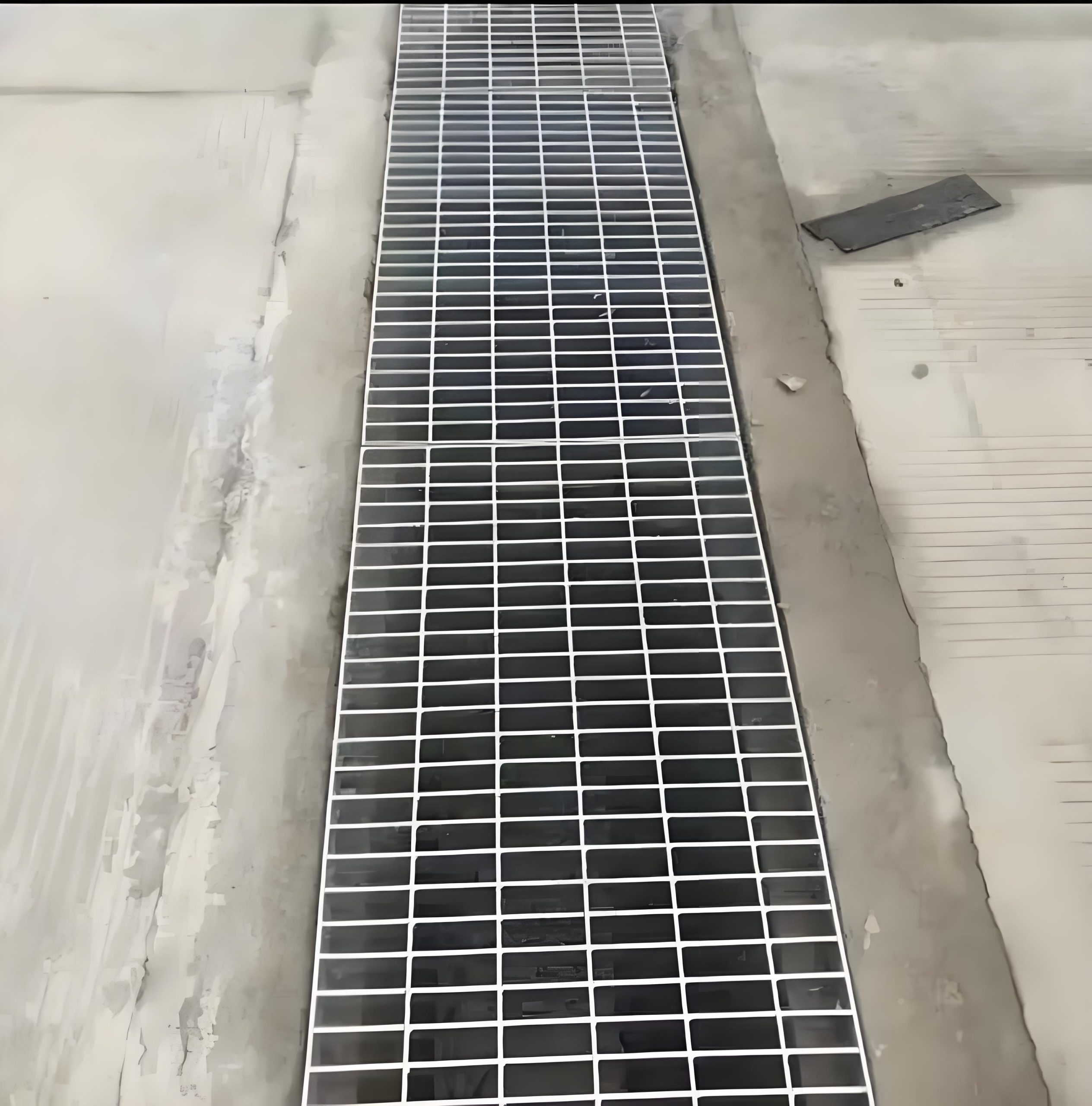
What size drainage channel grate do I need?
The correct size depends on the channel’s clear opening, expected runoff, available installation depth, traffic load, and outlet capacity. Common nominal internal widths are 100 mm, 150 mm, 200 mm, 250 mm, and 300 mm. Always use the channel manufacturer’s drawing because a nominal channel width is not always the same as the visible grate width or outside frame size.
What load class is needed for a driveway channel drain?
B125 is often used for private driveways and light vehicle areas, while C250 may be selected for commercial parking and higher traffic conditions. If trucks, forklifts, frequent turning traffic, or heavy vehicles will cross the drain, a higher class such as D400 or E600 may be required. The complete channel, frame, grate, and concrete support must match the selected class.
How much does a drainage channel grate cost?
Standard galvanized steel drainage grates may cost approximately US$20–80 per linear meter at factory level, depending on width, weight, opening design, finish, and quantity. Stainless steel channel grates often cost more, while ductile iron traffic grates vary by load class and frame design. Final pricing should include the complete drainage system, freight, packing, and required quality documents.