

304 stainless steel laser cut food grates are widely used in BBQ grills, ovens, smokers, food processing equipment, commercial kitchens, and custom cooking systems because they offer good corrosion resistance, accurate dimensions, smooth edges, and food-contact safety. For buyers, importers, equipment brands, and wholesalers, choosing the right factory is important not only for price, but also for material authenticity, cutting accuracy, surface finishing, hygiene, packaging, and stable batch production.
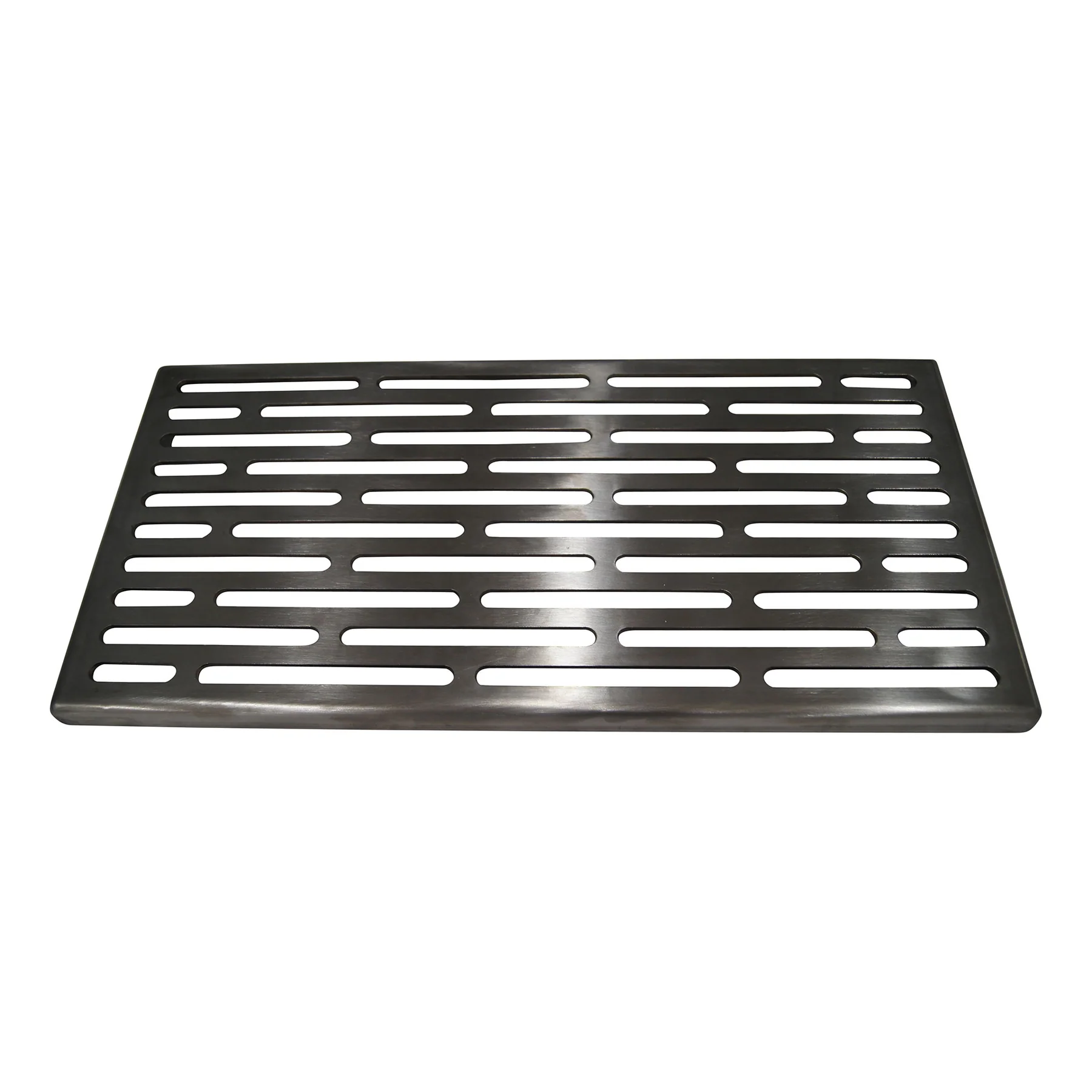
304 stainless steel laser cut food grates are flat or formed stainless steel components used to support, hold, drain, roast, grill, bake, smoke, cool, or process food. They are usually made from 304 stainless steel sheet or plate, then cut into the required size, shape, hole pattern, slot design, logo pattern, or custom structure by laser cutting machines.
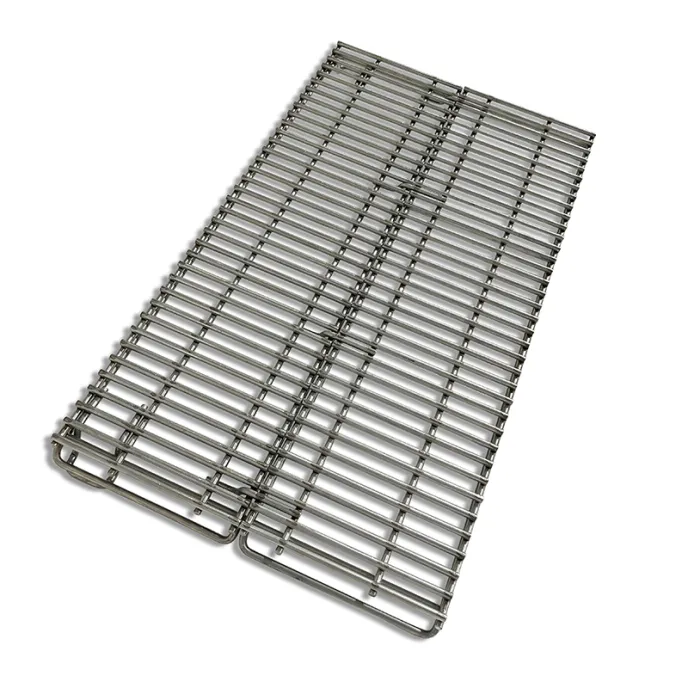
Compared with traditional wire grates or stamped grates, laser cut food grates offer more design freedom. The factory can produce round grates, square grates, rectangular grates, half-moon grates, grill inserts, smoker racks, oven trays, perforated cooking plates, pizza oven grates, cooling grates, and custom food machine parts according to drawings or samples.
| Product Name | 304 Stainless Steel Laser Cut Food Grates |
|---|---|
| Material | Food-grade 304 stainless steel |
| Manufacturing Method | Laser cutting, deburring, polishing, forming, welding if needed |
| Common Thickness | 1 mm, 1.5 mm, 2 mm, 3 mm, 4 mm, 5 mm, or customized |
| Surface Finish | Brushed, polished, pickled, passivated, sandblasted, mirror finish |
| Common Use | BBQ grills, ovens, smokers, food machinery, commercial kitchens |
| Customization | Size, shape, thickness, hole pattern, edge design, logo, packaging |
For food-related products, the most important points are safe material, smooth surface, clean edges, stable structure, and easy cleaning. A professional 304 stainless steel laser cut food grates factory should be able to control these details from raw material purchasing to final packing.
304 stainless steel is one of the most commonly used food-grade stainless steel materials. It contains chromium and nickel, which help form a protective surface layer and give the material good resistance to rust, oxidation, moisture, and many food acids. This makes 304 stainless steel a practical choice for food grates that contact meat, vegetables, seafood, bread, pizza, barbecue sauce, oil, steam, and cleaning water.
304 stainless steel is widely used in food equipment, kitchenware, cookware, food processing lines, beverage machines, dairy equipment, and restaurant supplies. It does not easily react with normal food ingredients, and it is easier to clean than carbon steel or coated steel. For grates used in BBQ grills, ovens, smokers, and food production equipment, 304 stainless steel offers a clean and reliable material base.
Carbon steel grates may rust quickly if the coating is damaged, especially after contact with water, salt, sauce, grease, or cleaning liquid. 304 stainless steel does not depend on paint or plating for basic corrosion resistance. Even if the surface is scratched slightly during normal use, the stainless steel itself still has corrosion resistance, provided that it is properly cleaned and maintained.
304 stainless steel has good strength, toughness, and fabrication performance. It can be laser cut, bent, welded, polished, brushed, and formed into many different food grate designs. This is useful for custom grill brands and food equipment manufacturers that need special sizes, unique hole patterns, or complex shapes.
When used in suitable environments, 304 stainless steel food grates can last much longer than low-grade steel or painted grates. A longer service life can reduce replacement frequency, improve user experience, and support better product value for wholesale and OEM buyers.
| Advantage | Why It Matters for Food Grates |
|---|---|
| Food-grade performance | Suitable for direct or indirect food contact applications |
| Corrosion resistance | Handles moisture, oil, sauce, steam, and cleaning water better |
| High-temperature resistance | Useful for BBQ grills, ovens, smokers, and roasting equipment |
| Easy cleaning | Smooth surface helps reduce food residue and grease buildup |
| Good fabrication | Supports custom size, shape, hole pattern, and OEM design |
Laser cutting is one of the key reasons these food grates can achieve accurate dimensions and clean designs. A laser cutting machine uses a focused beam to cut stainless steel sheet or plate according to a digital drawing. This allows the factory to produce repeated shapes with high accuracy and stable quality.
For BBQ grills, ovens, smokers, and food machines, a small dimensional error may cause poor fitting, shaking, installation difficulty, or uneven support. Laser cutting helps control the outside size, mounting holes, slots, curved edges, internal cutouts, and logo positions more accurately than many manual cutting methods.
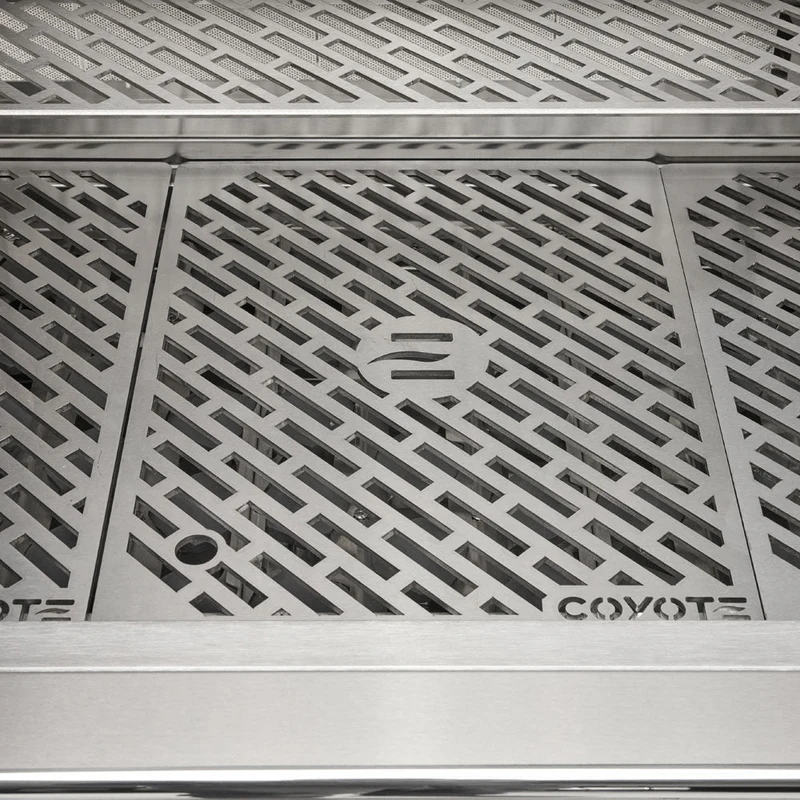
Food grates may need round holes, square holes, long slots, honeycomb patterns, flame patterns, logo cutouts, drain holes, or ventilation openings. Laser cutting makes these patterns easier to customize. Buyers can provide CAD drawings, PDF drawings, samples, or basic dimensions, and the factory can convert them into production files.
Laser cutting can create cleaner edges with less deformation. After cutting, the factory can remove burrs and sharp points by deburring, grinding, tumbling, polishing, or edge rounding. Smooth edges are very important for food grates because they improve safety, cleaning, appearance, and product feel.
Once the drawing and cutting program are confirmed, laser cutting can repeat the same design for batch production. This is helpful for wholesalers, grill brands, food equipment manufacturers, and e-commerce sellers who need consistent products across many orders.
| Laser Cutting Benefit | Result for Food Grates |
|---|---|
| High precision | Better fitting in grills, ovens, smokers, and machines |
| Pattern flexibility | Custom holes, slots, logos, and special shapes |
| Small batch friendly | Suitable for prototypes, trial orders, and OEM samples |
| Repeatability | Stable quality for wholesale and mass production |
| Clean cutting line | Less finishing work than rough mechanical cutting |
Food grates must be made with attention to material safety, surface cleanliness, edge condition, and production control. A factory producing 304 stainless steel laser cut food grates should understand that the product is not just a metal part. It may touch food, heat, oil, sauce, steam, cleaning liquid, and human hands during daily use.
The first requirement is genuine 304 stainless steel. Buyers should request material certificates when needed, especially for OEM orders, export orders, supermarket products, food equipment parts, and branded grill accessories. The grade should be clearly shown on the quotation, invoice, packing list, and production documents.
A food grate should not have rough burrs, sharp edges, deep scratches, oil contamination, welding slag, or trapped residue areas. A smoother surface helps users clean grease, meat juice, food particles, and carbon buildup more easily. For food processing equipment, cleanability is even more important because hygiene rules are stricter.
Many low-cost grates rely on coatings, paint, chrome plating, or other surface layers. If the coating peels, burns, or scratches, the product may rust or become unsafe for long-term use. 304 stainless steel food grates can be used without paint or plating in many applications, which makes them a cleaner and more durable choice.
A responsible factory should separate stainless steel production from carbon steel contamination as much as possible. Iron dust from carbon steel can stick to stainless steel surfaces and cause rust spots later. Good production practice includes clean work areas, proper tools, surface protection film when needed, and final cleaning before packing.
304 stainless steel offers good corrosion resistance in normal cooking, grilling, baking, smoking, and food processing environments. It performs well against moisture, steam, food oil, mild acids from food, and regular washing. This makes it suitable for most home grill grates, commercial kitchen grates, oven racks, smoker accessories, and many food machine parts.
Although 304 stainless steel is a strong choice for many food grates, it is not the best material for every environment. If the grate is used in a seaside area, salty environment, seafood processing plant, strong chloride cleaning condition, or highly corrosive industrial food process, 316 stainless steel may provide better corrosion resistance. A good factory should not simply recommend one material for every project. It should help buyers choose based on actual use.
Even stainless steel needs proper care. After grilling or food processing, grease, salt, sauce, and carbon deposits should be cleaned regularly. For outdoor BBQ grates, the product should be dried after washing and stored away from strong salt or chemical exposure when possible.
One of the main advantages of buying from a 304 stainless steel laser cut food grates factory is customization. Instead of choosing only standard wire racks or fixed-size grates, buyers can order products based on their grill model, oven chamber, smoker size, machine structure, or brand design.
The factory can produce small food grates for portable BBQ grills, medium grates for home ovens and smokers, or large panels for commercial food processing equipment. Size can be made according to drawings, samples, installation space, or buyer-provided measurements.
Laser cutting supports many shapes, including round, square, rectangular, oval, half-moon, sector-shaped, irregular, and special machine-fitting designs. This is useful for ceramic grills, kamado grills, pellet smokers, charcoal grills, pizza ovens, outdoor cooking systems, and custom food machinery.
Different hole patterns can affect heat flow, smoke circulation, drainage, food support, appearance, and cleaning. Larger holes improve airflow and reduce weight. Smaller holes support smaller food pieces. Slot patterns may be used for drainage or heat distribution. Decorative patterns can improve brand identity.
| Custom Option | Available Choices |
|---|---|
| Shape | Round, square, rectangle, oval, half-moon, sector, custom profile |
| Hole Pattern | Round holes, long slots, square holes, hexagon, logo cutout, mixed design |
| Thickness | 1 mm to 6 mm or according to project requirements |
| Edge Type | Straight edge, rounded edge, folded edge, framed edge |
| Surface Finish | Brushed, polished, passivated, sandblasted, mirror finish |
| Branding | Laser cut logo, engraved mark, custom label, retail packaging |
For OEM and ODM orders, a factory can help adjust the design for production. For example, if a hole is too close to the edge, the part may become weak. If the pattern has too many narrow cuts, cutting time and cost may increase. If the grate is too thin for the load, it may bend during use. Factory engineering support can help balance appearance, cost, strength, and function.
Smooth edges are a key quality detail for food grates. A good-looking laser cut grate is not enough if the edge is sharp, rough, or difficult to clean. After cutting, the factory should use suitable finishing methods to make the product safer and more comfortable to handle.
Deburring removes sharp burrs from the cutting edge and hole edges. This is especially important for food grates because users may handle the product by hand during cleaning, installation, or cooking. Burrs can also trap food particles and grease.
Edge rounding creates a softer edge and improves user safety. It is useful for retail BBQ accessories, premium grill grates, oven racks, and removable food machine parts. Edge rounding also gives the product a more refined finish.
Brushed finish gives the stainless steel surface a uniform grain. It is common for kitchen equipment, BBQ accessories, and commercial stainless steel parts. A brushed finish can improve appearance while keeping the product practical for daily use.
Polished food grates have a brighter surface and smoother feel. Polishing can help improve cleanability and product appearance. For high-end BBQ products or visible food equipment parts, polishing is often requested.
Passivation helps restore and improve the protective surface layer of stainless steel after cutting, welding, or grinding. For food-grade and export products, passivation may be requested to improve corrosion resistance and reduce surface contamination.
| Finishing Method | Main Purpose | Suitable Products |
|---|---|---|
| Deburring | Remove sharp burrs and rough edges | All laser cut food grates |
| Edge rounding | Improve hand safety and appearance | Retail BBQ grates, oven accessories |
| Brushing | Create uniform surface grain | Kitchen and BBQ products |
| Polishing | Improve brightness and smoothness | Premium food grates and visible parts |
| Passivation | Improve stainless surface protection | Food-grade, marine, export, and OEM products |
304 stainless steel laser cut food grates can be used in many cooking and food production systems. Their custom design capability makes them suitable for both consumer products and industrial equipment.
BBQ grill grates need strength, heat resistance, corrosion resistance, and easy cleaning. Laser cut 304 stainless steel grates can be made with customized airflow holes, flame patterns, grease drainage slots, and logo designs. They are suitable for charcoal grills, gas grills, portable grills, outdoor grills, and custom barbecue systems.
Ovens require stable support and resistance to repeated heating. 304 stainless steel laser cut grates can be used as baking racks, oven trays, pizza support plates, roasting racks, and food holding shelves. Smooth edges and accurate size are important because the grate must fit the oven chamber properly.
Smoker grates must allow smoke and heat to circulate evenly around food. Laser cut hole patterns can be designed for airflow, support, and easy cleaning. 304 stainless steel is suitable for many smoker racks because it resists moisture, grease, seasoning, and repeated heating better than ordinary steel.
In food processing equipment, stainless steel grates may be used for draining, filtering, supporting, conveying, cooling, washing, drying, or separating products. They can be custom made for meat processing, seafood handling, vegetable washing, bakery equipment, dairy systems, snack production, and packaging lines.
| Application | Typical Product | Key Requirement |
|---|---|---|
| BBQ Grill | Cooking grate, charcoal plate, heat diffuser | Heat resistance, easy cleaning, strong support |
| Oven | Baking rack, roasting tray, pizza grate | Accurate size, flatness, high-temperature stability |
| Smoker | Smoking rack, meat support grate | Airflow, smoke circulation, corrosion resistance |
| Food Processing | Drain plate, machine grate, support shelf | Food hygiene, smooth surface, custom fitting |
| Commercial Kitchen | Drain grate, cooling rack, equipment insert | Easy washing, rust resistance, durability |
A reliable 304 stainless steel laser cut food grates factory should have a clear production process. Stable quality comes from controlling each step, not only from using a laser cutting machine. Material inspection, drawing confirmation, cutting, finishing, cleaning, inspection, and packing all affect the final product.
The factory should confirm stainless steel grade, thickness, surface condition, and sheet flatness before production. For food-grade orders, 304 stainless steel material certificates can be provided if required. Surface scratches, rust contamination, wrong thickness, and mixed materials should be avoided from the beginning.
Before mass production, the factory should confirm the drawing details with the buyer. Important points include outside dimensions, hole diameter, slot width, edge radius, thickness, surface finish, bending direction, logo position, tolerance, and packing requirements. For new products, sample production is often recommended.
The cutting program is prepared according to the approved drawing. The factory should control cutting speed, power, gas, focus, and sheet position to reduce burrs, deformation, and cutting marks. Thin stainless steel requires careful handling to avoid warping.
After cutting, the parts are deburred, polished, brushed, passivated, or cleaned according to the order requirement. For food grates, this step is very important because it affects hand safety, appearance, hygiene, and corrosion resistance.
Quality control should include checking size, thickness, hole position, flatness, surface scratches, edge condition, burrs, stains, and packaging. For OEM orders, the factory may also check fit with a sample grill, fixture, or buyer-provided template.
| Production Step | Quality Control Point |
|---|---|
| Material preparation | Grade, thickness, surface condition, certificate |
| Drawing confirmation | Size, pattern, tolerance, finish, packaging |
| Laser cutting | Cutting accuracy, burr control, deformation control |
| Deburring | Smooth edges and safe handling |
| Surface finishing | Brushed, polished, passivated, or cleaned surface |
| Final inspection | Dimensions, appearance, flatness, quantity |
| Packing | Protection against scratches, moisture, and transport damage |
Many buyers compare 304 stainless steel, 201 stainless steel, and carbon steel grates because they look similar in pictures but perform very differently in real use. The material choice affects rust resistance, food safety, service life, cleaning, and product reputation.
304 stainless steel grates are suitable for most food-contact and cooking applications. They offer good corrosion resistance, good heat performance, and clean appearance. They are often used for mid-range and high-quality BBQ grills, ovens, smokers, kitchen equipment, and food processing machines.
201 stainless steel is usually cheaper than 304, but its corrosion resistance is lower because of different alloy content. It may be used for some low-cost products or dry indoor environments, but it is not the best choice for long-term food grates exposed to moisture, salt, sauce, and outdoor use. If a product is sold as premium food-grade stainless steel, 304 is usually a more trusted option.
Carbon steel grates are strong and low-cost, but they rust easily without coating or seasoning. Some carbon steel cooking grates are used in certain BBQ products, but they need more maintenance. If the coating peels or the surface is not cleaned and dried properly, rust can develop quickly. For export BBQ accessories and food equipment parts, 304 stainless steel is often preferred for easier maintenance and better corrosion resistance.
| Material | Corrosion Resistance | Food Grate Suitability | Typical Buyer Reason |
|---|---|---|---|
| 304 Stainless Steel | Good | Very suitable for most food grates | Quality, hygiene, durability |
| 201 Stainless Steel | Lower than 304 | Limited use, mostly lower-cost products | Lower material cost |
| Carbon Steel | Low without coating | Needs coating, seasoning, or careful maintenance | Low cost and high strength |
Food grates must support food weight, cooking tools, repeated heating, cleaning, and sometimes heavy meat cuts or equipment loads. The right thickness, pattern design, support spacing, and edge structure help prevent bending and deformation.
Thin stainless steel grates are lighter and cheaper, but they may bend more easily if the span is large or the food load is heavy. Thicker grates provide better rigidity and premium feel, but they cost more and take longer to cut. For small BBQ accessories, thinner plates may be enough. For heavy-duty grill grates or food machine support parts, thicker material is usually better.
Hole patterns affect not only appearance and airflow, but also strength. Too many large holes can reduce load capacity. Narrow bridges between holes may deform under heat or weight. A good factory can help adjust the hole size, spacing, and edge distance to keep the grate strong enough.
304 stainless steel performs well in many cooking temperature ranges. It can handle repeated heating in grills, ovens, and smokers. However, high heat may cause color change, heat tint, or slight surface oxidation over time. This is normal for stainless steel exposed to cooking heat. Proper cleaning and suitable thickness help maintain product performance.
Laser cutting and heating can create stress in stainless steel sheets. For wide or thin grates, the factory should control cutting layout, processing sequence, and finishing method to reduce warping. Some designs may require edge bending, frames, ribs, or thicker material to improve flatness.
| Design Factor | Effect on Food Grate Performance |
|---|---|
| Thickness | Higher thickness usually improves strength and reduces bending |
| Hole size | Larger holes improve airflow but may reduce support strength |
| Edge distance | Enough edge distance helps prevent cracking and deformation |
| Support span | Longer span needs stronger material or structure |
| Finishing | Deburring and polishing improve safety and cleanability |
A 304 stainless steel laser cut food grates factory usually serves different types of customers, including BBQ grill brands, outdoor cooking product sellers, restaurant equipment suppliers, food machinery manufacturers, importers, distributors, and online retailers. Wholesale and OEM/ODM service can help buyers build stable product lines with customized specifications.
Wholesale buyers often need stable size, competitive price, fast production, and consistent packing. For common BBQ grill grates, smoker grates, oven racks, and cooking plates, the factory can produce repeat orders based on confirmed drawings and samples. Batch production helps reduce unit cost and improve delivery planning.
OEM service means the factory produces according to the buyer’s design, brand, size, and technical requirements. This may include custom logo cutting, special packaging, private label, barcode labels, instruction sheets, and cartons suitable for retail or e-commerce.
ODM service means the factory can help develop or improve a product concept. For example, a buyer may need a new grill grate design with better airflow, easier cleaning, stronger support, or more attractive appearance. The factory can suggest material thickness, hole layout, edge treatment, and sample testing before mass production.
For new products, sample orders are important. Buyers can test the size, fitting, strength, surface finish, and user experience before placing a large order. A flexible factory can support prototype production, small batch trial orders, and later mass production.
| Service Type | What Buyers Can Customize |
|---|---|
| Wholesale | Standard sizes, batch quantity, carton packing |
| OEM | Drawing, size, logo, finish, label, packaging |
| ODM | Product structure, pattern design, functional improvement |
| Sample Order | Prototype testing before mass production |
Choosing a reliable factory can save time, reduce quality disputes, and improve long-term product stability. Price is important, but for food grates, buyers should also check material control, equipment capability, finishing process, communication, inspection, and export experience.
The factory should clearly confirm whether the material is 304 stainless steel, 201 stainless steel, 316 stainless steel, or another grade. For serious orders, material certificates should be available. If the price is much lower than normal 304 stainless steel pricing, buyers should confirm the grade carefully.
Good laser cutting capability means accurate dimensions, clean holes, smooth curves, and stable repeat production. Buyers can ask about maximum cutting size, thickness range, tolerance control, drawing format, sample lead time, and batch capacity.
Food grates need safe edges and clean surfaces. A factory should provide deburring, polishing, brushing, passivation, cleaning, and protective packing as required. Product photos should show real edge quality, not only top surface appearance.
A reliable factory should check material, dimensions, surface finish, burrs, flatness, quantity, and packaging before shipment. For custom orders, first article inspection or sample approval is useful before mass production.
For international buyers, export experience matters. The factory should understand packing requirements, carton marks, pallet loading, shipping documents, HS code support, trade terms, and delivery schedules. Clear communication reduces mistakes in drawings, labels, and packaging.
| Factory Check Point | Why It Is Important |
|---|---|
| Material certificate | Confirms real 304 stainless steel material |
| Laser cutting equipment | Controls size accuracy and pattern quality |
| Deburring and polishing | Improves safety, appearance, and cleaning |
| Sample support | Allows fitting and quality testing before bulk order |
| QC process | Reduces defects and batch inconsistency |
| Export packing | Protects products during long-distance shipping |
Proper packaging is important because stainless steel food grates can be scratched, bent, or stained during handling and shipping. A factory supplying export orders should design packaging based on product thickness, finish, size, weight, and shipping method.
Common packaging methods include plastic film, foam sheet, paper wrapping, inner cartons, outer cartons, wooden cases, and pallets. For polished or brushed surfaces, protective film or separate wrapping can reduce scratches. For heavy grates, strong cartons or wooden crates may be needed.
For wholesale and retail orders, the factory can provide labels, barcodes, product stickers, instruction cards, brand packaging, and carton marks. OEM buyers may request neutral packaging or private label packaging according to their sales channel.
304 stainless steel food grates can be shipped by express, air freight, sea freight, truck transport, or combined logistics. Small sample orders are often shipped by express. Bulk wholesale orders usually use sea freight to reduce shipping cost. The factory should help estimate package weight, carton size, and pallet dimensions.
For international shipments, the supplier may support commercial invoice, packing list, bill of lading, certificate of origin, material certificate, and other documents required by the buyer or customs. Clear export documents help avoid shipping delays.
| Packaging Item | Purpose |
|---|---|
| Protective film | Reduces surface scratches |
| Foam or paper separator | Prevents parts from rubbing each other |
| Strong carton | Protects small and medium food grates |
| Wooden case | Protects heavy or large custom grates |
| Pallet | Improves loading, unloading, and warehouse handling |
| Carton label | Helps identify item number, quantity, and destination |
Is 304 stainless steel good for food grates?
Yes, 304 stainless steel is good for food grates because it has reliable corrosion resistance, good heat performance, clean appearance, and food-contact suitability. It is commonly used for BBQ grates, oven racks, smoker grates, commercial kitchen parts, and food processing equipment. For salty marine environments or highly corrosive cleaning conditions, 316 stainless steel may be considered.
Can laser cut stainless steel grates be customized?
Yes, laser cut stainless steel grates can be customized in size, shape, thickness, hole pattern, slot design, logo, surface finish, and packaging. Buyers can provide drawings, samples, photos, or basic dimensions. A factory can produce round, rectangular, half-moon, oval, and irregular food grates for grills, ovens, smokers, and food machinery.
How do I choose a 304 stainless steel food grates factory?
To choose a reliable 304 stainless steel food grates factory, check whether the supplier can provide real 304 material, laser cutting capability, smooth deburring, surface finishing, sample production, quality inspection, OEM packaging, and export support. For custom orders, it is better to confirm drawings and samples before mass production.