

Stainless steel drain channel grating prices generally range from approximately US$25 to US$180 per meter for common factory-made covers, while reinforced, heavy-duty, heel-proof, architectural, or complete framed drainage systems may cost US$150 to more than US$900 per meter. The actual price depends on the stainless steel grade, grating width, bearing bar size, bar spacing, load capacity, manufacturing method, surface finish, frame design, order quantity, and shipping terms. A narrow 304 stainless steel drain grating used in a commercial kitchen cannot be priced in the same way as a wide 316L heavy-duty trench cover designed for a chemical plant or vehicle-access drainage channel. For an accurate quotation, the supplier normally needs the channel width, required cover length, bearing bar direction, expected load, stainless steel grade, surface type, frame details, and total order quantity.
Stainless steel drain channel grating is normally priced by linear meter, square meter, individual panel, or total project quantity. Pricing by meter is convenient for continuous drainage channels because buyers often know the total trench length before they know the exact number of individual cover panels.
However, a price per meter is meaningful only when the grating width and construction are clearly stated. One meter of 100 mm wide stainless steel grating contains much less material than one meter of 500 mm wide grating. Similarly, a light pedestrian cover requires smaller bearing bars than a heavy-duty cover designed for carts, forklifts, or road traffic.
The quoted price may cover only the removable grating panel, or it may include the stainless steel channel body, support frame, outlet, end plates, anchors, fixing devices, and installation accessories. Buyers should confirm the scope before comparing quotations.
| Quotation Type | Usually Includes | Important Limitation |
| Grating only price | Stainless steel removable cover panel | Channel, frame, anchors, and installation may not be included. |
| Grating with frame price | Cover panel and matching support frame | Drain body and outlet may still be excluded. |
| Complete channel price | Channel body, grating, frame, outlet, and basic accessories | Installation labor, concrete work, and freight may be separate. |
| Delivered project price | Product, packaging, freight, and agreed delivery terms | Import duty, local tax, and installation should be confirmed. |
A low price per meter often refers to a narrow, light-duty cover with a simple mill finish and no frame. A higher price may include thicker bearing bars, closer spacing, 316L stainless steel, serrated surfaces, welded edge banding, removable frames, polishing, passivation, special cutouts, or certified load performance.
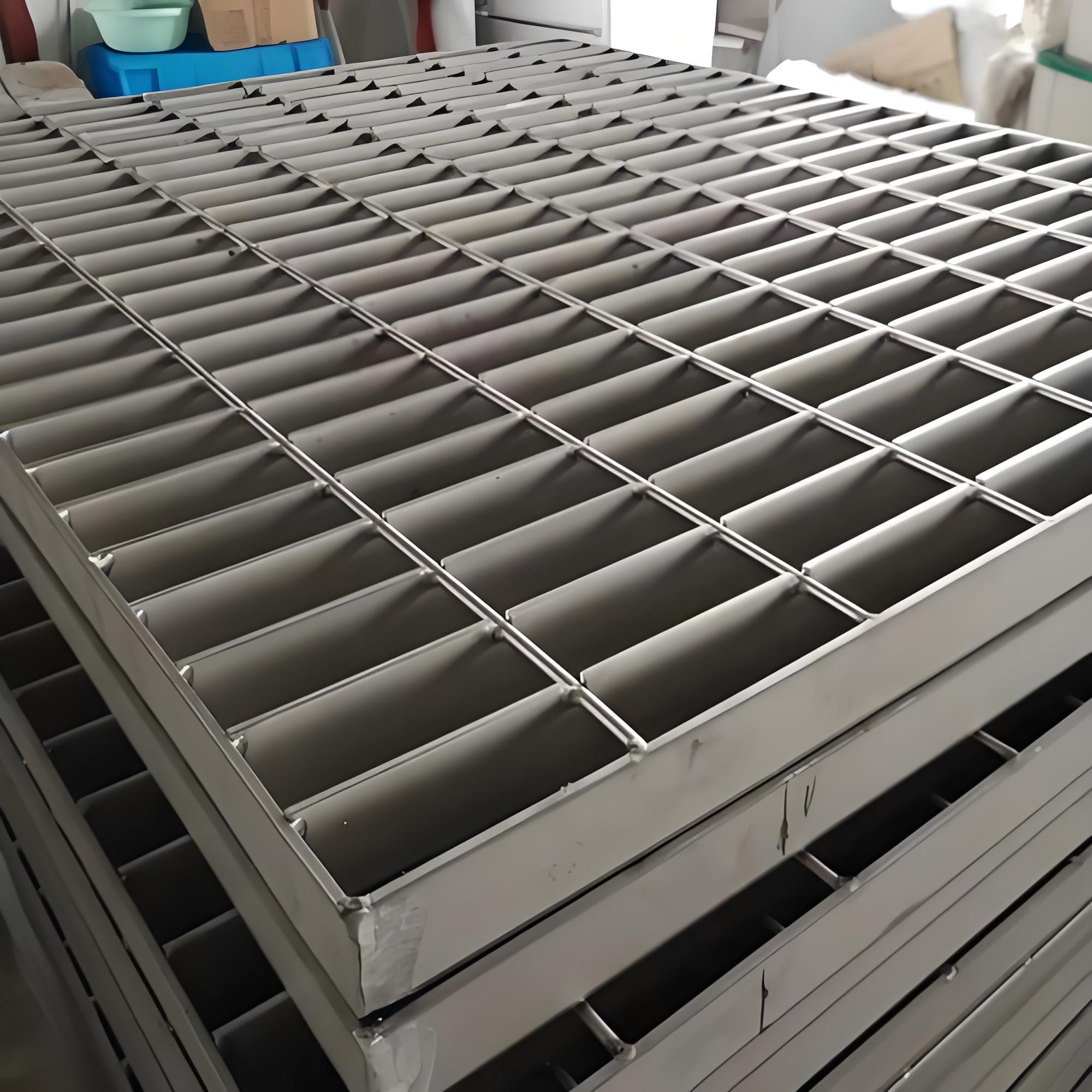
For preliminary budgeting, stainless steel drain channel grating can be divided into several practical price levels. These are general international factory-reference ranges rather than fixed quotations. Material markets, exchange rates, production location, order quantity, and shipping date can change the final price.
| Drain Grating Type | Typical Width | Approximate Reference Price |
| Light-duty 304 stainless steel grating cover | 100–200 mm | US$25–60 per meter |
| Standard 304 stainless steel drain grating | 200–300 mm | US$45–100 per meter |
| Medium-duty 304 grating with edge banding or frame | 300–500 mm | US$80–180 per meter |
| Light to standard 316 or 316L drain grating | 100–300 mm | US$35–130 per meter |
| Medium-duty 316 or 316L framed grating | 300–500 mm | US$100–240 per meter |
| Heavy-duty reinforced stainless steel trench grating | 200–500 mm or wider | US$180–500 per meter |
| High-load branded or engineered drainage system | Depends on system | US$300–900+ per meter |
A practical factory reference for a common 200 mm to 300 mm wide 304 stainless steel drain grating is approximately US$45 to US$100 per meter. If the same cover is made from 316L stainless steel, includes a matching frame, uses thicker bearing bars, or requires passivation, the price may increase to approximately US$80 to US$180 per meter.
These ranges should not be treated as an offer. A difference of only 100 mm in width can significantly change the material weight per meter. Load requirements can have an even larger effect because increasing the bearing bar height or thickness adds stainless steel across the full length of the cover.
Consider a removable drain cover that is 250 mm wide and 1,000 mm long, made from 304 stainless steel with standard welded construction, plain bearing bars, moderate pedestrian loading, and simple edge banding. A preliminary factory budget may fall between US$50 and US$95 per meter, depending on bearing bar size, spacing, finish, and quantity.
For a 300 mm wide 316L stainless steel cover with heavier bearing bars, serrated surface, welded banding, a matching angle frame, and pickled and passivated finish, a preliminary budget may be approximately US$110 to US$220 per meter.
A heavy-duty cover designed for pallet trucks, forklifts, service vehicles, or roadway loading may require deep bearing bars, reinforced frames, reduced panel spans, and engineering verification. Depending on width and load class, the price may exceed US$200 to US$500 per meter. Proprietary complete drainage systems can cost considerably more.
The stainless steel grade directly affects the raw material cost of the drain grating. The most common grades are 304, 316, and 316L. Although their appearance may be similar, their alloy content and corrosion resistance differ.
304 stainless steel is normally the most economical of the three. It provides good resistance to ordinary moisture, fresh water, food residue, mild cleaning agents, and indoor industrial conditions. It is widely used in commercial kitchens, food workshops, factories, utility rooms, and general drainage systems.
316 stainless steel contains molybdenum, which improves resistance to chloride pitting and many chemical environments. It is often selected for coastal locations, marine facilities, swimming pool areas, seafood plants, chemical processing, and salt-containing production environments.
316L is the low-carbon version of 316. Its low carbon content reduces sensitization risk during welding, making it particularly suitable for welded grating, framed covers, and fabricated drainage systems used in corrosive environments.
| Stainless Steel Grade | Relative Price Level | Typical Drainage Application |
| 304 | Base reference price | Kitchens, factories, indoor drainage, fresh-water washdown, general food processing |
| 316 | Usually higher than 304 | Coastal areas, marine-adjacent facilities, chemical plants, salt exposure |
| 316L | Similar to or slightly above 316 depending on supply | Welded drainage systems, chemical processing, hygienic plants, marine applications |
The material price difference is not always transferred directly to the final product on a simple percentage basis. Labor, cutting, welding, polishing, packaging, and shipping may remain similar regardless of grade. On a light and narrow grating, fabrication can represent a large part of the price. On a wide and heavy grating, raw material becomes the dominant cost.
For similar dimensions and construction, 316 and 316L drain channel grating generally cost more than 304. A common budgeting method is to use the 304 price as the baseline and add a material premium for the higher-alloy grades.
| Material | Typical Price Relationship | Selection Consideration |
| 304 | 100% baseline | Suitable for general indoor, fresh-water, and mild industrial environments. |
| 316 | Approximately 15–30% above comparable 304 products | Better for chlorides, salt exposure, and many chemical conditions. |
| 316L | Approximately 18–35% above comparable 304 products | Preferred for extensively welded covers and corrosion-sensitive environments. |
These percentages are only budget references. The actual premium changes with nickel and molybdenum prices, regional stainless steel supply, order volume, and whether the requested bar size is available from stock.
304 is usually sufficient for indoor kitchens, dry food processing areas, fresh-water drainage, general factory floors, and covered walkways where chloride exposure is low. Selecting 316L for these applications may increase the purchase price without creating a meaningful service-life benefit.
In coastal, marine, salt-processing, seafood, swimming pool, chemical, or aggressive sanitation environments, 304 may develop staining or localized corrosion. Paying more for 316 or 316L can reduce maintenance, surface repair, and premature replacement.
Drain channel grating often requires many welded connections, including cross bar welds, edge banding, frames, handles, and supports. The lower carbon content of 316L makes it a practical choice when welded areas will be exposed to corrosive liquids or repeated washdown.
Width is one of the largest price factors because it determines how much grating area and stainless steel weight are required for each linear meter. A supplier cannot provide a reliable per-meter price without knowing the clear channel width or the finished cover width.
The basic area calculation is:
Grating area per meter = grating width in meters × 1 meter
For example, a cover that is 300 mm wide has an area of 0.30 square meter per linear meter. If a basic grating specification is valued at US$100 per square meter before fabrication, its raw grating value would be approximately US$30 per linear meter. Banding, frames, cutting, polishing, packaging, and commercial margin would then be added.
| Grating Width | Area per Linear Meter | Relative Material Requirement |
| 100 mm | 0.10 m² | Very low |
| 150 mm | 0.15 m² | Low |
| 200 mm | 0.20 m² | Low to moderate |
| 300 mm | 0.30 m² | Moderate |
| 400 mm | 0.40 m² | High |
| 500 mm | 0.50 m² | Very high |
| 600 mm | 0.60 m² | Heavy and often structurally demanding |
The clear width of the drainage channel is not always the same as the finished width of the grating. The cover may need to overlap a support ledge or sit inside an angle frame. Buyers should provide a channel cross-section showing the support position and required bearing width.
Although the product is priced per meter, the actual cover is usually divided into removable panels. Common panel lengths may include 500 mm, 600 mm, 1,000 mm, or another project-specific dimension.
Short panels require more cutting, banding, labeling, and handling per meter. For example, a ten-meter channel divided into twenty 500 mm panels requires twice as many panel ends as the same channel divided into ten 1,000 mm panels. This increases fabrication cost.
If the quotation includes only the grating, channel depth has little direct effect on the grating price. If the quotation includes a complete stainless steel drainage channel, depth strongly affects sheet metal use, bending, welding, outlet design, and shipping volume.
| Price Scope | Does Channel Depth Affect Price? |
| Grating cover only | Usually no, except where deeper frames or special supports are required. |
| Grating and support frame | Sometimes, depending on frame profile and anchoring detail. |
| Complete stainless steel channel | Yes. Deeper channels use more sheet and require more fabrication. |
The bearing bars are the main load-carrying components of stainless steel drain grating. Their height, thickness, spacing, and unsupported span directly affect material weight and load capacity.
Increasing the bearing bar height usually increases stiffness and allows the grating to span a wider opening or carry a heavier load. Common heights may include 20 mm, 25 mm, 30 mm, 32 mm, 40 mm, 50 mm, and larger sizes for heavy-duty service.
Common thicknesses may include 2 mm, 3 mm, 4 mm, 5 mm, or more. Thicker bars add stainless steel weight across the full channel length. They also improve local durability, impact resistance, and load distribution.
| Bearing Bar Change | Effect on Performance | Effect on Price |
| Increase bar height | Improves bending stiffness and span capacity | Moderate to significant increase |
| Increase bar thickness | Improves strength, impact resistance, and durability | Significant increase in material weight |
| Reduce bearing bar spacing | Improves walking support and load distribution | More bars per meter and higher cost |
| Reduce cross bar spacing | Improves panel stability | Higher welding and material cost |
| Reduce unsupported span | Allows lighter bearing bars | May reduce grating cost but require more supports |
Closer bearing bar spacing means more stainless steel bars are required across the channel width. A grating with 15 mm spacing normally costs more than one with 30 mm spacing when the bar size and panel dimensions are the same.
Closer spacing may be required for heel-resistant walking surfaces, narrow wheels, food processing, small-object retention, or public access. Wider spacing can reduce cost and improve drainage but may not be suitable for every user.
A cover intended only for pedestrian traffic is usually lighter and less expensive than a cover designed for carts, pallet trucks, forklifts, or vehicles. Heavy-duty requirements may increase the price through deeper bars, thicker material, reinforced frames, shorter panel spans, and engineering verification.
| Typical Load Use | General Construction Direction | Relative Price Level |
| Light pedestrian use | Small bearing bars and narrow channel width | Low |
| Commercial kitchen traffic | Moderate bar size, close spacing, easy-clean surface | Low to moderate |
| Industrial walkway | Medium bearing bars and verified span | Moderate |
| Cart or pallet truck traffic | Thicker bars and reinforced frame | Moderate to high |
| Forklift or vehicle traffic | Heavy-duty bearing bars, short spans, engineered frame | High |
Buyers should avoid selecting a drain cover only by overall dimensions. Two covers with the same width and length may have completely different load capacities and prices.
The manufacturing method affects production time, appearance, available spacing, and price. The common options include welded bar grating, press-locked grating, swage-locked grating, slotted plate grating, wedge wire grating, and fully custom fabricated covers.
Welded grating is made by joining cross bars to bearing bars through resistance welding or another controlled welding method. It is widely used for industrial drainage covers because it offers a strong and practical structure.
For standard specifications and larger orders, welded grating is often one of the more economical options. Custom panel cutting, edge banding, and surface cleaning are added after the main grating panel is produced.
Press-locked grating is made by pressing cross bars into pre-slotted bearing bars. It normally has a clean, regular appearance and precise rectangular openings.
Its price may be higher than standard welded grating because slotting, alignment, and pressing require additional precision. It is often selected for architectural drainage, public areas, decorative channels, and projects where appearance is important.
Wedge wire grating uses shaped surface wires welded to support rods. It can provide narrow slots, smooth drainage, heel-resistant openings, and hygienic surfaces.
Wedge wire covers are generally more expensive than ordinary welded bar grating because of the specialized wire profile, welding process, close spacing, and finishing requirements.
Some drain covers are made from perforated or laser-cut stainless steel plate. Their price depends on sheet thickness, slot pattern, laser cutting time, bending, reinforcement, and finish.
They can offer a modern appearance but may require stiffeners underneath to achieve the same load capacity as bar grating.
| Construction Type | Relative Price | Typical Use |
| Standard welded bar grating | Low to moderate | Factories, industrial drains, walkways, and general trench covers |
| Press-locked grating | Moderate to high | Architectural areas, public spaces, and neat visual applications |
| Wedge wire grating | High | Food plants, pools, hygienic drains, and heel-resistant drainage |
| Laser-cut plate cover | Moderate to high | Architectural drains, kitchens, bathrooms, and custom designs |
| Engineered heavy-duty cover | High to very high | Roads, vehicle areas, factories, and high-load drainage |
Plain grating has smooth bearing bar tops, while serrated grating has notches or teeth that increase grip. Serrated drain grating usually costs slightly more because the bearing bars require additional forming or cutting.
| Surface Type | Price Difference | Best Application |
| Plain surface | Base price | Kitchens, hygienic areas, controlled indoor floors, and easy-clean drains |
| Serrated surface | Often approximately 5–15% above comparable plain grating | Wet walkways, oily factories, outdoor drains, stairs, and slippery areas |
A smooth bearing bar surface is easier to wash and inspect. Food residue, grease, and cleaning deposits are less likely to remain inside serrations. In a hygienic processing area, this cleaning advantage may be more important than maximum anti-slip performance.
Serrated bars provide additional contact with footwear. They are commonly selected where workers cross drainage channels exposed to water, oil, mud, or process liquid.
Serration does not replace proper housekeeping, drainage, footwear, handrails, or safety procedures. Heavy grease and biological deposits can still make a serrated cover slippery.
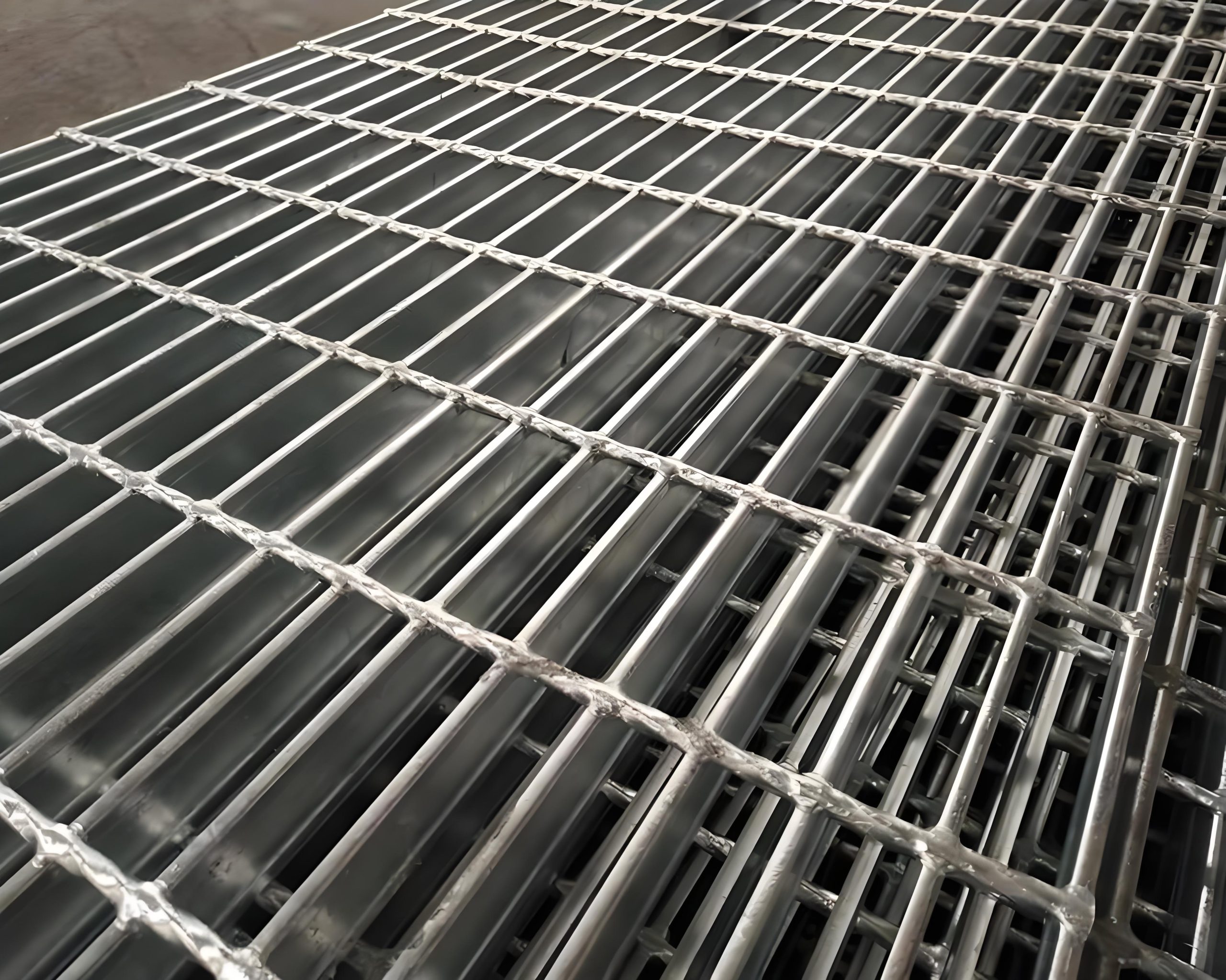
The support frame and panel edge details can represent a substantial part of the finished price. A quotation for loose unbanded grating should not be compared directly with a quotation for complete removable framed covers.
Banding closes the ends of the bearing bars and improves handling, appearance, and edge stability. Every individual removable panel normally requires banding on multiple sides.
Shorter panel lengths increase the number of banded ends per meter. This is one reason a drainage channel divided into many small covers may cost more than one using longer removable panels.
A matching angle frame provides a stable support ledge and protects the concrete or channel edge. The frame price depends on angle size, stainless steel grade, anchors, welding, straightness, and panel fit.
Flat bar frames may be welded to a stainless steel channel or embedded into surrounding construction. They can be simpler than angle frames but still require accurate alignment and support.
Lifting handles, recessed finger holes, key slots, or removable lifting tools can be added when covers require regular cleaning. These features increase cutting and fabrication cost but improve maintenance access.
Public areas, roads, or high-vibration locations may require bolts, clips, locking bars, or anti-theft devices. Locking systems add material, assembly time, and installation work.
| Additional Feature | Typical Price Effect |
| Simple edge banding | Small to moderate increase |
| Load banding | Moderate increase |
| Matching stainless steel frame | Moderate to significant increase |
| Lifting handle or key slot | Small increase per panel |
| Locking system | Moderate increase depending on design |
| Reinforced vehicle frame | Significant increase |
Stainless steel drain grating can be supplied with mill finish, pickled finish, passivated finish, brushed finish, polished finish, or electropolished finish. The more labor-intensive the finish, the higher the price.
Mill finish is normally the lowest-cost surface option. It is suitable for general industrial drainage where appearance is secondary. Fabrication marks and weld discoloration may remain unless cleaning is separately specified.
Pickling removes welding scale, heat tint, and surface contamination. It is often recommended for welded 304, 316, or 316L drain grating used in wet or corrosive environments.
Passivation removes free iron contamination and helps establish a clean passive surface. It is commonly specified for food processing, pharmaceutical, marine, and corrosion-sensitive applications.
A brushed finish provides a more uniform visual texture. It is used in visible commercial kitchens, architectural drains, hotels, public facilities, and decorative drainage channels.
Polishing improves appearance and can make exposed surfaces easier to clean. However, polishing welded bar grating is labor-intensive because it contains many intersections, edges, and internal surfaces.
Electropolishing is a specialized process that removes a thin surface layer and can improve smoothness and cleanliness. It is normally one of the more expensive options and is used mainly for hygienic or high-purity applications.
| Surface Finish | Relative Cost | Typical Application |
| Mill finish | Lowest | General factories and utility drainage |
| Pickled | Low to moderate | Welded industrial and marine grating |
| Passivated | Moderate | Food, pharmaceutical, chemical, and wet processing |
| Brushed | Moderate | Commercial kitchens and visible drainage systems |
| Polished | High | Architectural and hygienic projects |
| Electropolished | Very high | High-purity and specialized sanitary facilities |
Standard-size drain covers are usually cheaper because they can be cut from existing grating panels with limited additional fabrication. Custom-made covers require drawings, programming, special cutting, individual identification, additional welding, and dimensional inspection.
Standard panels use common bearing bar sizes, spacing, panel widths, and surface finishes. They benefit from larger production runs and lower setup cost.
Cut-to-length covers use standard grating but are divided into required panel lengths. This adds cutting and banding cost but remains more economical than fully custom shapes.
A non-standard width may require special edge positioning, additional bars, modified fixtures, or waste from a larger stock panel. The price per meter may therefore be higher.
Curved covers, corner panels, T-junctions, outlet cutouts, pipe openings, and irregular edges require more fabrication time. Each special panel may need an individual drawing and panel mark.
Where the grating follows a tapered channel, panel widths may vary along the trench. Variable dimensions increase production and inspection work.
| Product Type | Price Level | Main Reason |
| Standard stock panel | Lowest | Minimal fabrication and high production efficiency |
| Standard width, cut to length | Low to moderate | Cutting and edge banding required |
| Custom width rectangular panel | Moderate | Additional setup, cutting, and possible material waste |
| Special-shaped panel | High | Drawing, programming, complex cutting, and individual inspection |
| Custom framed drainage assembly | High to very high | Grating, frame, fitting, welding, and assembly work |
Order quantity affects both the factory price and the delivered price. Small orders have a higher cost per meter because setup, drawing review, welding preparation, surface treatment, and packaging are divided over fewer meters.
Orders below approximately 10 meters may carry minimum production, cutting, or packaging charges. A one-meter sample can cost much more per meter than a fifty-meter project.
Orders between approximately 20 and 100 meters usually provide better production efficiency. Standardized panel sizes and repeated fabrication details can reduce labor per meter.
Large orders can receive better material purchasing and manufacturing efficiency. However, extensive custom panel schedules, many special shapes, or strict inspection requirements can reduce the volume discount.
| Order Quantity | Typical Price Effect |
| 1–5 meters | Highest unit price due to minimum production and packing charges |
| 6–20 meters | Small-order pricing with limited efficiency |
| 21–100 meters | More competitive production price |
| More than 100 meters | Potential volume discount, subject to specification consistency |
Basic industrial grating may be bundled on pallets. Polished, brushed, or architectural covers may require protective film, separators, wooden cases, or individual wrapping.
Export packaging must protect the stainless steel from carbon steel contact, salt contamination, moisture entrapment, and movement during transport.
Stainless steel grating can be heavy even when the channel is narrow. Shipping cost depends on total weight, package dimensions, destination, transport method, and trade terms.
Air freight is generally practical only for small urgent orders because freight can exceed the product value for heavy grating.
Sea freight is more economical for larger orders. Buyers should confirm whether the quotation is EXW, FOB, CIF, DAP, or DDP because the included freight and import costs differ.
Long panels and frames may require special handling or dedicated transport. Dividing the channel into shorter panels can reduce shipping length but increase cutting and banding cost.
The application affects price because different environments require different materials, finishes, spacing, and load classes.
Commercial kitchen drain grating is normally narrow, removable, easy to clean, and resistant to food acids and cleaning chemicals. 304 stainless steel is widely used, while 316L may be selected for salt-rich or aggressive sanitation conditions.
Plain surfaces, heel-resistant spacing, polished edges, and removable handles can add to the price.
Food plants may require 304 or 316L stainless steel, hygienic welds, passivation, close spacing, and easy-clean frames. Seafood, meat, dairy, beverage, and brine-processing areas may have different corrosion requirements.
Factory drains may carry pedestrian traffic, carts, pallet trucks, or forklifts. Load-bearing requirements can be more important than appearance. Welded bar grating with serrated surfaces is common in wet or oily production areas.
Road drainage requires reinforced grating, engineered frames, controlled spans, secure locking, and verified vehicle loading. These products are substantially more expensive than ordinary pedestrian drain covers.
Municipal drainage covers may require corrosion resistance, anti-theft fixing, debris control, public walking safety, and high impact resistance. Stainless steel is normally selected for special architectural, coastal, or corrosion-sensitive locations because galvanized or ductile iron covers may be more economical for general roads.
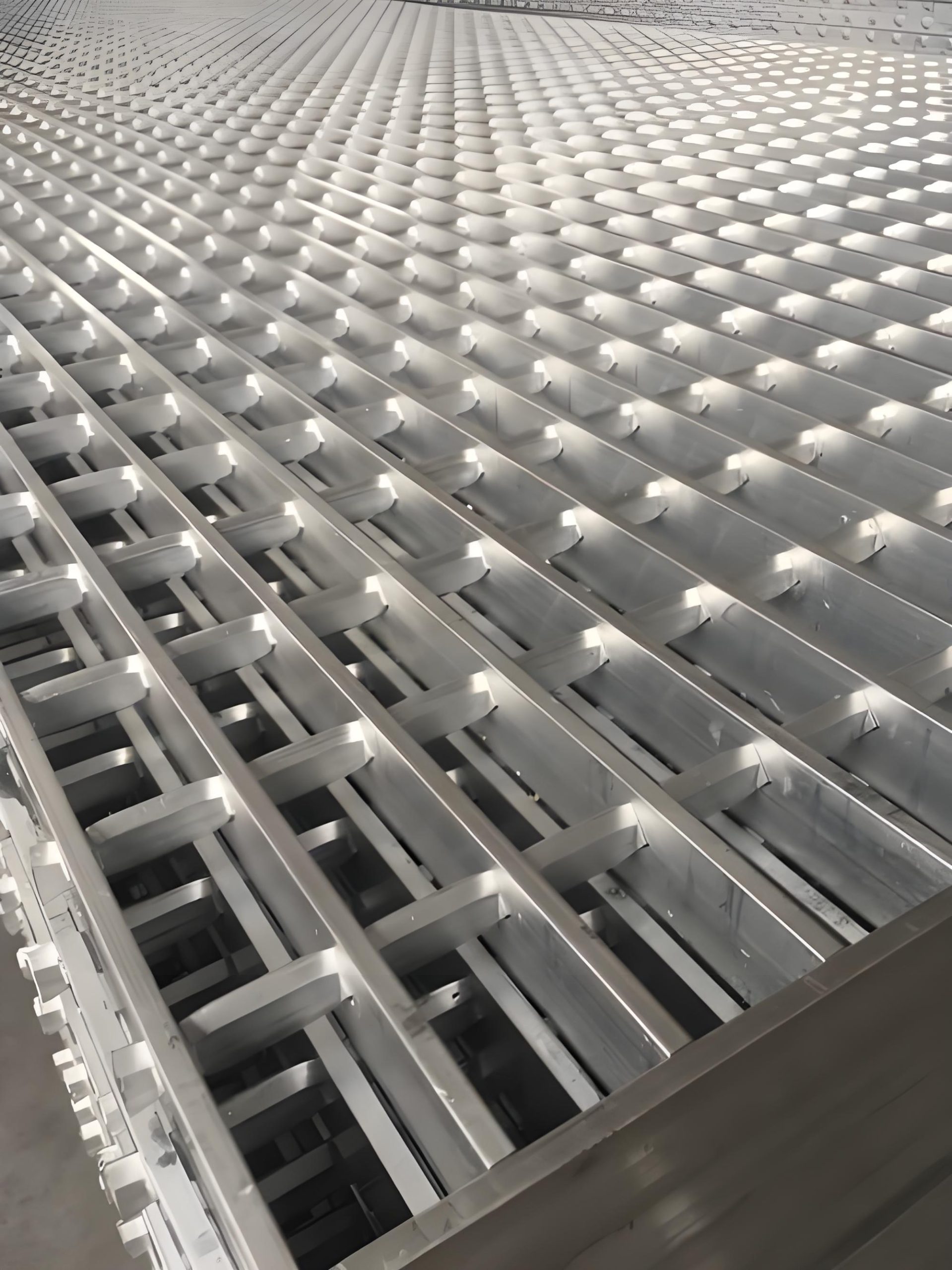
Pool drainage requires careful material selection because chlorinated water and cleaning chemicals can be aggressive. 316 or 316L is normally considered before 304, but the exact water chemistry and temperature must still be evaluated.
Chemical plant grating should be selected according to the actual chemicals, concentration, temperature, spill conditions, and cleaning process. 316L is not resistant to every chemical, so material compatibility must be reviewed.
| Application | Common Grade Direction | Main Price Drivers |
| Commercial kitchen | 304 or 316L | Close spacing, polishing, removable design, and hygiene |
| Food processing plant | 304, 316, or 316L | Passivation, cleaning, salt exposure, and sanitary fabrication |
| General factory | 304 or 316 | Load capacity, serration, width, and frame strength |
| Road drainage | 304, 316, or other engineered material | Vehicle load, reinforcement, locking, and certified frame |
| Marine facility | 316 or 316L | Chloride exposure, passivation, compatible fasteners, and maintenance |
| Chemical plant | 316L or higher alloy after review | Chemical compatibility, welding, finish, and spill conditions |
A preliminary price can be estimated using the grating area, base price per square meter, and additional fabrication costs. This method is useful for early budgeting, but it does not replace a supplier quotation.
Preliminary price per meter = grating width × base grating price per square meter + fabrication + frame + surface finish + packaging
| Item | Example |
| Width | 200 mm, equal to 0.20 m |
| Base grating price | US$90 per m² |
| Raw grating value per meter | 0.20 × US$90 = US$18 |
| Cutting and banding | US$15–25 per meter |
| Pickling and packaging | US$5–12 per meter |
| Preliminary total | Approximately US$38–55 per meter |
| Item | Example |
| Width | 300 mm, equal to 0.30 m |
| Base grating price | US$140 per m² |
| Raw grating value per meter | 0.30 × US$140 = US$42 |
| Heavy banding and frame | US$45–85 per meter |
| Pickling and passivation | US$12–25 per meter |
| Fabrication and packaging | US$15–30 per meter |
| Preliminary total | Approximately US$114–182 per meter |
A heavy-duty 400 mm wide cover may require deep bearing bars, thick frame sections, locking devices, shorter spans, and load verification. Even when the grating area is only 0.40 square meter per meter, the reinforcement and frame may cost more than the basic grating. A preliminary budget could range from US$200 to US$500 or more per meter.
Buyers may receive quotations with major price differences even when both suppliers describe the product as stainless steel drain grating. The difference often comes from specifications that are not visible in the short product name.
| Possible Difference | Effect on Quotation |
| Different stainless steel grade | 304 may be quoted against 316L. |
| Different bearing bar size | A deeper or thicker bar substantially increases weight and capacity. |
| Different width interpretation | One supplier may price clear width, another overall framed width. |
| Different spacing | Closer spacing uses more stainless steel bars. |
| Frame excluded | A low quotation may cover only the loose grating panel. |
| Surface treatment excluded | Pickling, passivation, and polishing may be optional. |
| Different load requirement | Pedestrian and vehicle covers require different construction. |
| Different panel lengths | Short panels require more cutting and banding. |
| Different shipping term | EXW, FOB, CIF, and DDP prices cannot be compared directly. |
| Certification and inspection | Material certificates, PMI, load tests, and inspection reports add cost. |
A technically complete comparison should review weight per meter, material grade, bearing bar size, spacing, panel dimensions, frame, finish, load basis, packaging, and delivery terms.
A supplier needs clear technical information before calculating a reliable price per meter. Providing only the total trench length is not enough.
| Required Information | Example |
| Total channel length | 50 linear meters |
| Clear channel width | 250 mm |
| Finished grating width | 280 mm including support overlap |
| Panel length | 1,000 mm per removable panel |
| Stainless steel grade | 304, 316, or 316L |
| Bearing bar size | For example, 30 × 3 mm |
| Bearing bar spacing | For example, 30 mm on center |
| Cross bar spacing | For example, 100 mm on center |
| Surface | Plain or serrated |
| Load requirement | Pedestrian, cart, forklift, or vehicle loading |
| Unsupported span | Clear distance between support ledges |
| Frame requirement | Grating only or grating with stainless steel angle frame |
| Edge treatment | Open edge, banded edge, or load banding |
| Surface finish | Mill, pickled, passivated, brushed, or polished |
| Special features | Handles, locks, cutouts, corner panels, or anti-theft devices |
| Quantity | Total meters and number of individual panels |
| Delivery destination | City, port, and country |
| Trade term | EXW, FOB, CIF, DAP, or DDP |
| Documentation | Material certificate, inspection report, PMI, or load test |
A simple channel cross-section can show the clear opening, frame position, support width, grating thickness, finished floor level, and required cover width. A plan drawing can show total length, panel divisions, corners, outlets, and special-shaped covers.
Drawings reduce the risk of pricing the wrong width or bearing direction. They also help the supplier calculate frame material, panel quantity, welding length, and packaging dimensions.
Terms such as “heavy duty” are not precise enough for engineering selection. The supplier should know whether the grating carries workers, carts, pallet trucks, forklifts, cars, or trucks. Wheel load, contact area, span, and safety factor can change the required construction.
The buyer should confirm whether the offered price includes only the grating cover or also includes the frame, channel, outlets, anchors, fasteners, packaging, freight, duty, and tax.
How much is 304 stainless steel drain grating per meter?
A common 304 stainless steel drain grating generally costs approximately US$25 to US$100 per meter for narrow light-duty and standard pedestrian covers. Medium-duty covers with wider panels, thicker bearing bars, welded edge banding, or matching frames may cost approximately US$80 to US$180 per meter. The final price depends mainly on width, bar size, spacing, load, finish, and quantity.
Is 316L drain grating more expensive than 304?
Yes. A comparable 316L stainless steel drain grating is commonly around 18 to 35 percent more expensive than a 304 product, although the exact difference changes with alloy prices and fabrication requirements. 316L is often selected for marine, coastal, chemical, salt-processing, and heavily welded drainage systems because it offers better chloride resistance and lower sensitization risk after welding.
What details are needed to quote drain grating?
An accurate quotation normally requires the total channel length, clear channel width, finished cover width, panel length, stainless steel grade, bearing bar size, bar spacing, load requirement, span, plain or serrated surface, frame design, surface finish, order quantity, delivery destination, and trade term. A channel cross-section or project drawing provides the most reliable basis for pricing.
 English English
  Arabic
 Vietnamese
 German
 French